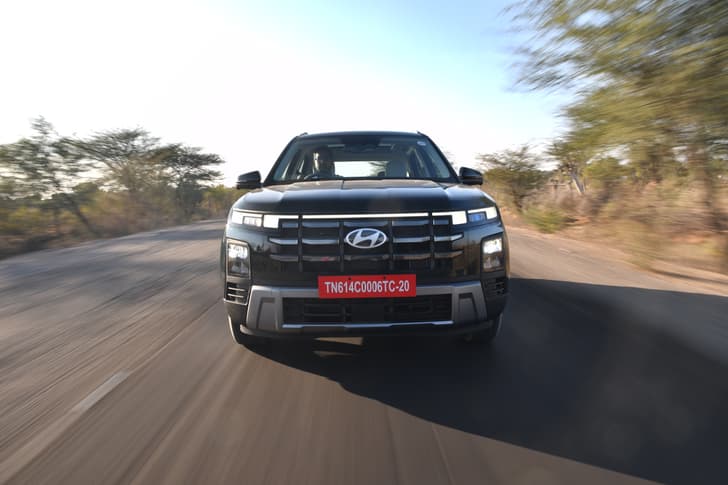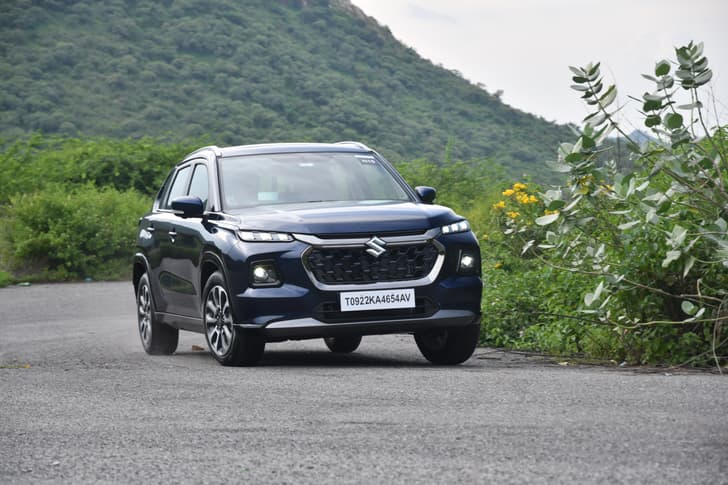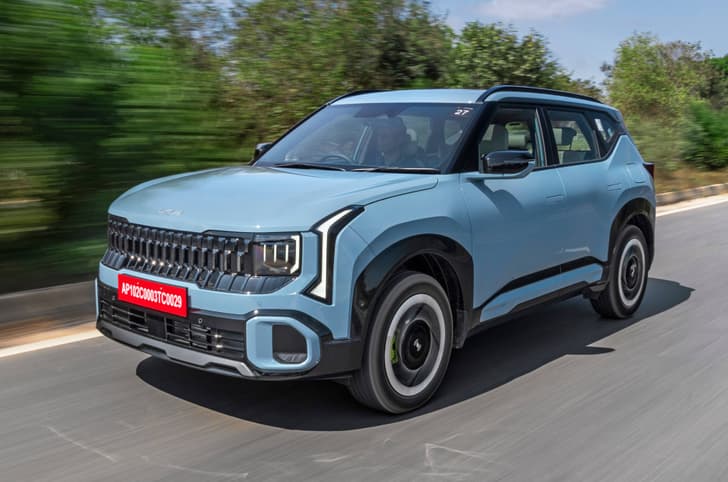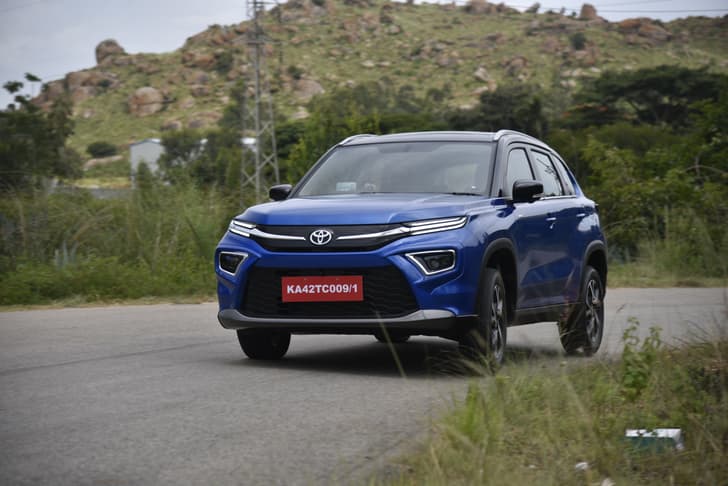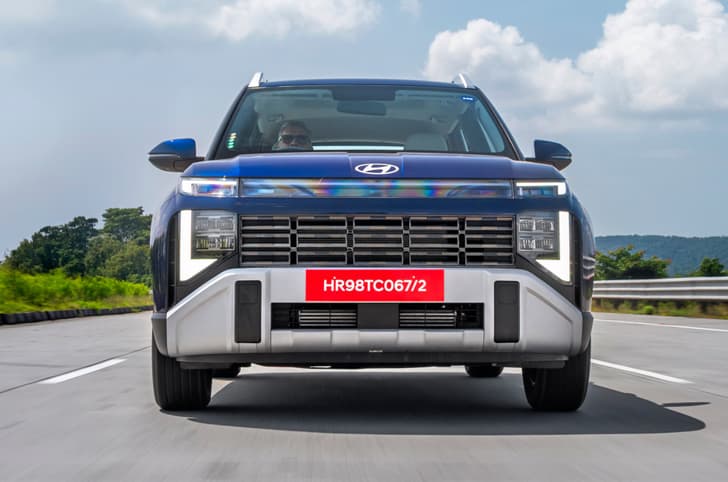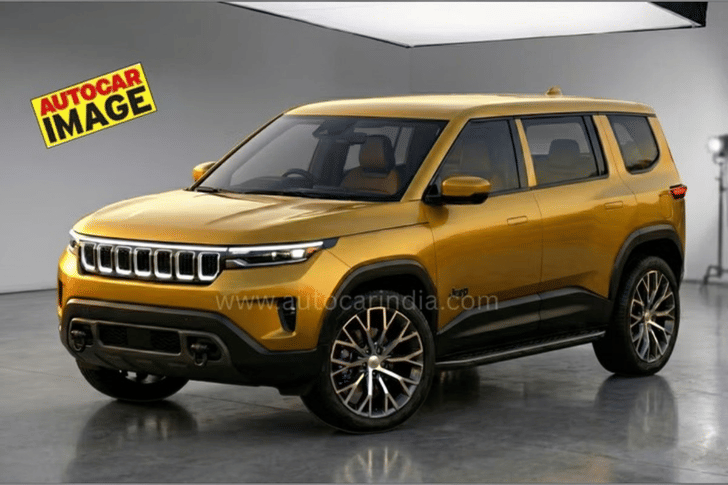

The new Tata Sierra has perhaps been one of the most anticipated launches of the year. And now, after multiple concept cars, spy shots and teasers, it has finally been launched into the deep end – the midsize SUV segment currently ruled by the Hyundai Creta. We got a chance to drive two powertrain options of the new Sierra to see if it lives up to its name and has what it takes to take on the segment champ.
Tata Sierra exterior design and engineering - 9/10
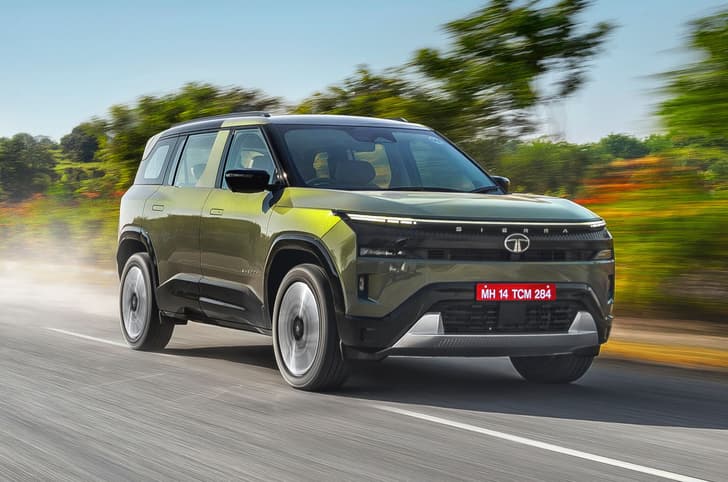
Sierra looks futuristic while retaining some signature design bits from the original.
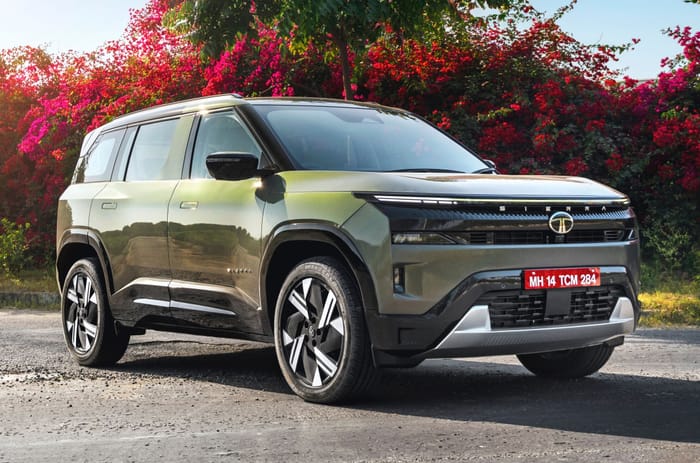
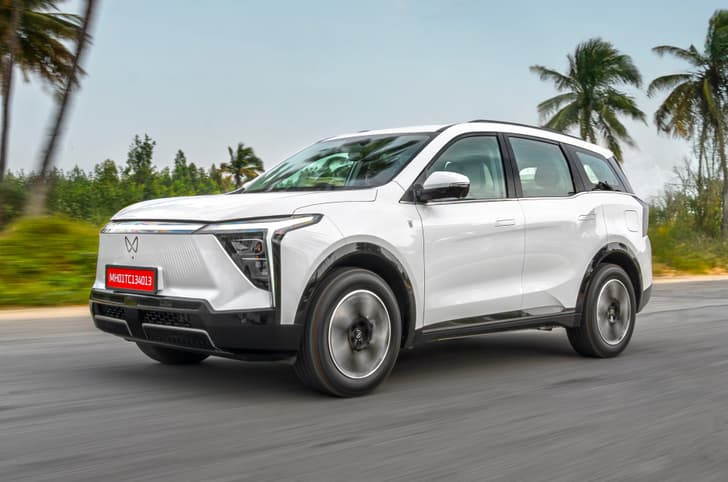
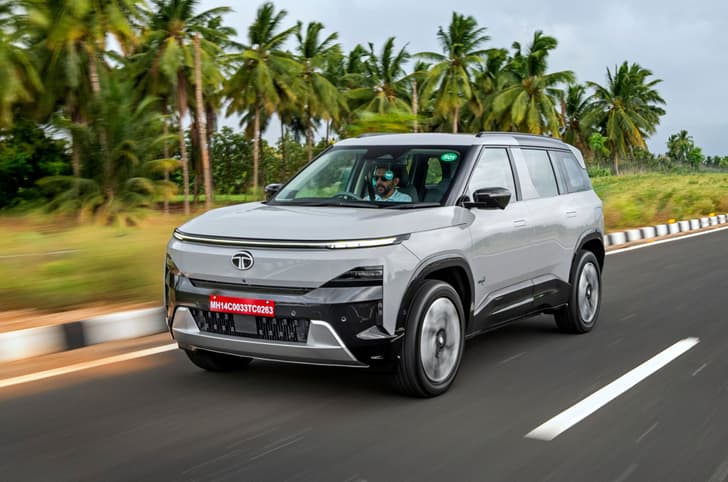
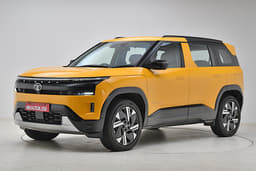
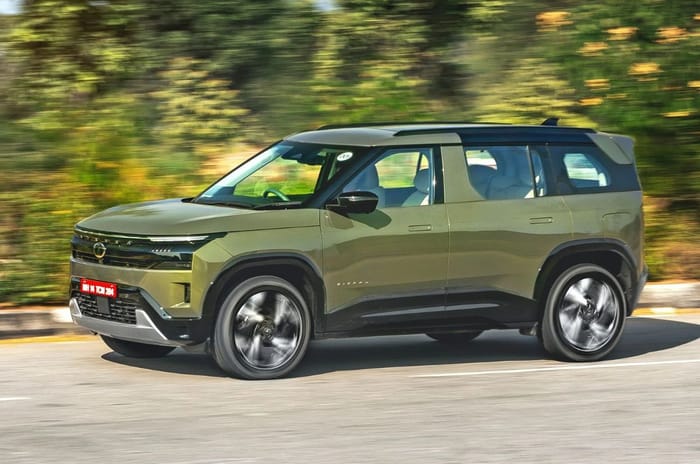
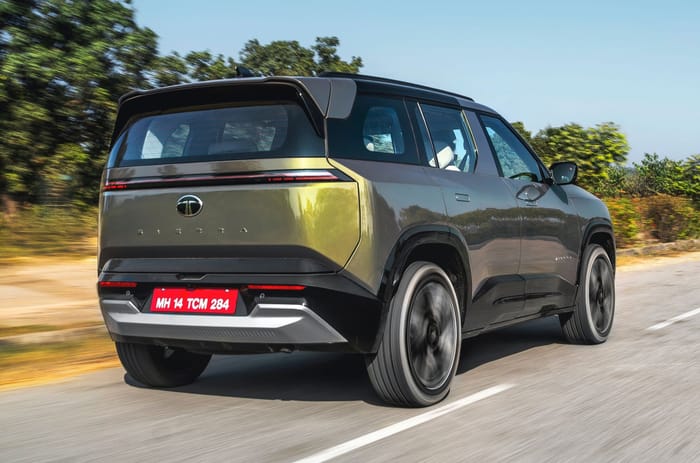
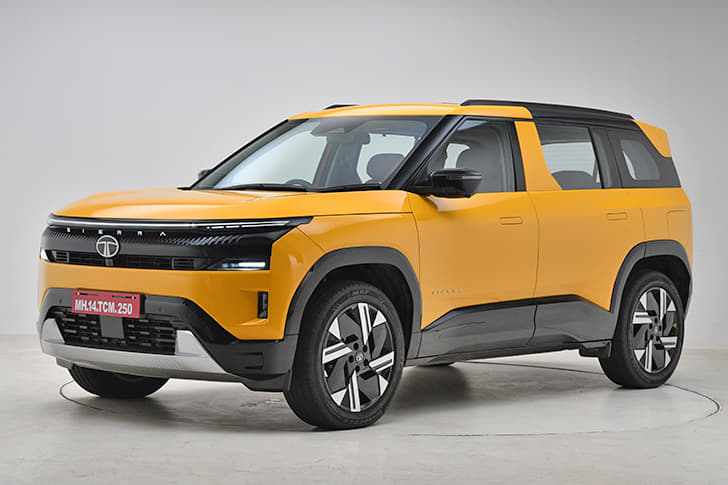
Tata Motors’s designers deserve praise, as the Sierra is a striking SUV that looks futuristic while retaining nods to the original. The upright, boxy silhouette, blacked-out front grille, high-set bonnet, squared-off wheel arches, thick B-pillar treatment and the blacked-out rear glass element (to mimic the original’s distinct curved rear glass) are all reminiscent of the original Tata Sierra from 1991. Then there are modern touches such as LED lightbars front and rear, super-slim LED headlamps and fog lamps, flush-fitting door handles and diamond-cut 19-inch alloys.
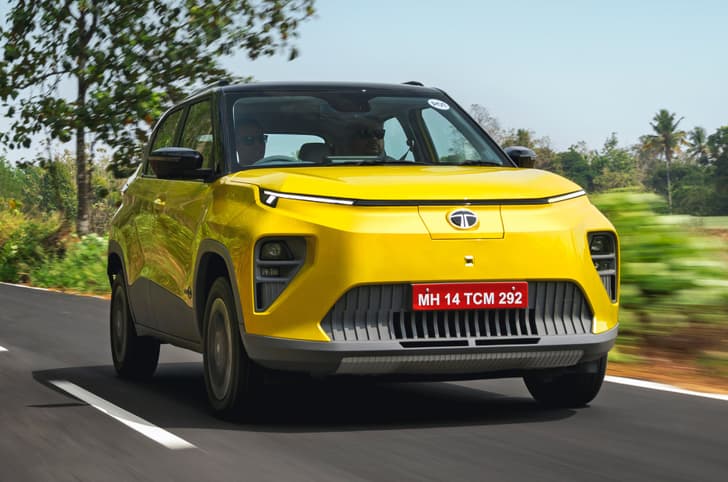
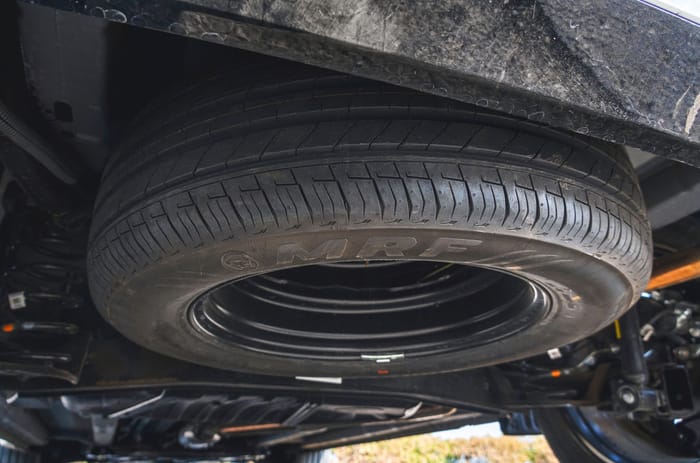
There are roof rails, too; Tata says they aren’t load-bearing, as it’s illegal to have a top carrier. There’s even a spoiler element on top of the tailgate that neatly hides the rear wiper. Lower down, you get faux skid plates at the front and rear and gloss-black body cladding all around, which will, no doubt, be a challenge to keep scratch-free. However, unlike the original, the spare tyre isn’t mounted on the now electrically operated tailgate and is instead located at the bottom of the SUV and can be lowered by loosening a bolt in the boot floor. There are as many as six paint shades to choose from, with the Munnar Mist (in pictures) and Andaman Adventure (yellow) being my favourites. On the whole, then, the new Sierra is a handsome SUV that’s big on desirability, and it manages to stand out from the usual crop of midsize SUVs.
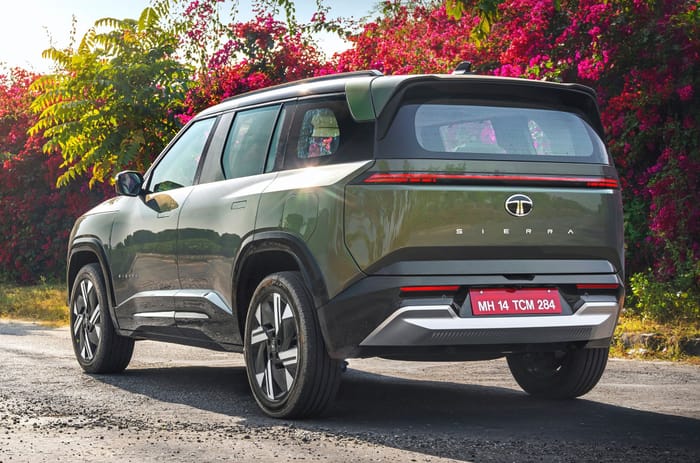
Underpinning the Sierra is Tata’s new All-Terrain Ready, Omni-Energy and Geometry Scalable (ARGOS) architecture, which is said to be compatible with multiple body styles and powertrains. The platform can support petrol, diesel, CNG and hybrid setups, as well as front-wheel-drive (FWD) and all-wheel-drive (AWD) configurations. For now, though, the Sierra is front-wheel drive. As for dimensions, it is 4.3m long, 1.8m wide, 1.7m high, with a 2.7m wheelbase – the tallest and widest in the segment, with the longest wheelbase.
Tata Sierra Interior space and comfort - 9/10
Touch-sensitive auto AC controls and steering borrowed from Harrier and Safari.

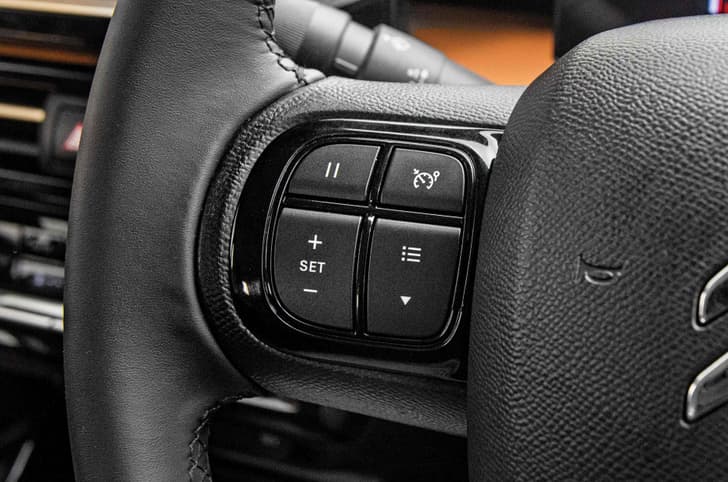
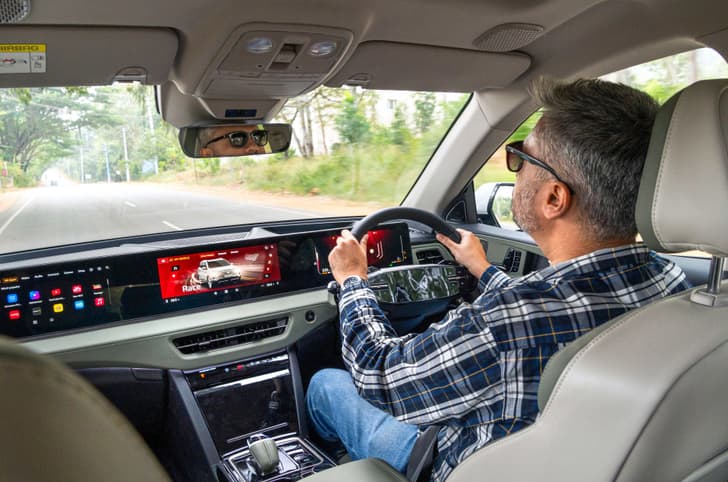
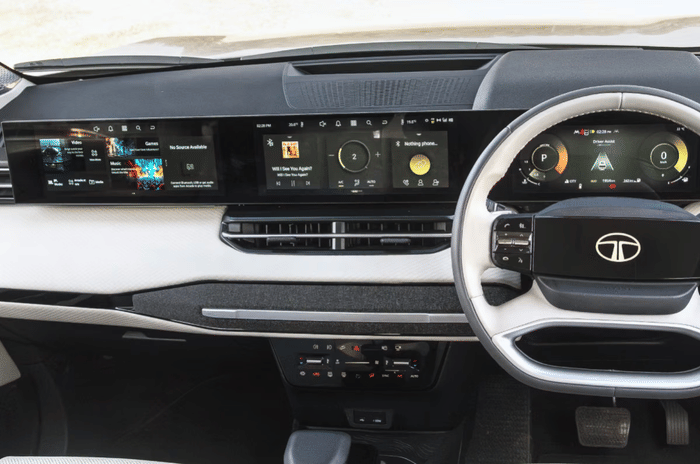
Step inside the cabin, and you’re greeted by what is Tata Motors’s best interior yet. The modern design, mix of colours and materials and the fit/finish all feel premium. The light-coloured, dual-tone upholstery also ups the ambience, though it will be challenging to keep clean. The dashboard, headlined by a three-screen setup on top trims, isn’t high, so you get a great view out of the cabin. The four-spoke steering is shared with the larger Harrier and Safari and features the illuminated logo in the centre, but the rectangular horn pad’s edges can feel intrusive. Also shared with the larger SUVs are the touch-sensitive buttons and toggle switches for the AC controls on the lower part of the dash.
Dashboard, three-screen set-up, control stalks, centre console are all-new.
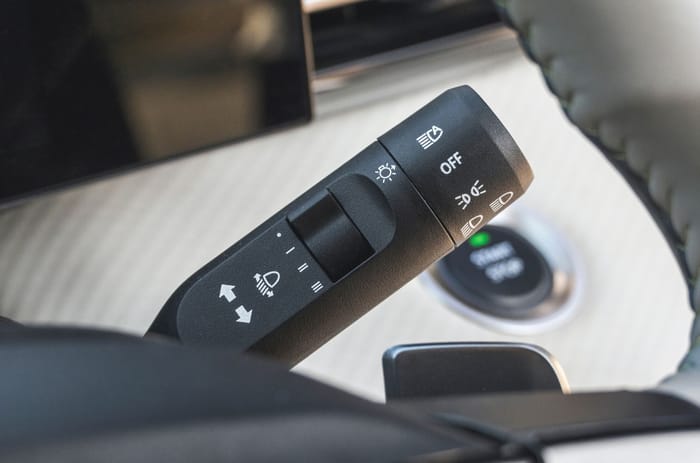
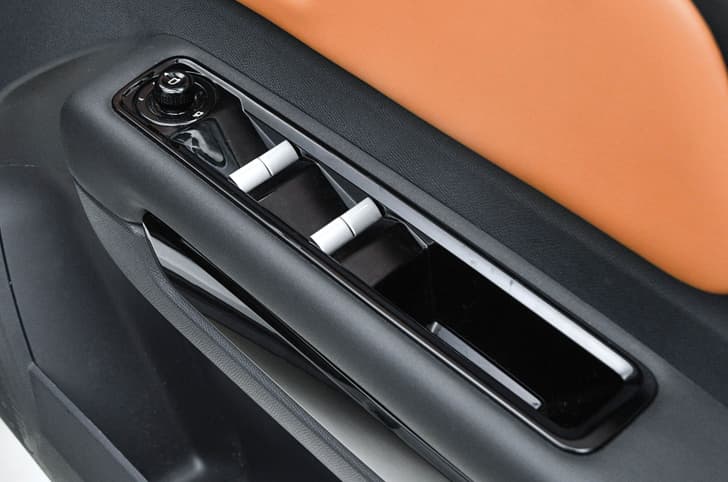
The centre console features two levels: the lower section at the front houses cup holders and charging ports, while the upper section at the back includes the gear selector (which is slow to respond), a wireless phone charger and an armrest. There’s also some storage under the armrest, though it’s too narrow and deep, which isn’t ideal. The wireless pad could also do with a more prominent lip to hold the phone securely in place. There are large doorbins and a sizeable illuminated glove box. The Sierra also features new control stalks for the indicators, lights and wipers and new power window buttons, all of which look and feel more premium than any other Tata.
Front seats get extendable under-thigh support and rear seats have a recline function
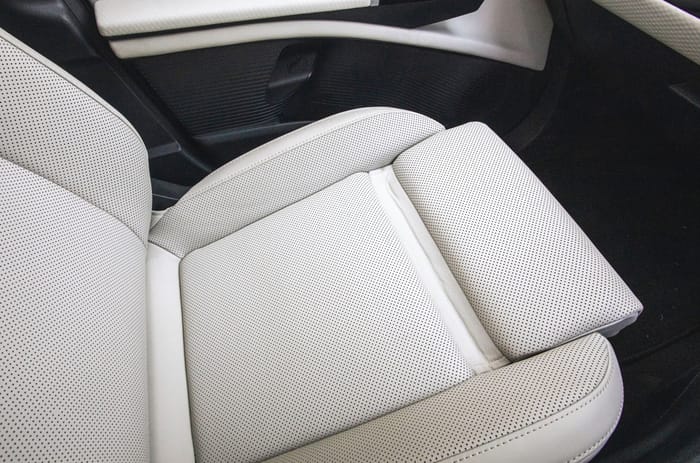
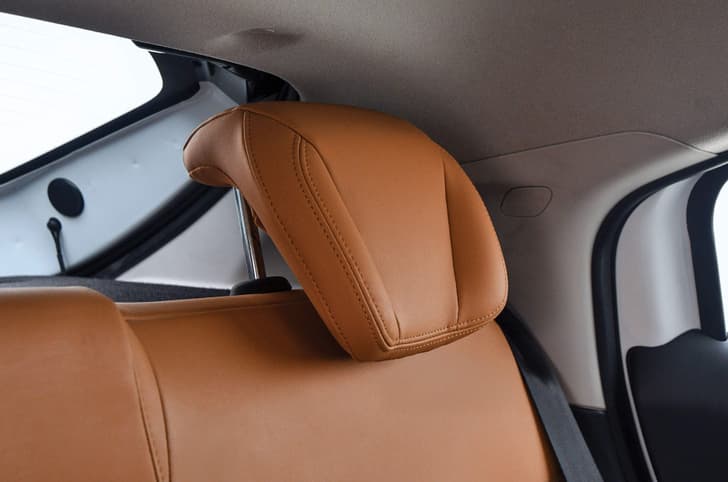
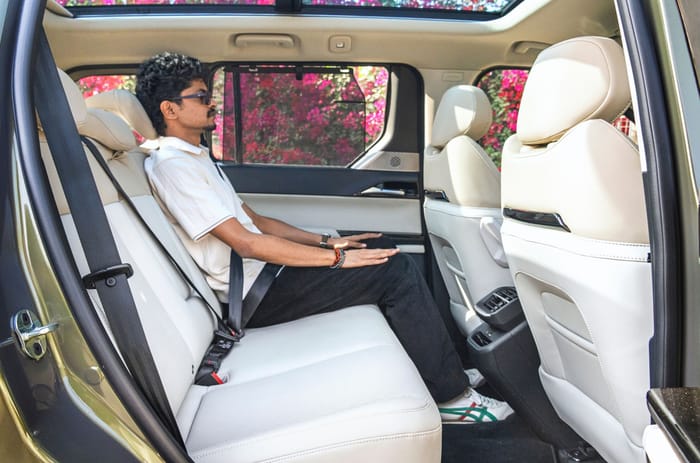
The front seats are comfy and accommodating, and what’s nice is that they also feature extendable under-thigh support, adding to the comfort factor. Seat cushioning, on the whole, is well-judged, as it doesn’t feel too soft or too firm. At the back, there is ample knee room and generous shoulder room for three adults, and despite the large panoramic sunroof, headroom isn’t an issue either. Rear passengers are well catered to, with window blinds, dedicated AC vents and USB charging ports, a reclining backrest, “boss mode” for the front passenger seat to liberate more legroom and a fold-down armrest with cup holders. Safety is taken care of, too, with all three passengers getting adjustable head restraints and three-point seatbelts.
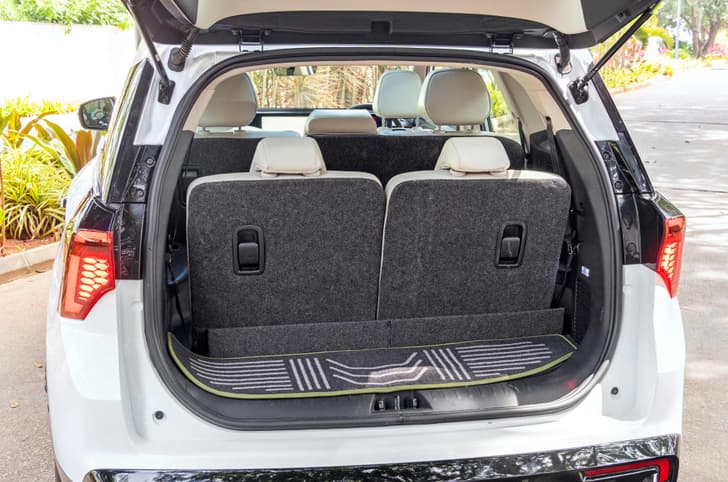
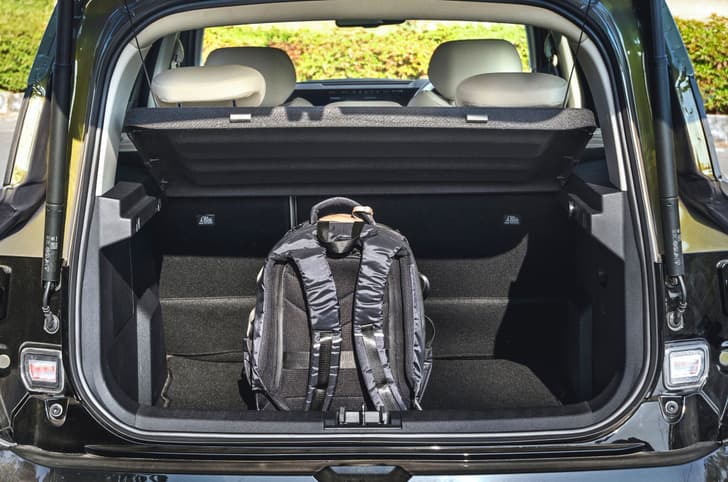
Boot space is 450 litres till the parcel shelf
The boot is a voluminous 622 litres to the roof (450 litres to the parcel shelf), and the wide opening and relatively low loading lip mean placing luggage shouldn’t be an issue. You can also fold the rear seats to expand capacity to 1,257 litres. However, the wheel wells eat into the boot space a bit, making it appear narrower than it is, and the electric tailgate could do with some more clearance.
Tata Sierra features and safety - 9/10
The range-topping Sierra Accomplished+ variant is well-equipped.
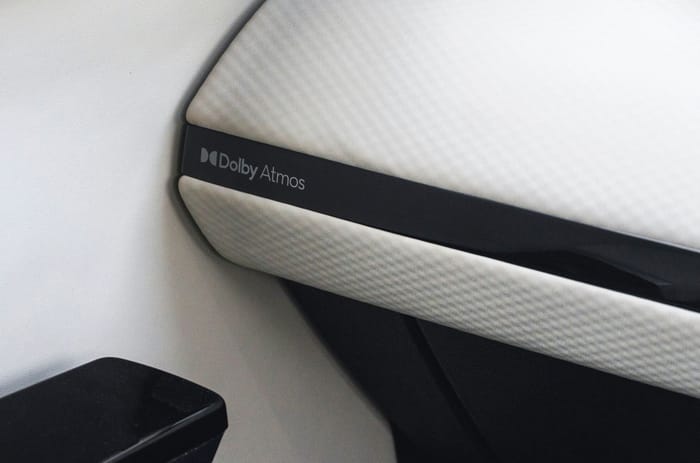
In a bid to take on the venerable Creta, Tata has left no stone unturned when it comes to features. The range-topping Sierra Accomplished+ packs ventilated front seats, a powered driver’s seat, connected car tech, wireless Android Auto and Apple CarPlay, an auto-dimming interior rearview mirror (IRVM), rear sunshades, dual-zone climate control, a panoramic sunroof, a wireless phone charger, and much more. A special mention has to go to the superb-sounding 12-speaker JBL Black sound system, which comes with a subwoofer, a soundbar on the dash, Dolby Atmos and 13 preset sound modes.
The most prominent feature, however, has to be the three-screen setup on the higher variants. It consists of a 10.25-inch digital instrument cluster, a 12.3-inch central infotainment touchscreen and a 12.3-inch passenger screen. All three Samsung OLED screens are crisp, high-resolution and slick to operate, and what’s nice is that the UI is easy to understand and navigate. And while the front passenger can connect wireless headphones to the third screen so as not to distract the driver, it lacks a privacy filter, which is an oversight. Meanwhile, lower variants get a two-screen setup, and interestingly, these get a head-up display.
Safety features include 6 airbags as standard, ESC, traction control, a 360-degree camera, disc brakes all around, hill-hold control and an expansive ADAS suite comprising autonomous emergency braking, lane-keep assist, cross-traffic alert, adaptive cruise control, and more. Our drive was too short to properly test its ADAS capabilities, but the lane-keep assist and adaptive cruise control functioned well on clearly marked roads. It’s also worth noting that the Sierra has not yet been crash-tested by Global NCAP or Bharat NCAP, but Tata Motors says it has been geared up for a 5-star score. Apart from the aforementioned features, Tata is also offering a host of accessories and a lifestyle kit.
Tata Sierra performance and refinement - 8/10
6-speed Aisin torque-converter automatic is well-matched to the new 1.5 turbo-petrol and the diesel engine.
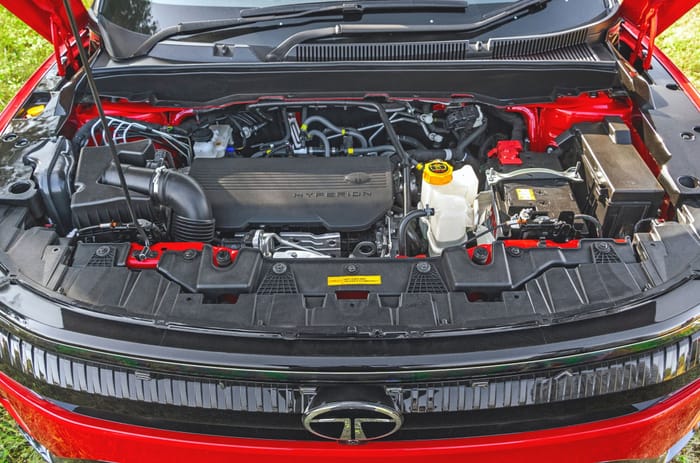
The Sierra is available with three engine options. The range starts with a new 1.5-litre naturally aspirated MPFI petrol engine that runs on the more efficient Atkinson cycle, putting out 106hp and 145Nm. This engine comes with a 6-speed manual or a 7-speed dual-clutch automatic transmission. However, we didn’t get a chance to sample it yet.
The second is a direct-injection turbo version of the above unit, putting out 160hp and 255Nm, available only with a 6-speed Aisin torque converter automatic. Finally, there’s a diesel option – the familiar 1.5-litre unit from the Curvv and Nexon that puts out 118hp and 260Nm with a 6-speed manual but a higher 280Nm when paired with a 6-speed torque-converter auto. While the engine is a carryover, Tata says there’s a new state of tune and hardware such as low-friction piston rings. We got to sample the turbo-petrol and the diesel auto on our test drive.
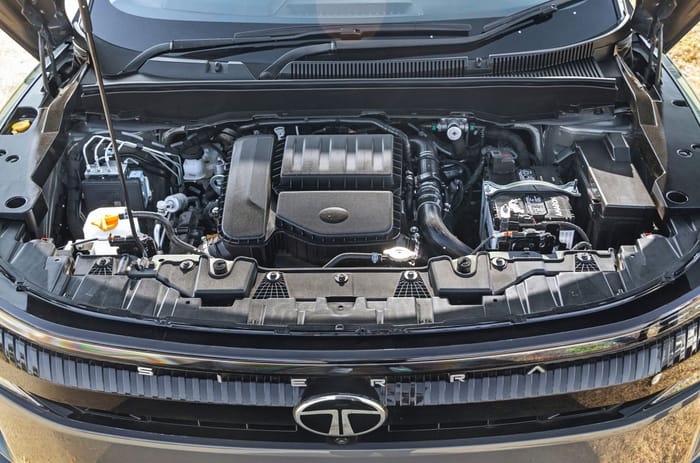
Let’s start with the new turbo-petrol, which is definitely our pick of the bunch. Tata’s new Hyperion engine impresses with its refinement, both at idle and on the move. Turbo lag is minimal, and it builds power in a linear manner. It misses that mid-range turbo kick, but it responds quickly enough to throttle inputs, which you can alter via the drive modes (City and Sport). Performance is strong, too, with our timing gear indicating a 0-100kph time of 10.09 seconds in Sport mode, which incidentally makes it quicker than the Creta N Line turbo petrol DCT, which takes 10.2 seconds. In rolling acceleration, this powertrain takes 5.64 seconds for the 20-80kph run and 7.23 seconds to go from 40 to 100kph.
Complementing the engine is a smooth Aisin 6-speed torque-converter automatic. It isn’t a quick-shifting unit, and shifts are slow via the paddles. But left to its own self, the shifts are seamless and the calibration excellent, so you will very rarely find yourself in the wrong gear. It’ll even hold on to gears for a bit longer when you’re on part throttle, which means you don’t really feel the need to take manual control via the paddle shifters.
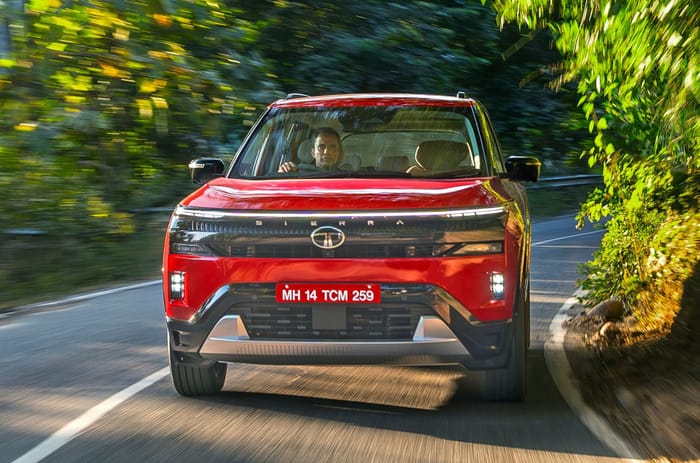
While refinement is one of the turbo-petrol’s strengths, it is the diesel’s weak point. You can hear the engine and feel the vibrations at all times, which makes it known to you that you are, in fact, driving a diesel. This 1.5 unit doesn’t have the midrange punch associated with diesels; instead, it builds power linearly. The diesel impresses with its long-leggedness and is a great option for those who do a lot of highway trips. The torque-converter auto, like with the petrol engine, is a smooth unit that keeps the engine in the meat of the powerband, and as such, you never really feel the need to take manual control.
Performance is reasonably quick: 0-100kph in 12.87 seconds, 20-80kph in 7.65 seconds and 40-100kph in 9.74 seconds. Thanks to all disc brakes, stopping performance is good and consistent too, though the pedal travel felt too long on the petrol. While performance, on the whole, is commendable, an area where the Sierra can improve is the road and tyre noise. Both filter through to the cabin and are apparent, especially at higher speeds.
Tata Sierra mileage - 7/10
On our short test drive, we didn’t get a chance to test the Sierra’s fuel efficiency, and Tata has yet to disclose the official claimed figures. But we will subject the Sierra to our real-world fuel-efficiency tests, so stay tuned for that.
Tata Sierra ride comfort and handling - 8/10
The Sierra excels in the ride and handling department.
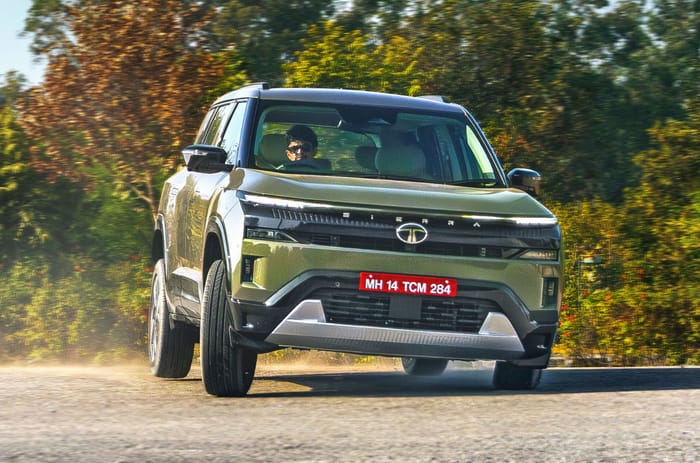
As you’d expect from a Tata, the Sierra excels in the ride and handling department. Top-spec versions feature frequency-dependent dampers (FDDs), which work admirably well. The Sierra feels composed and tough, even over the most broken patches of road. The ride does have some firmness at low speeds, and the occasional sharp jolt does filter through but never to the point of being uncomfortable, and as you get going, it gets better. Large potholes and ruts are also easily absorbed; we also tackled a light off-road trail, and the Sierra dealt with it admirably, with the 205mm of ground clearance coming in handy. Along with the drive modes, it also packs in three terrain modes: Normal, Wet and Rough.
Body roll is well-controlled around bends, and the Sierra does a superb job of hiding its mass and height from behind the wheel. The steering is on the lighter side and not particularly feelsome, though it’s predictable. There’s also good grip on offer, which makes you want to push the SUV more. On the whole, the Sierra is a lot of fun in the twisty stuff, especially the turbo-petrol automatic.
Tata Sierra price and verdict - 8/10
Sierra turbo petrol price starts at Rs 17.99 lakh; diesel price starts at Rs 12.99 lakh
Prices for the Tata Sierra start at Rs 11.49 lakh for the petrol, Rs 12.99 lakh for the diesel and Rs 17.99 lakh for the turbo-petrol, and the range tops out at Rs 21.29 lakh, so while variants overlap with the competition, it sits at the top of the midsize segment, which comprises major players like the Hyundai Creta, Maruti Grand Vitara, Maruti Victoris, Toyota Hyryder, Kia Seltos, Honda Elevate, and others.
It is interesting to see Tata Motors not play the value card but instead position the Sierra as a premium offering. Does it to justice? Short answer, yes. There are some shortcomings, of course, such as the noisy diesel engine, the evident road and tyre noise, and some small nitpicks. But those are overshadowed by this SUV’s many and solid strengths, like its lengthy equipment list, refined and strong new turbo-petrol engine, spacious and premium cabin and a well-sorted ride and handling balance. And to top it all off, it tugs at the heartstrings with it’s nostalgia-inducing styling and name. Tata Motors seem to have a winner on their hands then, one that they must now make sure to put out right.
Also see:
 Lenny D'sa
 Sergius Barretto
 Saumil Shah
 Nikhil Bhatia