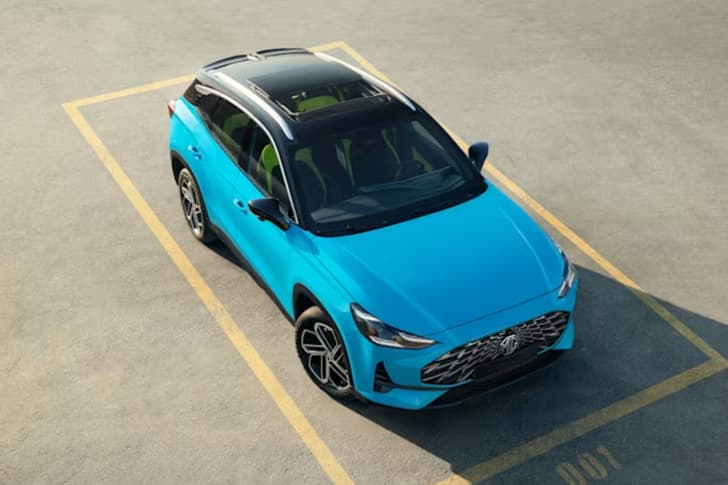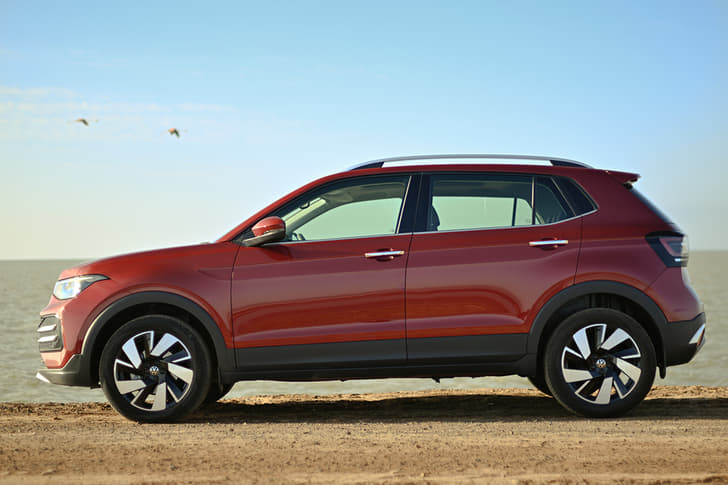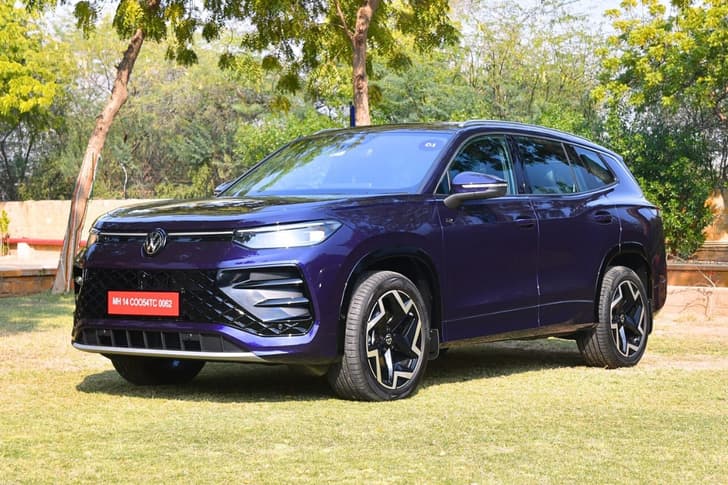
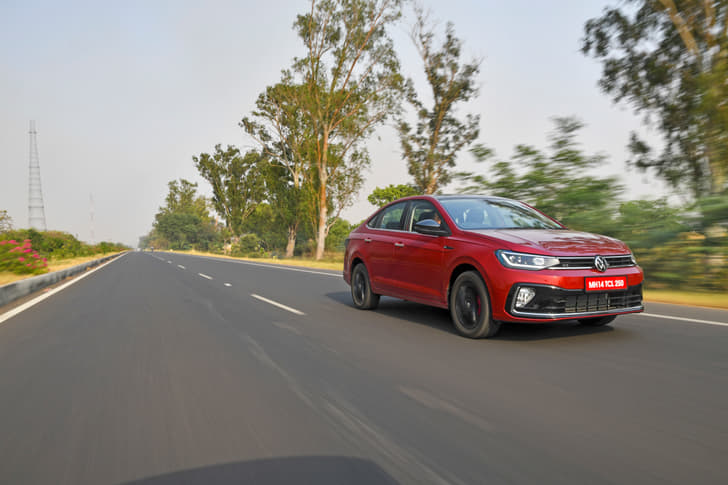
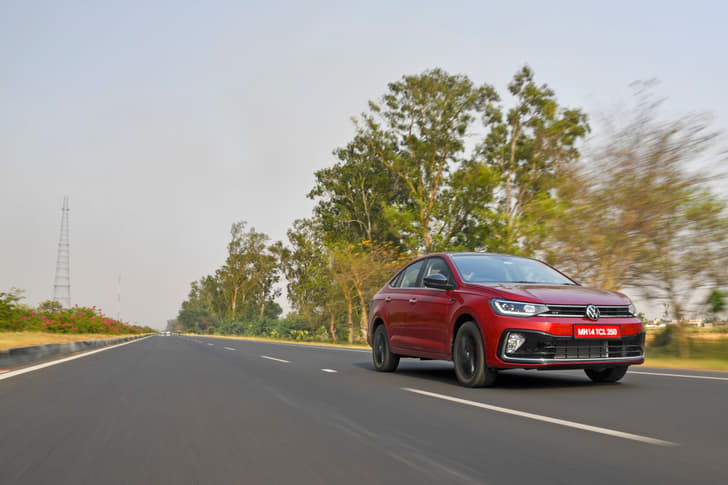
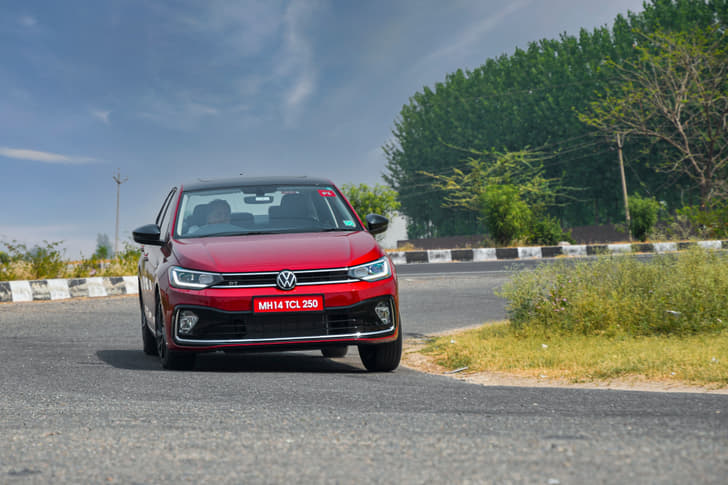
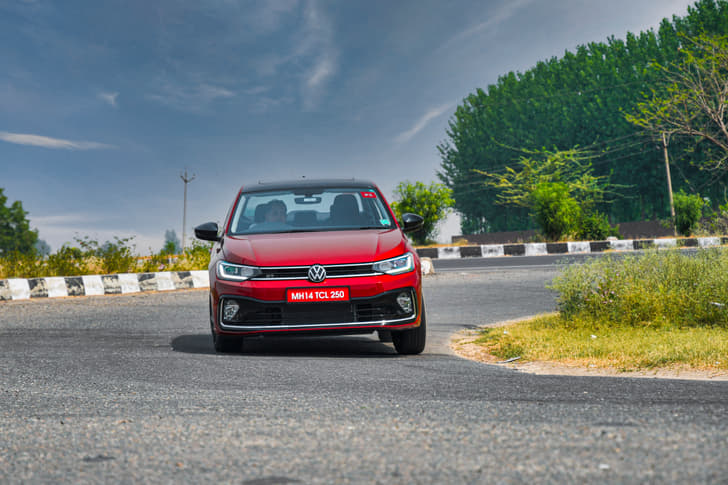

Volkswagen cars in India (7)
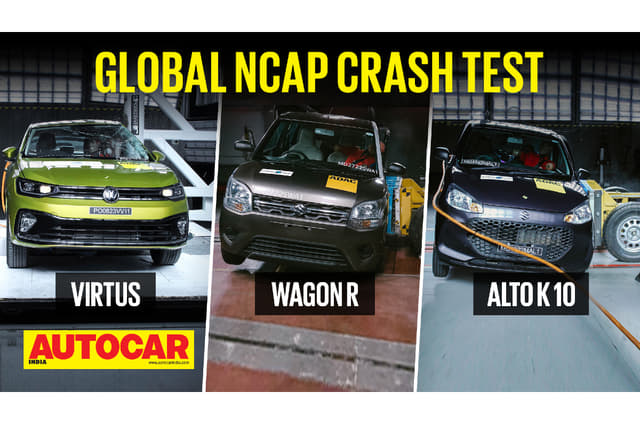
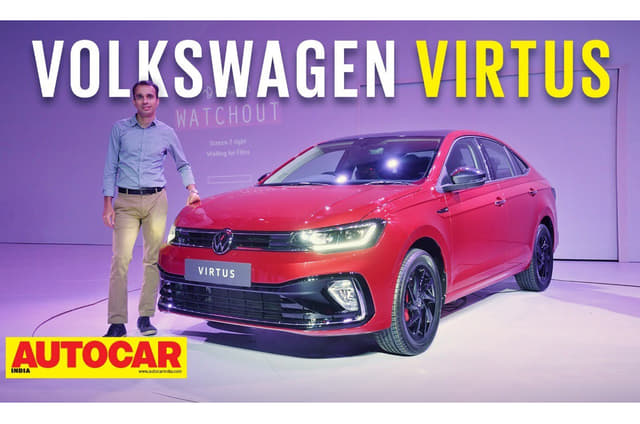
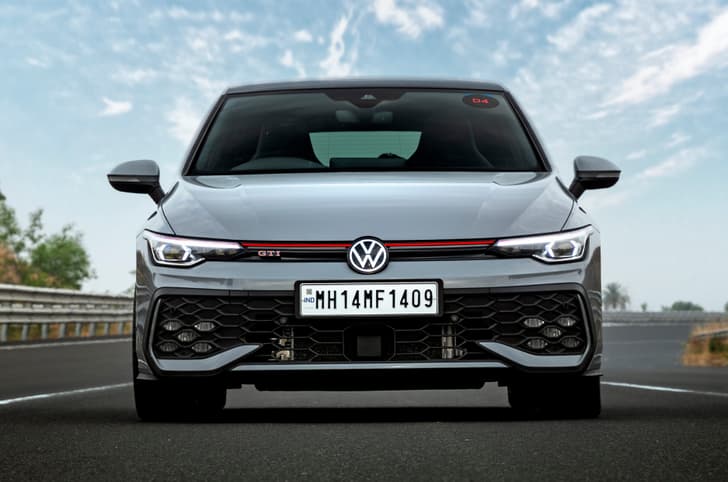
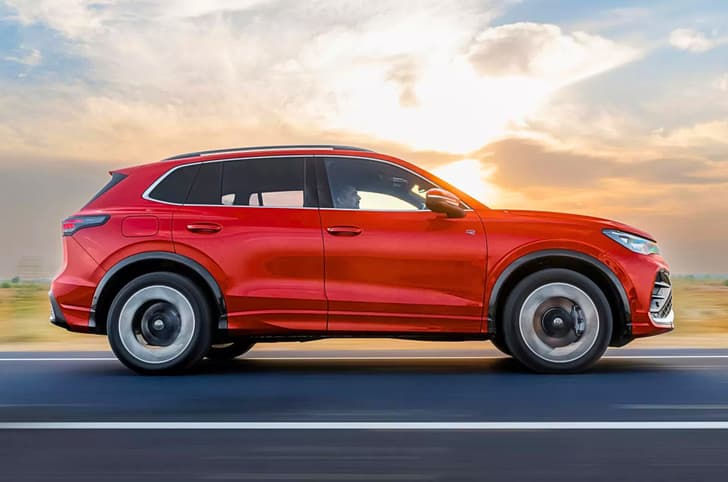
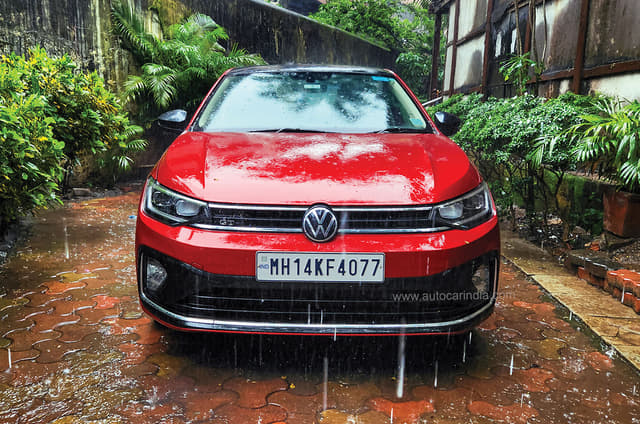
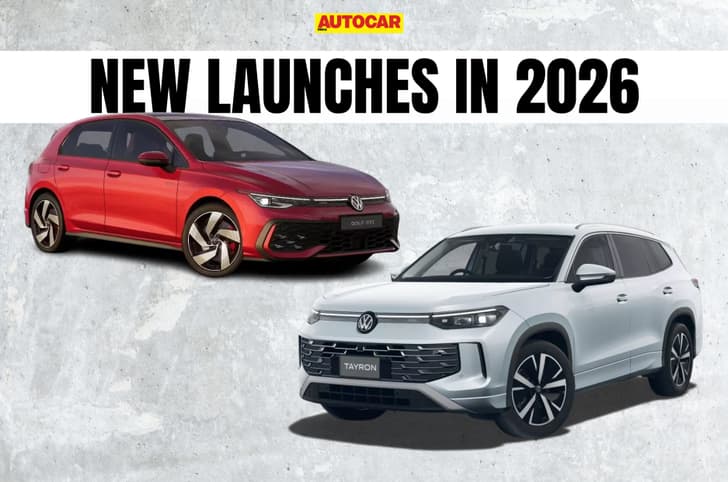
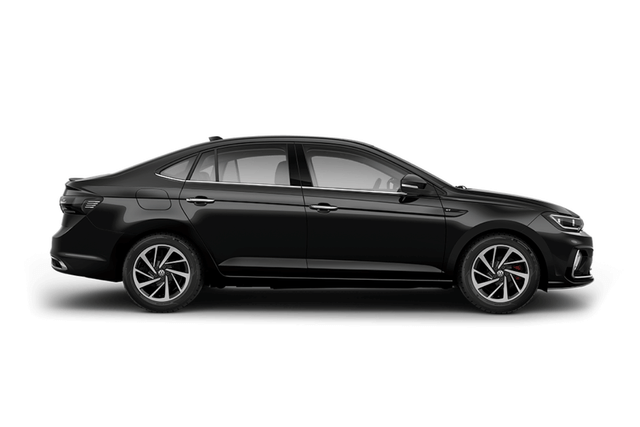
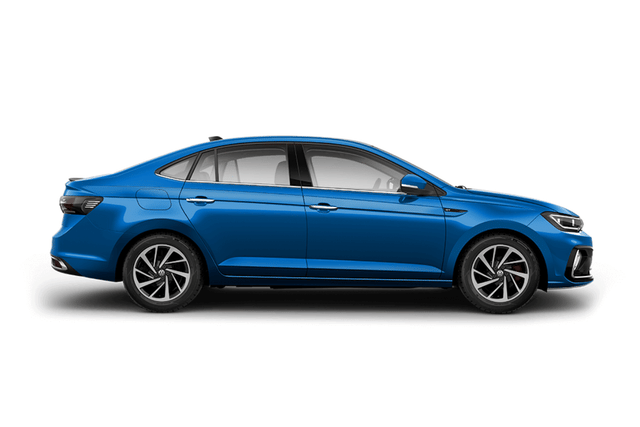
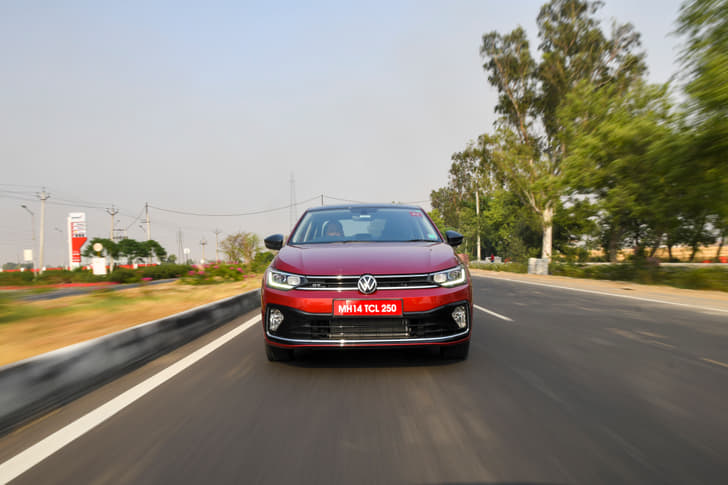
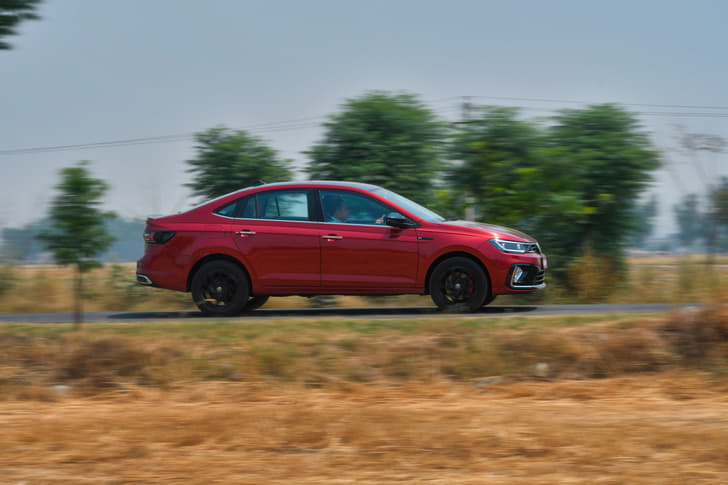
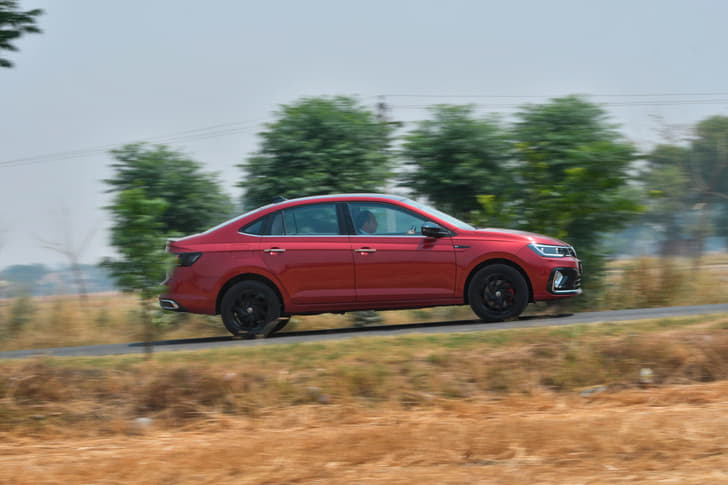
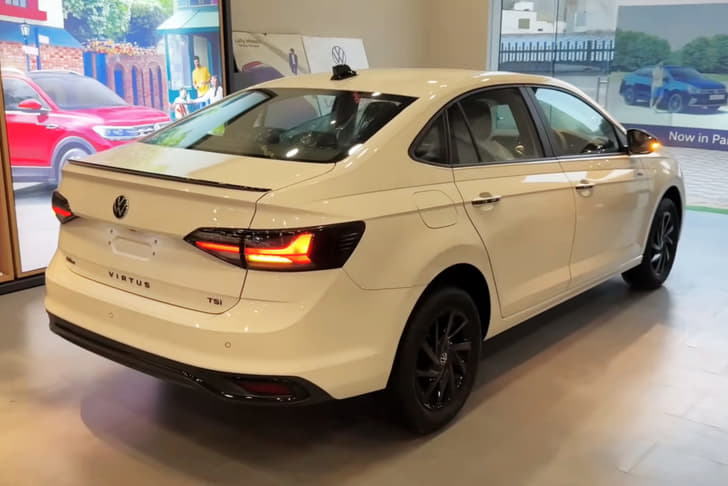
The Volkswagen car price starts at โน10.50 lakh and goes up to โน50.91 lakh. As of April 2026, the Volkswagen cheapest car is the Virtus, while the Golf is the costliest car. Currently in 2026, there are 7 Volkswagen cars in India, out of which 5 are on sale, and 2 are upcoming. The Volkswagen cars that are currently available for sale are the Virtus, Taigun, Tiguan, Golf, and the recently launched Tayron.
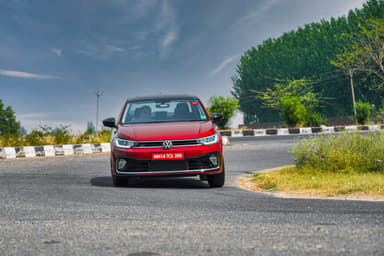
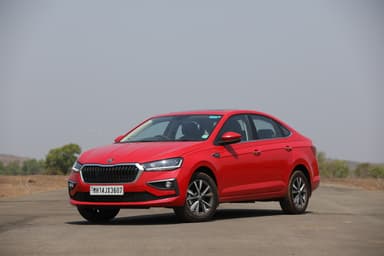
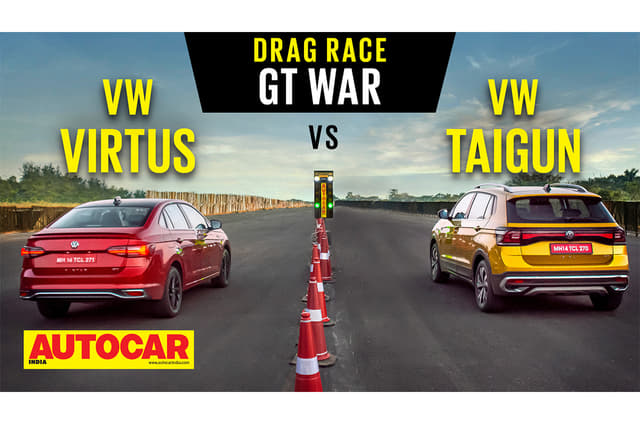
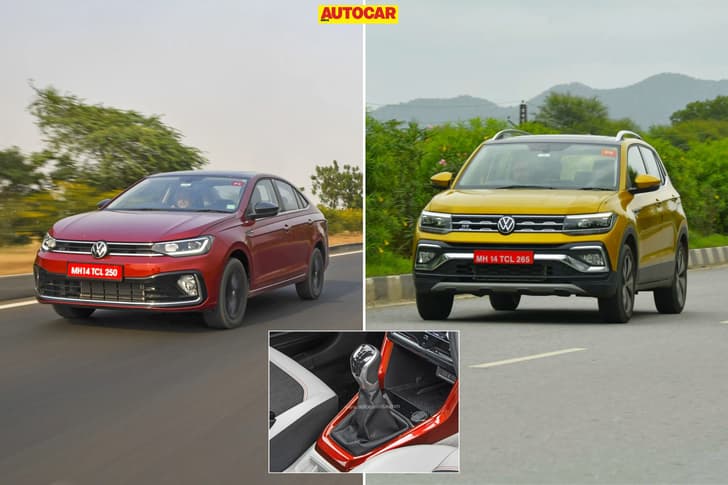
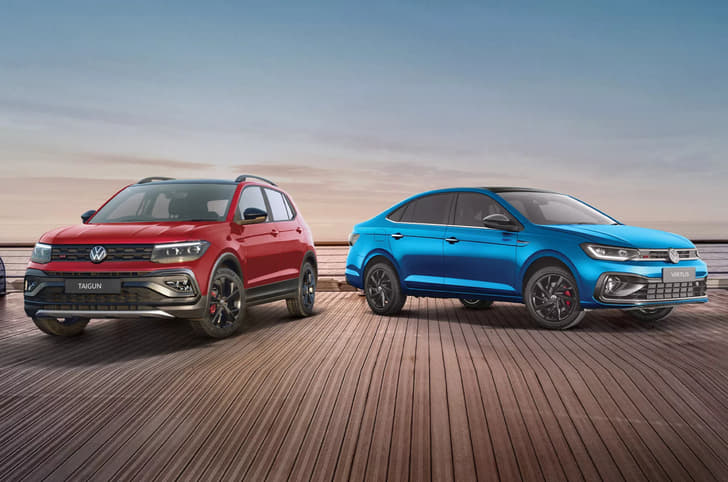
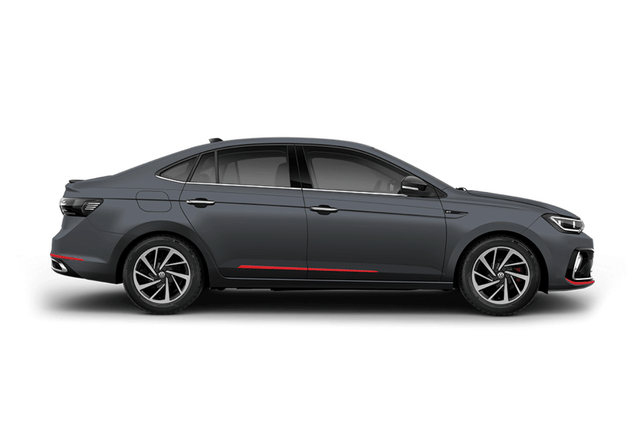
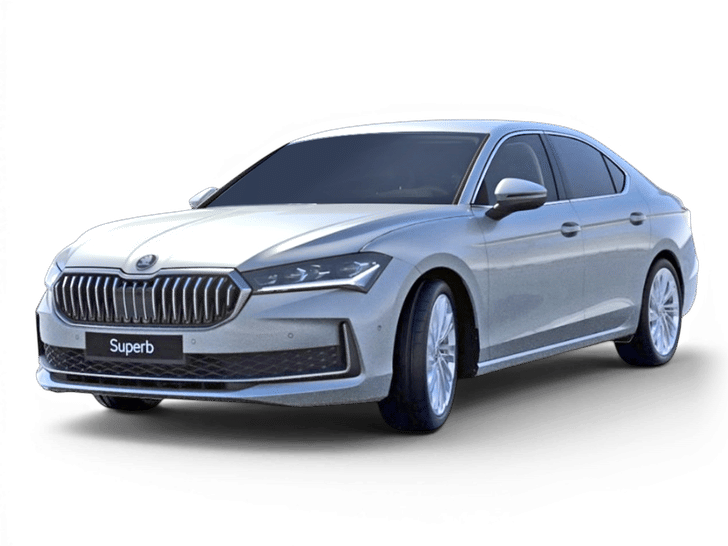
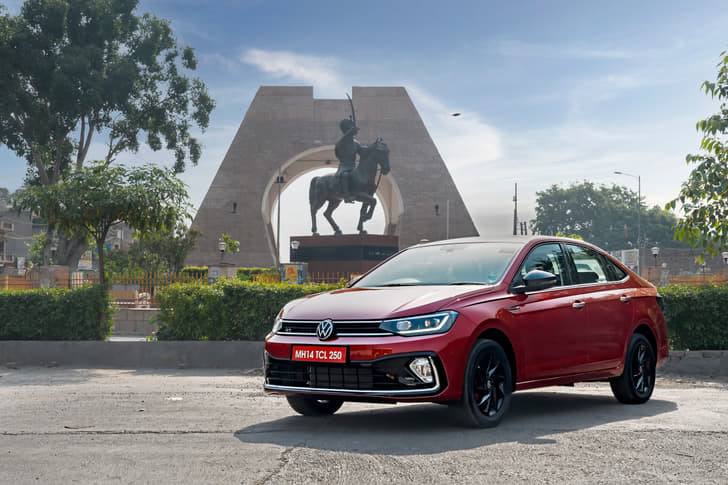
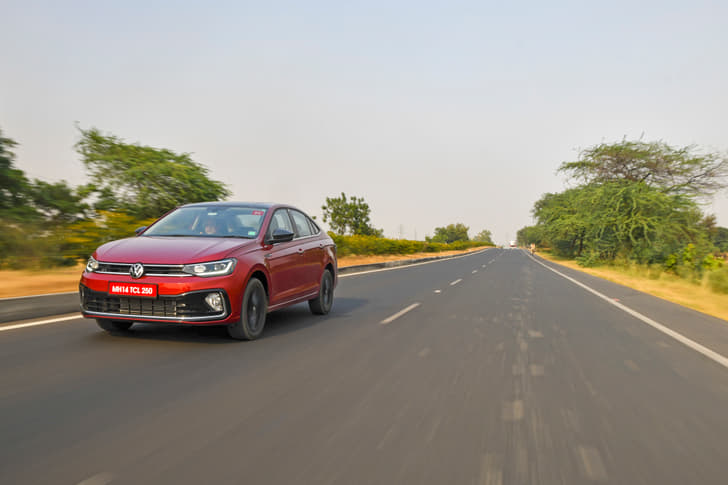
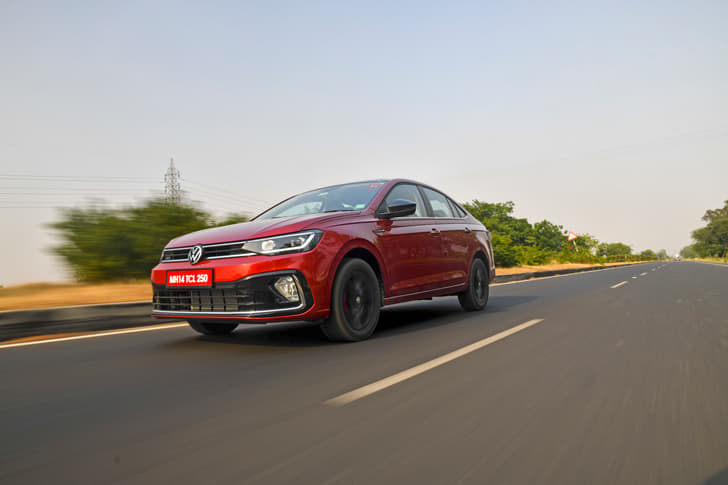
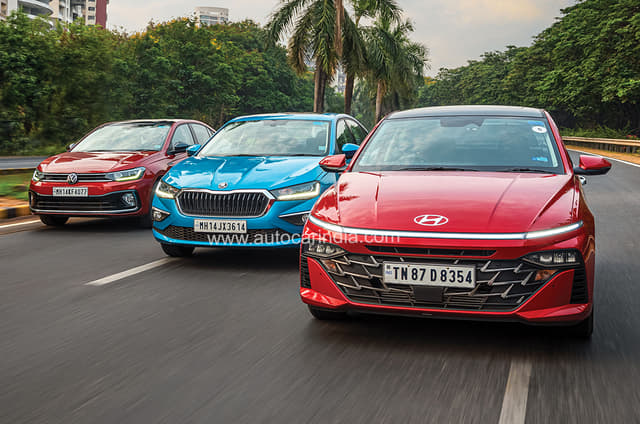
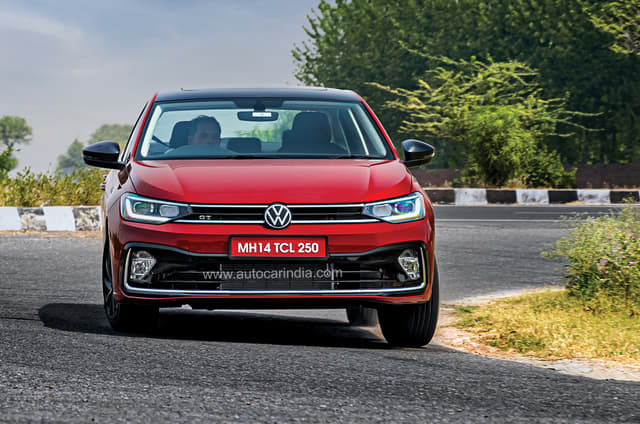
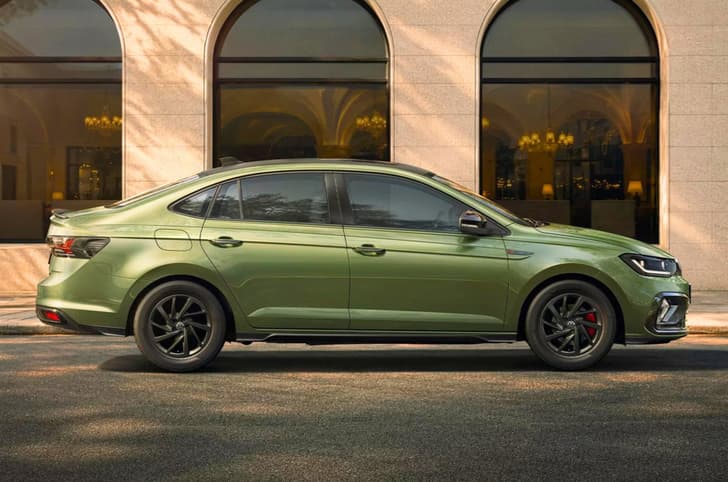
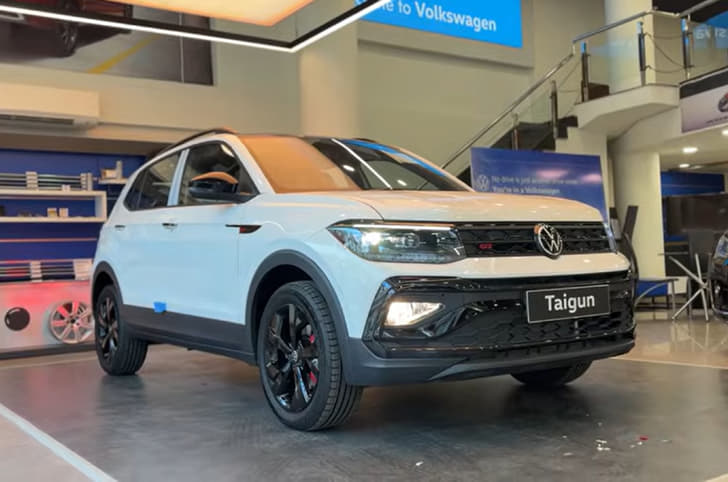
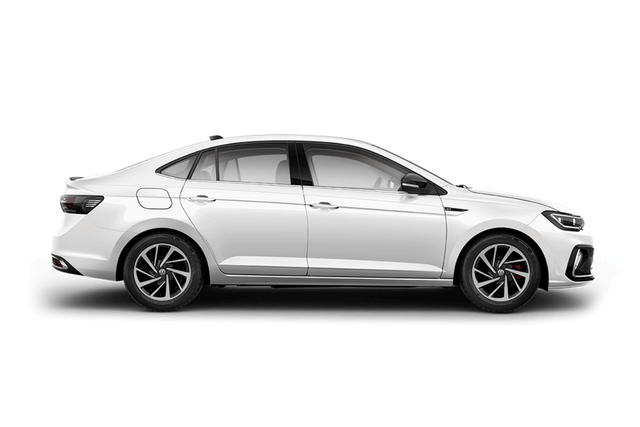
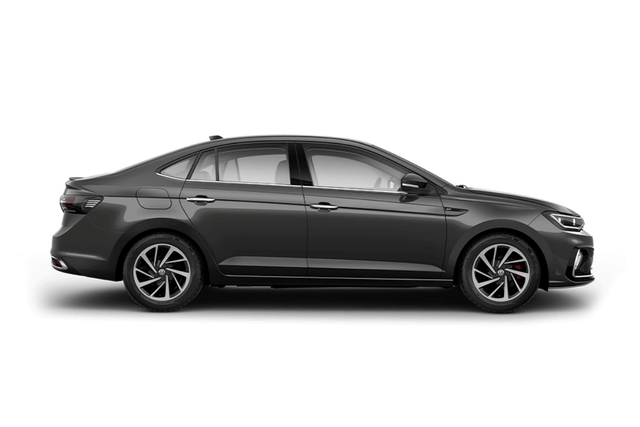
The Virtus is the only Volkswagen sedan car thatโs presently offered in the Indian market. The Volkswagen SUV cars list includes Tiguan, Tayron and Taigun, which rival the Kushaq and the Hyundai Creta. The Taigun is a sister product to the Skoda Kushaq, and both models are built alongside each other at Volkswagenโs Chakan plant near Pune.
After Skoda, the German brand Volkswagen is the second mainstream car from the VW Group to launch its cars and SUVs in India. Over the years, Volkswagen cars sold in the country have included the Polo, Vento, Touareg, Phaeton, Passat, and Jetta.
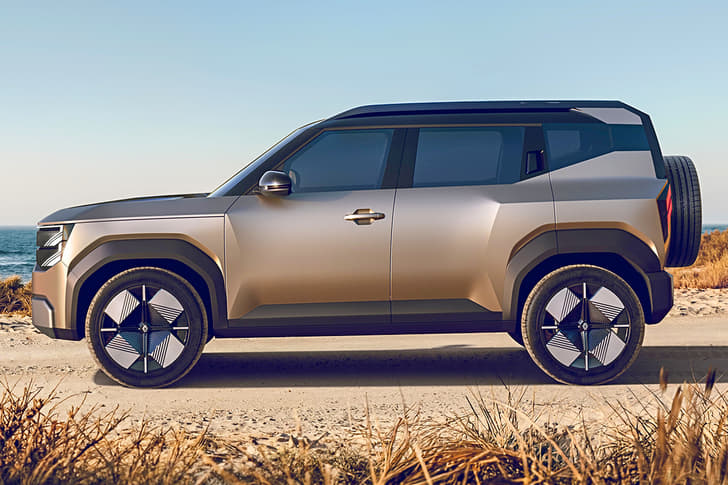
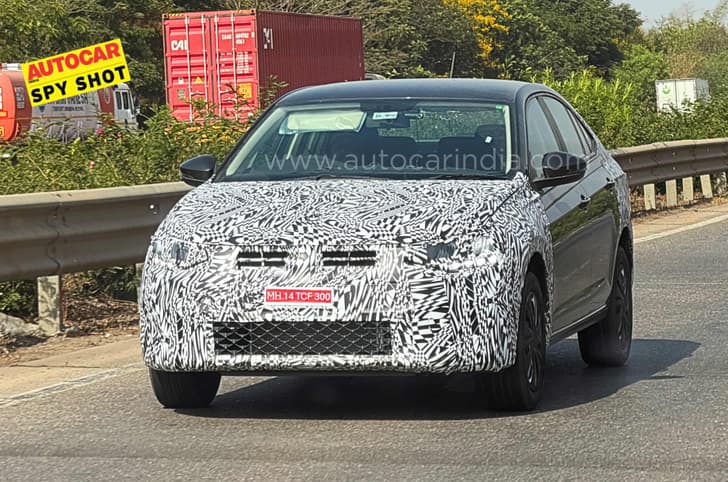
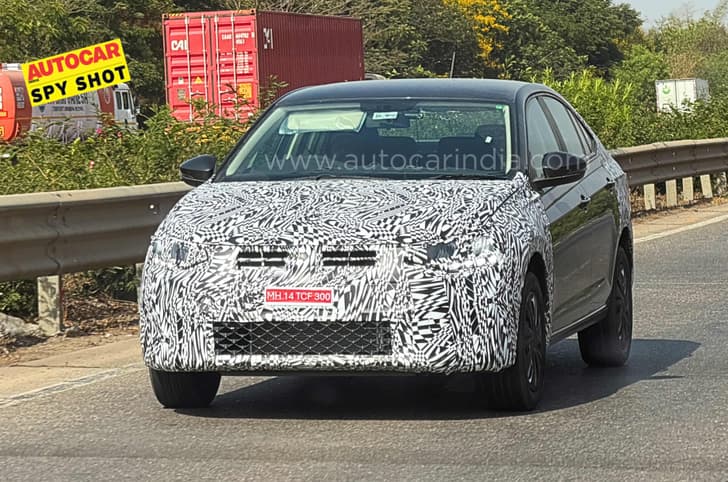
Volkswagen new car launch includes the Taigun facelift and ID 4, which are expected to launch in late 2026. The upcoming Volkswagen electric car, the ID 4, will rival the BYD Sealion 7. At present, there are no Volkswagen 7 seater cars on sale in India.
Volkswagen Car Price List (April 2026)
The price of Volkswagen cars in India starts at โน10.50 lakh for the Virtus and goes up to โน50.91 lakh for the Golf. View the latest Volkswagen car prices of all models available for sale in India in the table below:
Model | Price (Ex-showroom) |
Volkswagen Virtus | โน10.50 lakh - โน19.00 lakh |
Volkswagen Taigun | โน10.58 lakh - โน19.19 lakh |
Volkswagen Tiguan | โน45.73 lakh |
Volkswagen Tayron | โน46.99 lakh |
Volkswagen Golf | โน50.91 lakh |
Upcoming Volkswagen Cars in India
In 2026, Volkswagen upcoming models in India include two vehicles:
1. Volkswagen Taigun Facelift
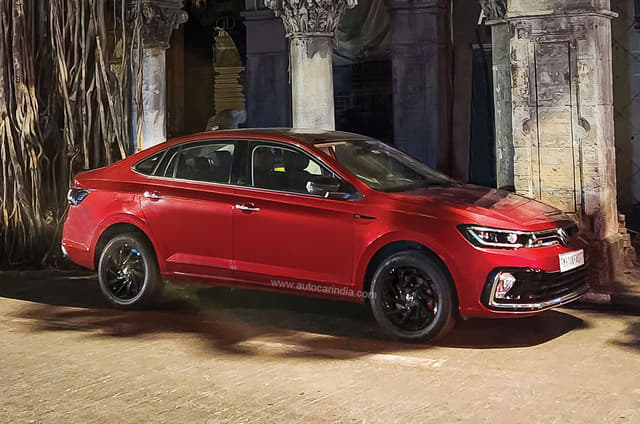
- Estimated price: โน11.00 lakh - โน19.50 lakh
- Expected Launch Date: 2026
- Fuel Type: Petrol
- Body Type: SUV
2. Volkswagen ID 4
- Estimated price: โน50.00 lakh - โน60.00 lakh
- Expected Launch Date: 2026
- Fuel Type: Electric
- Body Type: SUV
Volkswagen Cars - Latest Update
- 19 February 2026: Volkswagen Tayron R-Line launched in India at โน46.99 lakh
- 7 January 2026: Volkswagen has teased the Tayron for India for the first time.
- 7 January 2026: Volkswagen offers discounts of up to โน1.26 lakh on the Virtus and Taigun in January 2026, limited to MY2025 models.
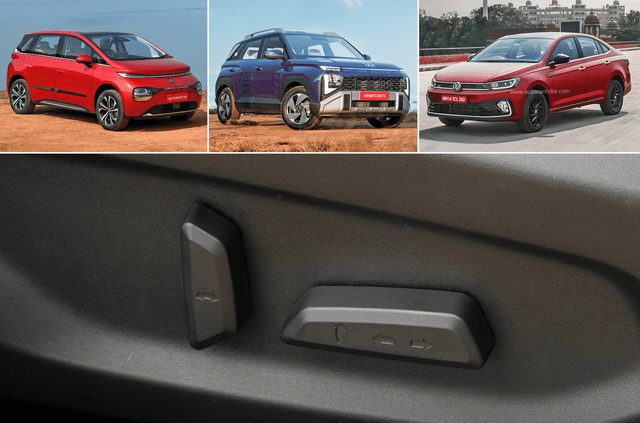
- 5 January 2026: Volkswagen brings back physical buttons with the ID Polo, saying customer feedback drove the move across future ID EVs.
- November 2025: JSW-MG Motor India and Skoda-VW in early talks for platform and technology partnership.
- May 2025: Golf GTI bookings open exclusively via the official Volkswagen website.
FAQs
The Polo is the most popular Volkswagen car in India, but it is not on sale anymore.
The Volkswagen car price in India starts at โน10.50 lakh for the Virtus and goes up to โน50.91 lakh for the Golf.
The cheapest Volkswagen car in India is the Virtus. The price starts at โน10.50 lakh.
Volkswagen SUV cars available in India include the Taigun, Tayron, and Tiguan. The upcoming ID 4 will also be an SUV.
Currently, Volkswagen does not offer any cars under โน10 lakh in India. The cheapest Volkswagen car in India is the Virtus, starting at โน10.50 lakh (ex-showroom).
Volkswagen cars in India currently include the Virtus, Taigun, Tayron, Tiguan, and Golf. The ID 4 is expected to launch in 2026.
The best Volkswagen cars depend on your preference. The Virtus is popular as a sedan, while the Taigun and Tiguan are preferred SUVs.
Presently, no Volkswagen diesel cars are available for sale in India.
Currently, the Golf is considered the top model of Volkswagen in India.
Yes. Both the Virtus and Taigun have starting prices under โน15 lakh.
Trending Questions on Volkswagen Cars - Answered by Autocar Experts
Nitin puri
โข20hHi, My current car is a Skoda Superb L&K, which has done around 18,400 km. I really like the Volkswagen Tayron R-Line. Is it worth upgrading to the Tayron, or should I continue with the Superb, considering it is already a fantastic car?

Autocar India
With a 2023 Skoda Superb L&K that has only 18,400 km on it, I would not switch unless you clearly need what the Volkswagen Tayron R-Line gives you: a higher seat, easier entry, and better clearance for rough roads or steep speed breakers. For your mix of city and highway use in a near-new car, keeping the Superb makes more sense right now.Three reasons. First, the Superb has a roomier back seat, so family trips are easier. Second, at this mileage, your car is almost new, so changing now will mean a big hit on resale, plus fresh tax and insurance for gains that may be small in daily use. Third, the move from a long, low car to a taller one changes the feel: you sit higher and see more, but the Superb's suspension is soft and plush while the VW's is a bit more sporty in the way it rides, especially on big wheels as the R-Line gets.Overall, unless you have a clear need for the higher seat and rough-road ease, holding on to your Superb a bit longer is the smarter move.
Siontan Ghosh
โข2dI am planning to buy an SUV that is safe, has good driving dynamics, is comfortable, and economical in terms of maintenance. My driving will be 70% city and 30% highway, with a monthly running of less than 500 km. I am confused between the Honda Elevate, Skoda Kushaq, and Volkswagen Taigun. I am very interested in German cars but would like your suggestion.

Autocar India
With a majority of city use, short monthly running, clear focus on safety, driving dynamics and comfort, we will suggest the Volkswagen Taigun 1.0 TSI automatic or equivalent Skoda Kushaq. You will like it for three reasons. First, it feels sure-footed and is a pleasure to drive. Second, the 1.0 turbo petrol is smooth and quick enough for gaps in city traffic, and the automatic here is a regular torque-converter unit, which means gears changes are very smooth. It also handles slow, stop-start roads without fuss. Third, safety is strong - the Taigun and Kushaq have a 5-star crash test rating and are well equipped with safety features. A couple of trade-offs to note. The back seat is not very wide, so three adults will be snug. And the ride at very low speeds, can feel a bit firm over sharp bumps. Service costs are a bit higher than Honda car, but VW now offers long warranty and service packs that keep bills predictable, so do ask your dealer about it.
Rengaraj K
โข3dI live in Bangalore, and my usage is around 800km in a month, 70% in the city and 30% on highways. I have shortlisted Toyota Hyryder Hybrid (eCVT), Taigun 1.5 DSG, and Seltos 1.5 DCT. Help me choose one. Currently, I own a Toyota Yaris CVT.

Autocar India
The Toyota Hyryder Hybrid is the better fit for you. It suits your pattern of 70% city use in Bengaluru traffic and about 800 km a month, and will feel familiar coming from your Yaris CVT.The Toyota Urban Cruiser Hyryder does a lot of running on the battery at low speeds, so it pulls away smoothly and cleanly, and feels very quiet and refined to drive in the city. It will also use less fuel in the city than the two turbo-petrol options you've listed, and you are already familiar with Toyota's reputed after-sales service. As per Toyota, its fuel efficiency is 29.97kpl.Trade-offs to note are that it doesn't have the outright performance, such as the Taigun or Seltos, and the boot is smaller than the other two, thanks to the hybrid battery.
Rengaraj K
โข3dI live in Bangalore, and my usage is around 800 km per month, with 70% in the city and 30% on highways. I have shortlisted the Toyota Hyryder Hybrid (eCVT), Volkswagen Taigun 1.5 DSG, and Kia Seltos 1.5 DCT. Please help me choose one. I currently own a Toyota Yaris CVT.
Autocar India
You are doing mostly city driving in Bangalore with some highway use, and you are already used to a smooth CVT experience. The Toyota Hyryder hybrid fits this perfectly. It is extremely smooth, quiet and effortless in traffic, often running on electric power at low speeds, which makes it far more efficient in city conditions. It also offers a relaxed driving experience on highways with consistent efficiency. This makes it the most comfortable and least stressful option for daily use.Now, comparing your other choices. The Volkswagen Taigun 1.5 DSG is easily the most fun to drive. It is quick, engaging and feels very stable at high speeds. But in city traffic, the DSG is not as smooth as a CVT, and achieving good fuel efficiency in the city will be difficult. It is better suited as an enthusiastโs car rather than a daily comfort-focused option.The Kia Seltos 1.5 turbo DCT sits somewhere in between. It is more refined than the Taigun and feels more premium inside, but the DCT still behaves like a performance-oriented gearbox. In stop-go traffic, it is not as seamless as a hybrid or CVT, and fuel efficiency will be noticeably lower than the Hyryder.
Sachin Bhosle
โข3dHi Autocar Team, I am looking for a powerful sedan for a daily commute of around 80 km, with most of the driving on highways, along with a 600 km long drive on most weekends. I am looking for a car with solid build quality, no sunroof, and one that feels planted at high speeds. It should also offer strong safety, including ADAS features. Additionally, I would prefer a sedan with good steering feel and engaging driving dynamics.

Autocar India
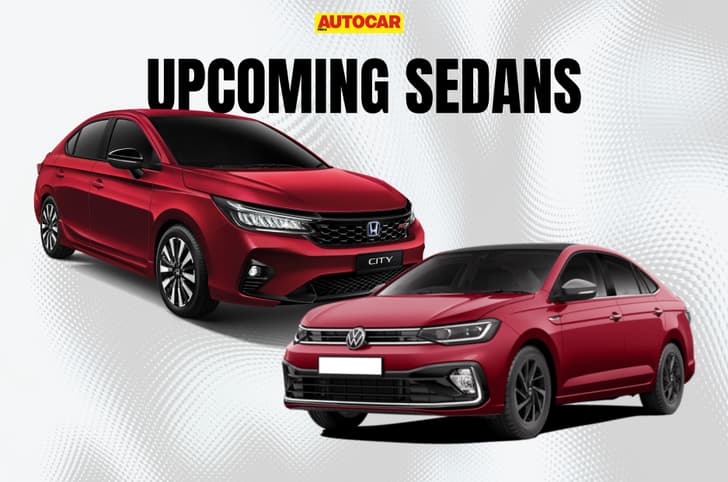
With 80 km a day, mostly on highways and a 600 km run most months, you need a safe, steady sedan that feels good at speed and does not force a sunroof. In that brief, the Honda City V CVT with Honda Sensing fits best because it gives you ADAS without a sunroof and stays calm and secure on fast roads.The Cityโs steering is light in town but feels natural and sure as speed builds, and the car remains composed over rough patches. The cabin is well-made, and you get core safety features like six airbags and stability control.Do note: the City is not the most powerful in this price band, so if you want very quick bursts for overtakes, you will need to press the engine harder, and the CVT can sound loud when you do.If you want stronger power and a more connected feel and can give up ADAS or the no-sunroof requirement, look at the Volkswagen Virtus 1.5 TSI DSG or Skoda Slavia 1.5 TSI DSG. They feel very strong on the highway, and their steering has more weight, but they miss ADAS, and top versions will add a sunroof. Overall, for your highway-heavy use, ADAS and no-sunroof requirement, the City V CVT lines up best.
Mohammed Zuber
โข1wHello Autocar team, I am planning to buy a new car, and I am very much confused between the VW Virtus GT and the Hyundai Creta Auto petrol. I am a proud owner of the Hyundai Creta 1.5 SX petrol 2023. But I feel I need a more punchy car. So, can you please clear my doubts on both of these cars?

Autocar India
If your goal is a stronger, more exciting drive than the 2023 Creta 1.5, you should opt for the Volkswagen Virtus GT Plus. It is a lower, lighter car with a strong turbo-petrol engine and a quick-shifting DSG gearbox. The Creta's turbo-petrol engine option may have a 10hp advantage on paper, but this one feels far stronger in practice. The steering also feels more direct, so on a fast road, the car goes where you point it with less delay. Coming from your current Hyundai Creta, you will immediately feel the extra shove in the mid-range and the sharper response. There are a couple of trade-offs. You will feel bumps a bit more than in your Creta, and though ground clearance is good, it's not as good as that of an SUV.So, for pure driving fun and a real step-up in how it pulls, go Virtus GT Plus DSG. Apart from everything else, it will also feel like a different car, while another Creta will feel too similar to your 2023 model. Do note, there is a facelift for the Vento coming later in the year, so if you can wait a few months, consider doing that.
Bask
โข1wReposting the question I asked a few weeks back. Could you please give your expert opinion? I own a 2020 Tiguan TDI Highline. The practicality of the SUV, with its interior space, top-notch build quality, fuel economy, AWD capability, and driving pleasure, is second to none. VW is no longer selling the 2.0-litre TDI engine with the DQ500 gearbox, so I plan to keep this car for another five years. With the warranty period completed, I would like to remap the engine to 180+ bhp with 400 Nm torque. Will the DQ500 gearbox be able to handle this? Do I need to install a bigger turbo? What other precautions should I consider (suspension, brakes, etc.)?

Autocar India
For a 2020 Tiguan TDI that you plan to keep for five more years, a mild Stage 1 tune to about 180-190 bhp and around 380-400 Nm is the sweet spot, and we would do it as an ECU plus gearbox software tune rather than chasing hardware changes.The DQ500 is a strong DSG in the VW family and, if tuned right, it can handle 400 Nm. The key is the gearbox software: ask the tuner to raise clutch pressure and keep torque delivery smooth, with torque slightly limited in the first few gears. That protects the clutches and keeps shifts clean. At this level, you do not need a bigger turbo. The stock unit can make those numbers safely. A larger turbo only makes sense if you want 200+ bhp, which brings more heat and cost and reduces long-term peace of mind.A few precautions will help. Stick to conservative maps that keep exhaust temperatures in check, especially in summer. If your car has a DPF, make sure the tune keeps it intact and manages soot well; otherwise, you will face clogging. If it does not, still keep the map mild. Shorten service intervals for engine oil, DSG oil, and the AWD coupling oil. Replace the fuel filter more often and use good diesel. Upgrade to better brake pads and fresh high-quality brake fluid; stock discs are fine. Good tyres with a proper speed rating matter more than stiffer suspension at this power. Avoid hard launches and lugging the engine in a high gear at low speed.
Drnatarajan
โข1wI currently own a Volkswagen Taigun 1.5 TSI GT DSG and have been facing issues with jerky low-speed performance in city driving, along with persistent rattles despite multiple service visits. I am considering upgrading to either the Kia Seltos (turbo petrol DCT) or the upcoming Renault Duster (turbo DCT). My usage is around 60% city and 40% highway. My main concern is whether these alternatives will offer a smoother and more refined driving experience in city traffic compared to my current car, or if they will exhibit similar behaviour due to the nature of dual-clutch transmissions.
Autocar India
With 60% city use and you already unhappy with the Volkswagen Taigunโs DSG jerks and cabin rattles, the Kia Seltos 1.5 petrol IVT automatic is the safer bet for you rather than the turbo DCTs. The IVT is a belt-type automatic (essentially a CVT) that has no clutch to slip, so it moves off smoothly in slow traffic and is jerk-free at parking speeds. It is also easier to live with in our stop-go traffic, and power is adequate for your weekend highway runs, but it won't have the punch and pace of the VW Taigun 1.5.If you switch to a Seltos turbo DCT, its relaiively jerky too. Dualโclutch gearboxes like the VW DSG and Kiaโs DCT can still give a small lurch when you crawl in bumper-to-bumper traffic. On rattles, Seltos cabins weโve used have held up quite well, but no car is fully immune to rough roadsTwo trade-offs with the Seltos IVT: it wonโt feel as quick as your 1.5 TSI when you floor it, and on bigger wheels, the ride can feel a bit firm on sharp bumps.About the new Duster: it has a wet-clutch DCT, which is a bit slower to shift than the VW DSG, and it's not as smooth as the Kia IVT. t.Overall, for your mix and your pain points, the Seltos 1.5 IVT lines up best. If you really want a turbo punch, the Seltos turbo DCT is fine, but expect similar low-speed manners to your Taigun.
Avi Bansal
โข2wI am 22 years old, shifting to Gurgaon, and frequently travel to Chandigarh. I have shortlisted the Toyota Hyryder strong hybrid base variant. Any other options and your advice?

Autocar India
Opt for the Toyota Urban Cruiser Hyryder strong hybrid if your priority is low running cost and stress-free ownership, but there are a couple of alternatives depending on what you value more. At your age and usage, frequent Gurgaon to Chandigarh runs plus city driving, the Hyryder makes a lot of sense because it is extremely efficient and very easy to live with. The strong hybrid system can deliver excellent real-world efficiency and even run a significant portion on electric power in traffic, which keeps costs low, and it is smooth, comfortable and reliable over long distances.That said, it is not a very exciting car to drive. The focus is on comfort and efficiency rather than performance, so if you enjoy driving, it may feel a bit dull on highways.If you want something more fun and engaging, look at the Skoda Kushaq or Volkswagen Taigun. Both are great to drive on highways like Gurgaon to Chandigarh and feel more solid at high speeds, but they will be less efficient and slightly higher to maintain.If you want a more premium and feature-rich option, the Kia Seltos or Hyundai Creta are strong alternatives. They offer better interiors, more features and a more modern feel, but again, fuel efficiency will not match the hybrid.
vivek arya
โข2wI want to buy a car but am confused between the Elevate ZX CVT and the Taigun 1.5 DSG (2025), as both are priced almost the same at around โน17.5 lakh on-road. Please suggest.
Autocar India
Both are good choices at that price, but theyโre aimed at slightly different buyers, so it depends on where and how you drive.The Honda Elevate and VW Taigun follow very different philosophies. The Elevateโs 1.5 naturally aspirated petrol with CVT is very well suited to city use. It is smooth, easy to drive and generally more relaxed in traffic. It is competent on the highway, but when you rev it hard for quick overtakes, the typical CVT โrubber-bandโ effect makes the engine sound loud and less refined than youโd like.The Taigun 1.5 TSI with the 7-speed DSG is the opposite. It is not as smooth in bumperโtoโbumper traffic and it can feel a bit jerky at low speeds, but it comes alive on the open road. With about 150 hp and 250 Nm, it has a strong midโrange and much quicker responses than the 121 hp Elevate, so it will comfortably leave the Honda car behind on the highway and makes overtaking effortless.Where the Elevate clearly scores is practicality. Itโs the larger car overall and offers a more spacious rear seat and a significantly bigger boot (around 458 litres vs 385 litres in the Taigun), which makes a noticeable difference for family use and luggage.So, if your priority is comfort, space and mostly city driving with occasional highway runs, go for the Elevate. If you enjoy driving, do frequent highway trips and want performance and refinement at speed, the Taigun 1.5 DSG is the more satisfying choice.
Last Updated on: 30 Apr 2026