
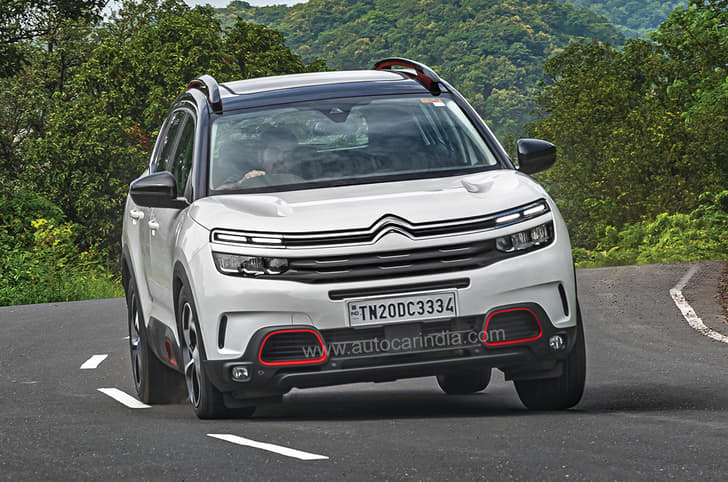
Joining the SUV bandwagon in India is Citroën, the newest player in the market, with its first offering in the shape of the contemporary C5 Aircross. With this crossover, the company aims to offer customers a taste of what the brand is known for – comfort and a smooth drive experience. And unlike other newbie brands like Kia and MG, which quickly established themselves in the country with the help of affordable and value-for-money offerings, Citroën has opted for a premium positioning strategy. With prices ranging between Rs 30.80 lakh and Rs 32.30 lakh, the C5 Aircross is pricier than other monocoque SUVs like the Jeep Compass and Hyundai Tucson.
The highlights of the C5 Aircross from the first drive report were its spacious interiors, its excellent ride comfort and its engine smoothness and refinement. But how is this car to live with, and how does it perform in our exhaustive tests? We find out.
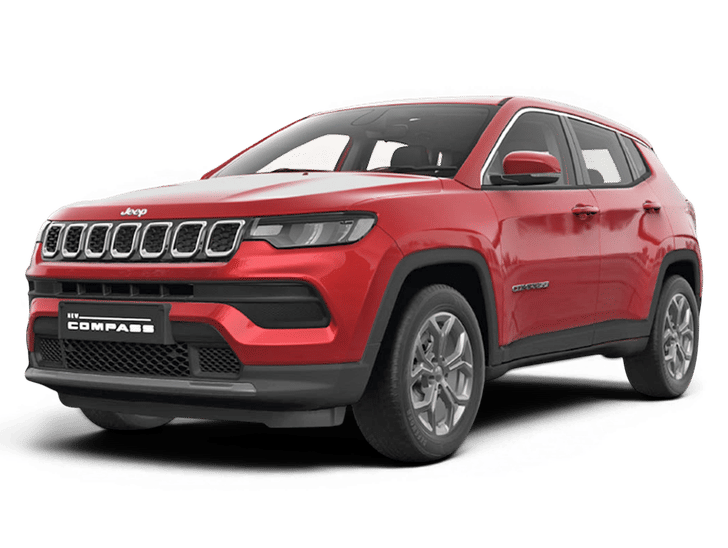
The Citroën C5 Aircross is built on the PSA group’s EMP2 platform that also underpins several front- and four-wheel-drive models sold abroad. This unibody crossover has the largest footprint in its class. To put its size into perspective, the C5 is 95mm and 20mm longer than the Jeep Compass and Hyundai Tucson, respectively; it is 151mm and 119mm wider than the Jeep and Hyundai, respectively, and it boasts of a class-best 2,730mm wheelbase. Its size advantage over the competition lends it the much-desired street cred, and what also make heads turn on the roads are its standout design elements.
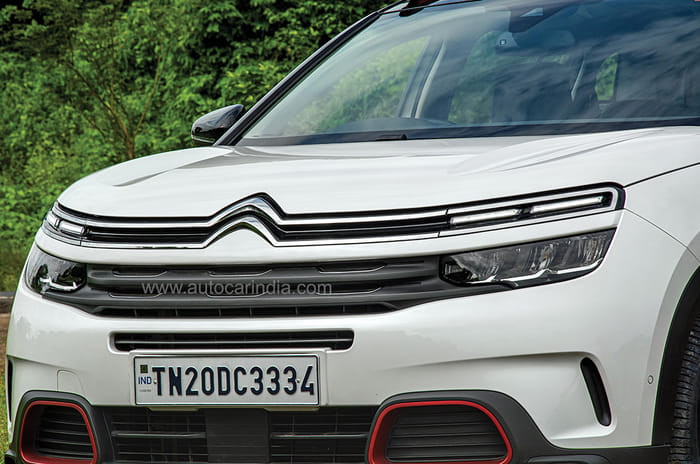
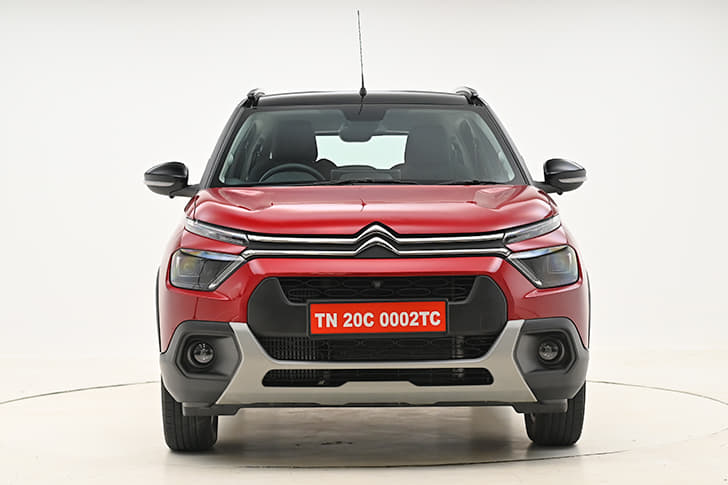
This Citroën cleverly fuses the two-box, high-riding SUV silhouette with unique yet attractive styling quirks and features that add a touch of youthfulness to its character. Its front angle is the most distinctive, with a multi-layered design. Its double-chevron logo extends into two chrome strips and encapsulates the DRLs. The LED headlamps flank its rather unconventional, horizontal grille design. And then there are two artificial inlets, finished in a contrasting-coloured border, on the front bumper that grab the limelight. These quadrilateral-shaped elements are seen all across the exteriors and also make their way inside the car.
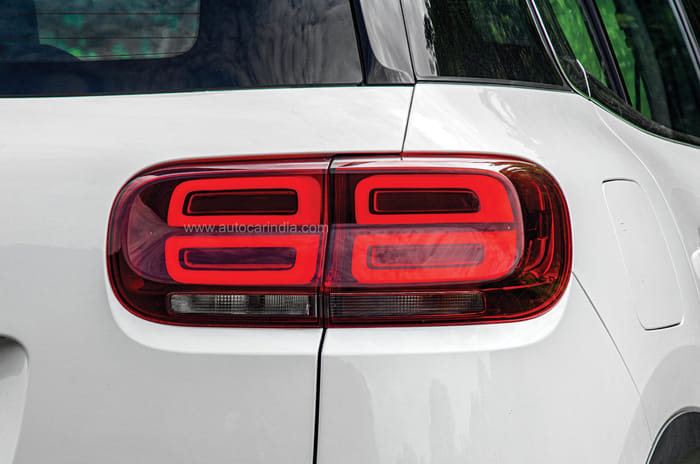
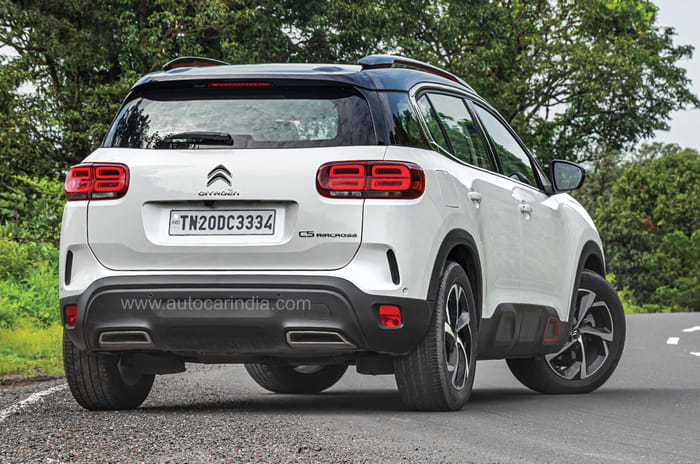
While some might find its front styling a bit excessive, the side and rear profiles, however, are a lot cleaner in comparison. What’s nice is that the thick body cladding, featuring the quad theme, adds some flair to its sides, as do the stylish 18-inch wheels, roof rails, and the chunky chrome strip that surrounds the windows. At the rear, the C5 gets a pair of fake air vents and twin exhaust tips, but the most eye-catching feature here are its tail-lights, which get four 3D quad LED elements.
Step inside the C5’s cabin and it’s a sea of grey, with interesting styling elements and a variety of textures. The reassuring ‘thud’ sound when you shut the door impresses, and so does its well-built cabin with top-notch levels of fit-finish. There’s a mix of soft-touch areas and hard plastics, with a higher percentage of the latter, but because the quality of materials used feels premium, buyers will not feel short-changed. And just like its exteriors, the quad design detailing is scattered all across the cabin, having their presence on nearly every element in some form or another.
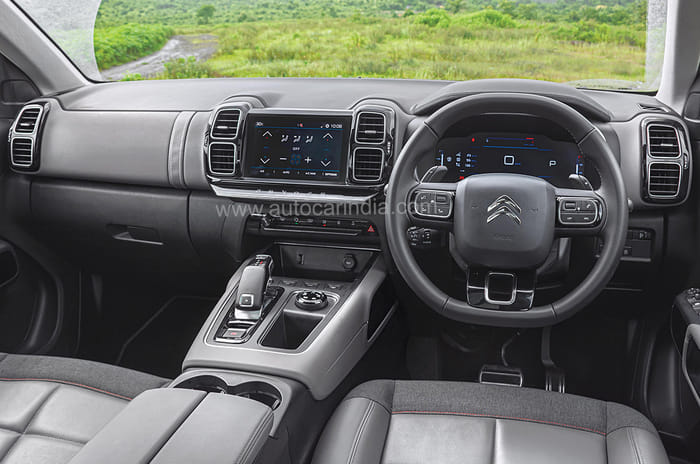
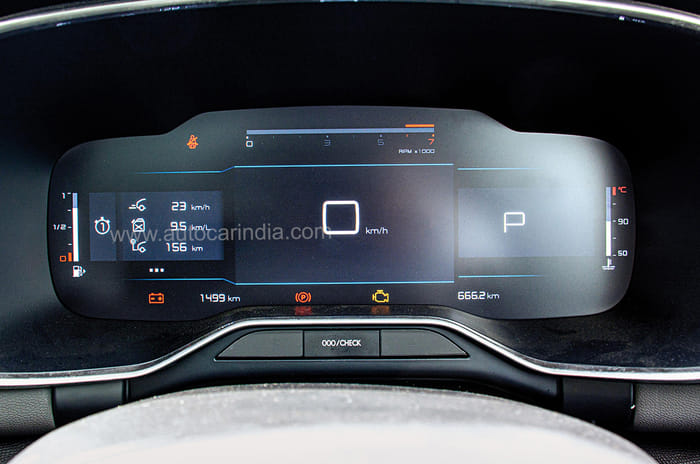
The slab-sided dashboard design is rather unconventional and what grabs your attention are the air-vents that are split into separate cubes (they operate as a single unit), in a bid to look different. The steering isn’t perfectly circular; it is flat on the top and bottom, and it feels great to grip, as do the column-mounted paddleshifters, similar to some supercars from the Ferrari stable. What’s unique about their placement is that, because they aren’t mounted on the steering, they don’t turn with the wheel like in most other cars, but remain fixed. The paddles themselves are quite tall in height for easy reach. Lurking behind the paddles is a 12.3-inch digital instrument cluster, which isn’t half as exciting to look at or in its operation. Some animations are crisp and drivers witness a large readout of the vehicle’s speed. On the whole, however, it feels a bit too basic and display options are far too limited.
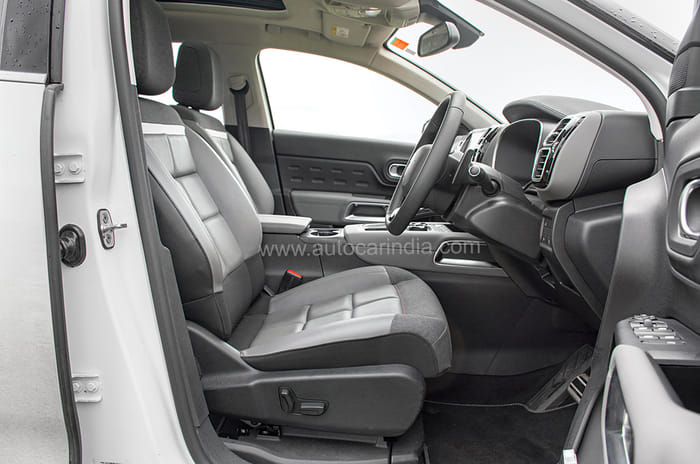
The flattish front seats feature a chocolate bar-like quad shaped stitching, and these are clad in part-leather and part-cloth. These seats are six-way electrically adjustable and are broad, accommodating and very comfortable. Uniquely, the front passenger seat also features height adjustment, but to adjust backrest recline you will need to operate an old-fashioned rotary knob, which isn’t the most convenient.
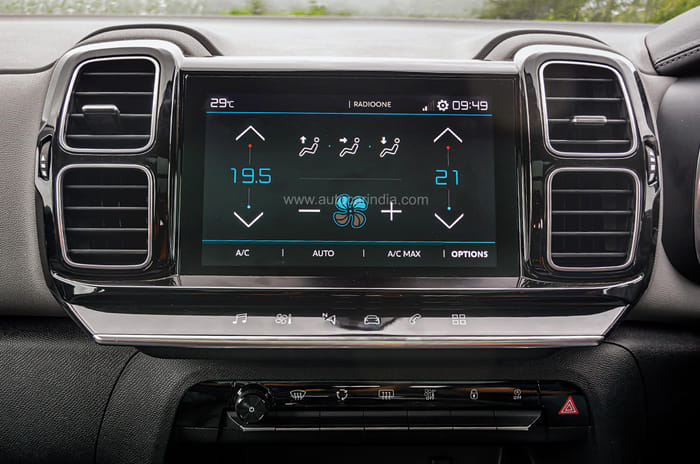
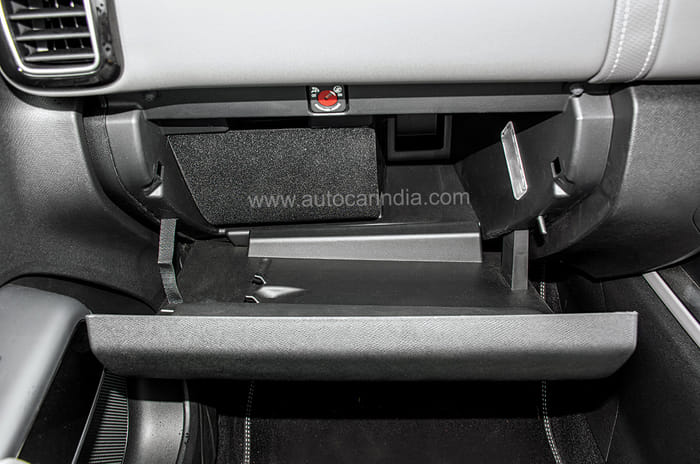
While living with this car, we did come across some niggles; for example, adjusting the cabin temperature is a two-step process – first you need to hit the shortcut button below the touchscreen and then access the climate control menu on the screen. The start-stop button requires a firm press to fire up the engine. And its left-hand-drive origins are glaringly evident in more places than one – the gear selector and engine start-stop button are placed closer to the passenger than the driver, the bonnet opening lever resides in the passenger footwell, and the fuse box occupies almost half of the area inside the glovebox.
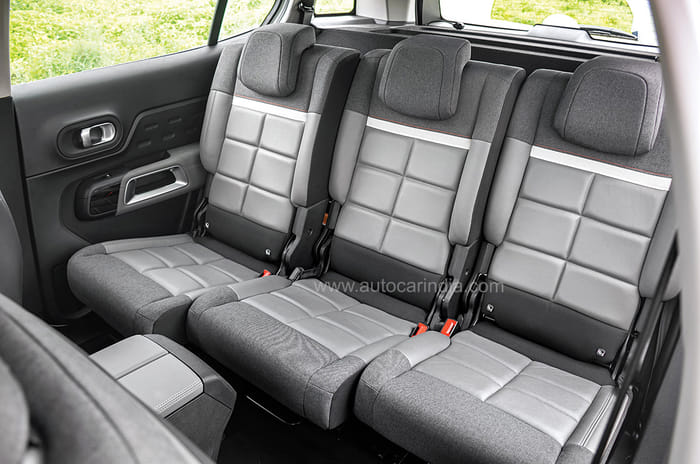
In the backseat, you will relish the sheer width of this cabin and its massive panoramic sunroof, which enhances the sense of space. What’s unique is that Citroën has plonked in three independent and identical rear seats, each having the ability to slide, recline and fold. This innovative and unique setup works best as a 5-seater, no doubt, but as a 4-seater, it isn’t ideal. Being confined to individual seats, outer passengers can’t spread out comfortably and make use of the empty space in the middle; an arm rest is missing too. Also, large passengers won’t find these seats as accommodating as the ones in the front.
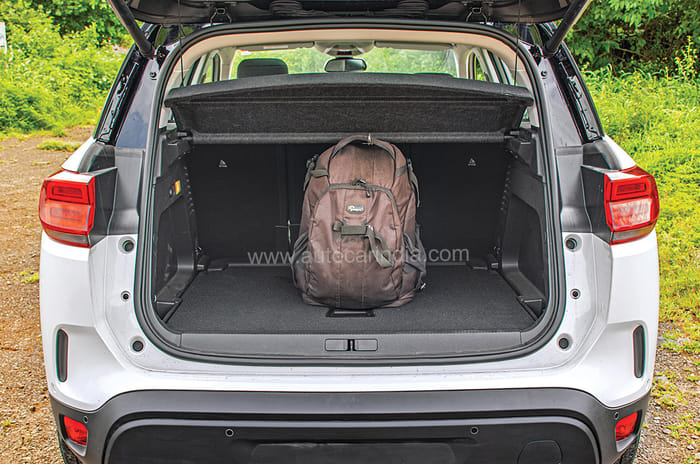
There’s plenty of cargo space as well and while the boot is large, at 580 litres, what is truly impressive is in-cabin storage, which Citroën says adds up to 33 litres. The door pockets, cubby holes and the phone tray are all really big and deep, and the centre console storage box is simple massive; thankfully, it’s illuminated, which makes it easy to find small items, especially when it’s dark.
Introduced in just two variants, Feel and Shine (as tested), they are similarly equipped, with the additions being a panoramic sunroof, LED headlamps and an electric tailgate in the latter. The standard features list includes 18-inch diamond-cut alloys, 8.0-inch touchscreen with Android and Apple connectivity, 6-way electrically adjustable driver’s seat, keyless entry and go, dual-zone climate control, air quality system, cruise control, ambient lighting and one-touch window operation. There is a 12.3-inch digital instrument cluster to speak of as well, however, with limited display options and rather unexciting screens, this feature could have been better executed.
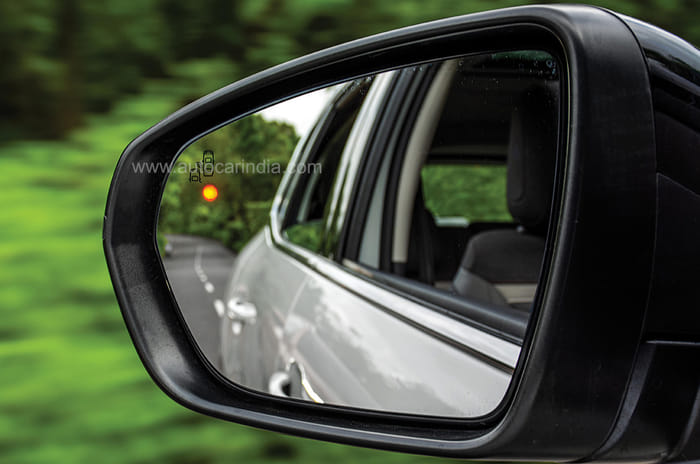
Standard safety features include auto headlamp and wipers, six airbags, ESP, hill-start assist, hill-descent control and blind spot assist. For the latter, there are orange LED indicators on the side mirrors that flash when there is a car or bike in your blind spot.
With the help of its front and rear sensors, the C5 will also steer itself into or out of a parallel or perpendicular spot, and the driver retains control over the brakes and gearbox. In addition, as you reverse, the camera also displays a top-view of the surroundings, which is particularly useful while reversing in a tight spot.
The 1,997cc turbo-diesel impresses with its refinement. Engine sounds filtering inside the cabin are almost negligible, and with no typical vibrations or clatter to speak of, the uninformed could even mistake this motor for a petrol. This motor carries forward its refined character throughout the rev range, and it is only closer to the redline that you will hear a bit of the diesel clatter. While still on the topic of refinement, its sound insulation needs a special mention – thanks to the double-glazed windshield, among other things, the C5’s occupants are isolated from the outside world’s ruckus. And because all the other sounds are so well insulated and the cabin is so quiet, tyre roar gets amplified at higher speeds.
Codenamed DW10 FC, this 2.0-litre engine produces 177hp and 400Nm of torque. Now while these figures might seem par for the course, especially in a vehicle that weights 1,685kg, the beauty of this motor lies in the smoothness with which it performs. What Citroën has done really well is married this engine to the Aisin-derived 8-speed automatic transmission, with which it works in perfect synergy.
The engine’s flattish torque curve, from 1,750-2,500rpm, coupled with short gearing make the C5 amply responsive with almost no delay in power delivery. Torque supply is aplenty, and so closely stacked are its gears that even while pottering around town in a high gear, it responds well when you squeeze the throttle to close a gap in traffic, without getting caught off-guard.
For the most part, shifts are barely perceptible and with a light foot these upshift at around 1,800rpm. While there is a full manual mode on offer, it will automatically upshift as it nears the redline or downshift when the revs fall too low.
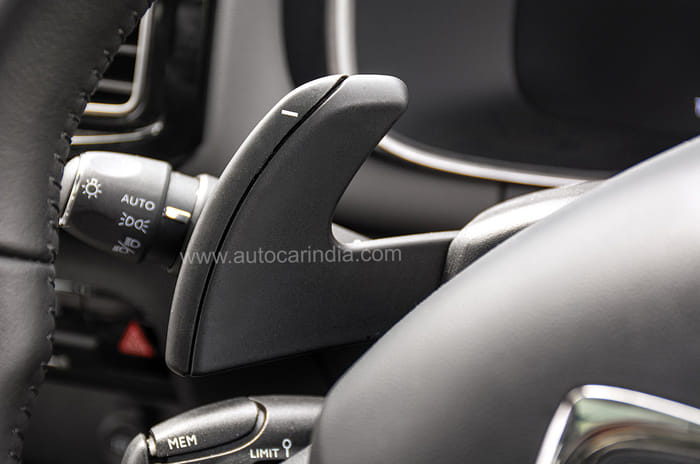
The C5 also gets paddleshifters and these provide a degree of manual control over the transmission. However, the shifts aren’t very quick, and because this auto is clever enough by itself, you’ll seldom find the need to use these.
In addition to the Normal mode, there are two other drive modes on offer – Eco and Sport. While there is a small difference between Eco and Sport, in terms of part-throttle responsiveness (the latter feels a bit quicker), shift from Normal to either of these two modes and the difference is barely perceptible.
Like many other cars, under full throttle, all these modes are over-ridden, and the C5 throws up similar acceleration timings on our testing equipment.
While this motor’s butter-smooth power supply makes it a comfortable tourer, it also packs in strong performance up its sleeves. Drivers with a lead foot will witness torque steer in the lower gears, as the front wheels struggle to put the power down and the traction control light blinks incessantly on the instrument cluster. Flat-out, the C5 can accelerate from 0-100kph in just 9.61sec. Its rolling acceleration times of 5.89sec and 7.71sec from 20-80kph and 40-100kph, respectively, are equally impressive, making it significantly quicker than rivals like the Jeep Compass and Hyundai Tucson.
What community is saying on the C5 Aircross?
Citroën claims that the C5 delivers a ‘flying carpet ride’, and while this might seem like marketing speak, in reality, its ride comfort is simply phenomenal and unequivocally, the best around. What makes the C5’s ride so good are the progressive hydraulic cushions. These cushions essentially replace the mechanical bump stops (usually made out of rubber) with hydraulic chambers. Interestingly, the front suspension uses two hydraulic chambers on either side of the shock absorbers – one for compression and the other for rebound, whereas there’s only one chamber at the rear for compression. These hydraulic chambers really shine when the car goes over deep or sharp surfaces at speeds, and it is at those times when you truly appreciate this setup’s bump absorption prowess. There’s no body shock or a jarring thud felt inside the cabin. This crossover swallows road shock better than most cars we’ve experienced, even from those that are two to three segments above.
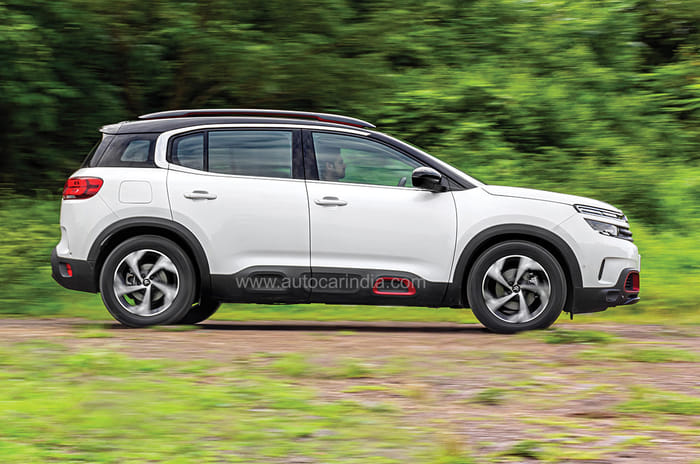
Over most other scenarios, the C5’s soft spring and damper setup flatten the road imperfections by themselves, offering a cushy drive experience. Up the pace, and the C5 tends to waft a bit over wavy surfaces, but it’s never excessive and body control on the whole is good. The steering remains oily smooth and light at all speeds. And when you corner with verve, it does roll a bit, on account of its soft suspension setup. With an aggressive driver behind the wheel, the traction control light is often seen flickering incessantly on the instrument cluster. It also tends to nose dive as you brake hard, and truth be told, this car is best enjoyed at six- or even seven-tenths of its potential; a Jeep Compass it is not.
To enhance this Citroën’s traction, it comes equipped with ‘Grip Control’ modes, which alter its ESP and traction control settings in scenarios such as mud, grass, snow and sand. These, plus the C5’s chunky 235/55 R18 tyres and the massive 230mm (unladen) ground clearance boost its ability to tread off the beaten path. However, with power being delivered only to the front wheels, it doesn’t have the absolute go-anywhere capability like other four-wheel-drive SUVs at this price point.
The brakes perform adequately for the most part, with a predictable pedal feel. Occasionally, you will find the brakes grabbing and bringing the car to a halt a bit too abruptly, particularly while slowing down at crawling speeds.
The gearbox has been internally codenamed EAT8 which stands for ‘efficient automatic transmission 8’, but does this transmission aid fuel economy as its name suggests? In our city driving cycles, the Citroën managed a rather impressive 10.3kpl. Owing to its impressive responsiveness in the city, you will seldom need aggressive throttle inputs to make quick overtakes or dart into gaps in traffic. Aiding city efficiency further is an automatic engine start-stop function that is seamless, responsive and vibration-free in its operation; hence, you won’t mind leaving it on while the car is stuck at a traffic light for a long duration. A peculiar behaviour we noticed is that this feature is a bit too eager to perform and often switched off the car while slowing down, even before coming to a halt.
The story is a bit different when it comes to highway fuel economy, which is 12.6kpl; with eight gear ratios, you’d have imagined a much higher figure, especially after the tall city efficiency. However, the good news is that this automatic is spinning at a lazy 1,500rpm in eighth gear while cruising at 100kph, but what’s interesting to note is that only the seventh and eight gears are overdrive ratios.
So, in a scenario when you are cruising at a steady pace, the C5’s efficiency will be higher. However, on two lane highways where speeds aren’t constant, the C5 will often be in lower gears to make quick progress, and that takes a toll on its fuel efficiency.
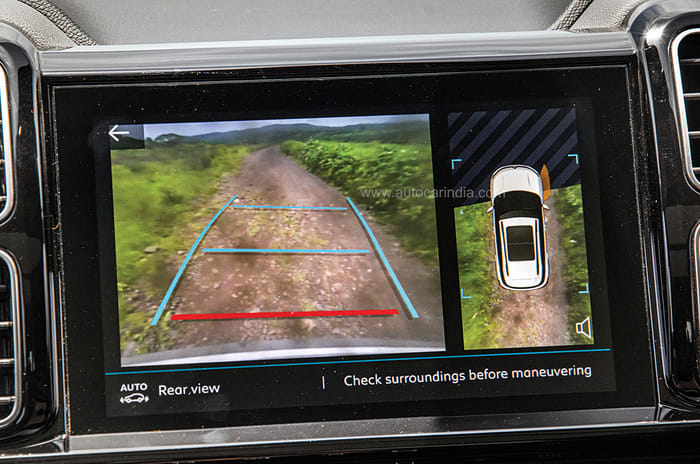
8.0-inch touchscreen is rather basic in its outlook but its various menus are easy to navigate through, thanks to the shortcut keys on the touchpad below. The touch sensitivity and responses are good, and even the sound output from the six speakers is par for the course. What’s unique is that the top-view display acts as a surround camera: it stitches the side views as you reverse, which makes parking a breeze.
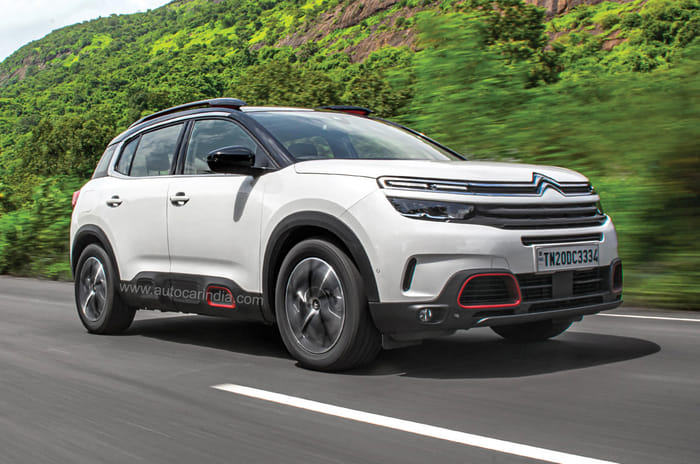
Without a doubt, the C5’s outstanding ride comfort is its highlight, and its bump absorption ability sets a new benchmark for cars not only in its segment, but also for those from a few segments above. What’ll also blow away buyers is the diesel engine’s smoothness and refinement, the seamless automatic transmission and the effort-free steering. Its touring abilities are further enhanced by strong engine performance, a high ground clearance, and some clever traction-enhancing gadgetry. Its comfortable front seats, large boot and ample features further add to its strengths.
In its quest to be unique, this Citroën does have its fair share of quirks. While some of these can easily be overlooked, ones like the three individual backseats could be a deal breaker for some chauffeur-driven folks. The biggest hurdle for Citroën’s debut model, however, is what it costs. Compare it to its nearest rivals, like the Jeep Compass and Hyundai Tucson, and the C5’s price is way out of the ballpark. Sure, the C5 is larger in dimensions and more spacious, but both its rivals offer more in terms of engines, transmissions and all-wheel-drive capability. Citroën’s wafer-thin support network doesn’t help its case either. In the C5’s favour though, it’s a car that needs to be experienced to really be appreciated. It is very competent as an urbane crossover, and if it is uniqueness that you’re after, the Citroën C5 Aircross delivers in abundance.
 Saumil Shah
 Soham Thakur
 Sergius Barretto