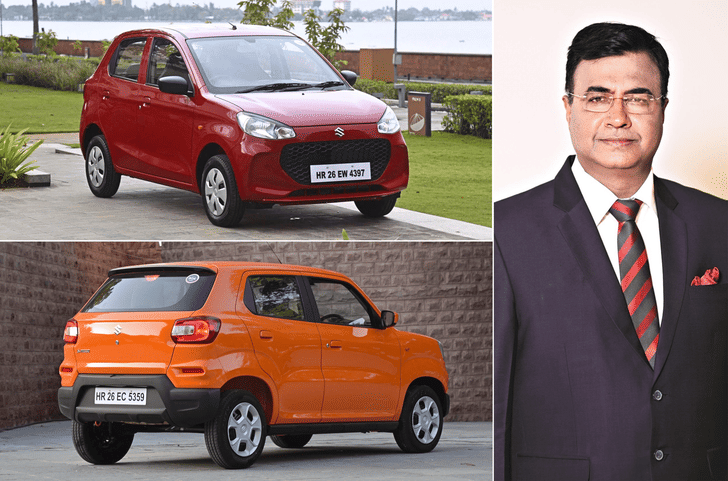
Maruti Suzuki expects the upcoming GST rate cut on automobiles to trigger a fresh wave of car ownership in the country, with entry-level vehicles becoming substantially more affordable. Entry-level car sales had been on a steady decline for the past few years due to affordability factors, and Maruti Suzuki, the largest player in this space, had often voiced concerns about the muted growth of the entire passenger vehicle industry. The GST reform can be expected to finally turn things around.
Maruti entry-level cars cheaper by up to Rs 1.29 lakh
S-Presso sees the highest reduction in prices
In Maruti’s portfolio, the S-Presso has received the highest price reduction of up to Rs 1.30 lakh, bringing its starting price to just Rs 3.50 lakh. The Alto K10, meanwhile, gets a price cut of up to Rs 1.08 lakh, now starting at Rs 3.70 lakh. For reference, that’s lower than even the starting launch price of the third-gen Alto when it was introduced for Rs 3.99 lakh in August 2022.
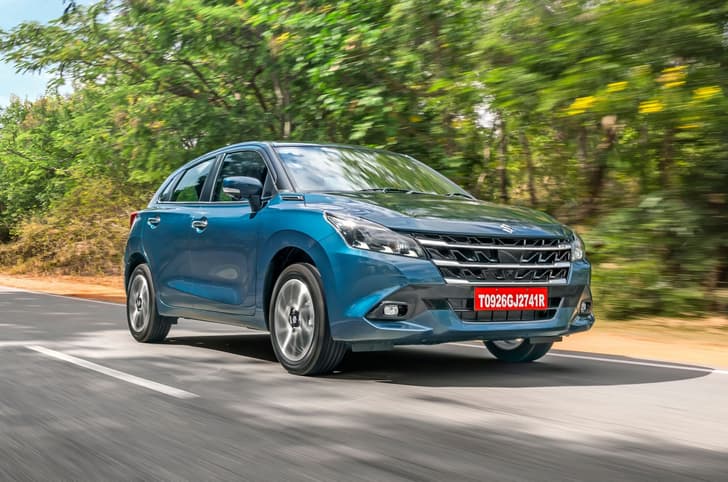
Other popular entry-level and premium hatchbacks, such as the Wagon R, Swift and Baleno have also received price cuts of up to Rs 80,000, Rs 85,000 and Rs 86,000, respectively. This significantly boosts affordability and could unlock pent-up demand in the entry-level space while also drawing buyers who were otherwise looking at the used car space.
At a press briefing recently, Partho Banerjee, senior executive officer, marketing and sales, Maruti Suzuki India Limited, said, “Other than the GST, we have further reduced the prices so as to make the car more affordable to the two-wheeler customers who want to upgrade to a four-wheeler. The price reduction is up to Rs 1.29 lakh, which is almost a reduction of 12.6 percent to 24 percent across different variants.”
Lower down payment and EMIs could further boost sales
Income tax rebate to also improve affordability
Banerjee noted that the biggest barrier to entry-level car ownership had been affordability, which was hit by regulatory costs and higher EMIs. “One was the high car prices due to the implementation of the emission and regulatory norms. Second, due to the high prices, the down payment was also increased, which was a challenge for the customer. And third, the EMI – high EMI is also basically a set-off of the high car prices,” he explained.
Maruti Suzuki is also banking on macroeconomic factors to spur demand. “This year, in the Finance Bill, our finance minister has given a special rebate for income up to Rs 11 lakh, which will lead to higher disposable income in the hands of customers who are targeting to buy small cars,” said Banerjee.
The carmaker expects the market to regain momentum in the coming financial year. “In the next financial year, we feel that the market is going to bounce back to the earlier CAGR (compounded annual growth rate) of 6-7 percent,” Banerjee said.
With inputs from Saptarshi Mondal
 Autocar India News Desk
 Dhruv Dhaka
 Dipan Sur