
Bajaj Auto is staring down the barrel of a complete production halt in August, as a severe shortage of heavy rare earth magnets – a crucial component in electric motors – threatens to derail its electric vehicle manufacturing.
- Bajaj’s EV production may stall amid rare earth magnet crunch
- No short-term fixes in sight with the festive season just around the corner
- Delayed subsidies and policy gaps threaten India’s EV momentum
Bajaj Auto’s EV production at risk amid rare magnet shortage
China curbs affects core component supply.
Rajiv Bajaj has sounded the alarm warning that an acute shortage of heavy rare earth magnets – critical to EV motors – could bring Bajaj Auto’s electric production to a standstill in August. These magnets, largely sourced from China, are now under export restrictions, disrupting the supply chain for high-performance motors.
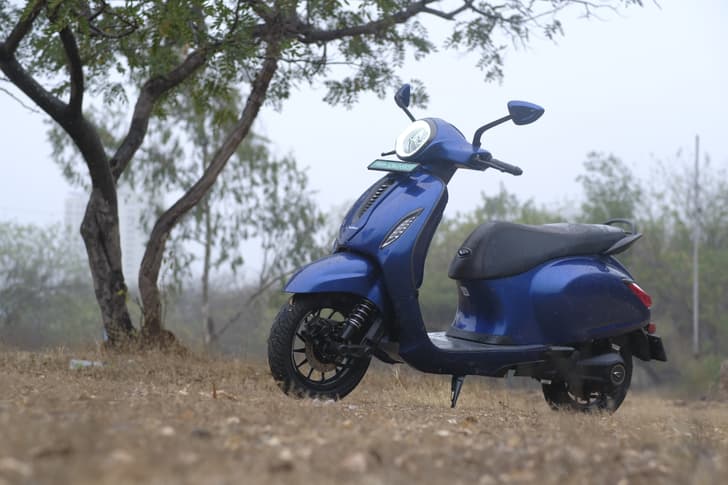
With Chetak being one of the leading electric two-wheelers, Bajaj Auto’s larger scale makes it more vulnerable than smaller players who may still have existing stock.
No quick fixes or immediate alternatives in sight
Overhauling the supply chain remains a complex and challenging task.
Bajaj admitted there are no viable short-term alternatives, and switching to new technologies or suppliers isn’t easy. Redesigning components or overhauling the supply chain would be a costly and time-consuming process, especially with the festive season approaching.
Policy gaps and industry uncertainty
Bajaj calls for clarity.
While some EV makers are seeking relaxations under the PLI scheme – specifically in domestic value addition (DVA) norms – Bajaj Auto hasn’t made such a request yet. Instead, Rajiv Bajaj is calling for greater transparency and timely updates from the government to help manufacturers plan better.
Rising Input Costs, Limited Price Flexibility.
If substitute materials can’t be sourced affordably, production costs will rise. However, passing on the cost to customers in India’s price-sensitive EV market – where adoption still hinges on affordability and subsidies – may prove difficult.
Supplier ecosystem at risk amidst festive season
Peak demand and low supply could cripple momentum.
The magnet shortage has hit just ahead of the festive season, a crucial sales window. A production freeze in August could lead to inventory shortages during key months, impacting revenue and market share.
Beyond Bajaj Auto, small suppliers and EV dealerships – many of whom have invested based on policy continuity – could be severely impacted if the disruption continues.
The timing couldn’t be worse. The shortage comes just ahead of the crucial festive season, when demand typically spikes. A production freeze in August would likely mean inventory shortages during key sales months, denting both revenue and profitability. Bajaj also highlighted the larger impact on the EV supply chain, particularly for small component manufacturers and dealerships that had invested heavily based on government policy stability.
Further compounding Bajaj Auto’s challenges is the delayed reimbursement of state EV subsidies by the Maharashtra government. Despite having passed on the benefits to customers, the company has received almost nothing in return for the past two years.
The current rare earth magnet crunch has exposed a major vulnerability in India’s EV roadmap. With no short-term fixes and the festive season looming, manufacturers need clarity, not confusion. Whether the government steps in fast enough could determine whether India’s EV charge stalls or surges ahead.
 Autocar India News Desk
 Dhruv Dhaka
 Dipan Sur