Kia Cars Under 25 Lakh in India (8)
Discover the best Kia Cars Under 25 Lakh. Our comprehensive guide covers detailed specifications, expert reviews, pricing information, and buying advice for Kia Cars Under 25 Lakh. Find the perfect cars that matches your requirements and budget.


Filter your search


Filter your search


Filter your search
Trending Questions on Kia Cars - Answered by Autocar Experts
I am using Tata Zest XM Diesel 90 PS since November 2024 and the odometer has crossed 1 lakh km. My annual running is around 8000 km but my monthly running sometimes might just be 150km. On day to day basis, I am using the car for commuting to office which is nearby. In a year, I have taken 4-5 long drives with more than 1000 km running that amounts to around 8000km annual running. Now, I have started looking for a new vehicle under 25 lakhs. And I want technologically advanced car with all bells and whistles along with reliability and affordable maintenance. Will BS6 diesel suit my commute pattern? Since I want upgrade from sub-4m range, which vehicle should i choose?
With your annual running of around 8,000km and a commute that is mostly short city trips, a BS6 diesel is not the right choice. Modern BS6 diesels use a diesel particulate filter (DPF) that needs regular long runs at steady speeds to regenerate properly. Your pattern of short, low-speed trips with only occasional long drives increases the risk of DPF issues over time. Petrol cars, hybrid or EV would be a better fit.Given your budget of Rs. 25 lakh and your desire for a technologically advanced car with all the bells and whistles, the Kia Seltos is the most sensible upgrade from your Tata Zest. It is a genuinely premium midsize SUV with a strong feature list, a comfortable cabin and a good balance between city usability and highway capability. It also has a proven ownership track record and affordable maintenance.If you want something a bit more driver-focused, the Skoda Kushaq is worth considering. It is a more engaging car to drive, but it does not feel as premium or as feature-rich as the Seltos.Overall, the Seltos is the best fit for your requirements. It is a significant upgrade from your Zest, it is technologically advanced, it is reliable and it will be easy to live with over the long term.
I currently own a 2021 Hyundai Creta Diesel, which has covered nearly 2 lakh km without any major issues. I am now planning to buy a new diesel car/SUV with a budget of around Rs. 18 lakh (ex-showroom). My usage is primarily long-distance highway driving. I have shortlisted the Mahindra XUV 7XO, Tata Sierra, Tata Harrier, Kia Seltos, and Hyundai Creta. Considering the current market and long-term ownership, which one would you recommend?
For your usage, the Mahindra XUV 7XO diesel is the best fit. You are doing very high mileage with long highway runs, so diesel efficiency and strong performance are the priorities. This Mahindra car is one of the most refined and powerful diesel SUVs in this price range, and it is also a very comfortable long-distance car with a spacious cabin - including a third row of seats - and a strong feature set. The Tata Harrier is also a good highway car with a strong diesel engine and a comfortable ride, but the 7XO is a more refined and better-rounded package overall. However, both these are in a higher segment, which means your budget will only get you a low- to mid-range variant. In the segment below, the Tata Sierra diesel is a newer product and looks very promising, but its diesel engine doesn't feel particularly strong considering its size and weight. The Hyundai Creta is just a facelifted version of your current car and hence won't feel as new, while the Seltos, though new and larger, uses the same engine as your Creta, and like the Sierra, doesn't feel as powerful given the SUV's size. Overall, the 7XO feels like the more premium and more complete product for your usage, but if you're not happy with the features on offer in your budget, try the Seltos instead.
What is the best SUV to buy under Rs. 15 lakh for a tall person who is 6'3" tall?
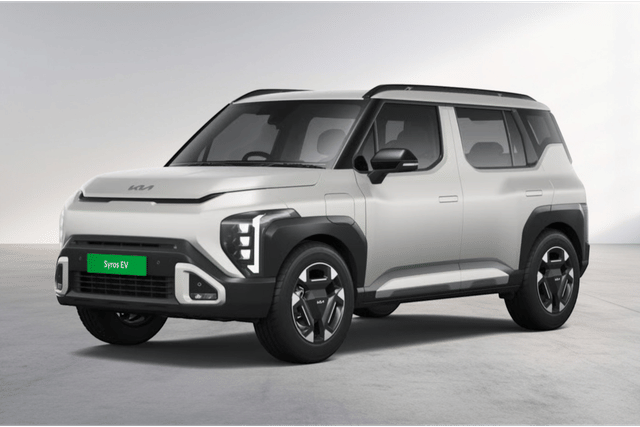
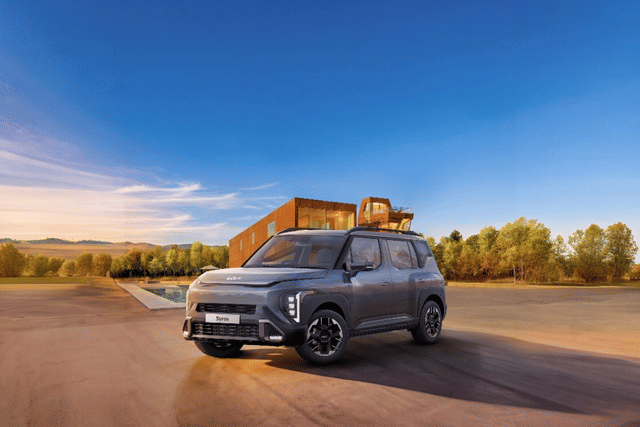
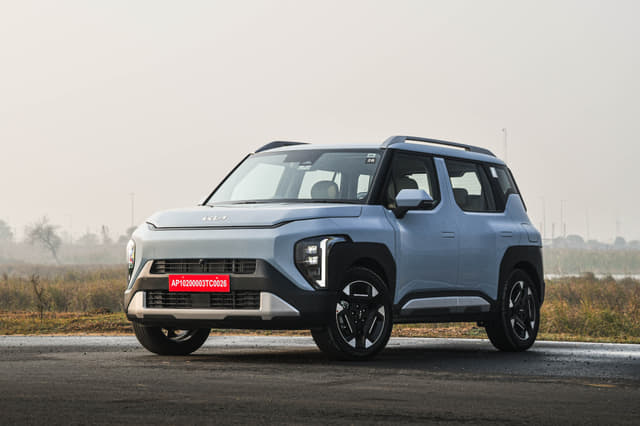
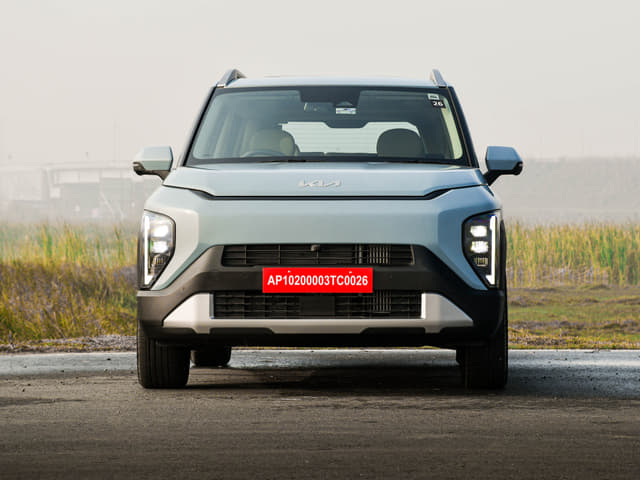
The Kia Syros is a great option for tall occupants. It's got a relatively high roof and will make you feel immediately comfortable. The large glass area also helps, and you can adjust the steering and seats to find a comfortable driving position. Space at the back is also more than adequate for tall individuals. This Kia car also has other plus points like a well-finished cabin, a good feature set and peppy turbo-petrol and efficient diesel engines. Ride comfort is on the firmer side, though.
I am planning to buy a petrol manual SUV with a budget of around Rs. 15 lakh. I am unable to decide between the Tata Sierra, Kia Seltos, and Hyundai Creta. Whichever car I choose will be a huge upgrade, as I currently drive a 2010 Maruti Suzuki Zen Estilo that is 16 years old. My usage is very minimal, around 200 km per month. Which one would you recommend?
With just 200km a month and a 16-year-old Zen Estilo as your current car, the priority should be a comfortable, reliable and easy-to-live-with upgrade rather than chasing the biggest or most feature-rich SUV. The Kia Seltos petrol manual is the best fit here. It is a well-rounded SUV with a comfortable ride, good refinement and a proven ownership track record. It will feel like a huge step up from the Estilo in terms of space, safety and overall driving experience without being unnecessarily large or complex for your low running.The Tata Sierra is a more premium and spacious option, but with such minimal usage, the extra size and cost are difficult to justify. The Hyundai Creta is a solid alternative too, but it will be replaced by a new one next year. The Seltos also feels more premium and is the better value proposition in this price range. Go for the Seltos petrol manual and enjoy a simple, dependable upgrade that will serve you well for years.
I am planning to buy a car with a budget of Rs. 20 lakh, which can be extended up to Rs. 24 lakh if required. My must-have features are ADAS and an automatic transmission. My annual running is relatively low, so I'm confused about whether I should buy a petrol or a diesel car. My main concern is the future of petrol engines with increasing ethanol blending. Since India has already moved to E20 fuel, I'm worried that if E25 or E27 becomes common in the next few years, today's petrol cars may face compatibility or reliability issues. Because of this, I'm considering a diesel car instead. Considering my low annual usage, long-term ownership, maintenance costs, resale value, and the future fuel scenario, would you recommend a petrol or a diesel car? If petrol is still the better choice, are my concerns about higher ethanol blends justified, or are modern E20-compliant engines expected to handle future changes without any major issues?
Go for an automatic petrol car with ADAS, and do not let the ethanol blending concern push you towards diesel. Your low annual running does not justify the higher purchase cost, higher maintenance, and potential DPF-related issues that come with modern diesel cars. Diesel engines are at their best when they are regularly driven on highways and cover higher annual mileage, which is not your usage pattern.On the ethanol question, modern E20-compliant petrol engines are engineered with a margin of safety. Manufacturers design fuel systems, seals, and components to tolerate slightly higher ethanol blends than the official limit. The main impact of higher ethanol content is a small drop in fuel efficiency, not reliability or engine damage. There is currently no official roadmap beyond E20, and if India does move to E25 or E27, it is likely to be a gradual transition, giving manufacturers time to adapt. Your car will not suddenly become incompatible.Within your budget, the Kia Seltos IVT is the best fit. It offers ADAS, a proven petrol automatic powertrain, and a strong value proposition. It is also a comfortable car with plenty of space and a premium cabin. This Kia car has a 1.5-litre naturally aspirated engine paired with a silky-smooth IVT transmission, making it exceptionally easy to drive in traffic.
Last Updated on: 17 Jul 2026