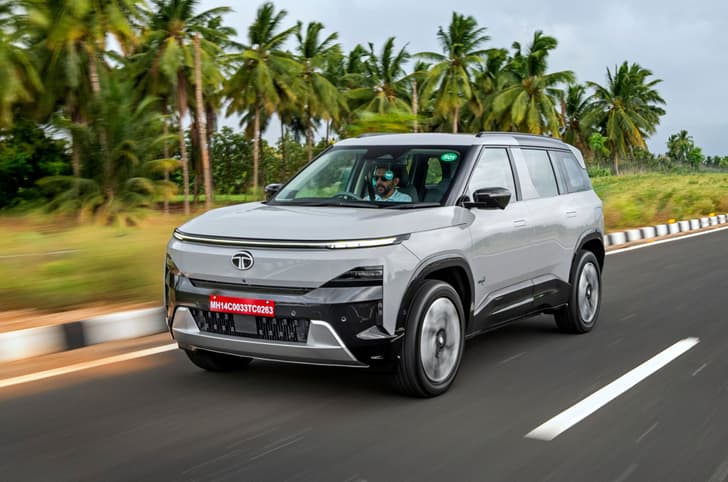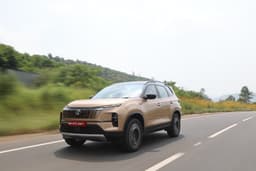

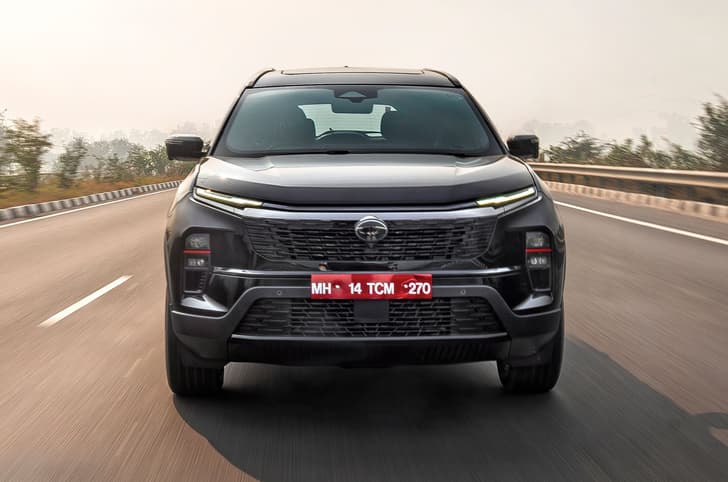
Think of a Tata Safari, and instantly an image of a tall, large and imposing SUV comes to mind, probably also accompanied by a soundtrack of diesel clatter. The Safari has always been predominantly diesel-oriented – the first generation did get a petrol but found few takers. A diesel is still what buyers in this segment prefer, but petrol power is gaining market share. Tata says the large three-row SUV is no longer just for those who pile in the entire family and head across the country. More and more urban buyers want that imposing stance and demand refinement and performance. Not to mention the 10-year ban on diesels in the National Capital Region that is pushing more people towards petrol. So, the question is, can this 1.5-litre Hyperion turbo-petrol engine do justice to the large Safari? We drove it around Delhi to find out.
Tata Safari petrol: Exterior design and engineering – 9/10
The exterior is identical to the diesel, but the overall design looks smart.
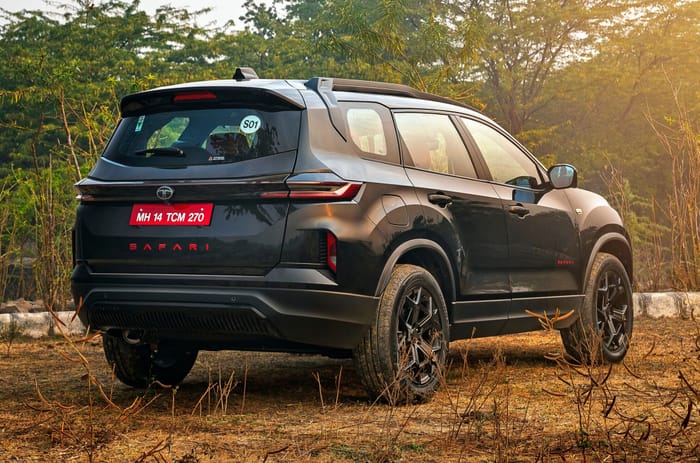
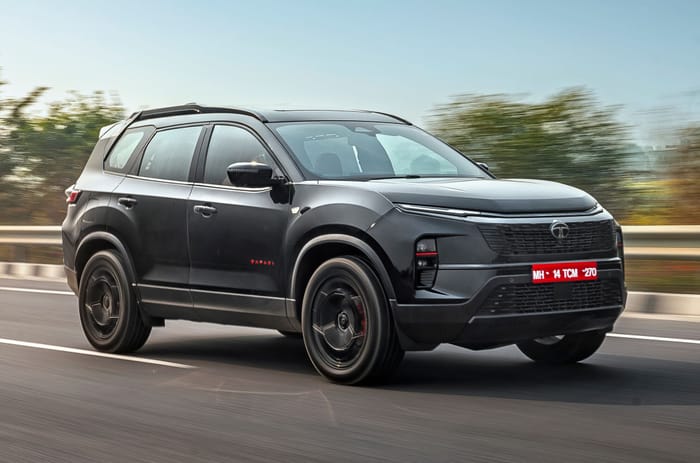
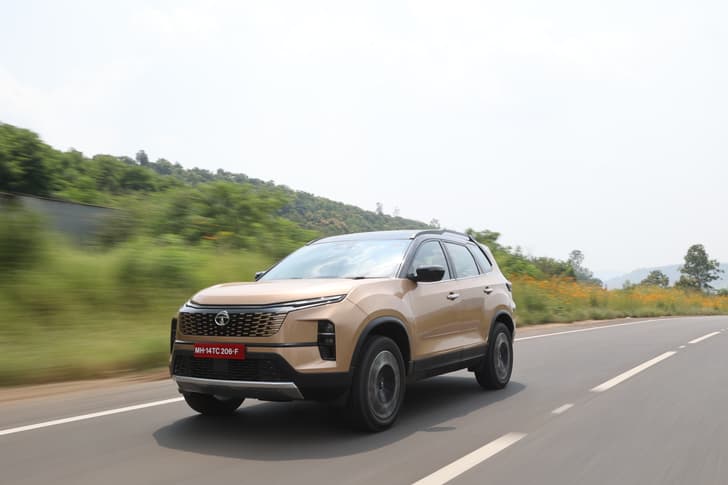
On the outside, the petrol Safari is identical to the diesel. Our test car was the top-spec Accomplished Ultra Red Dark, finished in stealthy gloss black across the body and trim, with splashes of red on the badging. A new Nitro Crimson colour is also available on some of the other trims. Apart from that, it’s all familiar Safari. The facelift it received in 2023 is still looking relatively fresh, but more could have been done to differentiate it from the diesel.
Viewed head-on, it is very similar to the Harrier, with a slim connected light bar and a large grille with intricate detailing. From all other angles, the Safari is a taller and therefore more imposing vehicle. The roofline rises from front to rear, accentuated by the roof rails, with a kick-up at the C-pillar to accommodate the third row of seats. Nineteen-inch wheels are standard from the Accomplished X+ trim onwards, with a blacked-out finish on our Red Dark variant. No surprises at the rear either; full-width LED tail-lamps differ slightly from the Harrier’s, and a neat script spells Safari. The petrol gets no additional badging to set it apart. Overall, the design is ageing nicely, and that big, imposing stance still draws eyeballs.
Tata Safari petrol: Interior space and comfort – 9/10
The interior is comfortable with a very usable third row, but some ergonomic quirks persist.
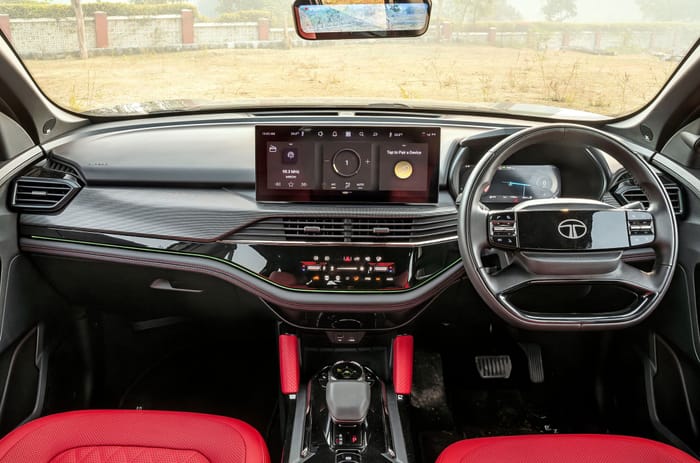
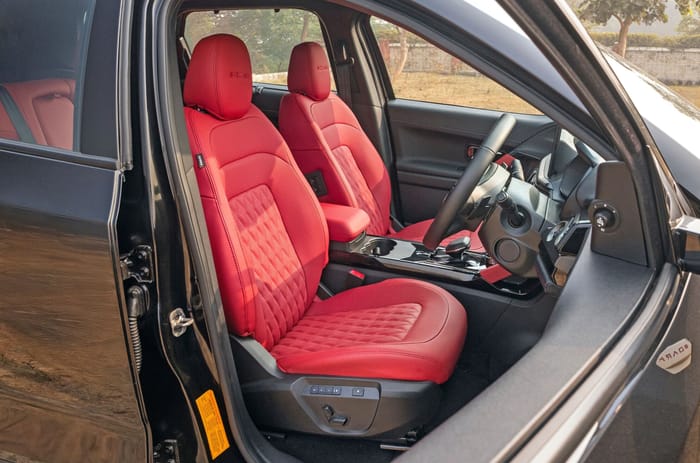
The interior is familiar Safari fare, with our Accomplished Ultra Red Dark test car sporting a black theme for the dashboard, steering wheel and door cards, paired with bright red leatherette upholstery covering the seats and door card inserts. The faux wood trim of the regular Safari is replaced with a grey-black trim piece featuring a fine silver pattern, which, along with the piano black finish on the touch panel and centre console, looks premium. The Accomplished X trim continues with the same brown and Oyster White theme as the diesel, while the new Accomplished Ultra gets a gold and Oyster White theme.
There are a few ergonomic quirks to contend with, such as a wireless charger that is hard to access and the 10.25-inch digital driver’s display, which is set too far into the dash, making the small font hard to read. Then there are the rather small touch-based buttons for the HVAC system and other functions, which are difficult to use on the move. The centre console is also shaped in a way that the driver’s knee makes frequent contact with it, particularly on bad roads. Around the cabin, a few fit and finish inconsistencies also exist.
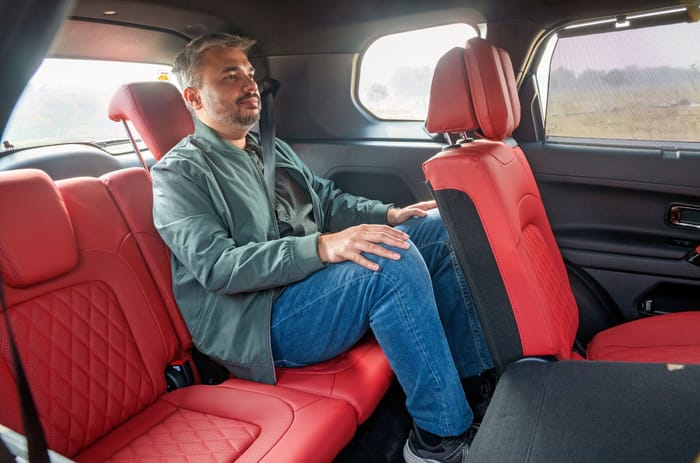
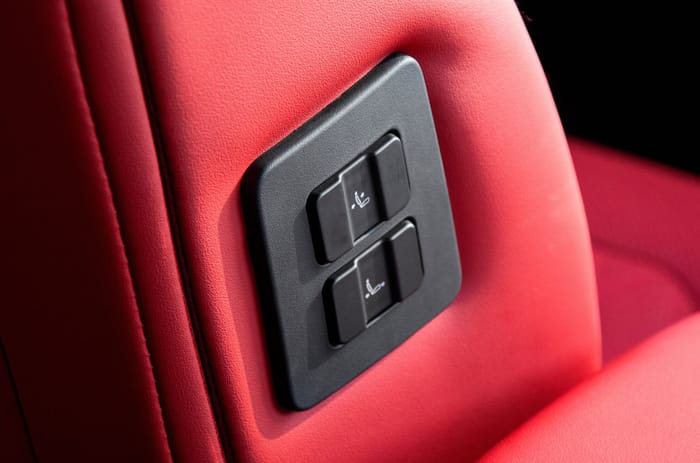
This aside, overall comfort is good. The driver sits high with a commanding view of the road on a seat that is wide and comfortable. Six-footers might find the front seat squabs a little short, but they are adequate for those of average height. The rear seat is wide, comfortable and supportive, with plenty of room all around. The outer two passengers also get winged headrests, but as before, the centre passenger goes without a headrest. Captain’s chairs for the second row are also available as an option on the Accomplished X+ trim and above, and they come with a ventilation function.
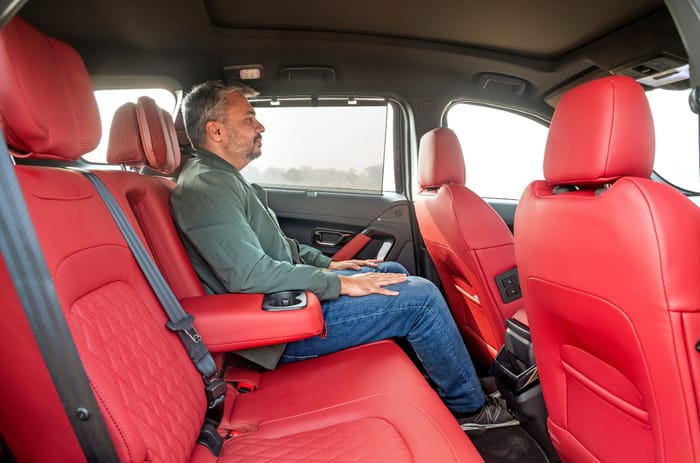
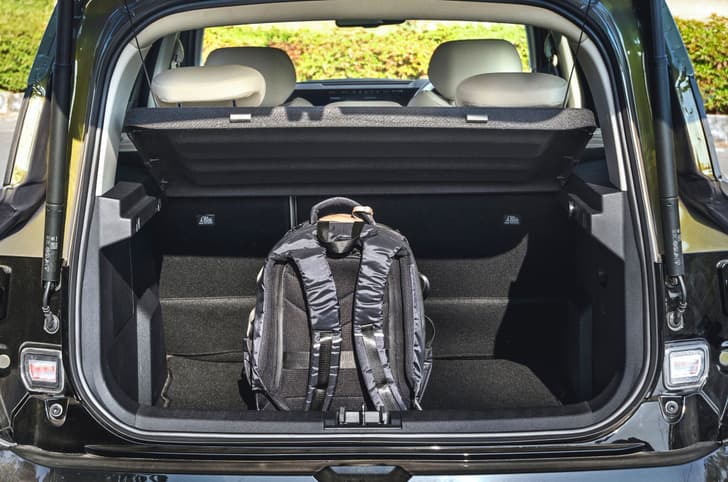
Access to the third row via the flip-down seat is straightforward, and once back there, knee room is quite good with the middle row slid forward. You do sit in a knees-up position, but it is still better than most SUVs of this class. Helping matters is a set of dedicated AC vents with their own blower controls. With the third row up, however, expect to carry only a couple of soft bags in the boot. With the seats stowed away, boot space rises to a substantial 680 litres – the same as the diesel.
Tata Safari petrol: Features and safety – 9/10
Now gets a few goodies from the Harrier EV to add to its already extensive list of features.
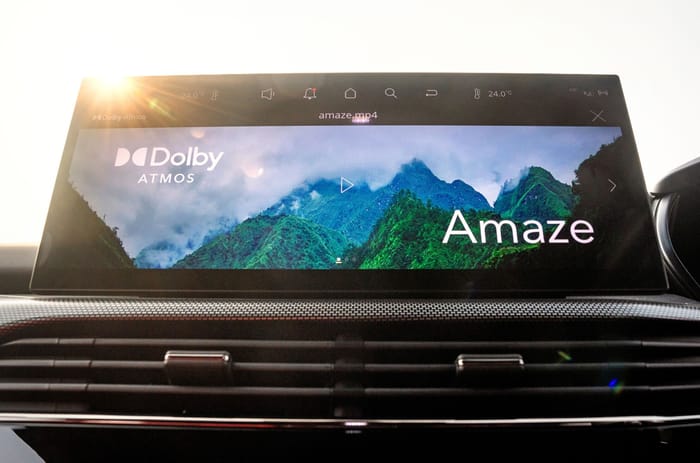
In its switch to petrol power, the Safari has also gained a few new features first seen on the Harrier EV. Chief among these is the 14.53-inch Samsung Neo QLED infotainment screen – its resolution is sharp, colours are vibrant, and it is very responsive to use. A wide array of built-in apps also brings the ability to stream movies and other content when parked, played through a 10-speaker JBL sound system with Dolby Atmos that sounds superb.
Also new is the digital rearview mirror, which doubles up as a built-in dash cam. The feed on this display is sharp with no noticeable lag, but to get a glare-free view, it needs to be adjusted upwards, which then compromises the front dash cam’s angle. A 360-degree camera is also included, though it isn’t sharp; however, the front and rear cameras now get washers, which will certainly help during the monsoons.

Other features include a powered driver’s seat with a memory function, which now also remembers your outside rearview mirrors’ (ORVM) position. The outside mirrors also now dip to show the kerb when reverse is selected, but they occasionally fail to rise again after shifting to drive. Apart from these new additions, the Safari remains just as well-equipped as its diesel counterpart. The 10.25-inch driver’s display gets a blind-spot monitor view and can even show full-screen Google Maps. Rounding out the feature list are ventilated front seats (plus ventilated second row on the 6-seat version), a cooled centre console bin, a panoramic sunroof, customisable ambient lighting, voice assistance, rear sun blinds, and more.
Typically Tata, there is no skimping on safety kit, with six airbags, four-wheel disc brakes, ABS with EBD and ESP standard from the base Smart trim. The Adventure X+ adds ADAS with adaptive cruise control, while the Accomplished X+ upgrades to Level 2 ADAS and seven airbags. The ADAS worked well during our testing, steering between lane markings on the highway without any unexpected interventions in city traffic. Like the diesel, the Safari petrol has also scored a full 5-star crash safety rating from Bharat NCAP.
Tata Safari petrol: Performance and refinement – 8/10
The Hyperion turbo-petrol delivers surprisingly strong performance even with six on board.
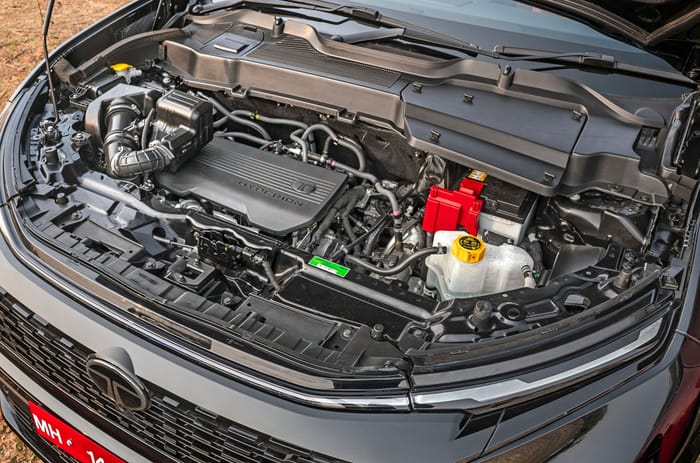
Powering the Safari is Tata’s new Hyperion 1.5-litre turbo-petrol engine that we recently experienced on the Tata Sierra. For this application, it has been tuned to deliver a bit more performance, as evidenced by the figures of 170hp at 5,000rpm and 280Nm from 1,750 to 3,500rpm – gaining 10hp and 25Nm on the Sierra. To counter the Safari’s heavier weight, the power and torque curves have been profiled to deliver a healthy 160Nm from just 1,000rpm. If you think a 1.5-litre engine in a large three-row SUV is inadequate, in practice it is anything but.
The engine’s strong bottom-end grunt helps the Safari pick up pace effortlessly. There is almost no turbo lag, and power delivery is linear. This also means that it doesn’t have the mid-range turbo punch or the top-end some other turbocharged engines deliver, but it certainly isn’t lacking in performance. The engine only revs to 5,000rpm, but with so much of its grunt down low, performance doesn’t suffer. Evidence of this is the impressive 0-100kph time we managed during our instrumented test (not to Autocar India standards). We even drove it with six passengers on board, and even then, performance felt more than adequate. Throttle response is good, too, but we would have liked a little more difference between the three drive modes. Additionally, there are three terrain modes for light off-road use.
Unlike the Sierra, the Hyperion in the Safari can be had with a 6-speed manual, but our pick would be the smooth-shifting Aisin-sourced 6-speed torque-converter automatic. The gear ratios are well matched to the engine; it doesn’t upshift too early and the software does a good job of keeping it in the meat of the power band. You rarely feel the need to correct its actions manually using the paddle shifters. Doing so however, automatically switches the drive mode Sport, taking longer than usual to return to Auto. Holding the right paddle to switch it to Auto didn’t do the trick on our unit.
Refinement is also very good with barely any vibrations across the rev range. The engine is a slightly too audible for a petrol, but it never sounds coarse or unrefined. With four-wheel discs, braking performance is good too.
Tata Safari petrol: Fuel efficiency – 7/10
Tata claims best-in-class fuel efficiency, but official figures are yet to be revealed.
Tata has yet to reveal the claimed fuel efficiency figures for the Safari petrol, and our short drive didn’t allow us to test it ourselves. Tata does claim best-in-class efficiency and has even set an India Book of Records-certified figure of 25kpl in controlled conditions; however, this is far from representative of real-world usage. We will test these claims during our road test. Curiously, throughout our testing, the average fuel efficiency readout refused to change from 8.0kpl.
Tata Safari petrol: Ride comfort and handling – 8/10
Superb ride quality and stability remain; handling improved by the petrol’s lighter curb weight.
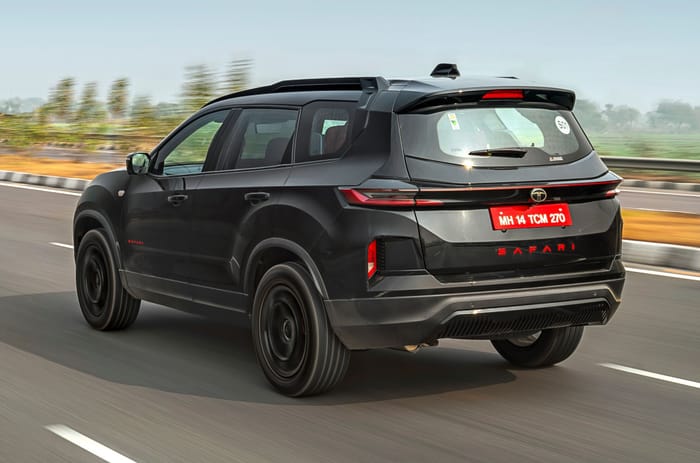
Just like the diesel Safari, ride quality on the petrol is superb. The platform’s Land Rover roots come through, with a sense of solidity when driving over bad roads. An underlying firmness comes through at slow speeds – amplified slightly by the 19-inch wheels – but at no point does it become uncomfortable. Out on the highway, the Safari really shines. Damping is excellent and body movements are well controlled, making it a superb long-distance cruiser. Even at triple-digit speeds on the Delhi-Mumbai Expressway, it felt stable and confident, holding its line through high-speed bends.
The petrol version is also some 80kg lighter than the diesel equivalent, which should help it feel more agile on tighter, twistier roads, though we didn’t encounter any on this drive. When cornering at moderate speeds, body roll is well contained, and the 245-section tyres provide good grip. The calibration of the electric steering system is also excellent – feeling light but weighing up progressively and providing confidence during high-speed lane changes.
Tata Safari petrol: price and verdict – 8/10
The petrol engine widens the Safari’s appeal while retaining all of its core strengths.
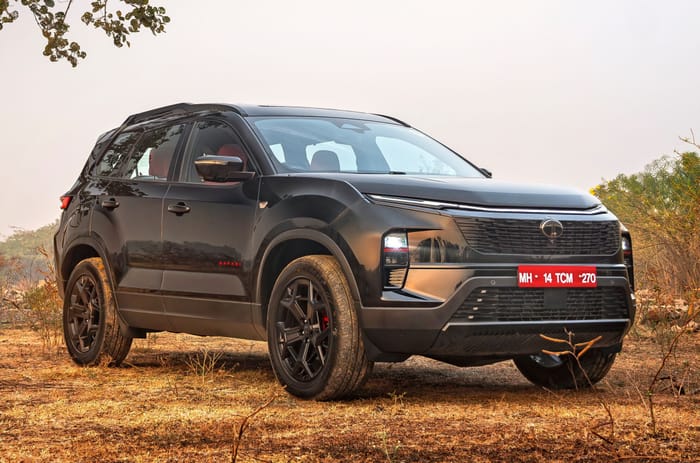
Pricing for the petrol-powered Safari has not been announced at the time of writing. The petrol line-up spans seven variants, starting with the base Smart trim, while the top-spec Accomplished Ultra and Accomplished Ultra Red Dark are new additions over and above the diesel range, where the Accomplished X+ sits at the top. We expect prices to start at around Rs 14 lakh, topping out at Rs 25.5 lakh for the fully loaded trim – around Rs 50,000 to Rs 80,000 less than the diesels.
Adding a petrol engine to the Safari line-up has significantly broadened its appeal. The familiar high points are all there – commanding road presence, a supremely comfortable ride and a spacious, well-equipped cabin with a genuinely usable third row. Despite its bulk and the engine’s relatively low cubic capacity, it delivers well on performance as well as refinement. There are still some ergonomic quirks to contend with, but they aren’t deal-breakers. So for those in the market for a three-row SUV who prioritise refinement and performance over fuel efficiency, the Safari petrol is well worth a serious look.
 Gavin DSouza
 Sergius Barretto
 Saumil Shah
 Soham Thakur