Last Updated on: 13 Jul 2026
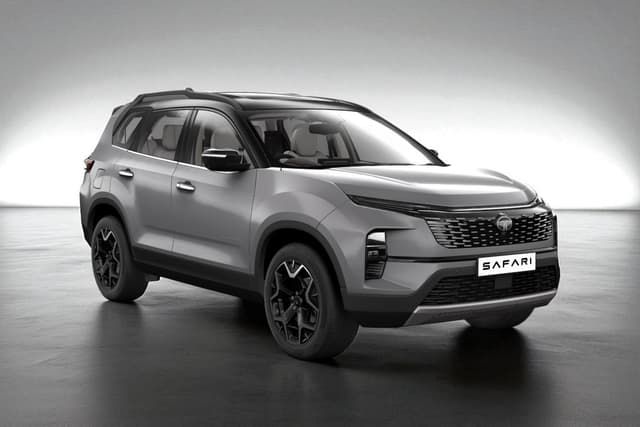
Tata Safari Mileage
The Safari’s diesel engine prioritizes relaxed cruising and torque-rich delivery. Built for long-distance comfort, it offers reasonable fuel economy considering its size and segment, making it a strong highway performer.
Tata Safari Mileage Summary
| PowertrainThe combination of engine type, fuel, and transmission that powers your vehicle and determines how it drives and what it runs on. | ARAI MileageMileage certified by the government, tested under controlled lab conditions. Real-world mileage will vary. | User Reported MileageMileage figures are reported by vehicle owners and represent the approximate real-world efficiency you may experience. Actual mileage will vary based on driving conditions, habits, and vehicle condition. |
|---|---|---|
Diesel-Manual 1956 cc | 16.3 kmpl | 14.91 kmpl |
Diesel-Automatic (Torque Converter) 1956 cc | 14.1 kmpl | - |
Tata Safari Mileage by Variants
Tata Safari Official Brochure
Download the complete brochure with specs, features, and variants.
Calculate your fuel cost for Tata Safari
Tata Safari Mileage - User Reviews
driving safari for 15 days now. in city gives around 9 to 11 kmpl and you need to drive light pedalled to get that. highway rides have been breezy and churning out 17 to 18 kmpl. good highway car but city mileage is not great
Read moreTell us about your experience
Tata Safari Alternatives with Similar Mileage
Tata Safari news
Tata Safari videos


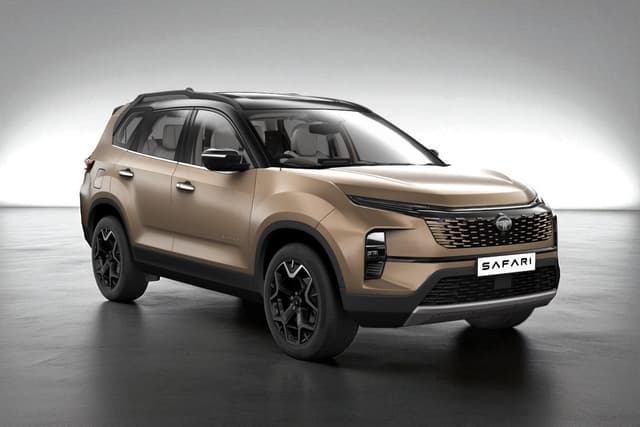
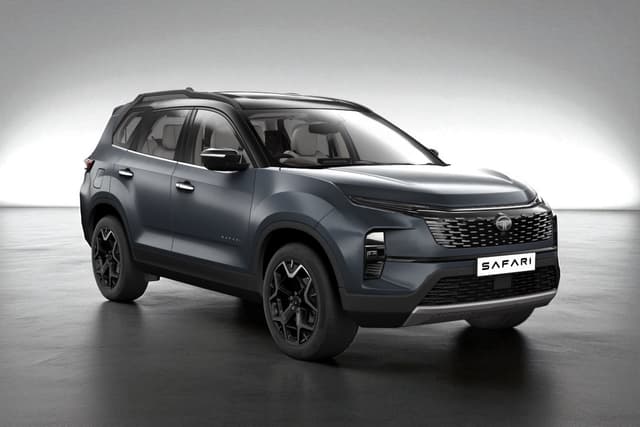
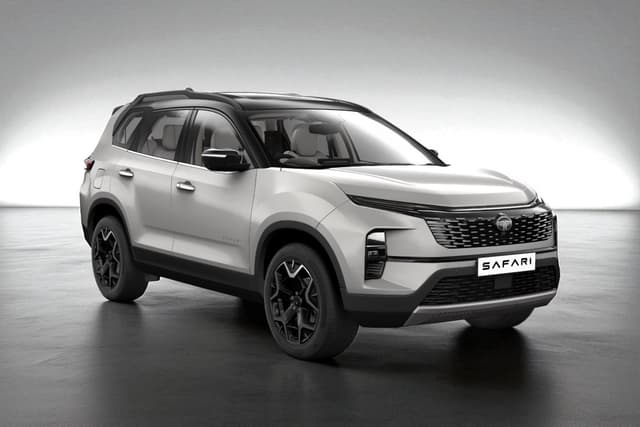
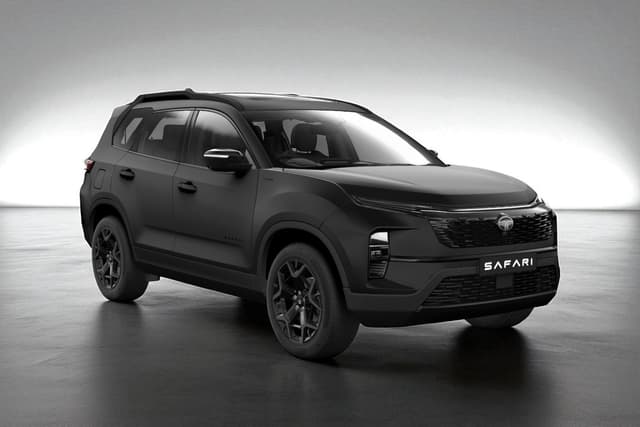
Tata Safari Colours
Questions you may find useful
Aarav Mehta
Hi Experts, I’m from Hyderabad. 45+ couple, 2 kids (11yrs) with Motion sickness issues, parents 80 yrs+. Need 6-seater Petrol AT with middle row sliding feature. Iam currently driving Zen estilo vxi petrol variant 2007. Budget is maximum Rs 30 Lakhs on road. Usage: 4000 km/yr, usage weekly once, 60% highway at 90-100 kmph, 40% city. Parents come 25% of the usage. Planning to keep for 12-15 years. Parents need easy ingress like Innova hycross. Is ADAS required according to my usage? Priority: No battery drain with weekly once use, suitable for kids with Motion sickness issues, safety, features, mileage, after-sales, resale. Shortlisted: 1. Tata Safari Petrol Accomplished Plus 2. Toyota Hycross GX O 6-seater 3. MG Hector Plus Petrol AT Savvy 6-seater 4. Kia Carens Clavis Petrol AT HTX O 6-seater Kindly let me know the Best fit for my usage in the above or any other car if iam missing the same. Thanks and regards Aarav Mehta

autocar.india
Given your mostly highway family runs, low yearly use, need for a true 6-seat petrol automatic and easy step-in for your parents, the Toyota Innova HyCross GX(O) 6-seater fits best. It is the easiest to get in and out of among your list, the middle-row captain seats slide to set a calm seating position for the kids, and the ride stays steady at 90-100 kph, so they feel less queasy. For a 12-15 year plan, Toyota’s reliability, dealer reach, and resale make life simple, and petrol suits 4,000 km a year with weekly starts without battery worries.Do note the GX(O) is light on some nice-to-have features, and the petrol will not be as efficient as the hybrid, but your annual running keeps fuel spend in check.If you want a lower price and a more city-friendly size, the Kia Carens Clavis petrol automatic HTX(O) 6-seater is your next best pick. It also has a sliding middle row and a very easy step-in, but it does not feel as settled on the highway, and the third row is tighter.ADAS is not essential for your use. If within budget, auto brake and blind-spot alerts are useful; lane-keep can feel intrusive here. The MG Hector Plus is no longer on sale. The Tata Safari’s taller step-in is not ideal for your parents. Overall, go with the Innova HyCross GX(O) 6-seater.
Partha
Hi, I want to buy a large SUV (XUV, Scorpio, Safari) under ₹20 lakh, but I am concerned about petrol mileage. My driving is 40–50 km per day (city + highway), and every 3–4 months I take a 500 km trip. Should I buy a diesel car, and if yes, will it have any impact on the DPF?

autocar.india
Your 40–50 km daily running, plus periodic 500 km trips, is ideal for a diesel. These engines need consistent use and occasional highway driving to stay healthy, and you are already doing both. Issues with BS6 diesels usually arise only when the car is used for very short city runs or constant crawling traffic without ever getting a proper stretch.The DPF needs heat to clean itself, which happens during steady driving at moderate speeds or higher RPM. Short trips and low speed driving lead to soot build-up, but your usage naturally allows the system to regenerate. It also makes sense to choose diesel in cars like the Mahindra Scorpio N, XUV700 or Tata Safari, as the petrol versions are not very fuel-efficient.
Rohit P
I am planning to upgrade from my 2017 Honda City diesel, which is now over nine years old. I am looking for a 7-seater, although it will mostly be used as a 5-seater, with occasional requirements to carry 6-7 passengers. The car will primarily be used in Gurgaon for city driving, along with highway trips on the Delhi-Mumbai Expressway for going to Kota, Rajasthan. My key requirements include good comfort for five passengers, a usable third row when needed, and a preference for an automatic transmission. My budget is around ₹26 lakh. At present, I am inclined towards the Tata Safari Petrol AT (Accomplished X). However, my main concern is the drop in mileage and the resulting increase in running costs. My current Honda City delivers around 23 kpl on highways and about 15 kpl in the city, whereas I expect the Safari petrol automatic to return roughly 12 kpl on highways and about 9 kpl in city conditions. This translates to a significant 40-50% drop in fuel efficiency, leading to noticeably higher fuel expenses. My monthly usage is approximately 800 km, split evenly between city and highway driving. While fuel efficiency is an important factor, it is not the only deciding criterion. I have considered diesel options but ruled them out due to my usage pattern, as the car may remain unused for weeks at a time and may not see highway runs for two to three months, which could lead to DPF-related issues. I have also evaluated the Mahindra XUV700 AX7 AT in both petrol and diesel forms. The petrol variant still has relatively low mileage, while the diesel brings back the same DPF concerns. Additionally, the third row in the XUV700 is not very practical due to tight headroom and limited knee room. The second row does not slide, which makes access more difficult. I briefly considered the Carens Clavis as well, but it appears to offer lower safety compared to the other options.

autocar.india
Pick the Tata Safari petrol. It meets most of your requirements, though fuel consumption will be high, particularly in the city. As a daily car, it is easy to drive, has light steering and a smooth automatic transmission, and runs well on bad roads. The second row slides, so you can share space with the third row when you have 6 or 7 on board, and getting in and out is easier than in the Mahindra XUV 7XO. On the highway, it feels steady and quiet.If fuel efficiency is a big concern, consider the Kia Carens Clavis with turbo petrol DCT combo. It will be slightly more efficient than Safari, and the third row is even more comfortable. In terms of safety, it has a comprehensive safety suite but it hasn't yet been tested by BNCAP.On the test drive, take the Safari on the highway and check the stability and overtaking performance.
Anupam Sharman
I want to buy a 7-seater car with a budget of around ₹25 lakh. My key requirements include features like a powered tailgate, a large infotainment screen, second-row sliding and ventilation, a sunroof, and decent fuel efficiency. I am currently considering the Tata Safari Hyperion Accomplished Ultra.

autocar.india
The Tata Safari is the model that fulfils most of your requirements. We say 'most' because fuel economy is a question mark for the moment, as we have not tested the Safari Hyperion petrol outside of the media drive. The Safari is a big SUV, and its weight could theoretically impact real-world fuel economy. If you need better efficiency, the Safari diesel is an option for you. Also note, Tata Safari Hyperion Accomplished Ultra prices range between Rs 27 lakh and 28.7 lakh, making the model slightly outside your Rs 25 lakh budget. You could consider the Accomplished X trim that fits within your budget. Key differences to the Accomplished Ultra are the X's smaller rims (18-inch vs 19-inch) and a smaller touchscreen (12.3-inch vs 14.5-inch).
Anant Sheopuri
I am looking to upgrade from a 2018 Ertiga VXI CNG to a petrol AT 7-seater for daily Mumbai city use majorly. I have shortlisted the MG Hector Plus Savvy Pro AT, Tata Safari Adventure X Petrol AT, XUV 7XO AX7 Petrol AT and Innova HyCross GXO (non-hybrid). Which one is the best option for long-term use, comfort for a large family of five, reliability and decent mileage?

autocar.india
Since mileage is a concern, the Toyota Innova HyCross will be ruled out here. The Hycross hybrid is a lot better, but the non-hybrid version is good for 7kpl at best, which isn't the best figure. The MG Hector Plus, Tata Safari and Mahindra XUV 7XO are good and tech-laden, but the third row space is best for kids and short drives for adults.A good option to consider would be the Kia Carens Clavis. The Clavis is an MPV that is high on practicality and comfort, and gets multiple powertrain options and lots of features. The third row is spacious and close to the Ertiga in terms of roominess, thereby even adults can travel in comfort. The ride quality is good, and the turbo-petrol engine has enough punch even with a full load. The Clavis is also high on features, and it will be the best choice among all the rest.
Prateek Saini
I have already booked Safari Adventure X Plus Petrol Automatic but confused on it considering TATA glitches etc. My main reason is to for it is being a car which has safety for family and small engine to give decent mileage in city. But People generally suggest to go for XUV 700 keeping mileage aside or go for Invicto or Kia Carens for mileage but finding Invicto at higher budget making breakeven in more than 80000 KM and Kia Carens really low on safety. Pls suggest.

autocar.india
Before you go ahead with the purchase, please keep in mind that the Tata Safari is a heavy vehicle and in its petrol-automatic guise, expecting double digit city fuel efficiency will be a bit ambitious. Yes, on the open roads, at constant speeds and light throttle inputs, the turbo-petrol could deliver good fuel efficiency, but in bumper-to-bumper traffic and stop-go conditions, fuel efficiency will be low. As a family car though, the Safari is a good option, on account of its spacious cabin, and impressive ride comfort. Tata's service experience can be a hit or a miss, and it isn't the best in terms of reliability either, occasionally throwing up a glitch or two. The Mahindra XUV 7XO is slightly better in that regard, however space isn't as good as in the Tata, especially in the third row. Also, the XUV's 2.0-litre turbo-petrol-automatic will fare worse (if not equally) as far as efficiency goes.Hence, if you want a fuel-efficient family car, the Maruti Invicto or the Toyota Innova Hycross hybrid are the ones to get. Of course, these are very expensive, and as you've rightly pointed out, unless your usage is very high, it will take a long time to benefit from its lower running costs after breaking even. But as far as reliability, peace of mind and a trouble-free ownership experience goes the Maruti and Toyota are still the ones to beat.
Sachin Rathod
I am confused between the Hyundai Alcazar and the Tata Safari in the diesel manual variants. My annual running is around 40,000 km, mostly on highways. I am looking for a car that offers decent mileage, strong safety, and reasonable maintenance costs. Which one would be the better choice for my usage?

autocar.india
With your kind of usage around 40,000km a year, mostly on highways, the Tata Safari diesel would be the better option for you overall.The main reason is that the Safari is simply the stronger highway car, which is where you’ll be spending most of your time. Its 2.0-litre diesel engine produces more torque than the one in the Hyundai Alcazar, and that extra pulling power really helps during highway driving. Especially when overtaking or cruising with a full load of passengers and luggage. The Safari also has a more substantial feel and tends to feel more planted and stable at higher speeds, which is something you will appreciate on long highway runs. Safety is another area where the Safari has an edge.The Alcazar’s advantage lies in efficiency and ease of use. It is slightly more fuel-efficient and feels lighter and easier to drive in city conditions. Maintenance on Hyundai models is also generally predictable, and service networks are very strong. However, given that your driving is predominantly highway-based, these benefits may not be as significant for your usage pattern.In terms of running costs, both being diesel means fuel costs will remain relatively manageable, even with such high annual mileage. The Alcazar will likely return slightly better fuel efficiency, but the difference isn’t dramatic enough to outweigh the Safari’s advantages in performance, stability and overall highway ability.
Ritesh
Dear Autocar, my daily commute is 38 km in the city. Should I choose the Safari diesel or the Alcazar petrol? Kindly advise in terms of maintenance, reliability, and cost efficiency. I want hassle-free ownership. Also, should I go for an automatic or manual?

autocar.india
An automatic transmission will be far more convenient for your daily city commutes; hence, between the two options you've listed, the Hyundai Alcazar DCT makes more sense. The Hyundai's service and ownership experience is likely to be better than Tata's.Additionally, since you'll be purchasing the vehicle in Delhi, opting for the petrol-automatic version will give you a maximum of 15 years of ownership in the region, whereas the diesel-manual Tata Safari can only be driven for 10 years.
Mohit Kakde
I currently own a first-generation Toyota Innova that has been with me since 2008 and has clocked around 2.75 lakh kilometres. Since it has served my family extremely well, I am now looking for an upgrade. Naturally, I am inclined towards the Toyota Innova Hycross because my priorities continue to be: Excellent space and family comfort Good ride quality and highway stability Reliability and long-term peace of mind A vehicle that is also enjoyable to drive personally My monthly running is quite high at around 9,000 km, with nearly 70% usage in Mumbai city traffic and 30% highway driving, mainly on the Mumbai–Satara route. My budget is around ₹26 lakh, which unfortunately does not comfortably accommodate the Hycross Hybrid variants. I have therefore also considered the non-hybrid Innova Hycross GX(O), but I am concerned about its fuel efficiency given my predominantly city usage. Would the non-hybrid Hycross still make sense for my usage pattern, or should I consider other SUVs or MPVs instead? I am open to both body styles, but I am not particularly inclined towards the Maruti Ertiga or Kia Carens since I want this purchase to feel like a genuine upgrade from my current Innova. Could you please suggest the best options considering comfort, fuel efficiency, reliability, driving experience, long-term ownership, and overall value?

autocar.india
Since your monthly usage is very high, we'd advise you to avoid the Toyota Innova Hycross NA petrol, as it isn't very fuel-efficient. You could consider the Maruti Invicto Zeta Plus hybrid. Maruti is offering substantial discounts on the car, and if you're lucky, it could even fall within your Rs 26 lakh budget. Being a badge-engineered version of the Toyota Innova Hycross, the Invicto is just as spacious, comfortable and efficient, and as a family car that'll be used for long distances, it is certainly one you must consider.The Tata Safari Diesel is another capable, comfortable seven-seater to cover long distances with family. Compared to a Mahindra XUV 7XO, the Tata Sierra is more comfortable for the third row occupants, while still having slightly better boot space, hence it gets our vote.Alternatively, have you considered an electric vehicle? The Mahindra XEV 9S is a great option, and will be very economical to run. Also, unlike the XUV 7XO, which gets a fixed middle row, the XEV 9S has an adjustable (sliding) middle bench to free up space for third row occupants. As far as power, range and charging times go, the XEV 9S is a very capable option. If you can arrange for home charging, this is one car you must seriously consider.
Venkat
Looking for a 7-seater with good third-row space, although most of the time the third row will remain folded and be used for my labrador and, occasionally, luggage. I need a car that must have good space across all three rows, front and rear parking sensors, 360-degree camera, at least low double-digit fuel efficiency and it should not feel underpowered with a full load. My usage will be occassionally highway drives of 300-500 km trips, along with moderate city usage of a maximum of 400 km per month. My current car has covered 35,000 km in 2.5 years, most of which are highway runs. I am considering Kia Clavis HTK+ as it is feature-loaded and comfortable, but the Petrol Turbo AT is quite thirsty, and I have concerns about the DCT in bumper-to-bumper traffic, along with safety concerns. Another car that I am considering is Tata Safari Petrol AT but there are customer complaints regarding quality issues and the new engine. I have also shortlisted XUV7X0 as it is powerful and good to drive, but the third row feels impractical and the fuel efficiency is quite poor. Now I am considering trying the Toyota Hycross non-hybrid as well. Please let me know your thoughts.

autocar.india
Your use is mostly long highway runs with the third row folded for your Labrador, plus a clear need for space in all three rows, parking aids and a 360 camera, and you don’t want it to feel weak when fully loaded. In that situation, the Toyota Innova Hycross 2.0 petrol automatic (non-hybrid) 8-seater is the one from your list that fits best overall. Its third row is the roomiest here, and when you fold it, you get a long, flat floor that is easy for a big dog and luggage. The CVT automatic, makes city work easy, but on the highway it has to work a bit hard to build up speed. Keep speeds steady, and you should see double-digit fuel efficiency on the highway, which matches your requirement.A couple of watch‑outs. The non‑hybrid Hycross does not get a factory 360 camera, and front sensors are limited to higher trims, so you may need a dealer‑fit 360 setup to meet that must‑have. Also, performance with a full load is just about adequate but not as strong as big‑turbo rivals if you push hard.If you must have a factory 360 camera, from your list, the Kia Clavis in a higher trim with the 1.5 turbo DCT gives you that and has a usable third row. Although your concern on DCT in heavy traffic is fair. Given your light city use, that risk is low. If you’re open to diesel, the Safari diesel AT also ticks power, highway comfort and 360 camera, but its third row is not as roomy as the Hycross. Overall, for your highway‑led use and dog‑friendly space, the Hycross non‑hybrid lines up best if you’re okay with adding a 360-camera via the dealer.
Have questions about this car?
Ask owners & Autocar experts.
Tata Safari On Road Price in India
Upcoming Cars


Tata Cars

Trending Cars

Latest Cars