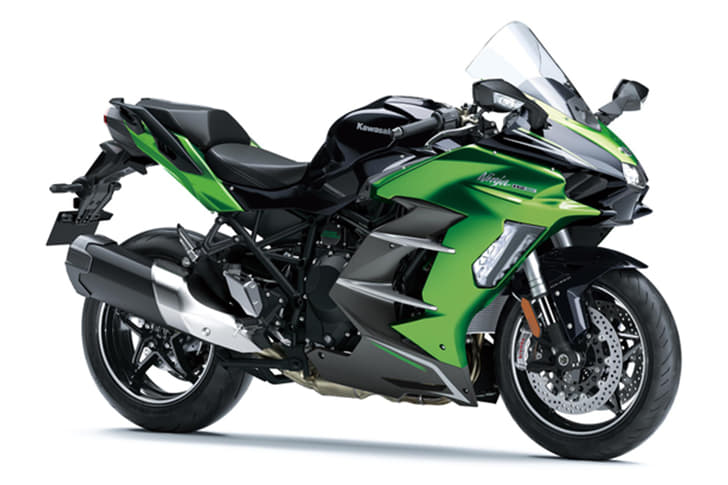

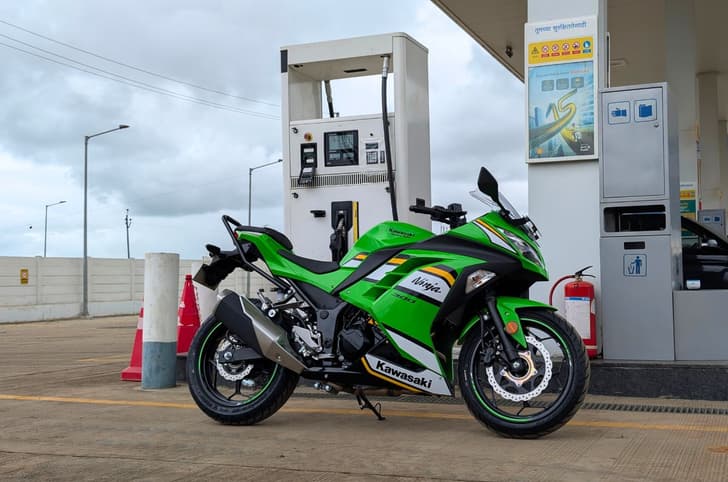
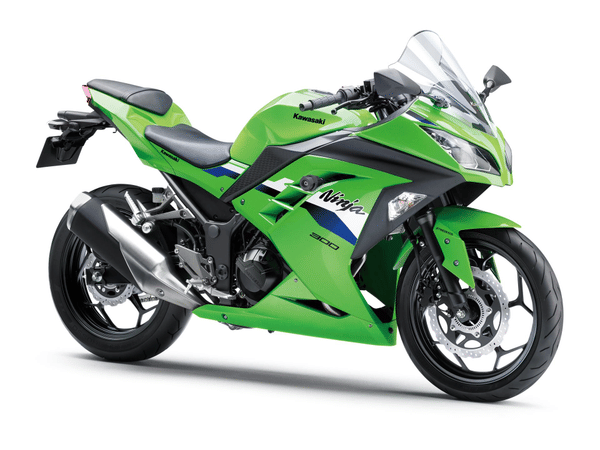
The Kawasaki Ninja 300 has long been the entry point into Kawasaki’s faired sportbike family, combining sharp styling with a high-revving parallel-twin engine. For 2025, the bike remains largely unchanged and still has the same output figures as before. We put the Ninja 300 through our usual testing cycle to find out just how efficient this twin-cylinder machine can be when tested in real-world conditions.
Kawasaki Ninja 300 real world fuel efficiency
It managed a combined fuel efficiency figure of 28.39kpl.
To test the Ninja 300’s city efficiency, we covered 42.6km through Mumbai traffic and refuelled with 1.55 litres of fuel. That worked out to an adequate figure of 27.48kpl. Next, we put the Ninja 300 on the highway, covering 55.4km before topping up with 1.89 litres of fuel. That translated to a figure of 29.31kpl. Both these tests were conducted with the bike running on stock tyre pressures. While these figures aren’t in the same ballpark as the high 30s or low 40s you might see from similar-capacity single-cylinder machines, they’re understandable when you consider the Ninja’s character.
Out on the highway, the Ninja feels more in its element. Cruising steadily in higher gears, the motor ticks along smoothly, which helps return close to 30kpl. In short, the Ninja 300 manages to balance performance with practicality better than you’d expect. With its 17-litre fuel tank, these figures translate to a 400km-plus range.
Kawasaki Ninja 300 fuel economy analysis
It is powered by a 296cc parallel-twin that produces 39hp and 26Nm
This 296cc twin is happiest-spinning in the mid- to upper-rev range, and while that makes it engaging to ride, it also means the engine is working harder than a relaxed single at lower city speeds. Out on open roads, the bike settles into an effortless cruise at 90-100kph.

This 296cc motor enjoys hitting redline and is geared to be ridden at higher revs. Maintaining a steady throttle will reward you with better efficiency, and pushing harder into triple-digit territory will naturally bring the number down. Still, for a faired 300cc twin that encourages spirited riding, these figures show it’s surprisingly easy on fuel when ridden sensibly.
Autocar India’s fuel-efficiency testing
Our fuel-efficiency testing routine starts by first filling the tank to the brim and ensuring the bike is running the manufacturer’s recommended tyre pressures. The bike is then ridden on fixed city and highway routes, where we maintain average speeds that best mimic real-world scenarios, keeping speed limits in mind. The payload on the bikes is kept constant by balancing rider weights and ballast, ensuring consistency across different vehicles and riders. At the end of the test cycle, the fuel tank is once again filled to the brim, giving us an accurate figure of how much fuel has been consumed against the trip meter reading.
 Vishal Venugopal
 Ved Janve
 Stephen Raj Antony