Hyundai Sedan Cars in India (2)
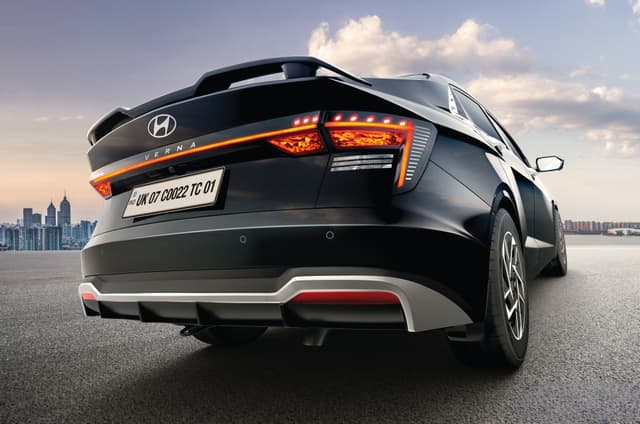
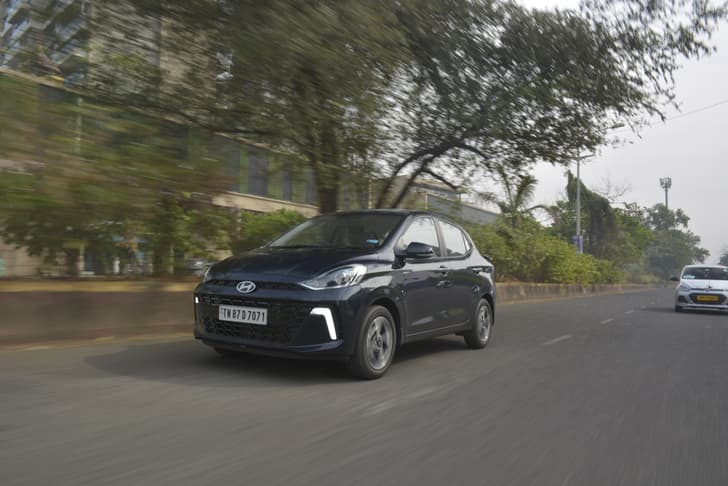
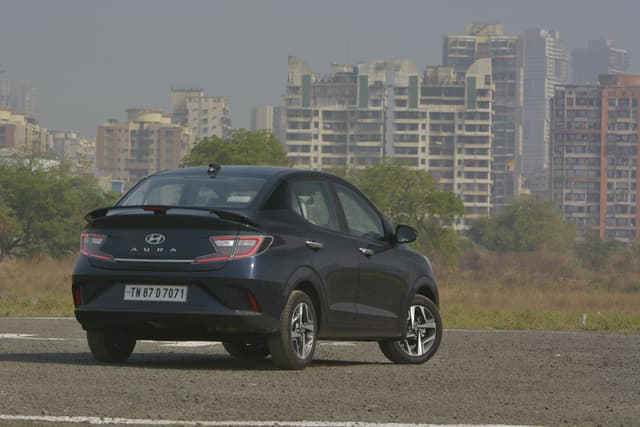
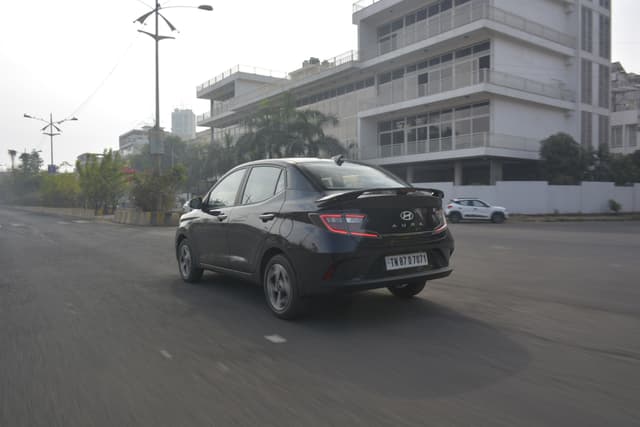
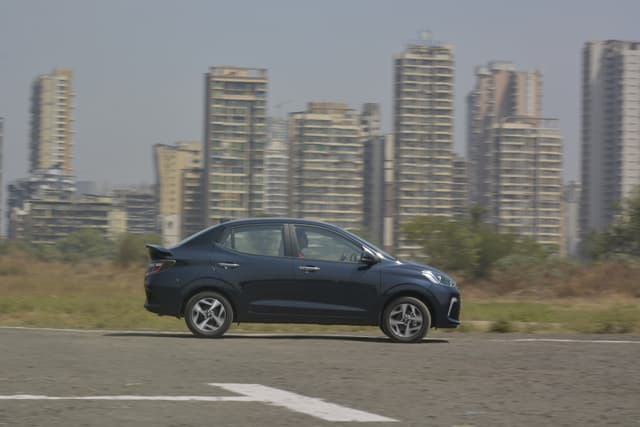
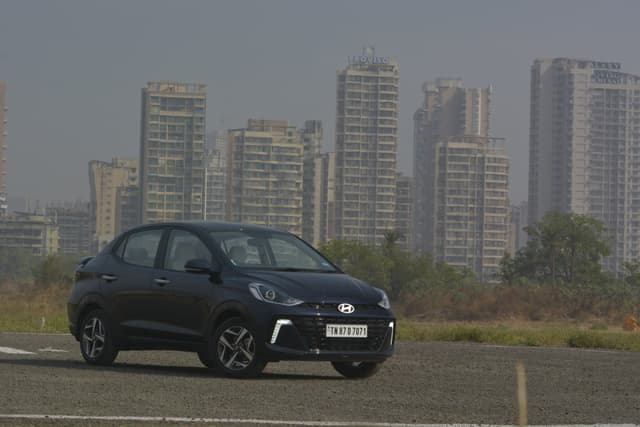
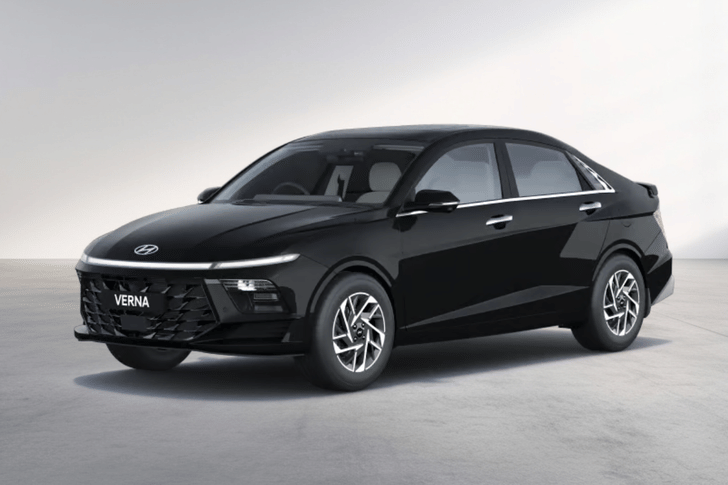
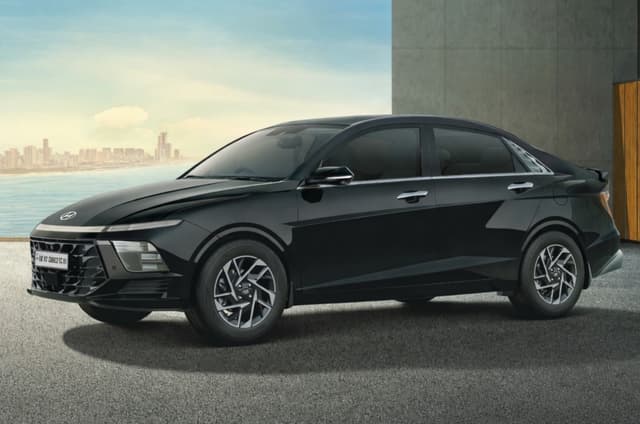
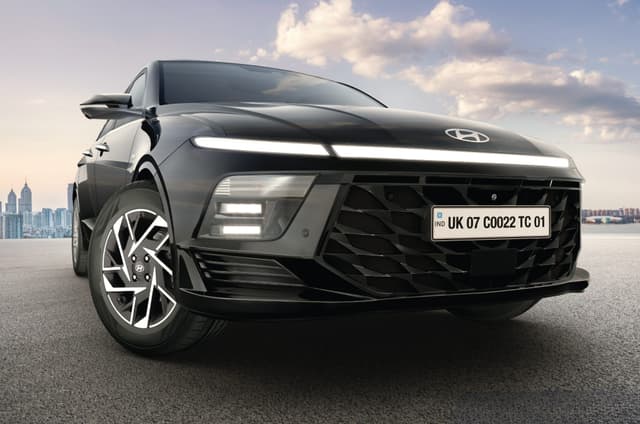
As of August 2026, Hyundai sedan cars in India comprise of two models - Aura and the Verna. The Hyundai sedan cars price range starts at ₹6.00 lakh and goes up to ₹17.13 lakh (ex-showroom).
Both Hyundai sedan cars comes with petrol engines, while the Aura also gets a CNG variant. Buyers can choose between manual and automatic transmissions. Also, both Hyundai sedans feature a 5-seater layout with a front-wheel-drive (FWD) configuration.
In terms of efficiency, the Aura delivers an mileage range of 17.0 to 28.4 kmpl, while the Verna offers 18.6 to 20.6 kmpl.
When it comes to safety, both models come equipped with six airbags as standard. For buyers prioritising top-tier crash protection can go for Hyundai Verna as it has achieved a 5-star safety rating from Global NCAP.
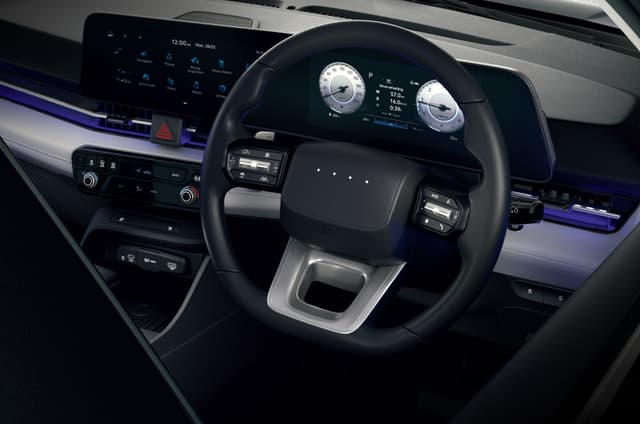
The Hyundai sedan cars features list includes ABS, parking sensors, central locking, alloy wheels, cruise control, and reverse camera. The Verna further differentiates itself by offering a sunroof and ventilated seats, adding a premium touch.


Hyundai Sedan Cars - FAQs
As of 2026, Hyundai sedan cars include two models - the Aura and the Hyundai Verna.
The Hyundai sedan cars in India lineup currently consists of the Aura and the Verna.
The Hyundai sedan cars price ranges from ₹6.00 lakh to ₹17.13 lakh (ex-showroom).
Both Hyundai sedan cars in 2026 are offered with petrol engines, while the Aura additionally comes with a CNG variant.
Yes, Hyundai sedan cars are available with both manual and automatic transmissions, depending on the variant.
The Aura delivers a mileage range of 17.0 to 28.4 kmpl, while the Verna offers 18.6 to 20.6 kmpl, making Hyundai sedan cars in India suitable for city and highway use.
The Hyundai Verna stands out as it has achieved a 5-star crash safety rating.
All Hyundai sedan cars come equipped with six airbags as standard, along with ABS, parking sensors, central locking, and a reverse camera.
The Hyundai sedan cars features list includes alloy wheels, cruise control, ambient lighting, wireless phone charging, Android Auto, Apple CarPlay, and parking sensors.
Within Hyundai sedan cars, the Verna offers premium additions such as a sunroof and ventilated seats, which are not available in the Aura.
Trending Questions on Hyundai Cars - Answered by Autocar Experts
Hi everyone, We currently own a Chevrolet Sail Sedan Diesel and are planning to upgrade. I'm having a tough time deciding between buying another diesel SUV or switching to an EV. Our usage pattern is quite different from most buyers. We drive around 50 km per week, almost entirely within the city. Highway trips are very rare, maybe once or twice a year. Because of this, I feel an EV makes more sense, and I absolutely love the smooth and quiet driving experience that electric cars offer. At the moment, I'm considering the Tata Nexon EV, Kia Syros EV (newly launched), and the Hyundai Creta Electric, especially the new BaaS option in the base variant. I'm leaning slightly towards Kia/Hyundai because they seem to have a better reputation for battery management, software, overall reliability, and after-sales service compared to Tata. If I decide to stay with diesel, the base model Kia Seltos Diesel would probably be my choice. However, I'm quite concerned about modern diesel systems, particularly DPF regeneration and DEF/AdBlue-related issues. Since our driving is mostly short city trips with very little highway usage, I'm worried that a diesel may not be the right fit in the long run. Given our usage pattern, what would you recommend: Kia Seltos Diesel, Tata Nexon EV, Kia Syros EV, or Hyundai Creta Electric? I'd especially appreciate feedback from owners who have experience with these cars in predominantly city driving. Thanks in advance!
Between the Nexon EV, Syros EV and Creta Electric, the Nexon EV is the most affordable option. But we'd strongly recommend the Syros EV - it is a very sensible choice. It is priced well, has a good feature set, and cabin space is excellent. Kia's battery management, software and service network inspire more confidence for long-term ownership. Overall, the Syros EV is the more balanced package, and even though the Creta Electric is a good car, the Syros EV comes across as better value for money.
I am planning to buy Honda City V CVT. Is it still worth buying the Honda City in 2026 from a long-term (7-10 years) ownership and reliability standpoint? Or should I consider other cars in the segment, such as the Virtus, Slavia, or Verna?
Yes, the Honda City V CVT is still worth buying in 2026 from a long-term ownership and reliability perspective. The City remains one of the most dependable and well-rounded sedans in the segment, with a proven naturally aspirated petrol engine, smooth CVT gearbox and Honda's strong reputation for reliability and low maintenance costs. It is also a very comfortable and spacious family car, with a well-sorted ride and a premium ownership experience.The Volkswagen Virtus and Skoda Slavia are more driver-focused cars with stronger turbo petrol engines and a more engaging driving experience, but they do not have the same long-term reliability track record as the City. You can expect the Volkswagen Virtus mileage to be around 9 to 12 kmpl in the city and 15 to 18 kmpl on the highway.The Hyundai Verna is a strong all-rounder with a more feature-rich cabin and a more powerful turbo petrol option, and the Verna price starts at Rs 10.99 lakh (ex-showroom), but the City still feels more practical and better suited to long-term ownership.If your priority is a car that you can keep for 7-10 years with minimal fuss, the City remains the safest and most sensible choice in the segment. The only reason to look at the Virtus, Slavia or Verna would be if you specifically want a more powerful turbo petrol engine and good driving dynamics Otherwise, the City V CVT is still the benchmark for long-term ownership.
What is the best car under 20lacs? I need a manual sedan car to commute daily to my office from Delhi to Gurugram.
The Hyundai Verna HX8 Turbo-petrol manual is a good option. The turbo-petrol engine of this sedan car is refined and delivers strong performance. Its clutch and gearbox are buttery smooth, and it rides well too, so overall the Verna feels very user-friendly for your daily commutes. Moreover, it is feature-loaded and delivers good value-for-money.Alternatively, you could consider the recently updated Honda City ZX Plus MT, which will fall within your Rs 20 lakh budget. While its feature list is similar to the Verna's, the Honda also gets ADAS, which the Verna manual misses.
I really liked the Hyundai Verna 1.5 Turbo DCT during the test drive. I have been driving a Honda Jazz for the last 11 years. While the Verna is definitely more powerful than the Honda City, would it still be the better choice compared to the City in terms of ride and handling? Also, how reliable is the DCT in stop-and-go traffic in Chennai? My usage is 60% within Chennai city and 40% on highways, including occasional 1,000 km drives from Chennai to Kerala.
Pick the Honda City automatic for your mix of Chennai crawl and marathon Kerala runs. The City rides a touch comfier over broken roads and has a more natural steering feel, which matters on a 1,000 km day when you are tired and just want an easy, steady car.The Hyundai Verna 1.5T DCT is the faster car and feels nicer on open roads, no question. But a dual-clutch can hesitate at times in stop-and-go traffic, whereas the City's CVT is seamless. The Hyundai Verna price starts at Rs 10.99 lakh (ex-showroom).If you crave the Verna’s shove for quick highway overtakes, it is tempting. Just be honest about your daily crawl. For hassle-free city use and relaxed long drives after 11 years in a Jazz, the City will feel familiar, calmer and easier to live with.
I currently own a Maruti Swift VDi that has covered 110,000km. I enjoy strong low-end torque. My city driving is in Bengaluru traffic, covering around 150km per week for office commuting. I also make highway trips during holidays to my hometown, which is around 530km from Bengaluru, along with regular weekend road trips. I plan to keep my next car for a long time, just as I have owned my current Swift for 14 years. I mostly prefer a manual transmission, but I can consider an automatic if it is reliable and fuel-efficient. My budget is up to Rs 25 lakh. I am open to sedans, SUVs, and mini SUVs.
Pick the Kia Seltos diesel manual. Its 1.5 diesel has strong low‑end pull, so crawling in Bengaluru traffic takes fewer gear changes, and it surges from low speeds without effort. On your 530 km runs, it sits calmly in 6th, cruises easily, and the cabin and boot are big enough for family road trips. You plan to keep it long, and this engine-gearbox is proven, efficient and well supported across India, so upkeep is straightforward.One thing to be aware of is that, like every BS6 diesel, the DPF needs an occasional longer, steady drive to stay happy. Your regular highway trips should cover that, but if most weeks are only short, stop‑go hops, keep this in mind.If you want the same easy torque with a slightly softer ride and Hyundai’s wider service spread, the Hyundai Creta diesel manual is the safer, comfier twin. If you decide an automatic will be easier in traffic, the Seltos or Creta diesel automatics are reliable and still efficient.
Last Updated on: 5 Aug 2026