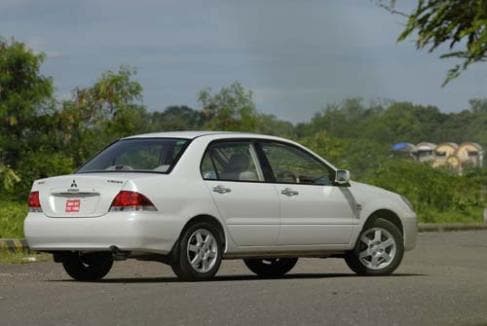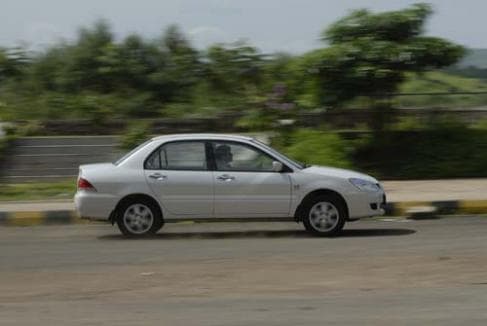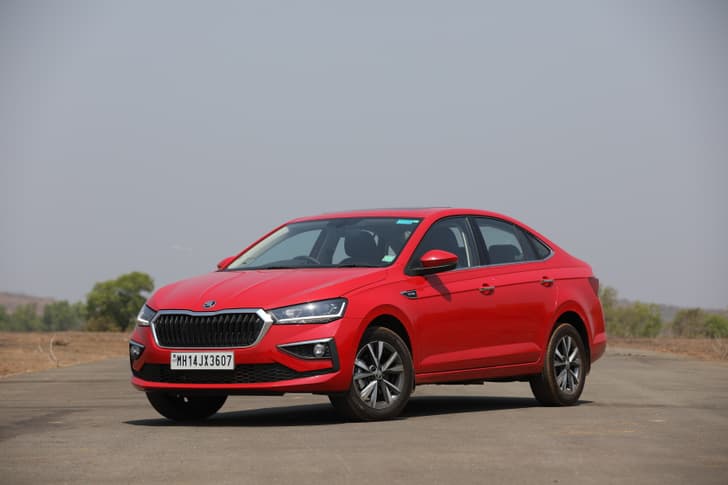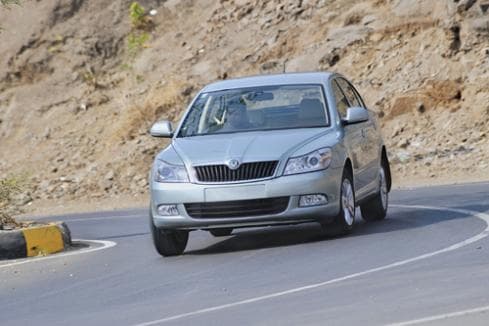
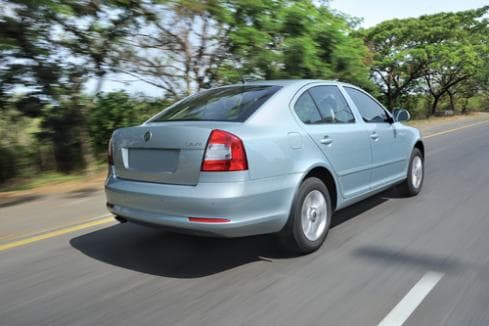
The Laura looks the freshest of all the Skodas, but the overall design comes across as safe and lacking in character. It is sharper looking and has a more prestige-like exterior style than the Octavia. The prominent grille, the elevated ridge at the centre of the bonnet, the kink in the rear or C-pillar and the squared-off tail give it the more grown up look. If you look closely at the Laura's nose, you hints of its large stable-mate, the Superb, especially around the area of the headlights.
The range-topping 2.0-litre oil-burner for the Laura puts out a healthy 140bhp and adds to the line-up of the 1.8-litre turbo petrol and the 1.9-litre Pumpe-düse engine that the Laura always had. It’s a familiar engine – we’ve seen it in the new Superb and the Volkswagen Passat (the VW has since shifted to a common-rail unit), and it comes with a six-speed twin-clutch gearbox. It’s available only in the top-of-the line Laurin & Klement trim and costs Rs 20 lakh, a pretty substantial Rs 2.4 lakh over the 1.9.
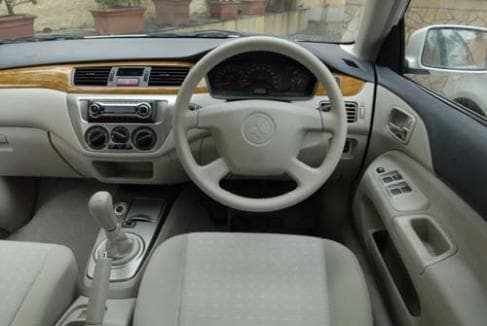
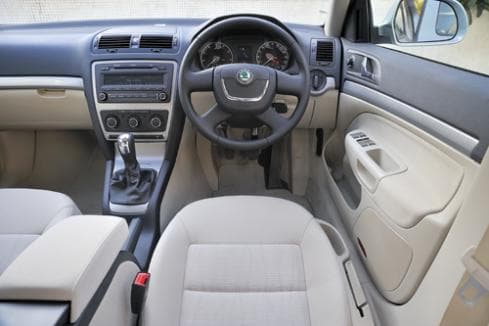
Inside, the stylish, contemporary cabin lives up to the luxury tag. The top of the dash is swathed in soft-touch plastics, there are splashes of high-quality chrome all over the dashboard and the only thing we didn’t take an instant liking to is the wood trim on the dashboard, especially the bit on the ashtray lid. Some of the attention to detail is terrific though.
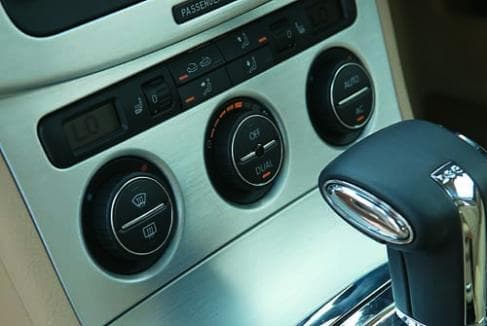
The door bins, for example, are huge and moulded to hold a one-litre bottle. Rearward visibility is a bit limited though because of the thick pillar and the high boot-lid. A good thing that this car comes with parking sensors then. This being the L&K, it is impressively specced. You get the touch screen audio system from the Superb, leather seats, steering- mounted audio controls, climate control and a powered driver’s seat with memory. The only thing we missed is the paddle shift option. We think that at this price and for this engine and gearbox, it is essential.
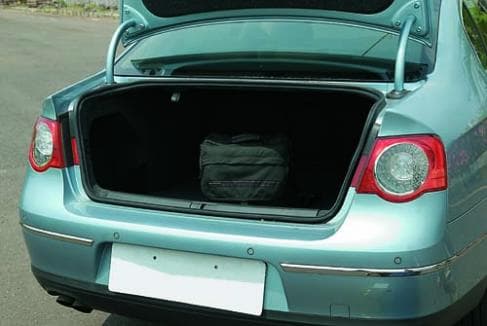
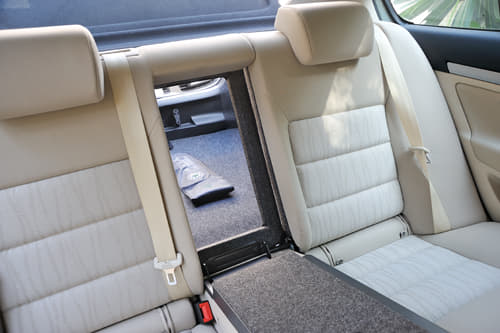
Space is good and the only criticism we can level at it is that the rear seat backrest is a bit too upright and the cushion is on the firm side. With the rear seats in place the capacity is 560 litres, which grows to 1,420 litres when the rear seats are folded down.
This engine has a lot going for it. It’s a 1968cc twin-cam unit, breathing through 16 valves (the 1.9 was an 8-valve unit) and making 32.6kgm of torque at 1750rpm. Thanks to the extra torque (7kgm more than the 1.9-litre engine), achieving three-digit cruising speeds is easy and staying there is easier. The engine, which drones intrusively when you accelerate hard, settles down to a barely audible hum, it’s right in the middle of its torque band and there’s just a hint of tyre noise intruding in the cabin. Overtaking is easy, the DSG ’box snaps up lower ratios almost as soon as you ask for downshifts, and the effortless gait that the car settles into makes it feel more locomotive than automobile. Thanks to this, the Laura covers ground rapidly, and feels comfortable right up to its maximum velocity. It’ll hit 100kph in 11.07 seconds, which is just 0.2sec faster than the 1.9-litre engine, and we expect the figures to improve considerably once the car is fully run-in. The downside of this engine is the considerable amounts of lag you get at lower speeds. The lack of response makes you mash the throttle pedal to the floor, and the abrupt burst of power makes it difficult to drive smoothly and makes it difficult to judge overtaking in the city. And, despite being the top-of-the-line spec, there are no paddleshifts to help you work around the inherent lag. Fuel economy is pretty good too. The Laura gave us 10.1kpl in the city and 14kpl on the highway.
The ride is pretty much luxury car. Independently sprung all around, it’s got MacPherson struts up front and multi-link at the rear. At higher speeds, the Laura doesn’t suffer from pitch, wallow or general flat-footedness. It rides with real poise, the suspension dealing with all types of road surfaces in a quiet, well-controlled fashion.
The body control is generally very good, apart from over long-wave undulations, when the extra weight of the engine block up front can set the car’s nose nodding a bit. The electro-mechanical steering is among the best we’ve experienced and it’s only the extra mass of the 2.0 TDi unit that tends to blunt its responses over the petrol engine a bit. There is some stiffness at lower speeds though. That said, this car comes with bigger wheels and wider tyres than the petrol Laura.
 Lenny D'sa
 Sergius Barretto
 Saumil Shah
 Soham Thakur
 Nikhil Bhatia