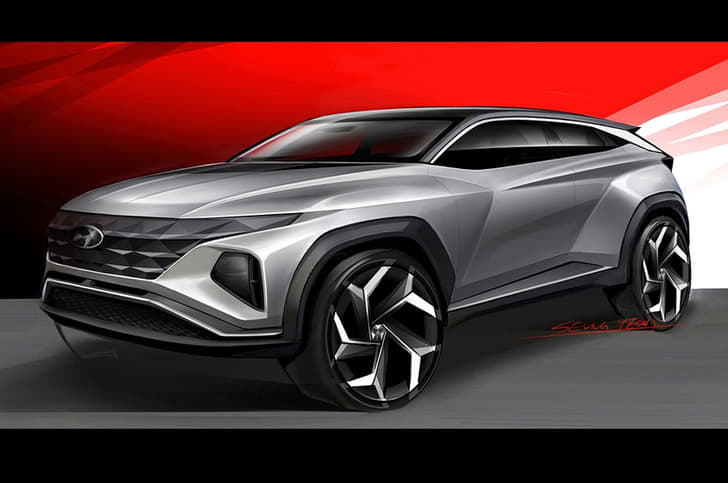
After launching its first EV – the Kona compact crossover at Rs 23.7 lakh in India – Hyundai Motor India has been working on another 'mass-market' vehicle for our market.
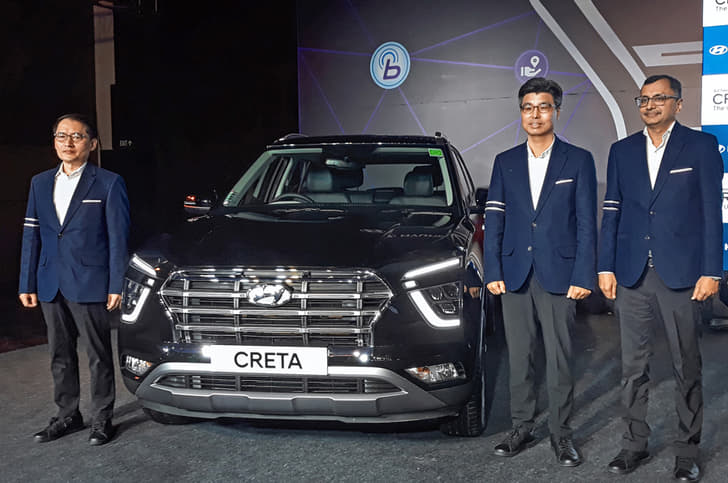
Speaking to our sister publication Autocar Professional, on the sidelines of the launch of the new Creta, Seon Seob Kim, the MD and CEO of Hyundai Motor India, said, "We are in the process of developing a mass-market EV, which will be an affordable product for the Indian customer." The carmaker had previously revealed plans for an affordable EV in July last year.
"We will introduce the vehicle in the next two years. It will be a made-for-India and made-in-India product, which could be exported to other markets where it fits the requirements," Kim added.
Ground-up design, flexible platform to enable combustion engine or hybrid variants
For the first time, Hyundai today revealed that the new EV will be a ground-up SUV. While designed primarily for electrification, the flexibility of the platform will allow putting in a conventional fossil-fuel or hybrid powertrain as well.
As it hopes to be able to bring the product out into the market by 2022, the company says it is currently undergoing various discussions and negotiations with potential supplier partners in the 'new ecosystem.'
Commenting on the possible pricing, Kim said, "It is too early to determine the price range, but when it comes to mass-market, our focus is on real-world driving range. It will be above 200km and anywhere between 200 and 300km."
Even as Hyundai Motor India sees reasonable success with the Kona (331 units in eight months till end-January 2020), the fact remains that it is a CKD product with a price point only a few environment-conscious buyers can approve. The recently launched MG ZS EV also undercuts the Kona by a significant Rs 2.70 lakh for a similar vehicle footprint and has got off to a good start as well.
What Hyundai needs to localise is substantial volumes to be able to amortise its investments. As a result, the company is also looking at a battery-manufacturing plant in the country when it actually introduces its all-electric SUV.
Now, as competition in the electric mobility space grows more aggressive with the launch of products like the Tata Nexon EV, Hyundai also looks to re-shape its business into 'Mobility as a Service'. It could very well be expected from the carmaker to bring something on the lines of the Nexon EV, which currently sells at Rs 14 lakh (ex-showroom), or undercut it like Haima-Bird's plans of bringing a sub-Rs 10 lakh EV next year.
With the entry of Great Wall Motor and the Haima-Bird partnership, it would be interesting to see how the EV space evolves in the country in the coming years. On the sidelines, the government focus needs to be on developing a robust charging infrastructure.
 Viraaj Bhatnagar
 Dipan Sur
 Dhruv Dhaka
 Saptarshi Mondal