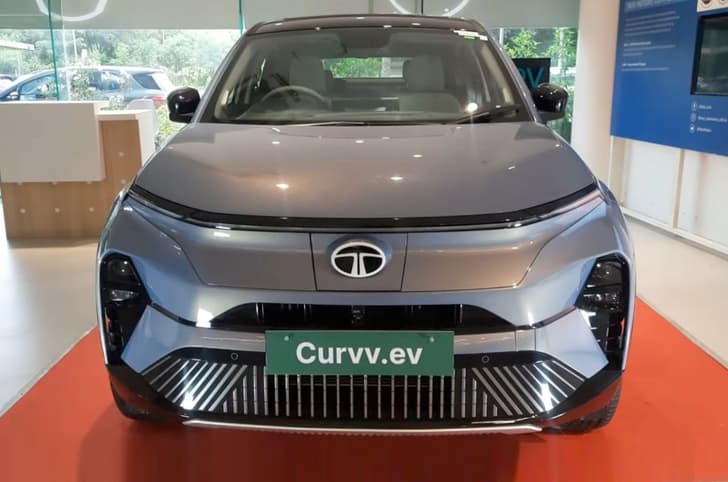
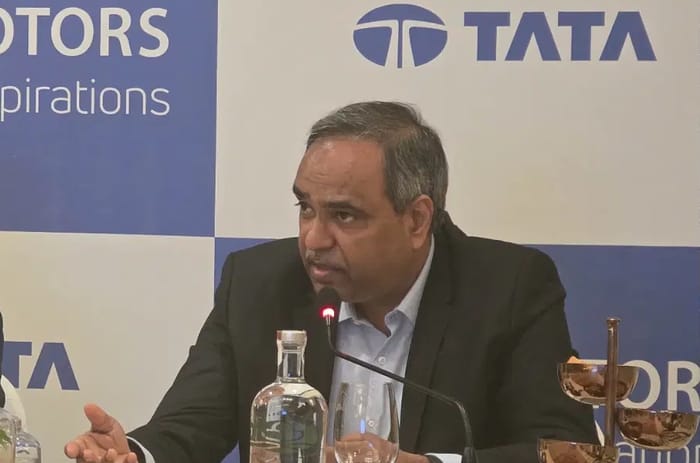
Tata Motors may consider adding hybrid powertrains to its portfolio if market dynamics demand it, according to Shailesh Chandra, managing director of Tata Motors Passenger Vehicles and Tata Passenger Electric Mobility. “We will be hoping to use the technology to deliver value to the customer, and obviously, it [hybrids] would be under consideration for different products at different points in time,” he said. This could signal a shift in the company’s stance amid a policy environment increasingly supportive of hybrid vehicles in certain Indian states.
- Bringing hybrids could be prompted by emissions and performance
- Tata considers hybrids part of its future petrol portfolio
- State-level hybrid incentives have slowed EV adoption in those states
Tata’s reasons for considering hybrid powertrains
Tata’s internal powertrain forecast: 30 percent EVs, 27 percent CNG, 6-10 percent diesel, 63-67 percent petrol and hybrid
“From a powertrain mix perspective, we’ve kept it [hybrids] in the category of petrol,” Chandra said. “If competitiveness requires us in certain segments to bring hybrid, we’ll bring it. It might not be just because of emission reasons but performance reasons also,” he added.
Chandra noted that the company’s internal powertrain forecast sees 30 percent of its mix coming from electric vehicles, 27 percent from CNG and about 6-10 percent from diesel, with the remaining volume accounted for by petrol, which includes hybrids. “We will be hoping to use the [hybrid] technology to meet the value we would be hoping to deliver to the customer. We exist in a market to compete; we’re not against a technology; we’re against the use of incentives in benefit of a technology which is self-viable,” he added, underscoring that any adoption would be segment-specific and time-dependent.
“Our focus is EVs. We believe this is the destination technology, and we need to double down on this, and we’re doing that,” Chandra affirmed. “Hybrids we consider as one of the technologies for improving competitiveness on the ICE side. If market demand comes, we can respond to that.”
Hybrid incentives counter EV adoption, says Tata
UP offers registration fee waiver on hybrids; Karnataka mulling the same
The remarks come at a time when states like Uttar Pradesh and Karnataka are offering or contemplating tax benefits for hybrid vehicles, bringing them closer to electric vehicles in terms of fiscal incentives. Uttar Pradesh has already waived registration tax on hybrids, while Karnataka is reportedly mulling similar concessions.
But Chandra also voiced concerns that extending incentives to hybrids – technologies he believes are already commercially viable – could derail India’s broader EV ambitions. He argued that tax breaks for hybrids are distorting the market and slowing down the adoption of EVs, especially in states where these benefits have been introduced.
“In one state that offered hybrid subsidies, EV penetration remained stagnant at 1.5 percent, compared to the national average, which has nearly doubled from 2.5 percent to 4 percent in the same period. Some state governments have done it, and it has come at the cost of suppressing penetration growth of EVs. That’s what happens when you subsidise a technology that has no barriers, which has natural adoption, and you artificially improve the competitiveness significantly. It has suppressed the pace at which electrification would have grown,” Chandra said.
He noted that this period has seen the launch of six to seven new EV models, and under normal circumstances, that should have spurred a more dramatic uptick in EV adoption. Instead, the unexpected growth has come from hybrids, which have gone from less than 1 percent to around 2.5 percent in market share largely, he argues, due to tax incentives. “Whereas on the hybrid side, there are hardly any models, and just because of this benefit, it has enhanced penetration,” Chandra added.
However, his concern lies with what he calls “extraordinary benefits” for hybrids that risk diluting the policy momentum built around EVs. “The issue for us is on the incentive side or any extraordinary benefit being given to hybrids, like taxation rates,” Chandra noted. “Then the question is open for many technologies on the ICE side. Why digress the focus from destination technologies where you have barriers which have to be overcome? If there’s money to be put by the government, that should be on the destination technology,” he said.
With inputs from Prerna Lidhoo
 Autocar India News Desk
 Dhruv Dhaka
 Dipan Sur