Autocar India

Hyundai Electric Cars in India (3)
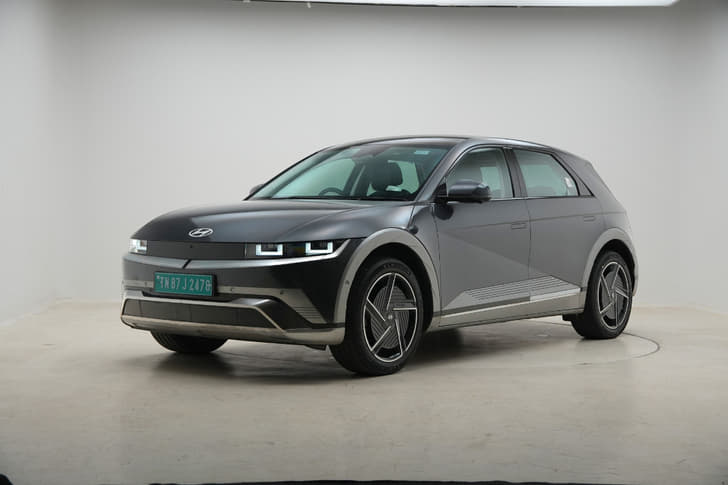
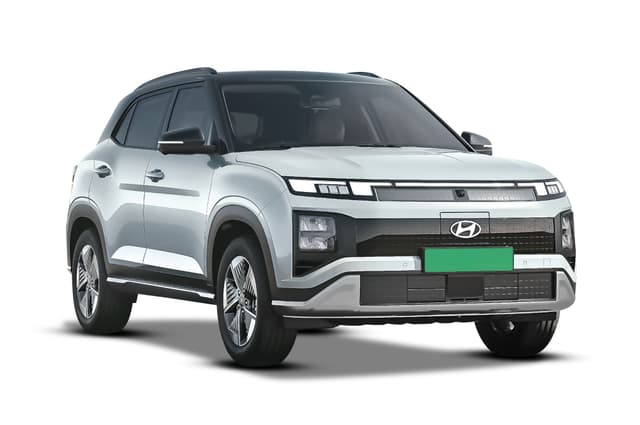
Hyundai electric cars in October 2026 include two premium SUV options in the Indian market. The Hyundai electric car price in India starts at ₹18.02 lakh and goes up to ₹46.30 lakh (ex-showroom), offering choices for both mid-range and premium EV buyers.

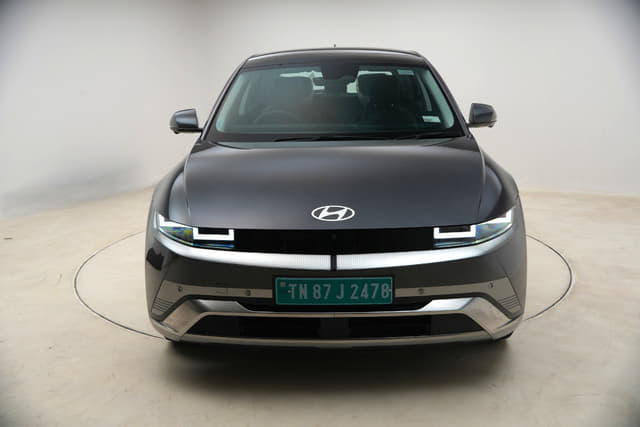
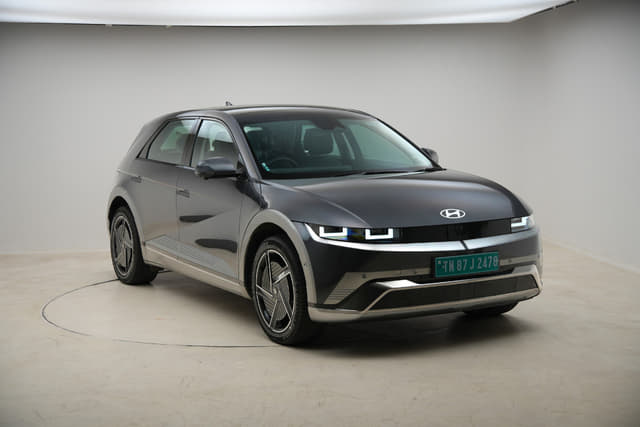
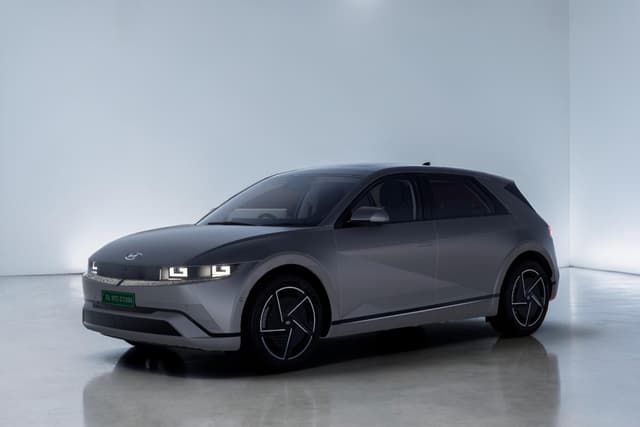
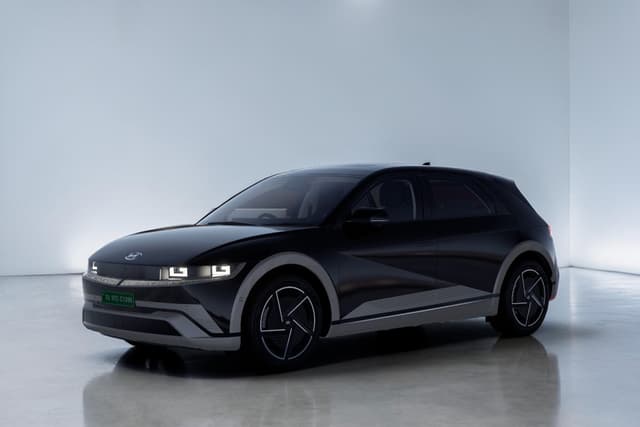
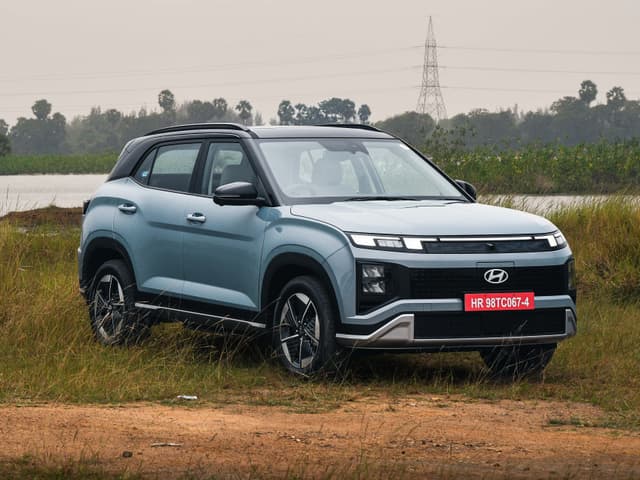
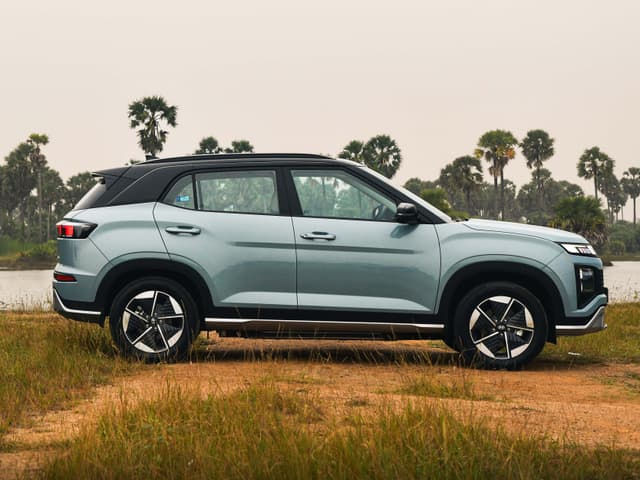
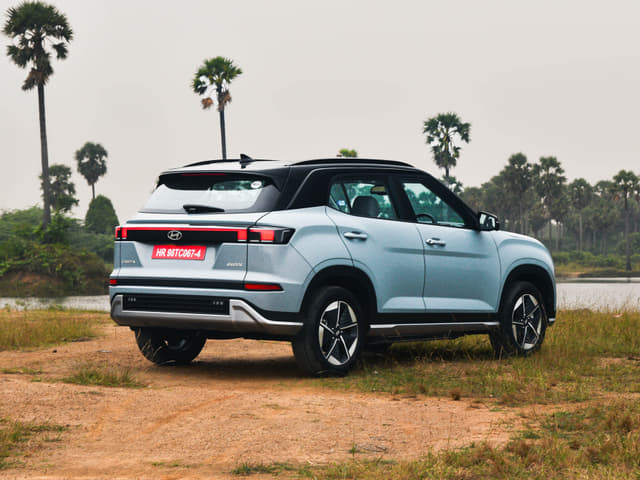
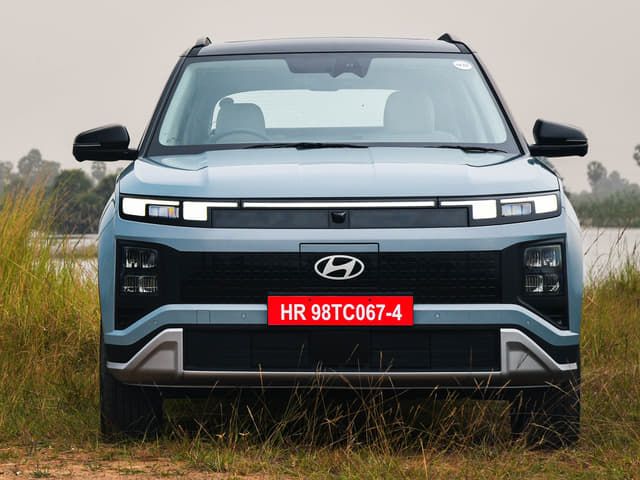
The Hyundai electric cars in India lineup consist of the Hyundai Creta Electric and the Hyundai Ioniq 5. The Hyundai Creta electric car offers a claimed range of 390-510 km and comes with a front-wheel-drive (FWD) setup. On the other hand, the Hyundai electric car Ioniq 5 delivers up to 631 km of range. It features a rear-wheel-drive (RWD) configuration for a more engaging drive.

Both Hyundai new electric car models are 5-seater SUVs and come equipped with 6 airbags for safety. Feature highlights include ambient lighting, alloy wheels, cruise control, ABS, parking sensors and central locking. The Ioniq 5 offers an additional 360-degree camera for enhanced safety.

Show more
Upcoming
Hyundai Compact EV
Late 2026
Exp. Launch
Hyundai Ioniq 5 Front Left Three Quarter
Hyundai Ioniq 5 Front View
Hyundai Ioniq 5 Closed Bonnet
Hyundai Ioniq 5 Color Gravity Gold Matte
Hyundai Ioniq 5 Color Midnight Black Pearl
9
690 km
5 seater
SUV
Hyundai Creta Electric Front Right Three Quarter
Hyundai Creta Electric Left Side View
Hyundai Creta Electric Rear Right Three Quarter
Hyundai Creta Electric Front Logo
Hyundai Creta Electric Front Left Three Quarter
9
420-510 km
5 seater
SUV

Hyundai Electric Cars - FAQs

Hyundai electric cars currently include two SUV models in the Indian market. 

The Hyundai electric car price in India starts at ₹18.02 lakh and goes up to ₹46.30 lakh (ex-showroom).
 

The Hyundai electric cars in India lineup consist of the Hyundai Creta Electric and the Hyundai Ioniq 5.
 

The Hyundai Creta electric car offers a claimed driving range of 390-510 km and comes with a front-wheel-drive setup.

The Hyundai Ioniq 5 delivers up to 631 km of range and features a rear-wheel-drive configuration along with a 360-degree camera.
 

No, currently there is no Hyundai electric car under 10 lakh available in India.

Both Hyundai new electric car options come with 6 airbags, ambient lighting, alloy wheels, cruise control, ABS, parking sensors and central locking.

The Hyundai electric cars price range for the two SUV models falls between ₹18.02 lakh and ₹46.30 lakh (ex-showroom).
 

Among Hyundai electric car in India options, the Hyundai Ioniq 5 offers the highest claimed range of up to 631 km.
 

Need an expert opinion on your car related queries?

Trending Questions on Hyundai Cars - Answered by Autocar Experts

•6d

Hello Autocar Team, I’m planning to buy an EV in November 2026. Please suggest one between the following options: Hyundai Creta Electric 51.2kWh Smart (O) and Tata Nexon EV Empowered Plus

Verified
•4d

There's a substantial price difference between the top-end variants of the Hyundai Creta Electric and Tata Nexon EV. But since you're comfortable with spending more for the Hyundai, we'd certainly recommend it over this Tata car. The Creta Electric is the more mature product, with a larger battery, a more spacious cabin and a more premium overall feel. Also, you're likely to get an additional 100km (or more) real-world range with the Creta Electric, and its DC fast charging capability is also better than the Tata's. Additionally, it also benefits from Hyundai's strong service network which is important for long-term ownership.We would also recommend you to consider a Kia Syros EV, that is a compact offering with a large battery, excellent cabin space, a posh interior, and is priced a bit more affordable than the Creta Electric.

VehicleHyundai Creta Electric
VehicleTata Nexon EV
VehicleKia Syros EV
•2w

I am based in Navi Mumbai and am planning to buy an electric SUV or MPV. My daily commute is around 25km, while I typically drive 200km on weekends. I currently own a 2017 Hyundai Creta 1.6 diesel manual and have test-driven the Hyundai Creta Electric, BYD eMax 7 and Kia Carens Clavis EV. With a budget of Rs 30 lakh, which 6-seater electric SUV or MPV would be suitable for long-term ownership? I am also concerned about BYD's after-sales service and would like to understand how it compares with the other options in terms of service support and long-term reliability.

Verified
•1w

Based on your usage pattern and concerns, the Kia Carens Clavis EV is the most sensible recommendation. Your daily running of 25 km is well within the comfort zone of any modern EV, and the 200 km weekend trips are easily manageable with a car that offers a realistic range of around 400 km. The Carens Clavis EV is a well-packaged 6-seater with a spacious and practical cabin, and Kia's strong service network gives you the peace of mind you are looking for over a long ownership period.The BYD eMax 7 is a very impressive product with a large battery and strong range, but your concern about after-sales service is valid. BYD's service network is still growing, and for a long-term ownership decision, that can be a significant factor. The Hyundai Creta Electric is a good product, but as a 5-seater it does not meet your requirement for a 6-seater family vehicle.The Carens Clavis EV strikes the right balance between range, practicality, comfort and ownership confidence, making it the best fit for your needs.

VehicleKia Carens Clavis EV
VehicleHyundai Creta Electric
VehicleBYD eMax 7
•1w

I own a 2018 Datsun Redi-GO, which I am planning to sell. I am looking for an EV priced between Rs 6 lakh and Rs 11 lakh. My monthly running is around 350-425 km. Please suggest a good car that suits my requirements.

Verified
•1w

The Tata Tiago EV is the most sensible recommendation in your budget. It is a proven product with a decent range for your usage and a compact footprint for city driving. Your running is not very high, so the financial savings will not be dramatic, but you will benefit from the smooth, quiet driving experience and low maintenance costs.The MG Comet is another option if you are looking for something even more compact and city-focused, but the Tiago EV is the more rounded car.The key is to ensure you have reliable charging at home, as your running does not justify the inconvenience of relying on public charging. If you do not have home charging, it is better to stick with a petrol car like the Maruti Suzuki Swift or Hyundai Grand i10 Nios, as they will be more hassle-free for your usage.

VehicleTata Tiago EV
VehicleMG Comet
VehicleMaruti Suzuki Swift
VehicleHyundai Grand i10 Nios
•1w

I am 59 years old and have been driving a Hyundai Xcent since 2014. It has covered 1,20,000 km, and I am due to retire at 60. Should I change my car now, and what car should I consider for two people, with monthly highway and hill trips covering Ooty, Mysuru and Bengaluru? I have a monthly running of around 1,500 km. Should I consider an EV, and if so, which one would suit my needs?

Verified
•1w

After 12 years and 1.2 lakh km with the Xcent, this is a good point to replace the car, particularly with retirement approaching. For around 1,500km a month and regular Bengaluru, Mysuru and Ooty runs, an electric car makes sense if home charging is available. The Creta Electric Long Range is the best fit because it combines a comfortable cabin, good ride quality, easy automatic driving and enough range for regular highway trips. In testing, the 51.4kWh version has delivered around 406km of real world range, while Hyundai covers the battery for eight years or 1.6 lakh km.The Hyundai Creta Electric is also well suited to hill driving because of the instant torque and smooth power delivery. Its ride is slightly firmer than the petrol Creta but remains comfortable, while the stable highway manners are a plus for longer journeys. The only consideration with an EV is charging availability on longer hill trips, so home charging is essential.

VehicleHyundai Creta Electric
•2w

I am looking for a car within 10 lakh (on-road budget) for my wife's daily commute in Kochi. I need a car with good road visibility, ease of handling and decent fuel efficiency. The car may be used for occasional highway commutes of around 100-150 km. A petrol engine seems like the right choice but I am a bit concerned whether the current models are E20 compliant. Do you think an EV would make any sense? If so, please recommend.

Verified
•2w

All new cars are engineered to handle E20 fuel, so there is no need to worry there, and you can go ahead with buying a new petrol car. The impact is limited to a slight drop in fuel efficiency compared to E10 petrol, but that will be the case with any car. Component wear and tear, meanwhile, is not a concern as it could be with pre-2023 vehicles that are not engineered to take E20 petrol. For your wife's daily commute in Kochi, with good visibility, ease of handling and mileage as priorities, the Hyundai Grand i10 Nios is the best fit. It is compact, easy to drive in the city thanks to its light controls, offers excellent visibility and has a smooth fuel-efficient petrol engine. It is also reliable and inexpensive to maintain, which makes it a stress-free ownership proposition.If you want a higher seating position and SUV-like visibility, the Hyundai Exter is a good alternative. It offers a slightly higher driving position and better road visibility while still being easy to drive and fuel-efficient, albeit not as good value for money as the Grand i10 Nios. The Maruti Suzuki Swift is another option that's even more fuel efficient, but visibility is not as good as in the Hyundai's.While an EV makes sense for the city component of your wife's usage, you must make sure home charging is possible at your residence first. However, the bigger issue is that at your budget of Rs. 10 lakh, none of the available EVs can comfortably do a long highway trip without some amount of range anxiety or reliance on the public charging network. If you're willing to take that risk, then EVs like the Tata Tiago EV are a good bet, but if not, then the Hyundai Nios or Exter are better bets for your wife.

VehicleHyundai Grand i10 Nios
VehicleHyundai Exter
VehicleMaruti Suzuki Swift
VehicleTata Tiago EV

Last Updated on: 9 Oct 2026