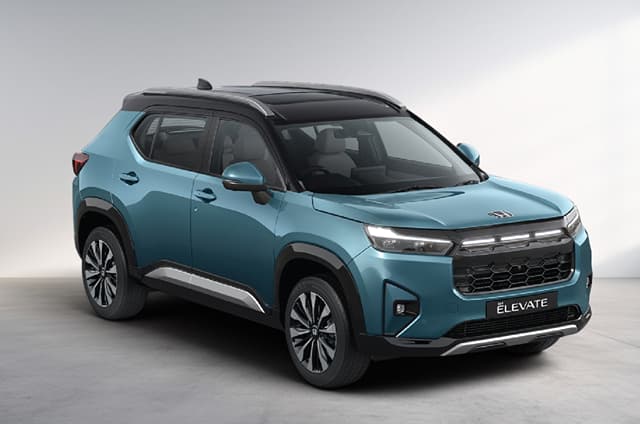
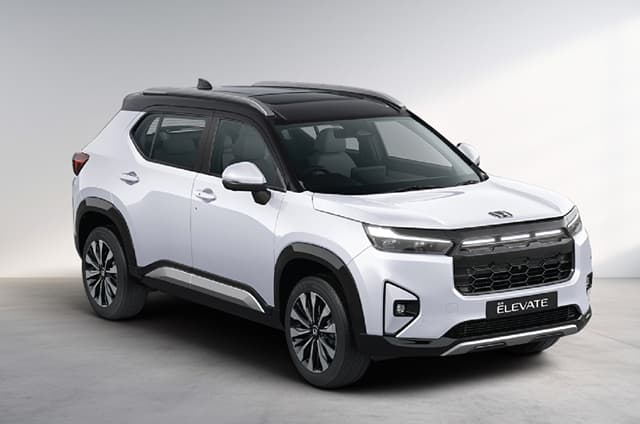
Honda Petrol Cars in India (4)
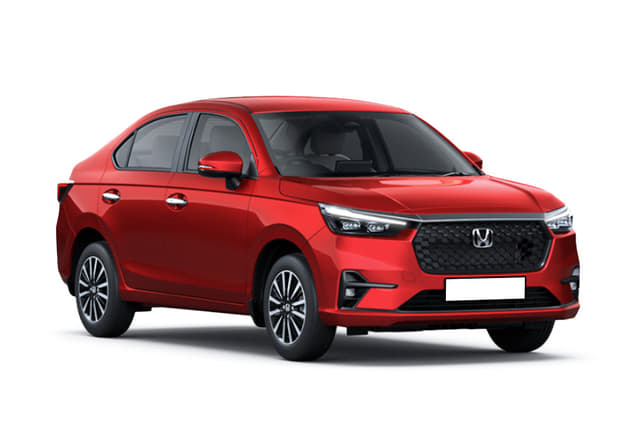
Discover the best Honda Petrol Cars. Our comprehensive guide covers detailed specifications, expert reviews, pricing information, and buying advice for Honda Petrol Cars. Find the perfect cars that matches your requirements and budget.


Find cars by body type

Find cars by body type
Trending Questions on Honda Cars - Answered by Autocar Experts
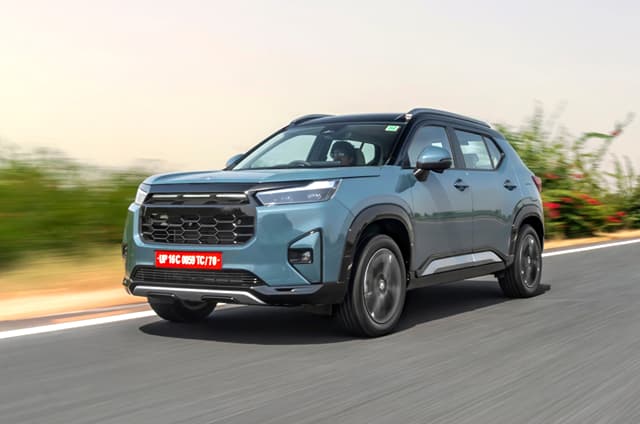
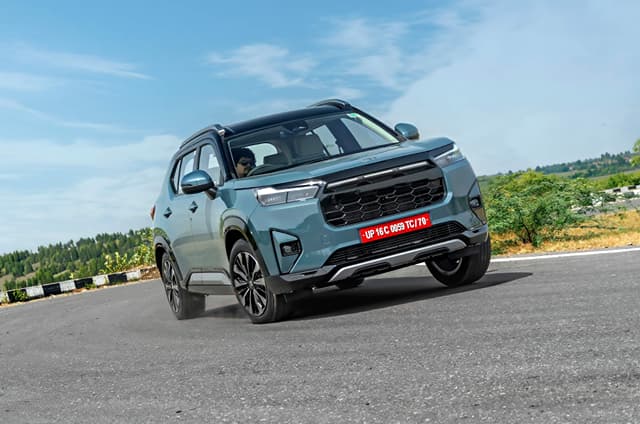
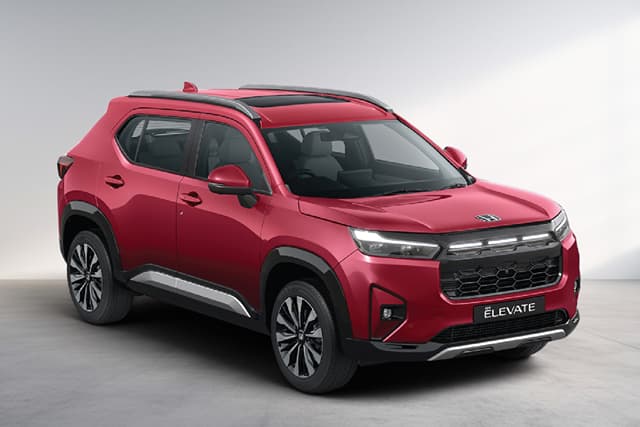
Hi Autocar, I’m looking for a petrol SUV under Rs 18 lakh with a manual transmission. I live in a small town and travel to Bengaluru occasionally. Most of my driving is a mix of city and highway use, with some hill driving, and I expect to cover around 5,000–8,000 km a year. I’m not looking for excessive features, as I feel the more electronics and automation a car has, the higher the maintenance costs can be. My priorities are a strong SUV stance and commanding driving position, good safety, annual maintenance costs below Rs 10,000, decent mileage, good road presence, predictable handling and comfortable ride quality. I also go trekking and take part in other outdoor activities, so some light off-road capability would be useful. Nothing extreme, but enough ground clearance and confidence to tackle rough patches and uneven roads. At the moment, I’m considering the Honda Elevate and Renault Duster, but I’m slightly concerned about long-term maintenance and after-sales support. From what I understand, Honda parts are generally sourced through its authorised network, while the Duster is not particularly known for having strong after-sales support. Could you please suggest which SUV would be the better choice for my requirements? Any other recommendations would also be helpful.
We would recommend the Renault Duster with the turbo-petrol engine paired with the six-speed manual. It is the best fit for the stated usage and priorities. With relatively low annual running, a petrol engine makes more sense, and while the Honda Elevate’s naturally aspirated engine is smooth, reliable and easy to live with, it does not have the Duster’s sense of toughness.The Elevate also feels less modern inside compared with the Duster. The Duster has a strong SUV stance, a commanding driving position and good ground clearance, which should provide greater confidence on rough patches and light off-road trails. Its handling and suspension are particular strengths, while the overall build quality also feels reassuring.Renault’s service network is not the strongest, but support should be better in Bengaluru, given that it is a major city. As an overall package, and considering the requirements, the Duster makes for the better choice. A relatively limited service network for Renault cars is a drawback, but the Duster’s strengths make it a more suitable option for this particular usage.
I am looking for a replacement for my Ford EcoSport petrol automatic Titanium+ and am planning to upgrade to a higher segment. This would be my last car purchase, as I am approaching 70, so reliability is my foremost concern. The car will be self-driven and should be petrol and automatic, as I am based in NCR. I prefer a torque-converter (TC) automatic and would also consider a CVT, but I do not want a DSG, DCT, DCA, or AMT. The car should also be reliable and capable on the hills of Uttarakhand and Himachal Pradesh, where I drive 3-4 times a year. My budget is Rs. 18-19 lakh, and stretching beyond this would not be possible. I would really appreciate your informed opinion and advice on which car would best suit my requirements. Thank you.
You should consider the Honda Elevate ZX CVT. As far as reliable, no-nonsense midsize SUVs go, this Honda car is among the best. Honda's 1.5-litre i-VTEC is a great mix of smoothness, reliability and efficiency, and with 120hp on tap, it has enough punch to handle the hills of Uttarakhand and Himachal when you need it to. It's a fuss-free SUV that will serve you well over a long period of time; Honda's service is known to be of high quality, and you get quite a few features within your budget of Rs 18-19 lakh.Other options you could look at are the Maruti Suzuki Victoris/Grand Vitara, which use a similarly reliable 1.5-litre petrol engine with a torque-converter automatic, but it isn't quite as punchy as the Honda engine and may feel lethargic in the hills if the car is loaded up. In a similar vein are the Hyundai Creta/Kia Seltos, which also use a 1.5 petrol engine and CVT, though these aren't quite as efficient, and in your budget you'll only get the base models of these cars. Overall, we feel the Honda Elevate is the best bet for you.
I am currently using my dad's Maruti Ritz and wish to upgrade to a more premium sedan or SUV. My current shortlist includes the Toyota Hyryder Strong Hybrid, Skoda Slavia, and Honda City e:HEV. Several thoughts and concerns keep coming to mind regarding each vehicle. The Hyryder is not a proper SUV, and its 3-cylinder engine has more vibration than 4-cylinder engines. The Slavia's 4-cylinder engine is giving single-digit fuel efficiency, especially with the E20 fuel concerns. I am also worried about the long-term maintenance of its turbo engine. The City e:HEV is priced above Rs. 20 lakh, attracting luxury tax, and its on-road price goes beyond Rs. 25 lakh. I am not sure whether the cost-benefit equation will work in favour of the City. The Slavia facelift is also around the corner. I wish to keep my next car for at least 10 years.
Based on your requirements, the Toyota Urban Cruiser Hyryder Strong Hybrid is the most sensible upgrade. Your concerns about the 3-cylinder engine are understandable, but in the hybrid, the petrol engine is assisted by the electric motor, which smooths out the power delivery and reduces the typical 3-cylinder vibrations. This Toyota car also delivers excellent fuel efficiency, especially in city driving, which will make a significant difference over a 10-year ownership period. While it may not be a "proper" SUV in the traditional sense, it offers a higher seating position, good ground clearance and a comfortable ride, making it a practical and premium upgrade from the Ritz.The Honda City e: HEV is a strong alternative, but the higher price pushes it into a different budget bracket, and the cost-benefit equation becomes harder to justify. The Skoda Slavia is a great driver's car with a smooth 4-cylinder engine, an extremely practical cabin and strong performance, but if efficiency is a high priority, it is best to stick to the strong hybrid. The Slavia will receive an update soon, which will also feature a new gearbox which replaces the earlier Aisin-sourced 6-speed torque converter (AQ250) with a newer Aisin 8-speed torque converter (AQ300). This will be exclusive to the 1.0-litre engine and will be a bit more efficient too. However, in comparison to a strong hybrid, nothing really comes close. Overall, the Hyryder Strong Hybrid offers the best balance of efficiency, reliability and ownership experience for your needs.
I want to buy a car for 40% city use and 60% long trips. I own a 2015 model of Celerio AGS. Should I buy Baleno AGS considering E20 fuel in the future.
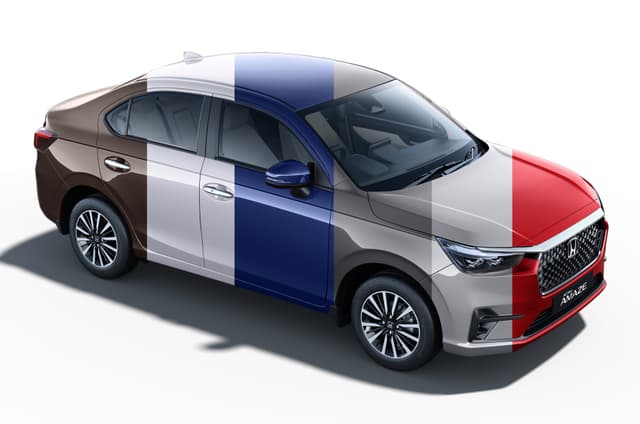
Given your usage pattern of 40% city and 60% long trips, the Maruti Suzuki Baleno AGS is actually a sensible upgrade from your 2015 Celerio AGS. The Baleno offers a more comfortable cabin, better highway stability and a more refined driving experience, which will make those long trips far more enjoyable. The AGS gearbox is also well suited to your occasional city use, keeping things simple and efficient.On the E20 front, there is no reason to worry. The Baleno is E20 compliant, and modern engines are engineered to handle this blend without any long-term reliability concerns. Maruti has also stated that their E20 engines are built for a material tolerance of slightly more than E20, so on the material front the car should be good for something like E22 for example. The main impact of a higher blend would be a reduction in fuel efficiency.The only thing to consider is whether you want to stick with AGS or move to a more conventional automatic. If you are happy with how AGS behaves, the Baleno is a solid choice. If you want a smoother and more premium automatic experience, you could look at something like the Hyundai i20 IVT or the Honda Amaze CVT instead. Both offer a more refined automatic gearbox, which can make a difference on long highway drives.Overall, the Baleno AGS is a good fit for your usage and there is no E20-related reason to avoid it. The decision really comes down to whether you are happy with AGS or want to move to a more conventional automatic.
Hi Autocar team, I am looking to buy a petrol manual SUV in Chennai for low-mileage usage—about 10 km a week in the city, with occasional 70–100 km highway trips every couple of months. I am deciding between the Honda Elevate and the Kia Seltos. Here is how the comparison stacks up for us: Price & Exchange: We get a much better trade-in value with Honda (around ₹4–4.5 lakh vs. ₹2.7 lakh at Kia). Net-net, accounting for the trade-in and Chennai on-road pricing, the Elevate works out to be roughly ₹3 lakh cheaper overall. Tech & Features: With the Elevate, we can add useful features like a 360-degree camera, a ₹6,000 ventilated seat add-on, and LaneWatch in the top model. Drive & Cabin Space: I actually preferred the steering feel of the Seltos during my test drive. The Seltos also somewhat comfortably fits 5 passengers for city rides, whereas the Elevate feels strictly like a 4-seater due to the rear center armrest/bench layout. We are a family of 7 who'll drive with the help of driver sometimes or my husband and I will drive. Model Cycle Concerns: Given the heavy discounts and trade-in offers on the Elevate, I’m concerned it’s riding on the older 2025 model cycle compared to the newer-gen 2026 Seltos. I worry a facelift or update might be around the corner for the Elevate. Given our usage, is it worth paying the ₹3 lakh premium for the newer Seltos and better steering, or does the Elevate make more practical sense despite being the older model?
Last Updated on: 16 Aug 2026