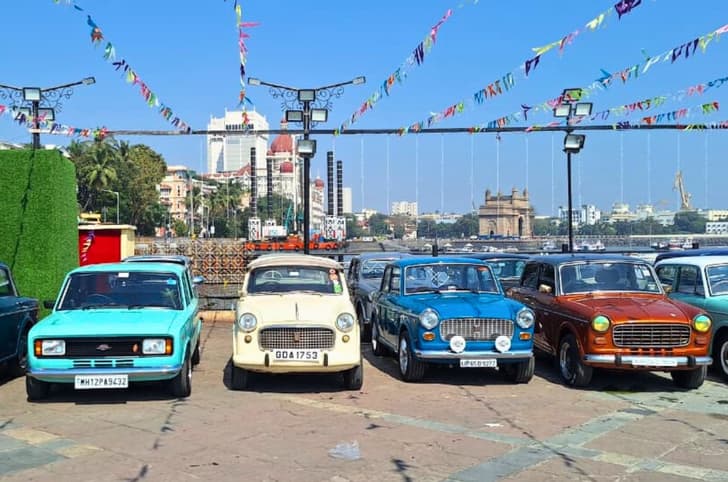
The Bombay Fiat Club Mega Meet 2025 brought together 150 Fiat and Premier Automobiles Ltd (PAL) cars at Mumbai’s Radio Club on December 14, a sharp increase from an attendance of around 80 cars in 2024. Inaugurated only last year, the meet is regarded as one of the largest gatherings of Fiat owners in India, with this year’s edition showcasing a mix of original, restored and rarely seen models. Here’s everything the 2025 edition of the Bombay Fiat Club Mega Meet had to offer:
A celebration of Fiat heritage in India
The Fiat 500: A small car with big personality
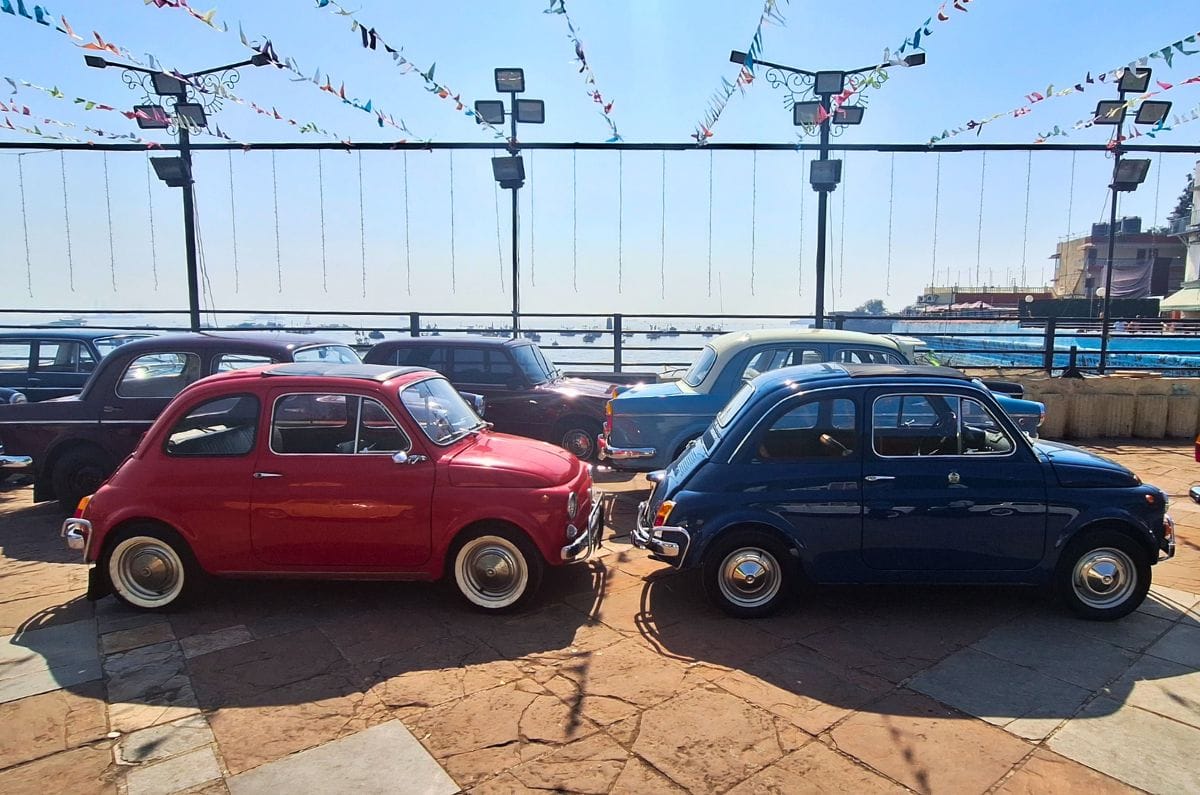
Among the oldest cars on display were three Fiat 500s, one of which even won the ‘Car of the Meet’ title. Originally introduced in Italy in 1957, the Fiat 500 was designed as a compact, affordable city car for post-war Europe. It used a rear-mounted 479cc two-cylinder air-cooled petrol engine producing around 13hp, paired with a 4-speed manual gearbox. While never common in India, they highlighted the early engineering philosophy that shaped Fiat’s global identity.
Fiat 1100 and Premier President: Fiat’s Indian foundation
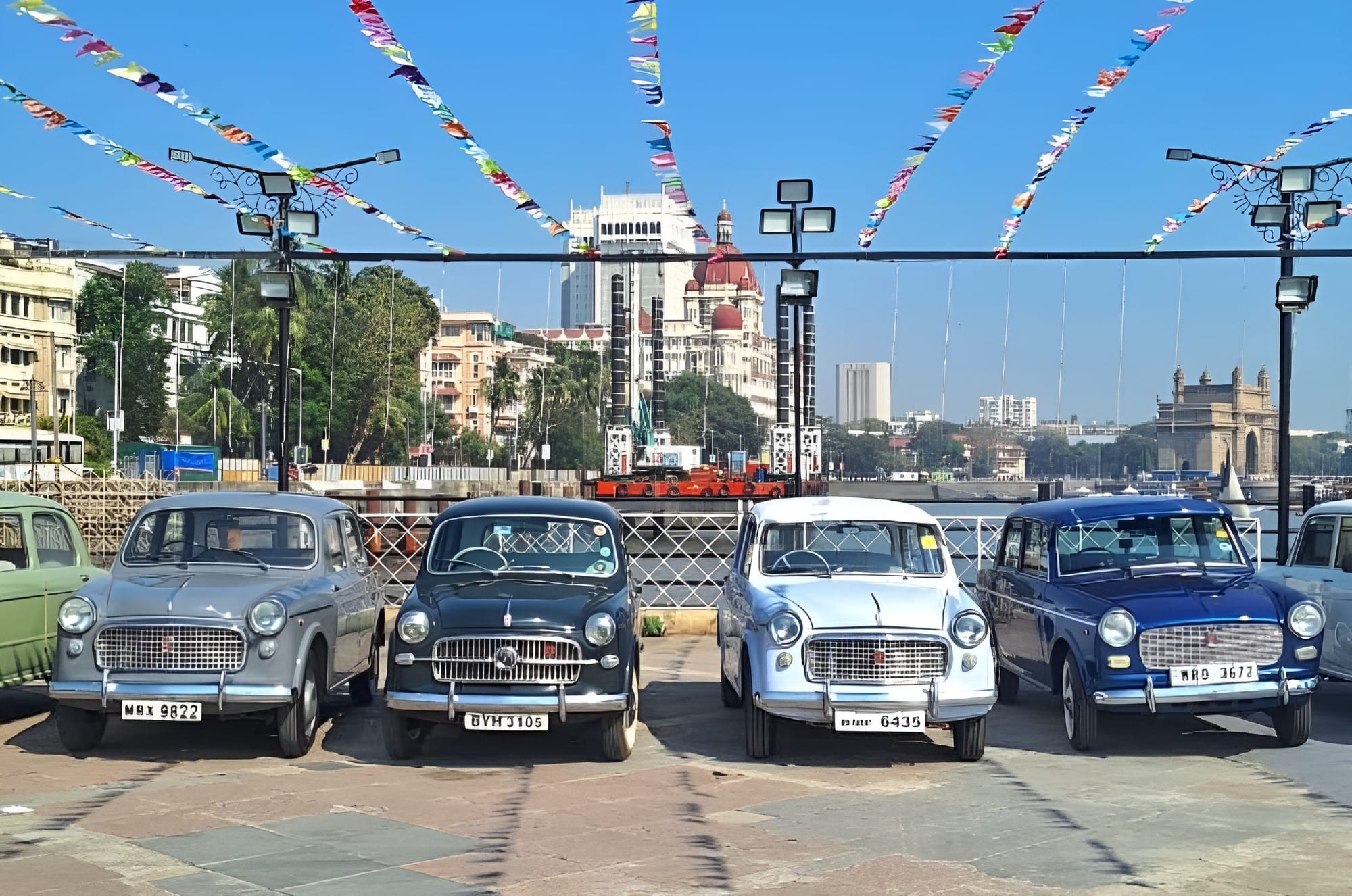
In 1954, PAL launched the Fiat 1100 in India with a 1,089cc four-cylinder engine. It started manufacturing the 1100 under licence as the Premier President in 1973, and the following year, it renamed the model as Premier Padmini, which went on to become one of India’s most beloved and iconic cars. Both Premier cars used versions of Fiat’s 1.1-litre petrol engine producing around 40hp, coupled with a 4-speed manual gearbox.
Premier 118NE: A shift towards modernity
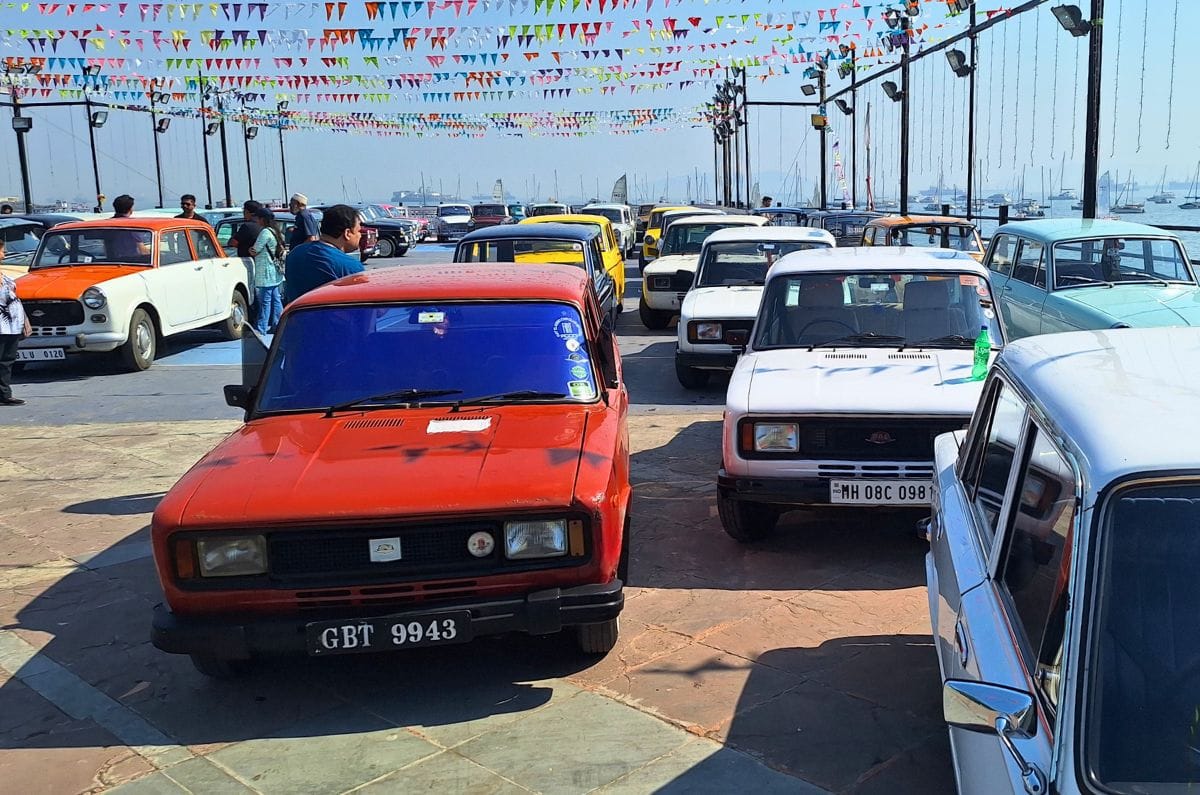
The Fiat 124, introduced internationally in 1966, marked a move towards more modern engineering, featuring a 1.2-litre four-cylinder petrol engine with outputs ranging from 60 to 65hp, mated to a 4-speed manual transmission. Its influence later extended to India through the Premier 118NE, launched in the late 1980s. The 118NE used a 1.2-litre Nissan-sourced petrol engine producing approximately 52hp, paired with a 5-speed manual gearbox.
A drive across Cuffe Parade in Mumbai
Best cars at the event were also awarded titles by unanimous voting
After the showcase, a car rally was planned across the Marine Drive in Mumbai. However, due to football icon Lionel Messi’s visit to the adjacent Wankhede Stadium, the route was changed. The cars headed to the World Trade Centre in Cuffe Parade instead before returning to the Radio Club. The change of plan, however, did not dim the event’s energy, with the modern towers of Cuffe Parade offering a good contrast to the compact Fiat and PAL models of yesteryear.
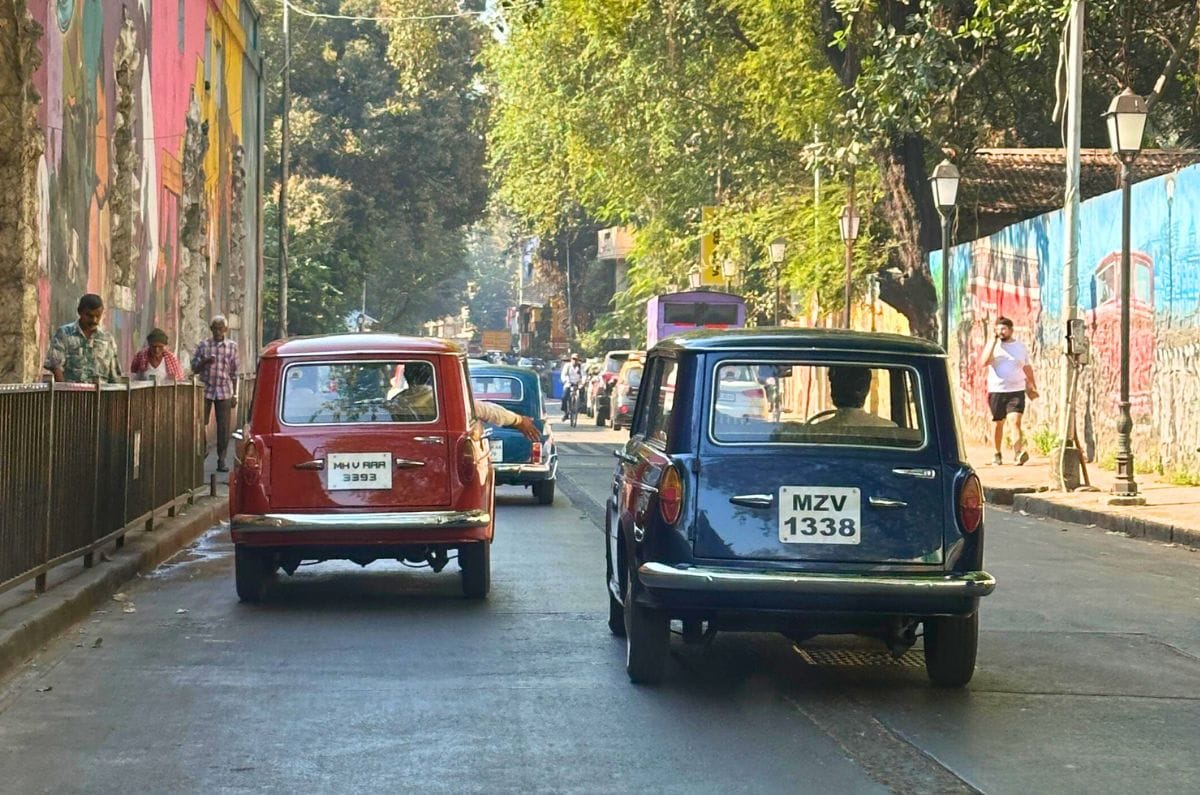
After the drive, when the cars were parked at the Radio Club again, the event enabled owners and the audience to interact, learning what goes into running and maintaining these retro cars, some of which still do duty as daily drivers on everyday roads. Notably, some participating cars travelled from as far as Nagpur and Goa for the meet – proof of their robust engineering that still enables them to run after decades.
Later in the day, the owners came together to decide among themselves which three cars would sit on the ‘Car of the Meet’ podium for 2025. As mentioned earlier, a Fiat 500 occupied the top spot. It was followed by a 1989 Premier Padmini and a 1970 Fiat 1100. In my opinion, such an award ceremony fosters healthy competition among owners, motivating them to take better care of their cars.
Why the Bombay Fiat Club Mega Meet matters
Helps to understand how cars and motoring have evolved over time
Events like the Bombay Fiat Club Mega Meet offer a rare opportunity to understand how cars and motoring have evolved over the decades. From modest-capacity engines that produced limited power, belonging to an era when seatbelts, electronics and driver aids were absent, to today’s far more efficient powertrains, the meet highlights just how different cars once were.
The meet also brings together owners who share their knowledge on repairs and maintenance of vehicles that hold historic value. With no registration fees for owners or entry fees for onlookers, the event allows everyone to experience these heritage cars in person rather than through photographs, videos or stories.


 Uday Singh
 Glenn Noronha