Honda City vs Slavia vs Hyryder


Last Updated on: 13 Oct 2026
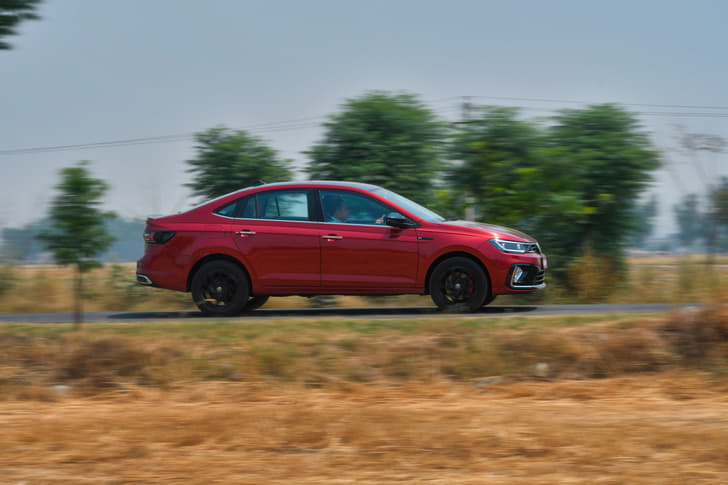
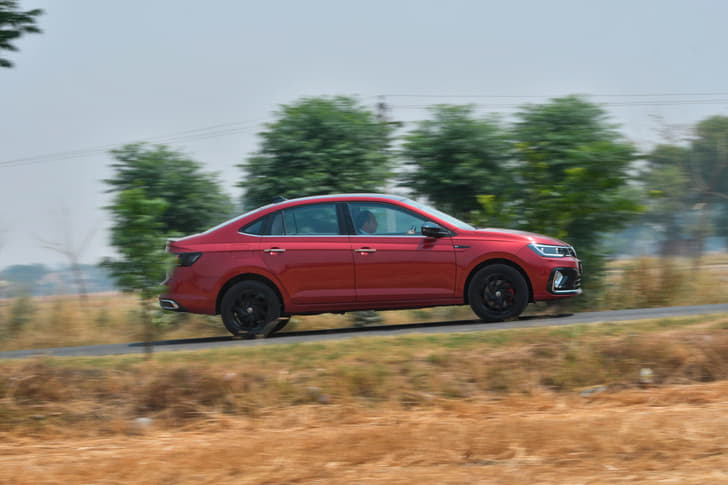
Engine Type | Turbocharged |
Engine Displacement | 999 cc |
Number of Cylinders | 3 |
Engine Installation | Front |
Fuel Type/ Propulsion | Petrol |
Pure Electric Driving Mode | No |
Gearbox Type | Torque Converter |
Number of Gears | 6 |
Manual Shifts via Gear Lever on Automatic Gearbox | Yes |
Paddle Shifters for Automatic Gearbox | Yes |
Sport Mode for Automatic Gearbox | No |
Drive Layout | Front Wheel Drive |
Lockable Differential/s | Yes |
Max Engine Power | 115hp at 5000-5500 rpm |
Max Engine Torque | 178Nm at 1750-4000 rpm |
Fuel Supply System | Direct Injection |
E20 Compatibility | Yes |
Emission Standard | Bharat Stage VI |
Auto Start/Stop | Yes |
Official Fuel Economy | 18.7 kmpl |
Fuel Tank Capacity | 45 litres |
User Reported Mileage | 17.9 kmpl |
Front Suspension Type | Independent, MacPherson Strut |
Front Springs | Coil Springs |
Rear Suspension Type | Non-independent, Torsion Beam |
Rear Springs | Coil Springs |
Damper Control | No |
Ride Height Adjust | No |
Type of Power Assist | Electric |
Steering Adjust type | Manual |
Steering Adjust | Tilt and Telescopic |
4 Wheel Steer | No |
Turning Radius | 5.05 m |
Front Brakes | Discs |
Rear Brakes | Drums |
Wheel Size | 16 inches |
Front Tyre Size | 205/55 R16 |
Rear Tyre Size | 205/55 R16 |
Wheels | Alloys |
Spare Wheel | Space Saver |
Length | 4561 mm |
Width | 1752 mm |
Height | 1507 mm |
Wheelbase | 2651 mm |
Ground Clearance | 179 mm |
Kerb Weight | 1228 kg |
Chassis Type | Monocoque |
Boot Capacity | 521-1050 litres |
Doors | 4 |
| Power Windows | Front and Rear |
| Glove Box | |
| Bluetooth Connectivity | |
| Sunglass Holder | |
| Bottle Holder in Doors | |
| Interior Lamps |
| Crash Test Rating | 5 |
| Speed Sensing Door Lock | |
| Side Airbag | |
| Seat Belt Warning | |
| Airbags | 6 |
| Rear Seatbelt Reminder |
| Body Coloured Bumpers | |
| Projector Headlamps | |
| Cornering Headlights | |
| Headlight Height Adjuster | |
| Antenna | Shark Fin |
| Follow Me Home Headlamps |
| Speedometer | Digital |
| Tachometer | Digital |
| Trip Meter | |
| Average Fuel Consumption | |
| Average Speed | |
| Distance to Empty |
| Audio System | |
| Branded Music System | |
| Speakers | 8 |
| CD Player | |
| USB Input | |
| AUX Input |
| Remote AC On / Off via App | |
| Remote Sunroof Open / Close via App | |
| Over the air (OTA) updates | |
| Remote Car Lock/Unlock via App | |
| Emergency Call Button | |
| Find My Car |
 Electronic Stability ControlPart Digital / Part Analogue Digital Instrument ClusterWired Android AutoFabric Seat MaterialLED headlampsHill Start Assist1-zone Climate ControlWireless Android Auto60:40 Rear Seat Backrest SplitCornering HeadlightsAutomatic HeadlampsPush Button StartCornering HeadlightsWireless Android Auto1-zone Climate ControlSingle Pane SunroofElectric Adjust for Driver's SeatCornering HeadlightsWireless Android AutoElectric Adjust for Front Passenger's SeatAutomatic Day Night Interior MirrorFully Digital Digital Instrument ClusterOver the air (OTA) updatesFront Only Ventilated SeatsFollow Me Home HeadlampsAutomatic Day Night Interior MirrorFully Digital Digital Instrument ClusterOver the air (OTA) updatesFront Only Ventilated SeatsFollow Me Home HeadlampsAutomatic Day Night Interior MirrorFully Digital Digital Instrument ClusterOver the air (OTA) updatesFront Only Ventilated SeatsFollow Me Home Headlamps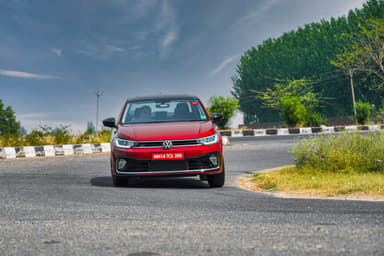

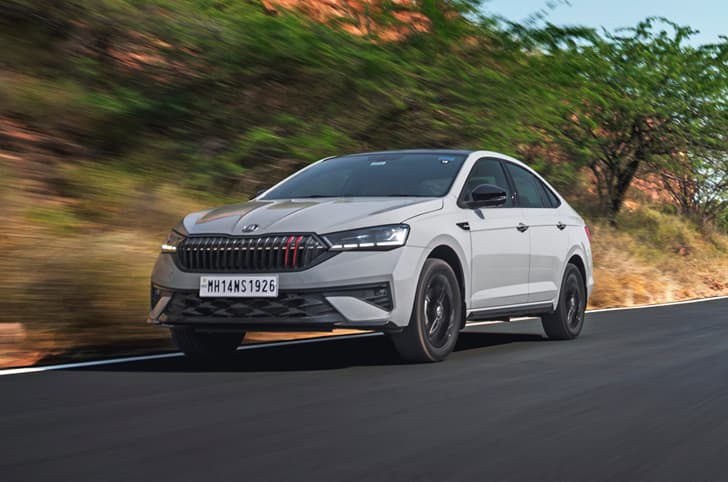
Hi, I am thinking of replacing Toyota Corolla (2006 model) with a car under the budget of Rs. 20 - 22 lakh. Which car do you suggest replacing the trustworthy Corolla with as it has served me very well. I am considering the VW Virtus/ Skoda Slavia, VW Taigun /Skoda Kushaq and Honda City Hybrid.

 Honda CitySkoda SlaviaVolkswagen VirtusVolkswagen TaigunSkoda KushaqToyota Urban Cruiser Hyryder
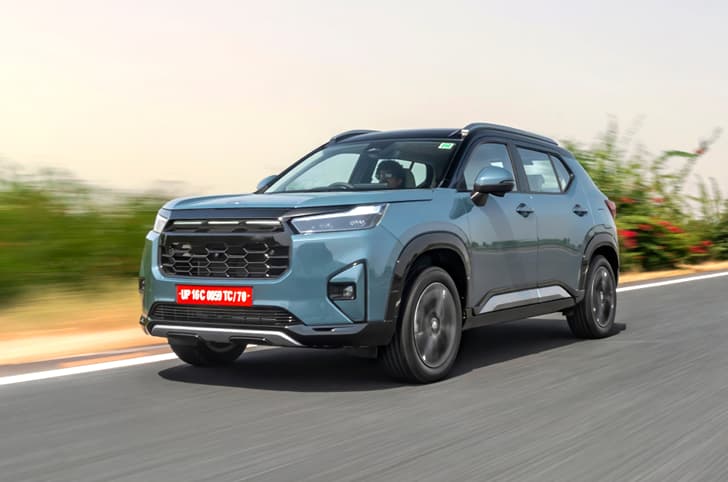
I currently own a Jeep Compass and want to get an additional car for my father, with good reliability, unlike the Jeep. My father still drives a 2008 Honda City, and I am torn between a few choices: the Honda City, Skoda Slavia, Nissan Tekton and Toyota Hyryder. Or should I wait for the Virtus facelift or the new-generation Creta? His usage is low, at almost 500 km per month. Please suggest.
Honda CitySkoda SlaviaVolkswagen VirtusToyota Urban Cruiser HyryderNissan TektonI just read that Slavia facelift is coming with new 8-speed automatic. Between the new Slavia and Virtus, which one would you pick if buying a sedan now?
Hi guys, I’m looking for a four-car garage that can fulfil some specific roles. I need an EV for city use in Bangalore, and I’m considering either the Tata Tiago EV or Punch EV. I also need a high-mileage family hauler, for which I’m thinking of the Toyota Innova Hycross VX(O). For a fun car for myself, I’m considering the Volkswagen Virtus GT. Finally, I want another SUV that doesn’t need to be as large as the Hycross, so I’m considering the Mahindra XUV 7XO, Kia Seltos or Mahindra BE 6. I’ll be travelling frequently between Bangalore, Hyderabad and Coimbatore, and I’m also planning a road trip across India. My overall budget for the four cars is around Rs 1-1.5 crore. I’m open to suggestions, so I’d really appreciate any recommendations. Thanks in advance!
Tata Tiago EVTata Punch EVToyota Innova HyCrossToyota Urban Cruiser HyryderVolkswagen VirtusMahindra XUV 3XOKia SeltosKia SorentoSkoda Slavia (2022-2026)