Autocar India
SK

Suraj Kannan

11w

We presently own a 2014 Honda City Diesel as our secondary car and an Innova Crysta Diesel as our primary vehicle. Our usage is approximately 60% city and 40% highway. We are considering purchasing a new secondary car; however, upgrade options for sedan enthusiasts are quite limited. Kindly suggest suitable new car options within a budget of ₹20 lakhs.

Autocar India team

Autocar India

Verified
9w
You're right, the choice of sedans available in the market today has dwindled considerably in recent years, and the midsize sedan segment is being propped up by just four candidates. The good news is that all four of them are expected to be updated in 2026, which should breathe some life into them in the form of updated looks and more features, and whichever car you choose, we recommend waiting until the updated version is launched.
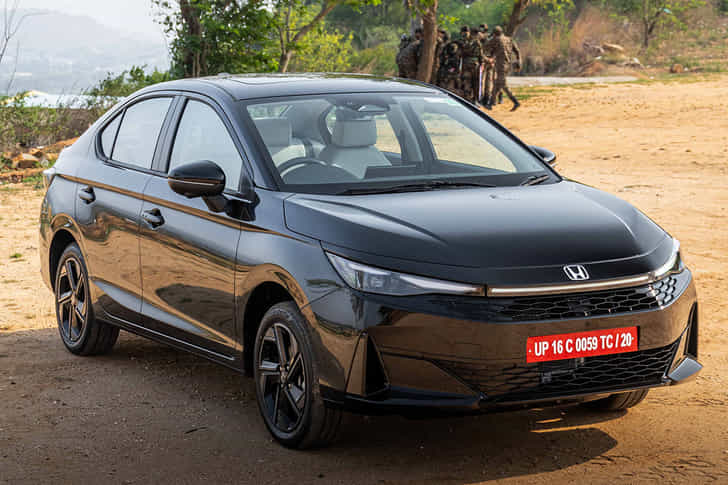
If you're a fan of the Honda City's no-nonsense approach, you'll like the new one, which will feel like a step up from your 2014 model, especially in terms of space and features. However, its single-engine option is limiting, and it is not as fun to drive as before.
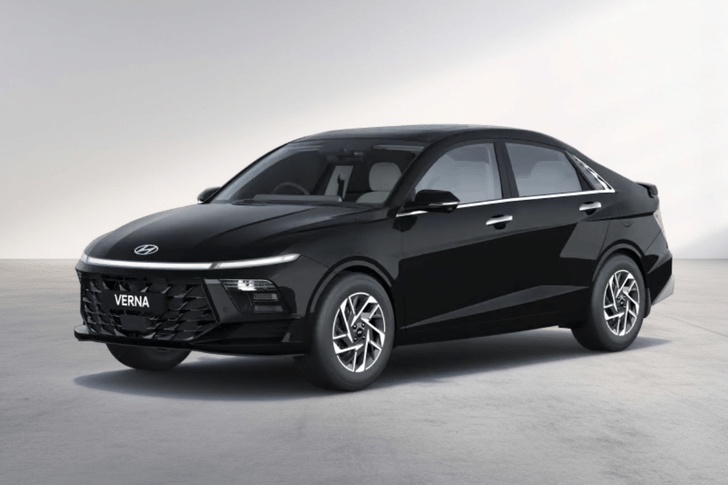
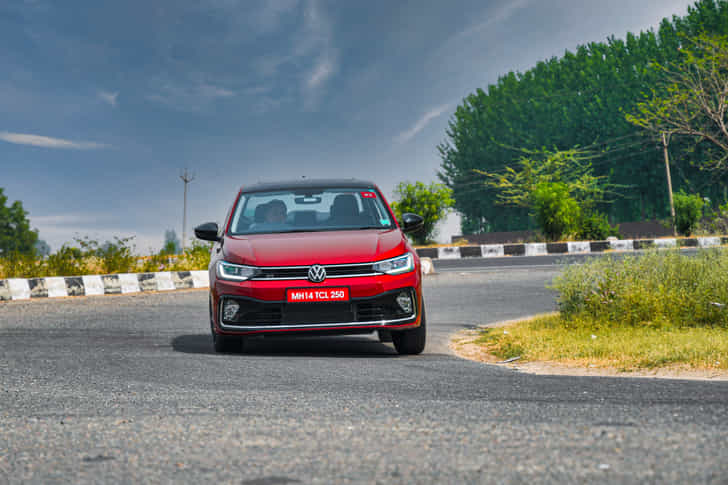
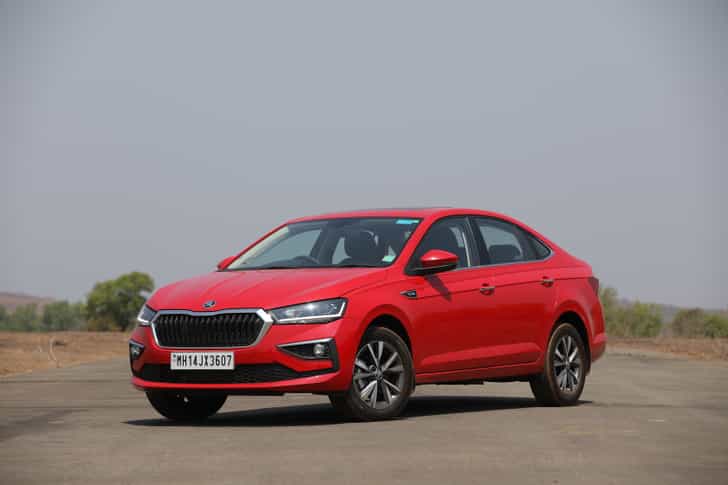
The Hyundai Verna is far more versatile and gets an even longer list of features, but it too errs on the safe and unexciting side, even with its 1.5-litre turbo petrol engine. Your best bets are the Skoda Slavia and Volkswagen Virtus, which, with the facelifts, will get a much-needed features upgrade.
They are excellent to drive, yet spacious and comfortable, and a particular highlight is their punchy TSI turbo petrol engines. Choosing between them is a matter of preference, as they are the same car underneath, but either of these is what you should choose.
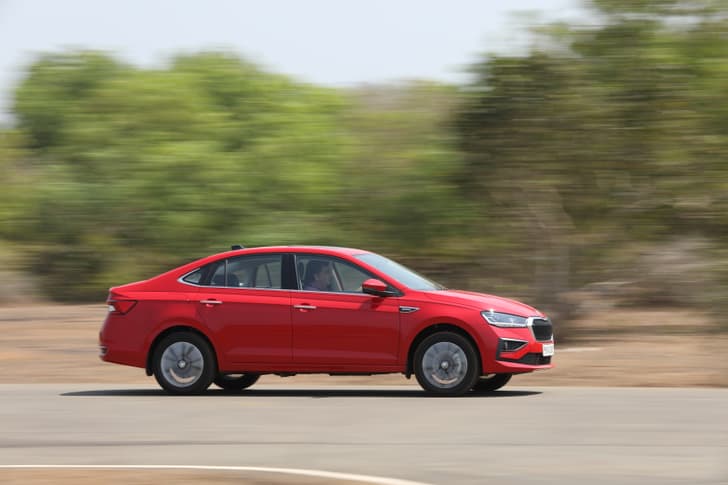
Skoda Slavia

Skoda Slavia

More questions on similar cars

PS

Prithvi Singh

2d

I am considering purchasing a car within the ₹25-30 lakh budget range. My daily commute is approximately 60-80 km between Noida and Delhi, along with occasional outstation trips every 3-4 months. I am currently unsure whether to choose an electric vehicle (EV), a petrol vehicle, or a petrol-hybrid. Given my high daily running, an EV appears to be the most cost-efficient option. However, concerns regarding charging infrastructure and range anxiety; especially during outstation travel, make it less convenient compared to petrol or hybrid vehicles, which offer greater flexibility for long-distance journeys. On the other hand, petrol or hybrid vehicles would be more expensive to operate in the long run. I would consider buying a diesel car, but due to the 10-year usage limit, I am hesitant. The Toyota Innova HyCross seems like a strong option, but its larger size may not be ideal for predominantly city driving. Additionally, since this will be my primary vehicle, I am hesitant to rely entirely on an EV at this stage, as it is still not as widely adopted or universally convenient as traditional alternatives.

Autocar India team

Autocar India

Verified
1d

With 60-80 km of daily driving, you are absolutely right that an EV would be the cheapest to run and very smooth in city traffic. However, since this is your primary car and you also take outstation trips, the need for charging planning and dependence on infrastructure can become inconvenient over time, especially on longer drives. It is usable, but not completely effortless yet.A strong hybrid fits your usage better. It gives you EV-like smoothness and excellent efficiency in city driving, while also delivering very good efficiency on highways, something modern hybrids now do surprisingly well. At the same time, you retain the full flexibility of a petrol car, eliminating any range anxiety or planning concerns. What’s even more impressive is that despite its size, it’s very easy to drive with great visibility, though its length can make parking in tight spots a bit challenging.We would have recommended you the Toyota Urban Cruiser Hyryder Hybrid instead, but considering you currently own the Honda City, the Toyota Urban Cruiser Hyryder may not feel like a meaningful upgrade in terms of space. This is where the HyCross makes a stronger case. It offers a clear step up in space, comfort and long-distance usability, while still delivering the efficiency benefits of a hybrid.A petrol-only SUV in this budget will feel simpler to own, but with your running, fuel costs will be significantly higher, which reduces long-term value.

VehicleToyota Urban Cruiser Hyryder
VehicleHonda City
VehicleToyota Innova HyCross
RA

Ram

1d

Which is the best seven-seater car in the ₹15 lakh bracket? My usage is occasional long drives and limited city usage.

Autocar India team

Autocar India

Verified
18m

With occasional highway trips, limited city use, and a cap of around ₹15 lakh, the Kia Carens Clavis HTE EX 1.5 NA manual fits your needs best. It is a true seven-seater that is easy to live with and stays within budget.Why it works for you: the petrol engine is smooth and quiet, and the light steering makes it simple to handle in the city. The middle row is roomy and comfortable, and roof vents help keep the cabin cool for everyone on hot days. Even the third row of this Kia car is surprisingly comfortable for adults.Know the trade-off: With all seven occupants on board and luggage, you will need to plan overtakes on the highway. Also, the boot space with all three rows up is just 216 litres, so for longer trips, you may need to fold the last row.If you don’t plan on using the third row often, then the Maruti Ertiga or Toyota Rumion are reliable picks. Maruti also has the largest dealer network if that is a concern for you.Overall, for your use and budget, the Carens Clavis lines up best.

VehicleKia Carens Clavis
VehicleMaruti Suzuki Ertiga
VehicleToyota Rumion
DS

Dattaprasad Sawool

1w

I want to buy a car for daily use of around 70 km. Please suggest a good and safe car within a budget of about ₹11 lakh (not more than this).

Autocar India team

Autocar India

Verified
2h

Go for the Tata Altroz petrol manual. Within your budget and daily 70 km, it is the safest and most sensible pick. The Altroz has a 5-star crash test rating and a strong body, so it meets your “safe car” needs better than most in this price range. It feels steady at 70-90kph, the ride is comfortable on bad roads, and the seats support you well, which matters when you are in the car for a long time every day. It is also easy to drive in the city, and Tata’s service network is wide, so upkeep is simple in most towns.One thing to be aware of is that the petrol engine is fine for daily use, but it does not feel very quick if you push hard.If your city has a good CNG supply and you want lower running costs, look at the Tata Punch iCNG Adventure. It is also a very safe choice, offering a higher seating position that makes traffic and speed breakers easy, but it is not as relaxed as the Altroz on longer highway runs.

VehicleTata Altroz

Popular discussions right now

KY

Krishna Yadav

4d

I am planning to sell my Mahindra XUV700 and switch to the Renault Duster. I would like your expert opinion on whether this would be a good decision.

Autocar India team

Autocar India

Verified
4d

On paper and in real-world ownership, these are very different cars, and the Mahindra XUV 7XO sits in a clear segment above. The XUV 700 is a bigger, more complete SUV. It offers more space, better road presence, stronger performance and a far richer overall experience, including the option of a third row and a more premium cabin. It is designed as a proper family SUV and feels more capable on highways and long drives.The Renault Duster, even in its new form, is a simpler, more driver-focused and lighter SUV. It will likely be easier to drive in the city and feel more rugged and straightforward, but it is still a step down in terms of overall size, features and cabin experience.So the decision really comes down to intent. If you are moving because you want something more compact, easier to use daily and less feature-heavy, then the Duster can make sense. But if you are expecting it to feel like an upgrade or even equal to the XUV700 in terms of space, comfort and overall experience, it will not.

VehicleRenault Duster
DE

Devakumar

5d

I have booked the Tata Sierra Adventure Plus petrol manual, but I am now confused between the petrol and diesel manual variants, particularly in terms of mileage and performance. I am not interested in an automatic transmission. My annual running is less than 6,000 km. Could you please advise which engine option would be more suitable for my usage? Additionally, I would appreciate any alternative suggestions for a spacious car with good mileage that fits my needs.

Autocar India team

Autocar India

Verified
4d

The Tata Sierra is a big, heavy car, and the petrol engine, being a naturally aspirated unit, feels just about adequate, especially once you load it up or hit the highway. The diesel, on the other hand, suits the car far better with its stronger low-end pull, making overtakes easier and long-distance driving far more relaxed.That said, with your low annual running of under 6000 km, the petrol still makes sense if your usage is mostly in the city. It will feel smoother, easier to live with and perfectly adequate for everyday driving, even if it lacks that effortless punch on highways.If you are open to alternatives for a better petrol manual experience, the Renault Duster with its turbo petrol engine is a strong option. It feels far more effortless to drive, while naturally aspirated options like the Kia Seltos or Hyundai Creta offer a more refined and effortless experience than the Sierra petrol.

VehicleTata Sierra
VehicleRenault Duster
VehicleKia Seltos
VehicleHyundai Creta
RO

Rohin

1w

I am confused about buying the AMT version of the Skoda Kylaq, Tata Nexon, or Maruti Fronx. My budget is between 11 and 13 lakh. My usage is mostly city driving of about 1,000 km per month, with occasional long highway drives.

Autocar India team

Autocar India

Verified
3d

Between the three, the Skoda Kylaq is the best automatic for the money. It doesn’t use an AMT but a proper 6‑speed torque-converter with the 1.0 TSI, which is smooth, robust and easily the nicest for your occasional highway runs.The Maruti Suzuki Fronx 1.0 turbo also gets the same 6‑speed torque-converter auto, and while it is refined and efficient, it doesn’t have the same solid, European feel or driving dynamics as the Kylaq. However, from an overall cost-of-ownership point of view - price, fuel efficiency and service, the Fronx is likely to work out cheaper.The Tata Nexon in your budget doesn’t get a torque-converter. You mainly have a 6‑speed AMT, which is convenient but nowhere near as smooth or quick as a proper automatic. There is also a 7‑speed DCA dual‑clutch option, which is noticeably better than the AMT, but still not as seamless as the autos in the Kylaq and Fronx, and it can push the price higher.For 11-13 lakh, 1,000km a month in the city and the odd long drive, we would pick the Kylaq auto. If budget discipline and running costs are top priority, go for the Fronx 1.0 turbo automatic.

VehicleSkoda Kylaq
VehicleMaruti Suzuki Fronx
VehicleTata Nexon

Posted on: 13 Feb 2026