Last Updated on: 14 May 2026
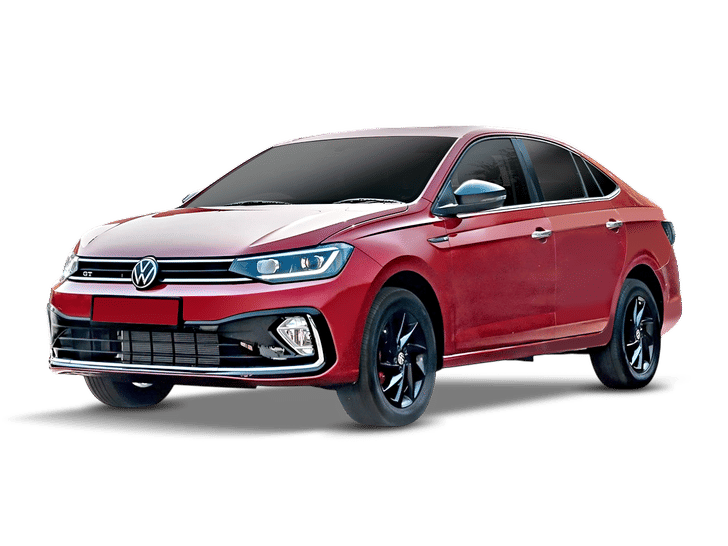
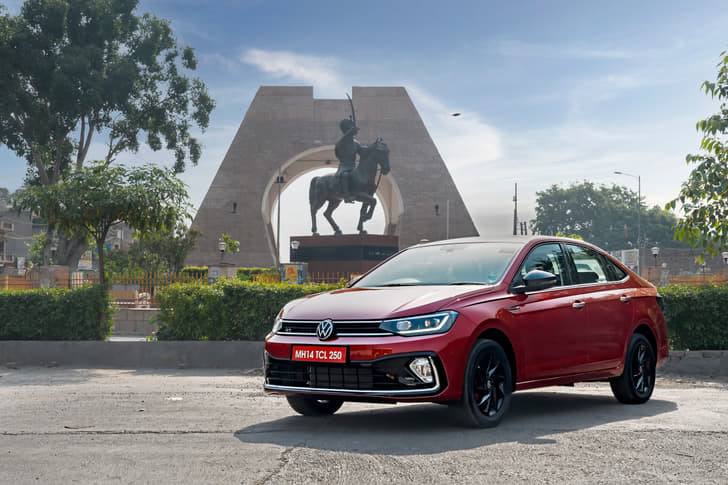
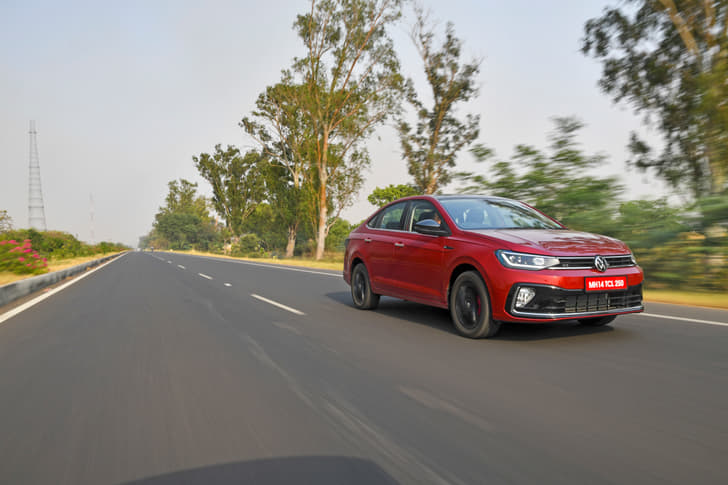
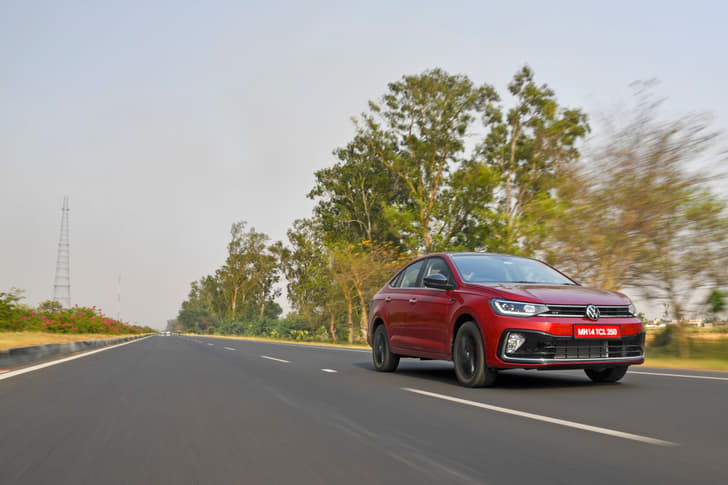
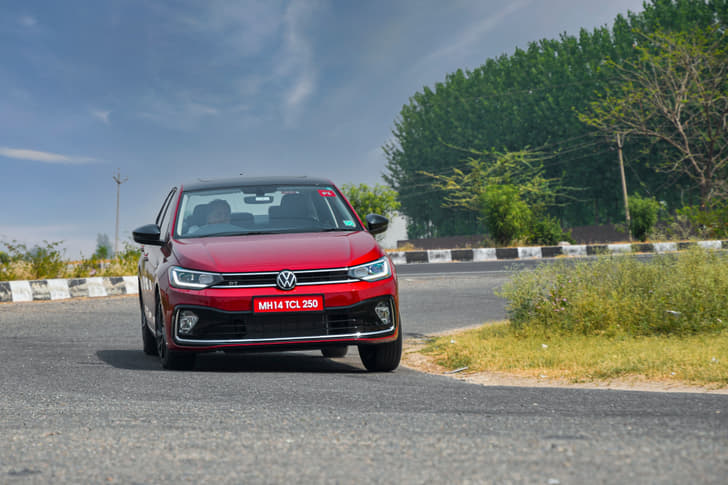
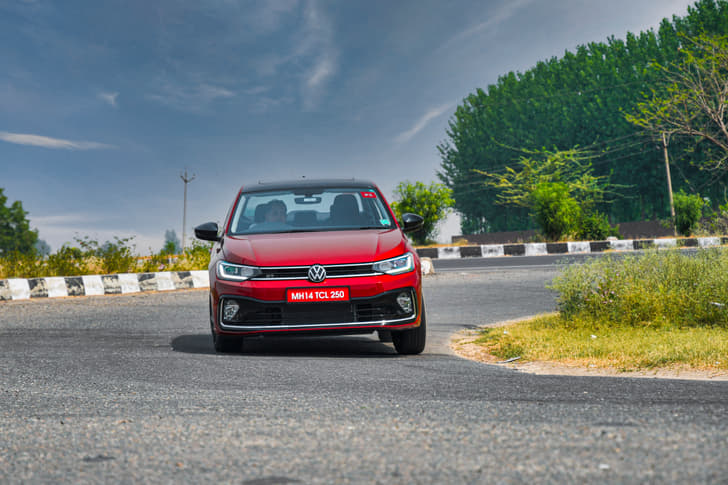
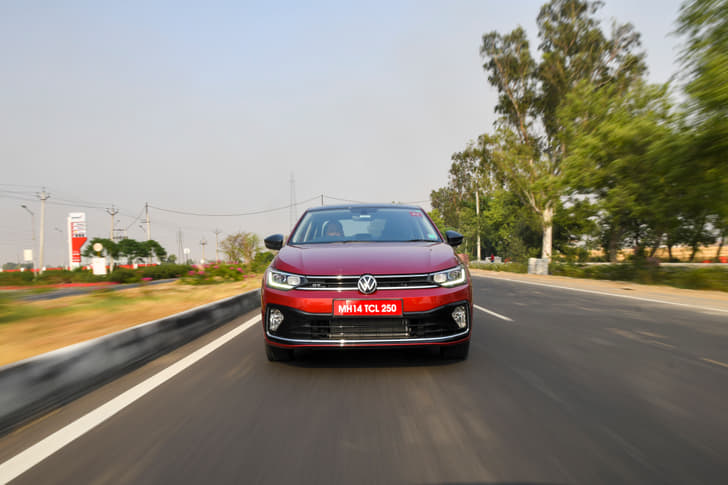
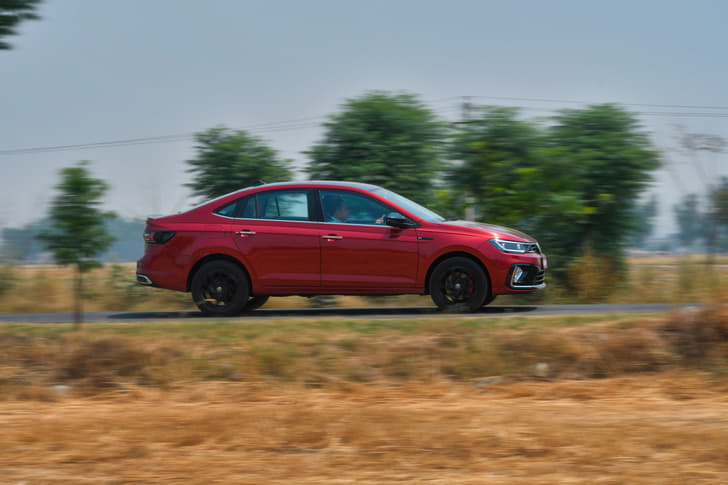
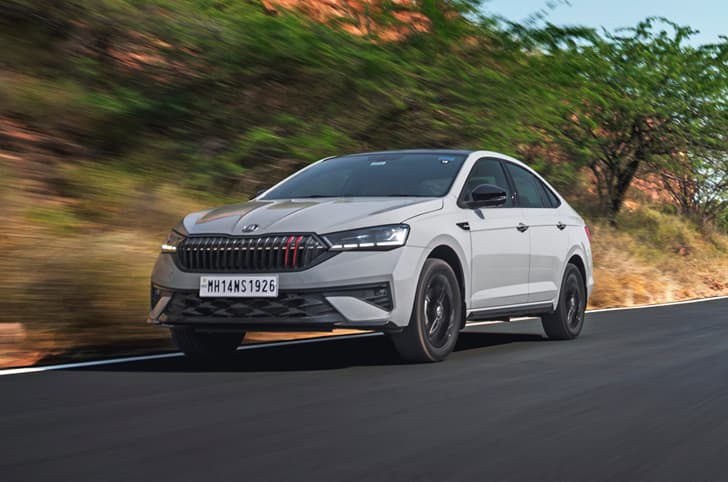
Volkswagen Virtus Highline AT
The Volkswagen Virtus Highline AT variant is priced at ₹14.66 lakh. The Highline AT variant offers key features like Ambient interior lighting, Cruise control, Keyless start, Airbags, Wireless phone charging. Explore complete specifications, and features below.
Volkswagen Virtus Highline AT specifications
Engine & Transmission
Fuel Type/ Propulsion | Petrol |
Engine Installation | Front |
Pure Electric Driving Mode | No |
Number of Cylinders | 3 |
Engine Displacement | 999 cc |
Engine Type | Turbocharged |
Max Engine Power | 115hp at 5000-5500 rpm |
Max Engine Torque | 178Nm at 1750-4000 rpm |
Drive Layout | Front Wheel Drive |
Gearbox Type | Torque Converter |
Number of Gears | 6 |
Lockable Differential/s | Yes |
Sport Mode for Automatic Gearbox | No |
Manual Shifts via Gear Lever on Automatic Gearbox | Yes |
Paddle Shifters for Automatic Gearbox | Yes |
Fuel & Performance
Fuel Tank Capacity | 45 litres |
Fuel Supply System | Direct Injection |
Official Fuel Economy | 18.7 kmpl |
Emission Standard | Bharat Stage VI |
E20 Compatibility | Yes |
Auto Start/Stop | Yes |
Suspension & Steering
Front Brakes | Discs |
Rear Brakes | Drums |
Type of Power Assist | Electric |
4 Wheel Steer | No |
Steering Adjust | Tilt and Telescopic |
Steering Adjust type | Manual |
Turning Radius | 5.05 m |
Front Suspension Type | Independent, MacPherson Strut |
Front Springs | Coil Springs |
Rear Suspension Type | Non-independent, Torsion Beam |
Rear Springs | Coil Springs |
Damper Control | No |
Ride Height Adjust | No |
Wheels | Alloys |
Wheel Size | 16 inches |
Front Tyre Size | 205/55 R16 |
Rear Tyre Size | 205/55 R16 |
Spare Wheel | Space Saver |
Dimensions
Length | 4561 mm |
Width | 1752 mm |
Chassis Type | Monocoque |
Height | 1507 mm |
Wheelbase | 2651 mm |
Doors | 4 |
Ground Clearance | 179 mm |
Kerb Weight | 1224 kg |
Boot Capacity | 521-1050 litres |
Volkswagen Virtus Highline AT features
Comfort
| Power Windows | Front and Rear |
| Cooled Storage | |
| Bluetooth Connectivity | |
| Sunglass Holder | |
| Bottle Holder in Doors | |
| Cabin Boot Access |
Safety
| Crash Test Rating | 5 |
| Heads Up Display | |
| Airbags | 6 |
| Emergency Brake Light Flashing | |
| Door Ajar Warning | |
| Seat Belt Warning |
Exterior
| Body Coloured Bumpers | |
| Cornering Headlights | |
| ORVM turn indicators | |
| Projector Headlamps | |
| Follow Me Home Headlamps | |
| LED taillights |
Interior
| Speedometer | Analog |
| Tachometer | Analog |
| Trip Meter | |
| Average Fuel Consumption | |
| Average Speed | |
| Distance to Empty |
Entertainment
| Audio System | |
| Branded Music System | |
| CD Player | |
| Speakers | 8 |
| USB Input | |
| AUX Input |
Connected Car Features
| Remote Sunroof Open / Close via App | |
| SOS Button | |
| Remote Car Lock/Unlock via App | |
| Emergency Call Button | |
| Find My Car | |
| Remote AC On / Off via App |
Volkswagen Virtus variants
Volkswagen Virtus comparison

Questions you may find useful
Varun
•6dI’m confused between the Skoda Kushaq 1.5 DSG and the Volkswagen Virtus GT 1.5 DSG. I personally prefer the Virtus for its sedan driving feel and enthusiast appeal, but the Kushaq seems more practical for long-term usage and family comfort. My main concern is: Will proper enthusiast sedans and 1.5 turbo petrol engines like the Virtus still exist 5–6 years later, or will the market fully shift towards SUVs, hybrids, and EVs? Would it make more sense to: Buy the Kushaq now and possibly move to a sedan later if the segment still exists, or Buy the Virtus now and keep it long term before enthusiast sedans become rare? Which would you recommend considering future trends, practicality, and ownership experience?

Autocar India
We would pick the Volkswagen Virtus GT now and keep it for a while because you already prefer the sedan feel and, over the next 5-6 years, cars like this are likely to become fewer while taller cars will only get more common. The 1.5 turbo with the DSG, which is a quick-shifting automatic, gives the Virtus a lively, smooth feel that makes daily drives and highway runs special. Also, if you truly enjoy sitting low and feeling connected to the road, the Virtus delivers that better than the Skoda Kushaq, so you’ll smile more every day you own it. And looking ahead, SUVs and hybrids will grow fast, but sporty petrol sedans will likely shrink in choice, not vanish overnight. So it makes sense to buy the one you really want now; the “practical” taller car will be easy to find later if your needs change. Moreover, the Virtus has plenty of ground clearance, especially for a sedan, so that should not be a worry either. Do bear in mind, though, that both the Virtus and its sister model, the Skoda Slavia, will be updated later this year, so if you can wait for just a few months, we would recommend doing so.
Siddhant Lokhande
•1wI am planning to buy an automatic car with an on-road budget of around ₹15 lakh. I currently drive a Honda Civic (manual), and my monthly usage is relatively low at under 400 km. The car will primarily be used for daily city commutes (office) and occasional highway trips—around 2–3 times a year, typically within 500 km. I am looking for a well-balanced option that offers comfort, reliability, and good fuel efficiency for both city use and occasional highway driving. I am not in a hurry and can wait until the end of the year if better options or updates are expected. Could you please suggest the best choices in this budget, keeping long-term ownership and ease of driving in mind?

Autocar India
You haven't mentioned the body style or whether you have any transmission preference (MT or AT). But since you're used to the low-slung Honda Civic manual, chances are the new crop of compact SUVs might not give you the same satisfying 'sporty' drive experience. You could consider the Hyundai i20 N Line, which is a 'fun-to-drive' hatchback. You could get either the manual or dual-clutch automatic version well within your budget. If it is a fun-to-drive sedan you're after, the entry-level 1.0 TSI manual versions of the Volkswagen Virtus and Skoda Slavia will fall within Rs 15 lakhs (on-road) too. Both these cars are likely to get an update this year, with similar changes as their mid-size SUV counterparts, Taigun and Kushaq; expect minor cosmetic updates and an upgraded air-con system with its manual version.
Akshay Nayak
•1wI am planning to buy a new car and have narrowed my choice down to the Skoda Slavia/VW Virtus with the 1.5 DSG. I really love how both cars drive, and the DSG feels like magic. However, 90% of my driving is in the city, and I live in one of the most traffic-congested areas of Mumbai (Malad). Would it be a wise decision to go for the DSG gearbox? Which other cars would you recommend in this segment (no SUVs)?

Autocar India
Go for the Volkswagen Virtus 1.0 TSI automatic rather than the 1.5 DSG, given your 90 percent city use in Malad’s heavy stop start traffic. You get the same cabin, driving position and overall feel you liked, but the 1.0’s torque converter automatic is far better suited to daily Mumbai conditions as it is smoother at low speeds, easier to modulate in bumper to bumper traffic and less stressful to live with over time. The 1.5 DSG, while genuinely quick and engaging with its fast shifts, can feel jerky at crawling speeds, tends to heat up in prolonged traffic and can be expensive to repair once out of warranty, which makes it less ideal for your usage. The 1.0 still feels adequately quick in the city with light controls and easy drivability, so you are not really giving up much unless you drive hard on open roads. If you are considering alternatives, the Honda City CVT and Hyundai Verna IVT are even smoother in traffic and very easy to live with, while the City e:HEV is the best for city efficiency if you are willing to stretch. The only drawback with the 1.0 is that it lacks the punch and sharp shift feel of the 1.5 DSG on highways, but overall it is the far more practical and stress free choice for your driving conditions.
Sachin Bhosle
•2wHi Autocar Team, I am looking for a powerful sedan for a daily commute of around 80 km, with most of the driving on highways, along with a 600 km long drive on most weekends. I am looking for a car with solid build quality, no sunroof, and one that feels planted at high speeds. It should also offer strong safety, including ADAS features. Additionally, I would prefer a sedan with good steering feel and engaging driving dynamics.

Autocar India
With 80 km a day, mostly on highways and a 600 km run most months, you need a safe, steady sedan that feels good at speed and does not force a sunroof. In that brief, the Honda City V CVT with Honda Sensing fits best because it gives you ADAS without a sunroof and stays calm and secure on fast roads.The City’s steering is light in town but feels natural and sure as speed builds, and the car remains composed over rough patches. The cabin is well-made, and you get core safety features like six airbags and stability control.Do note: the City is not the most powerful in this price band, so if you want very quick bursts for overtakes, you will need to press the engine harder, and the CVT can sound loud when you do.If you want stronger power and a more connected feel and can give up ADAS or the no-sunroof requirement, look at the Volkswagen Virtus 1.5 TSI DSG or Skoda Slavia 1.5 TSI DSG. They feel very strong on the highway, and their steering has more weight, but they miss ADAS, and top versions will add a sunroof. Overall, for your highway-heavy use, ADAS and no-sunroof requirement, the City V CVT lines up best.
Mohammed Zuber
•3wHello Autocar team, I am planning to buy a new car, and I am very much confused between the VW Virtus GT and the Hyundai Creta Auto petrol. I am a proud owner of the Hyundai Creta 1.5 SX petrol 2023. But I feel I need a more punchy car. So, can you please clear my doubts on both of these cars?

Autocar India
If your goal is a stronger, more exciting drive than the 2023 Creta 1.5, you should opt for the Volkswagen Virtus GT Plus. It is a lower, lighter car with a strong turbo-petrol engine and a quick-shifting DSG gearbox. The Creta's turbo-petrol engine option may have a 10hp advantage on paper, but this one feels far stronger in practice. The steering also feels more direct, so on a fast road, the car goes where you point it with less delay. Coming from your current Hyundai Creta, you will immediately feel the extra shove in the mid-range and the sharper response. There are a couple of trade-offs. You will feel bumps a bit more than in your Creta, and though ground clearance is good, it's not as good as that of an SUV.So, for pure driving fun and a real step-up in how it pulls, go Virtus GT Plus DSG. Apart from everything else, it will also feel like a different car, while another Creta will feel too similar to your 2023 model. Do note, there is a facelift for the Vento coming later in the year, so if you can wait a few months, consider doing that.
Ponnazhagan M
•4wI am looking for an automatic transmission car that can handle a mix of 60% city, 30% highway, and 10% mountain driving. Right now, I am stuck between the Virtus and Kushaq, though I am leaning towards the Virtus.

Autocar India
The Volkswagen Virtus is a strong fit for your driving mix, and the choice essentially comes down to whether you prefer a sedan or an SUV.The Virtus, in particular, has clear advantages. It offers a more compliant ride compared to the Skoda Kushaq, which tends to feel a bit firmer over broken roads. Its lower centre of gravity also gives it an edge in handling, especially on mountain roads, where it feels more planted and predictable. High-speed stability is another strength, making it well-suited for your highway usage.From a practicality standpoint, the Virtus also scores with a more spacious rear seat and a larger boot, which adds to its appeal as an all-rounder.The Kushaq’s main advantage is its higher ground clearance and taller seating position. This makes it easier to deal with rough patches, poor roads, and tricky urban conditions, while also giving a more commanding view of the road, something many drivers prefer in city traffic.So, if your priority is driving comfort, stability, and overall dynamics, the Virtus is the better pick. If you value ease of driving in tough road conditions and an SUV stance, the Kushaq makes a case. The 1.5 TSI version with the 7-speed DSG auto transmission for both the Virtus and the Kushaq suits your usage best.
Vin
•8wI want to buy a new car for my grandparents, which will mostly be driven by a driver (they will mostly use the backseat). They currently use a Honda City. The running is around 300km per month, only in the city. I would not want a car that is high, since it will be difficult for them to get in, but still a good car that I can use for my business meetings when I am in town (2-3 days a month). Do not want another Honda City, as it seems boring to me now. I don't need ADAS, it's not meant for Indian roads yet. Please suggest a good car in a similar budget to the Honda City (let's say around 20 lakh).

Autocar India
If you want something that is comfortable for your grandparents in the rear seat and also fun to drive when you take the wheel, we would suggest considering the Volkswagen Virtus.The Virtus sits at a comfortable height, not too low and not too tall, which makes it easy to get in and out of, especially for elderly passengers. The rear seats are well-contoured and supportive for two people, so your grandparents will be comfortable when they are being driven around. The ride quality is also comfortable, which suits city usage well.At the same time, this Volkswagen car is also very engaging to drive. If you can stretch your budget a bit, the 1.5-litre TSI engine is smoother, more powerful and great fun behind the wheel. The 1.0-litre engine is also good and has enough performance if you want to stay within budget.You can also look at the Skoda Slavia, which is essentially the same car with some cosmetic differences, in case you prefer Skoda.One thing to keep in mind is that both these cars are expected to get an update soon, which could mean good deals on the current models if you are not looking to wait.
Shivathmaja PS
•8wI am looking to buy a car for my parents, who do not drive, so it will mostly be chauffeur-driven. My main priority is rear seat comfort. We are upgrading from a 2011 Maruti Suzuki Swift Dzire. The car will mainly be used for highways and long trips, with minimal city usage. However, I would prefer an automatic transmission in case I need to use it occasionally in the city (Bengaluru). Before starting test drives, I wanted your suggestions on some suitable vehicles. Based on my initial research, I have shortlisted the following options: Honda City ZX CVT Kia Seltos HTX iVT Honda Elevate ZX CVT Škoda Slavia 1.5L Sportline DSG or 1.0 Monte Carlo AT Volkswagen Virtus Topline AT My budget is around ₹20–21 lakh. Which option would you recommend, especially considering rear seat comfort and highway usability?

Autocar India
Go for the Honda City ZX CVT. For chauffeur‑driven parents, it offers the comfiest rear bench, ample legroom, and a smooth CVT for Bengaluru traffic within your ₹20-21 lakh budget.Rear comfort is its strength: the 2,600 mm wheelbase helps knee-room, the rear seat is well-cushioned with good thigh support, and the ride is tuned soft for long trips. The 506‑litre boot easily swallows luggage for highway runs. ZX adds 6 airbags and ADAS with adaptive cruise control, useful on long highways. The CVT’s smooth creep and no shift‑shock make occasional city use easy. Versus your shortlist, Elevate’s rear bench feels upright, while Slavia/Virtus ride firmer and are more driver‑centric for back‑seat comfort.The one thing you give up is ground clearance in comparison to the Elevate. Also, if getting in and out is a concern, the Elevate's high-set seats would make it easier. A test drive should sort that out. For now, we recommend the City for its hassle-free ownership experience, reliability and most of all, a refined and comfortable cabin.
Pawan
•10wI am planning to buy a sedan. My annual driving is less than 10,000 km, with around 80% highway usage consisting of short trips of about 30-50 km. Would it be a good decision to buy the 1.0-litre Volkswagen Virtus or Skoda Slavia? I am especially concerned about after-sales service and long-term maintenance costs.

Autocar India
For your needs, the Volkswagen Virtus and Skoda Slavia are good options. Both cars are mechanically identical, so it ultimately comes down to which one you prefer in terms of styling and interiors, and which brand has a service centre closer to you. Performance from the 1.0-litre TSI engine is more than adequate for your highway trips, and fuel efficiency is respectable on the highway as well. The six-speed torque converter is excellent; however, in your case, since most of your driving is on the highway, the slick 6-speed manual is a fine choice.Volkswagen and Skoda have had a reputation for higher maintenance costs in the past. But both brands have improved things significantly with their INDIA 2.0 cars, which include the Virtus and Slavia. One thing to note, however, is that facelifts for both models are expected shortly. While these are likely to be relatively minor updates, similar to the one the Skoda Kushaq recently received. The 6-speed automatic is expected to be phased out and replaced by a new 8-speed unit, as seen on the Kushaq. Do consider this in your purchase decision.
Rahul R
•10wI am a 37-year-old self-employed male with two young kids. I loved the Virtus and decided to make it my first car. However, when I calculated the cost of ownership over 10 years, I felt I would be spending too much. My preference shifted towards the Hyundai i20 N Line after reading reviews that described it as a good driver’s car with ample rear space and decent boot space. Mileage is not a concern. My question is: will it satisfy me, or will I regret not getting the Virtus? If I choose the N Line, should I go for the manual or DCT? My usage will be 30% city and 70% highway.

Autocar India
If you have set your heart on the Volkswagen Virtus GT 1.5 TSI, we would strongly recommend you go for one. It is enjoyable to drive, and the 1.5 TSI engine elevates the drive experience manifold. Yes, the total cost of ownership will be higher than the Hyundai car; however, the smiles the Virtus delivers per kilometer makes it worth the stretch. It is one of those decisions that you buy with your heart, and it'll bring you a certain satisfaction each time you are behind the wheel of your car. You don't want to be in a state where you need to compromise, buy a car you're not too keen on getting, and regret your decision every time you see a VW Virtus GT.That said, if the Virtus GT is a financial stretch you're not comfortable with, then the Hyundai i20 N Line is an excellent hatchback that's both practical and fun-to-drive. The manual gearbox is more engaging than the DCT, and if you don't have to deal with a lot of bumper-to-bumper city traffic, it is the one that we'd recommend.
Volkswagen Cars
Latest Cars