Autocar India
PM

Ponnazhagan M

4w

I am looking for an automatic transmission car that can handle a mix of 60% city, 30% highway, and 10% mountain driving. Right now, I am stuck between the Virtus and Kushaq, though I am leaning towards the Virtus.

Autocar India team

Autocar India

Verified
14m
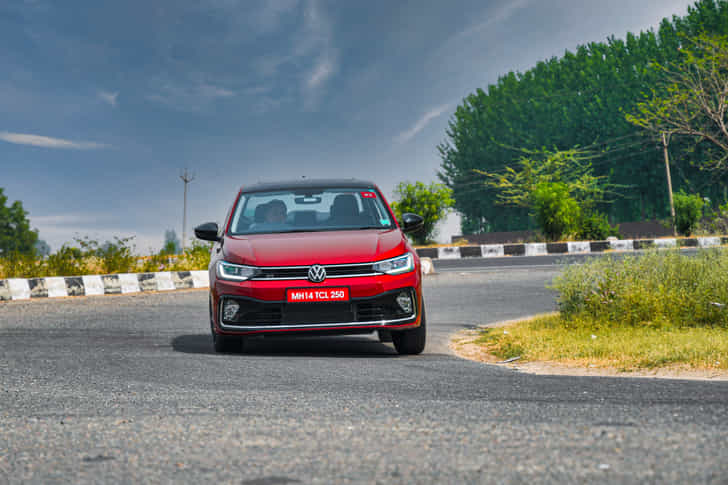
The Volkswagen Virtus is a strong fit for your driving mix, and the choice essentially comes down to whether you prefer a sedan or an SUV.
The Virtus, in particular, has clear advantages. It offers a more compliant ride compared to the Skoda Kushaq, which tends to feel a bit firmer over broken roads. Its lower centre of gravity also gives it an edge in handling, especially on mountain roads, where it feels more planted and predictable. High-speed stability is another strength, making it well-suited for your highway usage.
From a practicality standpoint, the Virtus also scores with a more spacious rear seat and a larger boot, which adds to its appeal as an all-rounder.
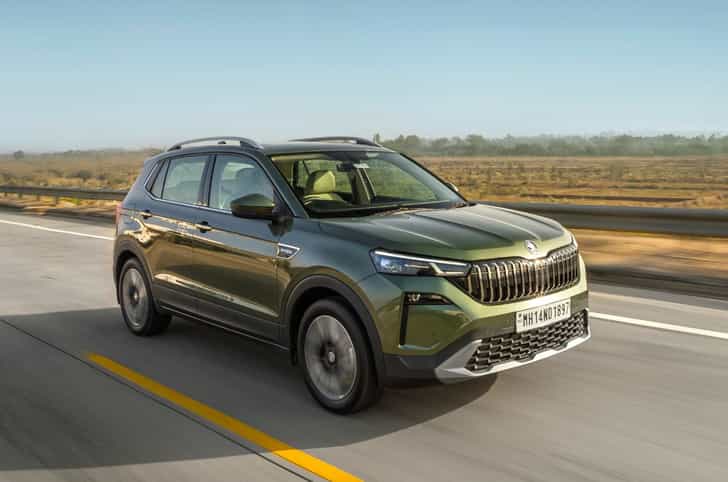
The Kushaq’s main advantage is its higher ground clearance and taller seating position. This makes it easier to deal with rough patches, poor roads, and tricky urban conditions, while also giving a more commanding view of the road, something many drivers prefer in city traffic.
So, if your priority is driving comfort, stability, and overall dynamics, the Virtus is the better pick. If you value ease of driving in tough road conditions and an SUV stance, the Kushaq makes a case. The 1.5 TSI version with the 7-speed DSG auto transmission for both the Virtus and the Kushaq suits your usage best.
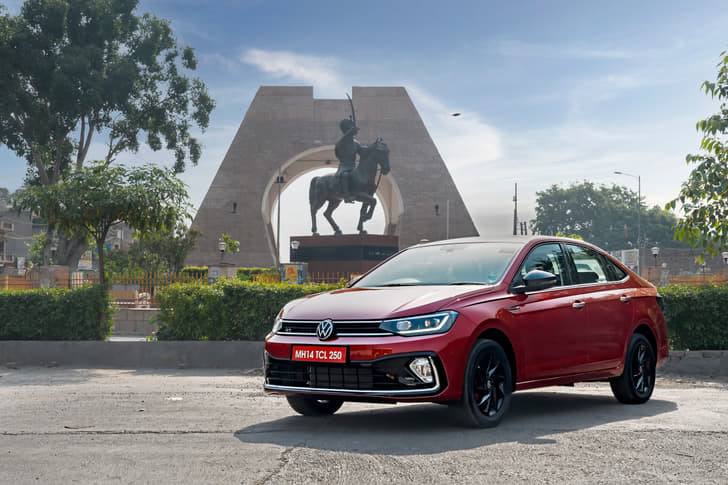
Volkswagen Virtus

Volkswagen Virtus

More questions on similar cars

AN

Ankur

1d

I am looking for a reliable petrol automatic car with good boot space, strong safety credentials, and features like cruise control. I would preferably avoid a sunroof, although it is not a deal-breaker. My budget is around ₹16 lakh with BH registration. The cars I am currently considering are: Kia Seltos Toyota Hyryder New Renault Duster Volkswagen Taigun Skoda Kushaq My usage mainly includes a daily office commute of around 15 km, along with 1-2 trips every year to my hometown, which is around 850 km one way, mostly on expressways between Haryana and Uttar Pradesh. I also make occasional 120 km trips to nearby cities such as Chandigarh, Delhi, and Gurugram.

Autocar India team

Autocar India

Verified
19h

With short daily city runs and a few very long expressway trips each year, a safe, smooth petrol automatic that holds steady at speed is the priority, and within your Rs. 16 lakh budget, the Skoda Kushaq Classic+ 1.0 TSI AT fits your brief best. It keeps things simple: a proven torque converter automatic for stress‑free traffic driving, light controls, and clear visibility for city use, plus cruise control for those 850 km Haryana-UP hauls that cut fatigue. It has a 5‑star crash safety rating and comes with the key safety tech you would want. The boot is wide and deep enough for two big suitcases plus soft bags, and the rear backrest folds if you need extra room.Know these trade‑offs: the ride is a bit firm on broken roads at low speeds, the rear seat isn't as spacious as some larger rivals, and Skoda’s service reach beyond big cities isn’t as wide as some rivals.

VehicleSkoda Kushaq
VA

Varun

6d

I’m confused between the Skoda Kushaq 1.5 DSG and the Volkswagen Virtus GT 1.5 DSG. I personally prefer the Virtus for its sedan driving feel and enthusiast appeal, but the Kushaq seems more practical for long-term usage and family comfort. My main concern is: Will proper enthusiast sedans and 1.5 turbo petrol engines like the Virtus still exist 5–6 years later, or will the market fully shift towards SUVs, hybrids, and EVs? Would it make more sense to: Buy the Kushaq now and possibly move to a sedan later if the segment still exists, or Buy the Virtus now and keep it long term before enthusiast sedans become rare? Which would you recommend considering future trends, practicality, and ownership experience?

Autocar India team

Autocar India

Verified
3d

We would pick the Volkswagen Virtus GT now and keep it for a while because you already prefer the sedan feel and, over the next 5-6 years, cars like this are likely to become fewer while taller cars will only get more common. The 1.5 turbo with the DSG, which is a quick-shifting automatic, gives the Virtus a lively, smooth feel that makes daily drives and highway runs special. Also, if you truly enjoy sitting low and feeling connected to the road, the Virtus delivers that better than the Skoda Kushaq, so you’ll smile more every day you own it. And looking ahead, SUVs and hybrids will grow fast, but sporty petrol sedans will likely shrink in choice, not vanish overnight. So it makes sense to buy the one you really want now; the “practical” taller car will be easy to find later if your needs change. Moreover, the Virtus has plenty of ground clearance, especially for a sedan, so that should not be a worry either. Do bear in mind, though, that both the Virtus and its sister model, the Skoda Slavia, will be updated later this year, so if you can wait for just a few months, we would recommend doing so.

VehicleVolkswagen Virtus
VehicleSkoda Kushaq
YA

Yatin

1d

Hi, I’m planning to buy an automatic petrol SUV and I’m confused between these two options: Kia Seltos HTK(O) IVT Petrol and Hyundai Venue HX8 DCT Petrol. The on-road price difference is around Rs 3 lakh, so I want to understand whether the Seltos is truly worth the extra cost. My typical usage includes office commuting twice a week, with a one-way travel time of about 1 hour 15 minutes, mostly in city traffic. I also do weekend trips with my wife and occasional trips with family or friends, usually with 4-5 people. The only factor strongly pushing me towards the Seltos is the panoramic sunroof. However, I currently drive a Punch, so I am a little doubtful about handling the Seltos’ size in city traffic.

Autocar India team

Autocar India

Verified
2h

The reason is simple. Your driving is largely city traffic with occasional family use, and in that scenario, the Seltos’ naturally aspirated petrol with the IVT automatic is the more relaxing and long-term friendly package. The Venue’s 1.0 turbo DCT is peppier and quicker, but in heavy stop-and-go traffic like your 1-hour 15-minute office commute, a DCT is not the ideal transmission if smoothness and peace of mind matter. Hyundai itself positions the Venue turbo with the 7-speed DCT, while the Seltos IVT is Kia’s smoother CVT-style automatic option.The Rs 3 lakh premium is not just buying you a panoramic sunroof. You are also getting a significantly larger and more comfortable cabin, much better rear seat space for family use, a more substantial boot and a car that simply feels a segment above the Hyundai Venue. Since you already own a Tata Punch, the Venue will not feel like a dramatic step up in size or cabin experience, whereas the Seltos will.On the length concern, yes, the Kia Seltos is noticeably bigger than your Punch, and for the first few days in city traffic, you will be conscious of that. But, this is something most drivers adapt to very quickly, especially with a rear camera and parking sensors. It is not large enough to become a burden in everyday urban use.So the real question is whether you value the extra space, comfort, and smoother automatic enough to justify Rs 3 lakh. For your usage, especially with regular traffic and occasional full family trips, we would say yes, the Seltos is worth it. If your use was mostly solo city driving and budget mattered more, the Venue would make more sense.

VehicleKia Seltos
VehicleHyundai Venue
VehicleTata Punch

Popular discussions right now

SA

Sam

1w

Should I wait for the Honda Elevate 2026 facelift? I have shortlisted the Elevate based on reliability (“no issues” ownership for 10+ years), brand trust, good drivability, comfort, and spaciousness. Or should I consider other options currently available in the market?

Autocar India team

Autocar India

Verified
6d

You’re after a no-drama, long-term family car that is easy to drive, comfortable and roomy. For that brief, the Honda Elevate VX CVT is a good fit. The VX CVT is the sweet spot because the automatic keeps the engine smooth in traffic, and the VX trim gets the useful features without pushing the price too high.Why it fits your list: Honda’s simple 1.5 petrol has a long, clean track record, so it suits your “no issues for 10+ years” aim. The driving position is high, the steering is light, and the CVT makes stop-go city work very easy. Space is good for four adults, the seats are supportive, and the suspension deals with broken roads well, so daily comfort is strong.Trade-offs to note: it is not the quickest for fast highway passes, and rivals offer more flashy features. If you expect a lot of high-speed use with a full load, you may want more punch.Regarding waiting for a facelift, while it may launch this year, there is no confirmed date or list of changes. An update usually brings small styling tweaks and a few extra features, and prices can go up too. The basics you care about are space, ease of driving, Honda’s engine and service and these are unlikely to change much.If you do want to look around, pick the Kia Seltos IVT for more features and a more modern cabin. Overall, for your needs, the Elevate VX CVT lines up best right now.

VehicleHonda Elevate
VehicleKia Seltos
MR

Murali Ramamurthy

1w

With four passengers, a fully loaded boot, the AC running, and driving conditions that include broken roads, ghats, and highways, which car performs better, the Citroen C3X Turbo AT or the Skoda Kylaq AT? If possible, please provide a back-to-back comparison review as well.

Autocar India team

Autocar India

Verified
6d

Both perform very well for your requirements, but overall, the Skoda Kylaq is the better choice. The Citroen C3 X has a slightly comfier ride quality, its AC performance is very strong, and its 1.2-litre turbo-petrol engine is quite punchy. However, the Kylaq's 1.0 TSI engine is more powerful, and the 6-speed automatic gearbox has been tuned for even greater responses. As such, it will feel more eager on ghats and highways. It too has excellent suspension and absorbs bumps and broken roads well. Moreover, the Kylaq sits in a segment above and hence offers more space in the back seat and the boot, which will be useful for your passengers and luggage. Moreover, the build quality is stronger, the interior feels more upmarket, and though it may be more expensive, there are more features on offer than in the Citroen. Hence, we recommend that you go with the Skoda.

VehicleSkoda Kylaq
VehicleCitroen C3
VA

Vasu

6d

I own a Honda City 4th Generation and have been getting an average fuel efficiency of 16.1 km/l over 85,000 km. Would it be worth installing a CNG kit to improve the mileage further? Please suggest.

Autocar India team

Autocar India

Verified
5d

With the kind of mileage you are already seeing from your 4th generation Honda City, I would not rush to fit a CNG kit. Around 16 kpl over 85,000 km is actually a healthy real world figure for a petrol sedan, and since the City is known for its smoothness and refinement, adding an aftermarket CNG kit will inevitably change the character of the car. Honda does not offer a factory CNG option for the City, so any retrofit will be third party, which means compromises in boot space, some loss in outright performance and the added variable of installation quality and long term reliability. Honda also recommends using fuel that meets the vehicle specifications, and aftermarket modifications can complicate warranty or support considerations on newer cars.A CNG conversion only starts making strong financial sense if your running is very high and you plan to keep the car for several more years to recover the kit cost. If your annual usage is moderate, the payback period can be longer than expected. The only real case for going CNG here is if fuel cost reduction is your absolute top priority. Otherwise, given how well your City is already performing, I would leave it as is and enjoy the refinement rather than fixing something that is not really broken.

VehicleHonda City

Posted on: 14 May 2026