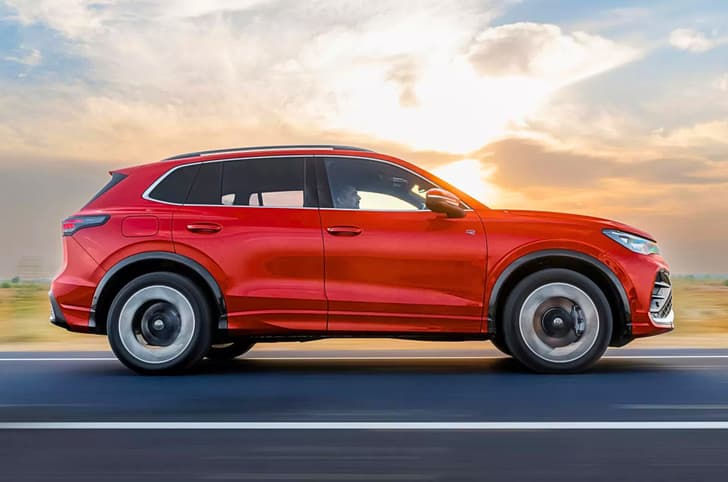
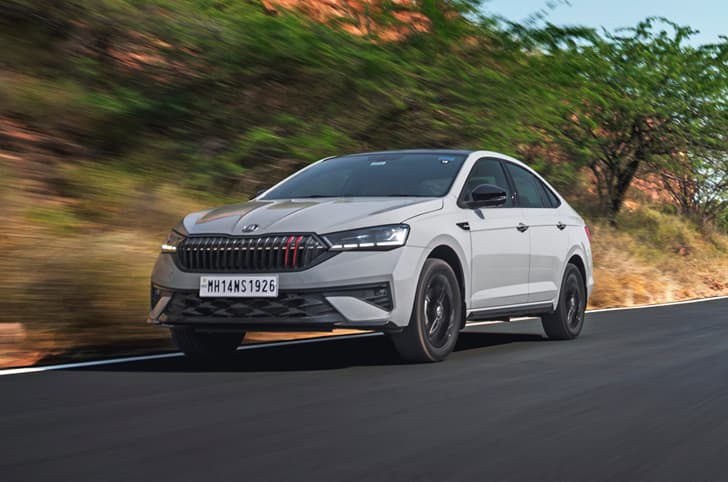
Slavia vs Virtus Sedan Choice


Last Updated on: 11 Oct 2026
Engine Type | Turbocharged |
Engine Displacement | 999 cc |
Number of Cylinders | 3 |
Engine Installation | Front |
Fuel Type/ Propulsion | Petrol |
Pure Electric Driving Mode | No |
Gearbox Type | Manual |
Number of Gears | 6 |
Drive Layout | Front Wheel Drive |
Lockable Differential/s | Yes |
Max Engine Power | 115hp at 5000-5500 rpm |
Max Engine Torque | 178Nm at 1750-4000 rpm |
Fuel Supply System | Direct Injection |
E20 Compatibility | Yes |
Emission Standard | Bharat Stage VI |
Auto Start/Stop | Yes |
Official Fuel Economy | 20.19 kmpl |
Fuel Tank Capacity | 45 litres |
User Reported Mileage | 17.42 kmpl |
Front Suspension Type | Independent, MacPherson Strut |
Front Springs | Coil Springs |
Rear Suspension Type | Non-independent, Torsion Beam |
Rear Springs | Coil Springs |
Damper Control | No |
Ride Height Adjust | No |
Type of Power Assist | Electric |
Steering Adjust type | Manual |
Steering Adjust | Tilt and Telescopic |
4 Wheel Steer | No |
Turning Radius | 5.05 m |
Front Brakes | Discs |
Rear Brakes | Drums |
Wheel Size | 16 inches |
Front Tyre Size | 205/55 R16 |
Rear Tyre Size | 205/55 R16 |
Wheels | Alloys |
Spare Wheel | Space Saver |
Length | 4561 mm |
Width | 1752 mm |
Height | 1507 mm |
Wheelbase | 2651 mm |
Ground Clearance | 179 mm |
Kerb Weight | 1208 kg |
Chassis Type | Monocoque |
Boot Capacity | 521-1050 litres |
Doors | 4 |
| Power Windows | Front and Rear |
| 12 Volt Port | |
| Cabin Boot Access | |
| Door Pockets | |
| Digital Instrument Cluster | Fully Digital |
| Bottle Holder in Doors |
| Crash Test Rating | 5 |
| Driver Airbag | |
| Door Ajar Warning | |
| Lane Departure Avoidance | |
| Day Night Interior Mirror | Automatic |
| Dashcam |
| Body Coloured Bumpers | |
| Cornering Headlights | |
| Follow Me Home Headlamps | |
| ORVM turn indicators | |
| Scuff Plates | |
| Antenna | Shark Fin |
| Speedometer | Digital |
| Tachometer | Digital |
| Trip Meter | |
| Average Fuel Consumption | |
| Average Speed | |
| Distance to Empty |
| Audio System | |
| CD Player | |
| Speakers | 8 |
| Branded Music System | |
| USB Input | |
| AUX Input |
| Alexa Compatibility | |
| Over the air (OTA) updates | |
| Find My Car | |
| Emergency Call Button | |
| Remote Sunroof Open / Close via App | |
| Remote AC On / Off via App |
 Electronic Stability ControlPart Digital / Part Analogue Digital Instrument ClusterWired Android AutoFabric Seat MaterialLED headlampsHill Start Assist1-zone Climate ControlWireless Android Auto60:40 Rear Seat Backrest SplitCornering HeadlightsAutomatic HeadlampsPush Button StartCornering HeadlightsWireless Android Auto1-zone Climate ControlSingle Pane SunroofElectric Adjust for Driver's SeatCornering HeadlightsWireless Android AutoElectric Adjust for Front Passenger's SeatAutomatic Day Night Interior MirrorFully Digital Digital Instrument ClusterOver the air (OTA) updatesFront Only Ventilated SeatsFollow Me Home HeadlampsAutomatic Day Night Interior MirrorFully Digital Digital Instrument ClusterOver the air (OTA) updatesFront Only Ventilated SeatsFollow Me Home HeadlampsAutomatic Day Night Interior MirrorFully Digital Digital Instrument ClusterOver the air (OTA) updatesFront Only Ventilated SeatsFollow Me Home Headlamps

Join the Discussions
I just read that Slavia facelift is coming with new 8-speed automatic. Between the new Slavia and Virtus, which one would you pick if buying a sedan now?
Hi guys, I’m looking for a four-car garage that can fulfil some specific roles. I need an EV for city use in Bangalore, and I’m considering either the Tata Tiago EV or Punch EV. I also need a high-mileage family hauler, for which I’m thinking of the Toyota Innova Hycross VX(O). For a fun car for myself, I’m considering the Volkswagen Virtus GT. Finally, I want another SUV that doesn’t need to be as large as the Hycross, so I’m considering the Mahindra XUV 7XO, Kia Seltos or Mahindra BE 6. I’ll be travelling frequently between Bangalore, Hyderabad and Coimbatore, and I’m also planning a road trip across India. My overall budget for the four cars is around Rs 1-1.5 crore. I’m open to suggestions, so I’d really appreciate any recommendations. Thanks in advance!

 Tata Tiago EVTata Punch EVToyota Innova HyCrossToyota Urban Cruiser HyryderVolkswagen VirtusMahindra XUV 3XOKia SeltosKia SorentoSkoda Slavia (2022-2026)
Most people around me are automatically looking at SUVs now. But for someone who mainly drives on highways and doesn't need extra ground clearance, is there still a good reason to pick something like a City or Virtus?
Hi, I’m confused between the Skoda Slavia 1.5 TSI DSG and Volkswagen Virtus 1.5 TSI DSG. My usage is mainly highway driving, including around 350 km non-stop from Chennai to Salem, with very little city driving. The car will primarily be used by my family, and I want an automatic only. For this kind of long-distance highway usage, which one would you suggest between the Slavia and Virtus? My main priorities are highway stability, comfortable long-distance driving, engine and gearbox reliability, ride comfort and overall suitability for my usage. Please advise which one would be better suited to my requirements.
Skoda Slavia (2022-2026)Volkswagen VirtusI am looking to buy a new car and am confused between two options: the Renault Duster Techno+ 1.3 DSG and the Volkswagen Virtus 1.0 GT Line. I will be driving the car daily for an office commute of about 20 km. I plan to keep the vehicle for 3 to 4 years and would like to know which one is the better choice in terms of features, resale value, premium feel, driving performance, and overall peace of mind.
Volkswagen VirtusRenault Duster