Autocar India
Fallback ad for desktopHero

Last Updated on: 04 Sep 2026

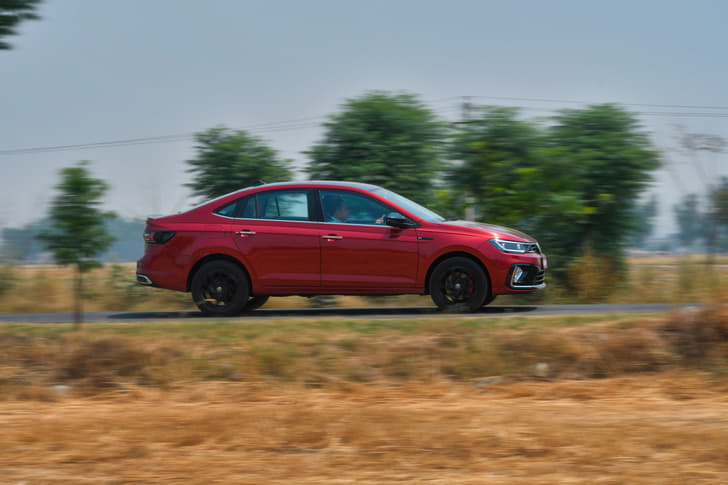
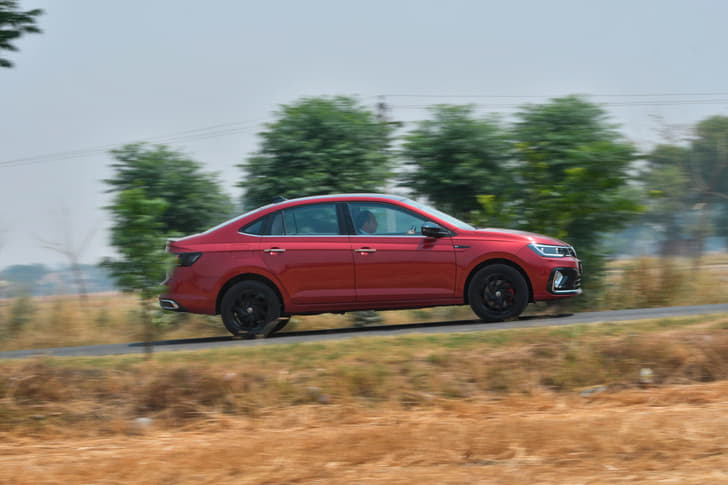
Volkswagen Virtus variants
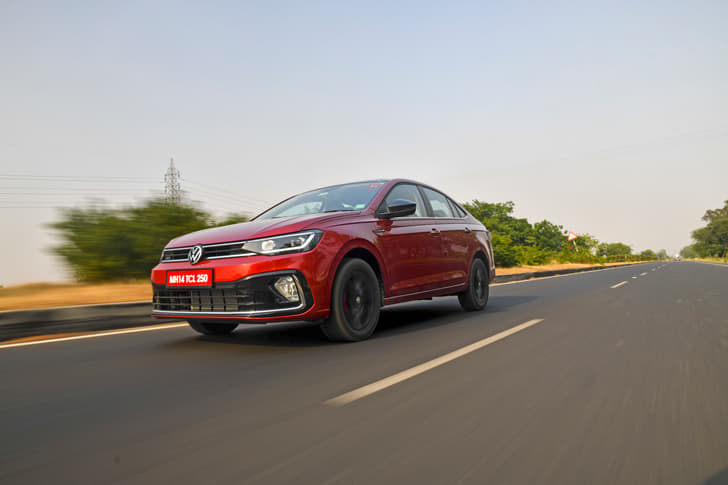
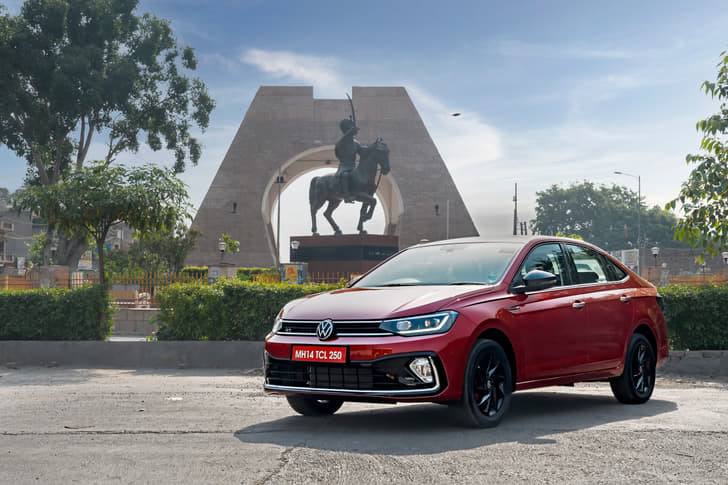
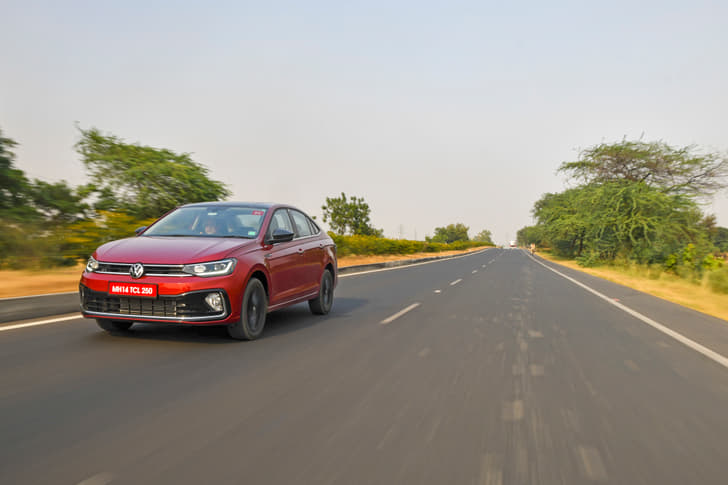
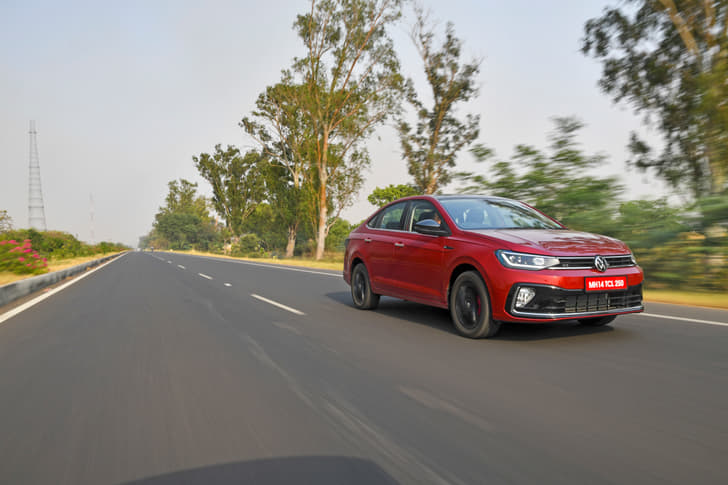
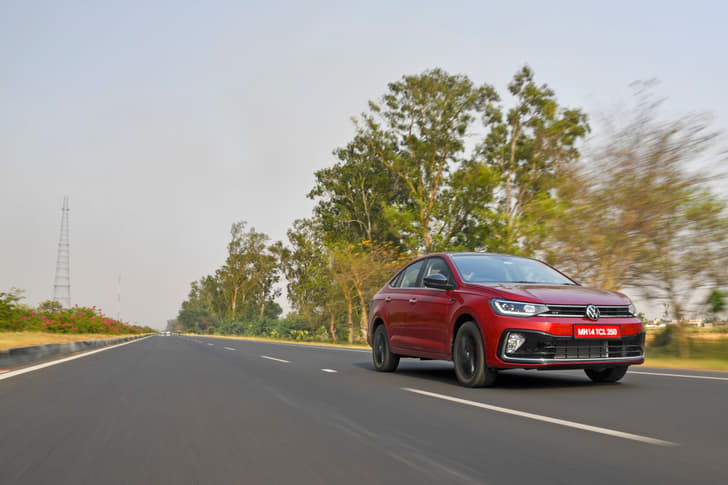
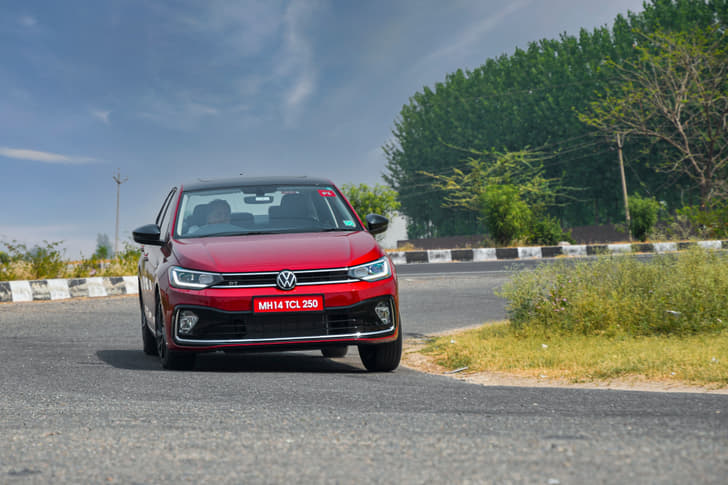
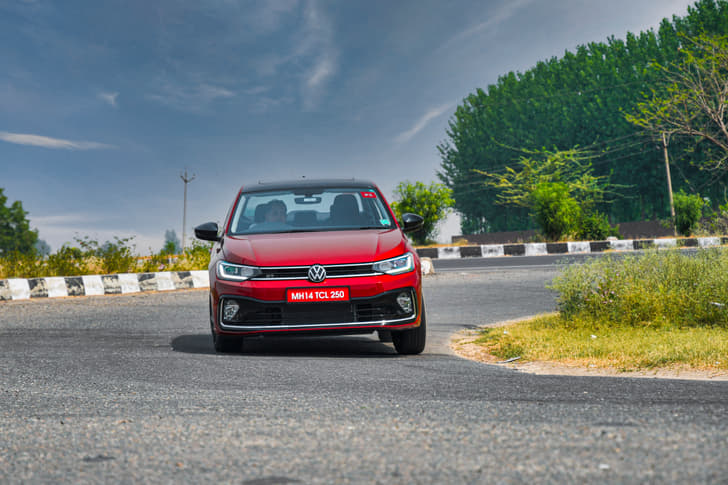
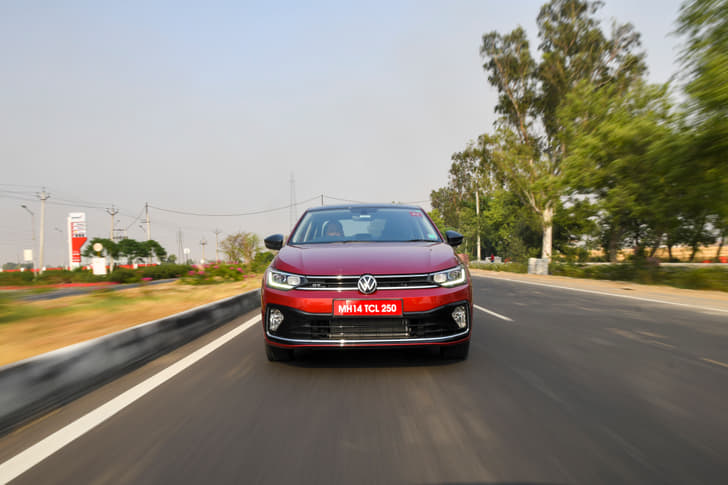
Front Left Three Quarter
Front Right Three Quarter
Front Left Three Quarter
Front Right Three Quarter
Front View
Front View
Front Right Three Quarter
Color Red

Volkswagen Virtus Highline MT

VariantHighline MT
CityMangan
₹15.41 Lakh
On road price, Mangan
View price breakup
Starting₹22,364 /month
EMI calculator

The Volkswagen Virtus Highline MT variant is priced at ₹13.51 lakh. The Highline MT variant offers key features like . Explore complete specifications, and features below.

Show more

Volkswagen Virtus Highline MT Key Features

Comfort
  • 1-zone Climate Control
  • Cruise Control
  • Rear AC Vents
Infotainment
  • Wireless Android Auto
  • Wireless Apple CarPlay

Volkswagen Virtus Highline MT specifications

Engine & Transmission

Engine Type
Turbocharged
Engine Displacement
999 cc
Number of Cylinders
3
Engine Installation
Front
Fuel Type/ Propulsion
Petrol
Pure Electric Driving Mode
No
Gearbox Type
Manual
Number of Gears
6
Drive Layout
Front Wheel Drive
Lockable Differential/s
Yes
Max Engine Power
115hp at 5000-5500 rpm
Max Engine Torque
178Nm at 1750-4000 rpm

Fuel & Performance

Fuel Supply System
Direct Injection
E20 Compatibility
Yes
Emission Standard
Bharat Stage VI
Auto Start/Stop
Yes
Official Fuel Economy
20.19 kmpl
Fuel Tank Capacity
45 litres
User Reported Mileage
17.32 kmpl

Suspension & Steering

Front Suspension Type
Independent, MacPherson Strut
Front Springs
Coil Springs
Rear Suspension Type
Non-independent, Torsion Beam
Rear Springs
Coil Springs
Damper Control
No
Ride Height Adjust
No
Type of Power Assist
Electric
Steering Adjust type
Manual
Steering Adjust
Tilt and Telescopic
4 Wheel Steer
No
Turning Radius
5.05 m
Front Brakes
Discs
Rear Brakes
Drums
Wheel Size
16 inches
Front Tyre Size
205/55 R16
Rear Tyre Size
205/55 R16
Wheels
Alloys
Spare Wheel
Space Saver

Dimensions

Length
4561 mm
Width
1752 mm
Height
1507 mm
Wheelbase
2651 mm
Ground Clearance
179 mm
Kerb Weight
1188 kg
Chassis Type
Monocoque
Boot Capacity
521-1050 litres
Doors
4

Volkswagen Virtus Highline MT features

Comfort

Power Windows
Front and Rear
Cooled Storage
Bluetooth Connectivity
Sunglass Holder
Bottle Holder in Doors
Cabin Boot Access

Safety

Crash Test Rating
5
Heads Up Display
Airbags
6
Emergency Brake Light Flashing
Door Ajar Warning
Seat Belt Warning

Exterior

Body Coloured Bumpers
Cornering Headlights
ORVM turn indicators
Projector Headlamps
Follow Me Home Headlamps
LED taillights

Interior

Speedometer
Analog
Tachometer
Analog
Trip Meter
Average Fuel Consumption
Average Speed
Distance to Empty

Entertainment

Audio System
Branded Music System
CD Player
Speakers
8
USB Input
AUX Input

Connected Car Features

Remote Sunroof Open / Close via App
SOS Button
Remote Car Lock/Unlock via App
Emergency Call Button
Find My Car
Remote AC On / Off via App

Volkswagen Virtus variants

Virtus Comfortline1 Variant
₹12.21 Lakh
Top Features
Electronic Stability ControlPart Digital / Part Analogue Digital Instrument ClusterWired Android AutoFabric Seat MaterialLED headlamps
Virtus Highline2 Variants
₹15.41 - ₹16.77 Lakh
Top Features
Hill Start Assist1-zone Climate ControlWireless Android Auto60:40 Rear Seat Backrest SplitCornering Headlights
Virtus Highline Plus2 Variants
₹15.86 - ₹17.10 Lakh
Top Features
Automatic HeadlampsPush Button StartCornering HeadlightsWireless Android Auto1-zone Climate Control
Virtus GT Line2 Variants
₹16.36 - ₹17.39 Lakh
Top Features
Single Pane SunroofElectric Adjust for Driver's SeatCornering HeadlightsWireless Android AutoElectric Adjust for Front Passenger's Seat
Virtus Topline2 Variants
₹17.29 - ₹18.64 Lakh
Top Features
Automatic Day Night Interior MirrorFully Digital Digital Instrument ClusterOver the air (OTA) updatesFront Only Ventilated SeatsFollow Me Home Headlamps
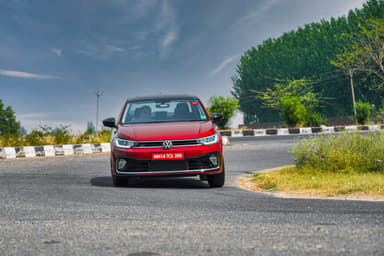
Virtus GT Plus1 Variant
₹21.49 Lakh
Top Features
Automatic Day Night Interior MirrorFully Digital Digital Instrument ClusterOver the air (OTA) updatesFront Only Ventilated SeatsFollow Me Home Headlamps
Virtus GT Plus Sport1 Variant
₹21.89 Lakh
Top Features
Automatic Day Night Interior MirrorFully Digital Digital Instrument ClusterOver the air (OTA) updatesFront Only Ventilated SeatsFollow Me Home Headlamps

Volkswagen Virtus comparison

Volkswagen Virtus
Volkswagen Virtus
₹10.71 - ₹19.20 Lakhs
8
Transmission
Manual, Torque Converter, DCT
Engine
999 cc - 1498 cc
Fuel type
Petrol
Mileage
18.7 kmpl - 20.19 kmpl
Compare
Skoda Slavia
Skoda Slavia
₹10.00 - ₹18.19 Lakhs
8
Transmission
Manual, Torque Converter, DCT
Engine
999 cc - 1498 cc
Fuel type
Petrol
Mileage
18.73 kmpl - 20.32 kmpl
Hyundai Verna
Hyundai Verna
₹10.99 - ₹18.26 Lakhs
8
Transmission
CVT, DCT, Manual
Engine
1482 cc - 1497 cc
Fuel type
Petrol
Mileage
-

Questions you may find useful

2d

Hey team, I wanted to ask about the difference between a 1.5 TSI and a 1-litre TSI for a Volkswagen Virtus in terms of driving pleasure. I have already watched too many videos about it and am pretty confused about which way to go when the facelift eventually arrives. My commute would be a 50/50 split within the city and on the highway. Would be grateful for an enthusiast's take on this. Regards Sabyasachi Mahapatra.

Verified
1d

It's simple; if you have the budget for the 1.5 TSI, go for the 1.5 TSI, as it is the superior engine in every way. The 1.0 TSI is a good engine – punchy, smooth and perfectly adequate for everyday driving. If you're keen on a manual gearbox, it will likely be your only option, as VW is unlikely to offer the 1.5 TSI with a manual with the facelift, due to low demand. The 8-speed AT that will come with the 1.0 TSI is a huge improvement on the 6-speed AT that comes with today's model, being smoother and smarter with its shifts. However, it is nowhere near as good as the 1.5 TSI's 7-speed DSG, which is both smarter and quicker with its shifts, and doesn't suffer from the clunkiness that other DCT gearboxes in this price range do. The obvious advantage of the 1.5 TSI is its added power of 150hp (versus 115hp), which makes the Virtus GT an enthusiast's delight, but what many don't realise is that its larger displacement also means it works better off boost. Essentially, you don't feel the turbo lag as much as you do with the 1.0 TSI, which can get bogged down at low speeds and low RPMs. Moreover, the 1.5 TSI has clever cylinder deactivation tech that the 1.0 doesn't have, which shuts down two cylinders under light engine loads to save fuel, so in the real world, it will be potentially more fuel-efficient than the 1.0 TSI AT. The only disadvantage of the 1.5 TSI is that it isn't offered in lower, more affordable trims of the Virtus, and that's likely to be the case with the facelift too. So yes, if you have the budget for it, definitely choose the Virtus 1.5 TSI.

VehicleVolkswagen Virtus
4d

Hi everyone, I have a budget around 13 lakh and my annual running is around 8,000 km. I'm confused between buying a sedan or compact SUV like Kia Seltos etc. as I have sold my Tata Punch last month that I owned almost for 4.5 years but now I want to purchase good and elegant looking car that can last for 7 to 9 year without any hassle. Me and my wife have shortlisted cars like New Honda City SV variant, New Skoda Slavia Base one, or Upcoming Virtus in sedan segment. In suv segment, I have shortlisted cars like Seltos, Grand Vitara, etc. My wife wants to shortlist sedan. Please suggest me which one should I go for as it's the matter of investing my hard earned money. Also, which car will have good resale value in future.

Verified
3d

Go for the Honda City SV petrol manual. With your annual running of 8,000km, petrol is the right choice, and the City is one of the most reliable and hassle-free cars you can buy. It is also a car that is known to last well beyond 7-9 years with proper maintenance, which fits your ownership plan. The SV variant gives you the essentials within your budget, and the City’s strong resale value and Honda's wide service network make it a sensible long-term investment.The Skoda Slavia and Volkswagen Virtus are both excellent to drive, but the City is the safer long-term bet. Skoda and Volkswagen have improved their ownership experience, but Honda still has the edge when it comes to reliability and peace of mind over a long ownership period. On the SUV side, the Seltos and Grand Vitara are both good cars, but at your budget you will be looking at base variants, and neither will have as much resale as the City.Since your wife prefers a sedan and you are looking for a car that will last without hassle, the Honda City SV is the best option.

VehicleHonda City
VehicleSkoda Slavia
VehicleVolkswagen Virtus
VehicleKia Seltos
VehicleMaruti Suzuki Grand Vitara
1w

I’m a first-time car buyer with very limited driving experience. I’ve only driven an SUV like the Mahindra KUV100 a few times in the past and have never driven a sedan before. I don’t really need a car for my daily commute, but I’d like to have one for long drives, convenience and occasional trips. I’m strongly considering the new Skoda Slavia or Volkswagen Virtus 1.0L MT because I really like both cars. Given my limited driving experience and the fact that I’ve never driven a sedan before, does it make sense to choose one of these as my first car? Would the Slavia or Virtus be manageable for someone with my level of experience, particularly when it comes to judging the car’s size, parking, manoeuvring in traffic and driving on highways?

Verified
1w

Yes, the Skoda Slavia or Volkswagen Virtus 1.0 TSI manual is a perfectly sensible first car, even with limited driving experience. Both cars are well-balanced sedans with good visibility, predictable handling and a forgiving nature, which makes them easy to live with. The 1.0 TSI engine is punchy enough for highway driving but not intimidating, and the manual gearbox is light and easy to operate.The main adjustment will be the lower seating position compared to an SUV like the Mahindra KUV100, which can initially make judging the car's extremities a bit trickier, especially in tight parking situations. However, both cars are not excessively large, and with practice, you will quickly get used to their dimensions. Parking sensors and a rear camera, which are available on higher variants, will also help build confidence. If you are genuinely concerned about parking and manoeuvrability, you could consider the Skoda Kylaq or Volkswagen Taigun / Skoda Kushaq 1.0 TSI instead. However, if you spend time practising, the Slavia or Virtus will not be difficult to get used to.

VehicleSkoda Slavia
VehicleSkoda Kodiaq
VehicleSkoda Kylaq
VehicleVolkswagen Virtus
VehicleVolkswagen Taigun
2w

Do parking sensors and a camera actually get used daily, or does everyone go back to eyeballing it after the first week? Considering adding this to my Virtus.

3w

I currently drive a 2018 Polo GT TSI. Now, I am looking for a new primary car; the Polo will continue as a secondary city car. The purpose of the primary car is a more comfortable back seat for my elderly parents, and I will have a weekly, once- or twice-a-week intercity expressway commute of about 300 km a day. So, comfort on the highway is also very important. Should I go with an EV? If so, which one? Or should I opt for the Virtus GT, as I enjoy my Polo a lot, or consider any other sedan? Budget: Up to Rs. 30 lakh OTR in Karnataka.

Verified
3w

Given your requirements, the Volkswagen Virtus GT is the most sensible choice. You already enjoy your Polo GT TSI, and the Virtus GT builds on that formula with a more powerful 1.5 TSI engine, a larger and more comfortable cabin, and a genuinely enjoyable driving experience. It is one of the best driver's cars in the segment, and it is also well suited to long expressway runs.The back seat is a significant step up from the Polo, with good legroom and a comfortable seating position for your parents. The ride is on the firmer side, but it is well controlled at highway speeds, and the car feels stable and confidence-inspiring on long journeys.On the EV question, a 300km round trip once or twice a week is right on the edge of what most mainstream EVs can comfortably manage without charging stops in the real world. While cars like the Tata Harrier EV and XEV 9S can technically do it, you would be running the battery down to low levels, and charging infrastructure is still not consistent enough to make this a stress-free experience. The Virtus GT, on the other hand, is completely hassle-free on long highway runs.Overall, the Virtus GT strikes the best balance between driving enjoyment, rear seat comfort and long-distance usability. It is the car you are most likely to still enjoy owning after five years. If you can wait a few months, however, Volkswagen is launching a facelifted version that should get a few more features.

VehicleVolkswagen Virtus
VehicleTata Harrier EV
VehicleMahindra XEV 9S

Volkswagen Virtus price in India

CitiesOn road price
Chennai
₹13.29 - ₹23.81 Lakh
Delhi
₹12.43 - ₹22.28 Lakh
Gurgaon
₹12.21 - ₹21.89 Lakh
Hyderabad
₹13.18 - ₹23.62 Lakh
Kolkata
₹12.43 - ₹22.28 Lakh
Mumbai
₹12.64 - ₹22.66 Lakh

Upcoming Cars

Renault Bridger Electric

₹12.50 - ₹17.50 Lakhs

Volkswagen Virtus facelift

₹10.80 - ₹19.70 Lakhs

MG New Astor
MG New Astor

₹12.00 - ₹17.00 Lakhs

Hyundai New Creta
Hyundai New Creta

₹11.30 - ₹20.50 Lakhs

Honda Elevate facelift

₹11.00 - ₹17.00 Lakhs

Trending Cars

Kia Sorento
Kia Sorento

₹32.05 - ₹46.25 Lakhs

Skoda Slavia facelift

₹10.00 - ₹18.00 Lakhs