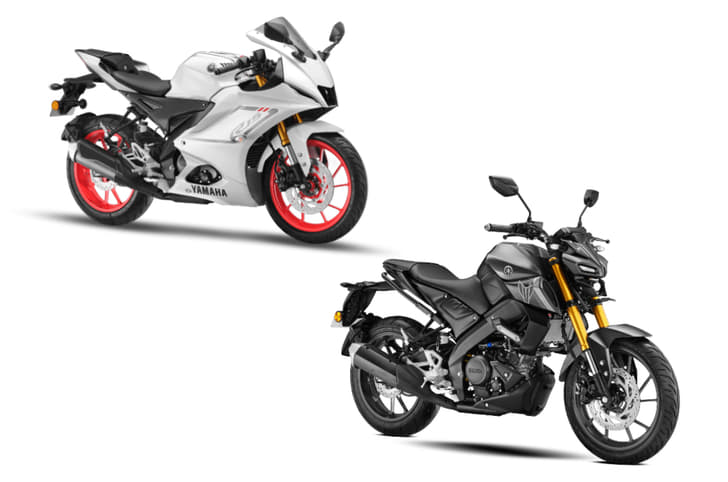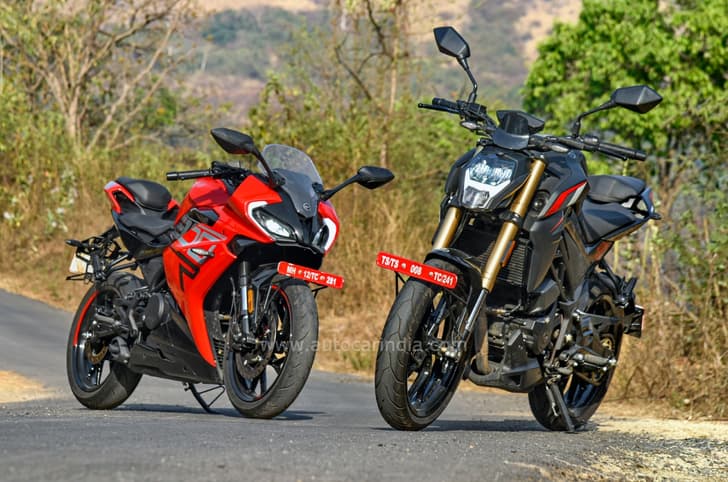


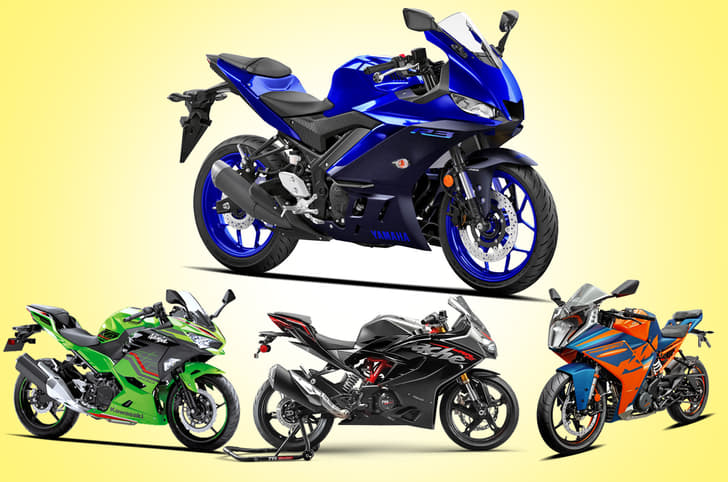
There have been indications for some time now, that Yamaha is planning to reintroduce some of its higher capacity models to the Indian market. This was recently all but confirmed when the Japanese brand showcased the R3, MT-03, R7, MT-07, MT-09 and R1M to its dealers in India. Of these, the R3 is the most popular and well received bike that was previously on sale in India. This makes it one of the most anticipated of all the incoming models, but it has gone through a number of changes since it was last sold on our shores. Here’s how the latest version of the R3 compares to its chief rivals from Indian and overseas manufacturers.
Yamaha R3 vs rivals: engine
The R3 is one of two twin-cylinder bikes in this comparison, and it ranks quite well in terms of power. It nearly matches the single-cylinder KTM RC 390, but isn’t quite as powerful as the larger Kawasaki Ninja 400. Both those bikes, though, have a significant torque advantage over the little Yamaha, which uses heady revs to make its power. The 321cc twin on the Yammie is the peakiest of the lot, producing peak figures higher in the rev range than any other bike here. The single-cylinder TVS Apache RR310 has the smallest displacement here, and that is reflected in its output figures.
Yamaha R3 vs rivals: dimensions and weight
The Kawasaki Ninja 400 is not only the most powerful and joint torquiest bike here, but also the lightest. It manages to come in 1kg lower than the R3, despite carrying the same 14 litres of fuel. The KTM RC 390 is next heaviest, at 172kg with its 13.7 litre tank filled, while the Apache is the heaviest of the lot, in spite of carrying the smallest fuel load. However, it marks itself out as the only bike here from an Indian manufacturer, with its healthy 180mm ground clearance figure to take on our less-than-perfect roads.
Yamaha R3 vs rivals: underpinnings
There’s very little to separate these bikes in terms of cycle parts, with the only noteworthy outlier being the Ninja 400, which gets a telescopic fork as opposed to the upside-down units on all the others. The Yamaha uses a diamond-type frame, while all the others use a perimeter-type frame featuring a trellis construction.
Yamaha R3 vs rivals: verdict
The Kawasaki Ninja 400 has quite a clear upper hand over most other bikes here, but it comes at a serious price. It’s over Rs 2 lakh more expensive than the very capable and versatile KTM RC 390, and that is a seriously difficult premium to justify. At an expected ex-showroom price of a little over Rs 3.5 lakh, the Yamaha will also be more expensive than the KTM, but with a much more digestible premium. And if you're after the smoothness of a twin-cylinder experience, and the peace of mind that the Yamaha badge brings, it should prove to be an interesting rival to the RC 390.
 Ved Janve