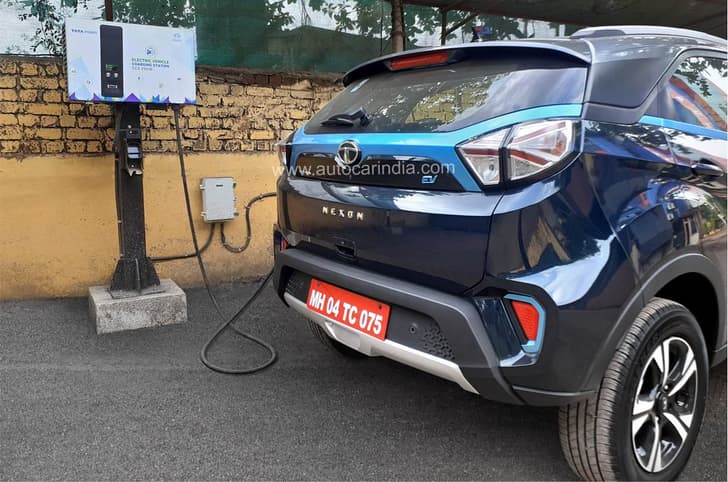
The Ministry of Heavy Industries has enhanced the financial outlay for the second phase of the Faster Adoption and Manufacturing of (Hybrid and) Electric Vehicle (FAME) scheme by Rs 1,500 crore to Rs 11,500 crore.
- FAME II scheme rolled out in 2019 with Rs 10,000 crore outlay
- As of January 31, Rs 5,790 crore given to EV makers on sale of 13.41 lakh EVs
- Scheme likely to be extended into next FY
The FAME II scheme was rolled out in 2019 with an outlay of Rs 10,000 crore for three years ending in 2022 but was extended to March 2024. The initial target of the scheme was to support 10 lakh electric two-wheelers, 5 lakh electric three-wheelers, 55,000 passenger cars, and 7,000 electric buses.
As of January 31, a total of Rs 5,790 crore was given as subsidies to electric vehicle manufacturers on the sale of 13.41 lakh EVs under the scheme. This includes 11.86 lakh two-wheelers, 1.39 lakh three-wheelers and 16,991 four-wheelers.
Further, the government has sanctioned 6,862 electric buses to various cities, state transport undertakings, and state government entities for intracity operations, as well as Rs 800 crore as capital subsidy to oil marketing companies for 7,432 EV public charging stations.
As per the revised outlay, Rs 7,048 crore has been allocated for subsidies, of which two-wheelers will get Rs 5,311 crore. Total grants for electric buses and setting up charging stations have also been revised to Rs 4,048 crore.
The government noted that the FAME II is a “fund and term-limited scheme.” Subsidies under the scheme will be eligible for vehicles sold till March 31, or till the time funds are available, whichever is earlier.
In the interim budget presented last week, the government allocated Rs 2,671 crore for the FAME scheme for the next financial year. While there has been no specific announcement on the extension of the FAME II scheme beyond March 31 or a third phase of the scheme, the allocation for the next financial year indicates the government’s plans to continue with the incentives.
New-age OEMs, particularly two-wheeler ones, and industry bodies have been pushing the government for an extension of the subsidies beyond March 31. The demand subsidy given under the scheme has been instrumental in driving the early-stage adoption of electric vehicles in the country.
 Autocar India News Desk
 Dhruv Dhaka
 Dipan Sur