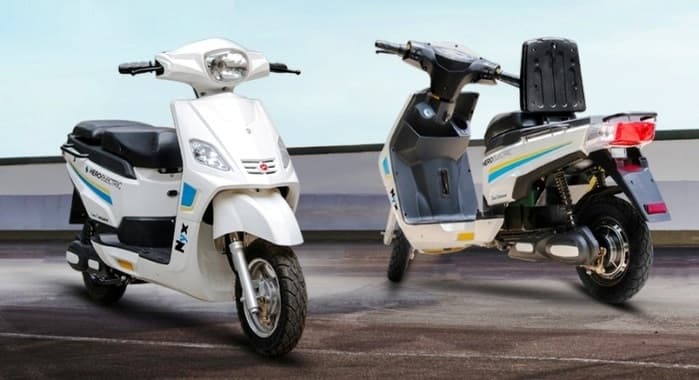
The electric vehicle (EV) industry’s growth rate of 37 percent during 2015-16, the first year of the FAME India scheme, is healthy. But the industry is still far away from being in the pink of health.
Removal of some anomalies and executing some of the pending plans by the government are what the EV industry wants to be fighting fit. “There’s a ramp-up time for anything like a start-up. That was natural to happen. But there was a confusion in the FAME scheme that it is only meant for one-million-plus cities,” said Sohinder Gill, director-corporate affairs, Society of Manufacturers of Electric Vehicles (SMEV), to sister publication Autocar Professional. This “confusion” did not let the industry, mainly the electric two-wheeler makers, tap the entire market potential. For example, Hero Electric, headed by Gill as its CEO, could sell only through 120 dealers out of its network of 400 dealers because of the limitation. It was only in October that the “correction” was done with Ambuj Sharma, former additional secretary, Department of Heavy Industries, playing a key role in it. “That is the time when FAME really started,” says Gill. In the markets where the FAME India scheme’s incentives reached, the response gave the EV makers new hope. “It was a big change in terms of customers getting discounts when they enter the showroom, so there was a big pull. People started coming because almost virtually everything had stopped and things were going down,” says Gill.
In 2014-15, 22,000 EVs were sold which reflected the market taking a U-turn. The figure though is one-fifth of what was estimated in the first year of the FAME India scheme. The projection for the second year is 3,00,000 units, and 5,00,000 for the third year. Though nowhere near the projected figure, the market size is expected to double this year to touch around 45,000 units. This gives hope to existing players and also attracts some others. The industry size in 2015-16 is still much lower than the peak of 85,000-100,000 units that the Indian EV industry sold in 2011-12 through 1,100 dealerships. The number of existing dealerships is estimated to be 600-700. “Not much has happened in terms of dealerships because the viability itself is still a question mark,” says Gill. Shutting down of dealerships and organisations also created a negative perception about EVs in consumers’ minds.
However, Gill is happy that the EV market tide is turning. He feels that the industry will recover faster if all the plans in the FAME Scheme document are executed well. “I would say one out of the four essential things which were short term, was done. That is why we are nowhere near the slated 1,00,000 in the first year and 3,00,000 in the second year,” he says. The yet-to-be-taken steps are facilitating finance, full-scale awareness programmes and setting-up charging infrastructure for EVs. For example, over half of the mainstream two-wheelers are sold through finance. Electric two-wheeler makers miss out on that opportunity as banks do not finance EVs, according to Gill. The lack of adequate charging infrastructure is also hampering industry growth as many customers who bought electric two-wheelers on the promise by OEMs and dealerships that they would get adequate charging stations within a year to charge their two-wheelers have had a disappointing ownership experience. So, once these hurdles are overcome, the EV industry will be on a firmer ground to enjoy a better ride.
 Viraaj Bhatnagar
 Dipan Sur
 Dhruv Dhaka
 Saptarshi Mondal