

What’s new?
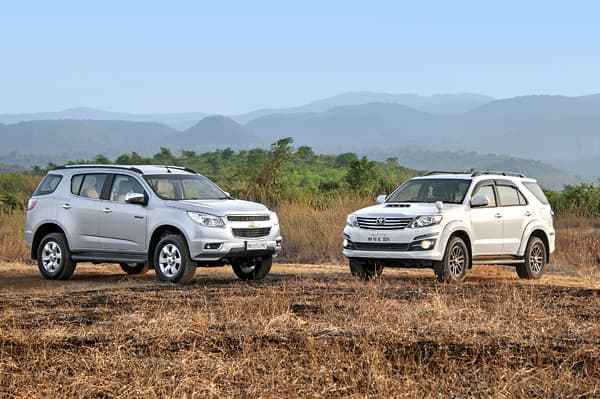
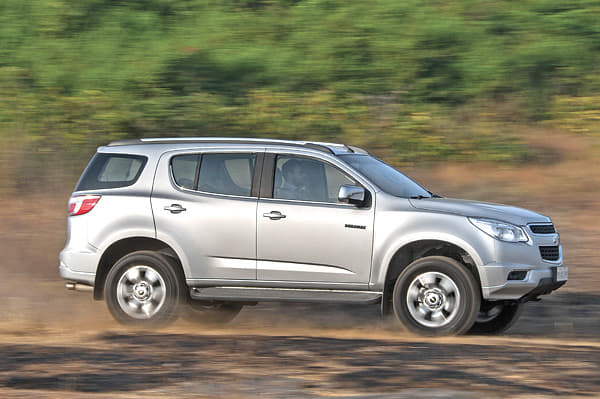
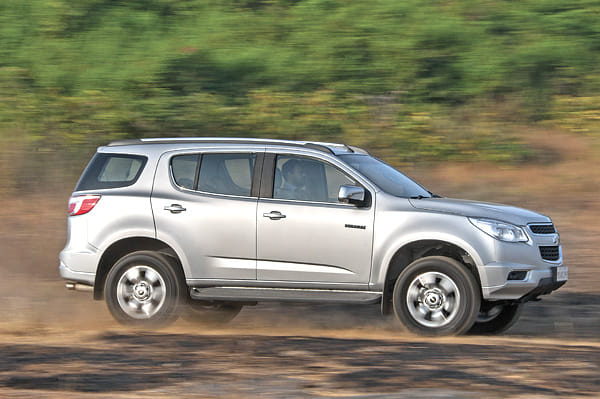
We Indians love big, traditional SUVs. We love the size, we love the imposing stance and we absolutely love the big ground clearance that allows us to drive roughshod over our roads. Of course, the unwritten rule here is ‘the bigger the better’, and who better to implement that than past masters Chevrolet, who, through past experience, know every single SUV trick in the book. And let’s be clear, the Trailblazer is a big, big SUV, even by class standards. Built on a new-gen ladder-frame chassis, it stretches the tape in all directions. It’s 173mm longer than the current favourite, the Fortuner, and wider and taller too.
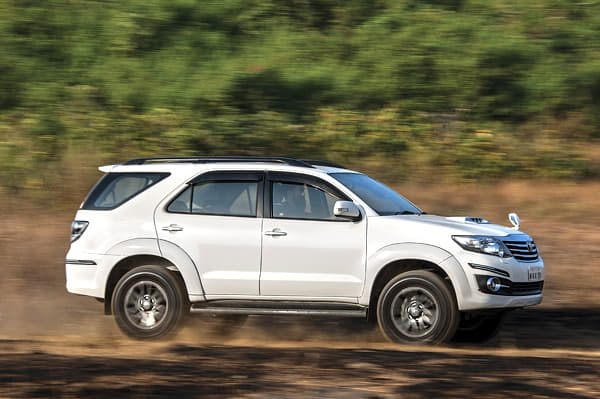
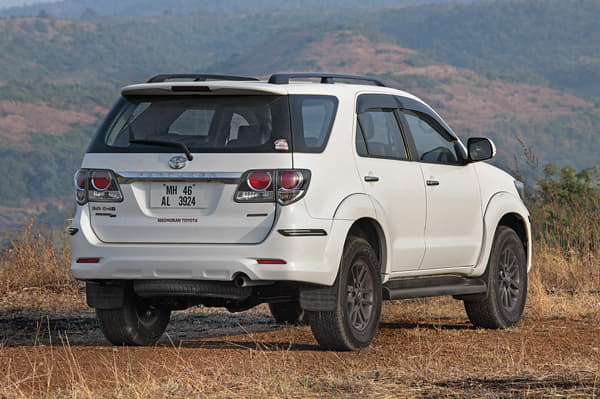
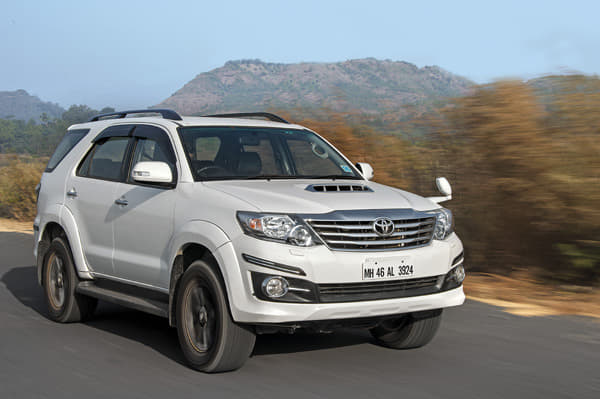
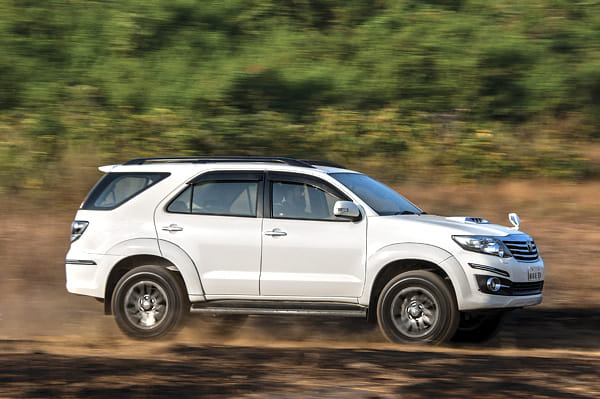
The Fortuner, however, has been one of the most successful SUVs in India. Toyota’s largest selling car after the Innova here, despite the presence of smaller, cheaper cars like the Etios and the Liva, the Fortuner is a, tough, tough competitor. It is dependable, as strong as a sledgehammer and extremely capable. Updated as recently as this year, the mildly facelifted Fortuner is also an SUV that gets every single thing right. So, the Chevrolet has an extremely difficult match on hand. It has to outshine it in every department to draw customers to it. And then there’s the strong Toyota brand it has to battle against; not a trifling challenge by any stretch. So, can the big Chevy displace the Fortuner or does the king-of-the-hill still retain top slot?
What are they like to drive?
The Duramax 2.8-litre four-cylinder diesel engine in the Trailblazer makes a very strong 197bhp. So, despite the 2,068kg weight, the Trailblazer is very quick off the mark. It dismisses the 0-100kph sprint in a blistering 9.89 seconds and that, for a vehicle of this mass, is clearly impressive. Performance is even good in the real world, where a mere tap on the accelerator is all that is needed to get this beast moving smartly after only a bit of a delay or turbo lag. The Trailblazer, in fact, is an impressive cruiser as the pulling power of the engine and the six-speed automatic gearbox keep the Chevy moving forward effortlessly. And that’s not all, it’s also pretty impressive when you are in a hurry. Want a quick burst of acceleration and the six-speed gearbox even shifts down fairly quick, power flowing to the rear wheels soon after. In manual tiptronic mode, one can even spin the motor all the way to 4800rpm, but the engine gets noisy at these speeds, so it’s best to keep revs below 3600rpm. What must be remembered is that, specified as it is, this Chevy is not built for driving on very challenging off-road trails. There’s no four-wheel drive or low range and this means the fantastic 253mm clearance and the big tyres are wasted on really challenging terrain.
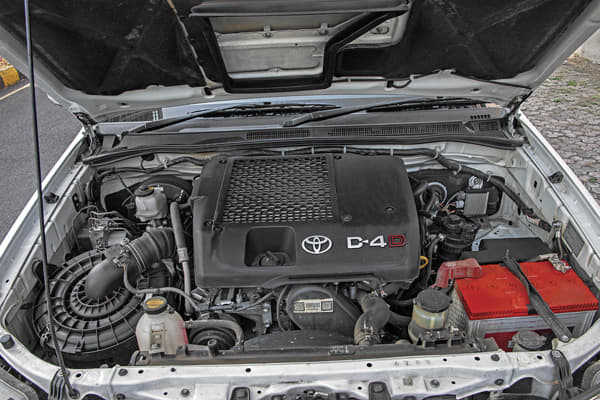
The specification sheet of the Fortuner reads, 3.0-litre D-4D. But while the Toyota has the larger capacity engine, it makes less power at 168bhp. Despite this, initial performance is more immediate. The Toyota is quicker on the draw when you hit the accelerator and the responsive engine also feels smoother than the Chevy. As a result, it is slightly nicer to drive in traffic and is also the more refined of the two. The Toyota, however, gets left behind once the roads open up. It lacks the sheer grunt of the Chevrolet and its straight line acceleration is nowhere near as quick. The heavier, permanent four-wheel-drive system automatic tested here takes a leisurely 12.32 seconds to sprint from 0-100kph and the gap between it and the Chevrolet only widens as you go faster.
In addition, it is the Chevy that also has the nicer gearbox, the Toyota’s five-speed gearbox is not as quick to respond. A lot can be gleaned from the following. In kickdown, the Toyota takes 7.39 seconds from 20-80kph and 10.86 seconds to go from 40-100kph. The Chevy does the same in 5.64 seconds and 7.33 seconds, respectively.
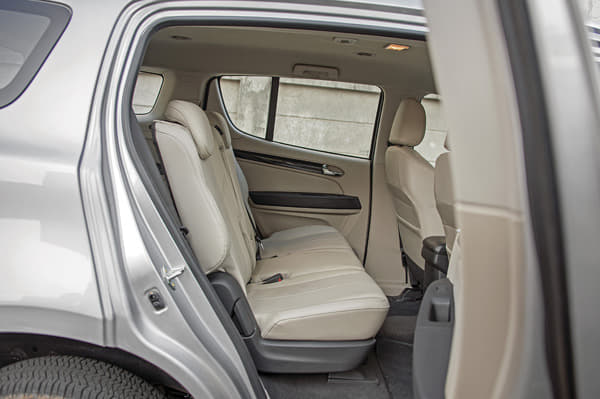
The Chevrolet also rides better than Toyota. Underneath the Chevy’s big body is a rugged ladder-frame chassis which gives it the ability to muscle through bad roads. And while the Fortuner feels tough, the Trailblazer feels tougher still. This helps it feel more composed while tackling larger bumps and big craters, the more supple suspension absorbing shocks better. There are vertical movements, expected from a vehicle this tall, but overall, it feels quite composed. Even passengers sitting in the third row don’t complain too much and that’s the best part about the Trailblazer.
Just like the Chevy, the Fortuner also sits on a ladder-frame. The low-speed ride here is slightly lumpy and the passengers get tossed around a bit. One can feel the road undulations more here and it never feels properly settled at slow speeds. However, go faster and the ride improves. High-speed stability is also good, and the car displays good grip with the full-time four-wheel-drive system making its presence felt at times.
But neither of these big and heavy off-roaders are truly enjoyable to drive if you employ an attacking driving style. These just aren’t the right kind of vehicles. The Fortuner rolls a fair bit, but grip levels are decent and the fairly direct heavy steering adds to the sense of security despite the mass of the car being flung around from side to side. So, overall, handling is decent for a vehicle this big.
The Trailblazer sits 253mm above ground and its skyscraper-like tall dimensions mean there’s even more body roll and you can feel the weight shifting around corners.
It can still be driven fast around corners, but there’s a bit more drama here with tyres squealing, and it doesn’t feel as compact or as composed as the Toyota. Still, grip levels are quite good and the handling is quite acceptable. The Chevy has the lighter and faster steering of the two, and this makes it easier to manoeuvre in traffic.
 Uday Singh
 Dipan Sur
 Glenn Noronha
 Viraaj Bhatnagar