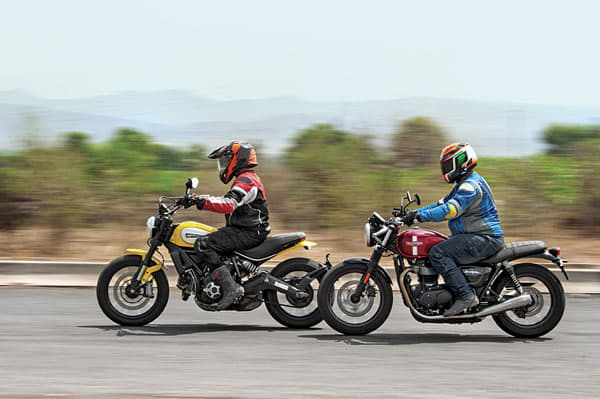
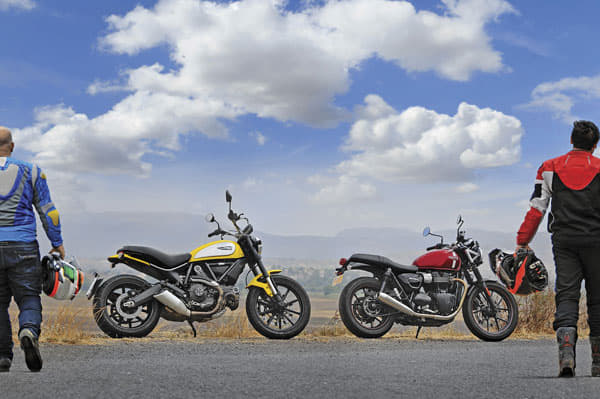
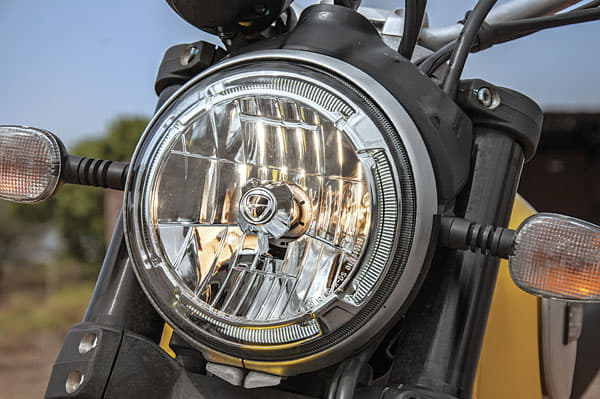
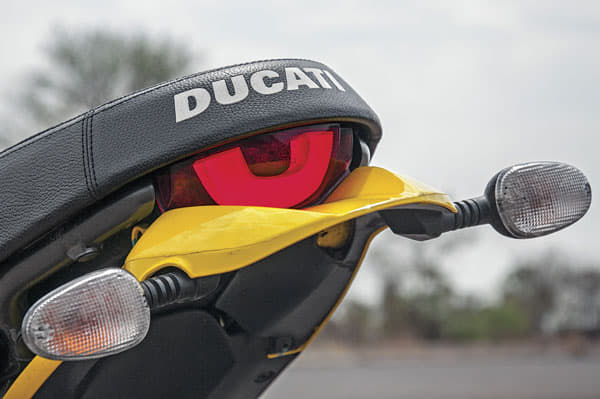
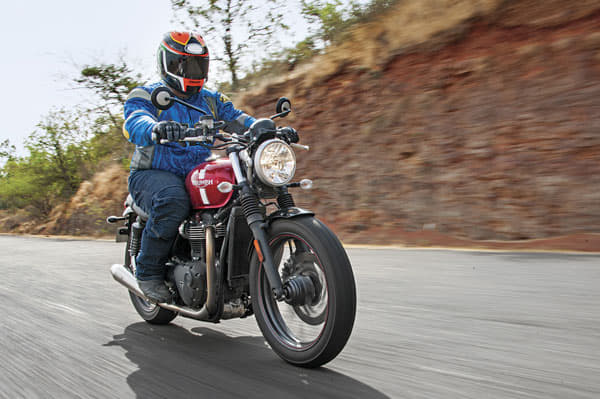
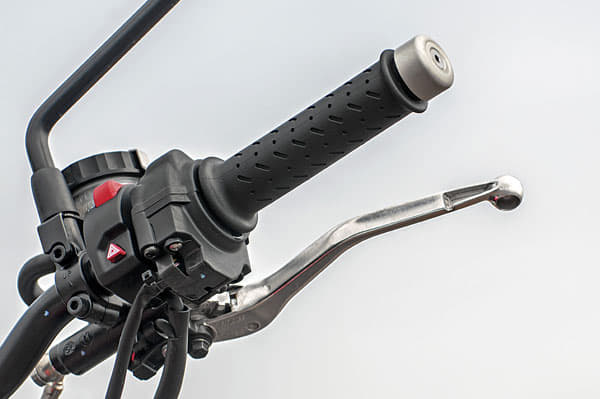
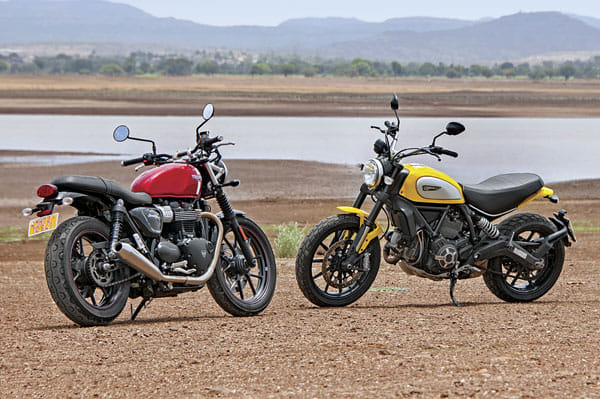
There are usually two distinct camps of motorcyclists – those who like to own the latest cutting edge, high-speed machines and those who prefer the calm and soothing process of working on and riding classic bikes from a bygone era. There is a recent trend, however, of bikers who love all that classic motorcycles represent, yet want a machine that’s thoroughly modern in construction. And in India, you needn’t look any further than the two bikes we have here, the Ducati Scrambler Icon and the Triumph Bonneville Street Twin to see just what appeals to this third lot of motorcyclists. Both motorcycles are modern interpretations of designs from the early 1960s and their sense of generic multipurpose represents a distinct move away from the highly specialised motorcycles that you see today. By virtue of their delicious designs, healthy but un-intimidating performance, modern safety aids, and accessible price tags, these motorcycles also offer bikers a friendly and properly usable stepping stone into the world of “big bikes”. And speaking of money, their near identical pricing in the Indian market makes choosing between the two a helluva task.
Bringing their ‘A game’
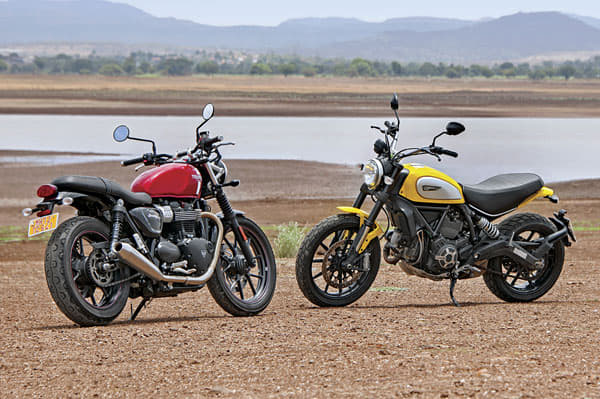
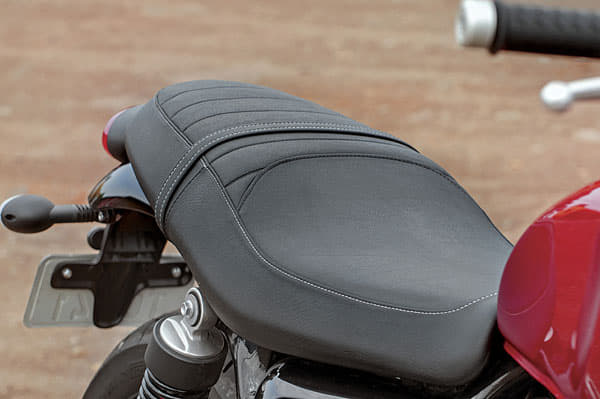
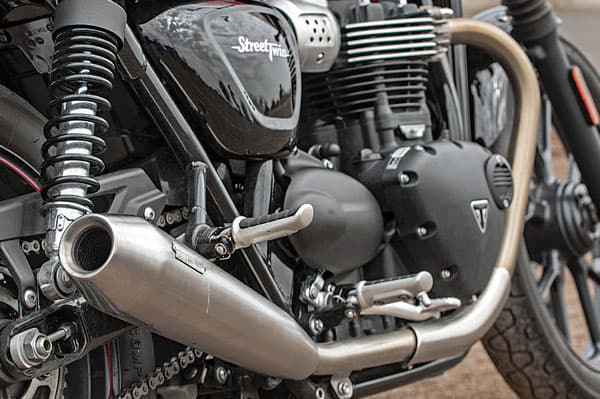
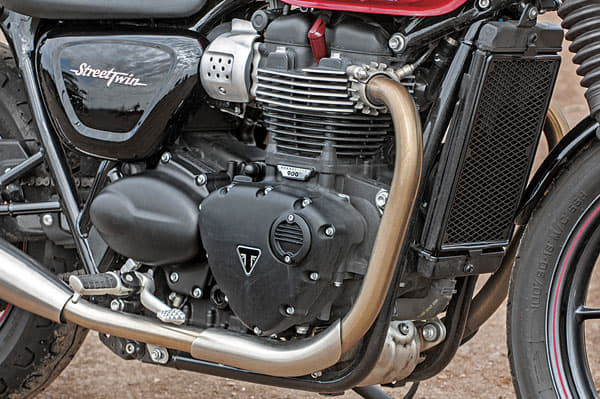
The Street Twin’s gently evolved and clean design manages to make it look even more proportionate now. Under the skin, it’s all-new and a massive update over the last-generation Bonneville. The all-new chassis is a simple but rugged dual-cradle design nestling a brand new eight-valve, 900cc parallel-twin motor which now gets liquid cooling. Even with a lowly 55hp on tap, the boffins at Triumph have worked their magic on this motor and it now makes about 18 percent more peak torque – 80Nm which kicks in at a low 3,230rpm.
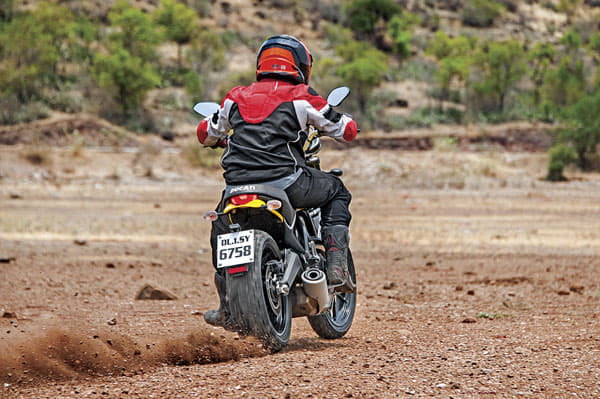
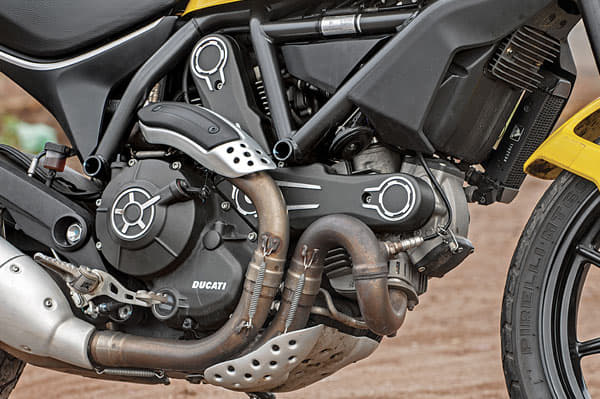
The Scrambler, on the other hand, looks like a bit of a mischief-maker. Its tank seems to be a size too small for the motorcycle, giving it a more muscular look with the wide tyres exaggerating its size. Ducati’s engineers have repurposed the 803cc air-cooled, four-valve, L-twin motor from the Monster 795/796 and fiddled around with camshafts, mapping them until it suited the Scrambler’s purpose. It makes 75hp of power and 68Nm of torque, both of which peak at much higher rpm as compared to the Triumph. Another rather crucial difference is the underpinnings of the Scrambler, which consist of a tubular steel trellis frame that uses the engine as a stressed member.
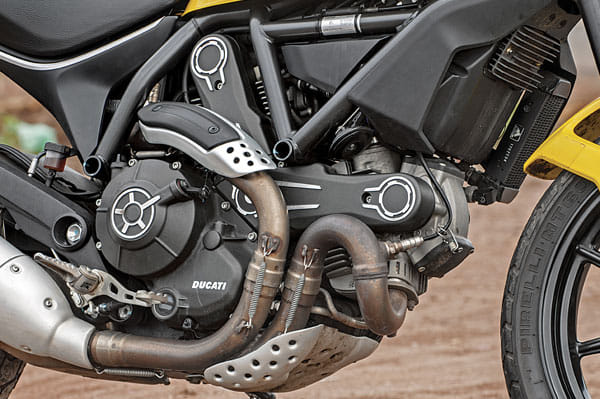
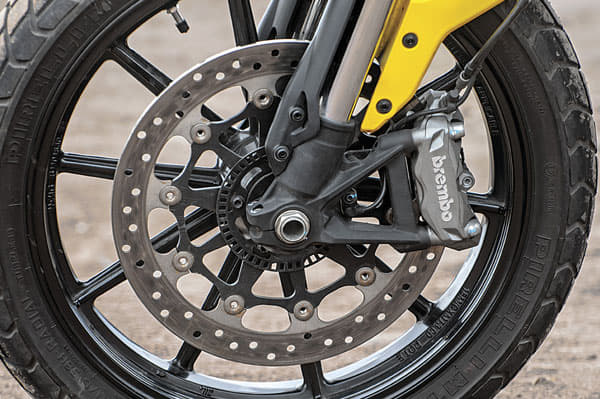
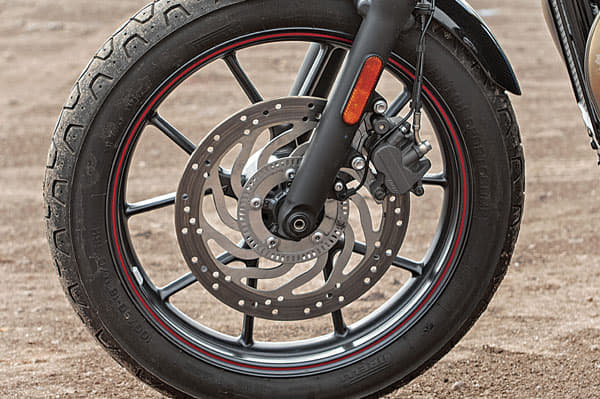
The Street Twin is designed to be a standard, road-going motorcycle and gets conventional 41mm telescopic forks up front and a pair of twin shocks at the back. The Scrambler, built for handling a multitude of surfaces, comes with upside-down forks while a monoshock handles suspension duties at the rear. And it’s the same story with the brakes as well. The Bonnie gets a single 310mm disc at the front and 255mm disc at the rear. Not only does the Scrambler rock a larger 330mm disc at the front (the rear is 245mm), it also gets a four-pot radially mounted Brembo monobloc caliper (the rear gets a one-piston floating caliper).
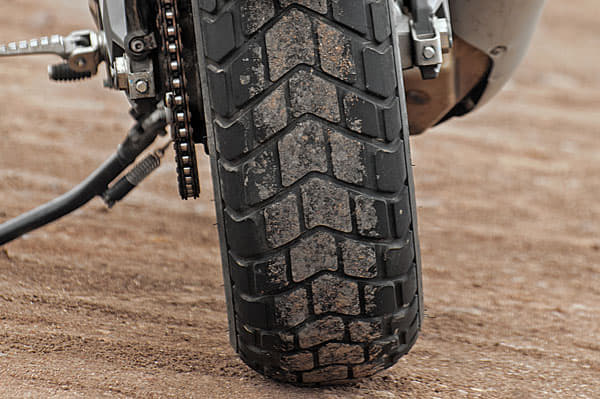
Both bikes run an 18/17-inch front/rear wheel combination, but when it comes to tyres, the Scrambler comes shod with chunky block pattern Pirelli MT60s which are designed for on/off-road use. The Street Twin, on the other hand, gets specially designed Pirelli Phantom Sportscomp rubber, which exudes a sense of an old-school tread pattern design, and comes in a radial only on the rear wheel.
 Ved Janve
 Vishal Venugopal
 Stephen Raj Antony