
Last Updated on: 21 Sep 2026
Hyundai Venue
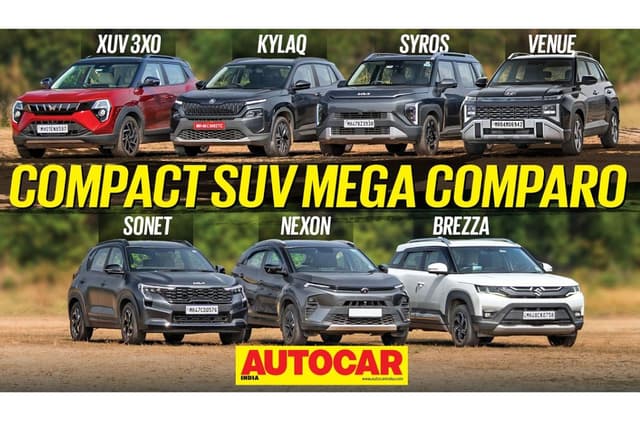
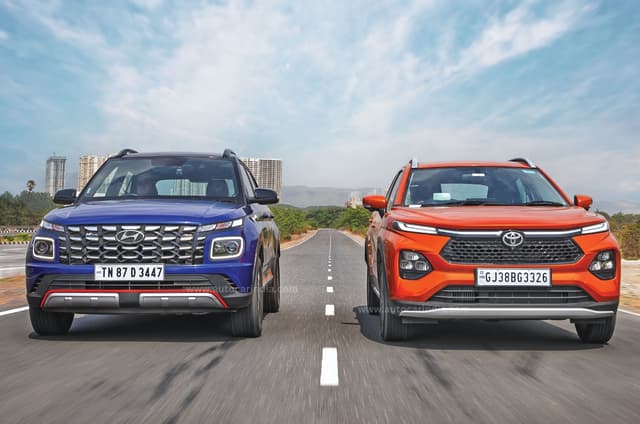
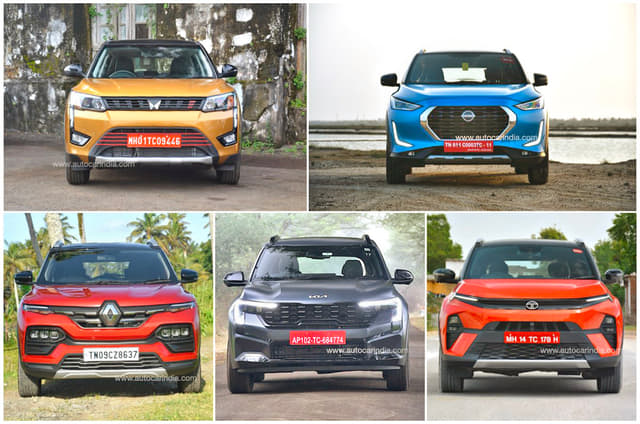
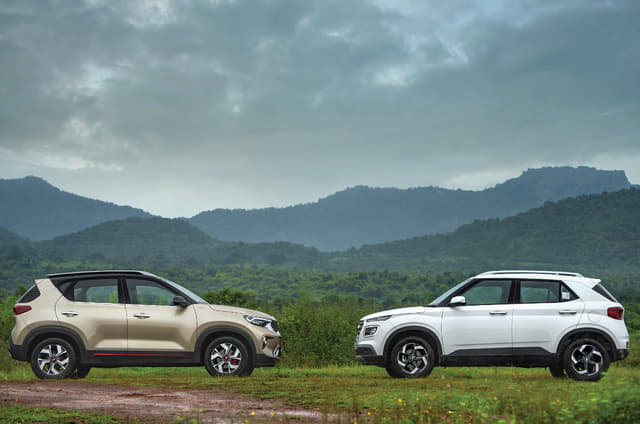
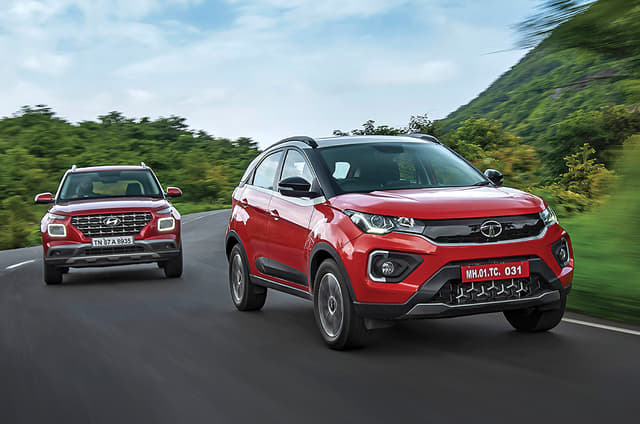
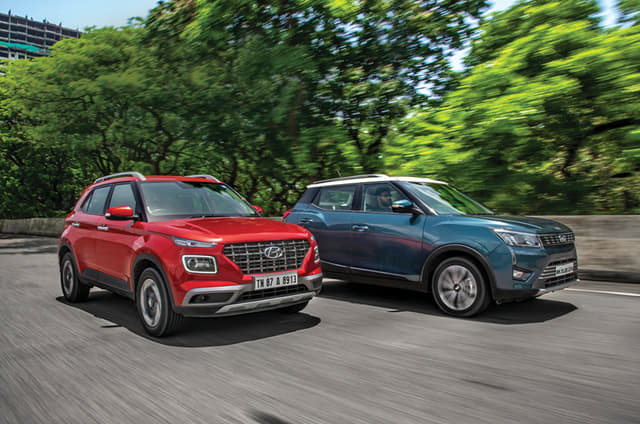
The Hyundai Venue price ranges between Rs 8.00 lakh and Rs 15.65 lakh (ex-showroom), with 26 variants on offer. The Venue is Hyundai's popular compact SUV offering, and rivals the likes of the Maruti Brezza, Kia Sonet, Tata Nexon, Mahindra XUV 3XO, Skoda Kylaq, and more.
Engine options for the Hyundai Venue comprise a 1.2-litre 4-cylinder naturally aspirated petrol, a 1.0-litre 3-cylinder direct-injection turbo-petrol, and a 1.5-litre 4-cylinder diesel. The Venue's turbo-petrol and diesel engines offer manual and automatic gearbox options, while the naturally aspirated petrol engine gets a manual only. The Hyundai Venue mileage ranges between 18.05kpl and 20.99kpl, depending on the powertrain.
Key Highlights of Hyundai Venue:
- Compared to the first-generation model, the new Venue is 48mm taller, 30mm wider, and has a 20mm longer wheelbase.
- Depending on the variant, the Hyundai Venue gets features like dual 12.3-inch screens, a 360-degree camera, ventilated front seats, a single-pane sunroof, Level 2 ADAS, white ambient lighting, wireless Apple CarPlay and Android Auto, and more.
- The sportier N Line variants of the Hyundai Venue are powered solely by the 120hp 1.0-litre turbo-petrol engine, and is offered with both manual and DCT gearboxes.
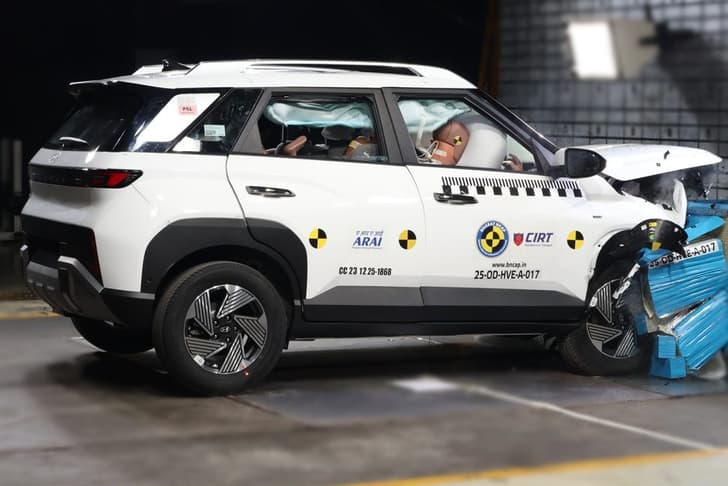
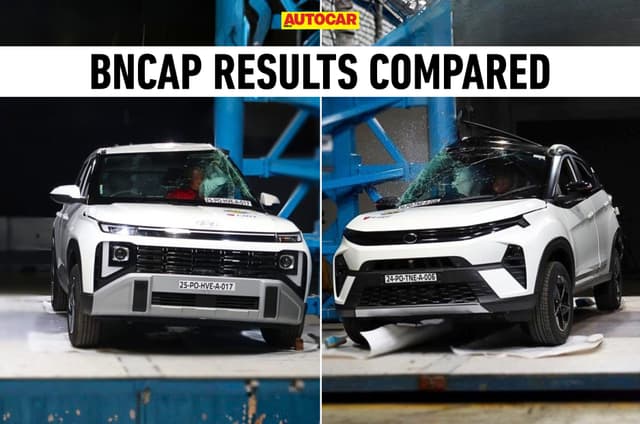
- Bharat NCAP rating of the new Hyundai Venue is 5 stars.
- Safety features for the Hyundai Venue include 6 airbags as standard, front and rear disc brakes, a tyre pressure monitoring system (TPMS), an electronic parking brake with auto hold, Level 2 ADAS, and more.
Hyundai Venue Latest Updates
- April 20, 2026: Hyundai Venue Knight Edition launched in India at Rs 9.70 lakh; the HX6, HX10 and N-Line's N10 DCT variants now get a dashcam.
- March 30, 2026: Hyundai Venue scores 5 star Bharat NCAP safety rating; the Venue is Hyundai’s second model to undergo Bharat NCAP crash tests.
- March 27, 2026: Hyundai hikes prices of the Venue by up to Rs 20,000; prices of several Venue variants, including the base HX2 petrol MT, the top-spec HX10 diesel AT and the N Line, are unchanged.
- March 10, 2026: Hyundai Venue diesel-AT gets more affordable with HX8 trim at Rs 13.70 lakh; Venue has amassed over 1 lakh bookings since launch.
- January 2, 2026: Hyundai Venue HX5+ variant launched at Rs 9.99 lakh; borrows some exterior and interior features from the pricier HX6 trim.
Hyundai Venue Features and specifications
Our Rating | 8 |
Mileage | 17.9 kmpl - 20.99 kmpl |
Engine | 998 cc - 1493 cc |
Fuel Type | Petrol, Diesel |
Transmission | DCT, Torque Converter, Manual, AT |
Seats | 5 |
Body Style | SUV |
Doors | 5 |
Max Power | 116 hp at 4000 rpm |
Max Torque | 250 Nm at 1500 - 2750 rpm |
| Engine Type | Turbocharged |
| Engine Displacement | 1493 cc |
| Number of Cylinders | 4 |
| Engine Installation | Front |
| Fuel Supply System | Common Rail |
| Emission Standard | Bharat Stage VI |
| Terrain Modes | Yes |
| Auto Start/Stop | No |
| Front Suspension Type | Independent, MacPherson Strut |
| Front Springs | Coil Springs |
| Rear Suspension Type | Non-independent, Torsion Beam |
| Rear Springs | Coil Springs |
| Length | 3995 mm |
| Width | 1800 mm |
| Height | 1665 mm |
| Wheelbase | 2520 mm |
| warranty Distance | Unlimited |
| warranty Duration | 3 |
| Acoustic Windshield | |
| Ambient Lighting | |
| Auto Parking | |
| Bluetooth Connectivity |
| Adaptive Cruise Control | |
| Airbags | 6 |
| Anti Theft Alarm | |
| Anti-Lock Brakes (ABS) |
| Antenna | Shark Fin |
| Body Coloured Bumpers | |
| Connected LED | |
| Cornering Headlights |
| Average Fuel Consumption | |
| Average Speed | |
| Distance to Empty | |
| Gear Indicator |
| AUX Input | |
| Android Auto | Wireless |
| Apple CarPlay | Wireless |
| Audio System |
| Check Vehicle Status via App | |
| Emergency Call Button | |
| Find My Car | |
| Geo Fence |
Hyundai Venue price & variants
The Hyundai Venue is available in 9 trim levels, namely HX2, HX4, HX5, HX5+, HX6, HX6T, HX7, HX8, and HX10. The sportier Venue N Line, meanwhile, comes in N6 and N10 trims.
The Venue is sold with an 83hp 1.2-litre naturally aspirated petrol engine paired with a 5MT gearbox, a 116hp 1.5-litre diesel engine with 6MT and 6AT options, and a 120hp 1.0-litre direct-injection turbo-petrol engine with 6MT and 7DCT options. Of these, the 1.2 petrol MT is available in the most number of trims, while the turbo-petrol and diesel powertrains are mostly evenly distributed across the range.
Here are the notable features of every Hyundai Venue trim:
HX2: 6 airbags, rear parking sensors, projector headlamps, 10.25-inch infotainment touchscreen, 4.2-inch MID in instrument cluster, wireless Apple CarPlay and Android Auto, electrically adjustable ORVMs, manual climate control, 4-speaker sound system. This trim has little in the way of bells and whistles, but still includes most essential safety and convenience features you need.
HX4: Rear defogger, rear camera, height-adjustable driver's seat, auto folding ORVMs, tyre pressure monitoring system (TPMS). The HX4 packs some more safety and convenience-enhancing features over the prior trim, but at a steep price increase. Powertrain choice is much more limited too.
HX5: Sunroof, cruise control (turbo-petrol and diesel only), push-button start/stop (petrol and turbo-petrol only), remote engine start (turbo-petrol only), front armrest (DCT and AT only). The HX5 trim ups the ante with a sunroof, a crowd-favourite feature, along with a broad spread of engine options and powertrain-specific features. Opting for the HX5 turbo-petrol DCT nets you all these goodies.
HX5+: Auto up/down powered driver window, rear wiper/washer, LED headlamps, rear window sunshade, wireless charging pad. Powertrain choice is limited in the HX5+, but if it aligns with what you were looking for, it's not that much pricier over the HX5 and is therefore the better pick.
HX6: Puddle lamps, 2-step reclining rear seat, 6-speaker sound system, automatic climate control, 60:40 split rear seats, rear armrest with cupholders, cooled glovebox. There isn't much to choose from in the HX6 trim when it comes to powertrains, and it's rather expensive. The HX6 does pack important comfort and convenience features, but it's worth spending a bit more for the HX8 instead.
HX6T: Automatic headlamps, over-the-air updates, connected car tech, built-in dashcam. The HX6 does not offer much over the HX6, and even misses out on some features, but is substantially cheaper as it's offered with the 1.2 petrol MT powertrain. If this is the one you're looking for, the HX6T is great value.
HX7: 16-inch alloy wheels, white ambient lighting (dashboard), LED positioning lamp, rear light bar, LED indicators. The HX7 trim is available in diesel MT guise only, and includes previous automatic-only features like 2-step rear seat recline, 60:40 folding seats, cruise control, rear armrest, and more. It's on the pricier side since it's a diesel variant, but should you be seeking one, the HX7 offers good bang for your buck.
HX8: Rear disc brakes (DCT/AT only), leatherette seats, 4-way powered driver's seat, ambient lighting on centre console (DCT/AT only), ventilated front seats, electronic parking brake with auto-hold (DCT/AT only). This trim amps up the feel-good factor of the cabin, and packs a crucial feature like seat ventilation too. Buying an automatic variant of the HX8 trim makes the most sense given how much is locked behind them.
HX10: Auto-dimming IRVM, front and side parking sensors, Level 2 ADAS, dual 12.3-inch displays, 8-speaker Bose sound system, voice commands for sunroof, idle stop and go (turbo-petrol only). Being the top-end trim, the HX10 expectedly gets all the premium accoutrements. However, it's also the only trim to offer useful safety kit like an auto-dimming IRVM and front and side parking sensors. The HX10 costs quite a lot more than the HX8 does, too.
Here are the notable features in every trim of the Venue N Line:
N6: Rear camera with sensors, rear defogger, 17-inch alloy wheels, N Line exterior badging, 10.25-inch touchscreen, wireless Apple CarPlay and Android Auto, manual climate control. The N6 is about as well-equipped as the mid variants of the standard Venue, but with distinct sporty touches. It can also be had with both MT and DCT options.
N10: Level 2 ADAS, automatic headlamps, sequential indicators, dual 12.3-inch displays, red ambient lighting, 4-way powered driver's seat, ventilated front seats. The N10 is matched in equipment levels with the standard Venue's HX10 trim, but the N Line cosmetic tweaks command a significant premium.
Hyundai Venue Expert Review
We like
Cabin looks and feels premium
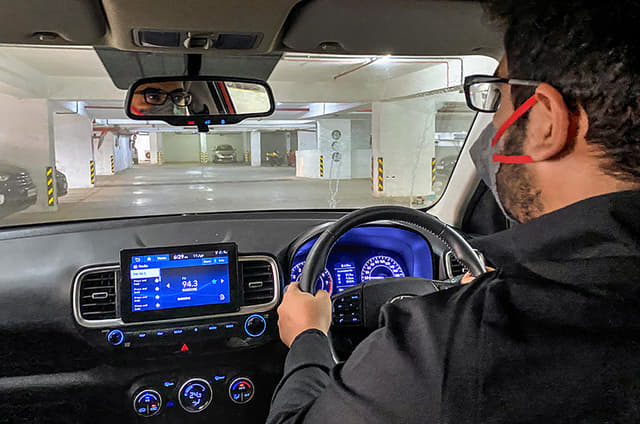
Slick infotainment system
Refined diesel and smooth auto combo.
We don't like
Ride still has an underlying firmness
N Line mechanically identical to standard version.
9
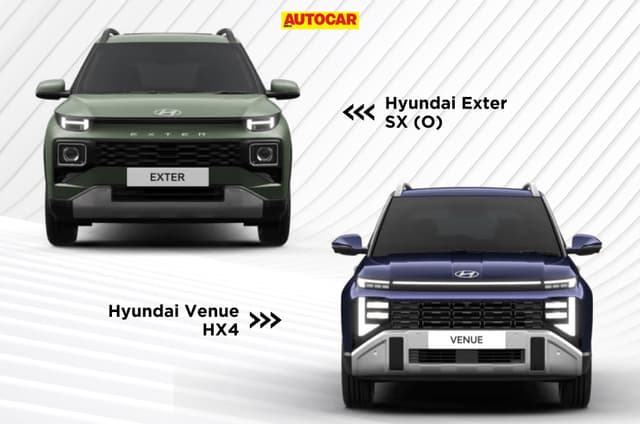
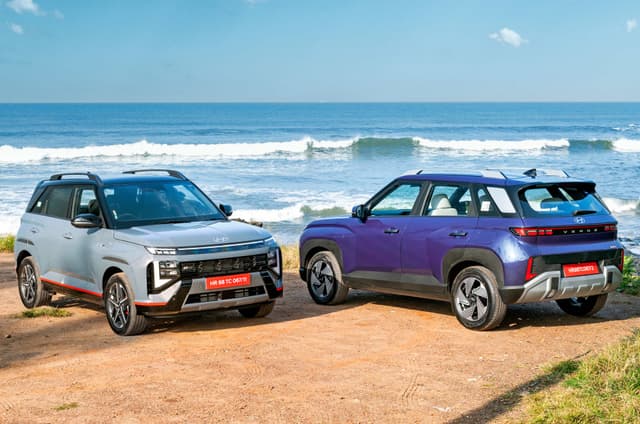
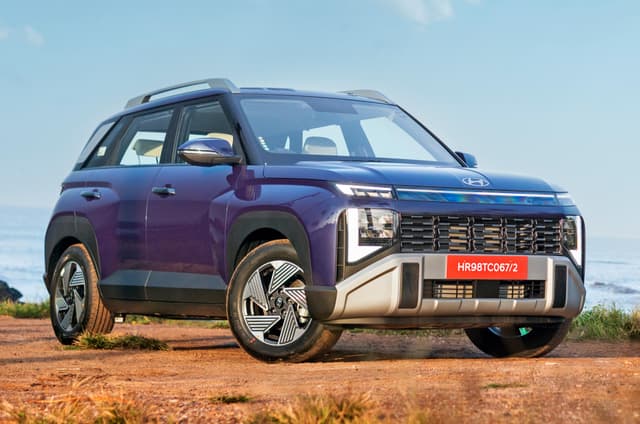
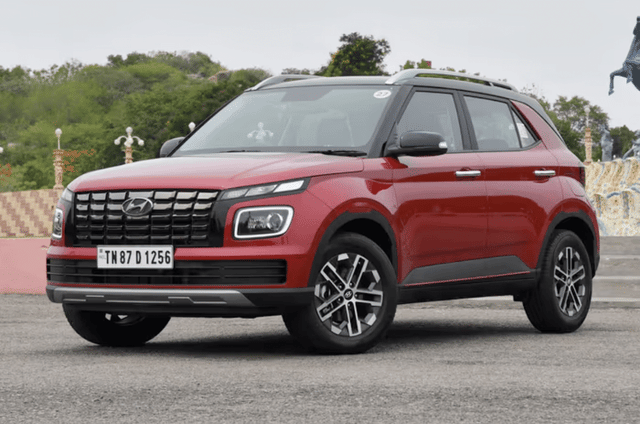
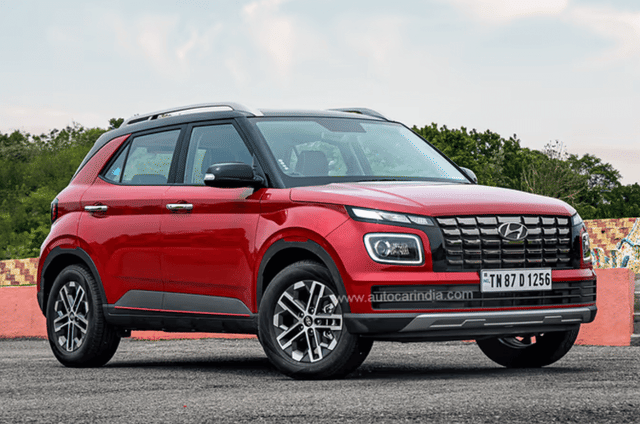
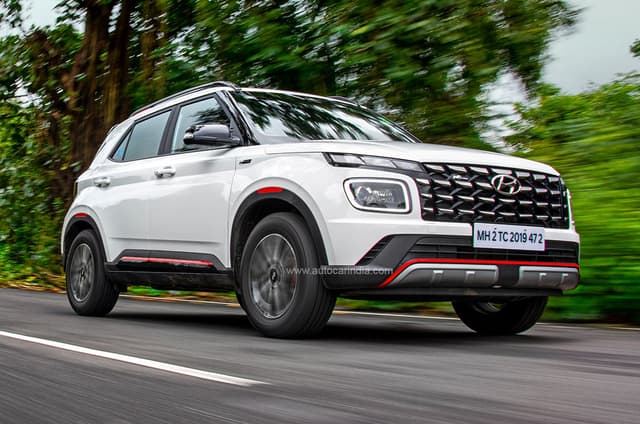
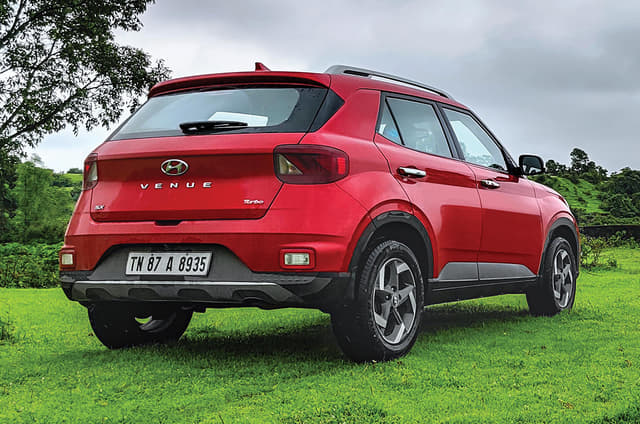
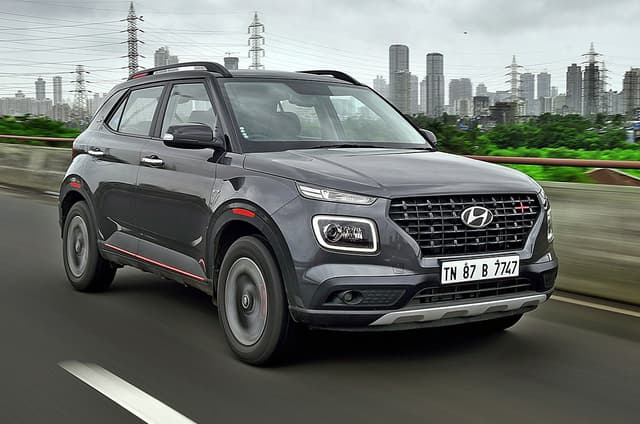
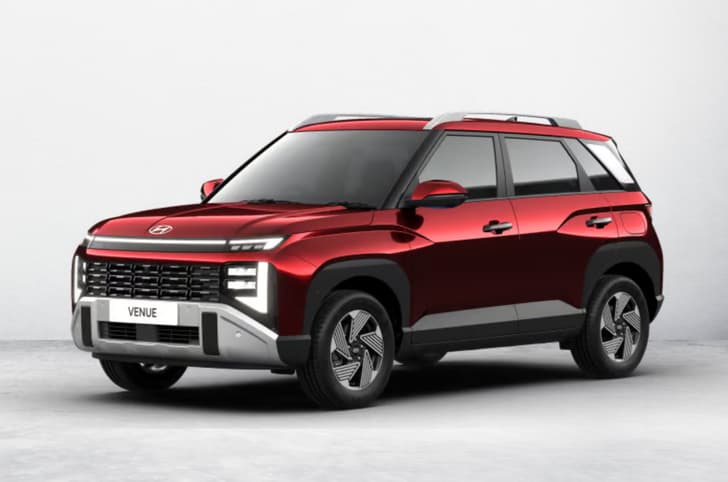
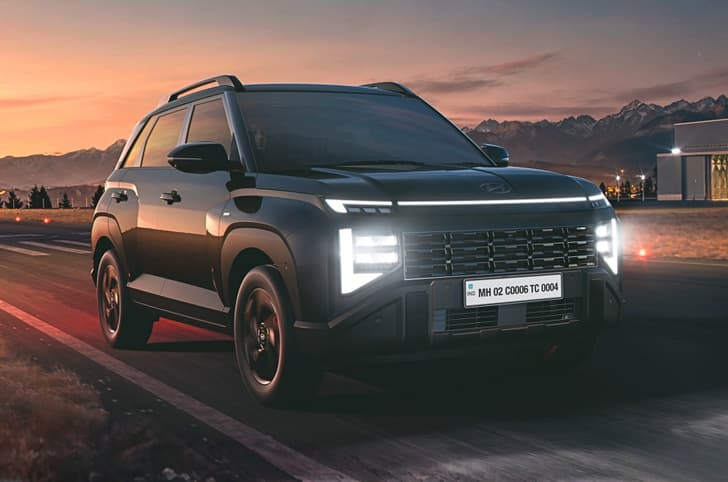
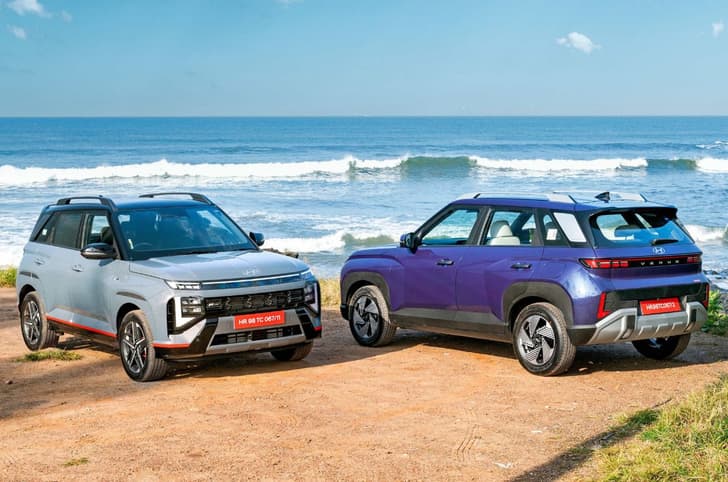
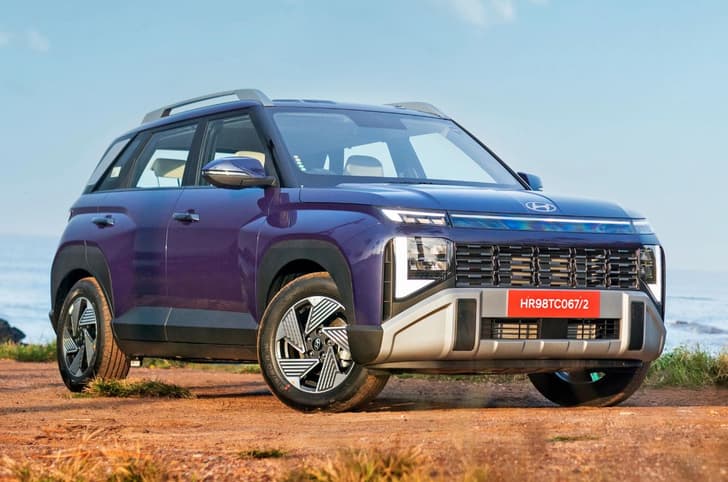
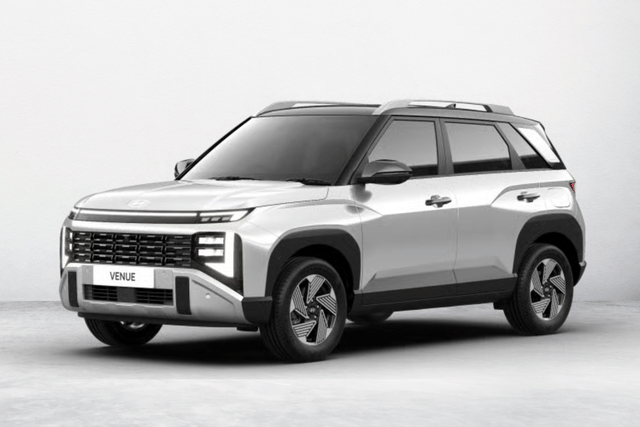
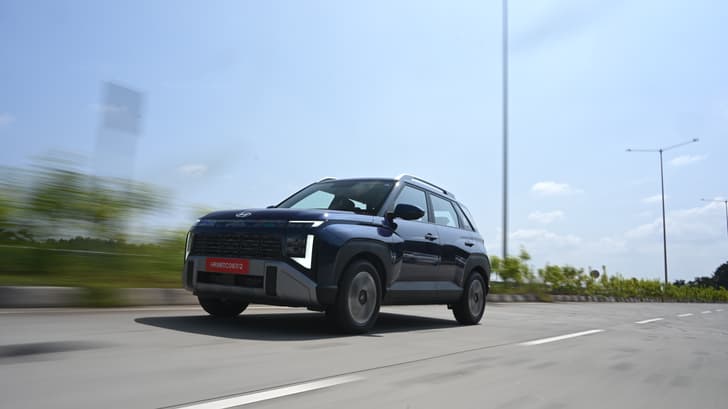
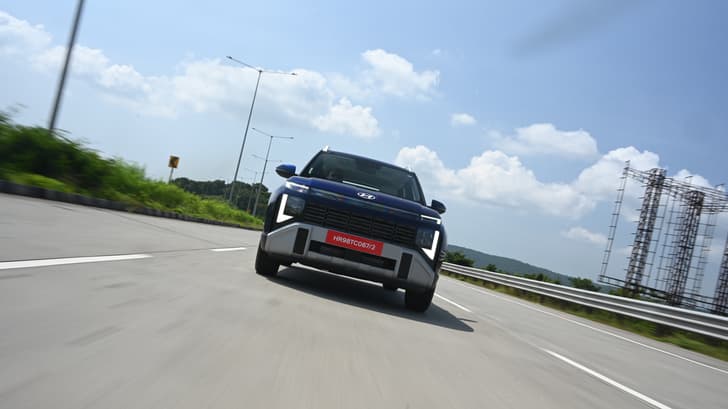
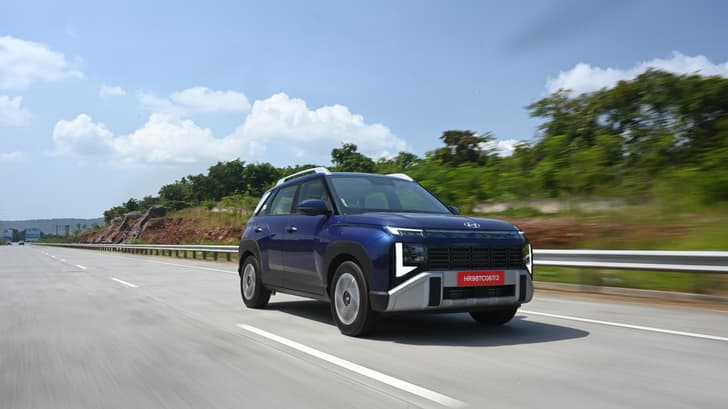
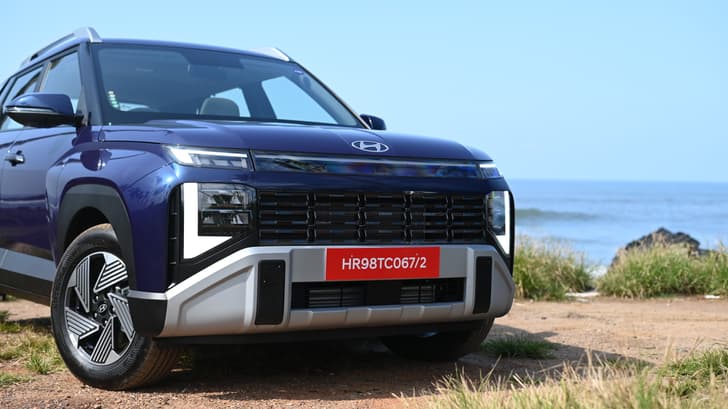
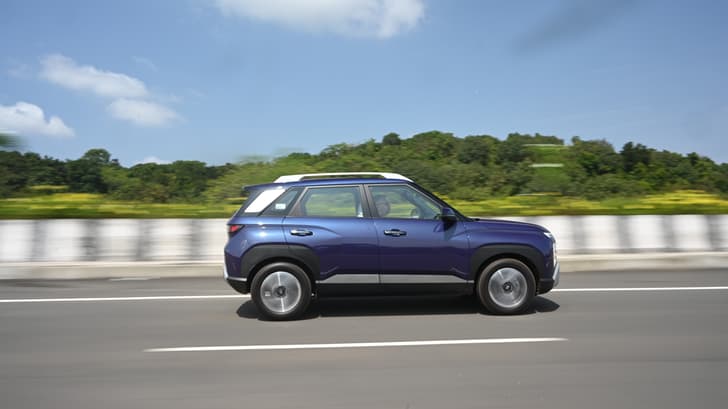
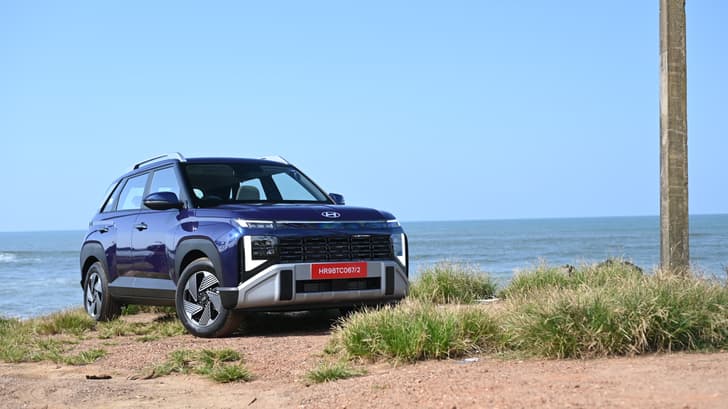
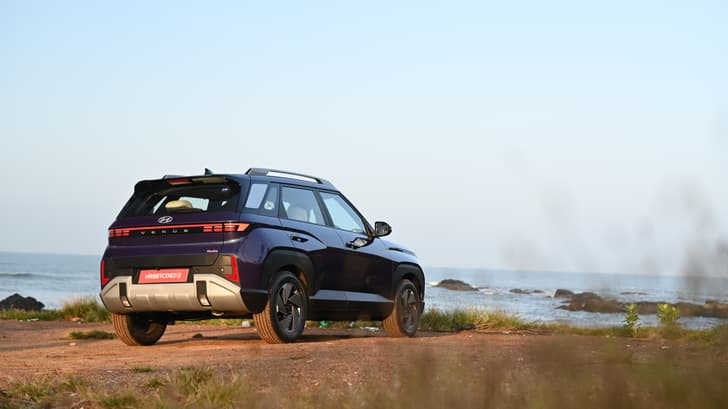
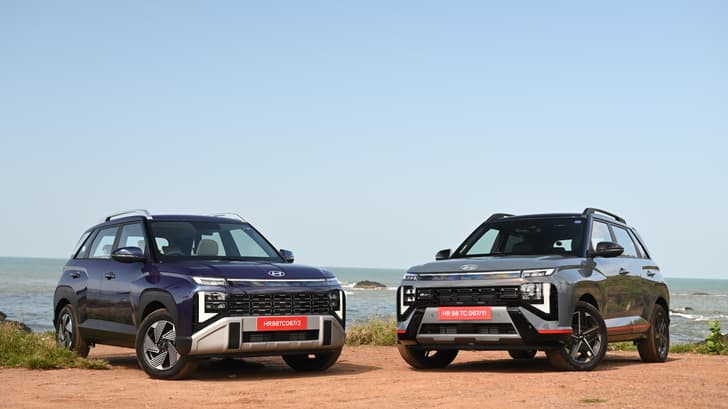
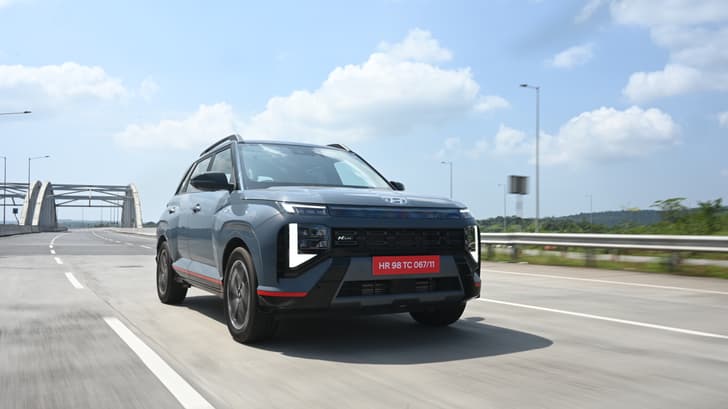
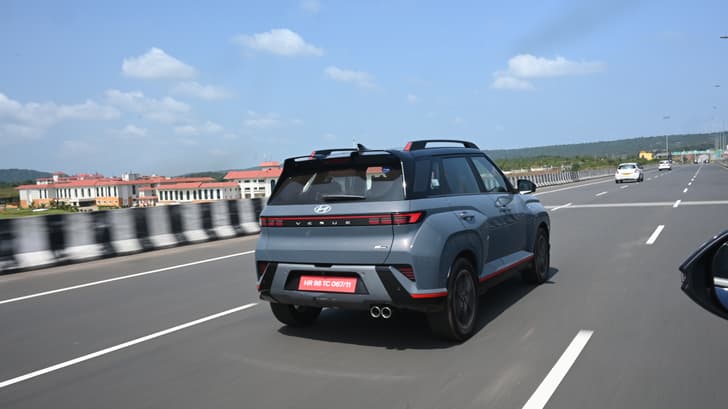
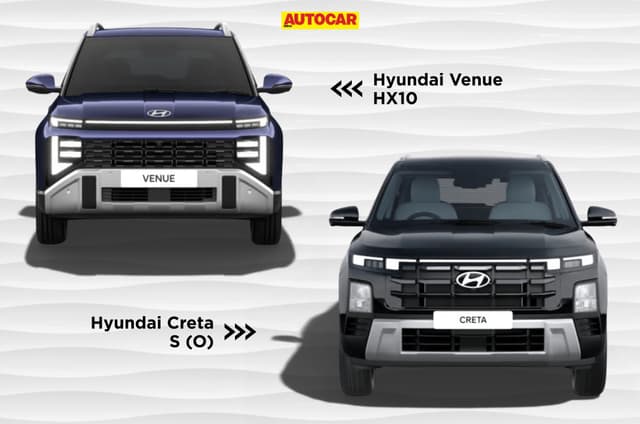
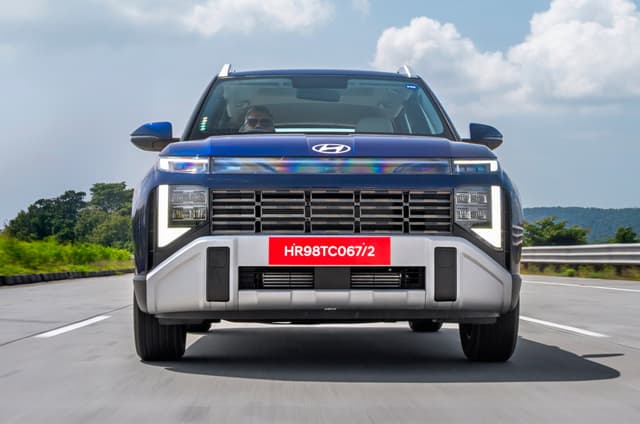
The new Venue sits on the global K1 platform shared with the Kia Syros. It’s more rigid and slightly larger – 30mm wider, 48mm taller, and with a 20mm longer wheelbase. The platform also makes it a software-defined vehicle capable of OTA updates for new features and fixes. Hyundai has nailed the proportions, avoiding the undertyred look some rivals suffer from, while giving the N Line a distinct identity. The front end borrows cues from the Creta, Exter and even the Palisade, while sharp creases, flared fenders and a new C-pillar quarter glass define the side. The standard car runs on 16-inch wheels, while the N Line gets striking 17s with red brake calipers. Overall, it’s an edgy design that stands out, even if it won’t appeal to everyone.
9
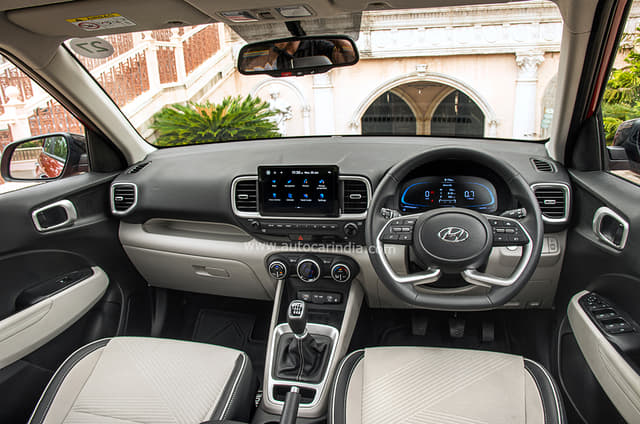
The dual 12.3-inch screens for the infotainment and digital driver’s display are larger than even the Creta’s and on par with the Syros. Powered by NVIDIA tech, the infotainment system is quick, responsive and has superb resolution – best seen in the 360-degree camera view. Features include ventilated front seats, a wireless charger, smart key with push-button start, an 8-speaker Bose system and a single-pane sunroof. The Venue also gains Hyundai’s SmartSense Level 2 ADAS, up from the earlier Level 1 setup. Safety kit is comprehensive, with six airbags, ABS, ESC, VSM and ISOFIX mounts standard from the HX2 trim. It hasn’t yet been crash-tested, but Hyundai expects a 5-star Bharat NCAP rating, given the Kia Syros’ strong performance.
8
The rear seat now offers more knee room thanks to the 20mm longer wheelbase and scooped-out front seat backs, though thigh support could be better. Shoulder room is slightly improved, but seating three abreast remains tight. Boot space has grown from 350 to 375 litres. Up front, the cabin feels cleaner and more modern, with a curved display neatly integrating the infotainment and digital instruments. A new steering wheel with four dots (Morse code for H) replaces the Hyundai logo, while automatic versions get a “coffee-table” centre console. Despite the hard plastics, quality and detailing impress. The dual-tone blue-and-white upholstery adds airiness, while the N Line gets an all-black interior with red accents and a sporty Ioniq 5 N–style steering wheel. Rivals like the Syros and Nexon offer more space, but the Venue’s design and finish stand out.
8
The ARAI mileage figure for the 1.2-litre petrol engine is 18.05kpl, while the turbo manual and DCT better that, delivering 18.74kpl and 20kpl respectively. The 1.5-litre diesel achieves 20.99kpl with the manual, however this drops significantly to 17.9kpl with the optional automatic.
8
The base engine is a 1.2-litre four-cylinder petrol producing 83hp and 115Nm, paired with a 5-speed manual. Above that sits the 1.0-litre turbo-petrol with 120hp and 172Nm, offered with a 6-speed manual or 7-speed DCT. The diesel option is a 1.5-litre unit with 116hp and 250Nm, now available with a 6-speed torque converter auto alongside the manual. The turbo-petrol is the most engaging, with mild lag below 2,000rpm before strong mid-range punch. The N Line’s exhaust adds a sporty burble, while both transmissions suit the engine well. The DCT is mostly smooth, with only mild hesitation at crawling speeds. The diesel impresses with refinement – barely audible below 2,000rpm – but runs out of steam past 3,500rpm. The auto’s smoothness complements it, though initial throttle response feels a bit dull.
7
The new Venue is slightly more softly sprung than its predecessor with a noticeable improvement in low-speed bump absorption. However, the damping is still not totally sorted with an underlying firmness coming through. Come across a sudden pothole or even worse a series of them, and the Venue will thud through. The ride also felt a tad too busy on the rippled concrete highways of Goa. While the Venue’s ride is not inherently uncomfortable, rivals like the Tata Nexon and Mahindra XUV 3XO do a better job of ironing out imperfections. The Venue N Line runs exactly the same setup as the regular car with only a slight firmness coming from the larger 17-inch wheels. All versions of the Venue steer almost exactly the same, with a direct but light and somewhat lifeless steering that never really weighs up at speed.
8
Despite the generation shift, it’s been priced keenly to start with – from Rs 7.89 lakh (ex-showroom). Move up the range though and prices climb sharply, reaching Rs 14.74 lakh for the turbo DCT, Rs 15.48 lakh for the top-spec N Line and Rs 15.69 lakh for the diesel automatic, putting it among the priciest in the segment, but it still represents solid value for what it offers. The design is edgy and modern with plenty of wow factor in N Line guise, while the tech-laden cabin looks and feels genuinely premium. It’s not perfect, but then nothing in this segment is.
Reviewed by: Lenny D'sa
Hyundai Venue Official Brochure
Download the complete brochure with specs, features, and variants.
Hyundai Venue reviews

Hyundai Venue comparison

Hyundai Venue Mileage
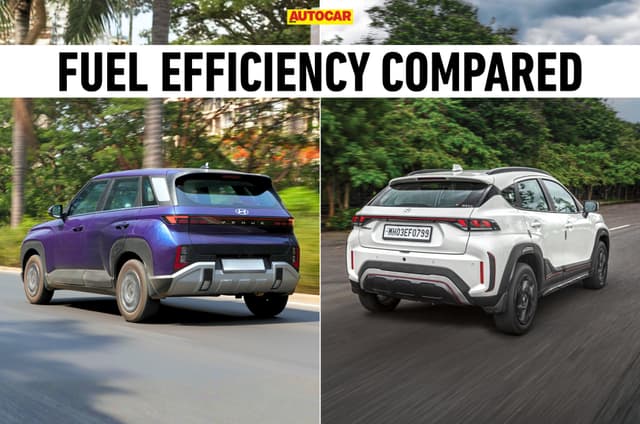
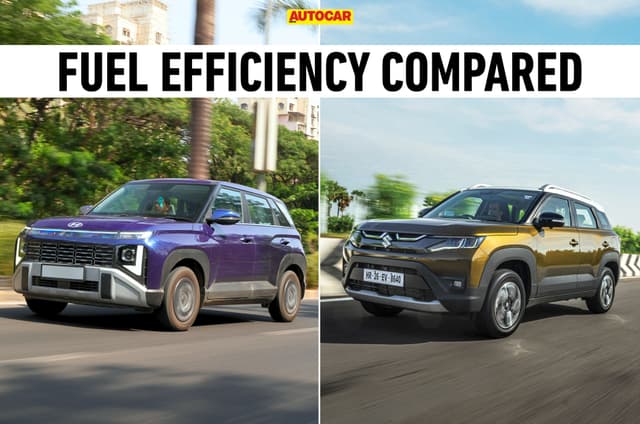
The Hyundai Venue mileage figures range between 17.9 kmpl - 20.99 kmpl. Hyundai claims the 1.2-litre petrol-MT returns 18.05kpl, while the 1.0-litre turbo-petrol engine has a claimed mileage figure of 18.74kpl and 20kpl for the manual and DCT gearboxes, respectively. Meanwhile, the Venue diesel mileage with the manual gearbox is 20.99kpl, while the automatic variant returns 17.9kpl. That makes it one of the most efficient diesel cars currently on sale in India.
| PowertrainThe combination of engine type, fuel, and transmission that powers your vehicle and determines how it drives and what it runs on. | ARAI MileageMileage certified by the government, tested under controlled lab conditions. Real-world mileage will vary. | Autocar Tested MileageAutocar's experts test each vehicle on fixed city and highway routes under standardised conditions - single occupant, AC running, manufacturer-recommended tyre pressures. Tanks are filled to the brim before and after each run to calculate efficiency. Results reflect realistic real-world usage. | User Reported MileageMileage figures are reported by vehicle owners and represent the approximate real-world efficiency you may experience. Actual mileage will vary based on driving conditions, habits, and vehicle condition. |
|---|---|---|---|
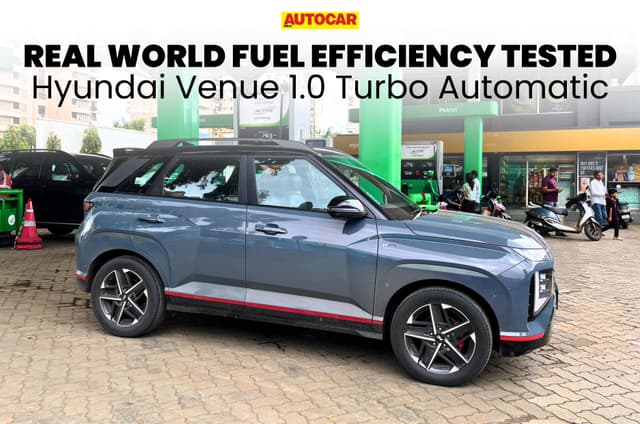
Petrol-Manual 1197 cc | 18.05 kmpl | 12.8 kmpl | 16.73 kmpl |
Petrol-Manual 998 cc | 18.74 kmpl | 12.8 kmpl | 17.24 kmpl |
Diesel-Manual 1493 cc | 20.99 kmpl | NA | NA |
Petrol-Automatic (DCT) 998 cc | 20 kmpl | NA | NA |
Diesel-Automatic (Torque Converter) 1493 cc | 17.9 kmpl | NA | NA |
Diesel-Automatic (AT) 1493 cc | 17.9 kmpl | NA | NA |
Hyundai Venue news
Hyundai Venue Images
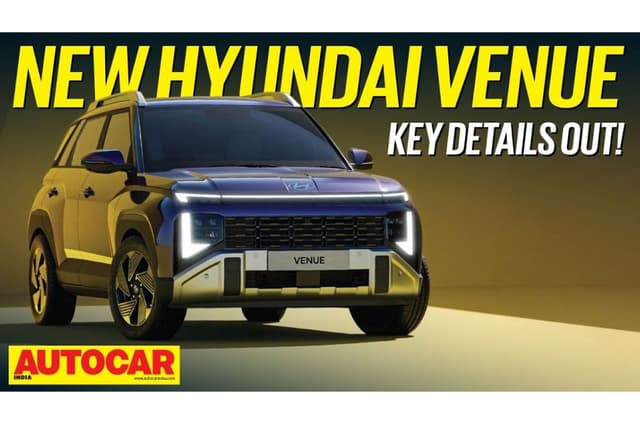
The second-generation Venue comes with quad-LED headlamps, connected DRLs and 16-inch alloy wheels and a lot more. Check out our Hyundai Venue image gallery to see the compact SUV from several angles.
Hyundai Venue videos
Our Hyundai Venue review covers its exterior design, seat and ride comfort and performance in great detail. Explore walkarounds and more in our Hyundai Venue video gallery.


.jpg?w=640&q=75&fm=auto)


Hyundai Venue Colours
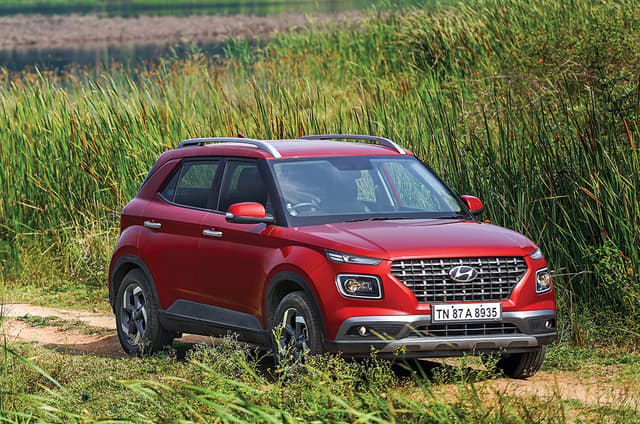
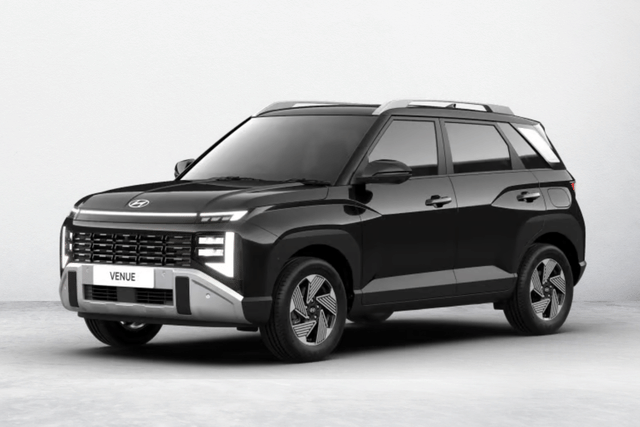
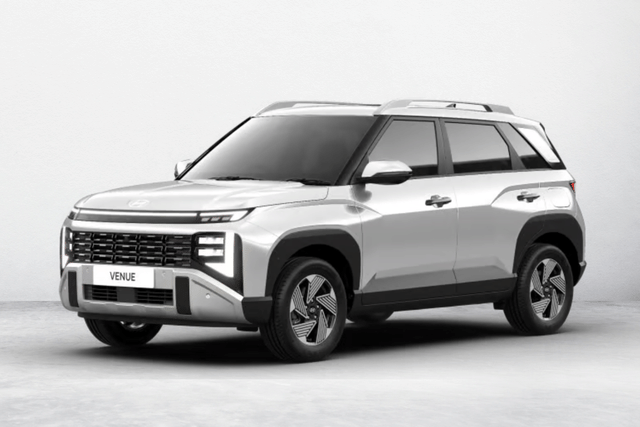
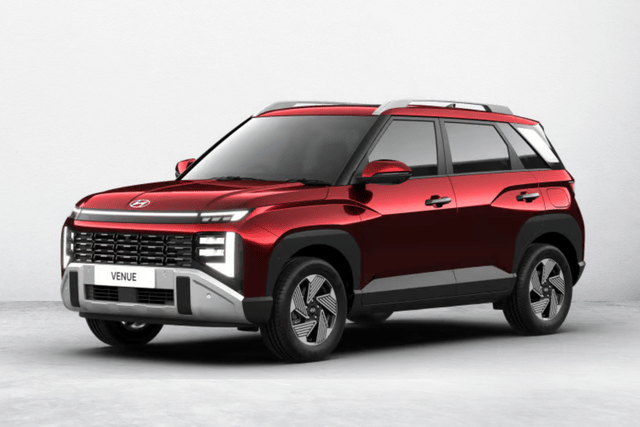
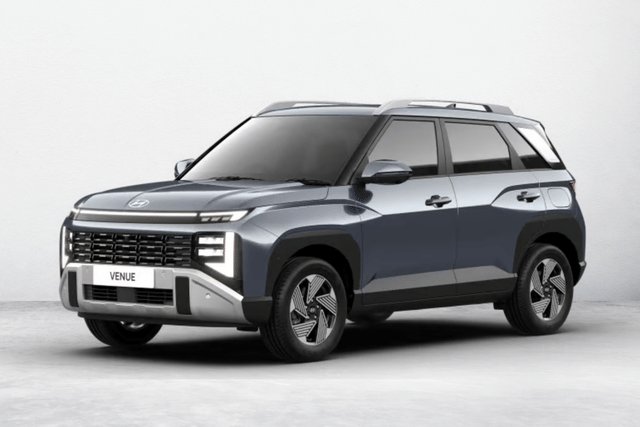
The Hyundai Venue colours include Abyss Black, Atlas White, Atlas White With Abyss Black Roof, Dragon Red, Hazel Blue, Hazel Blue With Abyss Black Roof, Mystic Sapphire, Titan Grey. See the Hyundai Venue in different exterior shades below.
Hyundai Venue Similar Cars to Explore
Hyundai Venue FAQs
Yes, the Hyundai Venue is a good choice for long drives and highway use as the turbo petrol and diesel variants offer good cruising ability, stability at high speeds, and features like cruise control and reclining rear seats, making it comfortable for long drives.
The Hyundai Venue N-Line sits above the standard Venue top model in the line-up.
The Hyundai Venue 2025 gets 1.2-litre NA petrol, a 1.0-litre turbo petrol and a 1.5-litre turbo diesel engine.
The Venue and the Nexon are similar in length, but differ in other dimensions.
Unlike the Creta EV, the Hyundai Venue 2026 does not get an EV option.
The Hyundai Venue base model mileage for the 1.2-litre NA petrol is 18.05kpl.
The Hyundai Venue price in India starts at ₹8.00 lakh and goes up to ₹15.65 lakh, ex-showroom.
The base-spec HX2 1.2 Petrol MT Hyundai Venue price is ₹8.00 lakh, ex-showroom.
The HX5 Knight Edition 1.5 Diesel MT Hyundai Venue price is ₹11.12 lakh, ex-showroom.
The top-spec HX10 1.5 Diesel AT Hyundai Venue price is ₹15.65 lakh, ex-showroom.
Questions you may find useful
Hi! I am planning to buy my first car. My budget is around Rs 15-16 lakh, and I will be using the car for around 500-600km a month, with 60% of my driving on highways. I am confused between the Venue N Line N6 manual (I might get the automatic if it fits within my budget) and the Creta EX(O) Summer Edition. My mom and dad really liked the Creta, but I feel the Venue N Line offers better value for money. Which one should I choose?
Go for the Hyundai Creta EX(O) Summer Edition. With your budget of Rs 15-16 lakh and a monthly running of 500-600 km with 60 percent highway usage, this Hyundai car is the better long-term choice. The Hyundai Venue N Line N6 is a good value proposition and feels sportier to drive, but the Creta is a larger, more comfortable car with better rear seat space, a more relaxed highway ride and a more premium overall feel. Since your parents also prefer the Creta, it makes sense to go with the car that the family is happier with. The EX(O) Summer Edition is well equipped and sits comfortably within your budget. The Venue N Line is more VFM on paper, but the Creta is the car you will be happier owning over the next 5-10 years.
Hi! I am planning to buy my first car. My budget is around Rs. 15-16 lakh, and my monthly running would be less than 500-600 km, with around 60% of it on highways. I am confused between the Venue N Line N6 manual (I might consider the automatic if it fits within my budget) and the Creta EX(O) Summer Edition manual. My mom and dad really liked the Creta, but I felt the Venue N Line N6 offered better value for money. Which of these two would be a better option for my requirements?
The Hyundai Creta EX(O) Summer Edition manual is certainly the more sensible choice - it is a larger, more spacious car with a larger 1.5 petrol engine. It even has a bigger boot, making it the better family car. However, if this car is exclusively going to be used by you, we'd recommend the Venue N Line N6 for its sporty and fun-to-drive nature. The 1.0-turbo is strong, and the dual-clutch automatic transmission will be very convenient while driving in city traffic.In summary, the Creta petrol manual is a better family car, but as your first car, the Venue N Line DCT will not only be more convenient to drive but will also feel more special.
I’m looking to buy the Citroen Aircross X 5-seater automatic, but I’m not completely convinced because of Citroen’s after-sales service and parts availability. If I don’t go for the Aircross, I will have to consider smaller cars such as the Kylaq or Venue, as my budget is Rs. 16 lakh at most. The extra space, ride comfort, and good discounts on the Citroen are tempting compared to the other two. Which one should I choose? My usage will be around 60% highway and 40% city.
Go for the Citroen Aircross X 5-seater automatic. This Citroen car is a genuinely comfortable long-distance car with a spacious cabin and a very absorbent ride. The discounts make it excellent value, and you are getting a larger, more comfortable car for the same money as a smaller SUV like the Kylaq or Venue. Citroen's service network is not as extensive as Maruti, Hyundai or Kia, but it is improving, and the Aircross X is not a complex car. If you are in a major city, service and parts availability should not be a deal-breaker. The Kylaq and Venue are both good cars, but they are smaller and less comfortable on long highway runs. The Aircross X is the better fit for your usage and budget.
I am planning to buy a sub-4m SUV and have shortlisted the Skoda Kylaq Signature Plus Automatic and Hyundai Venue HX5 Diesel Automatic. My annual running is expected to be around 16,000 to 18,000 km, including approximately 12,000 km of highway driving. From an economic point of view, I am slightly concerned about the Kylaq’s real-world petrol mileage, especially given the high amount of highway running. I am also concerned about the long-term implications of E20 petrol and whether it could lead to any issues in the future. On the other hand, I have concerns about buying a diesel due to the possibility of future government restrictions and the uncertainty around long-term diesel ownership. Considering these factors, I would appreciate your advice on which of the two would be the better choice for at least eight years of ownership.
Go for the Hyundai Venue Diesel Automatic. With your annual running of 16,000-18,000 km and a strong highway component, the diesel makes clear financial sense. The Venue’s diesel is refined and well suited to long-distance driving, and the 6-speed torque converter automatic is smooth and reliable. Hyundai’s service network and ownership experience are also strong, which matters over an 8-year horizon.The Skoda Kylaq Signature Plus Automatic is the better driver’s car, but the 1.0 TSI petrol will not match the diesel’s efficiency at your running, and the E20 concern is largely overstated – modern engines are engineered for it, and there is no official roadmap beyond E20. On the diesel side, the government has not announced any blanket restrictions on private diesel cars, and with Bharat Stage 6 and DPF technology in place, long-term ownership is not a major concern.The Venue is the more sensible and cost-effective choice for your usage pattern. If you want a more premium and spacious diesel SUV, the Kia Seltos Diesel Automatic is worth stretching for, but within your shortlist, the Venue is the right call.
I’m planning to buy a sub-compact SUV with a budget of around Rs 12 lakh. I prefer a manual transmission and am looking for a car that offers a smooth and comfortable driving experience in both the city and on highways. I also travel to hill areas about twice a year, so I’m unsure whether a turbocharged or naturally aspirated (NA) engine would be better suited to my requirements. The two cars I’m currently considering are the Maruti Suzuki Brezza with its 1.5-litre naturally aspirated engine and the Hyundai Venue with its 1.0-litre turbo-petrol engine. I’d like to understand which engine would be better suited to my usage, how the two compare in city traffic, highway driving and hill roads, and which would offer better long-term reliability and ease of maintenance. I’d also like to know the expected difference in real-world mileage between the two and, considering my overall requirements and budget, which of the two would be the better choice.
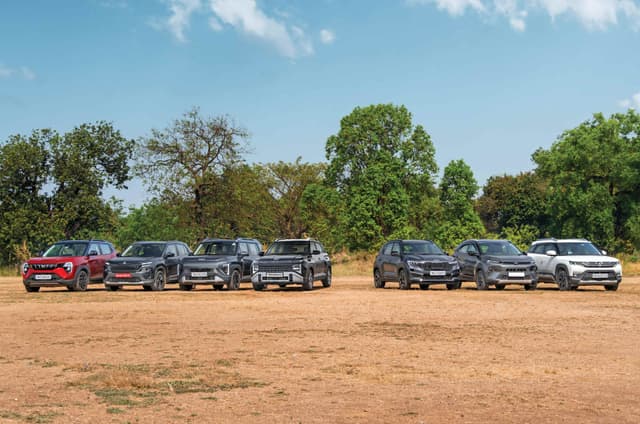
Go for the Maruti Suzuki Brezza 1.5L naturally aspirated petrol. It is the better fit for your requirements. The 1.5L NA engine is smooth, refined and delivers linear power, which makes it easy to drive in the city, comfortable on highways and predictable on hill roads. It has enough torque to handle inclines without feeling strained, and you do not have to worry about turbo lag or the need to downshift aggressively on steep sections.The Hyundai Venue 1.0L turbo is a punchy engine and feels more energetic when pushed, but it does have some turbo lag at low speeds and requires more gear changes on hills. It is also a smaller three-cylinder engine, so it is not as refined as the Brezza’s four-cylinder unit. In terms of reliability and maintenance, Maruti has the edge with a simpler naturally aspirated engine and a wider service network.Real-world mileage will depend on driving style, but the Brezza should deliver slightly better consistency, especially on highways and hills, while the Venue turbo can be more efficient if driven gently in the city. Overall, the Brezza is the more dependable and easier-to-live-with choice for your usage pattern.
Upcoming Cars


Hyundai Cars


Trending Cars


Latest Cars