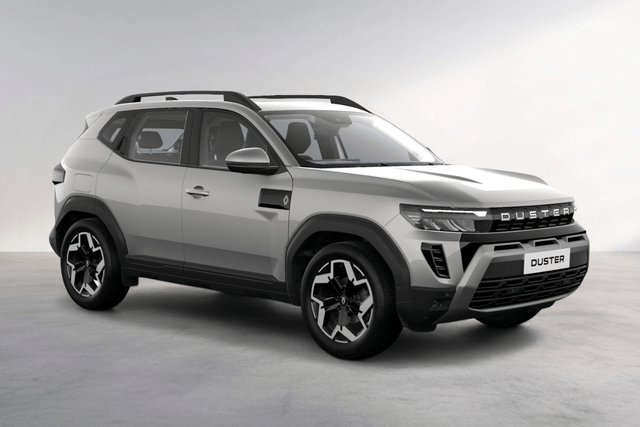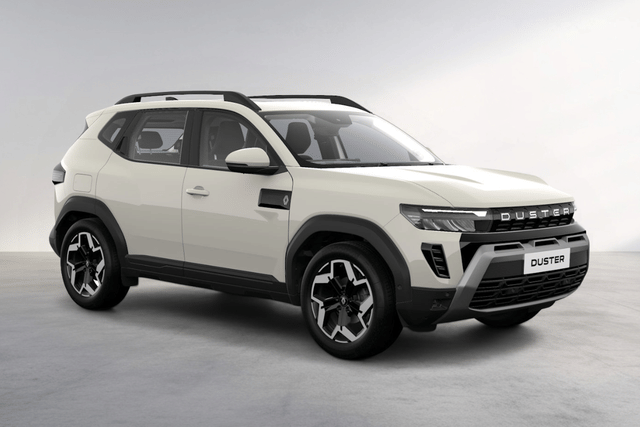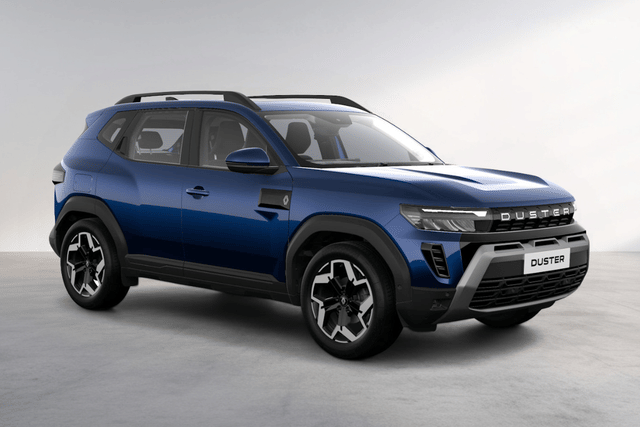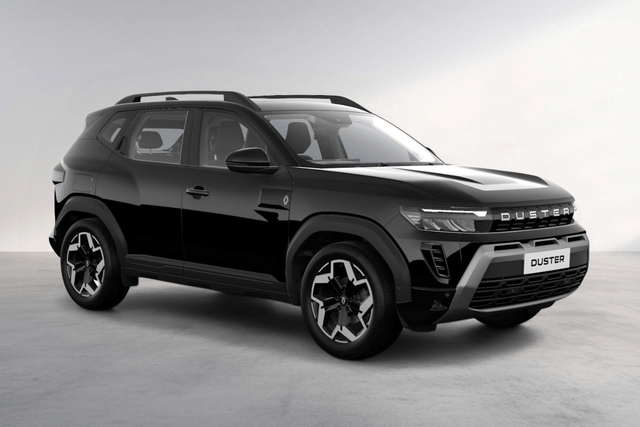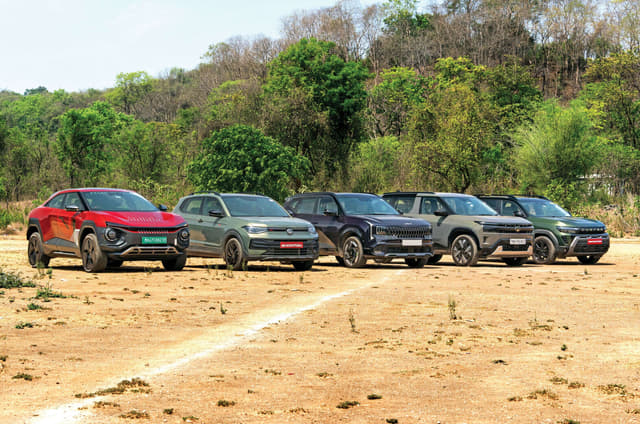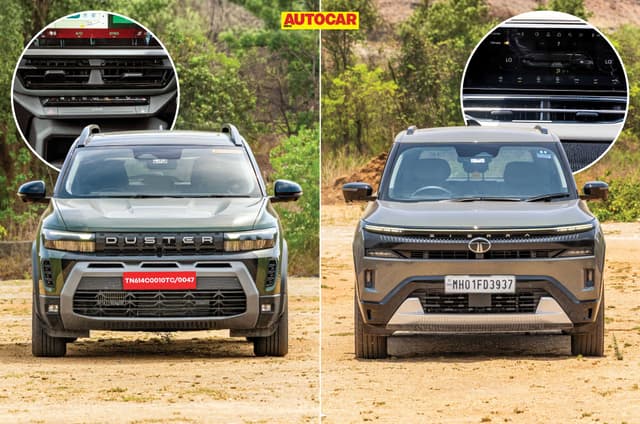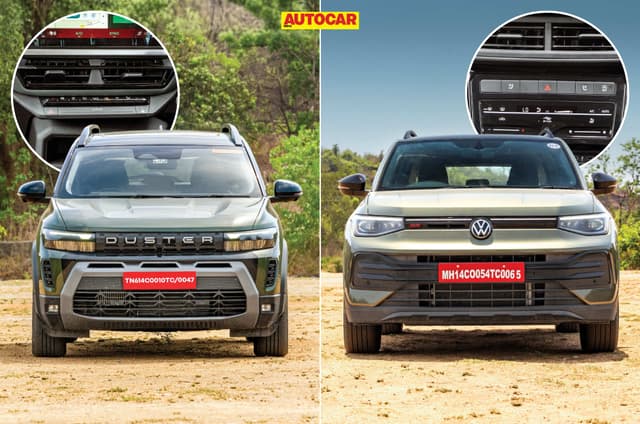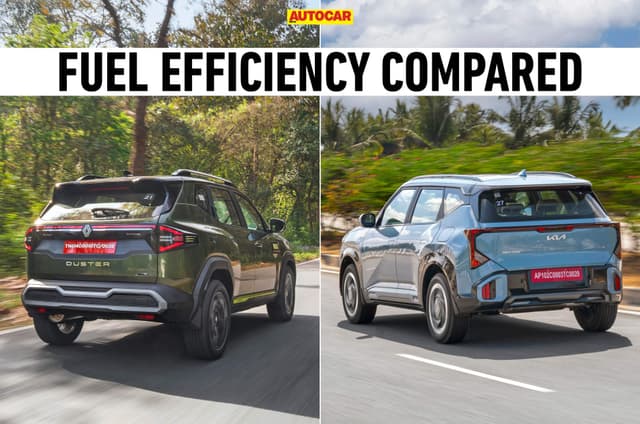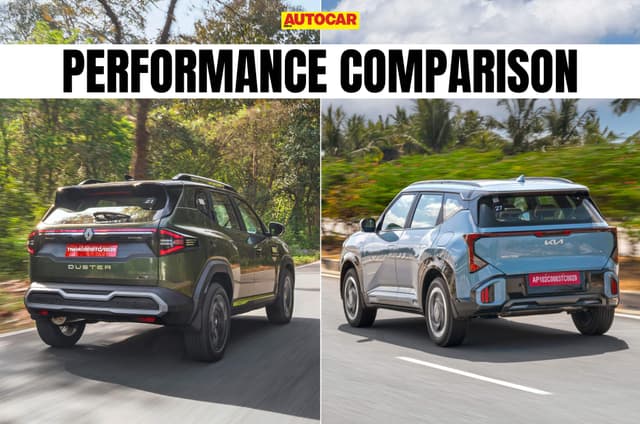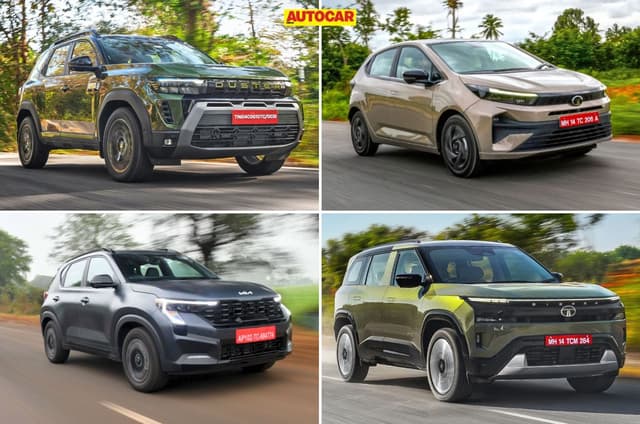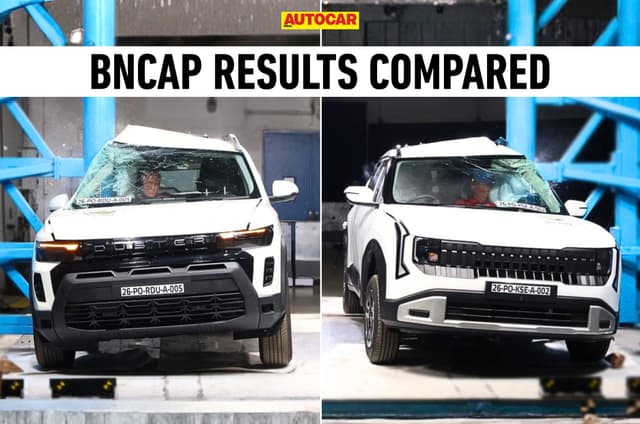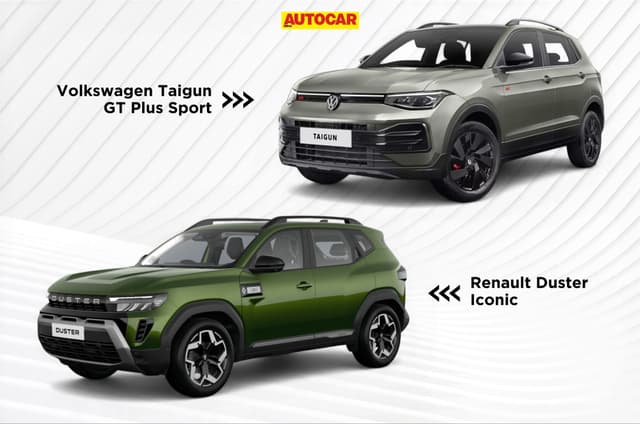
Renault Duster
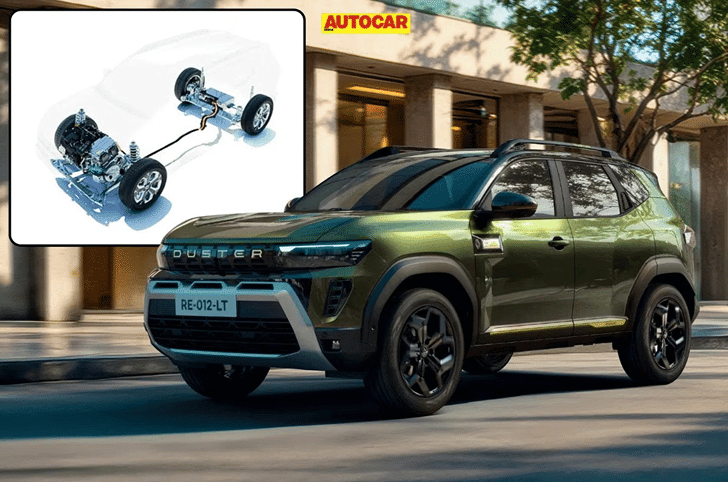
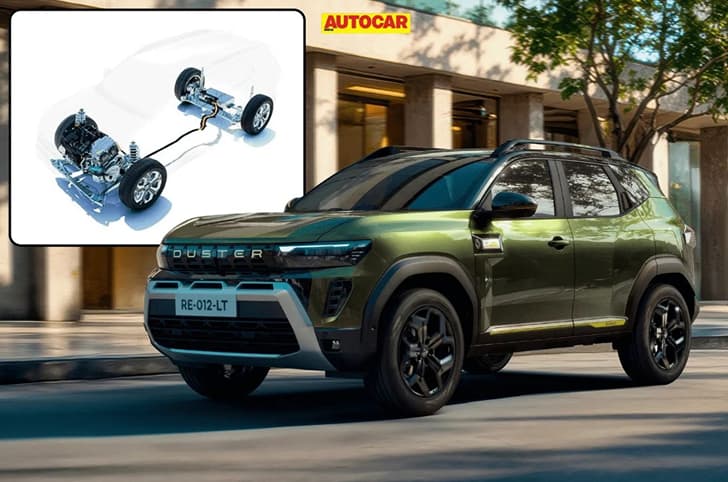
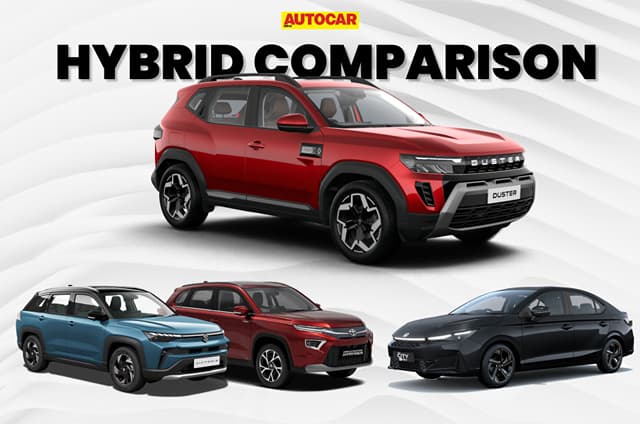
Renault Duster is a midsize SUV with a rugged design, 212mm of ground clearance and a 518-litre boot. It is available with turbo-petrol engines and a strong-hybrid powertrain. The Strong Hybrid E-Tech 160 combines a 1.8-litre four-cylinder petrol engine with two electric machines, a 1.4kWh, 247V battery and a multi-mode automatic gearbox. It produces 160PS of system power and has an ARAI-claimed mileage of 29kpl. The system can operate in electric-only, petrol-only and combined hybrid modes, with the gearbox selecting the appropriate operating mode automatically.
Duster Key Features
Here is what buyers get across the range.
Category | Key Features |
Engine and gearbox | • 1.0-litre turbo-petrol, 100hp and 166Nm, with a six-speed manual gearbox • 1.3-litre turbo-petrol, 163hp and 280Nm, with a six-speed manual or dual-clutch automatic • Strong Hybrid E-Tech 160 with a 1.8-litre four-cylinder petrol engine • Multi-mode automatic gearbox with six automatically selected operating modes |
Hybrid technology | • 1.4kWh, 247V battery • High-power traction motor with a claimed peak torque of 208Nm • High-voltage starter generator to help start the engine, smooth gear shifts and recover energy under braking • All-electric, petrol-only, series-hybrid and series-parallel hybrid operation, among six automatic modes • Battery charging through energy recovery and the petrol engine • 160PS system power and 29kpl ARAI-claimed mileage • No external charging required |
Screens and audio | • 10.1-inch touchscreen on equipped variants • Wireless Android Auto and Apple CarPlay • Google built-in services on equipped variants • Arkamys audio system |
Safety | • Six airbags • Electronic stability control and tyre pressure monitoring • Level 2 ADAS on equipped variants • Five-star Bharat NCAP crash-test rating |
Comfort and convenience | • Panoramic sunroof on equipped variants • Ventilated and electrically adjustable front seats on higher variants • Dual-zone climate control • Wireless phone charger and powered tailgate on equipped variants • 360-degree camera on equipped variants |
Practicality | • 518-litre boot • 212mm ground clearance • Five seats • 2,657mm wheelbase |
Duster Road Test Findings
What we liked
- Ride comfort remains one of the Duster's main strengths, with the suspension suited to broken roads and everyday Indian driving.
- The 1.3-litre turbo-petrol is refined and punchy, making it a strong choice for buyers who prioritise performance.
- The 518-litre boot is generous for the segment and adds to the Duster's family-car appeal.
- The Strong Hybrid E-Tech 160 adds a more fuel-efficient powertrain option to the Duster range. Its 1.8-litre petrol engine, electric motors, and multi-mode automatic gearbox can work in different combinations, including electric-only driving. Its ARAI-claimed mileage is 29kpl, although real-world fuel efficiency will depend on driving conditions and usage.
What we did not like
- The rear cabin is not as spacious as some rivals, particularly when three passengers share the rear seat.
- The petrol variants' real-world fuel efficiency can be considerably lower than their ARAI figures.
- The infotainment interface is not the most intuitive to use.
- A spare tyre is not supplied as standard on the petrol model.
Who should buy the Duster?
Based on our review, the Duster suits five kinds of buyers.
Buyer type | Why it fits |
If ride comfort matters | The suspension handles broken roads well and keeps the SUV comfortable on longer journeys. |
If you want strong petrol performance | The 1.3-litre turbo-petrol produces 163hp and 280Nm. |
If fuel efficiency is a priority | The strong-hybrid E-Tech 160 has an ARAI-claimed mileage of 29kpl and can run in electric mode for up to 80 percent of the time in city conditions, according to Renault. |
If you want an automatic | The 1.3-litre turbo-petrol is available with a dual-clutch automatic, while the hybrid uses a multi-mode automatic gearbox. |
If you travel with luggage | The 518-litre boot provides generous luggage space for family trips. |
The Duster is less suited to buyers who need the roomiest rear seat in the segment or want a diesel engine. The hybrid is worth considering for those prioritising fuel efficiency, although its real-world mileage and driving behaviour need to be assessed separately from the petrol variants.
Renault Duster Price Details
- Authentic 1.0 Turbo Petrol MT (base model): 10.49 lakh (ex-showroom)
- Adventure 1.3 Turbo Petrol DCT (mid variant): 15.39 lakh (ex-showroom)
- Hybrid Emotion 1.8 Petrol AT (top model): 19.49 lakh (ex-showroom)
Renault Duster Latest Updates
- 09 October 2026: Renault Duster hybrid bookings open ahead of October 17 launch.
- 25 September 2026: Renault announced Duster Hybrid India launch date to be October 17.
- 14 July 2026: Renault launched an Adventure Edition of the Duster priced from Rs 12.99 lakh (ex-showroom).
- 22 June 2026: Renault India starts exporting the Duster to global markets.
- 20 April 2026: The Duster receives a 5-star BNCAP crash safety rating.
- 14 April 2026: Renault India has started customer deliveries of the new Duster.
Duster Specifications
17.75 kmpl - 29 kmpl
999 cc - 1789 cc
Petrol, Petrol-Electric Hybrid
Manual, DCT, Auto
5
160 hp
6
175 Nm
Duster Variants
Base variant
Authentic 1.0 Turbo Petrol MT
999 cc · Petrol · Manual
₹12.17 Lakh
View DetailsMost popular
Evolution 1.3 Turbo Petrol DCT
1333 cc · Petrol · Automatic
₹16.81 Lakh
View DetailsTop variant
Hybrid Emotion 1.8 Petrol AT
1789 cc · Petrol-Electric Hybrid · Automatic
₹22.61 Lakh
View DetailsDuster Highlights
6 Airbags
Acoustic Windshield
1.4 kWh Electric Battery
Wireless Phone Charging
LED Headlamps
Front Only Ventilated Seats
+3
14
Duster Autocar Rating
Outstanding ride comfort
Refined and punchy 1.3 turbo petrol engine
Large 518-litre boot
Cabin not as spacious as rivals
No spare tyre as standard
Infotainment interface not intuitive to use
Renault Duster price & variants
The Renault Duster is available with turbo-petrol engines and a Strong Hybrid E-Tech 160 powertrain. The 1.0-litre turbo-petrol engine is paired with a six-speed manual gearbox, while the more powerful 1.3-litre turbo-petrol engine is available with a six-speed manual or a six-speed dual-clutch automatic. The Strong Hybrid E-Tech 160 uses a 1.8-litre petrol engine and an electric motor system, paired with an automatic transmission.
The Duster range starts at Rs 10.49 lakh ex-showroom for the entry-level turbo-petrol version, while the Strong Hybrid E-Tech 160 is offered in Evolution, Techno and Emotion variants. Its introductory prices are Rs 16.99 lakh, Rs 18.99 lakh and Rs 19.49 lakh, respectively. These hybrid prices apply to deliveries made until December 31, 2026, subject to the manufacturer's terms.
Which variant to pick:
- Entry-level turbo-petrol: The starting point for buyers looking for the Duster at the lowest price.
- 1.3-litre turbo-petrol: Suits buyers who want more power, with manual and dual-clutch automatic options.
- Strong Hybrid E-Tech 160 Evolution: The entry point to the hybrid range, priced at Rs 16.99 lakh ex-showroom.
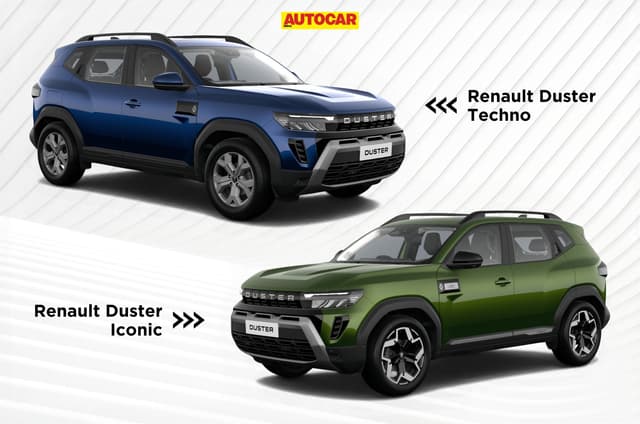
- Strong Hybrid E-Tech 160 Techno: The mid-level hybrid variant, priced at Rs 18.99 lakh. The dual-tone version costs an additional Rs 20,000.
- Strong Hybrid E-Tech 160 Emotion: The top-spec hybrid variant, priced at Rs 19.49 lakh.
EMIs for the Authentic 1.0 Turbo Petrol MT start at 17,698 a month. On-road prices vary by city, insurance and registration charges.
Renault Duster Expert Review
We like
Outstanding ride comfort
Refined and punchy 1.3 turbo petrol engine
Large 518-litre boot
See more
We don't like
Cabin not as spacious as rivals
No spare tyre as standard
Infotainment interface not intuitive to use
See more
9.0
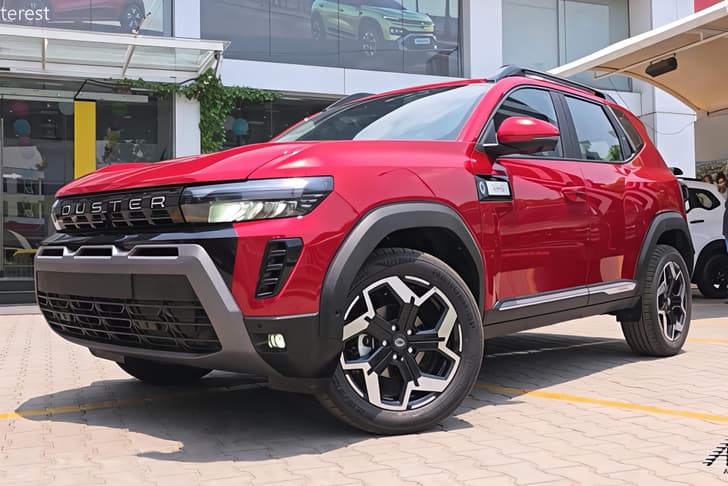
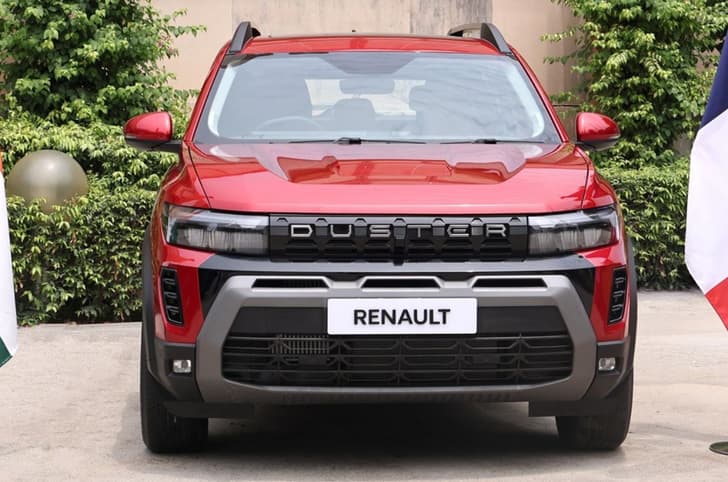
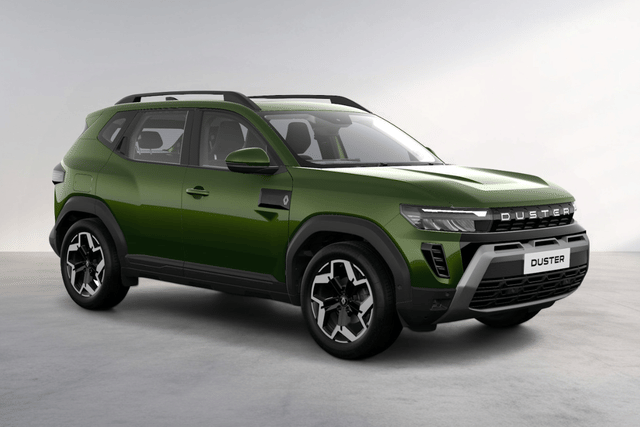
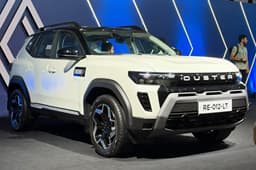
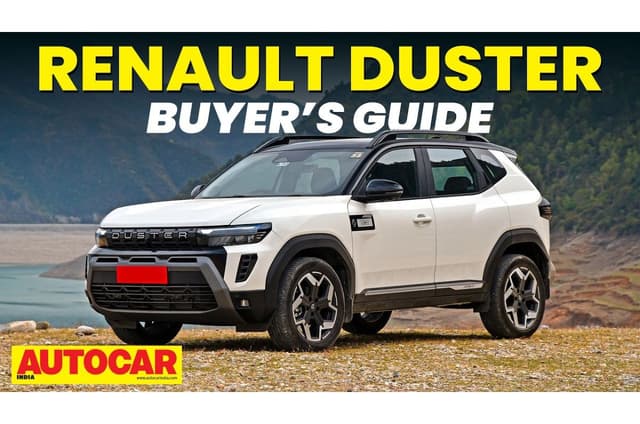
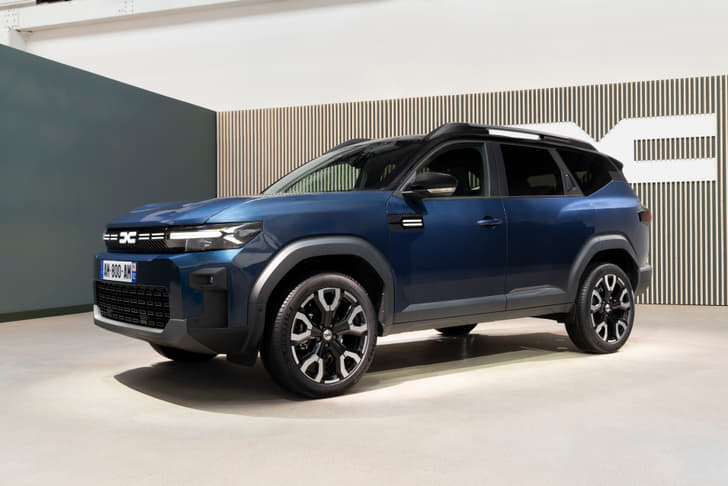
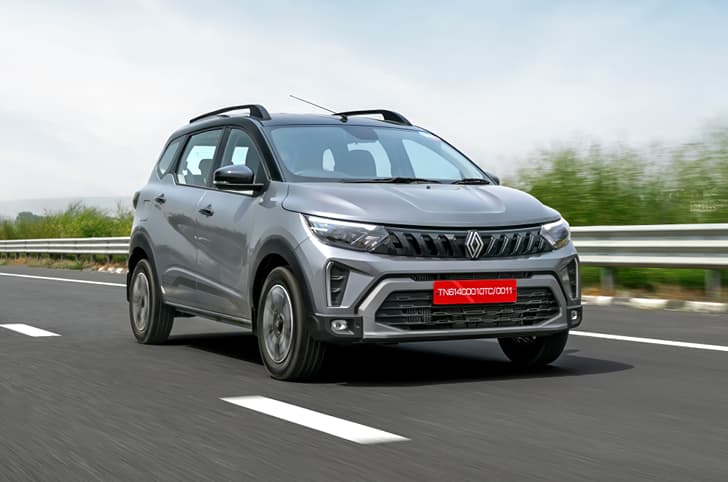
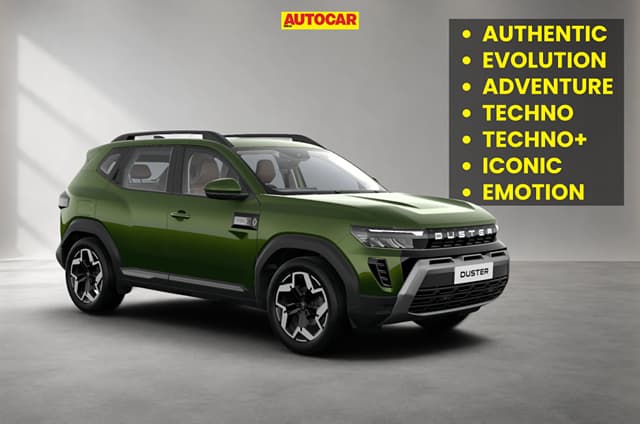
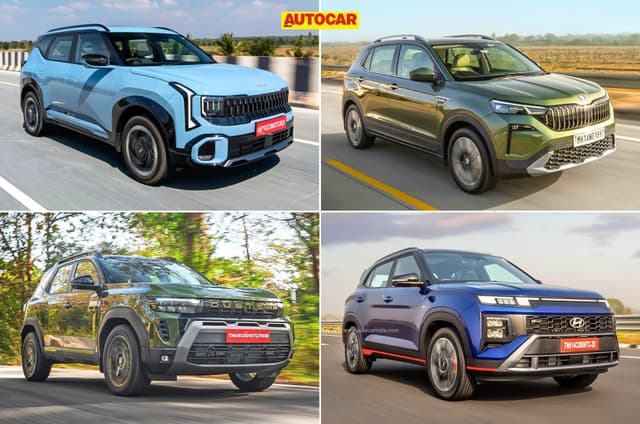
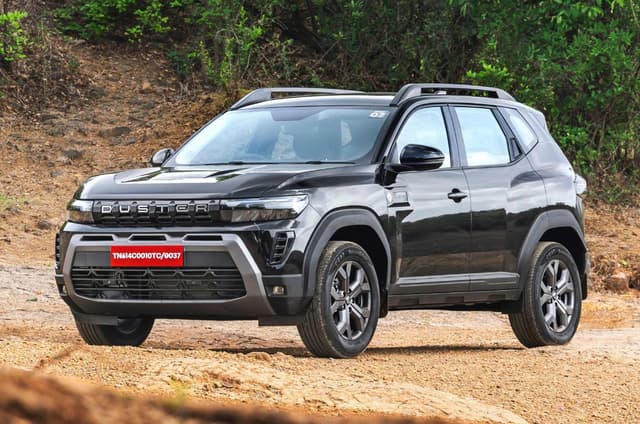
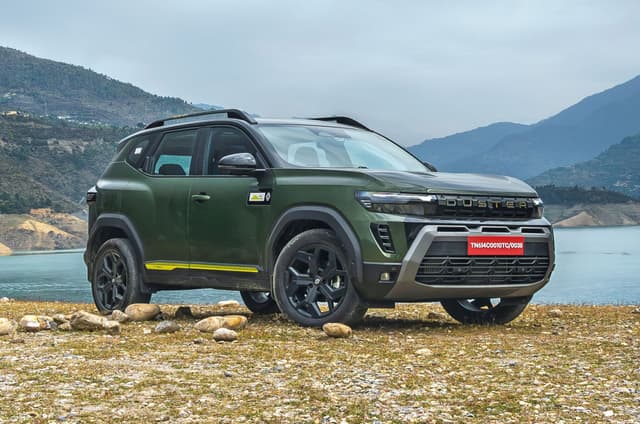
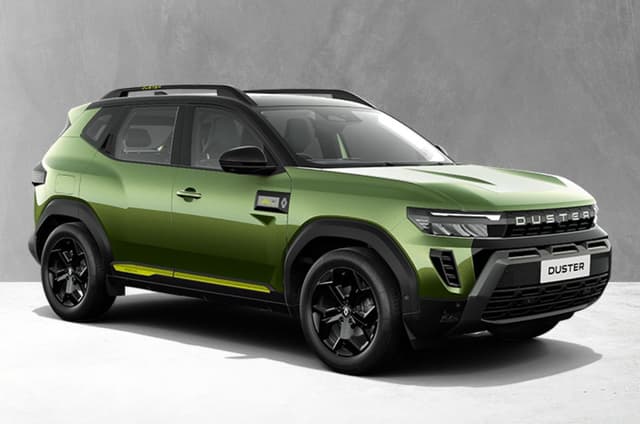
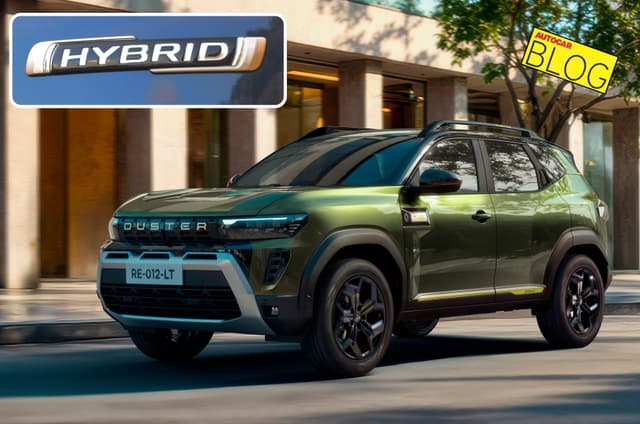
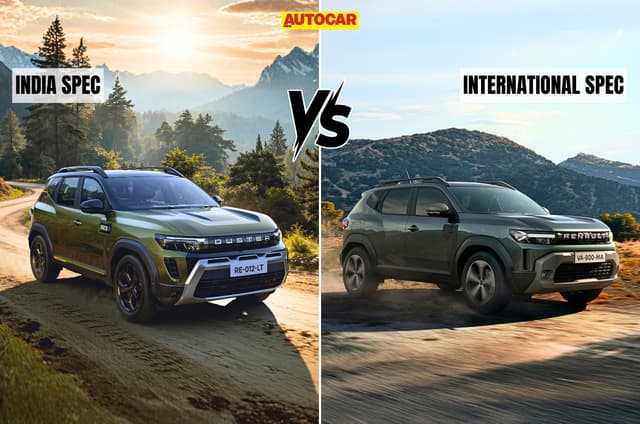
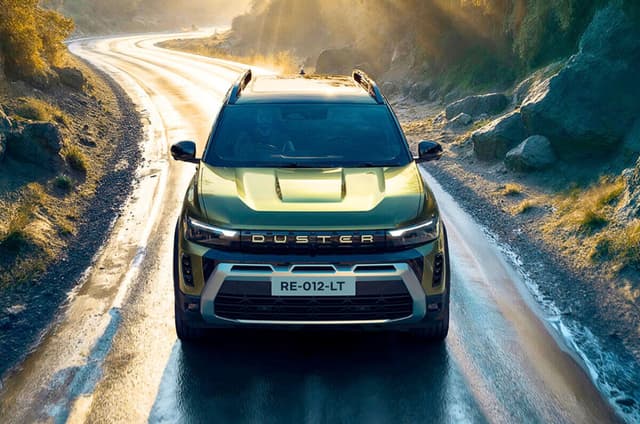
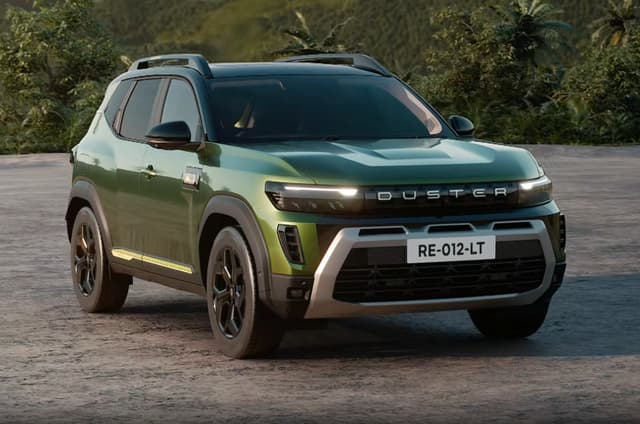
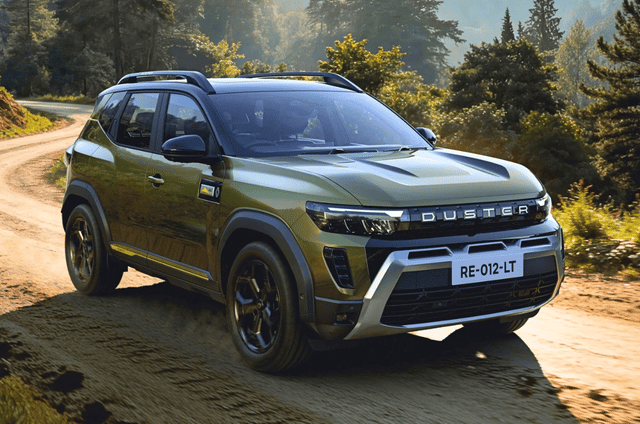
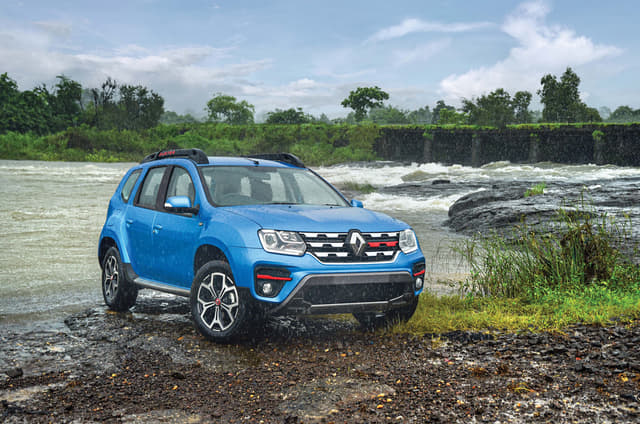
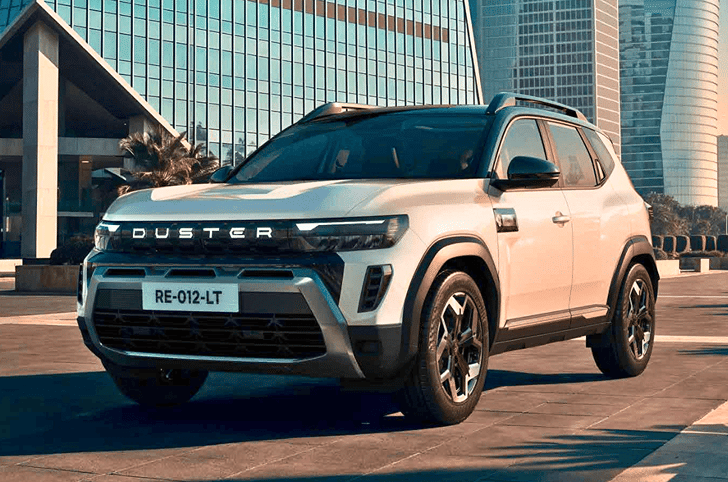
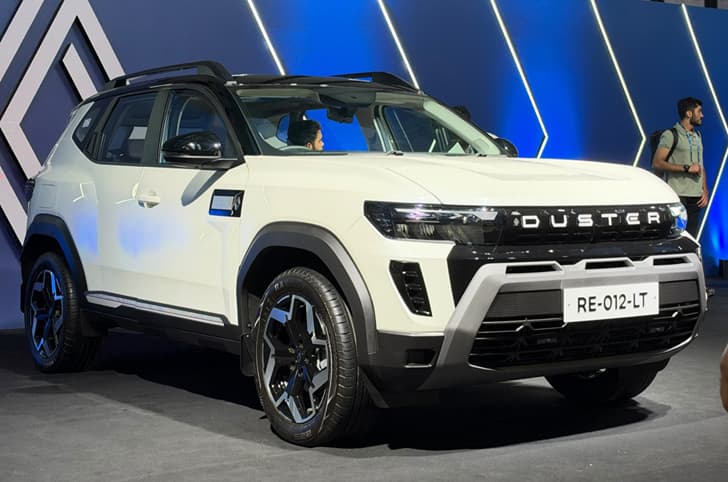
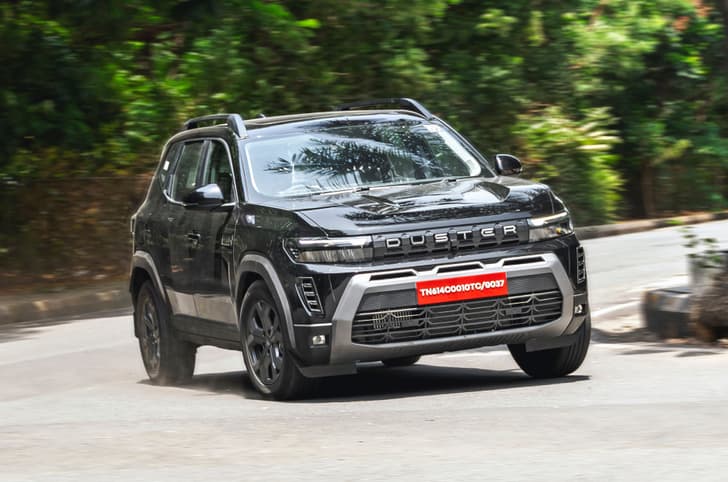
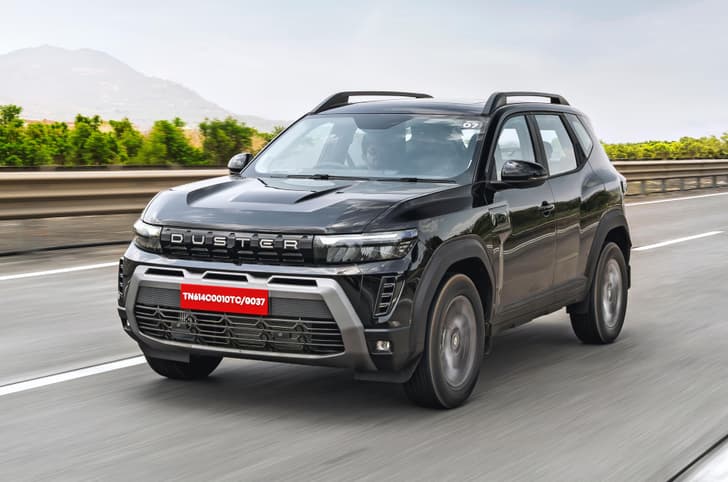
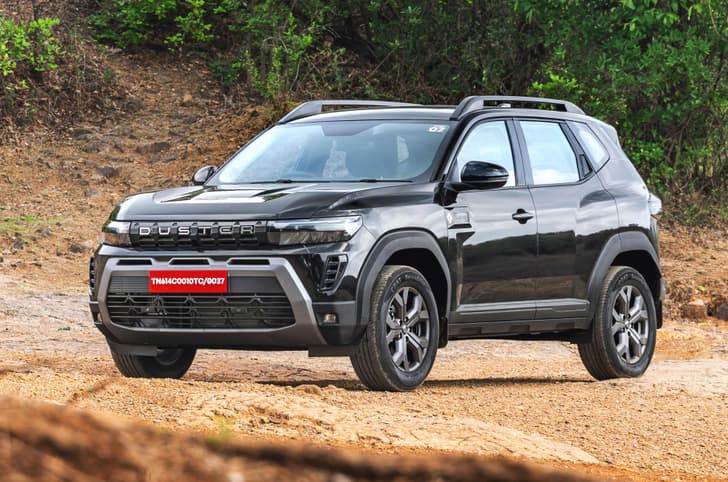
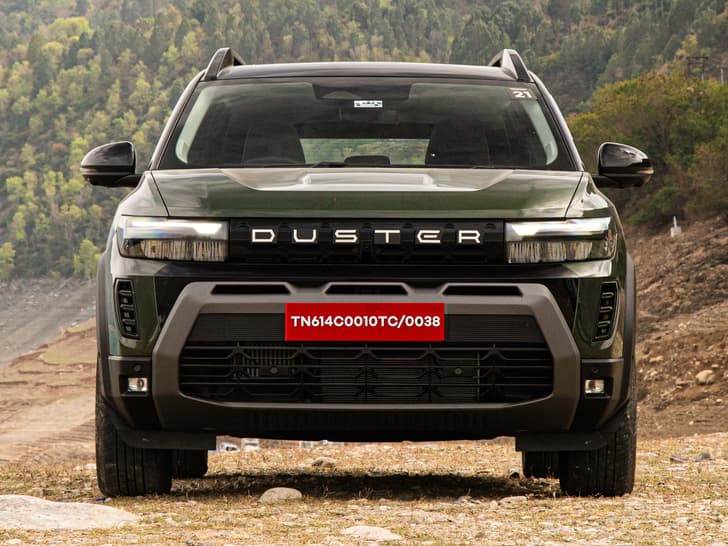
Renault has nailed the design of the new Duster. It retains familiar cues while adding modern touches. The India-spec version is based on the third-gen model sold abroad but tailored extensively for our market. The front features LED headlights with eyebrow-shaped DRLs, a unique grille with bold ‘Duster’ lettering instead of the Renault badge, and a nostalgic silver skid plate.
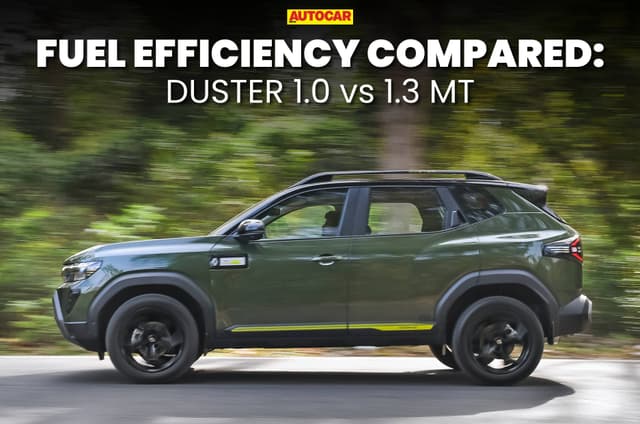
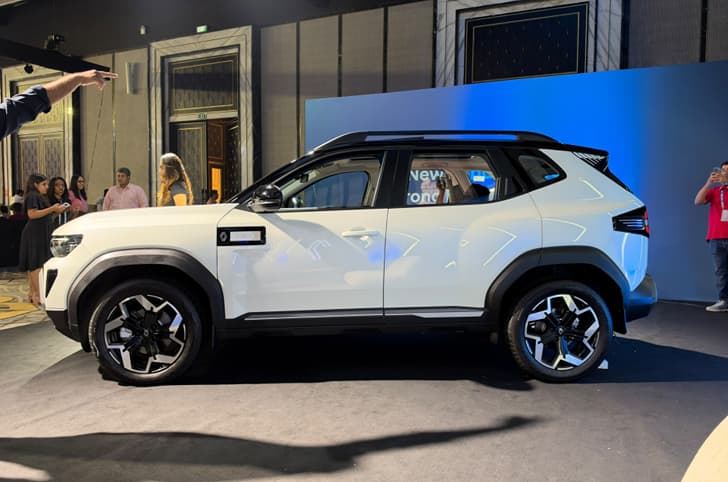
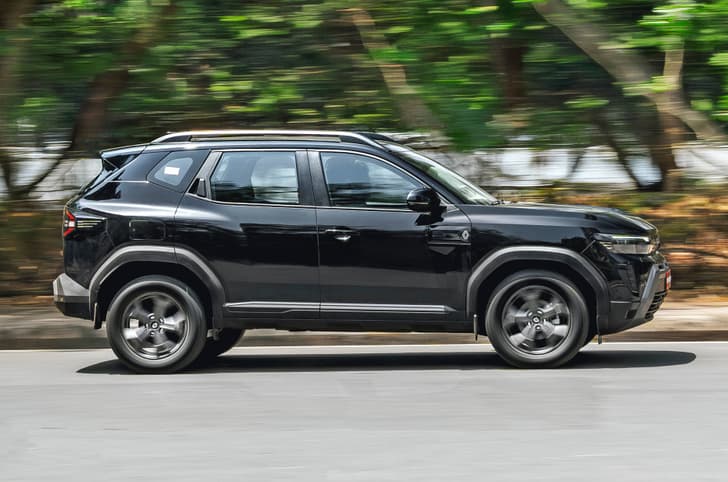
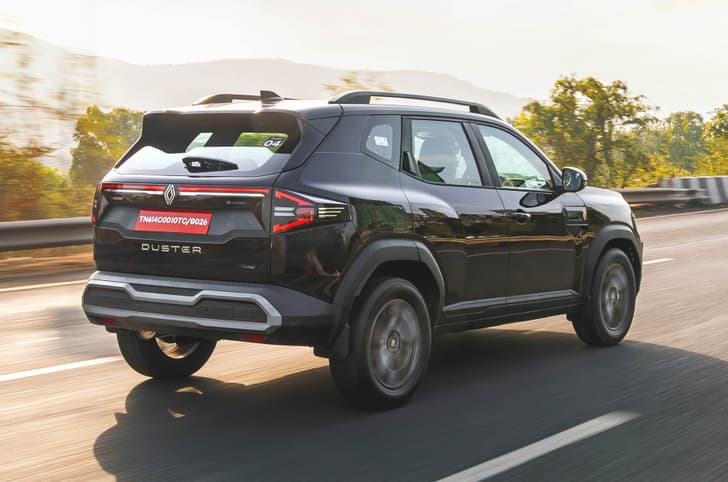
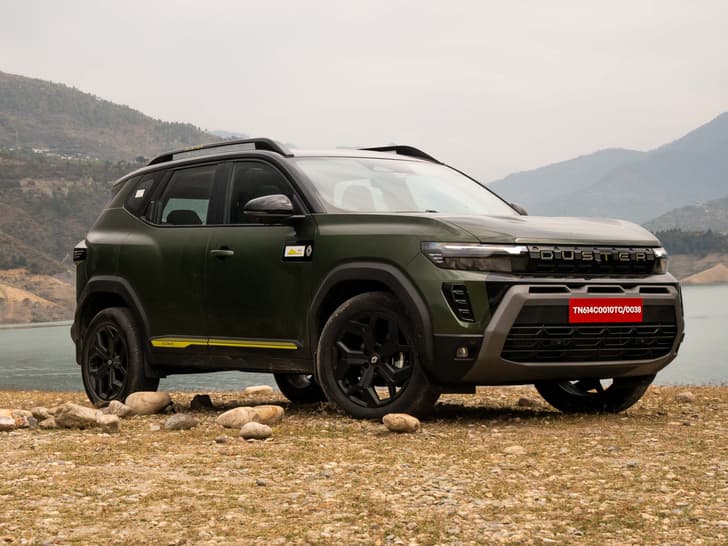
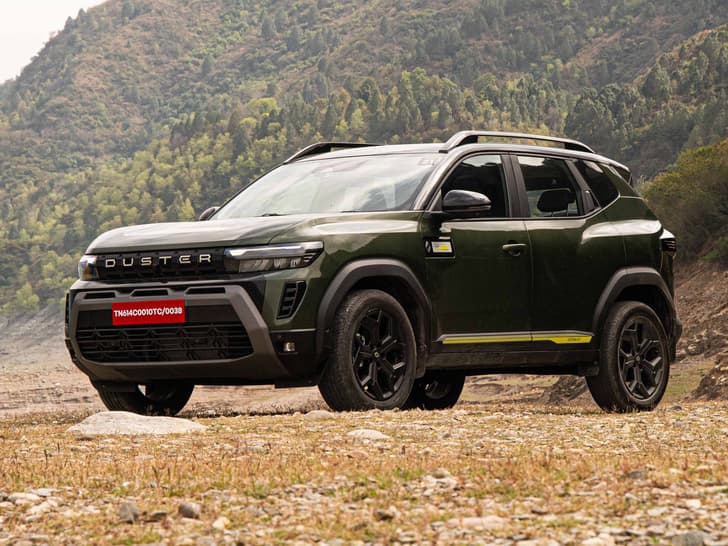
In profile, the SUV looks properly rugged, with chunky cladding, 18-inch alloys, and 212mm ground clearance. Rear door handles are tucked into the C-pillar, and there are roof rails too. At the rear, triangular tail-lamps connected by an LED light bar and a sporty spoiler stand out.
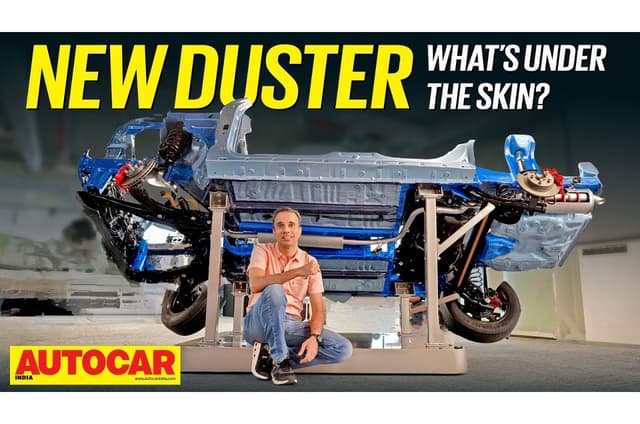
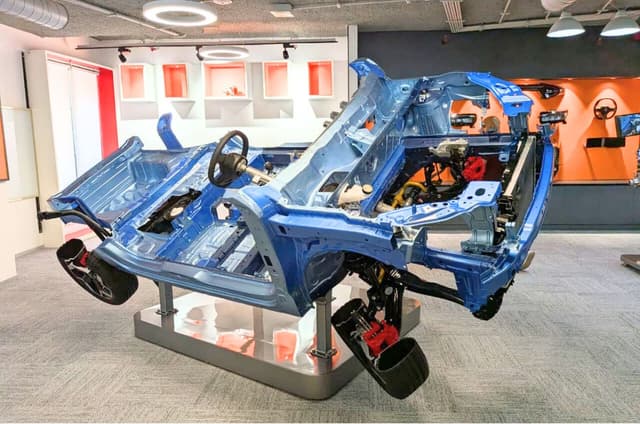
Built on the Renault Global Modular Platform (RGMP), it supports future electrification and multiple powertrains. At 4343mm long with a 2657mm wheelbase, it sits squarely in the midsize segment. A segment-best 518-litre boot and strong off-road angles underline its practicality and capability.
8.0
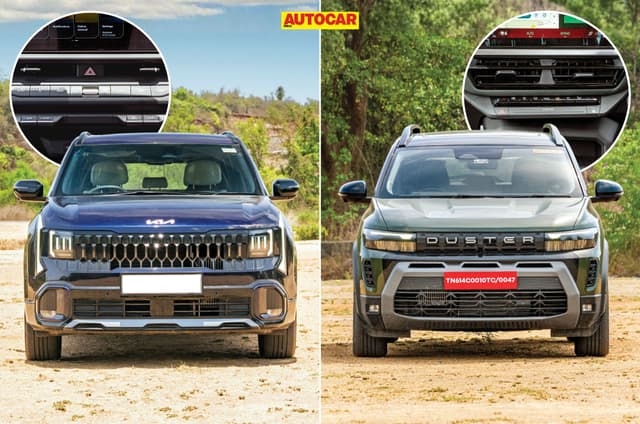
The cabin has been significantly reworked for India. It features a dual-screen layout, soft-touch materials, and stylish accents like faux carbon fibre and contrast stitching. Renault has wisely retained physical controls for key functions.
The automatic and manual variants get different centre console layouts, both designed with practicality in mind. Storage is generous, and ergonomics are well thought out. The steering feels good to hold, though the digital cluster may not appeal to traditionalists, and the key fob feels cheap.
Front seats are comfortable, ventilated, and electrically adjustable. The rear seat is best for two adults, with decent legroom and headroom, though shoulder space is limited. The higher window line reduces outward visibility compared to the old Duster.
8.0
The Duster comes well-equipped with features expected in this segment. The 10.1-inch touchscreen supports wireless smartphone integration and built-in Google services like Maps and Assistant. While responsive, the interface isn’t the most intuitive.
Other highlights include ventilated seats, panoramic sunroof, wireless charger, 360-degree camera, powered tailgate, dual-zone climate control, and connected tech.
Safety includes six airbags, TPMS, disc brakes all around, and Level 2 ADAS—the first for Renault India. The ADAS is mostly well-calibrated, though lane-keep assist feels slightly aggressive. Renault is targeting a 5-star crash rating.
9.0
The Duster offers two turbo-petrol engines: a 1.0-litre (100hp) and a 1.3-litre (163hp). The latter, is available with a 6-speed manual or DCT. A strong hybrid is slated to join later.
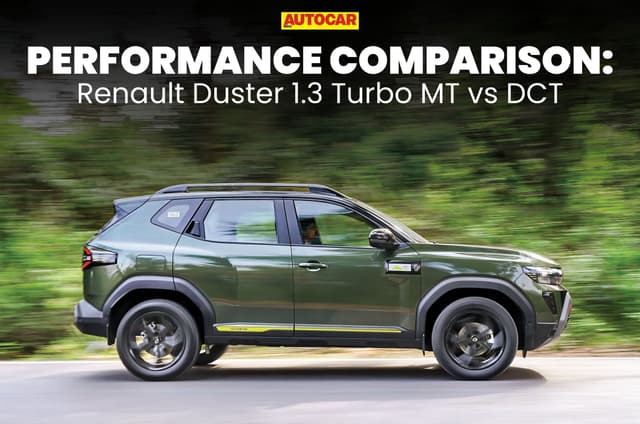
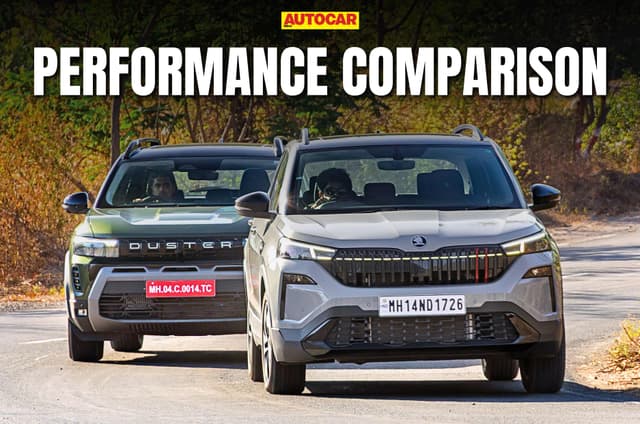
The 1.3 DCT stands out for its refinement and smoothness. It feels quiet, with minimal vibrations, and delivers a strong mid-range punch after some turbo lag. The gearbox prioritises smoothness over outright speed, making it great in city traffic. It clocked 0-100kph in 10.4 seconds.
The manual offers more engagement, with a light clutch and precise shifts. However, turbo lag is more noticeable, and tall gearing requires frequent downshifts. It’s slightly slower than the DCT at 10.8 seconds.
7.0
Official fuel efficiency figures stand at 18.45kpl for the 1.3 turbo petrol-DCT and 17.75kpl for the 1.3 turbo petrol-manual. However, expect real world figures do be considerably lower.
9.0
Ride comfort remains a core strength. The Duster handles rough roads, potholes, and broken terrain with ease, offering a slightly firm but very absorbent ride. It feels stable at highway speeds and composed over varied surfaces.
In corners, body control is good, though not as sharp as some rivals. The steering is light but precise, with selectable modes adding flexibility for different driving styles.
9.0
Priced between Rs 10.29 lakh and Rs 18.49 lakh, the Duster is competitively positioned. It undercuts some rivals at the top end while offering strong value overall. Renault also offers benefits like subscription plans and a 7-year warranty.
The new Duster stays true to its roots with rugged styling, strong performance, and excellent ride quality. While the lack of diesel and AWD may disappoint loyalists and its cabin isn’t as roomy as rivals, it remains a highly capable and desirable midsize SUV that successfully carries forward its legacy.
Reviewed by: Soham Thakur
Renault Duster Official Brochure
Download the complete brochure with specs, features, and variants.
Renault Duster reviews

Renault Duster comparison


Renault Duster EMI Calculator
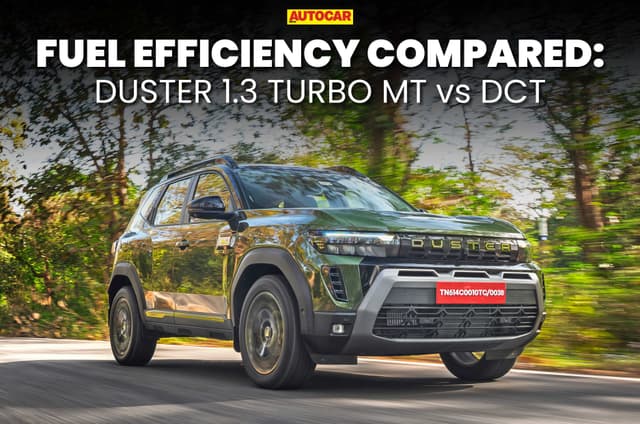
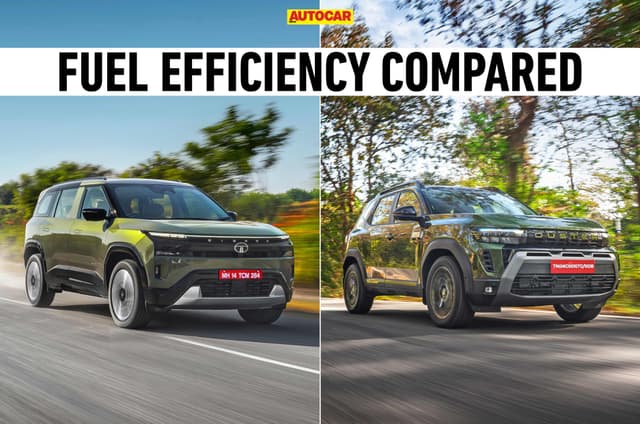
Renault Duster Mileage
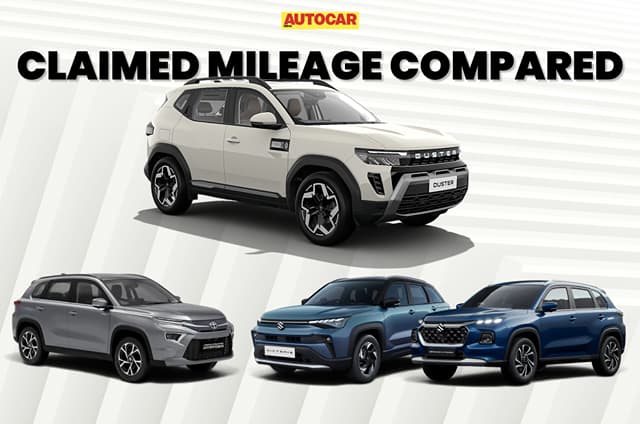
Renault Duster mileage varies by powertrain. The 1.0-litre turbo-petrol with the six-speed manual is ARAI-rated at 19.41kpl, while the 1.3-litre turbo-petrol returns 17.75kpl with the six-speed manual and 18.45kpl with the six-speed dual-clutch automatic. The Strong Hybrid E-Tech 160 has an ARAI-certified mileage of 29kpl, making it the most fuel-efficient option in the range on paper.
The hybrid could be worth considering for buyers who prioritise fuel efficiency, particularly in city traffic, where its electric motor can help reduce petrol consumption. However, real-world mileage will vary with traffic, driving style, road conditions and usage, so the ARAI figures should be treated as a reference rather than an expectation of everyday fuel economy.
| PowertrainThe combination of engine type, fuel, and transmission that powers your vehicle and determines how it drives and what it runs on. | ARAI MileageMileage certified by the government, tested under controlled lab conditions. Real-world mileage will vary. | Autocar Tested MileageAutocar's experts test each vehicle on fixed city and highway routes under standardised conditions - single occupant, AC running, manufacturer-recommended tyre pressures. Tanks are filled to the brim before and after each run to calculate efficiency. Results reflect realistic real-world usage. |
|---|---|---|
Petrol-Manual 999 cc | 19.41 kmpl | NA |
Petrol-Manual 1333 cc | 17.75 kmpl | NA |
Petrol-Automatic (DCT) 1333 cc | 18.45 kmpl | 9.97 kmpl |
Petrol-Electric Hybrid-Automatic (Auto) 1789 cc | 29 kmpl | NA |
Hear from the
Autocar Community
Renault Duster news
Renault Duster Images
The Duster images gallery features 125 photos of the SUV, covering its exterior design, cabin, features and colour options. These are the details worth studying closely:
- Exterior design: The prominent Duster lettering on the front grille, LED headlights with eyebrow-shaped daytime running lights and connected rear tail-lamps.
- Rugged styling: The chunky body cladding, roof rails, alloy wheels and high ground clearance.
- Dashboard and displays: The dual-screen layout, including the 10.1-inch touchscreen and 10.25-inch digital instrument cluster.
- Seats and cabin: The front and rear seats, upholstery, dashboard finish and available cabin colour themes.
- Boot space: The 518-litre boot, including its loading area and boot opening.

Renault Duster videos
Duster videos cover 14 reviews and walkarounds, showing details that a specification list cannot convey:
- How the suspension handles broken roads and uneven surfaces.
- How the 1.0-litre and 1.3-litre turbo-petrol engines differ in everyday driving.
- How the dual-clutch automatic behaves in traffic and during acceleration.
- How much room the rear seat offers for adults and how useful the boot is for family luggage.
- How the touchscreen, digital instrument cluster and physical controls work in the cabin.
- How the Duster's exterior design, ground clearance and road presence compare with expectations from photographs.


Renault Duster Colours
Renault Duster colours include 6 options, ranging from brighter shades to more understated finishes. The available colours are Sunset Red, Pearl White, River Blue, Moonlight Silver, Stealth Black and Jade Mountain Green. Select shades are also available with a contrasting Stealth Black roof, depending on the variant.
Renault Duster Similar Cars to Explore
Renault Duster FAQs
If budget allows, the Duster 1.3 with the DCT combines strong performance and the convenience of a smooth automatic gearbox. It’s also the one to look at if you want all the bells & whistles and a more upscale-looking interior. For those on a tighter budget, the Duster 1.0 not only offers enough performance to keep up with the flow of traffic in the city but also decent part-throttle responses.
The Renault Duster’s 518-litre boot is the largest in the segment. It also offers the convenience of an electrically operated tailgate. However, instead of a proper spare tyre, the Duster’s boot only comes with a puncture repair kit.
In the case of the top-spec Renault Duster, not only do you get accommodating and well-padded front seats but also ones that are electrically adjustable and ventilated. While the rear bench is best for two adults and there are no sunblinds at the back, the expansive glasshouse helps boost the sense of space. Along with decent kneeroom and acres of headroom even for six-footers, the rear of the Duster offers a centre armrest with cupholders, dedicated AC vents and charging ports. These, along with a mix of textured and soft-touch materials (including the leather-wrapped steering wheel) and good cabin insulation and excellent outward visibility, make this a comfy cabin.
Whether you go for the 1.0 or 1.3 versions, the overall ride quality of the new-gen Duster is easily as good as the old model. Not only does it smother rough patches and large potholes without letting any of it be heard in the cabin, but it also manages to feel stable and composed out on the highway. The comfy ride aside, the Duster handles corners quite well too, with the steering feeling precise and offering good feedback.
Unlike some of its rivals, the Renault Duster isn’t available with a diesel engine, nor does it get an all-wheel drive (AWD) version. Moreover, the Duster’s second row also feels tighter in terms of shoulder room. Then there’s the infotainment screen, which isn’t the most intuitive to use while on the move due to the lack of clarity and layout.
Yes. The 1.3-litre turbo-petrol is available with a six-speed dual-clutch automatic, while the Strong Hybrid E-Tech 160 uses an automatic hybrid transmission.
The Renault Duster is available with a 1.0-litre turbo-petrol engine, a more powerful 1.3-litre turbo-petrol engine and a 1.8-litre Strong Hybrid E-Tech 160 powertrain.
Questions you may find useful
I am planning to buy a hybrid car within 25 lakh for 80-100 km daily running mostly within the city. I am considering the Renault Duster Strong Hybrid, but I am not a big fan of its looks, and the rear seat space is not enough. I just want to know when is the Kia Seltos hybrid, Duster 7-seater and Bigster launching so that I can plan accordingly.
With your daily city running of 80 to 100km, waiting for the Kia Seltos strong hybrid is worth considering if you can postpone your purchase until 2027. Since the Duster's design and rear seat space don't appeal to you, there's little point spending nearly Rs 20 lakh on a car you're already unsure about.The Seltos hybrid was showcased at the Paris Motor Show in October 2026, and an India launch is expected in 2027. Kia hasn't announced an exact launch date, battery capacity, India specific specifications or pricing yet, so these remain unknown.The seven seater based on the Duster, expected to draw on the Bigster, is anticipated to launch early next year. However, its powertrain line up and hybrid availability haven't been confirmed.
The new Duster Hybrid looks like a really good deal. I currently own a 5th-gen Honda City and a Renault Pulse Diesel, and I’m considering replacing the Pulse with the new Duster Hybrid. Would you recommend going for the Duster Hybrid, or would I be better off with the Kia Seltos Diesel? Around 80-85% of my driving is in the city, with occasional highway trips and weekend outings. I am a bit worried about the service at Renault because the ones with pulse weren’t so good. Please suggest.
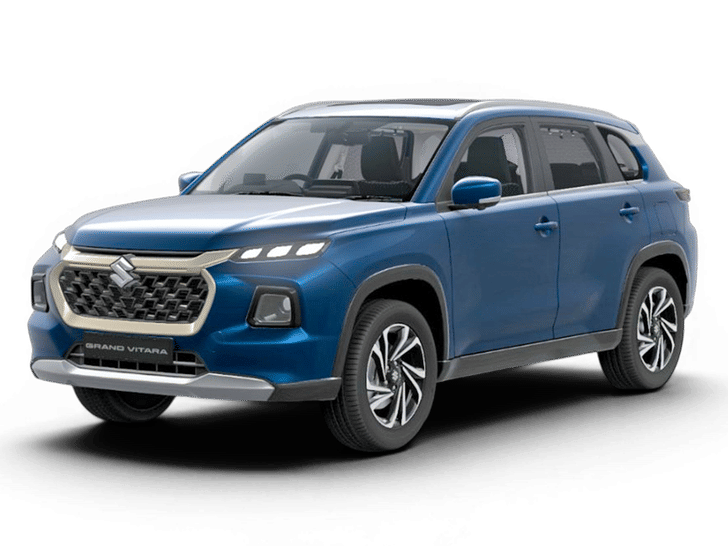
Given your usage pattern of 80–85% city driving with occasional highway trips, the Renault Duster Hybrid is actually a very good fit. The hybrid system is designed to maximise efficiency in stop-start city conditions, and the Duster’s ride quality and robust suspension make it well-suited to Indian roads. The new Duster also feels like a genuinely fresh product, with a strong value proposition and a more engaging driving experience than most rivals.The Kia Seltos Diesel, on the other hand, is the better choice if your usage was more highway-focused. The diesel engine is efficient and relaxed on long drives, but with predominantly city driving, the benefits of diesel ownership diminish, especially with modern diesel particulate filter systems that can become problematic with short, low-speed runs.Your concern about Renault service is valid. The brand’s service network and consistency are not on the same level as Kia, and that is something to factor in. However, the new Duster is a far more important product for Renault than the Pulse ever was, and the company is likely to put more effort behind it.If you are still hesitant about Renault’s service, the Maruti Suzuki Grand Vitara Hybrid or Toyota Urban Cruiser Hyryder Hybrid are worth considering. Both offer strong hybrid systems, excellent fuel efficiency and a far more reliable and widespread service network.
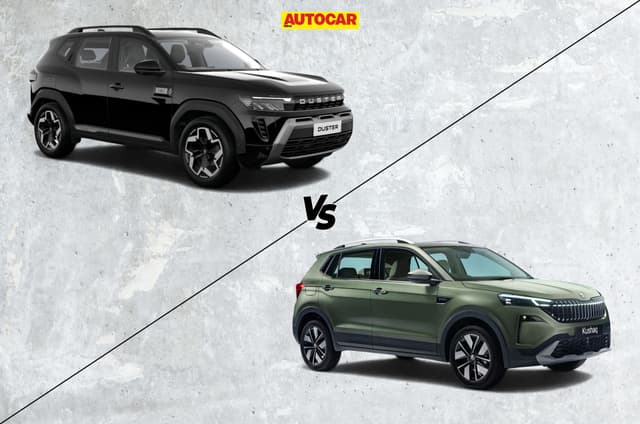
I’m looking for my first personal car, although I’m in no hurry to buy one. I recently drove a friend’s Kylaq Signature+ AT and genuinely loved it. It felt mature, eager, and somehow familiar, almost like home. Since I intend to keep my cars for a long time, I started exploring larger European cars. The Kushaq’s exterior is jaw-dropping, but something feels missing in its dashboard design. The Taigun’s interior looks premium, even if the materials aren’t particularly soft-touch. Then there’s the European Duster Adventure AT, which costs around Rs 4 lakh less than some of my other options, but I’m not particularly keen on its reflector headlights. Now I’m tempted to test-drive the Scorpio-N Z6 D AT and XUV 7XO AX3 D AT as well, since they fall within a similar price range. However, fuel efficiency, servicing and overall ownership costs seem excessive for someone who drives barely 5,000km a year, mostly for pleasure. I commute on my Jupiter. Here’s my dilemma. The Kylaq Sportline AT would cost around Rs 13 lakh with BH registration. I loved driving it, and its space should be sufficient even if kids enter the picture five years from now. The Duster Adventure AT costs around Rs 16 lakh and sits a segment above the Kylaq, with a more substantial mechanical package. My heart has wanted a VW or Skoda ever since we bought Dad’s Honda City, which is why the Kushaq and Taigun remain tempting options. Then there’s the XUV 7XO AX3 D AT at around Rs 20 lakh. It’s huge and tempting, but I’m unsure about its body roll. My friend’s 2019 XUV500 impressed me, although its body roll was noticeable. I don’t really need a big SUV, but if I’m buying a car to keep for the long term, should I stretch my budget or stick with the Kylaq, which I already love driving?
You already have the answer in your question. The Kylaq Sportline AT is the car you loved driving, and at Rs 13 lakh with BH registration, it is also the most sensible choice for your usage. With just 5,000 km a year, mostly pleasure drives, there is no justification for stretching to a diesel SUV like the XUV 7XO AX3 D AT at Rs 20 lakh. The fuel savings will never add up, and you will be carrying around a lot of unnecessary size and weight for no real benefit.The Duster Adventure DCT at Rs 16 lakh is a tempting upgrade, but it is not a segment above the Kylaq in any meaningful way. The Kylaq is a genuinely well-sorted car with a proven 1.0 TSI engine and a 6-speed torque converter automatic that is reliable and easy to live with. It is also spacious enough for a small family.The Kushaq and Taigun are both excellent cars, but the Kylaq is essentially the same mechanical package at a lower price. The only reason to choose the Kushaq or Taigun would be if you strongly prefer their interiors, but from an ownership perspective, the Kylaq is the smarter buy.The XUV 7XO is a great car, but it is a big, heavy diesel SUV designed for long highway runs and high annual mileage. At 5,000 km a year, it simply does not make sense.Stick with the Kylaq Sportline AT. It is the car you loved driving, it is the right size for your needs, and it will be the easiest and most enjoyable car to own over the long term. Do not overthink this. The best car is the one you already know you love.
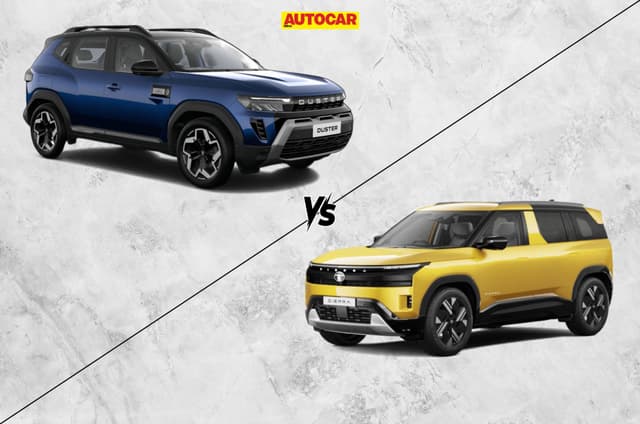
The new Duster could make things interesting in the SUV segment. Would you consider it over the Grand Vitara or Hyryder?
I am confused whether I should go with the Slavia 1.5 DSG facelift or the Duster 1.3 Turbo. Since 80% of my weekly driving (which is around 80 km) is in heavy Bengaluru city traffic. Will the Slavia's DSG clutch pose a reliability risk, or is the Duster a safer pick?
Both of these use dual-clutch automatics, but there’s an important difference for your driving. The Duster’s DCT uses wet clutches, which run in oil. The oil keeps them cool, so they cope much better with the constant creeping and slipping of stop-go traffic. The Slavia 1.5’s 7-speed DSG uses dry clutches, which have no oil cooling and can heat up in long, slow crawls. For Bengaluru traffic, that’s a real point in the Duster’s favour.The Duster is the better fit in other ways too. Renault has tuned its gearbox for smoothness rather than outright speed, and in our test it worked really well in city traffic. Its ride is one of the best in the segment, soaking up broken roads, and the higher seating position makes heavy traffic less stressful.Modern DSGs are far more dependable than the early ones that gave them a bad name, so the Slavia isn’t the risk it once was. But the 1.5 TSI is built for open roads, and at around 80km a week, mostly in traffic, you’d rarely enjoy what you’re paying extra for. If you still want the Slavia, look at the 1.0 TSI. It now comes with a new 8-speed torque-converter automatic, which takes the clutch question off the table entirely.
Upcoming Cars


Renault Cars


Trending Cars


Latest Cars


Last Updated on: 25 Oct 2026