
Hybrid Cars Under 15 Lakh in India (6)
Discover the best Hybrid Cars Under 15 Lakh. Our comprehensive guide covers detailed specifications, expert reviews, pricing information, and buying advice for Hybrid Cars Under 15 Lakh. Find the perfect cars that matches your requirements and budget.


Filter your search


Filter your search


Trending Questions on Cars - Answered by Autocar Experts
Hi, I am currently driving Maruti Suzuki Dzire VXI petrol for daily running of 70 km. I am planning to upgrade to a hybrid/CNG/EV with decent features. What are the options under Rs. 15 Lakh?
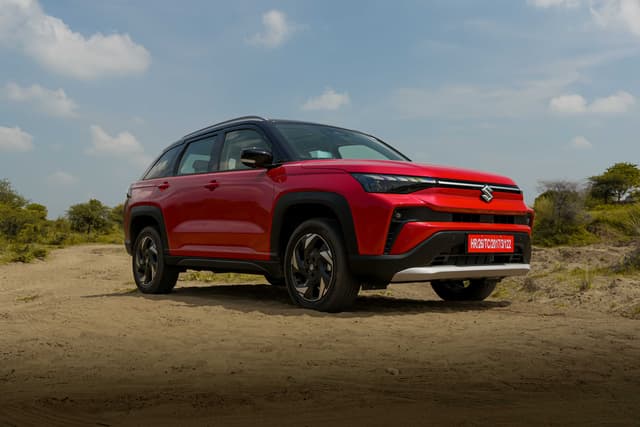
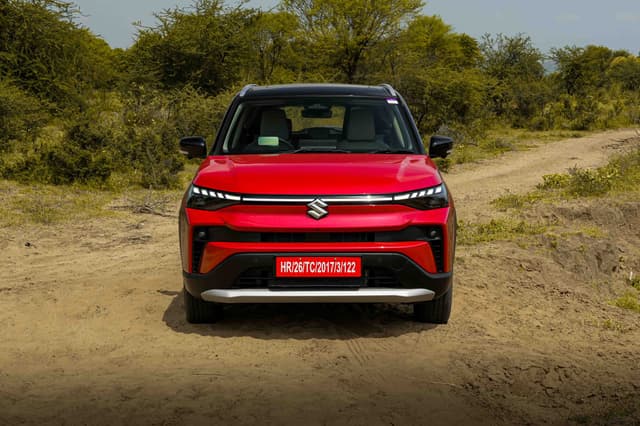
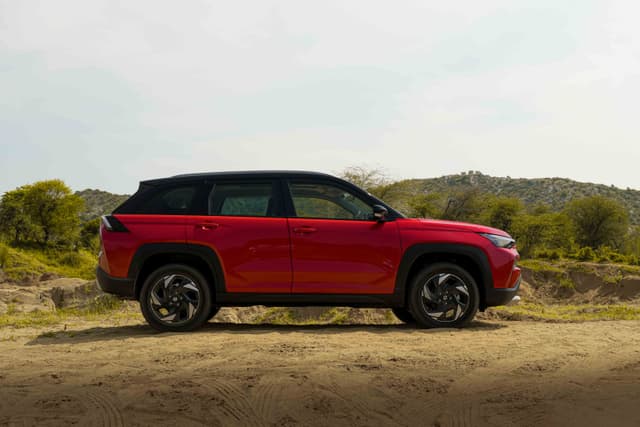
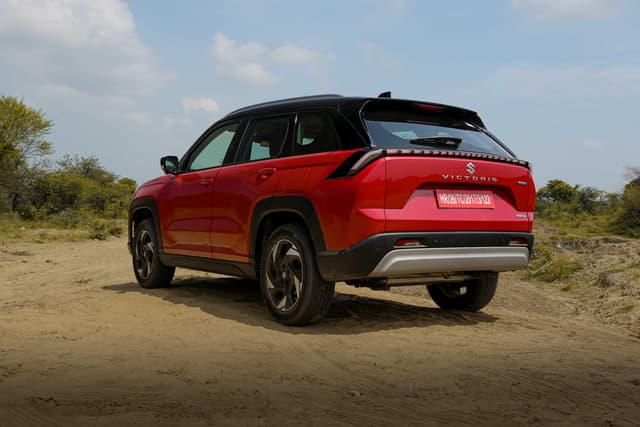
With a daily running of 70km, you are clocking over 25,000km a year, so fuel efficiency and running costs become very important. Since you are coming from a Dzire VXI, reliability and low maintenance are likely priorities as well.CNG is the most cost-effective option for your usage, and the Maruti Suzuki Brezza CNG is the most sensible upgrade. It is a practical, reliable SUV with a factory-fitted CNG kit, good service reach and low running costs. The Brezza CNG also offers a decent feature set and a comfortable ride, making it a very easy car to live with.If you are open to EVs and have access to home charging, the Tata Nexon EV is worth considering. It will offer the lowest running costs and a more premium cabin, but only if your daily route is predictable and you can charge at home. Otherwise, CNG remains the more practical choice.Hybrids like the Maruti Suzuki Victoris Hybrid or Toyota Urban Cruiser Hyryder Hybrid are excellent for your use case, but they won't fall under your budget of Rs 15 lakh.Overall, the Brezza CNG is the most sensible upgrade for your usage and budget.
I currently own a Creta 1.4 CRDi E+ diesel variant and am looking to replace it. My budget is Rs 15 lakh, and I would prefer an EV, followed by a hybrid or diesel variant.
We would either Since you are coming from a Hyundai Creta, the Kia Syros EV is worth considering as it offers a more premium experience while still having a surprisingly spacious cabin despite its smaller exterior dimensions. This Kia car is also more comfortable than the MG Windsor, both in terms of ride quality and seating comfort. Its compact dimensions should also make it easier to manoeuvre in the city.The Windsor EV remains a strong alternative if maximum cabin space is the priority. Its spacious and airy interior make it a practical family electric car, and it would be a natural choice if you want to retain the sense of space you are used to in the Creta.
I am looking for an automatic car under Rs 15 lakh, although the budget can be somewhat flexible. My monthly running is no more than 500km, largely within the NCR, with only occasional weekend trips to Haryana, Uttarakhand and Himachal Pradesh. I am open to petrol, EV and hybrid options, but given my low usage, a petrol car would probably make the most sense. However, the uncertainty around fuel-blending policies is what has made me consider an EV. With such low running, I am also concerned that a DCT gearbox may not be ideal, so I would prefer a car with a torque-converter automatic. A Hyundai dealer mentioned that Hyundai’s DCT and torque-converter automatics are essentially the same, but I am not convinced that is correct. I would appreciate some recommendations based on these requirements.
Go for a petrol automatic with a torque converter gearbox. Your usage is low, mostly city with occasional highway trips, so petrol is the right choice and a torque converter automatic is the most reliable and stress-free option for city driving. The Hyundai dealer is incorrect – Hyundai cars use DCT gearboxes on turbo petrol engines and torque converter automatics on naturally aspirated petrol engines, and they are both completely different. DCTs can feel jerky in stop-start traffic and can throw up some issues, while torque converters are smoother and more reliable in the long run.The Maruti Suzuki Brezza automatic is the most sensible recommendation here. It uses a 6-speed torque converter automatic, is reliable, easy to drive in the city and has Maruti’s strong service network; the ride too is geared for plush low-speed city comfort, on highways though there is some float at higher speeds. On the EV side, your low running does not justify the higher upfront cost, and you do not have a clear financial case for it. On the fuel blending concern, modern petrol engines are engineered to handle E20, and there is no official roadmap beyond that, so it should not be a reason to avoid petrol. Furthermore, Maruti has said that they have built in a higher margin for material compliance to slightly higher ethanol blends, so on the material front you should be fine; mileage, though, would likely drop with higher ethanol blends, but this would be true across models. Thus, go for the Brezza automatic and you will have a hassle-free ownership experience.
Hi, which would be a good first car among Victoris VXI AT, Victoris VXI Strong Hybrid, or Seltos HTK IVT? What sort of discounts are available on the Victoris Strong Hybrid variants that could sweeten the deal? My maximum budget is Rs. 15 lakh ex-showroom. We are 4 members in the family with a pet dog. My usage is 80% in Bengaluru city, with a monthly running of less than 1,000 km. I am considering the hybrid if the pricing is good; otherwise, I am happy with the NA petrol variants. The purchase is not urgent, and I can wait until the end of 2026 or Q1 2027 as well.
Go for the Maruti Suzuki Brezza ZXI AT petrol. With your usage of less than 1,000km a month and 80% city driving in Bengaluru, the strong hybrid does not make financial sense unless you are getting a very substantial discount. The petrol automatic is smooth, reliable and well suited to city traffic, and the Brezza is a proven, fuss-free ownership proposition with Maruti’s service reach and low running costs. The Seltos HTK IVT and the Victoris VXI AT are good cars, but at Rs. 15 lakh ex-showroom you are at the lower end of their range and will be compromising on features, whereas the Brezza ZXI AT is a more complete package at that price point. The Seltos and Victoris are bigger, but not my much and the premium you pay does not justify the entry-level variants. The Brezza also has a comfortable rear seat and a decent boot, which will suit a family of four plus a pet dog and is a better deal overall.
I want to buy a hybrid car with a sunroof, and my budget is Rs. 8-10 lakh. Which would be the best option within this budget?
At Rs 8-10 lakh, there are no hybrid cars available in India. The only options in this price range are mild hybrids, which offer a small efficiency boost but do not provide the fuel savings or electric-only driving of a proper strong hybrid system. If you are specifically looking for a hybrid with a sunroof, you will need to increase your budget to around Rs 20 lakh or more, where cars like the Maruti Suzuki Victoris Hybrid, Grand Vitara Hybrid and Toyota Urban Cruiser Hyryder Hybrid become available. These are proper strong hybrids and are among the most efficient cars in India today.If your budget is fixed at Rs 8-10 lakh, the best approach is to focus on a good mild hybrid car with a sunroof, such as the Maruti Suzuki Fronx or Brezza. If space is not the highest priority, get the Fronx, as it is better value for money, giving you more features for your money. The Brezza, however, has more interior space, more powerful engines and a 5-star Bharat NCAP crash test rating, so it could be the better choice.But then your other requirement - a sunroof - will not be met by either of these, as Maruti only offers this feature in higher variants. So if that is of the highest priority, check out a petrol car like the Hyundai i20, Tata Punch or Kia Sonet. Overall, our recommendation is to go for one of the mild-hybrid Maruti models and forego the sunroof. It's the better decision in the long run.
Last Updated on: 3 Nov 2026