



Last Updated on: 23 Feb 2026
Hyundai Venue
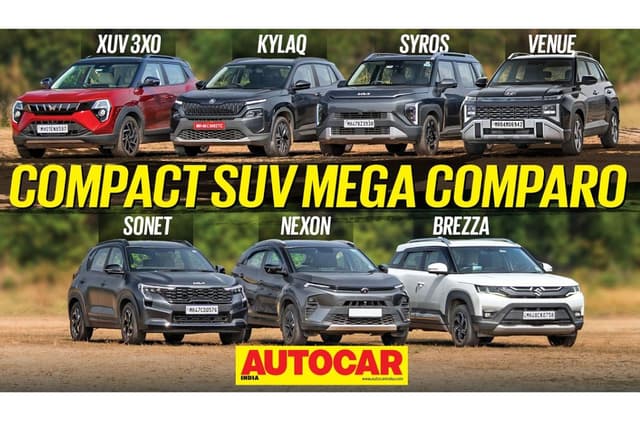
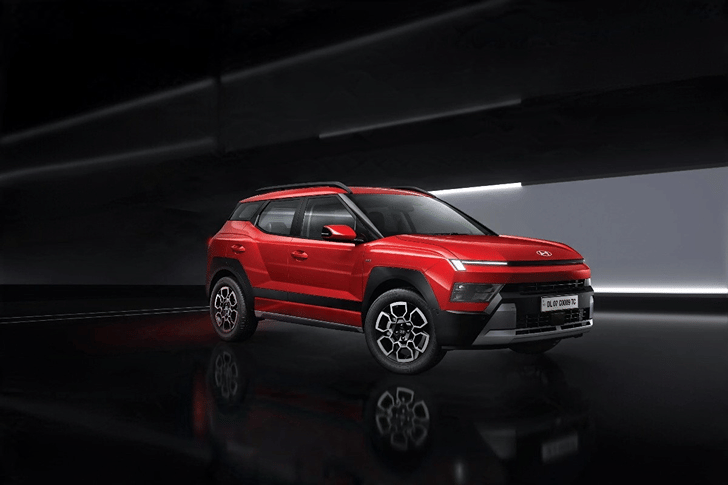
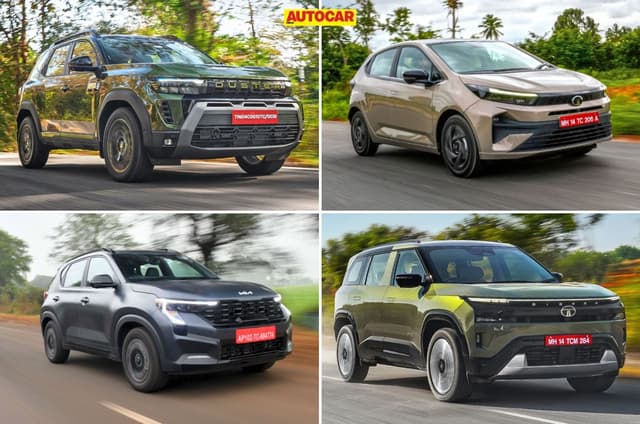
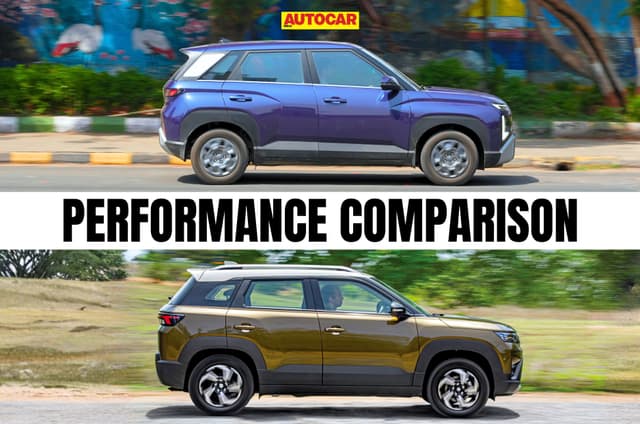
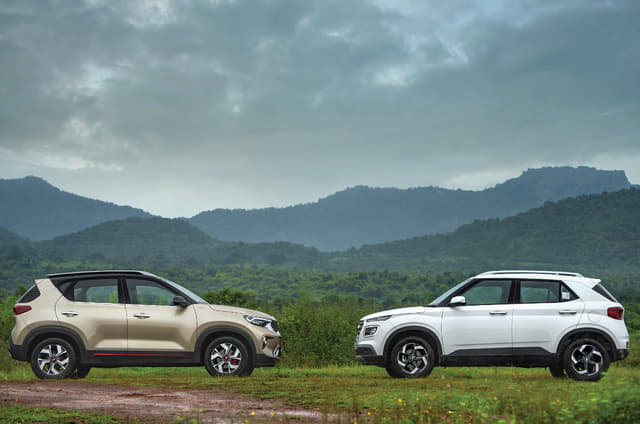
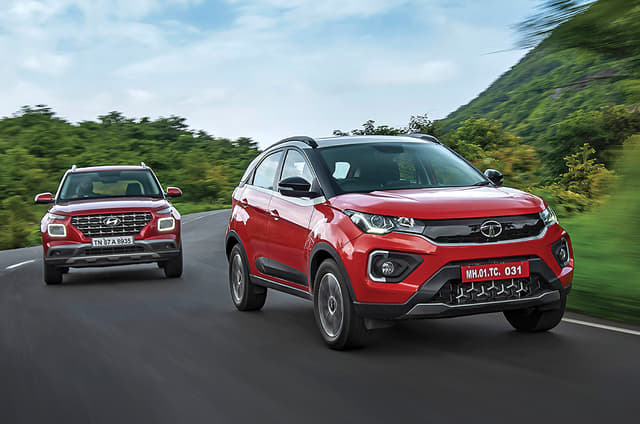
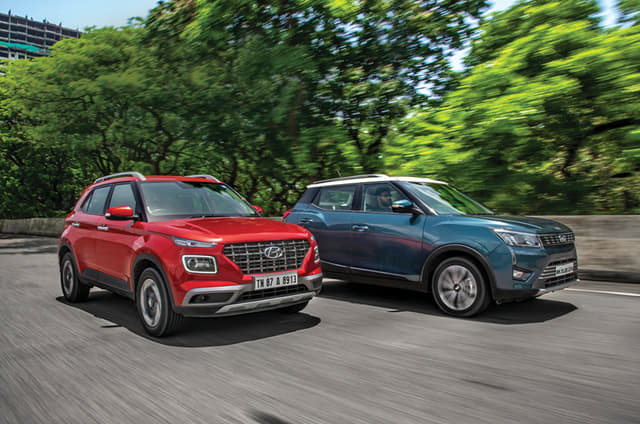
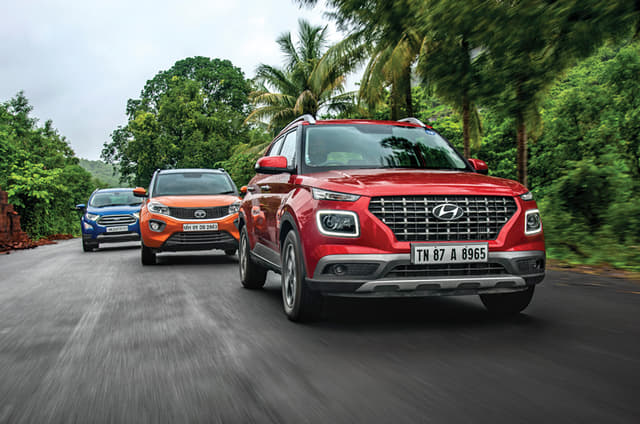
The Hyundai Venue price in India starts from โน8.00 lakh and rises to โน15.51 lakh (ex-showroom), with 22 variants on offer. The Hyundai Venue rivals the likes of compact SUVs like the Maruti Brezza, Tata Nexon, Mahindra XUV 3XO, Kia Sonet, Tata Punch and Skoda Kylaq.
The New Hyundai Venue is sold with 3 engine options. The 2025 Venue comes with an 83hp 1.2-litre naturally aspirated petrol engine paired with a 5MT, a 116hp 1.5-litre diesel engine with 6MT/ 6AT and a 120hp 1.0-litre turbo-petrol engine with 6MT/ 7DCT.
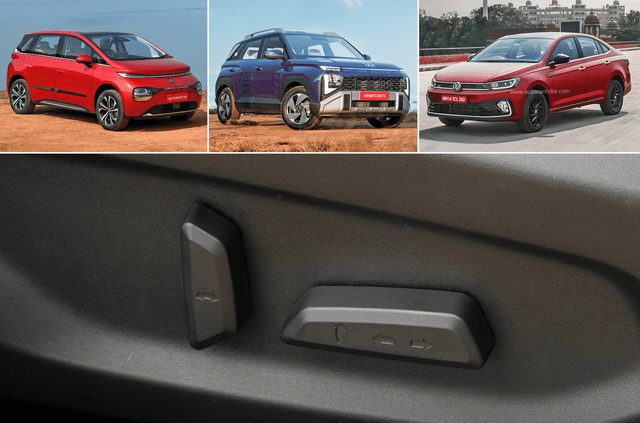
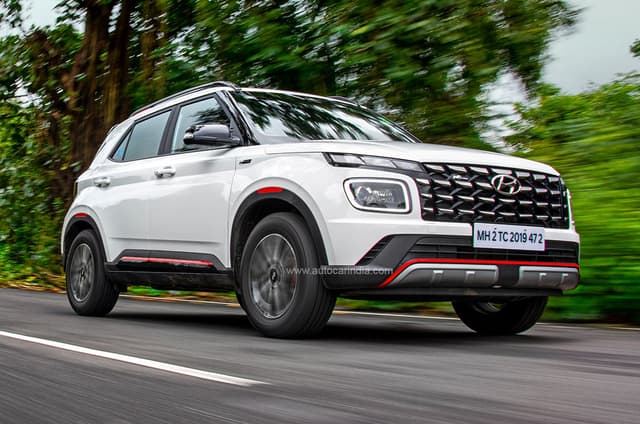
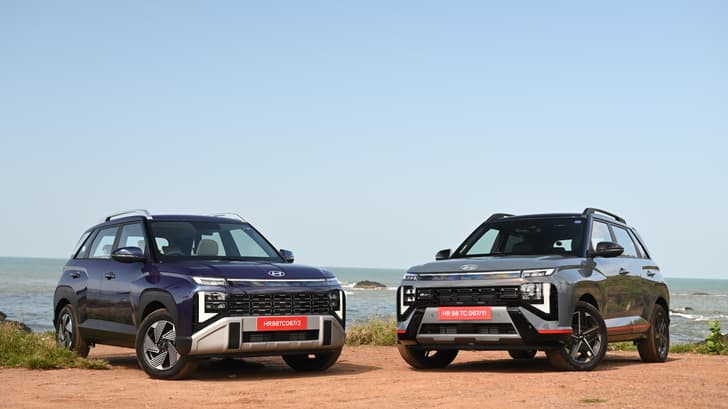
Hyundai has equipped the 2025 Venue with features like quad LED headlights, 16-inch alloy wheels, twin 12.3-inch screens, wireless Apple CarPlay and Android Auto, over-the-air (OTA) updates, Level 2 ADAS, ventilated front seats, an 8-speaker Bose sound system, an electronic parking brake with auto hold (DCT only), a 4-way powered driverโs seat and a 360-degree camera.
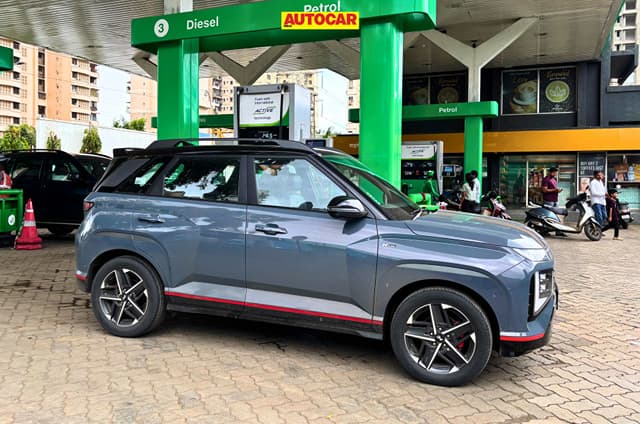
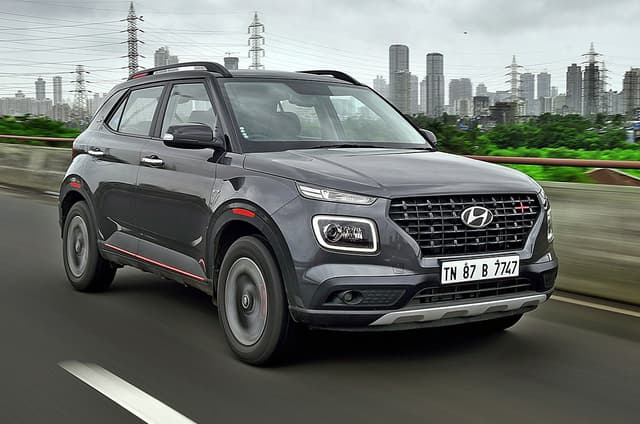
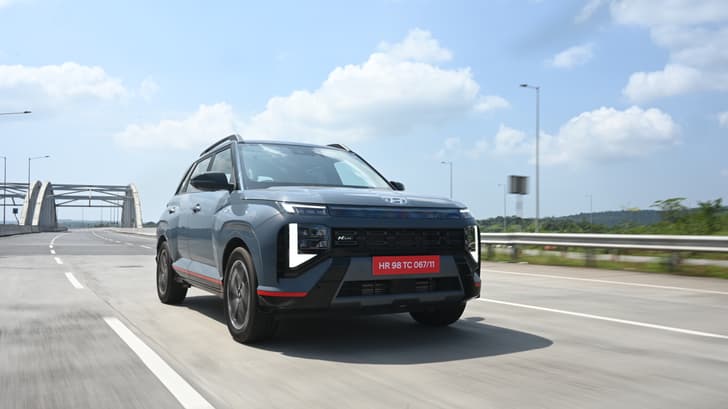
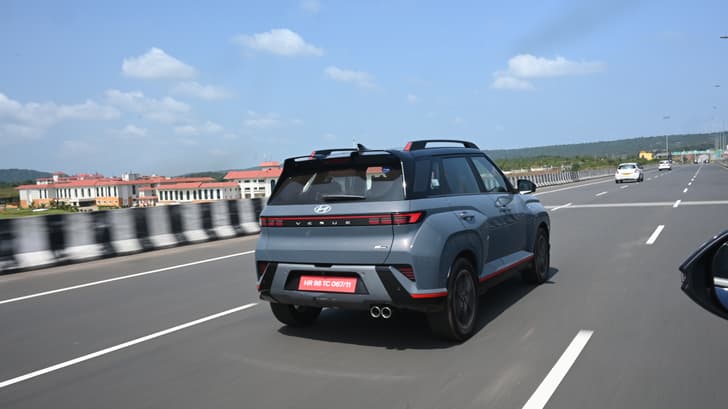
The 2025 Venue also gets a sportier N Line version thatโs gets a unique exterior and interior cosmetic treatment, dual-tone exhaust tips and a sportier suspension setup. It is powered by the potent 120hp, 1.0-litre turbo-petrol engine, and is offered with both manual and DCT gearboxes.
Hyundai Venue Highlights
- Compared to the first-generation model, the new Venue is 48mm taller and 30mm wider.
- The wheelbase has also grown by 20mm, now measuring 2520mm.
- New Venue diesel adds a torque converter automatic gearbox option, alongside a manual gearbox.
- There are 2 petrol engines on offer: an 83hp, 1.2-litre naturally aspirated engine and a 120hp, 1.0-litre turbo-petrol engine.
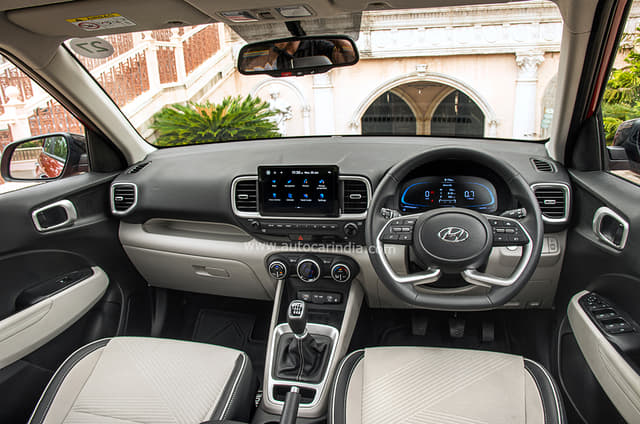
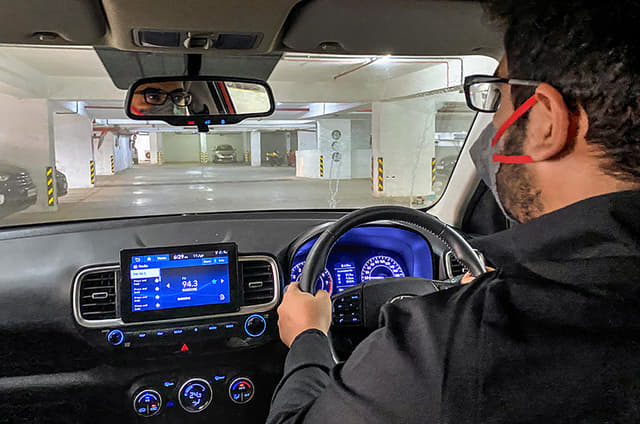
- It gets a curved display comprising two 12.3-inch screens (larger than even the Creta), a new steering wheel, 360-degree camera and ventilated seats. It also gets a Level 2 ADAS suite on the HX10 1.5 Diesel AT trim.
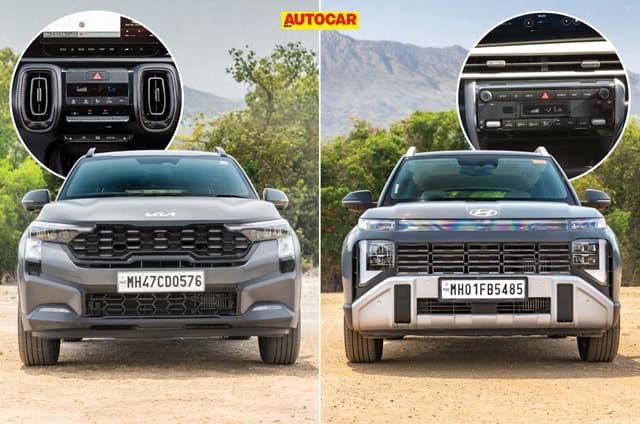
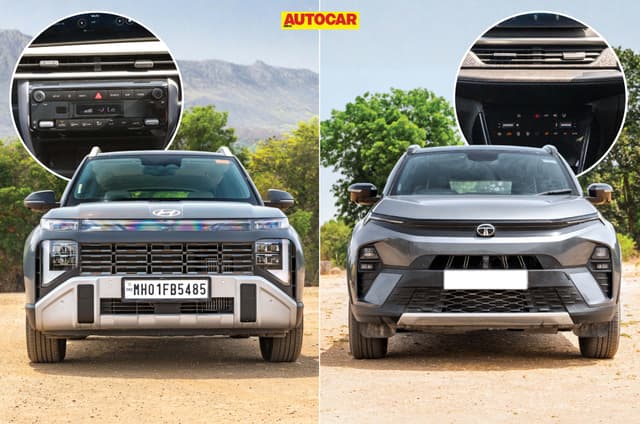
- Hyundai has kept physical controls for HVAC and media in the Venue interior. The rear seats also get a 2-step reclining feature.
- The sportier N Line version of the Venue is powered by the 120hp, 1.0-litre turbo-petrol engine, and is offered with both manual and DCT gearboxes.
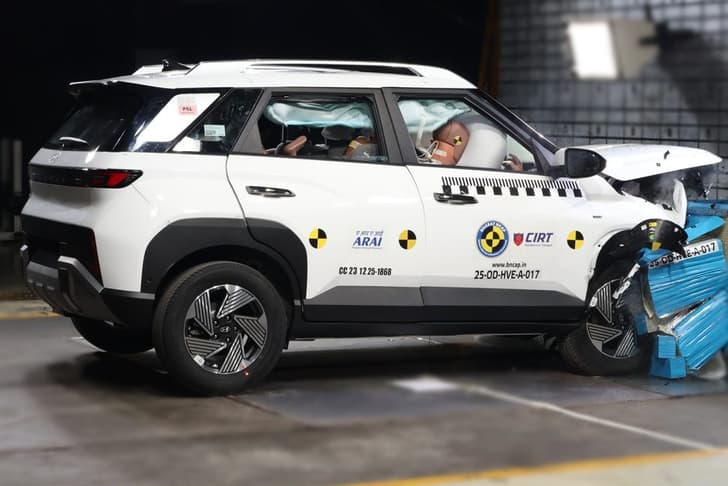
- The first generation Hyundai Venue scored 4 stars at the Australasian New Car Assessment Program (ANCAP). Bharat NCAP rating of the new Hyundai Venue is yet to be announced.
- Hyundai has equipped the latest Venue SUV with six airbags (standard), disc brakes for all wheels, a tyre pressure monitoring system (TPMS) and an electronic parking brake with auto hold. The 2025 Venue also gets a Level 2 ADAS suite.
Hyundai Venue Latest Updates
- Jan 2025: Hyundai Venue nominated for 2026 World Urban Car of the Year Award
- Nov 2025: New Hyundai Venue launched in India at Rs 7.90 lakh.
- Oct 2025: New Hyundai Venue revealed ahead of November 4 launch
- Oct 2025: New Hyundai Venue spied undisguised ahead of launch
- Aug 2025: Second-gen Hyundai Venue interior spied for the first time
- Apr 2025: Next-gen Hyundai Venue spied with new design details
- Nov 2024: Hyundai Venue sales cross 6 lakh unit milestone
- Sep 2024: Hyundai Venue Adventure Edition launched at Rs 10.15 lakh
- May 2022: Hyundai Venue facelift revealed
- Jun 2022: Hyundai Venue N Line launched
- May 2020: Hyundai Venue gets 1.5 diesel, iMT gearbox
- May 2019: Hyundai Venue makes global debut
Hyundai Venue Features and specifications
Our Rating | 8 |
Mileage | 17.9 kmpl - 20.99 kmpl |
Engine | 998 cc - 1493 cc |
Fuel Type | Petrol, Diesel |
Transmission | DCT, Manual, AT |
Seats | 5 |
Body Style | SUV |
Doors | 5 |
Max Power | 116hp at 4000 |
Max Torque | 250Nm at 1500-2750 |
| Fuel Type Propulsion | Diesel |
| Number of Cylinders | 4 |
| Engine Displacement | 1493 cc |
| Engine Installation | Front |
| Fuel Tank Capacity | 45 litres |
| Official Fuel Economy | 17.9 kmpl |
| Auto Start/Stop | No |
| Front Brakes | Disc |
| Rear Brakes | Drum |
| Turning Radius | No |
| Steering Adjust type | Manual |
| Wheelbase | 2520 mm |
| Boot Capacity | 375 litres |
| Doors | 5 |
| Kerb Weight | 1250 kg |
| warranty Duration | 3 |
| warranty Distance | Unlimited |
| Power Windows with One Touch-Up | |
| Power Windows | Front and Rear |
| Exterior Mirrors Electric Adjust | |
| Power Windows with One Touch-Down | Driver Window Only |
| Leading Vehicle Departure Alert | |
| Heads Up Display | |
| Automatic Wipers | |
| Child Safety Lock |
| Body Coloured Bumpers | |
| Front Fog Lamps | |
| Headlight Type | LED |
| Projector Headlamps |
| Shift Indicator | |
| Tachometer | Digital |
| Trip Meter | |
| Average Fuel Consumption |
| Video Player | |
| Rear Entertainment Screens | |
| Touchpad | |
| Gesture Controls |
Hyundai Venue price & variants
The 2026 Hyundai Venue price starts at Rs 8.00 lakh (ex-showroom). New Venue on road price in Delhi for the HX2 1.2 Petrol MT variant begins at Rs 9.07 lakh. On-road 2026 Venue price will vary from city to city depending on RTO charges, insurance and other factors, but depending on the variant chosen, it will roughly range between โน9.07 lakh and โน18.38 lakh.
The Hyundai Venue is offered in 22 variants, from HX2 1.2 Petrol MT to HX10 1.5 Diesel AT. Depending on the trim level, the Hyundai Venue comes equipped with features like 16-inch alloy wheels, two-tone leatherette upholstery, twin 12.3-inch screens, which are larger even than the Hyundai Creta SUV, front ventilated seats, 2-step recline function for the rear seats, rear window sunshades, front parking sensors and Level 2 ADAS. Top variants of the Venue also get drive and traction modes (Normal, Mud, Sand and Snow).
Hyundai Venue Official Brochure
Download the complete brochure with specs, features, and variants.
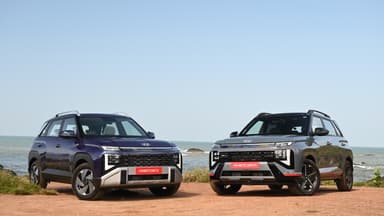
Hyundai Venue expert review
We like
Cabin looks and feels premium
Slick infotainment system
Refined diesel and smooth auto combo.
We don't like
Ride still has an underlying firmness
N Line mechanically identical to standard version.
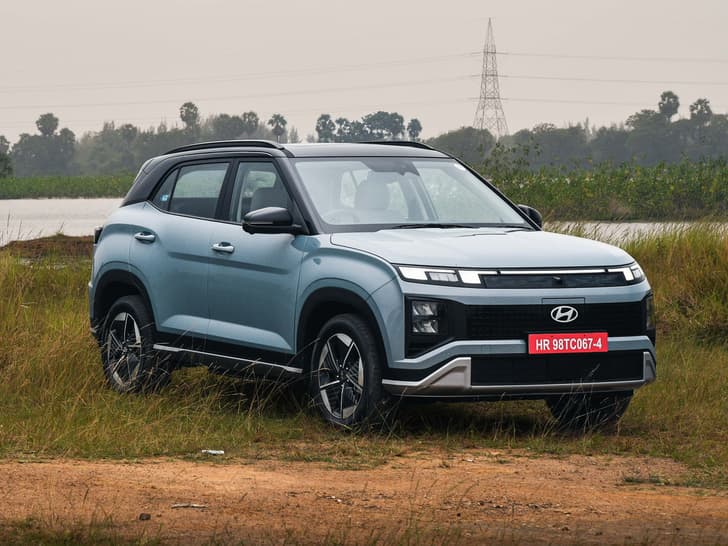
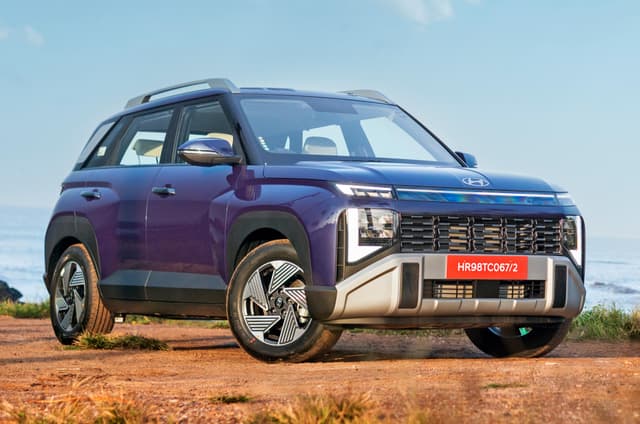
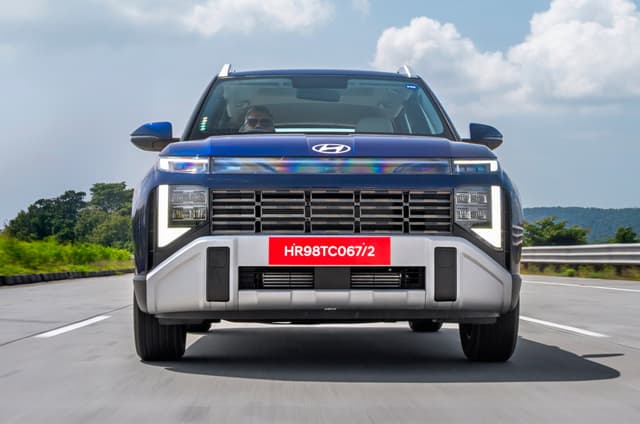
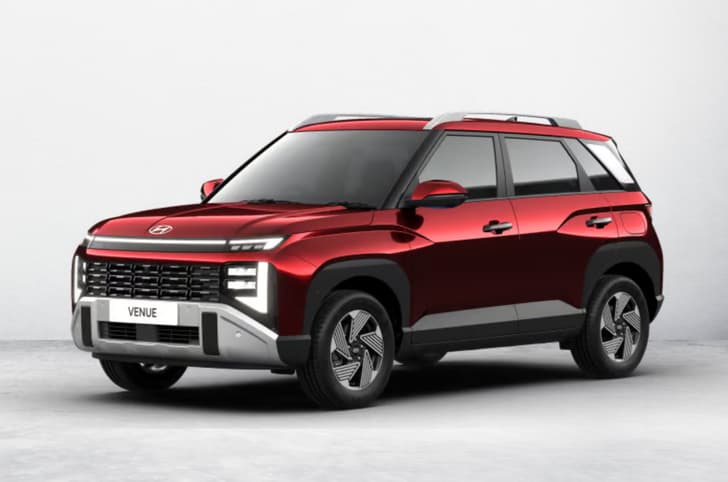
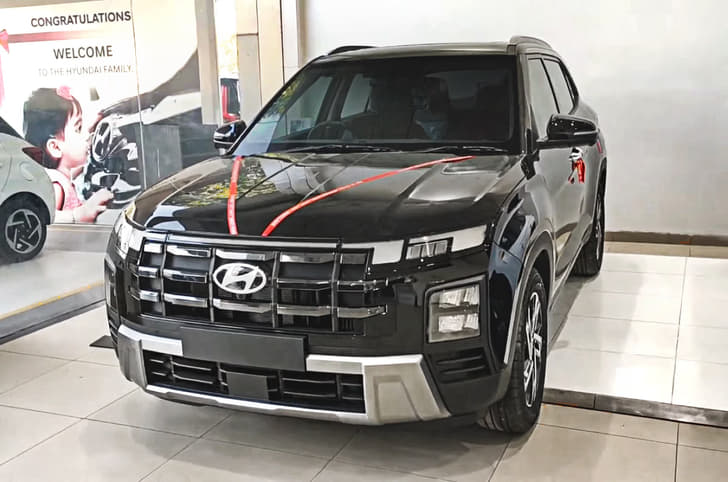
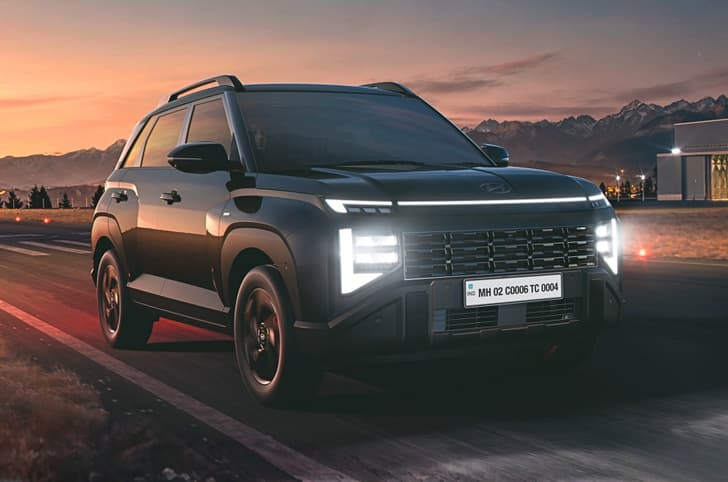
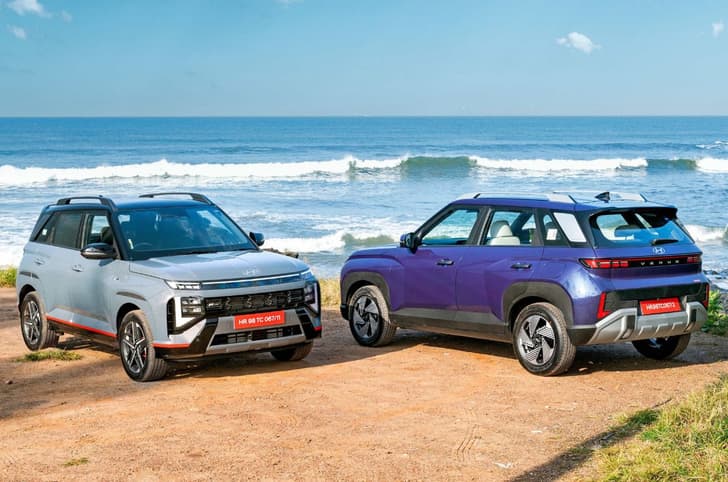
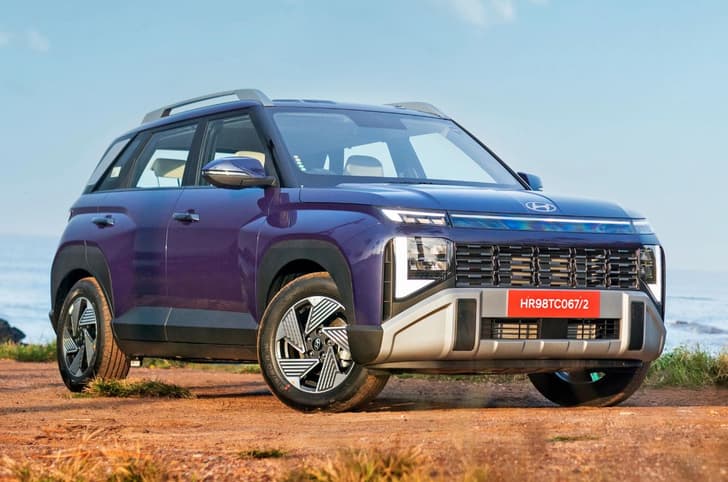
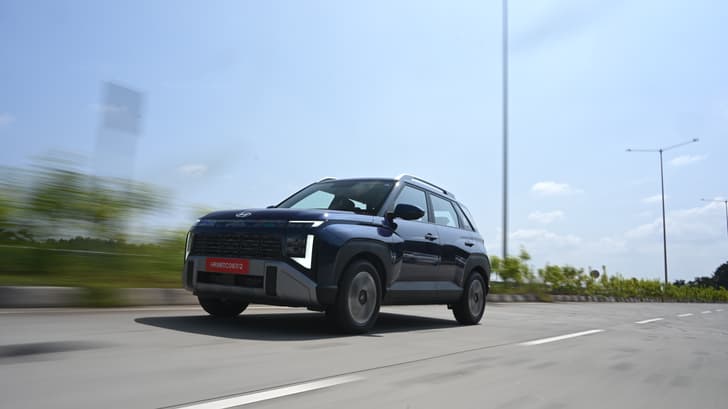
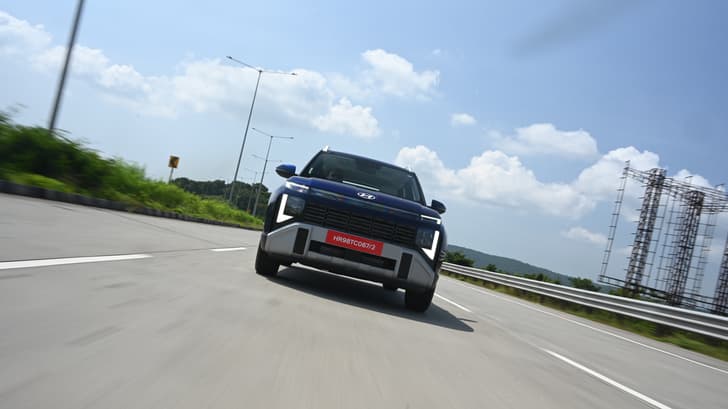
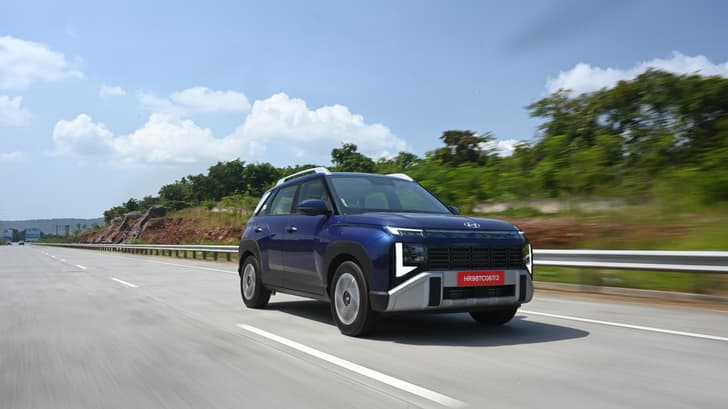
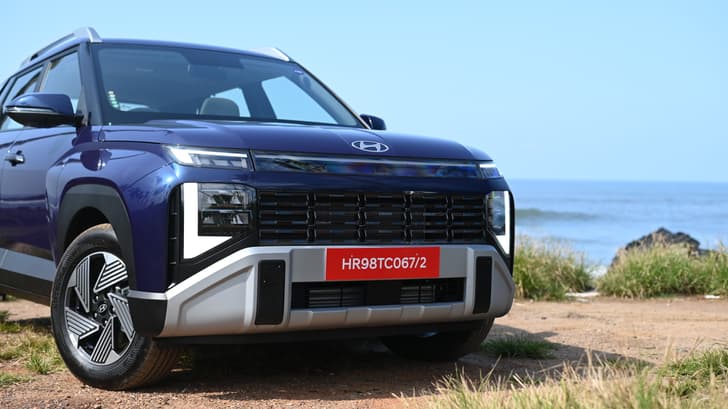
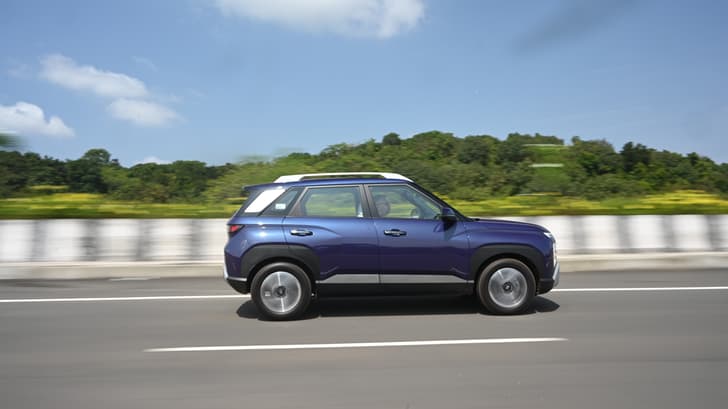
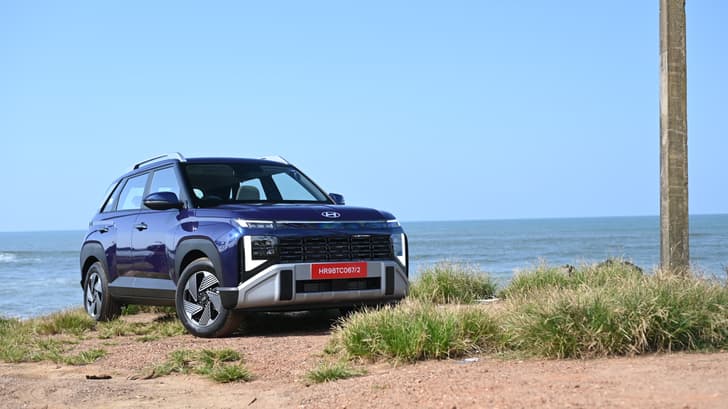
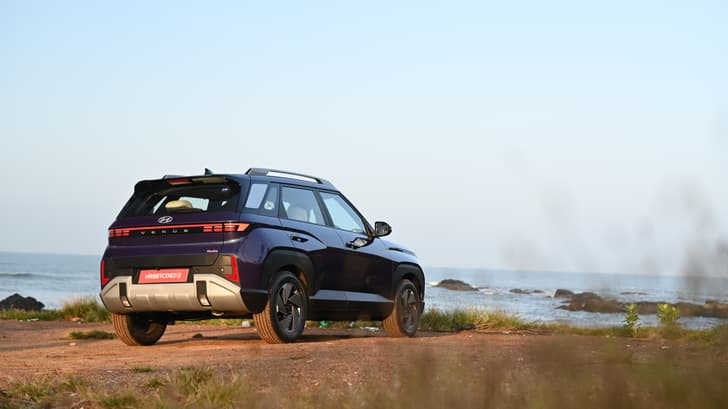
The new Venue sits on the global K1 platform shared with the Kia Syros. Itโs more rigid and slightly larger โ 30mm wider, 48mm taller, and with a 20mm longer wheelbase. The platform also makes it a software-defined vehicle capable of OTA updates for new features and fixes. Hyundai has nailed the proportions, avoiding the undertyred look some rivals suffer from, while giving the N Line a distinct identity. The front end borrows cues from the Creta, Exter and even the Palisade, while sharp creases, flared fenders and a new C-pillar quarter glass define the side. The standard car runs on 16-inch wheels, while the N Line gets striking 17s with red brake calipers. Overall, itโs an edgy design that stands out, even if it wonโt appeal to everyone.
9.0
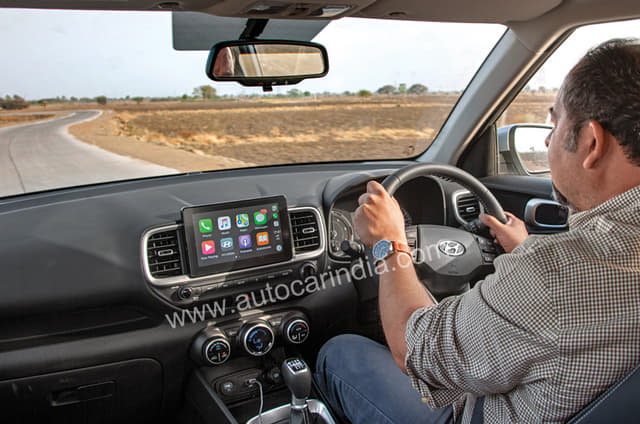
The dual 12.3-inch screens for the infotainment and digital driverโs display are larger than even the Cretaโs and on par with the Syros. Powered by NVIDIA tech, the infotainment system is quick, responsive and has superb resolution โ best seen in the 360-degree camera view. Features include ventilated front seats, a wireless charger, smart key with push-button start, an 8-speaker Bose system and a single-pane sunroof. The Venue also gains Hyundaiโs SmartSense Level 2 ADAS, up from the earlier Level 1 setup. Safety kit is comprehensive, with six airbags, ABS, ESC, VSM and ISOFIX mounts standard from the HX2 trim. It hasnโt yet been crash-tested, but Hyundai expects a 5-star Bharat NCAP rating, given the Kia Syrosโ strong performance.
9.0
The rear seat now offers more knee room thanks to the 20mm longer wheelbase and scooped-out front seat backs, though thigh support could be better. Shoulder room is slightly improved, but seating three abreast remains tight. Boot space has grown from 350 to 375 litres. Up front, the cabin feels cleaner and more modern, with a curved display neatly integrating the infotainment and digital instruments. A new steering wheel with four dots (Morse code for H) replaces the Hyundai logo, while automatic versions get a โcoffee-tableโ centre console. Despite the hard plastics, quality and detailing impress. The dual-tone blue-and-white upholstery adds airiness, while the N Line gets an all-black interior with red accents and a sporty Ioniq 5 Nโstyle steering wheel. Rivals like the Syros and Nexon offer more space, but the Venueโs design and finish stand out.
8.0
The ARAI mileage figure for the 1.2-litre petrol engine is 18.05kpl, while the turbo manual and DCT better that, delivering 18.74kpl and 20kpl respectively. The 1.5-litre diesel achieves 20.99kpl with the manual, however this drops significantly to 17.9kpl with the optional automatic.
8.0
The base engine is a 1.2-litre four-cylinder petrol producing 83hp and 115Nm, paired with a 5-speed manual. Above that sits the 1.0-litre turbo-petrol with 120hp and 172Nm, offered with a 6-speed manual or 7-speed DCT. The diesel option is a 1.5-litre unit with 116hp and 250Nm, now available with a 6-speed torque converter auto alongside the manual. The turbo-petrol is the most engaging, with mild lag below 2,000rpm before strong mid-range punch. The N Lineโs exhaust adds a sporty burble, while both transmissions suit the engine well. The DCT is mostly smooth, with only mild hesitation at crawling speeds. The diesel impresses with refinement โ barely audible below 2,000rpm โ but runs out of steam past 3,500rpm. The autoโs smoothness complements it, though initial throttle response feels a bit dull.
8.0
The new Venue is slightly more softly sprung than its predecessor with a noticeable improvement in low-speed bump absorption. However, the damping is still not totally sorted with an underlying firmness coming through. Come across a sudden pothole or even worse a series of them, and the Venue will thud through. The ride also felt a tad too busy on the rippled concrete highways of Goa. While the Venueโs ride is not inherently uncomfortable, rivals like the Tata Nexon and Mahindra XUV 3XO do a better job of ironing out imperfections. The Venue N Line runs exactly the same setup as the regular car with only a slight firmness coming from the larger 17-inch wheels. All versions of the Venue steer almost exactly the same, with a direct but light and somewhat lifeless steering that never really weighs up at speed.
7.0
Despite the generation shift, itโs been priced keenly to start with โ from Rs 7.89 lakh (ex-showroom). Move up the range though and prices climb sharply, reaching Rs 14.74 lakh for the turbo DCT, Rs 15.48 lakh for the top-spec N Line and Rs 15.69 lakh for the diesel automatic, putting it among the priciest in the segment, but it still represents solid value for what it offers. The design is edgy and modern with plenty of wow factor in N Line guise, while the tech-laden cabin looks and feels genuinely premium. Itโs not perfect, but then nothing in this segment is.
8.0
Reviewed by: Lenny D'sa
Hyundai Venue reviews
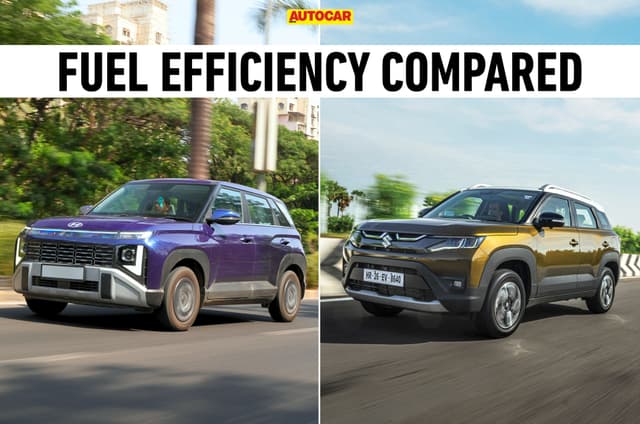
Hyundai Venue comparison
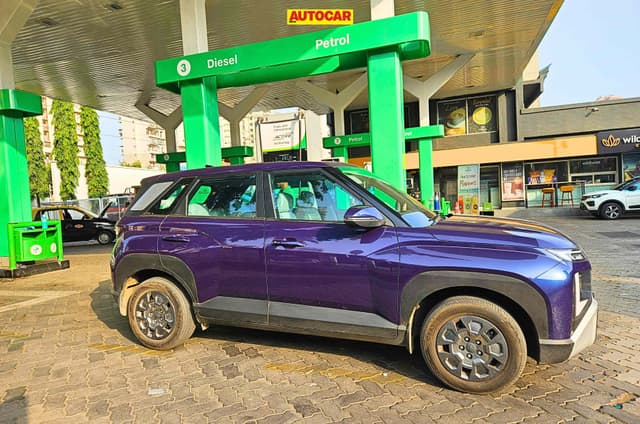
Hyundai Venue mileage
The Hyundai Venue mileage figures range between 17.9 kmpl - 20.99 kmpl. Hyundai claims the 1.2-litre petrol-MT returns 18.05kpl, while the 1.0-litre turbo-petrol engine has a claimed mileage figure of 18.74kpl and 20kpl for the manual and DCT gearboxes, respectively. Meanwhile, the Venue diesel mileage with the manual gearbox is 20.99kpl, while the automatic variant returns 17.9kpl. That makes it one of most efficient diesel cars on sale in India.
| Fuel type | Displacement | Transmission | Mileage |
|---|---|---|---|
| Petrol | 998 cc | DCT | 20 kmpl |
| Diesel | 1493 cc | 17.9 kmpl | |
| Petrol | 998 cc | Manual | 18.74 kmpl |
| Petrol | 1197 cc | Manual | 18.05 kmpl |
| Diesel | 1493 cc | Manual | 20.99 kmpl |
| Diesel | 1493 cc | AT | 17.9 kmpl |
Hyundai Dealers in Delhi
Planning to buy Venue? Here are a few dealers in Delhi
Bagga Link Hyundai - East Patel Nagar
1/8 East Patel Nagar, Opposite Pillar No 177, New Delhi, Delhi 110008
Deep Hyundai-Mangolpuri
C-5, Mangolpuri industrial area, Phase -1, Paschim Vihar, New Delhi, Delhi 110083
Deep Hyundai-South Side
Plot No. 1, Lane No. 1, Mundka Industrial Area (South Side), Rohtak Road, New Delhi, Delhi 110041
Fortune Hyundai-Upsidc Site
D-74, UPSIDC Site, Greater Noida, Site - IV, Greater Noida, Uttar Pradesh 201308
Frontier Hyundai-Rajapuri
K-1/36, KH-107/17/1, Rajapuri, Opp Sector-5,Main Rajapuri, Dwarka, New Delhi, Delhi 110059
Hyundai Venue news
Hyundai Venue Images
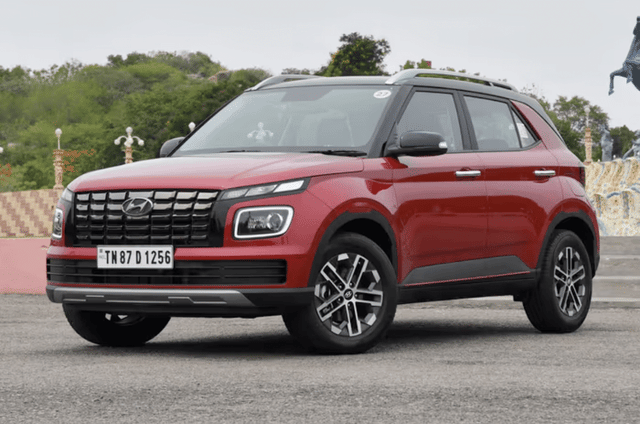
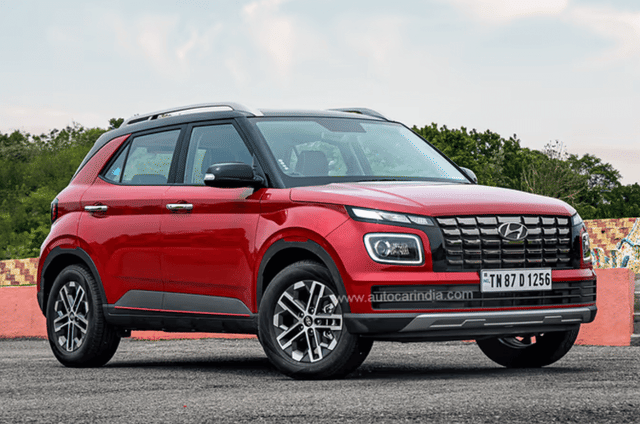
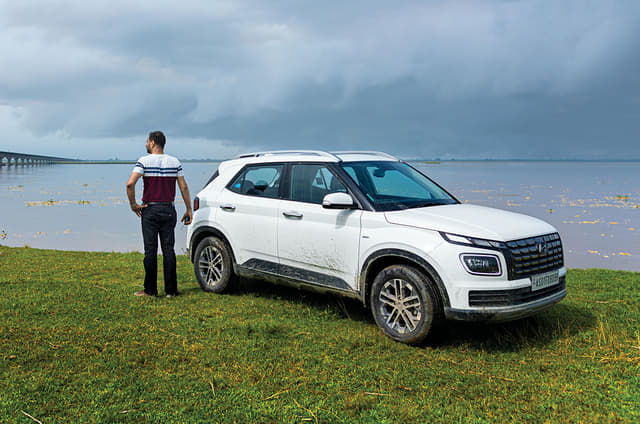
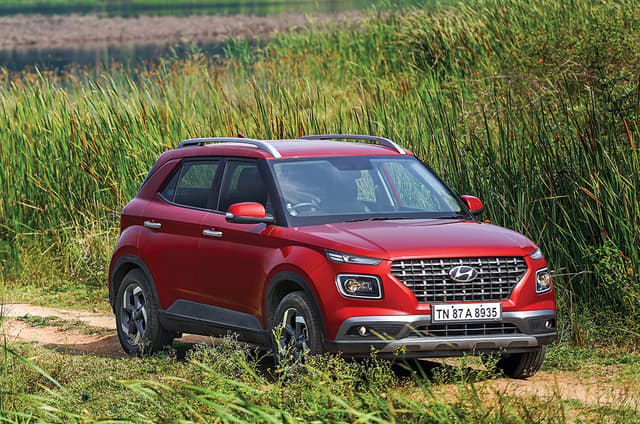
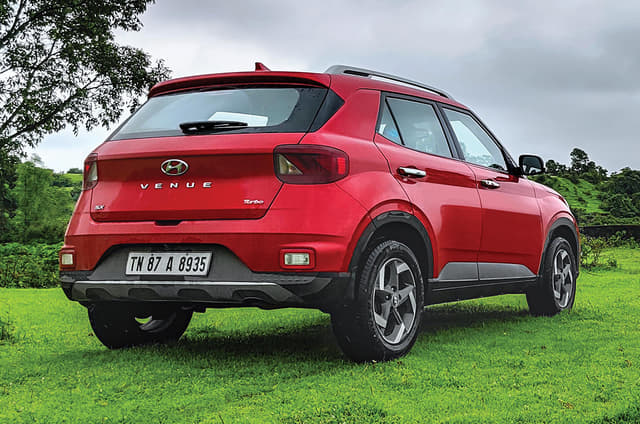
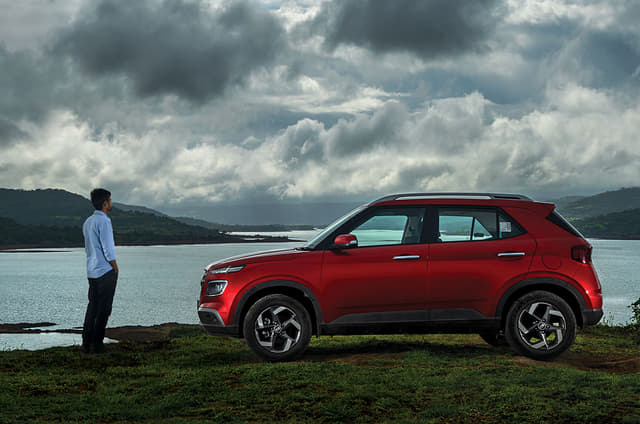
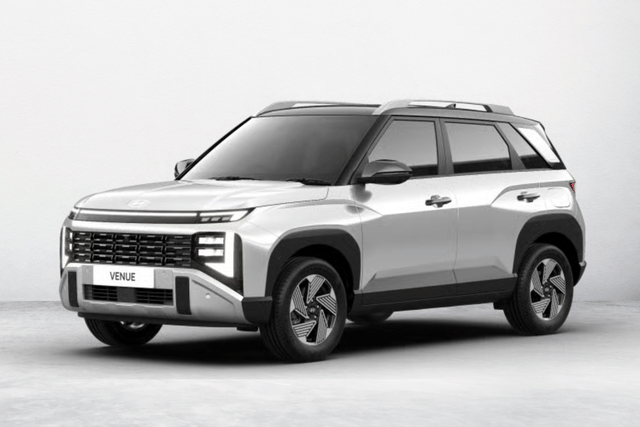
The second-gen Venue comes with quad-LED headlamps, connected DRLs and 16-inch alloy wheels and a lot more. Check out the Hyundai Venue image gallery to see the compact SUV from several angles.
Hyundai Venue videos
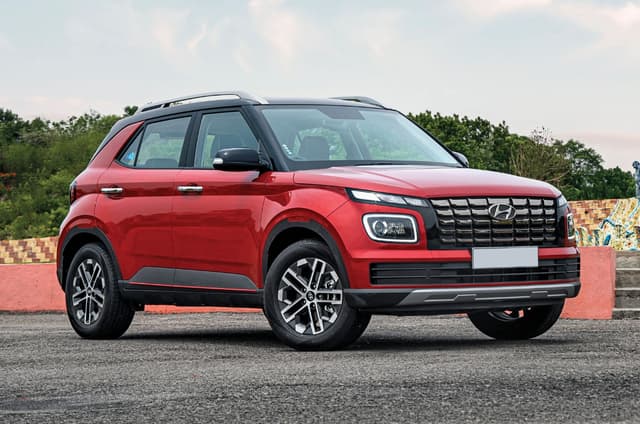
Our Hyundai Venue review covers its exterior design, seat and ride comfort and performance in great detail. Explore walkarounds and more in our Venue video gallery.

.jpg?w=640&q=75)


Hyundai Venue Colours
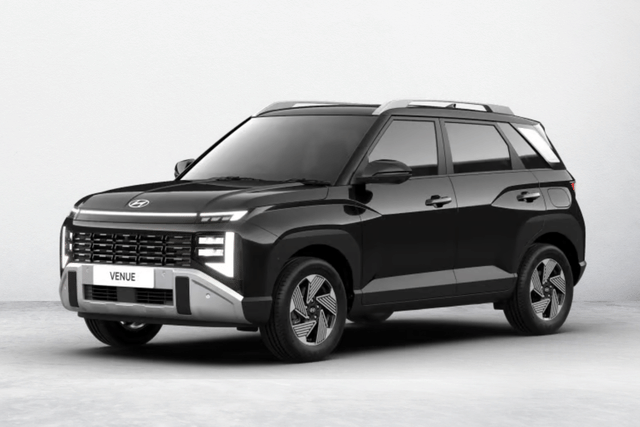
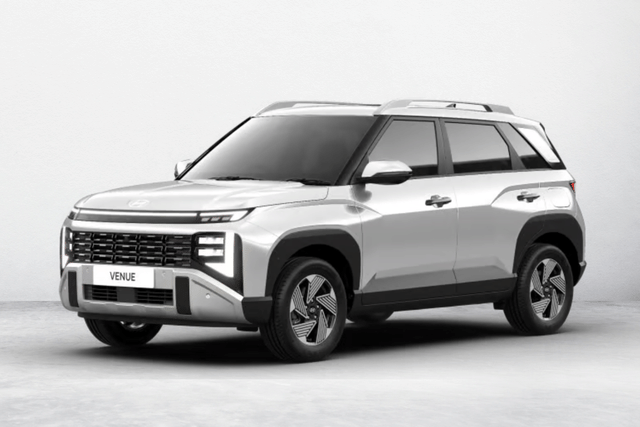
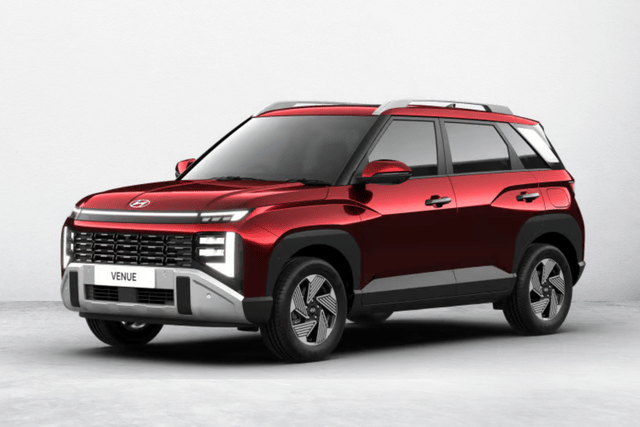
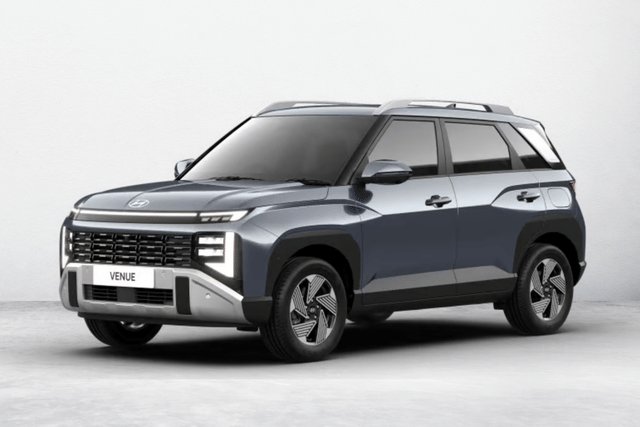
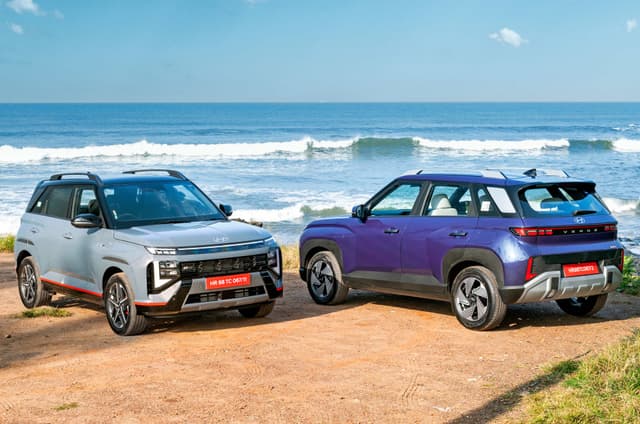
The Venue comes with 8 colour options. These include Mystic Sapphire, Hazel Blue, Dragon Red, Atlas White, Titan Grey and Abyss Black. Atlas White and Hazel Blue are available as a dual-tone option with an Abyss Black roof from the HX 6 trim onwards. The HX2 1.2 Petrol MT trim is available only with Abyss Black and Atlas White themes, and the HX 4 introduces Mystic Sapphire and Titan Grey colours to the mix. The HX 5 comes with all the monotone colour options.
The N Line versions miss out on the Mystic Sapphire colour option, but all other colour options, including the dual-tone themes, are available on both N Line trims.
Hyundai Venue FAQs
No, Hyundai Venue is a 5 seater.
New Hyundai Venue has a 5-speed, a 6-speed MT and a 7-speed DCT gearbox options with the petrol engine. Meanwhile, the diesel gets a 6-speed MT or a 6-speed AT gearbox option.
There are 6 airbags available in all the variants of Hyundai Venue.
No, the New Hyundai Venue is not available in CNG, it is available in petrol and diesel engines.
No, the Hyundai Venue offers a sunroof only in the mid to top variants.
Yes, the Hyundai Venue is a good choice for long drives and highway use as the turbo petrol and diesel variants offer good cruising ability, stability at high speeds, and features like cruise control and reclining rear seats, making it comfortable for long drives.
The ADAS features available in the New Hyundai Venue are of Level 2 proficiency in selected variants. T
No, the Venue 2026 comes with a single-pane sunroof in mid to top variants.
The Hyundai Venue N-Line sits above the standard Venue top model in the line-up.
The Venue and the Nexon are similar in length, but differ in other dimensions.
Unlike the Creta EV, the Hyundai Venue 2026 does not get an EV option.
Hyundai Venue 1.0 turbo petrol mileage is 18.74kpl for the manual and 20kpl for the DCT.
Hyundai claims 20.99kpl for the diesel manual, while the diesel-automatic returns 17.9kpl.
The Hyundai Venue price in India starts at โน8.00 lakh and goes up to โน15.51 lakh, ex-showroom.
Trending Questions on Hyundai Venue - Answered by Autocar Experts
I am currently driving a Maruti Suzuki WagonR (2017), and I now feel the need to upgrade as my monthly running is around 1,500-2,000 km. What car should I buy within a budget of โน14 lakh?
Since your monthly running is on the higher side, a diesel SUV would make sense. The newly updated Hyundai Venue in HX 5 trim would fit in your budget and is a big upgrade from the WagonR. The engine is refined, frugal and tried and tested, and should you get the manual gearbox, it has a light clutch that makes it easy in traffic.
The HX 5 also gets a good level of kit, like a sunroof, cruise control, touchscreen, reversing sensors, TPMS, etc. The ride quality is good too, and it has a decent-sized boot for outstation trips.
Hyundai's after-sales network is also one of the best, and it would be a hassle-free ownership experience.
I have been looking for a secondary car, primarily to be driven in the city. A petrol automatic would be preferred. Mileage is not a very big criterion. Good engine performance, features and a hassle-free ownership experience are on the must-have list. We are looking for something compact and easy to maneuver in the city and park in tight spaces. Budget is around โน15 lakh, plus or minus a lakh. A lack of dealerships in the city we reside in restricts us to only a few brands: Maruti Suzuki (Nexa too), Kia, Hyundai, Mahindra, Toyota and Tata. We test drove the Hyundai Venue (new gen), Kia Sonet and also looked at the Toyota Fronx and Nexon. Which car would you kindly suggest?
I currently own a 2018 Honda WR-V diesel manual (6-speed), which has run about 50,000 km, along with a Tata EV purchased in 2023, which has covered around 20,000 km. I have now decided to replace my WR-V with a BS6 diesel automatic car. Could you please suggest which diesel automatic model would be the best choice according to Autocar?
Without knowing your budget and more requirements, we can't recommend the ideal choice for you. We have shortlisted models that you should consider, and why they are of interest.
Compact SUVs
- Hyundai Venue: (+) Smooth diesel engine and auto gearbox combo, good interior space, upmarket interior | (-) Expensive for its size
- Kia Sonet: (+) Smooth diesel engine and auto gearbox combo, upmarket interior, good value | (-) Rear seat space is limited, due to be replaced in the coming year
Midsize SUVs
- Kia Seltos: (+) Spacious interior, well equipped, good ride comfort | (-) Performance is adequate only
- Tata Sierra: (+) Class-best space, feature-packed, tough build, ride comfort | (-) Engine feels noisy, road noise
- Hyundai Creta: (+) Well equipped, decent performance | (-) Due to be replaced in the coming year
I am planning to buy a compact SUV with a diesel automatic gearbox, and my budget is around โน12โ14 lakh on-road. I generally prefer choosing the variant just above the base model, as it usually offers the best value for money rather than going for the top-spec variant. My shortlisted options are the Tata Nexon, Hyundai Venue, and Kia Sonet. While value for money is my main priority, my child is insisting that the car should also have a sunroof. Considering these requirements, which car would you recommend buying?
While the Tata Nexon has its strengths in a tough build and good suspension, its AMT gearbox is no match for the torque converter automatic. It comes paired with the Hyundai Venue and Kia Sonet's 1.5-litre diesel engine. The Hyundai and Kia's smooth diesel engines and slick auto gearboxes deliver a very polished driving experience, which you will love.
Of the two, the Hyundai Venue is newer, offers more rear seat space and a few more frills like a larger 10.25-inch touchscreen. You'd get a Venue diesel-auto HX5 in your budget, which is reasonably well equipped and also packs in a sunroof. We can't recommend it wholeheartedly, though, because it misses the safety of a rear wiper.
If rear seat space isn't a deal breaker and you are comfortable with the idea of buying a car that will be replaced in the near future, the Sonet diesel-auto HTX is definitely worth a look.
For not much money over the Venue HX5, it packs in a whole lot more equipment such as LED headlights, push button start, leatherette seats and front seat ventilation. Also, it has the safety of a rear wiper, rear disc brakes and front parking sensors.
I am planning to buy a compact SUV with a diesel automatic gearbox, and my budget is around โน12-14 lakh on-road. I usually prefer buying the variant just above the base model for better value rather than going for the top variant. My shortlisted options are the Tata Nexon, Hyundai Venue and Kia Sonet. While my priority is value for money, my child insists that the car should have a sunroof. Which car would you recommend ?
Hi, I currently drive a 2015 Honda Jazz diesel with 200,000km on the odometer . I have got the best in everything from the same. Most of my travel is in Pune city, where I clock around 100 km per day, and once a month, I travel 1000 km outstation. So in total, around 3000 km approximately in a month. My budget is โน15 to โน18 lakh, but I need a better 5-seater SUV and expect a strong balance of mileage, power and style. Kindly suggest, as I am a big fan of diesel cars.
Hi Autocar Team, My monthly running is around 1,600-1,800 km, and about 85% of my driving is on highways. My priorities are safety, a refined engine, good mileage, and low maintenance costs. My budget is around โน15 lakh. Currently, I drive a Hyundai i20 petrol manual, but now I want to switch to an automatic car. I have shortlisted the Mahindra XUV 3XO AX5 diesel Autoshift and the Kia Seltos lower variant. Considering my high highway usage and priorities like safety, refinement, mileage, and maintenance, which of these would you recommend?
While the Mahindra XUV 3XO has a strong and refined engine, the AMT gearbox is not the best performing units in terms of smoothness and response. Quick overtakes on the highway would require a lot more planning with an AMT, and over time, it can get frustrating.
We would recommend checking out the Hyundai Venue as it gets a diesel engine mated to a 6-speed torque converter gearbox that is a lot better than AMT units. The Venue is also well equipped in its HX5 guise that falls within your budget. It is the newer car overall with a fresh and modern interior.
Hi Autocar Team, I am planning to buy the Hyundai Venue facelift model, but am unsure whether I should go with the petrol or diesel automatic. I prefer an automatic only, and my monthly usage is around 1,000 km, mostly city driving with occasional highway trips.
I drive around 178 km daily (approximately 46,000 km per year), mostly on highways and expressways. I am trying to decide between CNG and diesel for my next car. My main concern with CNG is long-term engine wear, as I have heard that some CNG engines may require major repairs after 1-1.3 lakh km. Since I plan to keep the car for at least 5+ years, durability is very important to me. My priorities are low NVH (noise, vibration, and harshness), smooth highway cruising, comfort, durability, and reliable long-term ownership. Considering my usage pattern and high annual mileage, which engine option would be better - CNG or diesel? Also, which car would you recommend?
For the kind of usage you describe, around 178km a day and roughly 46,000km a year - a diesel car makes far more sense than a CNG one.
Firstly, diesel is much more widely available on highways and expressways, which is where youโll be spending most of your time. With such high daily mileage, convenience matters, and diesel fuel stations are easy to find almost anywhere in the country.
Secondly, diesel engines are better suited to long-distance cruising. Their strong low-end and mid-range torque make overtaking easier and allow the car to cruise at highway speeds with less effort. This also typically results in lower engine stress and more relaxed driving. It should suit your priorities of smooth cruising, good NVH and long-term durability.
CNG cars, on the other hand, do have a few compromises. Performance is noticeably weaker than petrol versions, because CNG produces less energy. When the car is fully loaded or when you need quick overtakes on the highway, the lack of power becomes quite evident.
Another practical issue is that the CNG cylinder takes up a large portion of the boot, which can be inconvenient if you are frequently travelling with luggage. From a mechanical perspective, modern factory-fitted CNG engines are much better engineered than earlier conversions.
However, CNG is a dry gaseous fuel and doesnโt have the lubricating properties of liquid fuels, so over very high mileages, there can be slightly higher wear on valves and valve seats. For someone covering well over 40,000km a year, a diesel powertrain is generally the more robust long-term solution.
Since you havenโt mentioned your exact budget, here are a few strong diesel options across segments. In the compact SUV class, the Hyundai Venue diesel is a good choice with a refined and proven 1.5-litre engine. If you want something larger and more comfortable for long highway drives, the Hyundai Creta diesel remains one of the best all-rounders with excellent refinement and efficiency.
And if you are looking for something bigger and more premium, the Mahindra XUV7XO diesel offers strong performance, good highway manners and a very robust engine.
Both Hyundai Motor India and Mahindra & Mahindra have well-proven diesel engines that are known to handle high mileage well when properly maintained. Given your driving pattern and ownership horizon of 5 years or more, diesel is clearly the more suitable and practical choice.
Hi, I need advice to buy a new car which suits my needs, My requirements are: 1. Car under 13 lakh 2. My running is around 2800 km per month between Dehradun and haridwar, so needs best fuel efficient car, occasional long distance max. 300 kms. 3. Car possession will be almost for 10 yrs.
Since your running is on the higher side and you prioritise fuel efficiency, a diesel compact SUV would be a suitable pick. Our recommendation would be the new Hyundai Venue in HX5 trim with the 1.5-litre diesel and 6-speed manual combination, which sits within your budget. The engine is refined for a diesel, has adequate performance for your highway journeys and delivers good fuel efficiency too, with an ARAI rating of 20.99kpl. In the real world, you can expect efficiency in the mid- to high-teens on the highway.
The HX5 trim is well equipped with features like dual displays with a 10.25-inch infotainment system, a sunroof and cruise control, which will be useful on your drives from Dehradun to Haridwar. Finally, as you want to keep the car for almost 10 years, reliability and service are important, and Hyundai is well known for both. Do take a test drive before you decide.
Hyundai Venue price in India
Hyundai Cars