
Last Updated on: 30 Aug 2026
Tata Tigor
Tata Tigor is the only sedan in the brand’s portfolio. Tata Tigor price ranges between ₹5.60 lakh for the its base model Petrol XM MT, to ₹9.00 lakh for the CNG XZ+ AMT (ex-showroom).
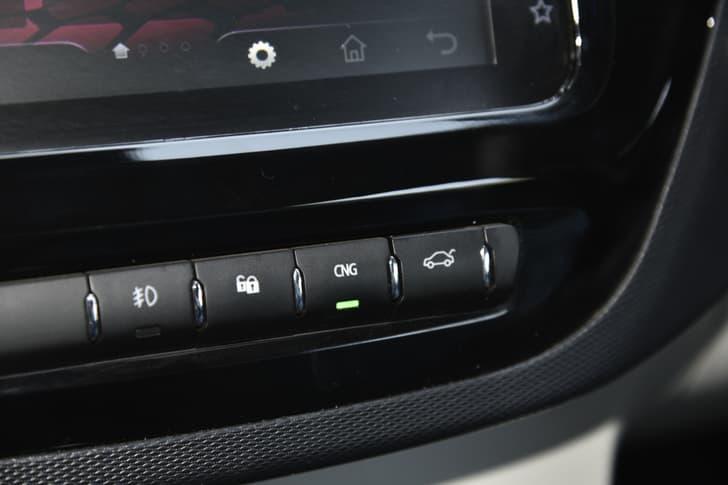
The Tata Tigor variants include 14 options spread across five trims – XM, XT, XZ, XZ+ and XZ+ Lux. Tata offers the Tigor in 2 engine options: 1.2 petrol (5MT and 5AMT) and 1.2 CNG (5MT and 5AMT).
Tata Tigor mileage ranges between 28.06km/kg for the AMT, and 26.49km/kg for the CNG variants and between 19.28kmpl-16.6kmpl, for the petrol versions.
Key Highlights of Tata Tigor
- The Tigor is the only Tata sedan currently on sale in India.
- Tigor car price makes it the most affordable compact sedan.
- Tigor car is available with petrol and CNG engine options.
- Tata Tigor safety rating is 4 stars by Global NCAP
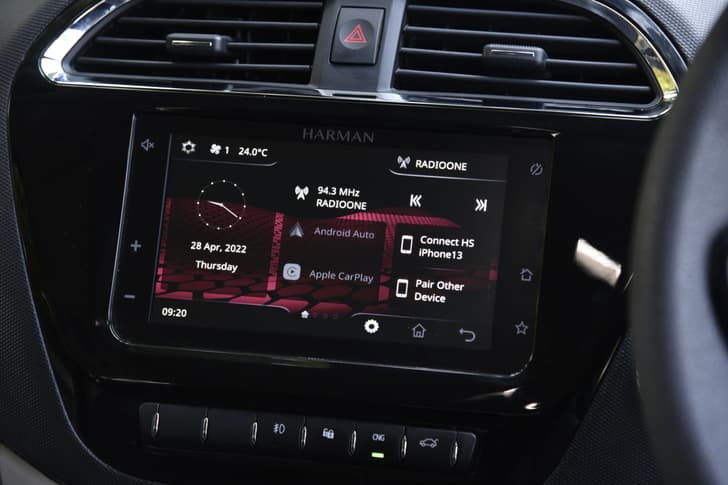
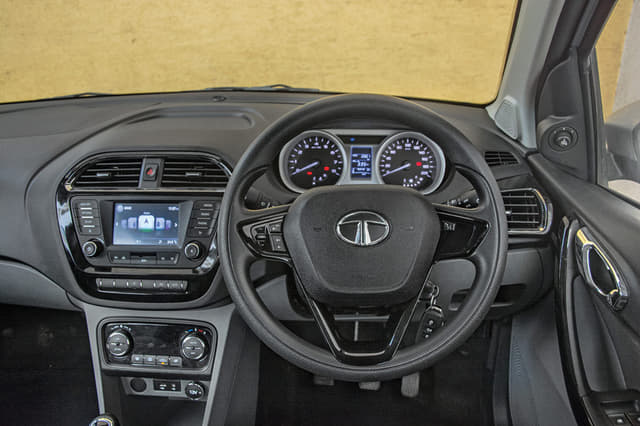
- Tata Tigor features include a 10.25-inch infotainment touchscreen, 360-degree camera, wireless Android Auto and Apple CarPlay, and a 4-inch digital instrument display.
Tata Tigor Interior and Exterior
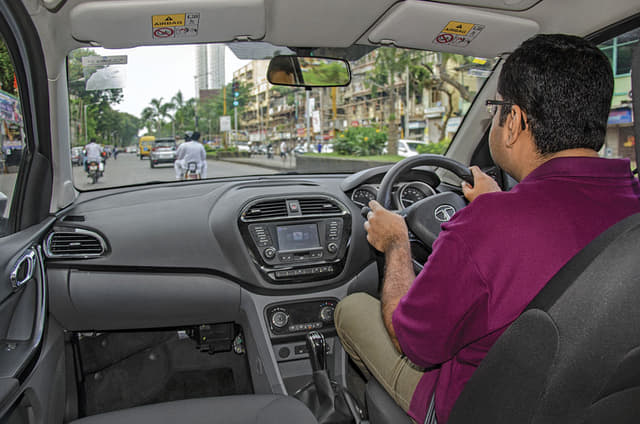
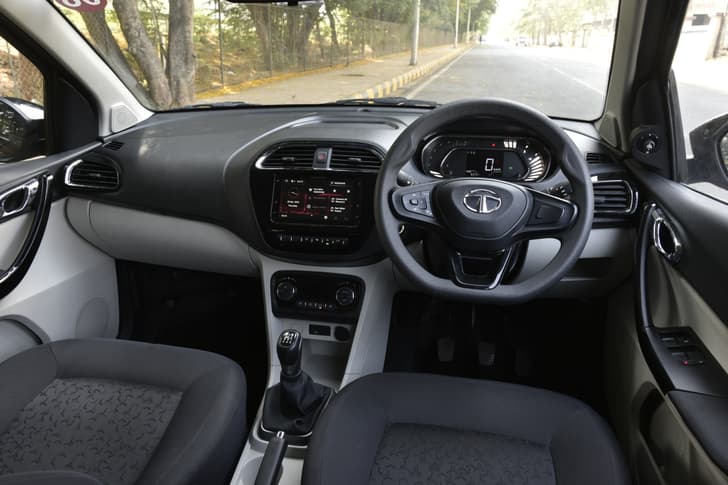
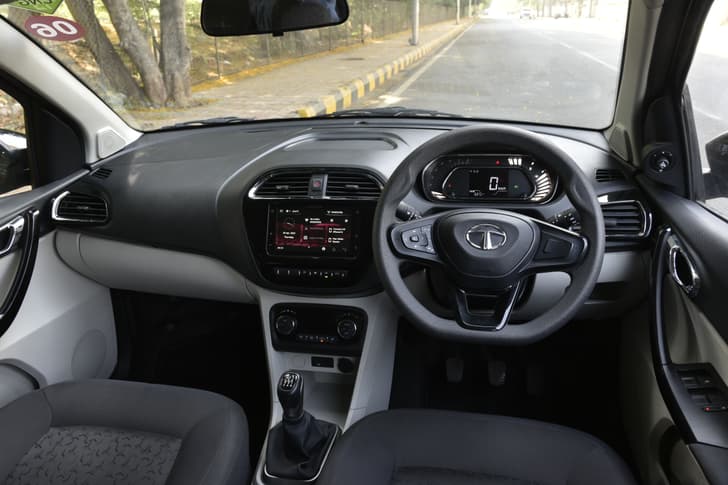
Tata Tigor Interior includes a cabin with a dual-tone brown and grey theme. Tata Tigor top model CNG XZ+ AMT gets fabric seats with individual front armrests, 4-inch digital instrument cluster, automatic climate control and leatherette wrapped steering wheel.
Tata Tigor offers a 360 degree camera hill-hold control, automatic wipers and headlights, dual front airbags, and ESP.
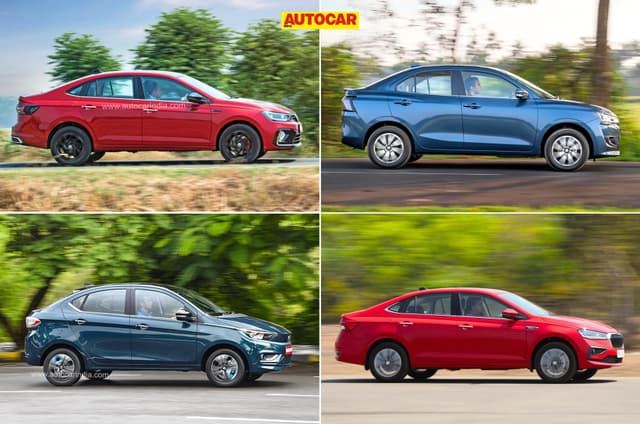
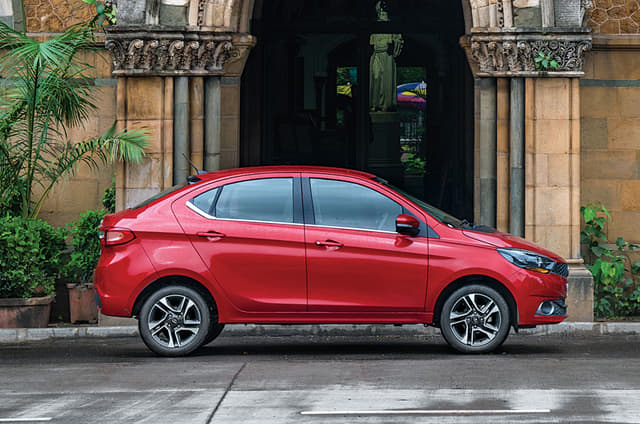
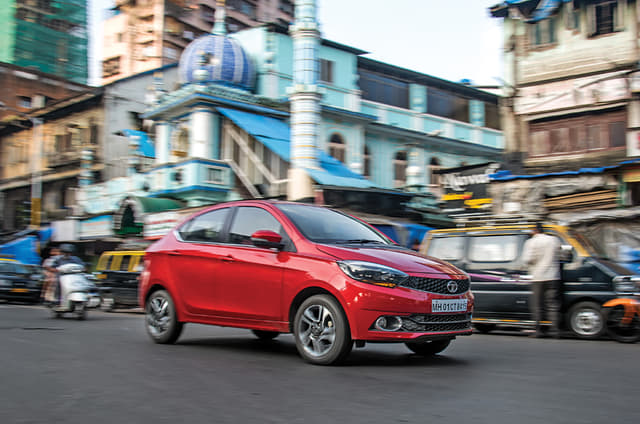
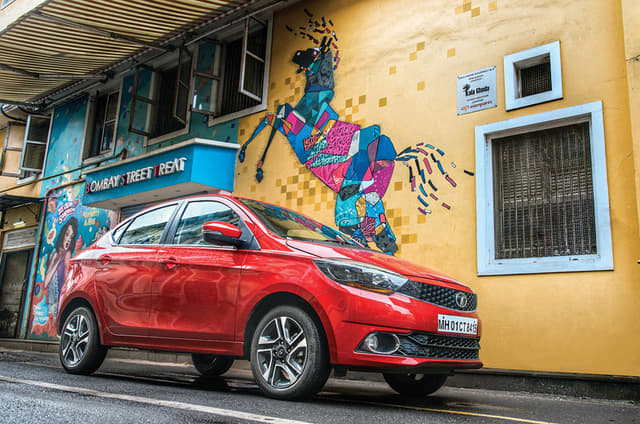
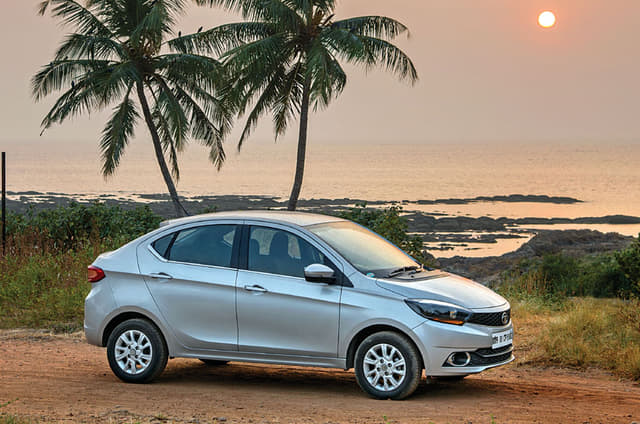
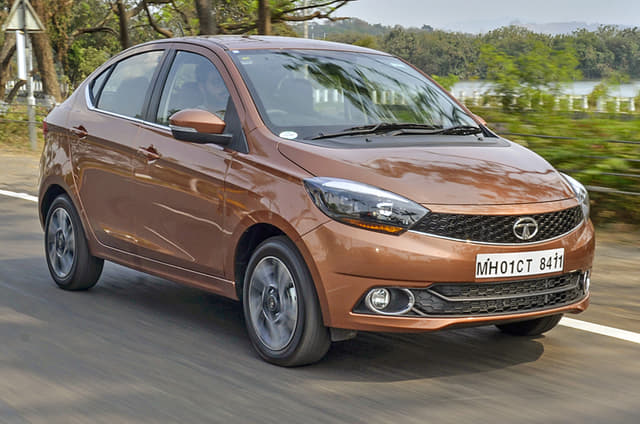
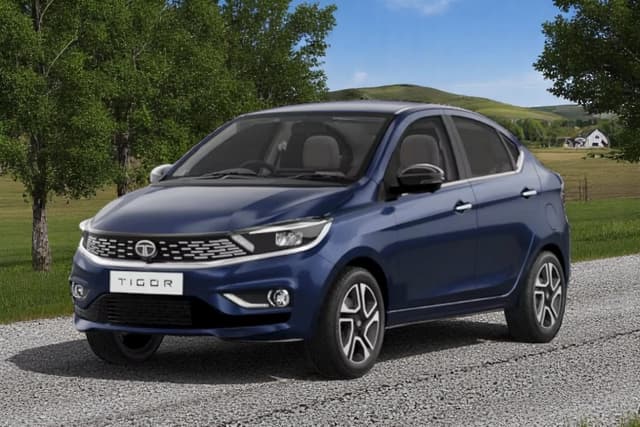
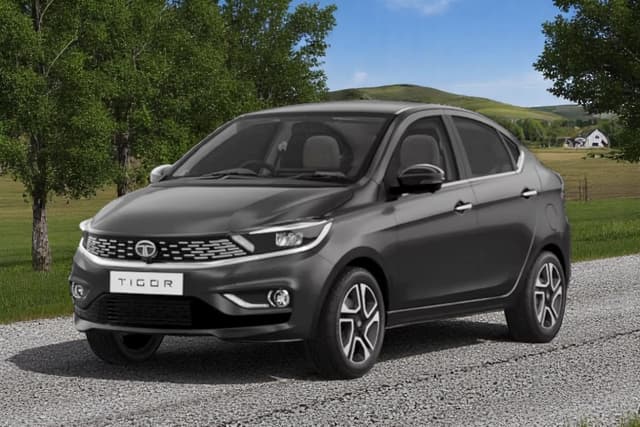
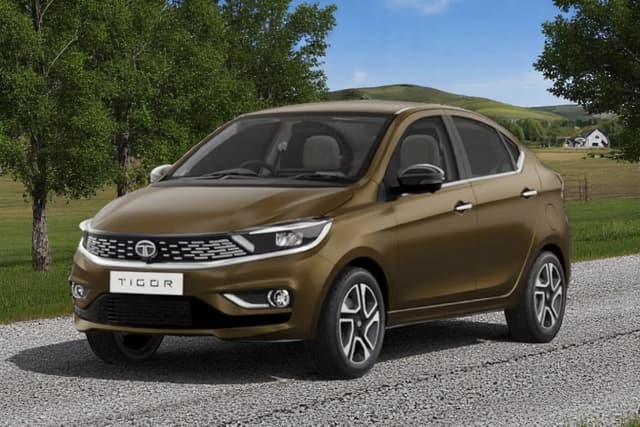
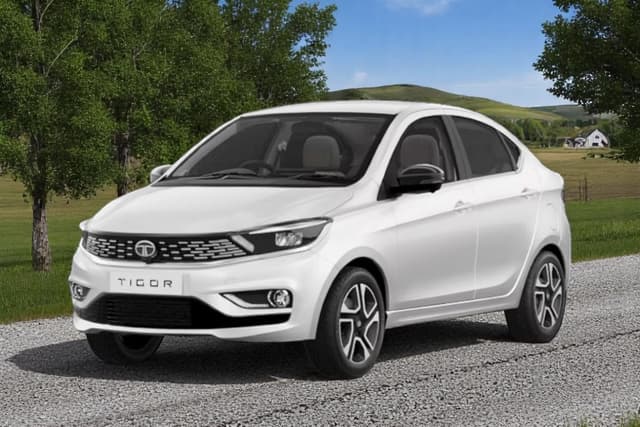
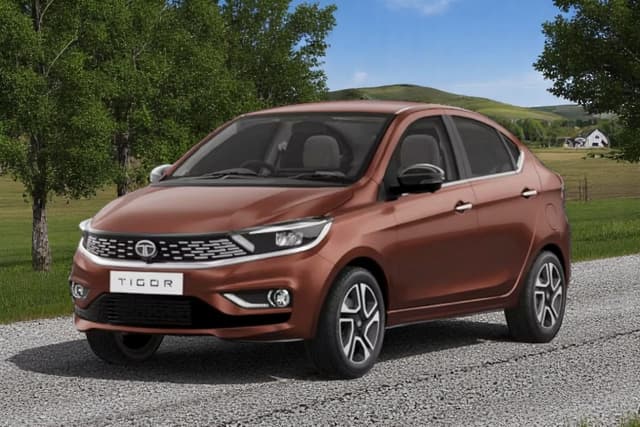
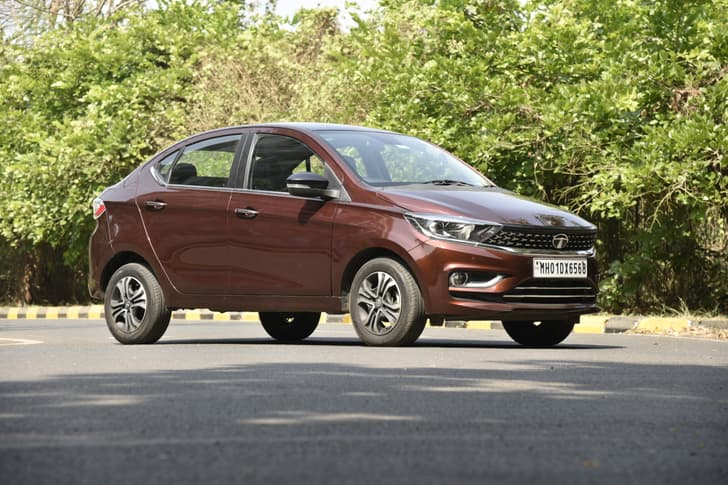
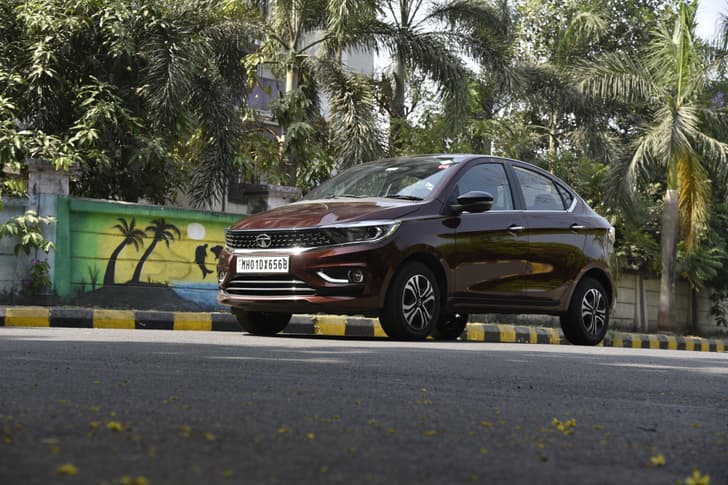
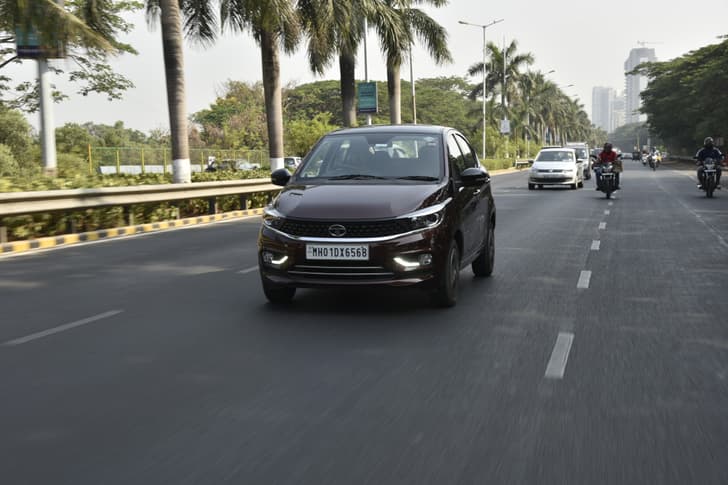
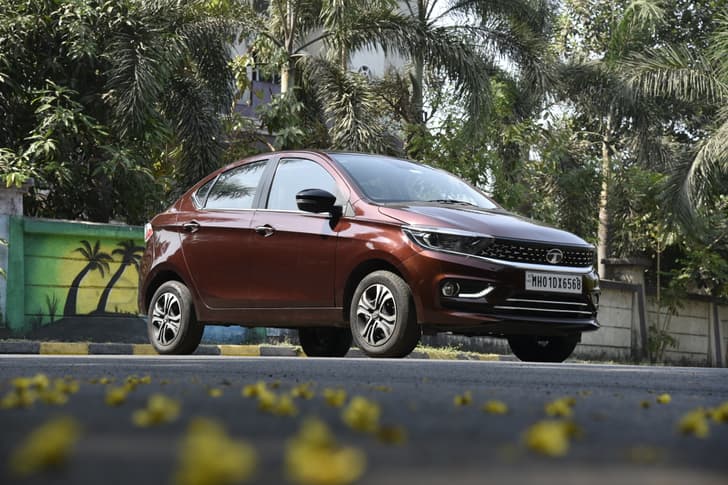
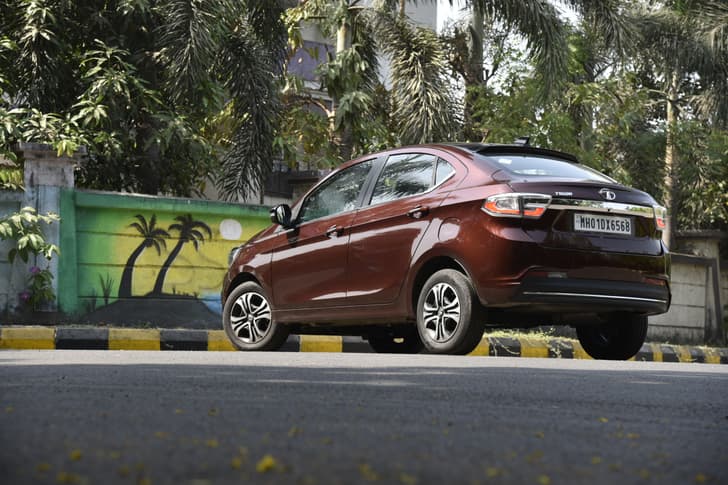
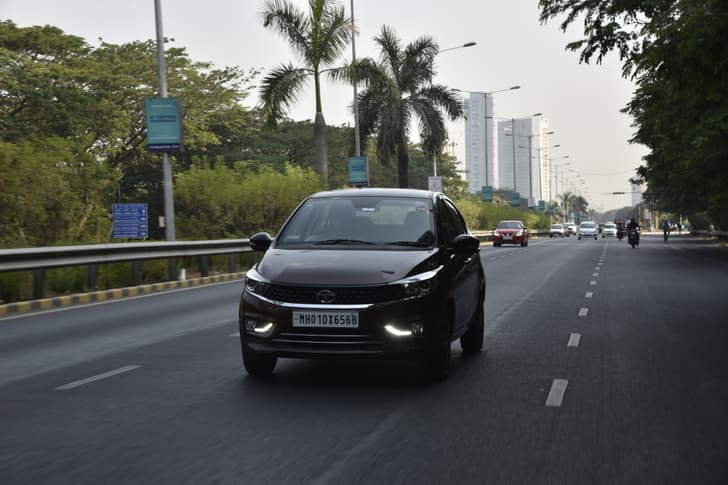
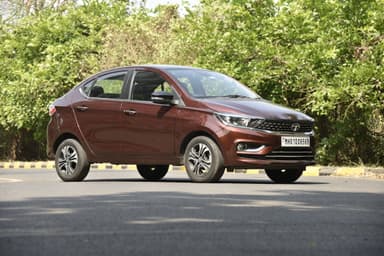
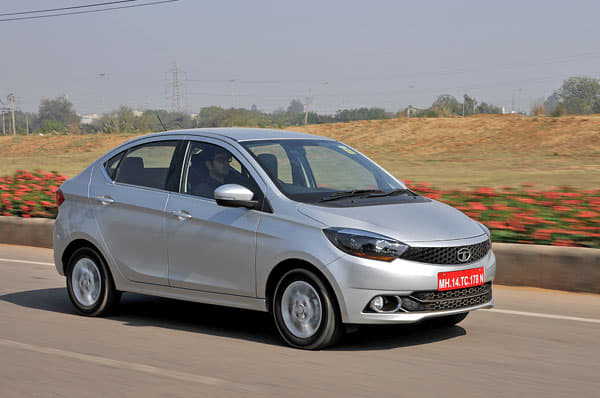
The Tata Tigor exterior looks like the smaller Tiago hatchback and the Altroz, but with subtle changes. It features LED headlights and tail-lights, 15-inch dual-tone alloys wheels, a body-coloured boot spoiler and shark fin antenna. There is also ‘TIGOR’ lettering on the boot, along with a chrome band connecting the tail-lights; chrome finish can also be seen on the door handles and on the front grille.
Tata Tigor Safety Features
The Tata Tigor safety rating is 4 star from Global NCAP. It scored 12.52/17 points in adult occupant protection and 34.15/49 points in child occupant protection, showing good safety standards. However, the Tigor was tested under the less stringent Global NCAP testing protocol that was in effect till June 2022.
Tata Tigor safety features include two airbags, ABS with EBD, traction control, and 3-point seatbelts with reminders for all passengers. Also, it offers ESC and ISOFIX anchors for rear outboard seats, brake assist and hill hold control.
Tigor Rivals
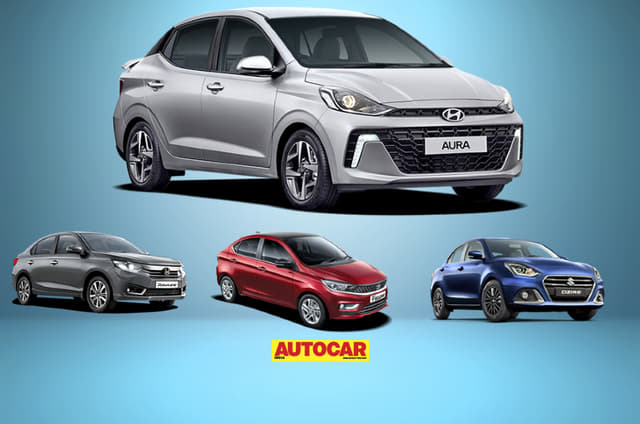
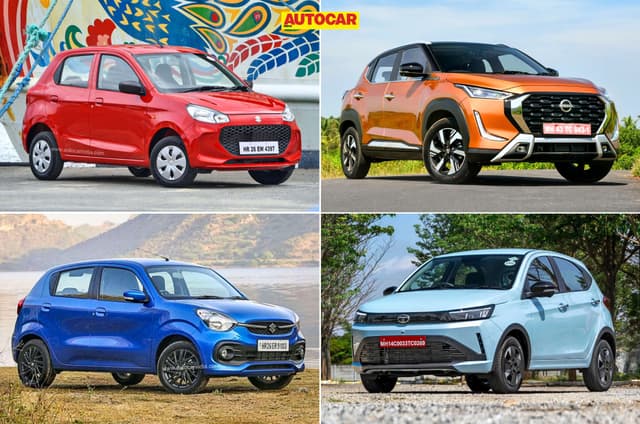
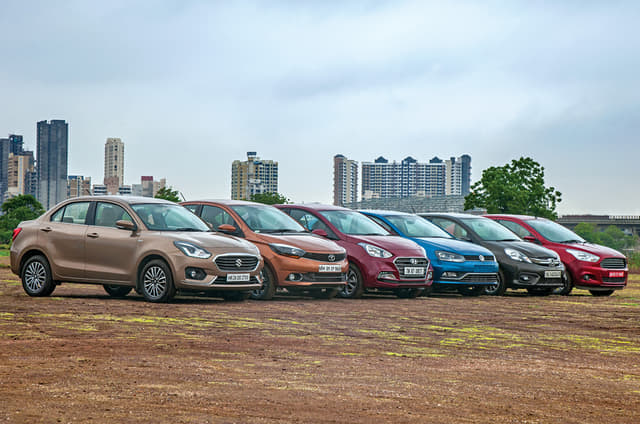
The Tata Tigor competitors include popular compact sedans in India. It includes Maruti Dzire, Hyundai Aura and Honda Amaze.
Tata Tigor Latest Updates
21 March 2026: Tata Tigor price to increase by 0.5 percent from April 1 onwards.
5 March 2026: Tata Tigor gets discounts of up to Rs 40,000 in March 2026.
Tata Tigor Features and specifications
Our Rating | 6 |
Engine | 1199 cc |
Fuel Type | CNG, Petrol |
Transmission | Manual, AMT |
Seats | 5 |
Body Style | Sedan |
Doors | 4 |
Max Power | 86 hp at 6000 rpm |
Max Torque | 113 Nm at 3300 rpm |
Warranty Distance | 100000 km |
Warranty Duration | 3 Years |
| Engine Type | |
| Engine Displacement | 1199 cc |
| Number of Cylinders | 3 |
| Engine Installation | Front |
| Fuel Supply System | MPFI |
| Emission Standard | Bharat Stage VI |
| Auto Start/Stop | No |
| Fuel Tank Capacity | 35 litres |
| Front Suspension Type | Independent, MacPherson Strut |
| Front Springs | Coil Springs |
| Rear Suspension Type | Non-independent, Torsion Beam |
| Rear Springs | Coil Springs |
| Length | 3995 mm |
| Width | 1677 mm |
| Height | 1532 mm |
| Wheelbase | 2450 mm |
| Power Windows | Front and Rear |
| Bluetooth Connectivity | |
| Cabin Boot Access | |
| Cooled Glovebox |
| Crash Test Rating | 4 |
| Airbags | 2 |
| Curtain Airbag | |
| Dashcam |
| Body Coloured Bumpers | |
| Antenna | Shark Fin |
| Cornering Headlights | |
| Follow Me Home Headlamps |
| Speedometer | Digital |
| Tachometer | Digital |
| Trip Meter | |
| Average Fuel Consumption |
| Audio System | |
| Branded Music System | |
| CD Player | |
| Speakers | 8 |
| Alexa Compatibility | |
| Car Light Flashing & Honking via App | |
| Check Vehicle Status via App | |
| Emergency Call Button |
Tata Tigor price & variants
The Tata Tigor price starts at ₹5.60 lakh for the base Petrol XM MT variant and goes up to ₹9.00 lakh for the top CNG XZ+ AMT variant (ex-showroom). The Tigor is available in five variants – XM, XT, XZ, XZ+ and XZ+ Lux, with petrol and CNG engine options, as well as manual and AMT gearboxes depending on the variant.
The Tigor is powered by a 1.2-litre three-cylinder petrol engine producing 86hp and 113Nm. The CNG version produces 75.5hp and 96.5Nm and gets the same 1.2-litre engine adapted to run on CNG. Both fuel types can be paired with a 5-speed manual, while the AMT is also available depending on the variant.
XM
The XM is the entry-level Tigor and gets dual airbags, ABS with EBD, rear parking sensors, ESP, ISOFIX mounts, a fully digital instrument cluster, four power windows, height-adjustable driver's seat, manual air conditioning and an 8.89cm infotainment system with four speakers.
XT
The XT adds features such as a larger 7-inch touchscreen infotainment system, reverse parking camera, two tweeters, Apple CarPlay and Android Auto, LED headlamps, LED DRLs, electrically adjustable ORVMs, front armrest and rear centre armrest with cupholders.
XZ
The XZ builds on the XT with equipment including automatic headlamps, rain-sensing wipers, auto-folding ORVMs, cruise control on petrol versions, push-button start/stop, fully automatic temperature control and 15-inch dual-tone wheels on petrol versions.
XZ+
The XZ+ adds a 10.25-inch touchscreen infotainment system, reverse parking camera, wireless Apple CarPlay and Android Auto, push-button start/stop, automatic climate control, automatic headlamps, rain-sensing wipers and cruise control on petrol versions.
XZ+ Lux
The XZ+ Lux is the top-spec Tigor and adds a 360-degree camera, tyre pressure monitoring system, front and rear Type-C charging ports, advanced digital instrument cluster, four tweeters, leather-wrapped steering wheel, cooled glovebox and shark-fin antenna.
Tata Tigor expert review
We like
Value
Comfort
We don't like
Average fuel economy (petrol)
7
The Tata Tigor stands out in the sub-4 m saloon segment with a distinctive sloping roof and fastback-like profile. The recent design refresh enhances its premium appeal with a sharper grille, chrome accents and crisp headlamps, though a thick A-pillar slightly hampers visibility at intersections.
Engineering for both petrol and iCNG remains rooted in simplicity and practicality. The CNG variant retains the same sturdy platform and adds a semi-independent rear suspension with dual path struts and a twist beam to handle the extra weight of the CNG cylinders. This keeps the car confident and composed on urban roads while contributing to a slightly firmer ride.
7
Inside, the Tigor feels spacious and well-finished for its class. The front seats are comfortable with good support, and clever use of textured plastics lifts perceived cabin quality. The sizable 419-litre boot is a strong suit, though in the iCNG the usable cargo space roughly halves to about 205 litres due to the CNG tank, still enough for a couple of soft bags. Access to the spare tyre is awkward in this layout.
Rear passengers enjoy adequate headroom and knee space, making the Tigor a practical choice for city journeys and occasional highway trips. Light steering and a tight turning radius further enhance urban usability.
7
Both petrol and CNG Tigor use Tata’s 1.2-litre three-cylinder Revotron engine tuned for drivability. In petrol form, the engine feels familiar and adequate for daily use, though the lack of outright urge means you’ll work the gearbox to keep momentum alive.
The iCNG version produces slightly lower output (around 73 hp and 95 Nm) yet manages day-to-day performance without a perceptible deficit compared to petrol for typical driving. Engine vibrations are present at idle and under hard acceleration, but refinement is acceptable for the segment and smoothens out on the move.
7
Fuel efficiency is a clear strength of the iCNG. Real-world CNG figures hover around 16.85 km/kg in the city and 25.86 km/kg on the highway, closely matching claimed figures. Running costs on CNG are a fraction of petrol, with cost per kilometre roughly one-third of petrol expenditure. Although the additional weight and shorter gearing temper performance slightly, the trade-off for low operating cost is substantial.
Petrol economy is modest in comparison, averaging around 12.7 kmpl in mixed conditions.
8
The Tigor feels planted and confidence-inspiring in everyday driving. Suspension absorbs urban bumps well, and despite the firmer ride in the CNG due to extra mass and modified suspension, comfort remains acceptable. Steering is light and accurate at lower speeds, adding to city ease, and the car holds itself well on highways for its class.
Braking performance is slightly compromised by the added weight of the CNG setup, showing longer stopping distances than the petrol in panic scenarios.
8
The Tigor’s feature list is competitive for its segment. A touchscreen infotainment system, Harman Kardon audio with excellent sound quality, and practical storage enhance cabin appeal. Safety includes multiple airbags, ABS with EBD and stability aids, and Tata’s robust build adds peace of mind.
7
Priced attractively within the compact sedan segment, the Tigor offers strong value — especially the iCNG for buyers prioritising lower running costs backed by OEM-integrated safety and warranty. While not class-leading on dynamics or tank range versus some rivals, its combination of space, comfort, efficiency and robust package make it a sensible choice for daily commuters and cost-conscious families.
Reviewed by: Saumil Shah
Tata Tigor Official Brochure
Download the complete brochure with specs, features, and variants.
Tata Tigor reviews

Tata Tigor comparison
Tata Tigor news
Tata Tigor Images
Check out the Tata Tigor images in the gallery, which highlight the bold exterior, spacious interior, and boot space available even with the dual-cylinder CNG variant.
Tata Tigor Colours
The Tata Tigor colours come in monotone colour options like Supernova Copper, Meteor Bronze, Arizona Blue, Daytona Grey, and Pristine White.
Inside, the Tata Tigor interior features brown and grey dual-tone styling with black highlights around the AC controls and vents, and the door handles.
Similar Cars to Explore
Tata Tigor FAQs
Yes. The Tigor's spacious rear seat, individual front armrests, large boot and comfortable ride make it well-suited to small families. The sedan body style also helps separate luggage from the passenger compartment.
Higher variants come with features such as a 10.25-inch touchscreen, wireless Android Auto and Apple CarPlay, cruise control, automatic climate control, rain-sensing wipers and a 360-degree camera, giving it a competitive feature list for the segment.
The CNG variant makes sense for buyers with high monthly running because of its lower fuel costs. The petrol version, however, offers better boot usability and slightly stronger perform
If you're planning to buy a Tigor in the coming months, it may be worth waiting for the facelift. It is expected to bring updated styling, a redesigned dashboard, more features and additional safety equipment while retaining the familiar petrol and CNG powertrains.
No. The facelift is expected to retain the existing 1.2-litre petrol and CNG powertrains, along with the choice of a 5-speed manual and 5-speed AMT gearbox.
The facelifted Tigor is expected to borrow several updates from the new Tiago, including a redesigned dashboard, freestanding touchscreen, revised steering wheel, semi-digital instrument cluster, rear AC vents, fast-charging USB ports and six airbags as standard.
Questions you may find useful
Looking at a Tigor EV as a second car and genuinely worried about battery degradation numbers after 5-6 years. Is this still a valid concern or outdated information at this point?
Took my Tigor in for its first service today, in and out in under 90 minutes with a clear breakdown of what was actually done.
What's the problem with Tigor petrol AMT, is it good for long run? Why it's not seen much on road? I haven't driven though Tata's AMTs, how laggy it's compared to Hyundai's AMTs or MS AMTs? Given that, I drive nios AMT and never feel any such lag and am looking for another AMT for my personal use. Kindly share if Magnite AMT can also be considered or not good. Tentative monthly running with this secondary vehicle is expected to be around 500km.
I am upgrading from a Tata Tigor and am confused between the Mahindra 3XO AX5L petrol and the Tata Nexon DCA. My usage is primarily city driving, averaging around 700 km per month. Could you please help me choose the better option for my needs?
Mostly city driving at about 700 km a month and moving up from a Tata Tigor - in that use, the Mahindra XUV 3XO AX5 L petrol automatic is the stronger fit. It's automatic is a torque-converter type, which means it changes gears smoothly and feels calm at very low speeds. The driving position is higher than your Tigor, visibility is good, and the AX5 L gives you easy-to-use screens and parking aids you will want every day.The Tata Nexon DCA is still a solid choice. It has a roomier back seat and a bigger boot. But its DCA gearbox, which is a dual-clutch that shifts very quickly when you speed up, can feel a bit hesitant when you inch forward in heavy traffic. It is not a deal-breaker, but for a primarily city user like you, the Mahindra’s calmer behaviour at low speed matters more.Two trade-offs with the 3XO to keep in mind: the back seat and boot are not as spacious as the Nexon’s. Overall, for mostly city use, the XUV 3XO AX5 L petrol lines up best with what you described.
Hi Autocar Team, first of all, I would like to thank you for your excellent service. I own a Tata Tigor CNG AMT, purchased in 2024. At the time of purchase, my expected usage was quite high, which is why I chose this model. However, due to unforeseen circumstances, my usage has now reduced significantly to around 50 km per month or even less. The car has been driven approximately 12,000 km so far, mainly due to a few trips and family events. There are also periods when the car is not used at all for 4–6 weeks continuously. I am concerned about whether such low and irregular usage could negatively impact the car’s long-term health, especially since I plan to keep it for many years. Could you please advise: Whether keeping the car with such low usage is advisable What precautions or maintenance steps I should follow Or whether it would be better to consider selling the car under these circumstances
For your situation, there is no need to worry or consider selling the car. Your current usage of around 50 km per month, even with 4-6 weeks of no driving, is not harmful as long as you follow some basic precautions.Modern cars like your Tata Tigor CNG AMT can handle low usage, but they do need to be run periodically to stay healthy. The main things affected by long idle periods are the battery, tyres and fluids, not the engine itself.You should make it a point to drive the car once every 2-3 weeks for about 15-20 minutes, and occasionally run it on petrol as well, not just CNG. It is also important to stick to annual servicing, even if the running is very low, and keep an eye on battery condition and tyre pressure.There is no real downside to keeping the car, apart from following basic maintenance. Selling it now does not make financial sense either, since the major depreciation has already happened and replacing it will only add more cost.Overall, it is perfectly fine to continue using your current car, and with simple care, it will remain reliable for many years.
Upcoming Cars


Tata Cars

Trending Cars


Latest Cars