
Last Updated on: 26 May 2026
Tata Harrier EV
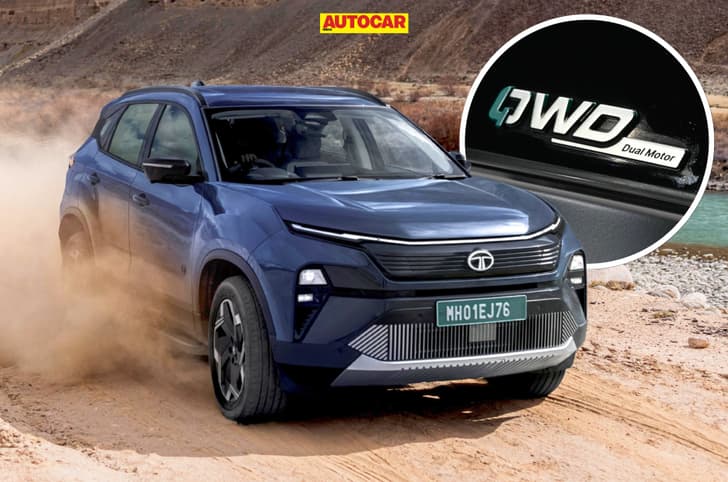
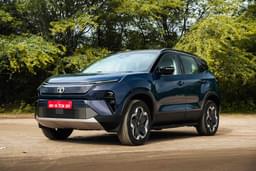
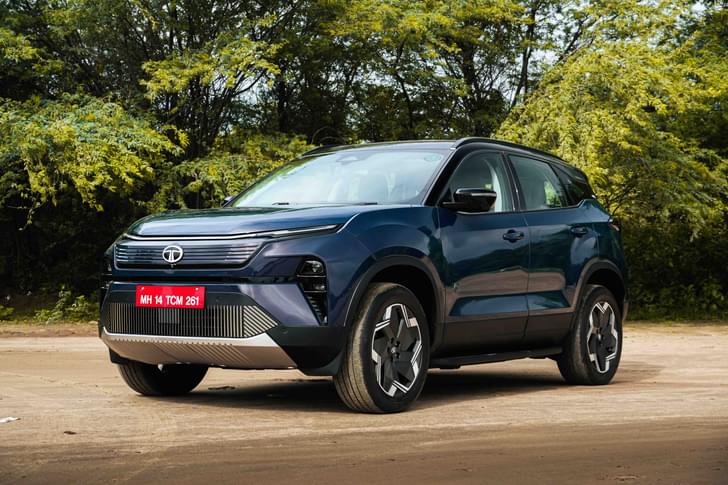
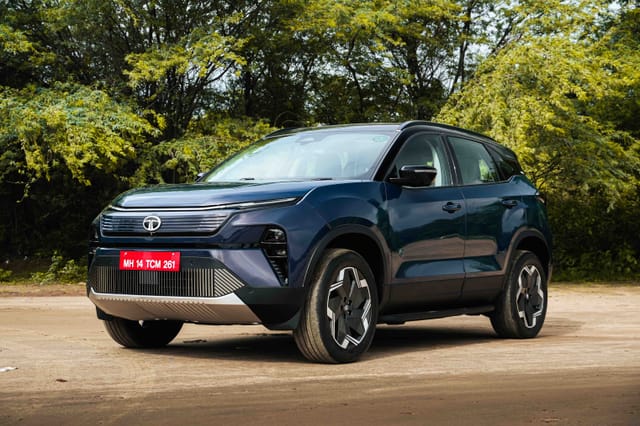
The Tata Harrier EV is the manufacturer’s flagship eSUV, with ex showroom prices starting from Rs 21.49 lakh for the entry-level Adventure 65 trim. Its top-end Empowered 75 AWD trim is priced at Rs 28.99 lakh.
The Tata Harrier EV variants include 7 options, such as Adventure 65, Adventure S 65, Fearless + 65, Fearless + 75, Fearless + 75 AWD, Empowered 75, Empowered 75 AWD. It offers a choice between a 55kWh and a 65kWh battery pack, with an option between both rear-wheel-drive (RWD) and all-wheel-drive (AWD) setups. It is one of the most affordable EVs to get a dual-motor AWD system.
Harrier EV range depends on the chosen powertrain option. The 65kWh battery pack is available only with RWD and has a claimed range of 538km. The 75kWh battery pack comes with both RWD and AWD setups, with a claimed range of 627km and 622km, respectively.
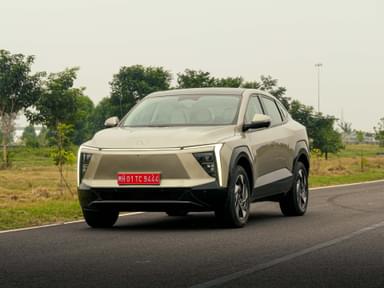
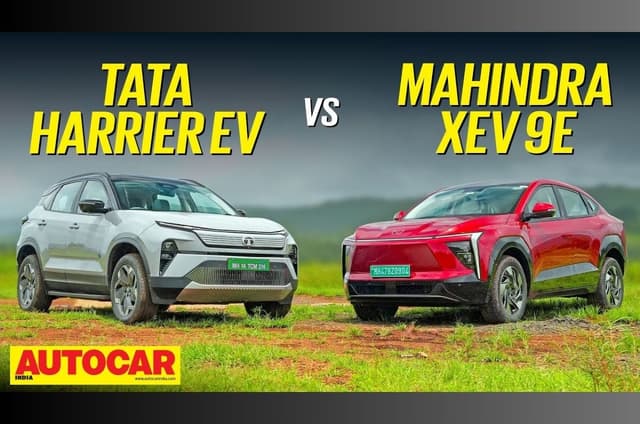
The Tata Harrier EV rivals include the Mahindra XEV 9e and BYD Atto 3.
Key Highlights Of Tata Harrier EV
- It is the most premium Tata EV on sale, with ex showroom prices ranging between Rs 21.49 lakh and Rs 28.99 lakh.
- Offers a choice between a 65kWh and 75kWh battery pack, with a claimed range of up to 627km.
- Available with a 238hp rear motor and a 158hp front motor.
- The 65kWh battery pack is offered with only the RWD setup, but the 75kWh option is available with both RWD and AWD choices.
- Has been crash tested by Bharat NCAP, where it scored a 5-star safety rating for both adult and child occupants.
- It is one of the safest cars to be tested by Bharat NCAP, alongside the Mahindra XEV 9e.
- Gets a lot of modern-day features, including Adaptive cruise control, Ambient interior lighting, Ventilated seats, Sunroof, Blind spot monitor.
Tata Harrier EV Latest Updates
21 March 2026: Tata launches a more affordable AWD variant of Harrier EV, the Fearless+ QWD 75, at Rs 26.49 lakh (ex-showroom).
17 February 2026: Harrier EV discounts climb to Rs 1.5 lakh in February 2026; benefits apply to both 2025 and 2026 models.
Tata Harrier EV Features and specifications
Our Rating | 8 |
Battery Range | 538 km - 627 km |
Fuel Type | Electric |
Transmission | Auto |
Seats | 5 |
Body Style | SUV |
Doors | 5 |
Claimed Electric Motor Range | 622 km |
Warranty Distance | 125000 km |
Warranty Duration | 3 Years |
| Fuel Type/ Propulsion | Electric |
| Number of Motors | 2 |
| Pure Electric Driving Mode | Yes |
| Motor Type | Induction Motor (Front),Permanent Magnet Synchronous Motor (Rear) |
| Battery Capacity | 75 kWh |
| Claimed Range | 622 km |
| Terrain Modes | Yes |
| Real World Highway Range (EV) | 393 km |
| Front Brakes | Discs |
| Rear Brakes | Discs |
| Type of Power Assist | Electric |
| Steering Adjust | Tilt and Telescopic |
| Length | 4607 mm |
| Chassis Type | Monocoque |
| Width | 2132 mm |
| Height | 1740 mm |
| Power Windows | Front and Rear |
| Rear Parcel Tray | |
| Front Seatback Pockets | |
| Headlight and Ignition on Reminder |
| Crash Test Rating | 5 |
| Pretensioners & Force Limiter Seatbelts | |
| Rear Cross Traffic Collision Avoidance | |
| Rear Cross Traffic Alert |
| Body Coloured Bumpers | |
| Charging Indicator On Light Bar | |
| Outside rear view mirror (ORVM) | |
| ORVM turn indicators |
| Speedometer | Digital |
| Tachometer | |
| Trip Meter | |
| Average Fuel Consumption |
| Audio System | |
| CD Player | |
| Branded Music System | JBL |
| USB Input |
| Find My Car | |
| Remote AC On / Off via App | |
| Service Reminder Via App | |
| Anti Theft Immobilisation |
Tata Harrier EV price & variants
Ex showroom prices of the Tata Harrier EV start from Rs 21.49 lakh and go up to 28.99 lakh. In India, Harrier EV on road prices range between Rs 22.83 lakh and Rs 30.74 lakh.
- The Adventure and Fearless+ variants are available with 65kWh battery pack.
- The Fearless+ is also available with the larger 75kWh battery pack, alongside the top-spec Empowered variant.
- The Empowered is the only variant to come with an AWD option, with the rest featuring a RWD setup.
Tata Harrier EV Official Brochure
Download the complete brochure with specs, features, and variants.
Tata Harrier EV expert review
7.0
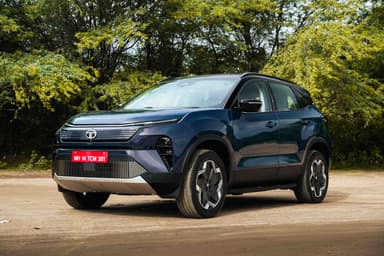
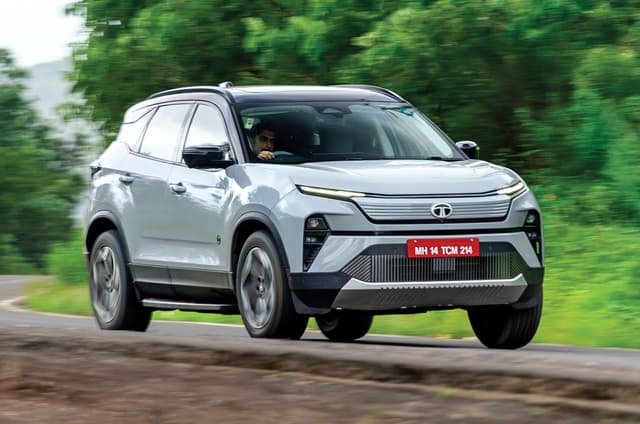
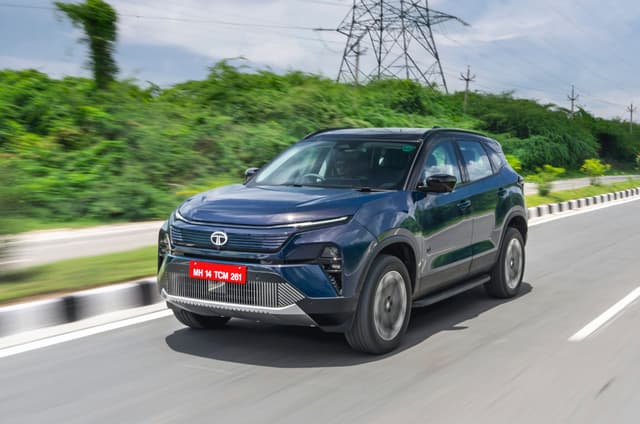
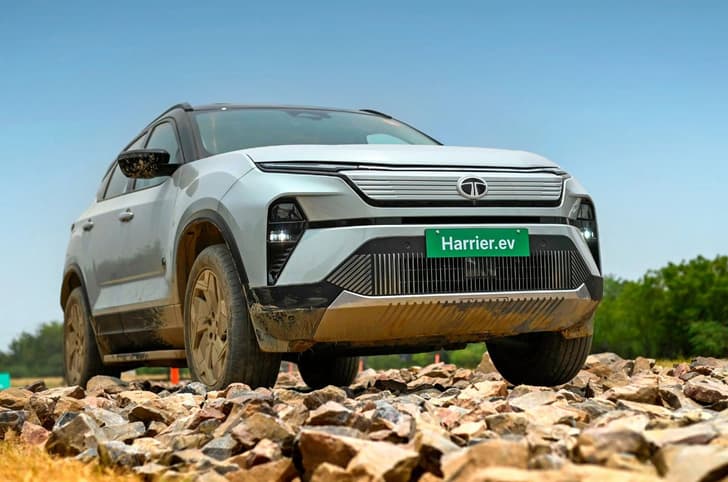
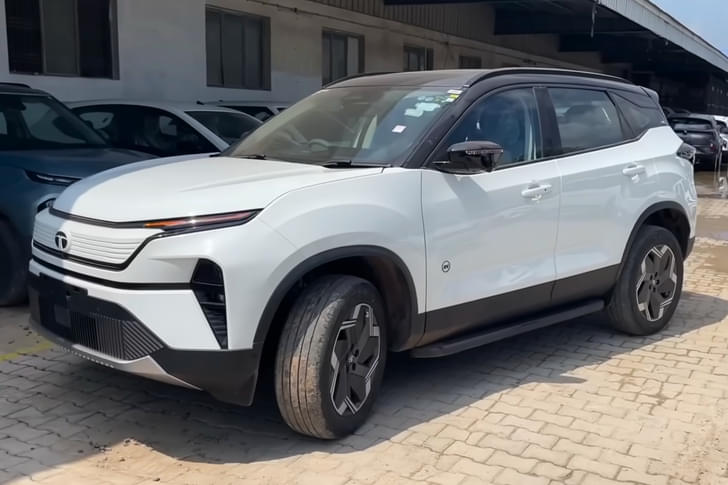
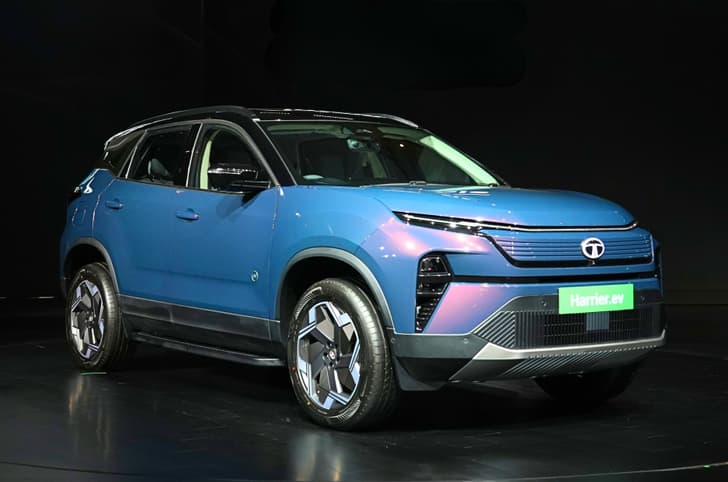
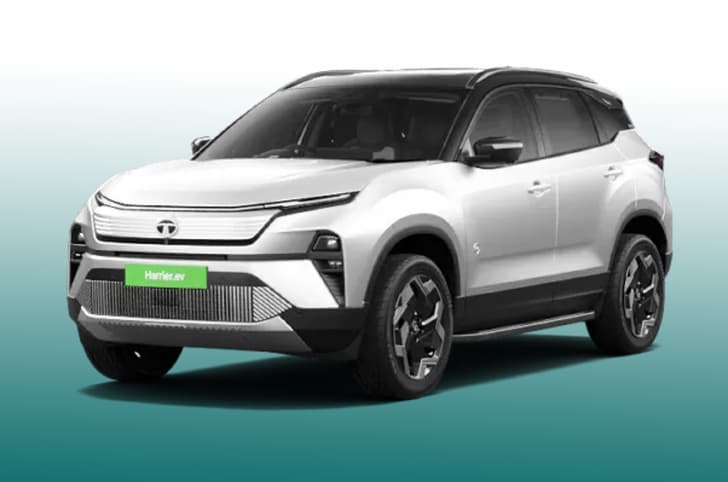
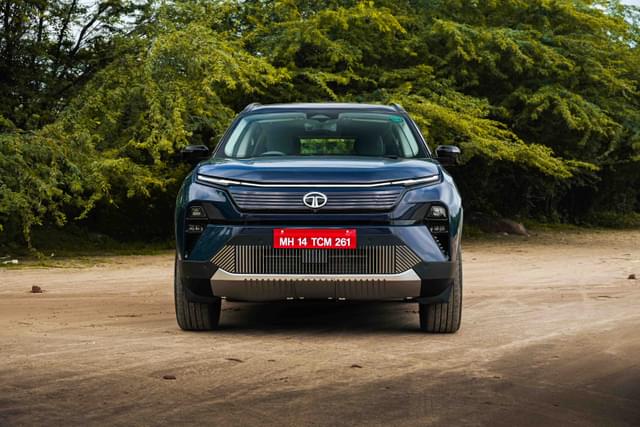
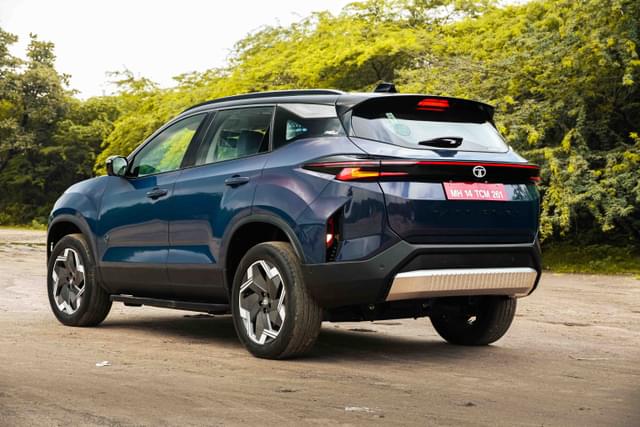
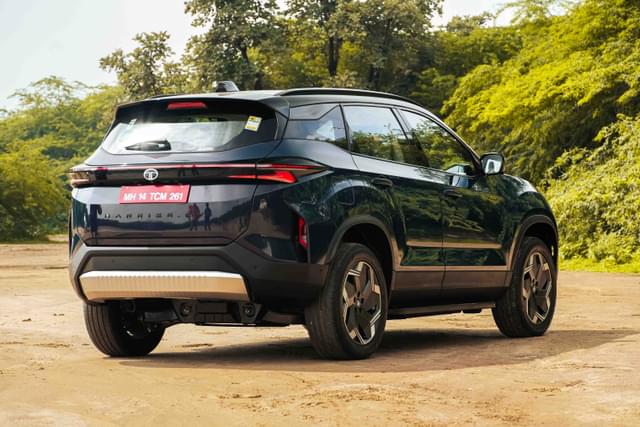
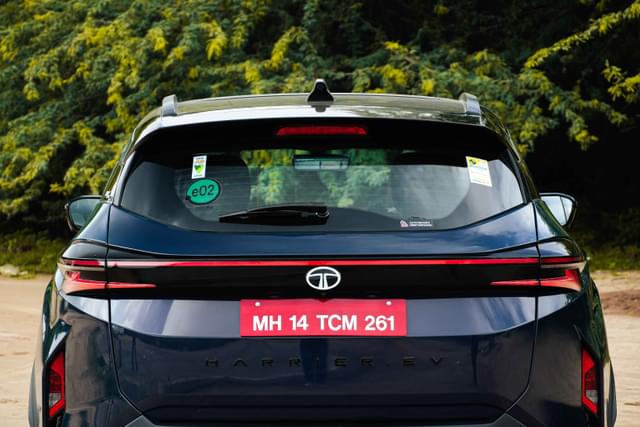
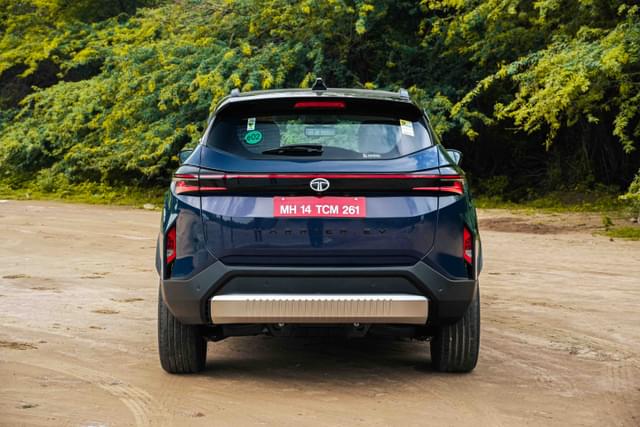
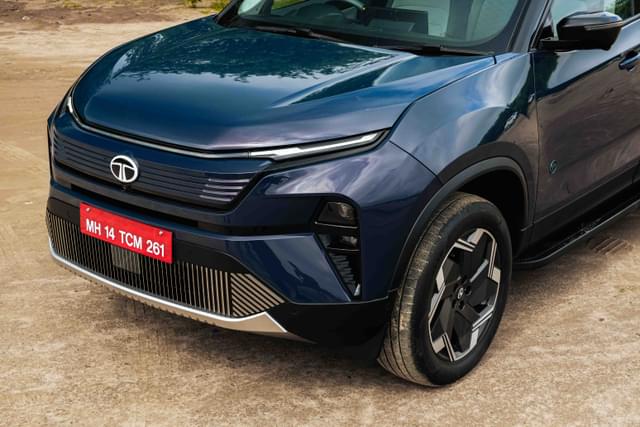
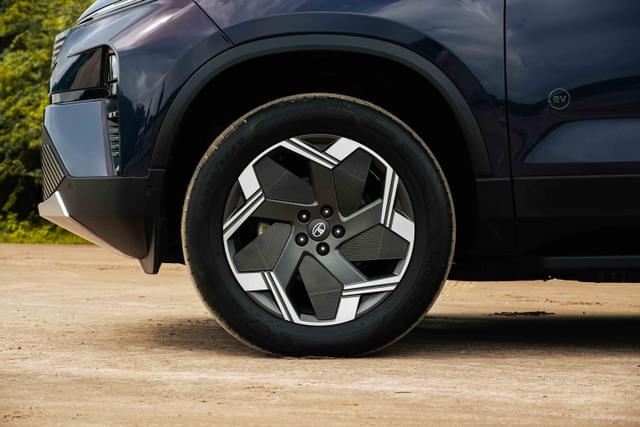
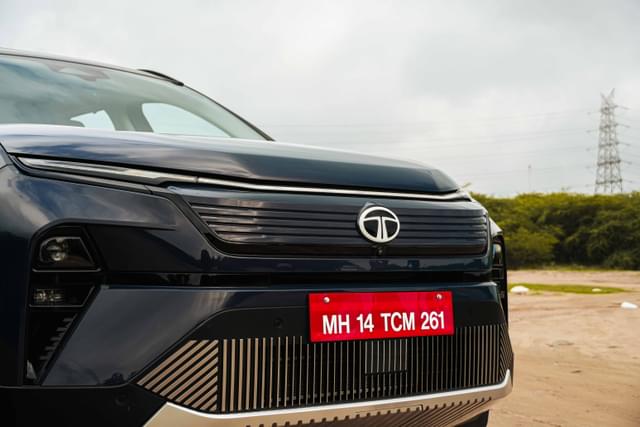
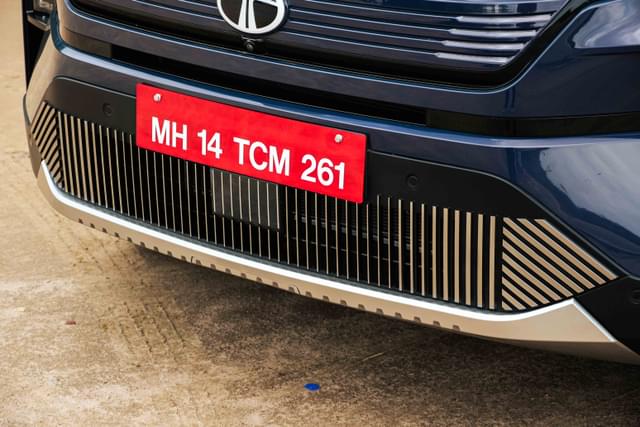
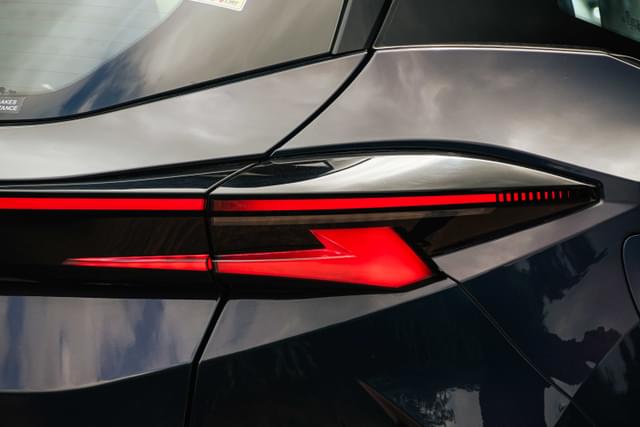
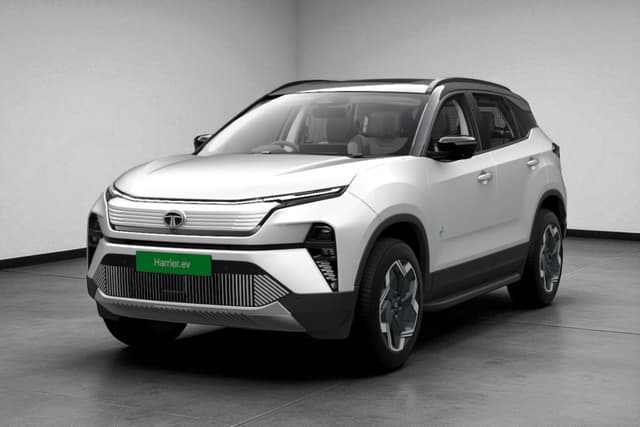
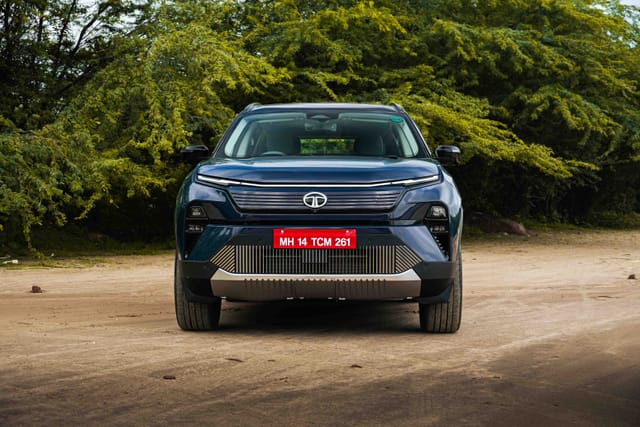
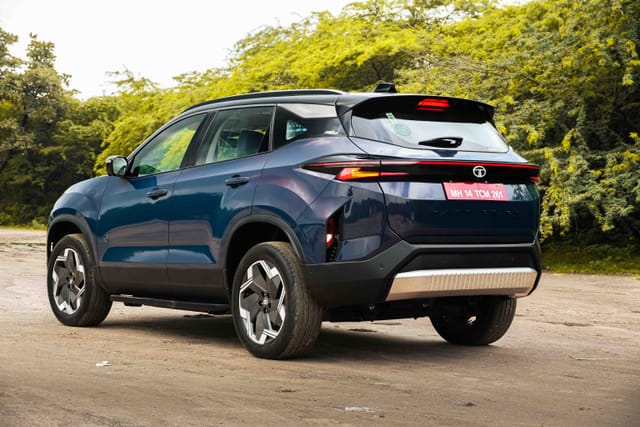
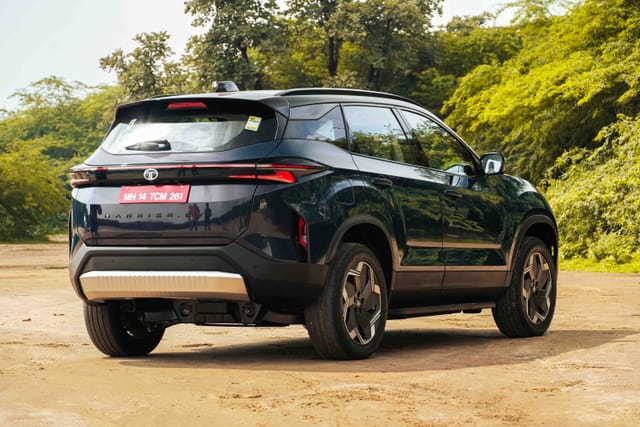
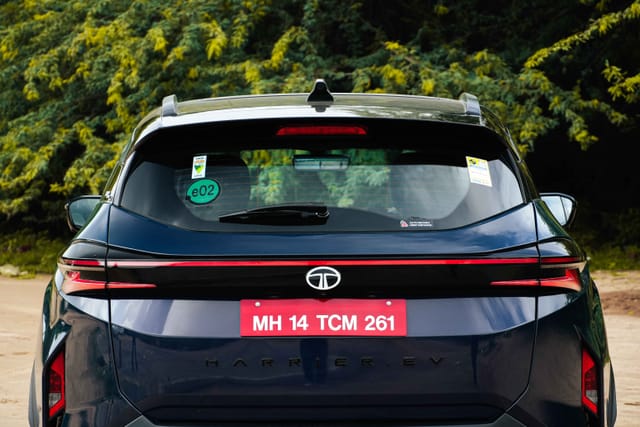
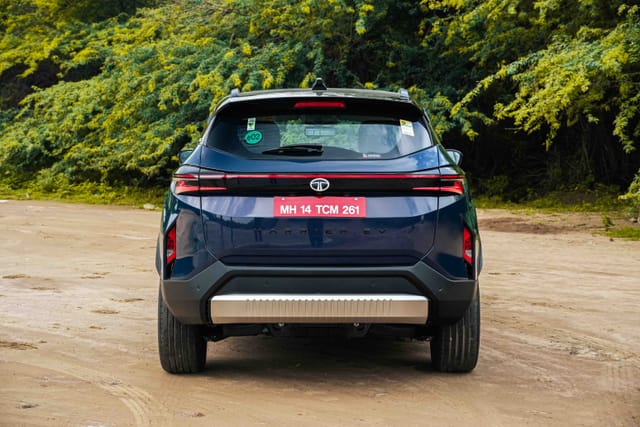
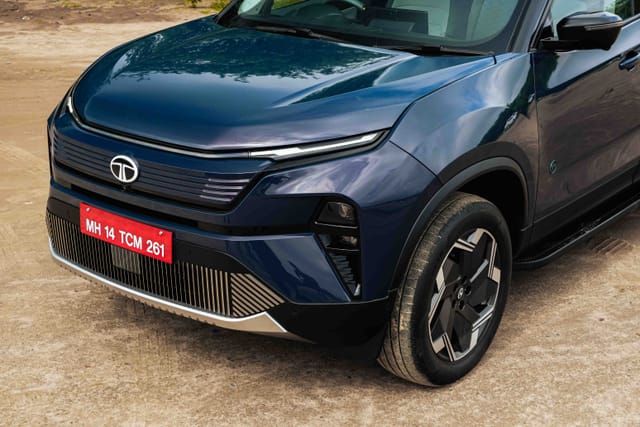
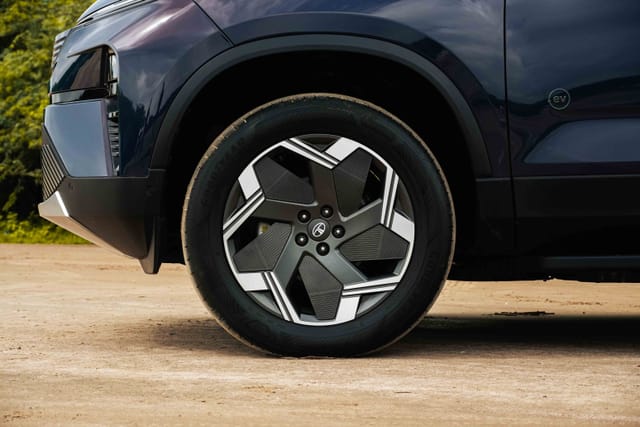
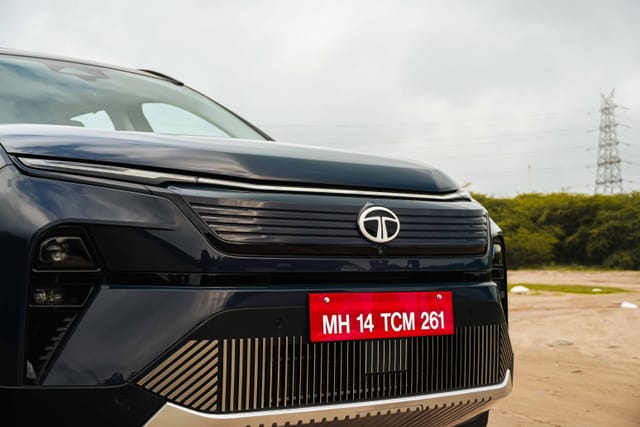
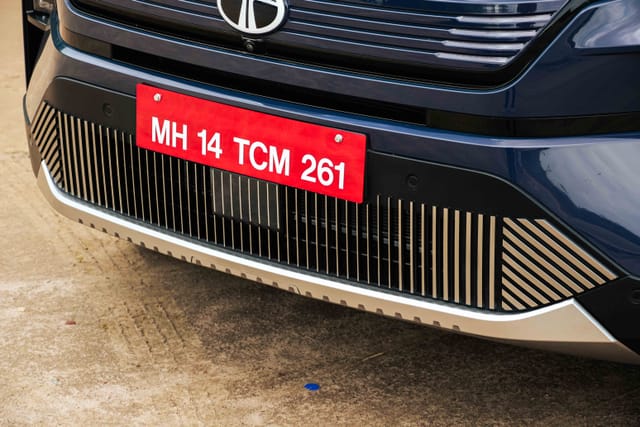
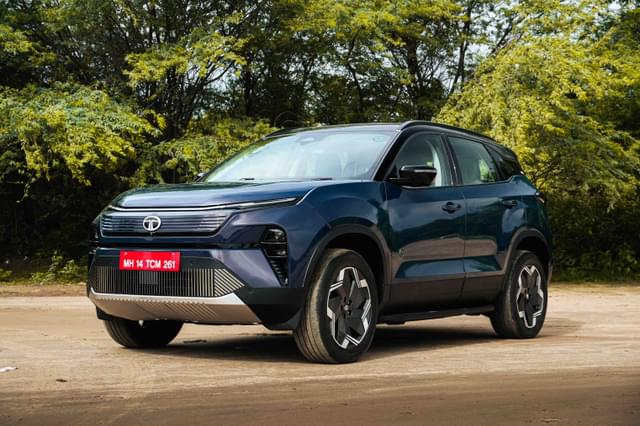
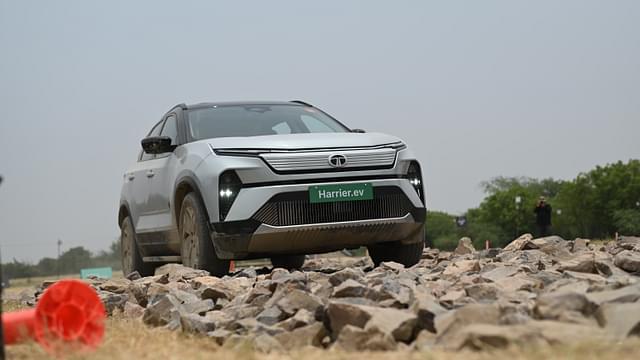
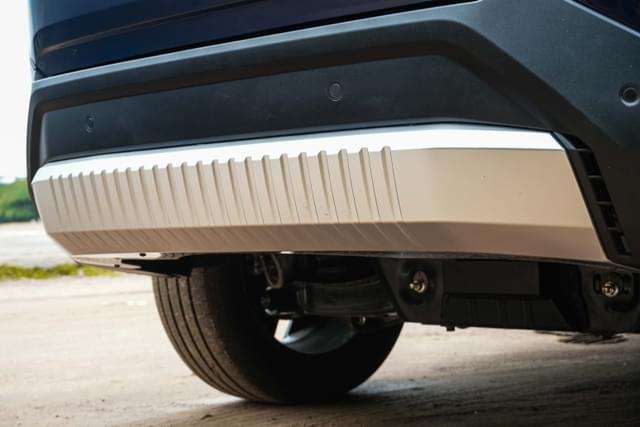
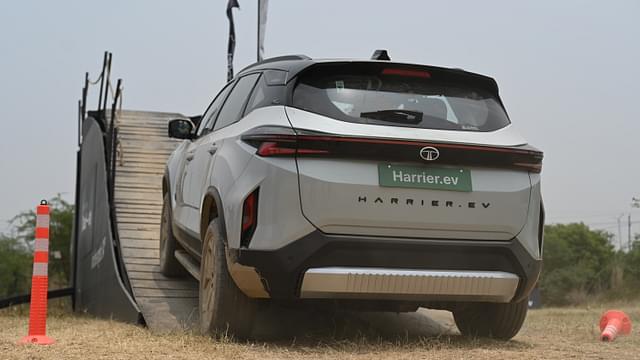
Compared to the ICE Harrier, the EV only gets subtle styling tweaks—a closed-off grille with strakes, revised bumper, aero-optimised 19-inch alloys, and an EV badge. At the rear, it’s just the missing tailpipe and EV badge that set it apart. While still a handsome SUV with strong presence, it lacks the futuristic flair of modern EVs.
The Harrier EV isn’t a born EV but a massive ICE-to-EV conversion. Though it shares its top hat with the ICE Harrier, the Omega Arc platform has been re-engineered with a flat floor and Tata’s new electrical architecture, t.idal. Lower variants are RWD with a permanent magnet motor; higher ones get AWD with a front-mounted induction motor, making it Tata’s first 4x4 since the Hexa and Safari Storme.
8.0
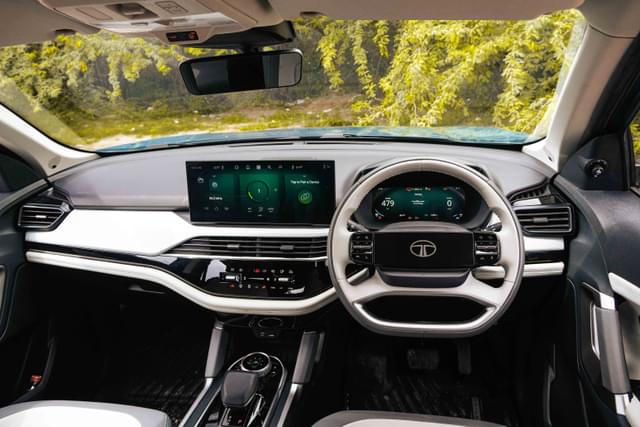
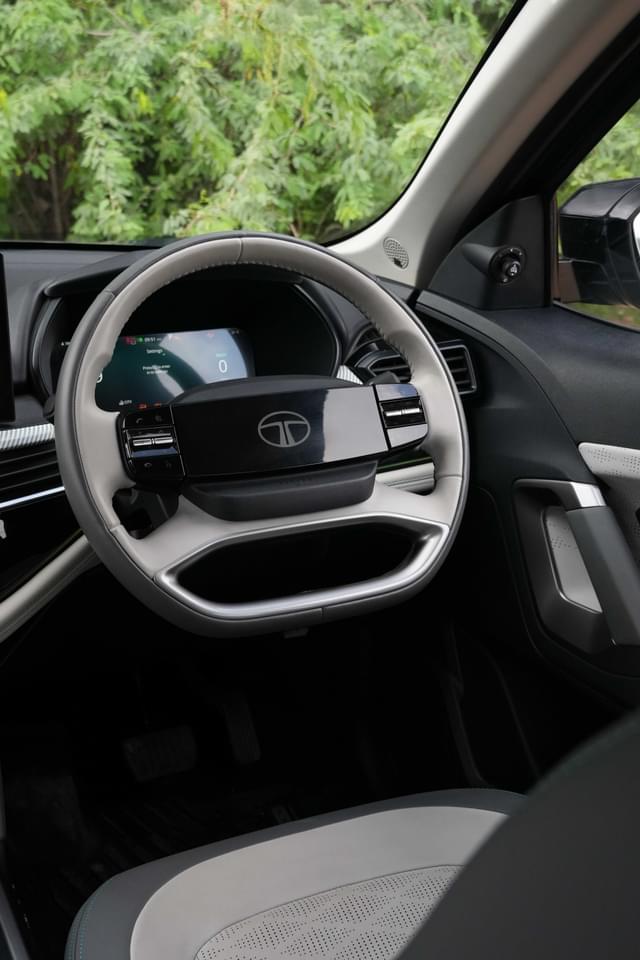
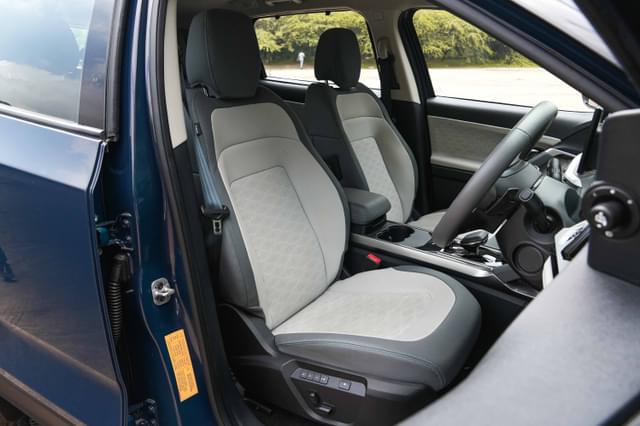
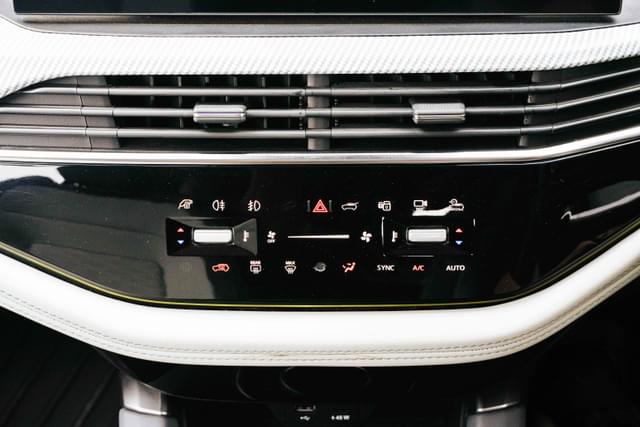
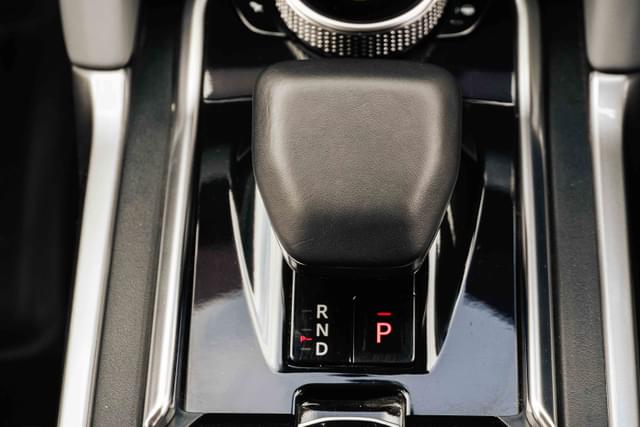
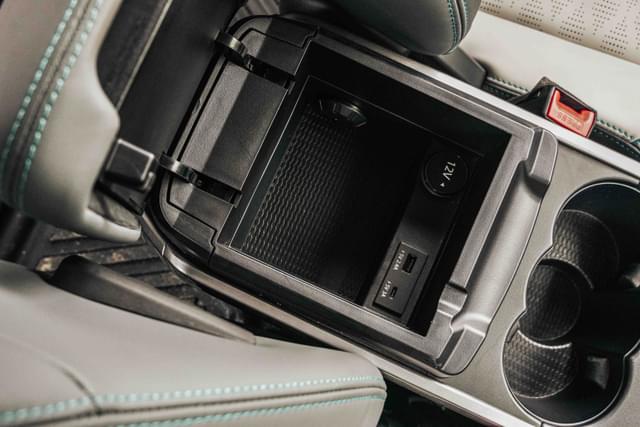
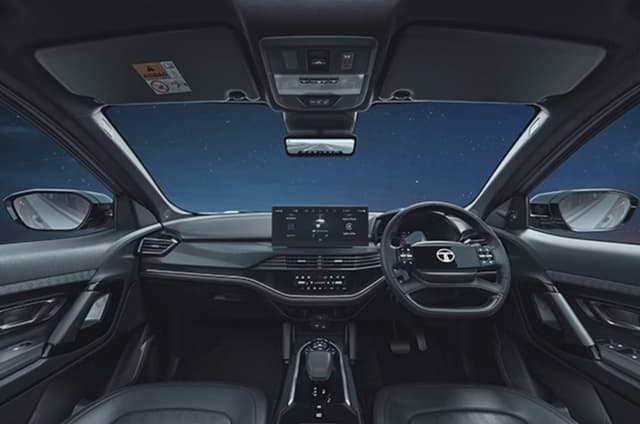
The cabin remains familiar—same dashboard, steering, and digital cluster—with additions like a 14.5-inch touchscreen and new gear selector. A circular key fob enables summon mode and other remote features. Front seats are wide and comfy, though taller drivers might find their knees brushing the centre console. Storage is generous, with cooled cubby space and large door bins.
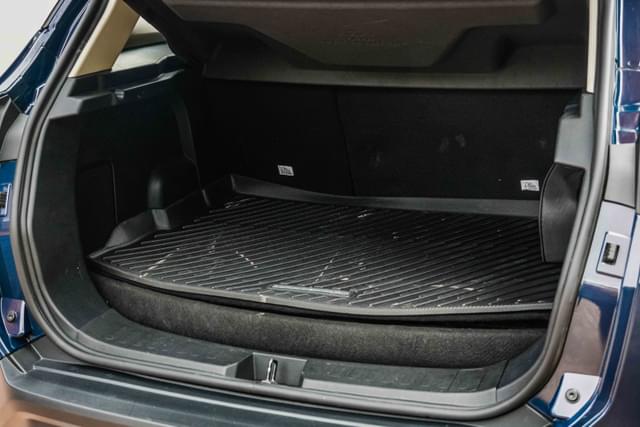
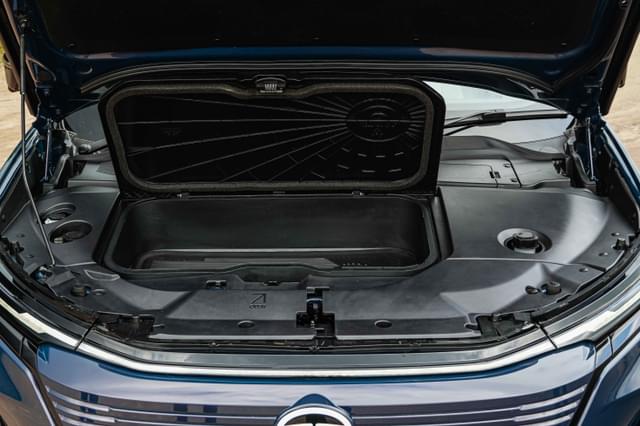
The rear seat is spacious with good legroom and a flat floor, making it comfy for three. Winged headrests, rear blinds, “boss mode” for extra legroom, rear vents, USB-C ports, and an armrest with cupholders complete the experience. Boot space is 502 litres (measured to the roof), slightly less than the diesel due to the raised floor. There’s also a frunk—67 litres on RWD, 35 on AWD.
8.0
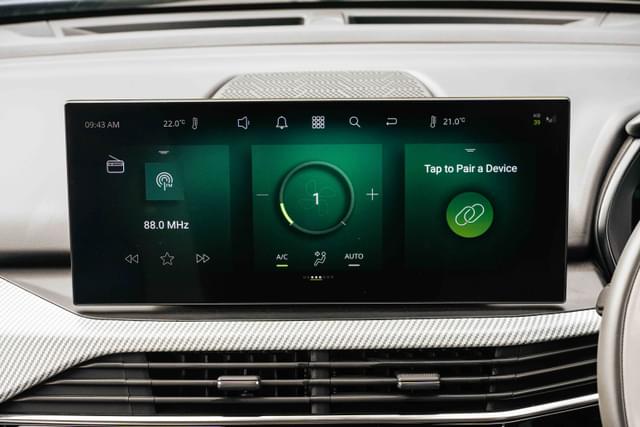
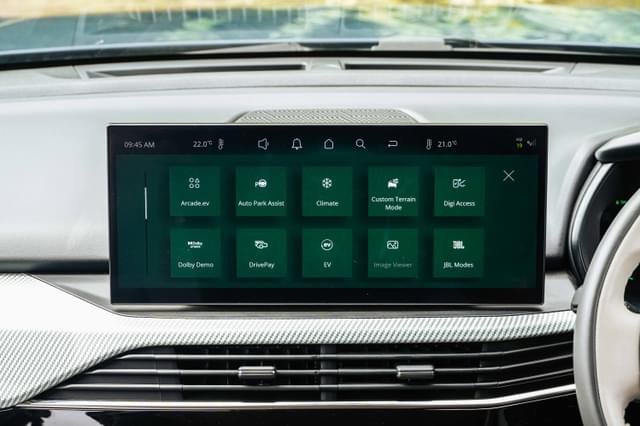
Highlight features include the world’s first 14.53-inch Samsung Neo QLED display, JBL 10-speaker audio with Dolby Atmos, Drive Pay, ventilated seats, ambient lighting, and a panoramic sunroof. There are also multiple cameras, a dash cam, 540-degree view, and a digital rearview mirror, though the parking camera feels low-res and choppy.
Summon mode and auto park are present, though the former needs software refinement. The latter worked well in our test. Safety-wise, it gets 7 airbags, disc brakes, TPMS, and Level 2 ADAS calibrated for Indian roads, along with a 5-star Bharat NCAP rating.
9.0
We drove the top-spec QWD version with dual motors putting out a combined 313hp and 504Nm. It does 0-100kph in a claimed 6.3s (6.65s in our test) and is quicker than the Mahindra XEV 9e. Acceleration is strong yet progressive, with drive modes including Eco, City, Sport, Boost, and even Drift. Refinement is excellent with minimal motor and wind noise.
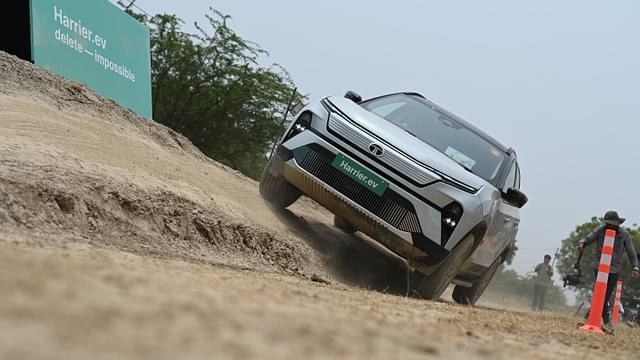
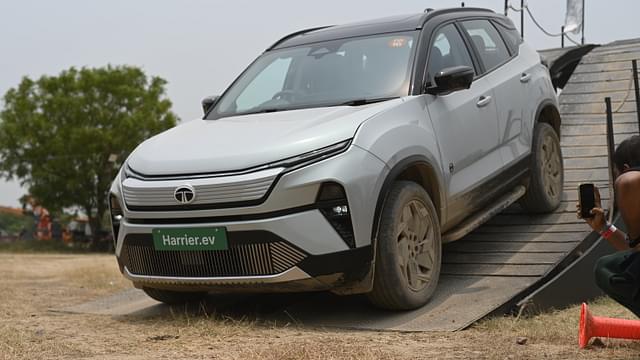
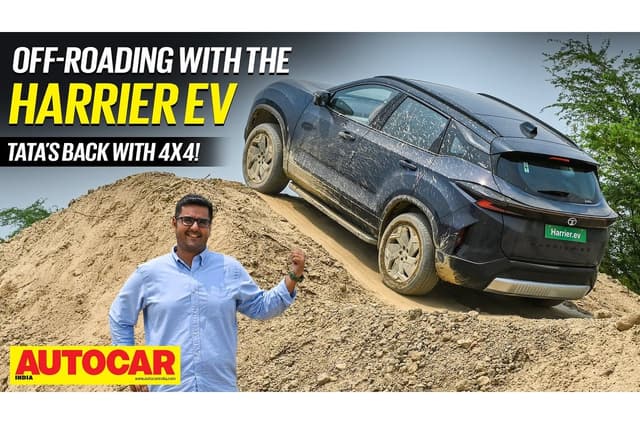
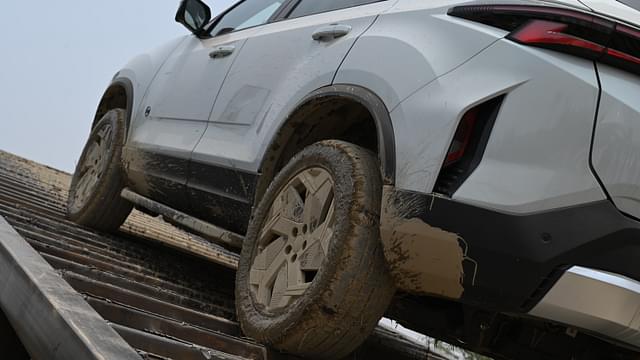
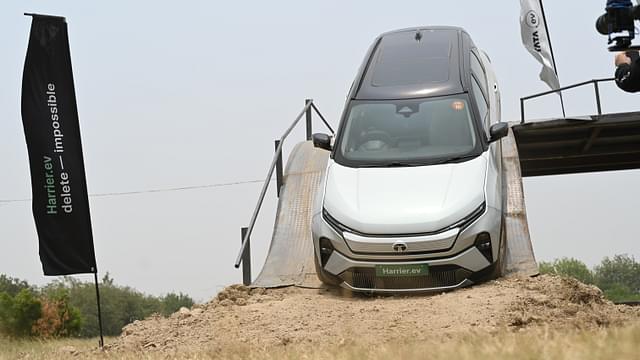
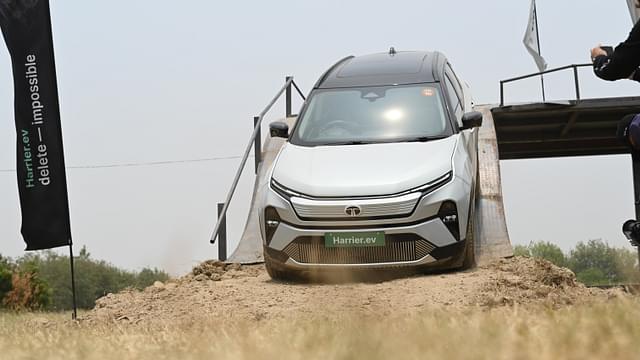
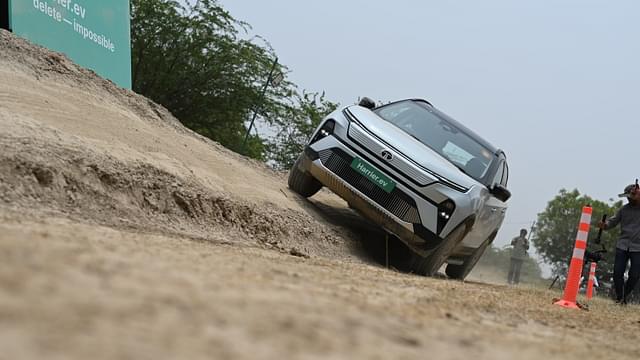
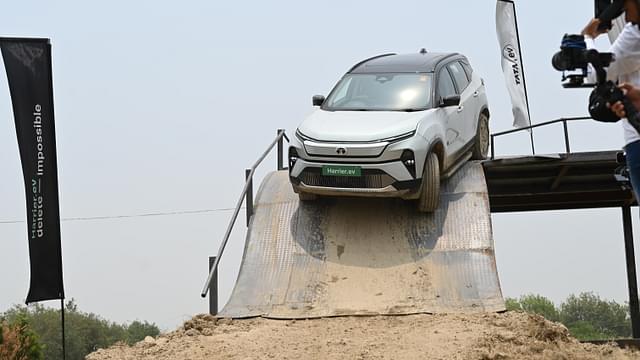
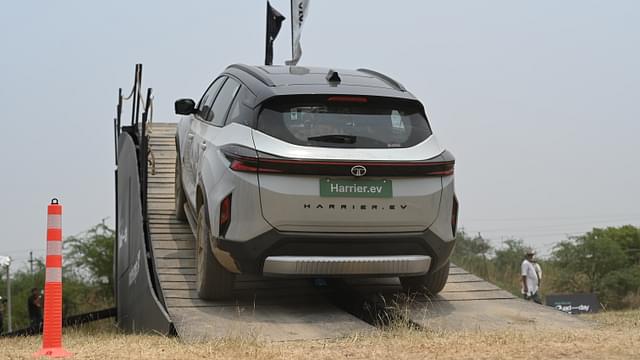
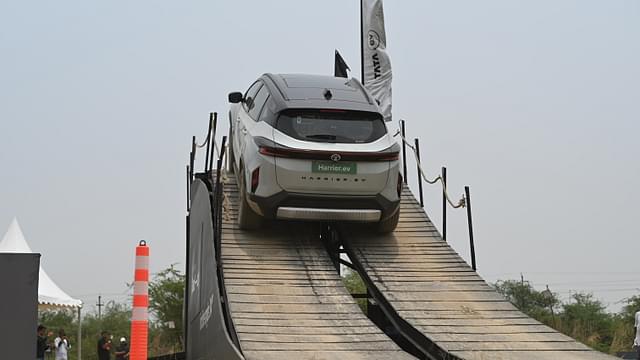
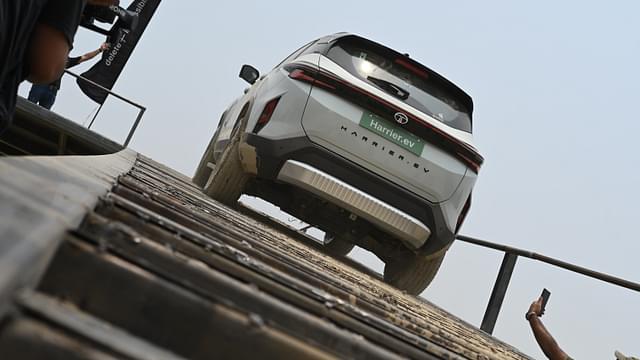
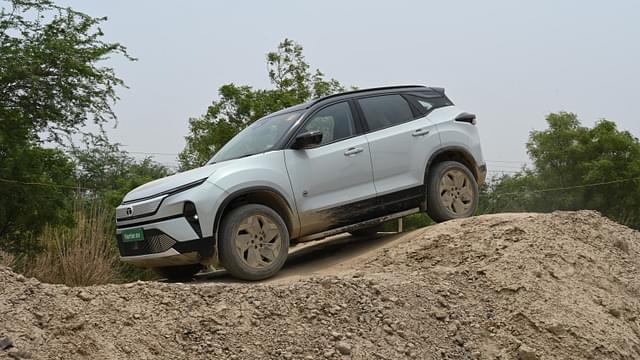
It’s equipped with six off-road modes and proved capable on a light trail. There are four regen levels via paddle shifters, but no single-pedal mode. The brakes, however, feel spongy and lack bite.
8.0
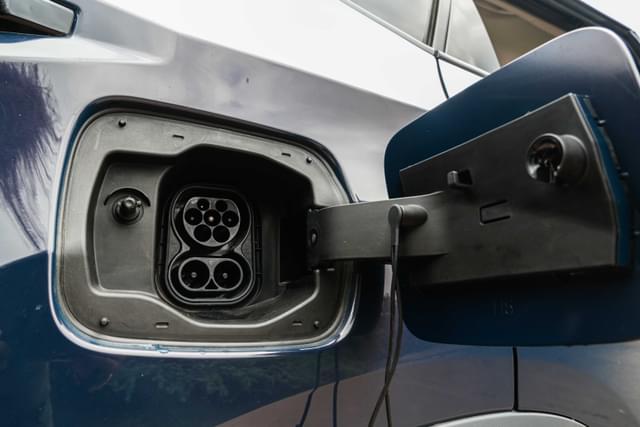
The QWD gets a 75kWh battery with a 622km ARAI claim (460–490km real-world). In our run, it covered 414km from 98% to 3% battery—translating to 5.81km/kWh and a projected 436km range. Charging from 20-80% takes 25 mins on a 120kW DC fast charger; 10-100% takes 10.7 hours on a 7.2kW AC charger. V2L and V2V capabilities are also included.
9.0
Its standout trait is the ride quality. Thanks to Tata’s Ultra Glide Suspension with Frequency Dependent Dampers, it balances plushness and composure excellently. Low- and mid-speed bumps are soaked up beautifully. There’s slight vertical movement at high speeds, but it settles quickly. Handling is predictable with well-controlled body roll and good grip. Steering feels a bit heavy at low speeds but firms up nicely on the highway.
8.0
Priced from ₹21.49 lakh to ₹28.99 lakh, the Harrier EV undercuts the Mahindra XEV 9e while offering AWD over it. However, the 7.2kW charger costs extra (Rs 49,000).
It may not have the wow factor and it needs software refinement, but the Harrier EV nails the fundamentals—ride, refinement, performance, and comfort. It lands squarely in the Goldilocks zone—not too much, not too little. The question is, is that enough for today's EV buyer?
Reviewed by: Soham Thakur
Tata Harrier EV reviews

Tata Harrier EV comparison


Tata Harrier EV Range
The Harrier EV mileage depends on the chosen variant. The 65kWh RWD trims have a claimed range of 538km, while the 75kWh battery pack with a RWD setup has a range of 627km, which for the AWD configuration is 622km.
| Fuel type | Displacement | Transmission | Range |
|---|---|---|---|
| Electric | 65 kWh | Auto | 538 km |
| Electric | 75 kWh | Auto | 627 km |

Tata Harrier EV news
Tata Harrier EV Images
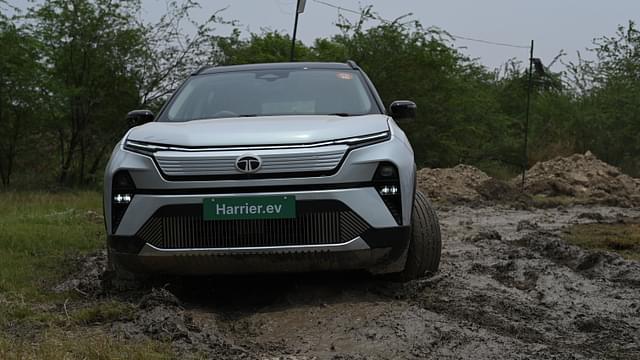
Check out the Harrier EV in 77 images, which highlight its bold exterior design and its premium interior that is filled with modern-day features.
The Tata Harrier EV brings together a dominating SUV design, a clean and modern cabin with a loaded feature suite, a 5-star Bharat NCAP safety rating, and powerful electric motors to offer a complete package to the customers.
Tata Harrier EV videos
In the video section of the Harrier EV, we have given our opinions on the Tata eSUV, highlighting what we like and dislike about it. We have also compared it with its prime rival to see which would be a better choice for you.


.jpg?w=640&q=75)


Tata Harrier EV Colours
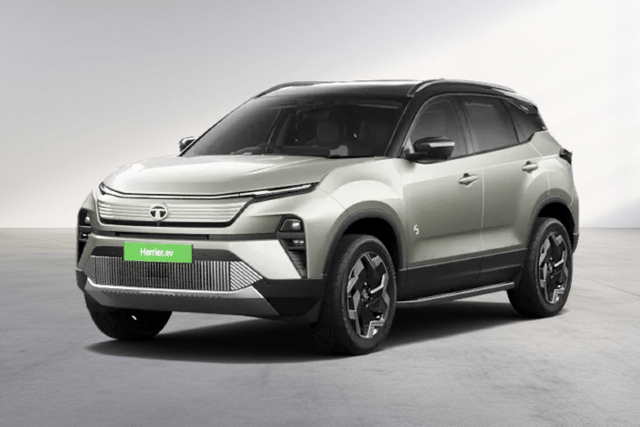
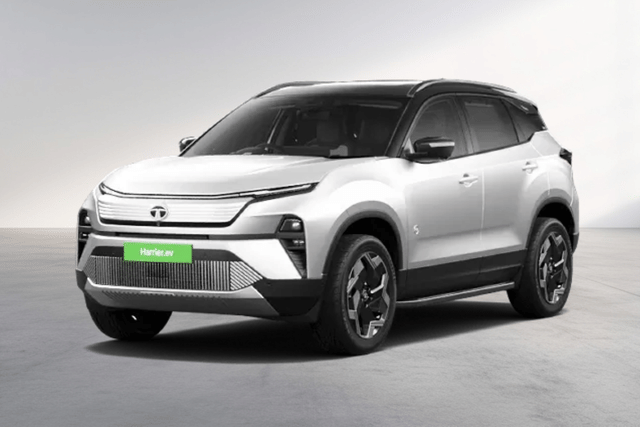
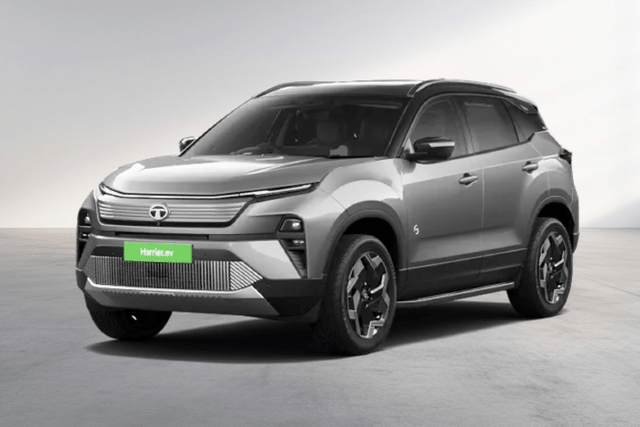
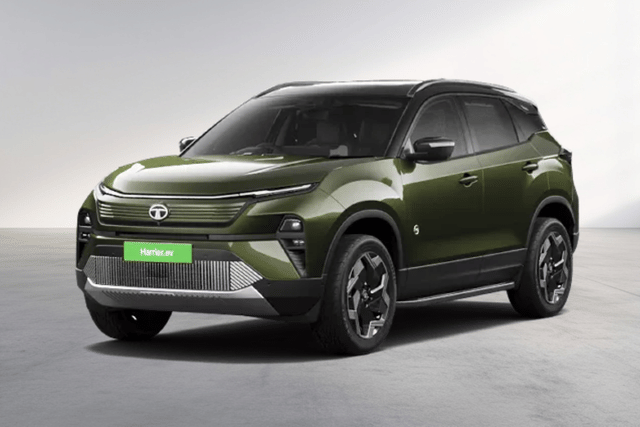
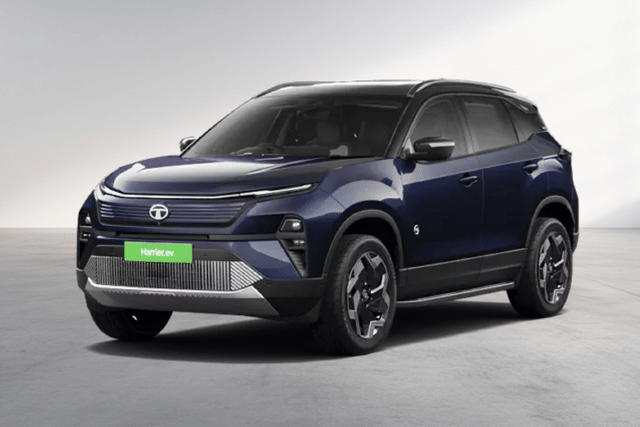
Tata Harrier EV colour options include 5 exterior hues, including Empowered Oxide, Nainital Nocturne, Pristine White, Pure Grey, Seaweed Green, Stealth.
It also gets different interior colour options, based on the chosen variant.
Tata Harrier EV FAQs
The Harrier EV’s sound system gets a 10 speaker JBL setup
Tata Harrier EV's RWD 75kWh variants can travel up to 627km on a single charge.
Tata Harrier EV gets three variants and two battery pack options.
The Harrier EV is a five seat SUV.
The Harrier EV rivals the Mahindra XEV 9e and the Creta EV.
Harrier EV is offered in RWD using a single motor or AWD with a dual-motor setup, delivering up to 504?Nm of torque.
The Harrier EV offers a certified range of up to 538km with the 65kWh battery and up to 627km with the 75kWh battery, with the AWD driving up to 622 km (MIDC cycle).
The Harrier EV offers a panoramic sunroof with voice assist on selected variants.
The Harrier EV features a 10.25-inch or 12.3-inch touchscreen, depending on variant, with top variants offering a 14.53-inch LED infotainment, along with a 10.25-inch digital driver display.
The Harrier EV offers up to 7 airbags, Level-2 ADAS on the top variant, 360-degree surround view with Transparent Mode, electronic stability control, connected car technology, and digital key access.
The Harrier EV measures 4,607mm long, 2,132mm wide (with mirrors), 1,740mm tall, with a 2,741mm wheelbase, and seats 5.
The Harrier EV is 5-star rated by BNCAP.
The Starting price of Tata Harrier EV is ₹21.49 lakh.
The on road price for Tata Harrier EV is ₹22.83 lakh.
Questions you may find useful
Siddarth Ravindra
•6hHi, I recently moved back to India and am planning to buy an EV as my primary and only car. My budget is around ₹25 lakh, and I am looking for a proper 5-seater that will mainly be used for city driving of around 15-20 km daily, along with occasional road trips. For the past six years, I have been driving Tesla models - first the Model 3 and later the Model Y - so I would ideally like to continue using an EV in India as well. However, I am still unsure about the practicality of the charging infrastructure here. I will be staying in a rented apartment near Outer Ring Road, Bellandur, Bengaluru. I have been informed that the residential community, which has around 2,000 apartments, currently has about 6-8 charging points, and the connected mall also has a few additional chargers. Could you please advise: Whether owning an EV as the only car in Bengaluru currently makes practical sense How reliable is the charging infrastructure in Bengaluru and across India for road trips Which EVs around ₹25 lakh would best suit my requirements in terms of comfort, technology, driving experience, reliability, range, and overall ownership experience Any guidance would be greatly appreciated.

Autocar India
Before committing to an EV, it is advisable to speak to electric car owners in the complex to know about the ease of charging. Public chargers in easy access are a plus, but the ideal and often most reliable solution is a charger in your own parking. Many housing complexes do not allow this, making it all the more important to research public charging options in the vicinity. In general, Bengaluru does have a wide network of chargers, so a weekly plug-in shouldn't be a hassle. Further, major highways south and west of the city have regular fast chargers, so planned roadtrips are very workable.Of the cars, the Hyundai Creta Electric is a sensible buy for your usage. It's a good size for Bangalore's traffic yet offers comfortable seating for five passengers. It won't match your Tesla's wow factor, but the Creta does pack in all the features that you would need and use over your short commutes. You can buy the 51.4kWh battery pack version, which offers ample range for your city drives. If you'd prefer a larger vehicle with more interior space, options include the Mahindra XEV 9S (the 70kWh battery pack is a good pick but just out of your budget) and the Tata Harrier EV with the 65kWh battery pack.
Kks
•2wWe have owned a Tata Zest for 10 years and are looking for a family car for 4 adults and 1kid 9year old. Our running for the year is 12k to 13k kms with 60% city and the rest highway for occasional trips. We intend to keep it for 10 years and zeroed in on Seltos, but worried about ethanol blending and pricey petrol. So, for our requirement, we are thinking of moving to EV and are confused whether we should wait for Sierra EV, go with Harrier EV or XEV 9s. Although we aren’t keen on a 7 seater, and 9E seems to be gimmicky. Please help.

Autocar India
For your usage, we would not switch to an EV purely because of ethanol blending worries. With 12,000 to 13,000 km a year, 60 per cent city use and a 10-year ownership plan, a petrol SUV like the Kia Seltos is still a perfectly practical choice. E20-compliant petrol cars will continue to be supported, and a move to higher ethanol blends like E85 would require dedicated flex fuel engines, so there is no realistic scenario where today’s compliant petrol cars suddenly become unusable.If you genuinely want to move to an EV, then the decision should be based on your usage pattern, charging convenience and ownership comfort, not fuel policy anxiety. Between your options, the Tata Harrier EV looks like the most complete fit today. It gives you the space you need for four adults and a child, feels like a proper family SUV and removes the uncertainty of waiting for an unlaunched product. The Mahindra XEV 9e is also a strong EV, but since you already find it a bit too gimmicky and are not looking for that kind of experience, it does not sound like the natural fit.As for the Tata Sierra EV, we would absolutely suggest waiting if you are not in a rush, because it is expected soon and could land in the sweet spot between the Harrier EV and the smaller EV SUVs in terms of practicality and positioning. The only caveat is that buying an EV without a reliable home charging setup would make far less sense than simply buying the Seltos petrol and moving on.
Tushar
•2wSir, how is the rear suspension and ride quality of the Mahindra XEV 9e Pack One and Two? I tested the Pack Three and found the rear seat very boat-like with too much movement both vertically and sideways, which can get nauseating for rear-seat passengers. Is the suspension setup in Pack One and Two any better? Should I instead go for the Harrier EV 75 RWD if I want better ride quality, or should I wait for the Sierra EV? I want an EV bigger than the Nexon, but I do not like the Curvv EV and was thinking of avoiding Mahindra because of the suspension. I tried the Nexon EV and new Punch EV and found their rear suspension much better than the XEV 9e and even the eVitara. Please guide.

Autocar India
What you felt in the Mahindra XEV 9e Pack Three is a fair observation. The XEV 9e does have a softer suspension tune, and for some rear seat passengers, that can translate into a floaty, slightly boat-like vertical movement over undulations, which can feel uncomfortable or even nauseating if you are sensitive to that kind of motion. As far as we know, there is no major suspension hardware difference between Pack One, Two and Three that fundamentally changes this character, so we would not expect the lower variants to feel significantly different in this regard.If rear seat ride quality and body control are a major priority, the Tata Harrier EV is the better option right now. It feels more tied down, composed and generally better controlled from the rear, without that excessive floatiness. If you still want to stay with Mahindra, the XEV 9e actually feels more balanced in this respect and does not have the same exaggerated bouncy character as the XEV 9S.That said, since you are clearly particular about ride quality and already like how Tata’s EVs are tuned, we would absolutely suggest waiting for the Tata Sierra EV as well, especially since its launch is right around the corner. It should sit in that sweet spot above the Nexon EV in size while potentially offering the kind of more settled suspension setup you seem to prefer.
TechiePetrolhead
•2wHi AutocarIndia Team, I am really interested in the Tata Sierra EV. Any scoops or news on when we can potentially expect the same to be launched here in India? Thanks, TechiePetrolhead

Autocar India
If you are waiting for the Tata Sierra EV, the good news is that it does not seem too far away. Current indications suggest a launch could happen either later this month or in June.Expect it to slot below the Tata Harrier EV in Tata’s electric line-up, likely with multiple battery pack options and a more premium positioning than the Tata Curvv EV. Tata has also indicated that both Rear Wheel Drive and All Wheel Drive versions are planned, which should make it one of the more interesting mainstream electric SUVs in India.
Ketan
•2wI am planning to buy an EV in the ₹20-25 lakh price range. My key requirements include around 500 km range, along with good space, comfort, and overall refinement. I have shortlisted the Tata Harrier EV and the Hyundai Creta EV, and I am also waiting for the Tata Sierra EV to be revealed. Which of these would make the most sense for my needs?
Autocar India
The Hyundai Creta Electric Excellence LR is the one that fits your brief best. It fits within your price range, and it has a cabin that is comfy and easy to live with for a family of four. Also, Hyundai’s EVs are usually very refined and smooth to drive in traffic, which matches your focus on a calm, polished experience.Two things to keep in mind for your needs. First, in this budget, a true 500 km in real use is tough. The Creta Electric may have a claimed range of 473km (ARAI), but we managed to get a real-world figure of 432km in our testing. Second, fast charging speeds on mid-price EVs like the Creta are usually modest, so plan stops on longer trips accordingly.The Tata Harrier EV will suit you only if you can stretch the budget. Being a bigger car with a larger battery, it will be roomier inside and offer more range. The Tata Sierra EV is worth waiting for only if you love the look and want a roomier cabin. But prices, exact specifications and launch timing are not final yet.
Sekhar
•3wMy primary usage is on highways, and I need the maximum possible range along with a good highway driving experience. I am confused between the Tata Harrier EV 75 kWh Fearless (RWD) and the Mahindra 9S 79 kWh. Which one offers a better highway range?
Autocar India
You need a car for pure highway use and want the longest stretch between stops; in that case, we would lean towards the Mahindra XEV 9S 79kWh for its better real-world highway range. In our real-world testing, we managed 477 km on the highway, which suits your “pure highway” pattern. We have also tested the AWD Harrier EV, which managed 401 km (combined). While the RWD version should better that, it will likely still fall short of the XEV 9S’s range.One thing to note: the Mahindra’s ride can feel a bit floaty on undulating highway surfaces, so try it out before you commit. If that is an issue, the XEV 9e has a more settled ride.Overall, for highway-first use and maximum range, the XEV 9S 79kWh is the safer bet.
Naman
•4wI am confused between the Tata Harrier Fearless 75, Mahindra BE 6 Pack 2, and Mahindra XEV 9e. My driving is mainly on highways. Which is the better option in terms of range and comfort?

Autocar India
The Mahindra XEV 9e is the better pick, both in terms of range and comfort. On the highway, you can easily expect around 480km of real-world range with the 79kWh battery version. Performance is plenty, its steering is light, suspension setup is good, and seats are comfortable, which makes it ideal for long-distance travel. Also, it is worth noting that the XEV 9e's fast charging speeds are much higher than the Harrier EV's, translating to shorter charging times when connected to a 120kW or faster DC charger.
satya narayana
•4wI am confused between the XEV 9S and Harrier EV base models. Which one will be better for both city and highway driving?
Autocar India
The base Mahindra XEV 9S gets a 59kWh battery, with a 231hp/380Nm rear motor, and its claimed range is 521km. The entry-level Harrier EV on the other hand gets a 65kWh battery, with a 238hp/315Nm rear motor, and its claimed range is 538km. Even though their specifications are similar, the Mahindra car is Rs 1.5 lakh more affordable. For the money, the XEV 9S also gets you a premium kit like a dedicated passenger (third) touchscreen and panoramic sunroof, among others. Additionally, the XEV 9S has a lighter steering and a tighter turning radius, which makes manoeuvring the car much easier in the city. Additionally, the extra row of seats can come handy occasionally. Overall, the Mahindra XEV 9S comes across as the better pick of the two.
Anushka
•7wI am lokking to buy a spacious EV for myself. My daily running is around 70 km, highway and city driving being 50% each. Space, power, safety and mileage are primary considerations.my budget is up to 28 Lakhs.

Autocar India
Go for the Tata Harrier EV Fearless+ 75 AWD. At your budget, it meets your priorities of space, power, safety and a strong highway-city balance. The Harrier EV offers a large, comfortable cabin with excellent rear-seat space and strong safety credentials, while the dual-motor AWD setup gives it effortless performance and added confidence on highways and in low-grip conditions. With your 70 km daily running, the larger battery also ensures you can comfortably go multiple days between charges, and highway drives feel relaxed and stable.The Mahindra XEV 9S is a close alternative if you specifically want a three-row layout and a more tech-focused cabin. It offers greater seating flexibility and a feature-rich interior, but the third row is best suited for occasional use. At highway speeds, it does not feel as planted or as polished as the Harrier EV.Smaller EVs like the Tata Nexon EV or MG ZS EV make sense if you want to spend less or prefer something easier to drive in tight city conditions, but at your budget they feel like a compromise on space and overall performance.
Gulshan Bhatia
•7wHi AutocarIndia, I have a budget of ₹23-25 lakh. My monthly running is approximately 12,000-14,000 km, with around 70% city driving and 30% highway usage. I am confused between choosing a petrol vehicle and an EV. I am not considering a diesel option since my driving is not very regular at times, and I am concerned about potential DPF clogging issues. Currently, I am evaluating the Mahindra XUV 7XO A7 T petrol, which costs around ₹25 lakh on-road in Pune. However, considering the current global war situation, I feel petrol prices may increase permanently, which is making me seriously consider an EV. I am therefore looking at the Tata Harrier EV Fearless Plus 75 kWh, which is priced around ₹27 lakh. Though I have heard that some discounts are available, and the effective price could come down to around ₹26 lakhs. Given my usage pattern, budget, and long-term cost concerns, please guide me on whether a petrol or EV would be the better choice and help me decide between these options. Thanks in advance.
Autocar India
The Mahindra XUV 7XO petrol does not suit this kind of running. A turbo petrol will be significantly more expensive to run over time, and with your usage, the fuel cost difference will be substantial.The Tata Harrier EV makes far more sense here. It offers very low running costs per km, smooth and effortless driving in the city, and strong performance on highways. With your high usage, the savings on fuel will add up quickly and justify the higher initial cost.The key condition is charging. If you have reliable home or office charging, the EV becomes a very practical and economical solution. Without that, managing frequent charging will become inconvenient.On your concern about diesel, in your case, it is actually not an issue. With such high and consistent running, DPF problems will not arise, as the car will regularly get the kind of driving needed to keep the system healthy.