
Last Updated on: 18 Aug 2026
Hyundai Alcazar
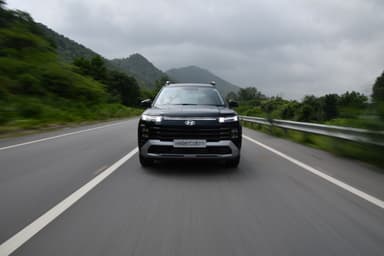
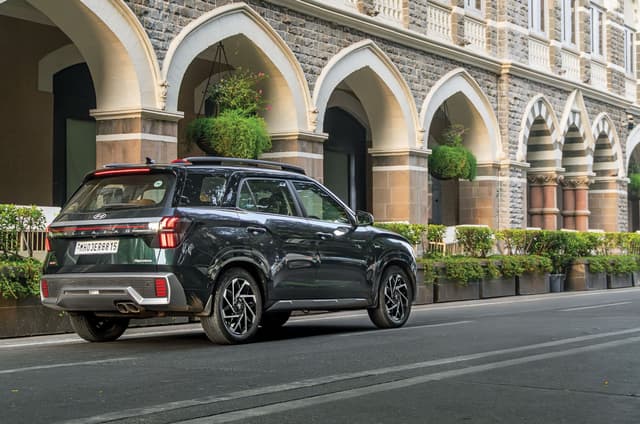
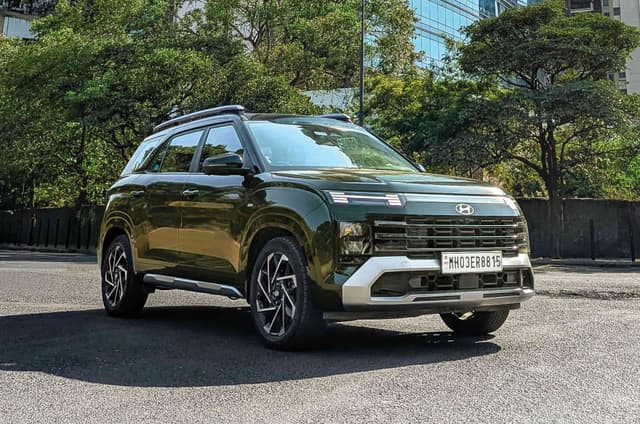
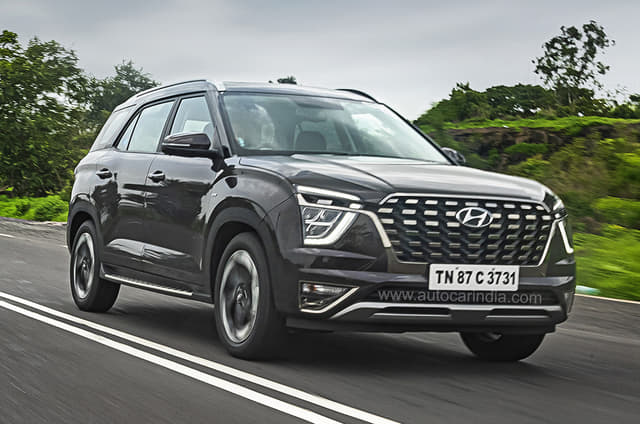
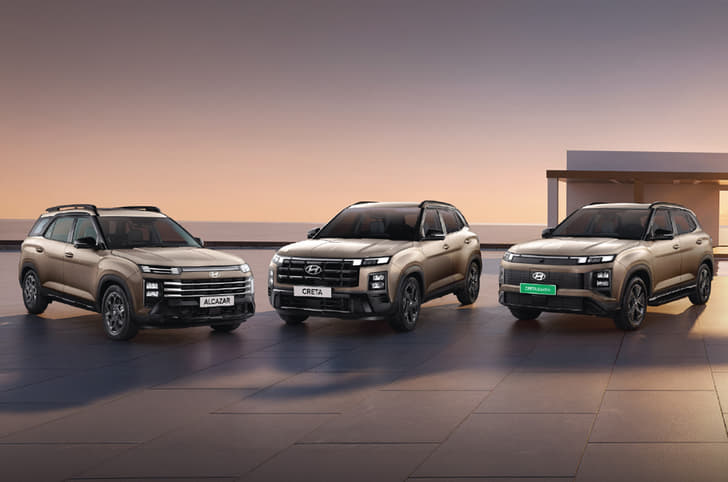
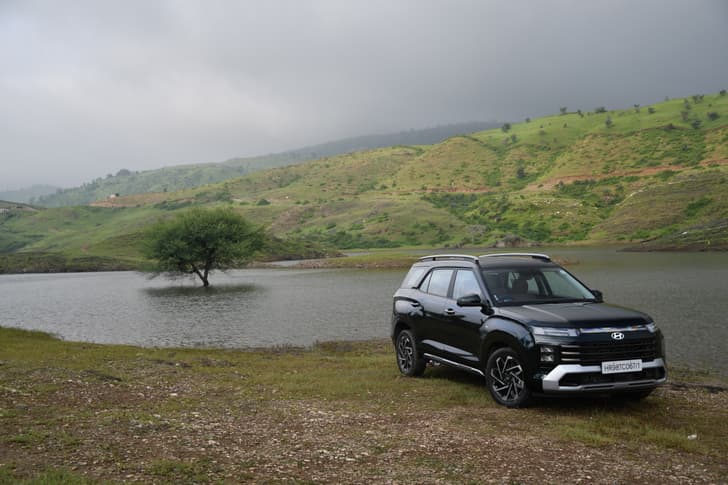
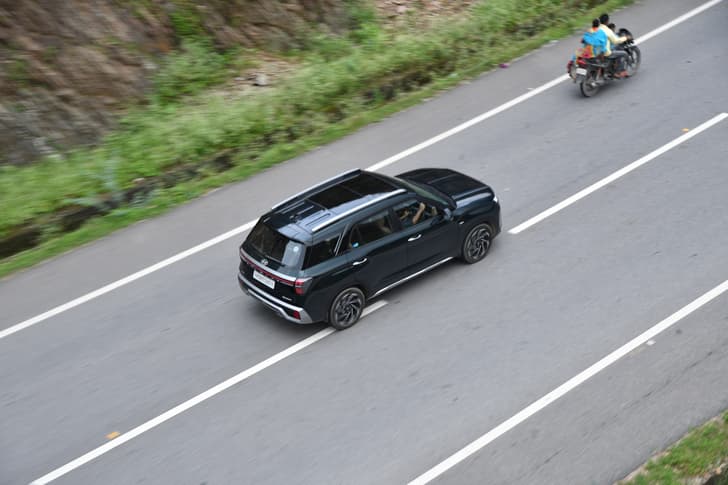
Hyundai Alcazar is a three-row SUV positioned above the Creta in the carmaker's lineup. The Hyundai Alcazar price ranges between ₹14.51 lakh and ₹21.10 lakh (ex-showroom). The Alcazar on-road price starts from ₹17.12 lakh for its base Executive 1.5 Petrol MT 7 seat, while the top variant Signature 1.5 Diesel AT 6 seat costs ₹25.64 lakh (on-road).
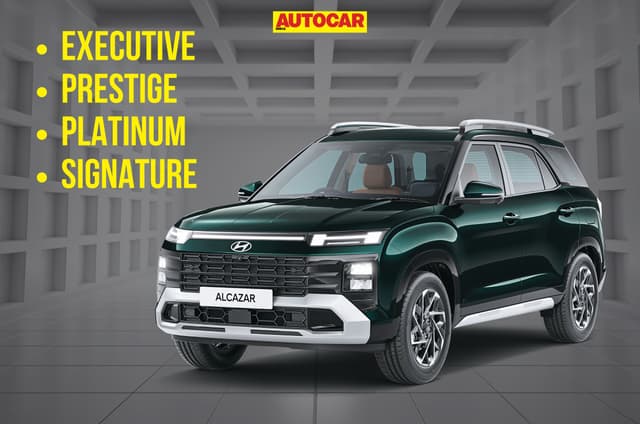
The Hyundai Alcazar variants include 14 options spread across Executive, Corporate, Prestige, Platinum, Signature trims and the special Knight Edition, available in both 6-seater (captain seats) and 7-seater layouts. The Hyundai Alcazar comes with two engine options - a160 hp 1.5-litre turbo-petrol engine paired with a 6-speed manual or 7-speed DCT, and a 1.5-litre diesel engine that produces 116 hp with 6-speed manual or automatic transmission.
Hyundai Alcazar mileage ranges between 17.5 kmpl - 20.4 kmpl, depending on the selected variant.
Key Highlights of Hyundai Alcazar
- It is available in both 6-seater (captain seats) and 7-seater configurations, catering to family and urban buyers alike.
- The Hyundai Alcazar engine options include a 160hp 1.5-litre turbo-petrol (7DCT/6MT) and a 116hp 1.5-litre diesel (6AT/6MT).
- The Alcazar mileage ranges between 17.5 kmpl - 20.4 kmpl.
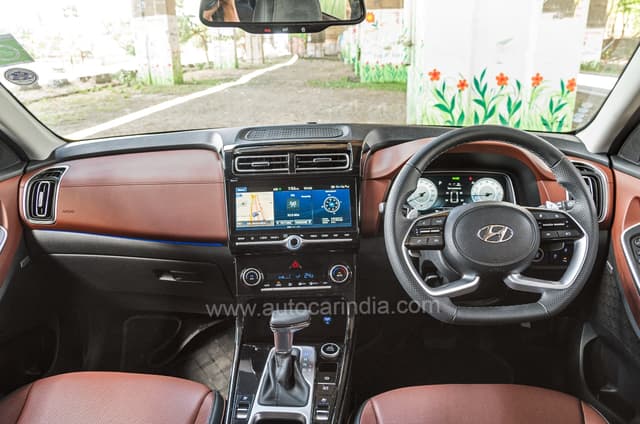
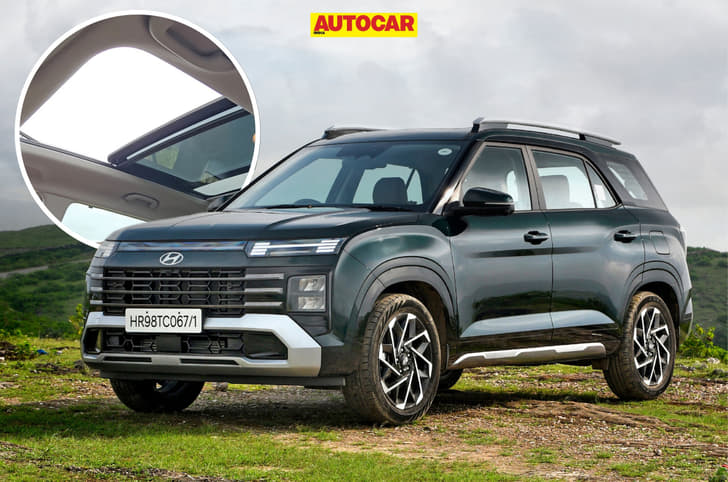
- Features onboard include a panoramic sunroof, 10.25-inch touchscreen infotainment system, digital driver display, ventilated front seats, Bose sound system, and wireless charging.
- The interior features a dual-tone black and brown theme, soft-touch dashboard materials, and ambient lighting for a premium feel.
- The Alcazar offers Hyundai’s Bluelink connected car suite with remote engine start/stop, geo-fencing, and live location tracking.
- Safety features include Level 2 ADAS, six airbags, 360-degree camera, front and rear parking sensors, electronic stability control (ESC), hill assist control, and vehicle stability management (VSM).
- The Hyundai Alcazar dimensions stand at 4,560 mm in length, 1,800 mm in width, and 1,710 mm in height, with a 2,760 mm wheelbase.
- It is offered in Executive, Corporate, Prestige, Platinum, and Signature trims, with both petrol and diesel engine options.
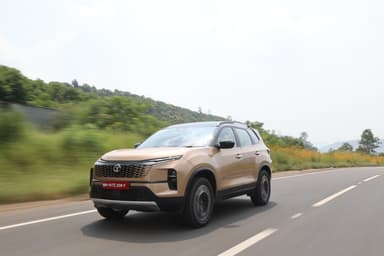
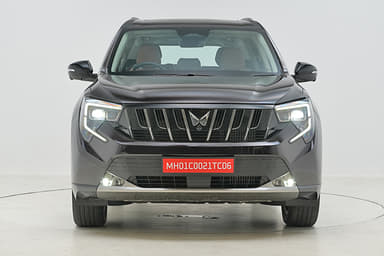
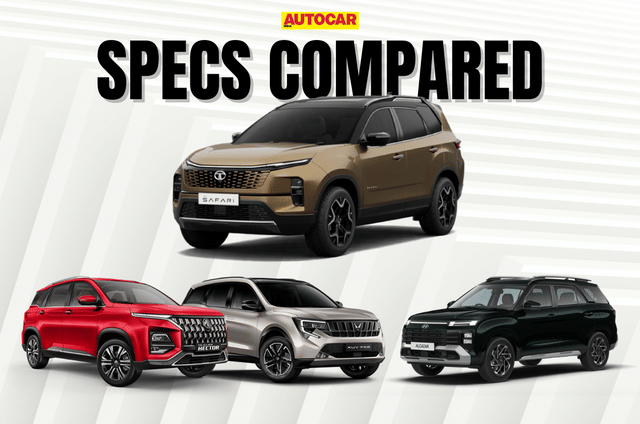
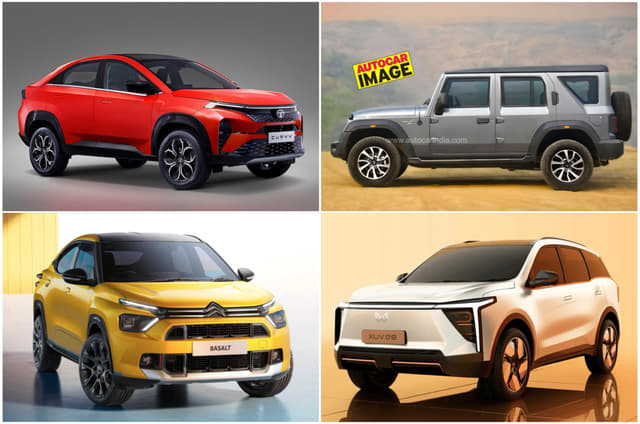
- The Hyundai Alcazar rivals models such as the Tata Safari, Mahindra XUV 7XO and MG Hector Plus.
Hyundai Alcazar Latest Updates
- June 5, 2026: Up to Rs 75,000 benefits on Hyundai Alcazar in June.
- March 3, 2026: Up to Rs 70,000 benefits on Hyundai Alcazar in March; these comprise a Rs 30,000 cash discount, a Rs 10,000 Navratri booking bonus and a Rs 30,000 scrappage bonus.
Hyundai Alcazar Key Highlights
SAFETY
6 Airbags
POWERTRAIN
1.5L Petrol Turbocharged Engine
COMFORT
Fully Digital Instrument Cluster
ENTERTAINMENT
Bose Music System
ARAI MILEAGE
18 kmpl
EXTERIOR
LED Headlamps
INTERIOR
Front & Rear Ventilated Seats
SEATING
6-Seater
* Highlight shown are for the top variant. Features may vary by trim.
Hyundai Alcazar Features and specifications
Our Rating | 8 |
Mileage | 17.5 kmpl - 20.4 kmpl |
Engine | 1482 cc - 1493 cc |
Fuel Type | Diesel, Petrol |
Transmission | Torque Converter, Manual, DCT |
Seats | 6 - 7 |
Body Style | SUV |
Doors | 5 |
Max Power | 116 hp at 4000 rpm |
Max Torque | 250 Nm at 1500 - 2750 rpm |
Warranty Distance | Unlimited km |
Warranty Duration | 3 Years |
| Engine Type | Turbocharged |
| Engine Displacement | 1493 cc |
| Number of Cylinders | 4 |
| Engine Installation | Front |
| Fuel Supply System | Common Rail |
| Emission Standard | Bharat Stage VI |
| Auto Start/Stop | Yes |
| Official Fuel Economy | 18.1 kmpl |
| Front Suspension Type | Independent, McPherson Strut |
| Front Springs | Coil Springs |
| Rear Suspension Type | Non-independent, Torsion Beam |
| Rear Springs | Coil Springs |
| Length | 4560 mm |
| Width | 1800 mm |
| Height | 1710 mm |
| Wheelbase | 2760 mm |
| Power Windows | Front and Rear |
| Bluetooth Connectivity | |
| Cabin Boot Access | |
| Cooled Glovebox |
| Airbags | 6 |
| Anti-Lock Brakes (ABS) | |
| Auto emergency braking (AEB) | |
| Boot Open Warning |
| Body Coloured Bumpers | |
| Antenna | Shark Fin |
| Cornering Headlights | |
| Follow Me Home Headlamps |
| Speedometer | Digital |
| Tachometer | Digital |
| Trip Meter | |
| Average Fuel Consumption |
| Audio System | |
| Branded Music System | Bose |
| CD Player | |
| Front USB port | Type C |
| Alexa Compatibility | |
| Car Light Flashing & Honking via App | |
| Check Vehicle Status via App | |
| Emergency Call Button |
Hyundai Alcazar price & variants
The Hyundai Alcazar price starts from ₹14.51 lakh and goes up to ₹21.10 lakh (ex-showroom). The Alcazar variants include 14 trims, with the Executive 1.5 Petrol MT 7 seat as the entry-level and Signature 1.5 Diesel AT 6 seat as the top model.
Its on-road price in Mumbai ranges between 17.12 lakh and 25.64 lakh. The Hyundai Alcazar Executive 1.5 Petrol MT 7 seat is priced at 14.51 lakh and comes with keyless start, ambient lighting and dual zone climate control.
Hyundai Alcazar expert review
We like
Long equipment list
Easy to drive, Comfy ride
We don't like
Seating 6/7 is a compromise
Diesel engine could do with more punch
8.0
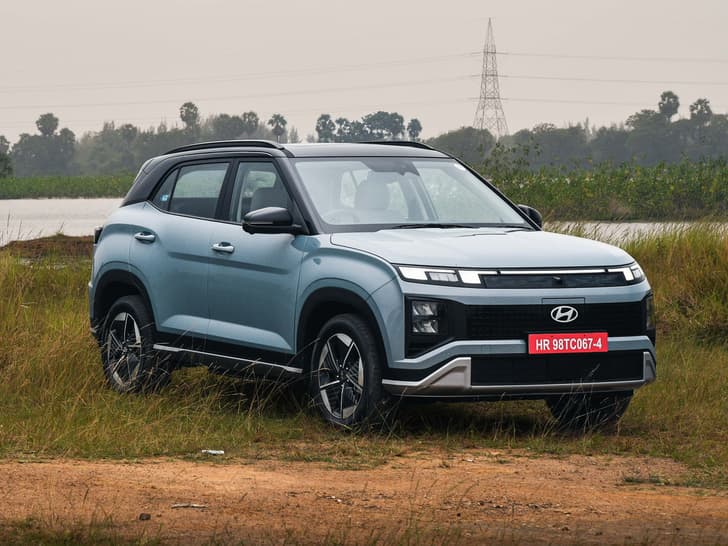
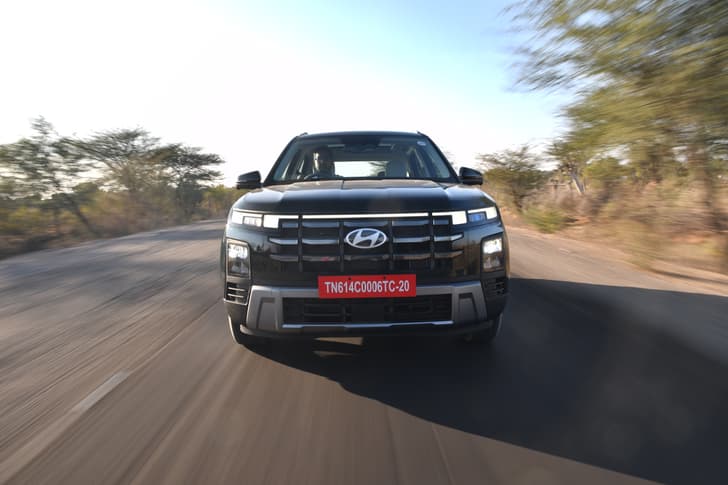
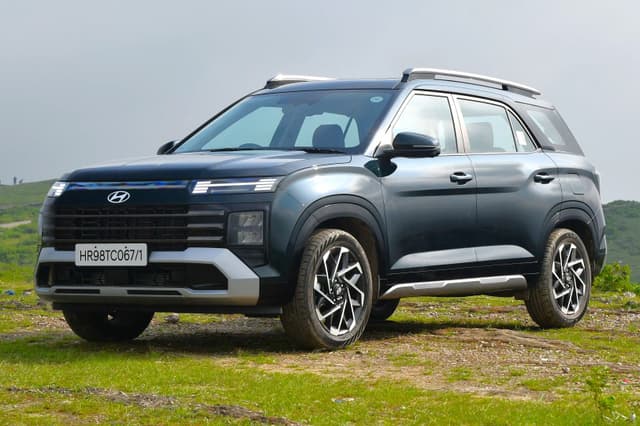
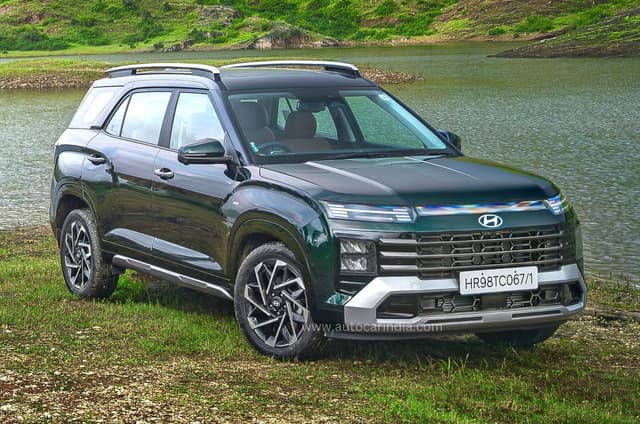
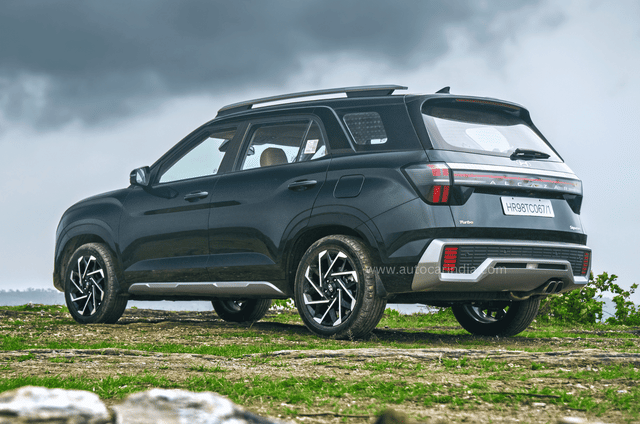
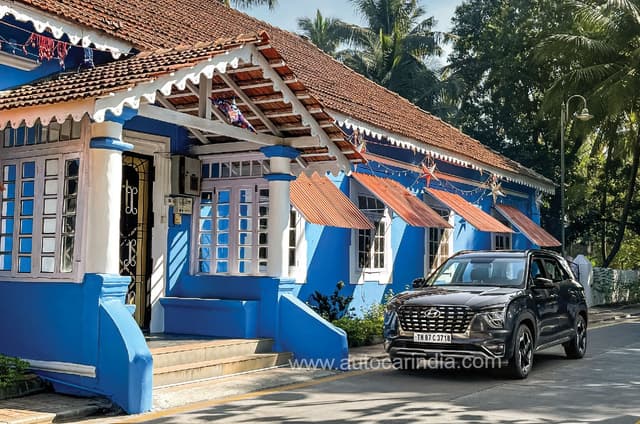
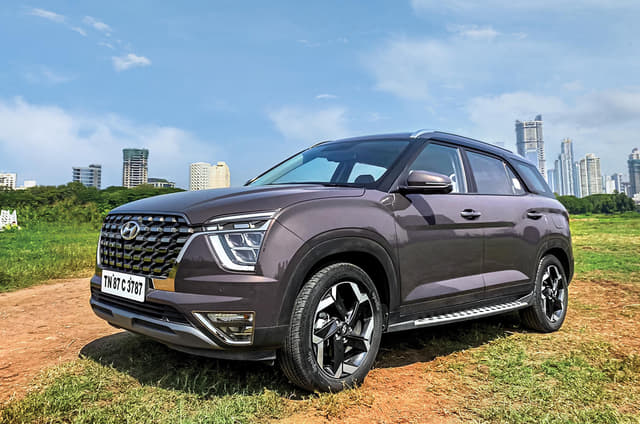
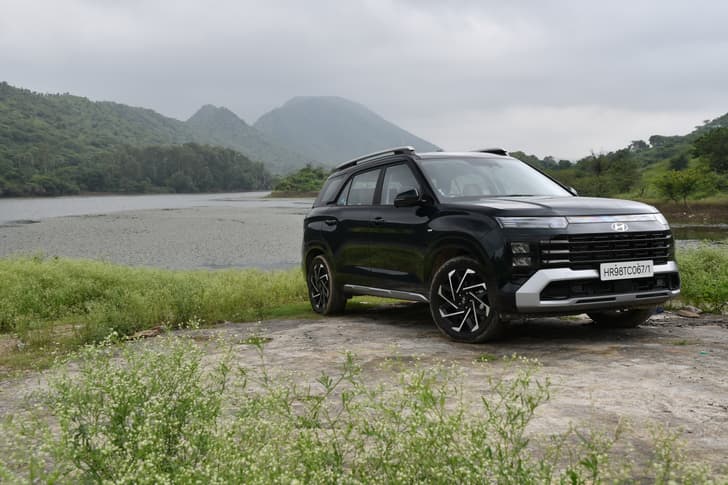
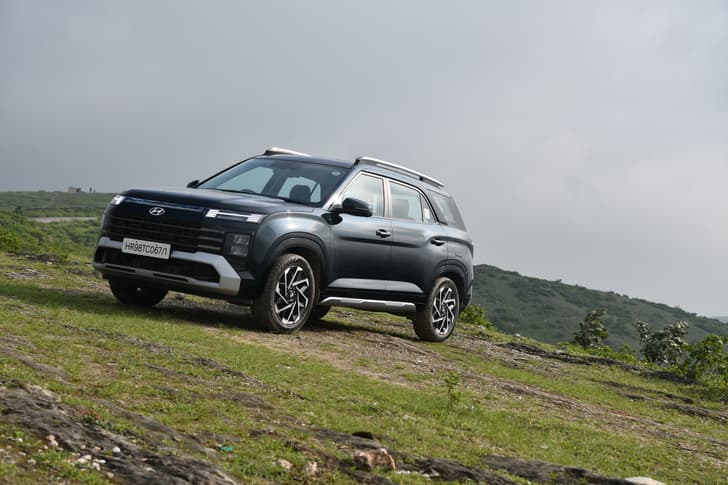
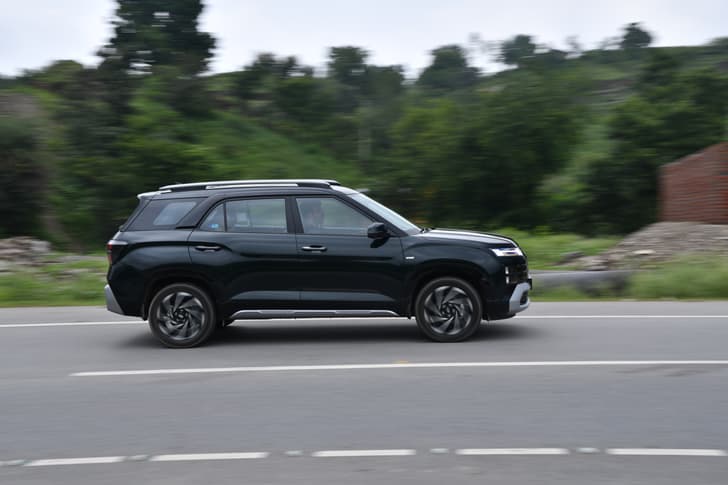
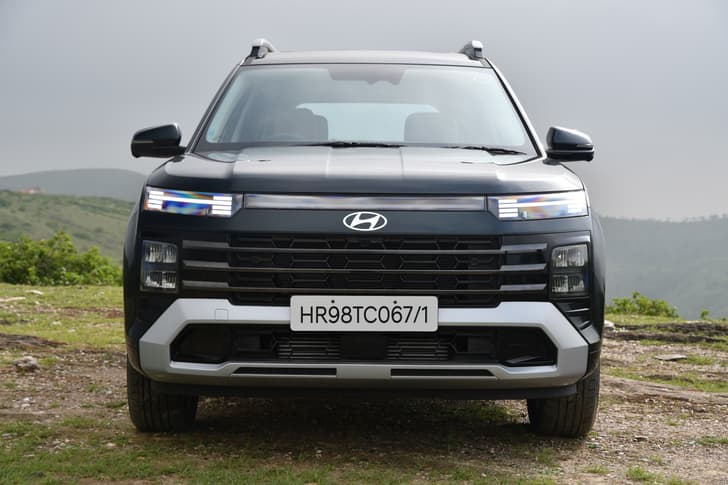
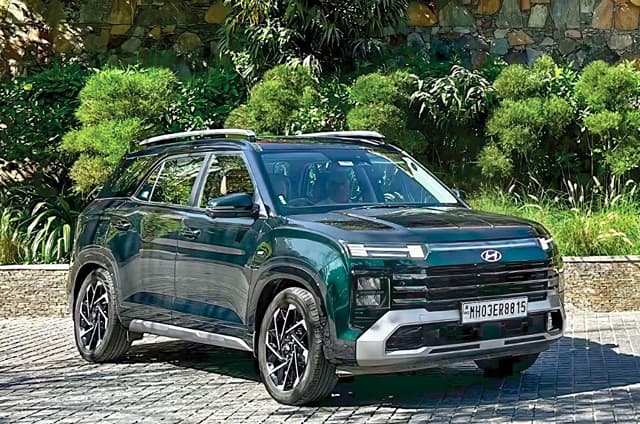
The Hyundai Alcazar facelift updates the three-row SUV’s design with refinement rather than reinvention. Upfront, a larger grille flanked by wider headlamps and reshaped bumpers gives it a more premium, planted presence. Subtle new elements — sharper rear lamps, revised tailgate garnish and fresh alloy designs — sharpen the overall look without being ostentatious.
Engineering fundamentals remain unchanged: a body-on-frame platform tuned for comfort and stability over outright sportiness. Niceties like new Satin Chrome trim on dark wheels and cleaner surfaces enhance perceived quality, but the Alcazar’s proportions remain familiar.
8.0
Inside, the Alcazar facelift impresses with a grown-up cabin feel. Soft-touch materials on dash and doors, redesigned centre console and sculpted seats lift ambience. The dual-tone theme and generous use of padded surfaces help it feel more upmarket than before.
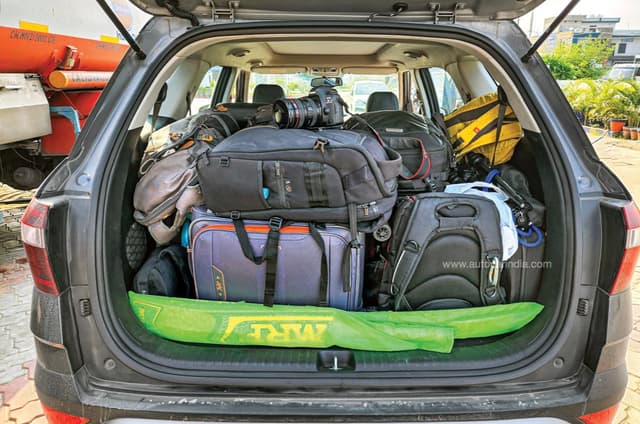
Space remains a strength of the three-row layout. Front and middle rows are comfortable with ample legroom and good under-thigh support. The third row, while typically tight for adults, suits children or short hops and reclines slightly for added comfort. Boot space with all seats up is limited but increases rapidly once the third row folds.
7.0
Both petrol and diesel engines continue in the facelift. The 1.5-litre turbo-petrol is smooth and refined in city use but gets busy when pushed hard. The 1.5-litre diesel — particularly in the Diesel Review context — emerges as the more compelling choice thanks to stronger mid-range torque and confident acceleration.
The diesel’s refinement is high for its class, with noise, vibration and harshness well managed. In both engines, Hyundai’s 6-speed manual and 6-speed torque converter automatic options remain, with the automatic particularly effective in urban stop-go traffic.
6.0
Fuel economy is a notable strength of the diesel Alcazar. On real-world runs, the diesel returns strong economy figures — a boon for long-distance and frequent highway use — without compromising performance. The petrol variants, while respectable in consumption for urban use, lag behind the diesel in overall fuel efficiency.
7.0
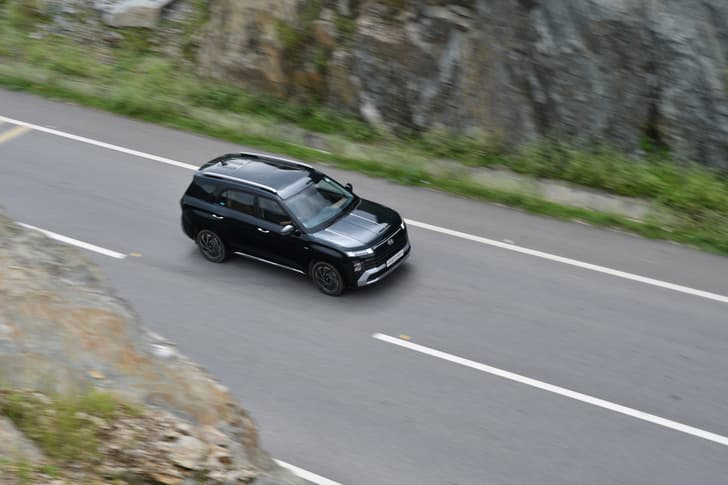
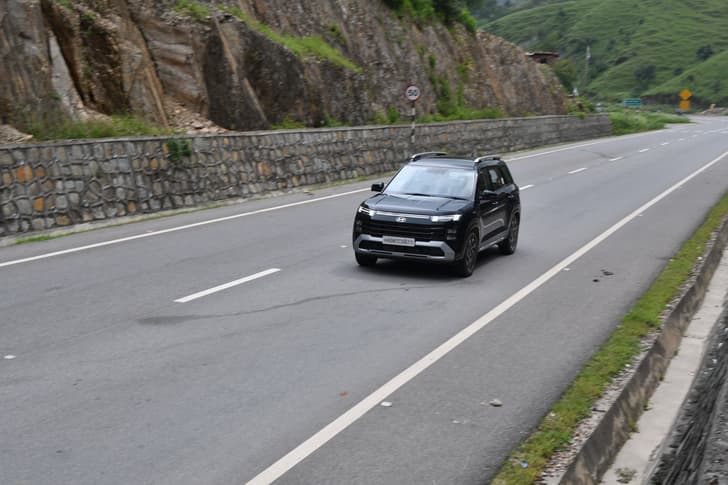
Ride quality is one of the Alcazar facelift’s defining traits. Suspension settling and compliance are tuned firmly towards comfort; it absorbs urban undulations, broken surfaces and highway ruts with poise. Body control is confident rather than sporty, making long journeys less tiring for occupants.
Steering weight is balanced for everyday driving, with adequate feedback that builds confidence. The diesel, with its richer mid-range, feels especially composed on open roads, and the torque converter automatic adds to the ease of cruising.
9.0
The Alcazar facelift brings a good tech list. A large touchscreen with wireless Android Auto and Apple CarPlay anchors the dash, and features like panoramic sunroof, ambient lighting, wireless charging and connected car tech underline modernity. Rear AC vents for the second and third rows, plus multiple USB ports and blower controls, enhance practicality.
Safety kit remains competitive: multiple airbags, ABS with EBD, ESC, hill-start assist and ISOFIX child seats are standard. Parking sensors with a rear camera aid manoeuvrability in urban settings.
8.0
The facelifted Alcazar continues to present strong value in the three-row SUV segment. Pricing moves it above compact SUVs but firmly within range of premium three-row alternatives. The diesel variant, with its satisfying blend of performance, refinement and strong economy, is especially appealing for buyers covering regular long distances.
While not the most dynamic handler, its comfort-first approach, generous kit and practical space make it a compelling purchase for families seeking a refined, feature-rich three-row SUV that doesn’t demand frequent highway cruising compromises.
Reviewed by: Jay Patil
Hyundai Alcazar Official Brochure
Download the complete brochure with specs, features, and variants.
Hyundai Alcazar User Reviews
Tell us about your experience
Hyundai Alcazar reviews

Hyundai Alcazar comparison
Hyundai Alcazar Mileage
The real-world Hyundai Alcazar mileage will depend on factors like driving style, road conditions and other factors.
| PowertrainThe combination of engine type, fuel, and transmission that powers your vehicle and determines how it drives and what it runs on. | ARAI MileageMileage certified by the government, tested under controlled lab conditions. Real-world mileage will vary. | Autocar Tested MileageAutocar's experts test each vehicle on fixed city and highway routes under standardised conditions - single occupant, AC running, manufacturer-recommended tyre pressures. Tanks are filled to the brim before and after each run to calculate efficiency. Results reflect realistic real-world usage. |
|---|---|---|
Petrol-Manual 1482 cc | 17.5 kmpl | - |
Diesel-Manual 1493 cc | 20.4 kmpl | - |
Petrol-Automatic (DCT) 1482 cc | 18 kmpl | 10.24 kmpl |
Diesel-Automatic (Torque Converter) 1493 cc | 18.1 kmpl | - |
Hyundai Alcazar news
Hyundai Alcazar Images
Check out Hyundai Alcazar images in our curated gallery, showcasing its exterior, premium interiors, and versatile 3-row seating layout. The Hyundai Alcazar brings together style, comfort, and modern technology.
Hyundai Alcazar videos
Check out our Hyundai Alcazar videos to know about its design, interior layout, and key features such as the 10.25-inch digital cluster and connected car technology.

.jpg?w=640&q=75&fm=auto)
Hyundai Alcazar Colours
The Hyundai Alcazar colour options include Abssy Black, Abssy Black / Atlas White (dual Tone), Atlas White, Black Matte, Fiery Red, Ranger Khaki, Robust Emerald Matte, Robust Emerald Pearl, Shadow Grey, Starry Night, Starry Night Turbo, Titan Grey, Titan Grey Matte.
Hyundai Alcazar FAQs
The Alcazar is meant for someone who wants a bit more practicality, wants to occasionally ferry a few more passengers, and do so without compromising on tech and features.
Seat comfort is one of Alcazar's strengths. The seats are comfy and there are winglets on the headrests to stop your head from bobbing about on a drive.
No, as space in the last row is very limited. If you are over 5’10", there will be barely any kneeroom and headroom. So, the space is best for kids or shorter adults.
The Alcazar can comfortable cruise at triple-digit speeds on the highways. Even the suspension setup feels comfy on open roads.
With a claimed mileage of 18.1kpl, the Hyundai Alcazar diesel automatic is the one to go for.
Questions you may find useful
I'm looking for your expert opinion to help me finalise my next used family car. I'm currently considering the MG Hector Plus Sharp Pro 1.5 Turbo Petrol MT (2024), Hyundai Alcazar 2.0 MPI Petrol, Kia Carens 1.5 Naturally Aspirated Petrol, and Maruti XL6 Alpha Plus Petrol. My usage is around 500 km per month (approximately 6,000 km per year), with most of my driving being in the city. My family consists of four members, and while I rarely need the third row, having a 6- or 7-seater is a bonus for occasional family trips. I plan to keep the car for at least 7 to 10 years. Fuel economy is not a priority; instead, I value comfort, features, reliability, and good performance. Long-term dependability, ease of maintenance, and a hassle-free ownership experience are far more important to me than mileage. One of my biggest concerns is the increasing use of ethanol-blended petrol, with E20 already in use and the possibility of higher blends such as E30 in the future. I'm unsure whether I should avoid turbo-petrol engines for long-term ownership or whether modern turbocharged engines are reliable enough. Based on my usage, which of these four cars would you recommend? Would you choose a naturally aspirated engine, such as those in the Alcazar, Carens, or XL6, over the MG Hector's 1.5-litre turbo-petrol for someone planning to keep the vehicle for 7 to 10 years? How concerned should I be about E20 or future E30 fuel and its long-term impact on these engines? Is the MG Hector's 1.5 Turbo Petrol engine dependable enough for long-term ownership, or would you prefer the Hyundai 2.0 MPI or the other naturally aspirated options? Is the Kia Carens 1.5 NA petrol sufficiently powerful for occasional trips with six or seven passengers, or is it likely to feel underpowered? Similarly, is the Maruti XL6 Alpha Plus adequately powered for highway driving with a full load, or does its 1.5-litre mild-hybrid engine struggle in such conditions? Finally, how would you rank these four cars in terms of long-term reliability, performance (especially when fully loaded), build quality and safety, maintenance costs, service network, feature list, and overall ownership experience? If this were your own long-term family car purchase, which one would you choose and why? I'd really appreciate an unbiased recommendation based on my specific requirements rather than general market popularity. Thank you!
Based on your usage and priorities, the Hyundai Alcazar 2.0 naturally aspirated petrol would be our recommendation. Your monthly running is low, the third row will only be used occasionally, and you're looking for a comfortable, feature-rich family car that can be kept for 7 to 10 years. The Alcazar strikes the right balance. Its 2.0-litre naturally aspirated petrol engine is a simple, proven unit that should be easy to own over the long term, while also offering better performance than the Kia Caren's 1.5-litre naturally aspirated petrol engine. Hyundai cars also have a strong reputation for reliability and aftersales support, which becomes even more important for long-term ownership.As for the E20/E30 question, there's little reason to worry. The Alcazar's 2.0 engine is likely E10 compliant but will run on E20 just fine, and while higher ethanol blends can lead to a slight reduction in fuel efficiency, they are unlikely to have a significant impact on long-term reliability.The MG Hector 1.5 turbo petrol is a good engine, but it is a heavier car and the turbo petrol will not offer any real advantage in your running. The Carens is the more practical and better packaged family car, but since you aren't frequently using the third row, the Alcazar is the better pick.
Dear Autocar, I’m looking for some advice on a dilemma that I haven’t been able to resolve. I’m replacing my 2015 Audi Q3 Diesel, which has been an excellent long-distance tourer for us. I haven’t test-driven the Alcazar yet, but I plan to do so shortly. My annual running is relatively low, so this isn’t a petrol vs diesel question from a fuel-cost perspective. Our typical usage is very long road trips (Mumbai-Goa and similar), often 8-10 hours at a stretch, with two adults (my wife and me), our Beagle, and lots of luggage. We also drive through highways, ghats, villages and city traffic, so the car needs to feel effortless and confidence-inspiring in every situation, especially while climbing steep ghats with a full load. I’m considering the Hyundai Alcazar, but I’m confused between: 1. 1.5 Turbo Petrol DCT 2. 1.5 Diesel AT (Torque Converter) If the petrol had a conventional torque-converter automatic, I would probably choose it without a second thought. My dilemma exists only because the petrol comes with a DCT, whereas the diesel gets a torque-converter automatic, which is generally considered smoother and more refined at low speeds. My priorities are, in order: - Overall refinement and cabin quietness - Smoothness of the transmission in city traffic - Effortless performance while climbing ghats with a full load - Long-distance comfort and relaxed cruising - Long-term ownership experience and reliability I am not looking for maximum fuel economy or the lowest running costs. I also have another dilemma regarding the seating configuration. Should I choose the 6-seater with captain seats or the 7-seater with the bench seat? My wife almost always travels in the second row during our road trips. She normally likes sitting in the middle seat because she enjoys the forward view. However, from the videos I’ve watched, the captain seats in the 6-seater appear significantly more comfortable and supportive for long journeys. Based on my usage, which powertrain and seating configuration would you recommend, and why? Thank you.
Between the 1.5 turbo petrol and 1.5 diesel Hyundai Alcazar, the diesel is the better fit for your usage. It offers strong low-end torque and a more relaxed, effortless character on long drives. Just as importantly, the 6-speed torque converter automatic is smoother and more intuitive in city traffic. In contrast, Hyundai-Kia DCTs tend to have a sharper engagement, which can feel slightly jerky at low speeds and in stop-go conditions.Do note that while the 1.5 diesel pulls well from low revs, its top-end performance is not particularly strong. With a full load, highway overtakes will require a bit more planning compared to the turbo petrol. That said, for your kind of driving, which prioritises ease, consistency and long-distance comfort, the diesel’s overall delivery and gearbox pairing work better.On seating, the 6-seater with captain seats is the more comfortable choice. The individual seats are better contoured, offer superior support, and the addition of armrests makes a noticeable difference on long journeys. Your wife will likely appreciate the enhanced comfort over extended hours on the road. The trade-off, of course, is the loss of the exact central seating position she prefers, but in the Alcazar, the front seats are not overly bulky, so forward visibility remains reasonably good.One alternative worth considering is the Mahindra XUV 7X0 diesel. It offers stronger performance, better refinement, and feels more effortless on highways, especially when fully loaded. The ride quality is also well suited to mixed road conditions. However, it is a larger vehicle than the Alcazar and can feel more cumbersome in tight urban environments.Overall, for your priorities, the Alcazar diesel with captain seats strikes the best balance of comfort, smoothness and ease of driving
I am planning to buy the Hyundai Alcazar Prestige 7-Seater Manual Petrol variant. We are a family of four, so most of the time, only five seats will be occupied. However, we occasionally travel in groups consisting of 4 adults, 3 older kids, and luggage, which is why I am considering the 7-seater option. Currently, I drive a 2019 Hyundai Santro Sportz, and my annual running is unlikely to exceed 10,000 km. We have test-driven the Tata Sierra, Kia Carens Clavis, and Kia Seltos, but the Alcazar felt better in terms of overall seating comfort, especially with older kids seated in the third row. Given my usage pattern and requirements, do you think the Alcazar Prestige 7-Seater Petrol Manual is a good choice? I am also open to considering other options in a similar price range if there are better alternatives. Any advice or recommendations would be greatly appreciated.
Based on your usage, the Hyundai Alcazar Prestige 7-seater petrol manual is a sensible choice. Your annual running is under 10,000km, so petrol is the right fuel, and the manual gearbox keeps costs down. The third row is one of the more usable options in this Hyundai car, especially for older kids on occasional trips, and the overall comfort and refinement are strong points. However, do keep in mind that with all three rows in use, boot space is very limited, so you will need to plan luggage carefully or consider a roof box for longer trips.Given your requirement of occasional 7-seat use with older kids, the Kia Carens Clavis is worth a second look. It offers a more spacious third row and better luggage flexibility, making it a more practical 7-seater overall. The Alcazar feels more premium and better finished, but the Carens Clavis is the more functional family car. The Tata Sierra is a good product, but it does not offer a third row at all. If you want even more third row and luggage space, consider moving up to a Tata Safari, which offers both. However, that will entail a price jump, so you will likely have to up your budget for that. All things considered, the Carens Clavis is the more practical choice, but if you're happy with the space in the Alcazar, you should go for it.
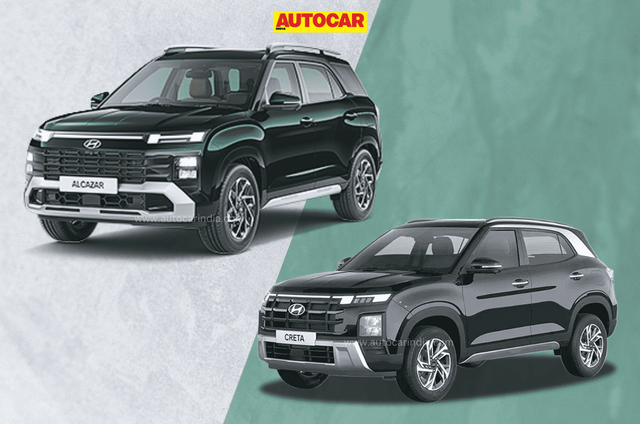
I am looking to upgrade from my Hyundai Creta to a 7-seater SUV. My annual running is only around 6,000 km, and my budget is up to Rs. 25 lakh. Is the Hyundai Alcazar a good option for my usage? I have also considered the Mahindra XUV 7XO and Tata Safari, but I am concerned about their relatively low fuel efficiency. Which 7-seater SUV would you recommend?
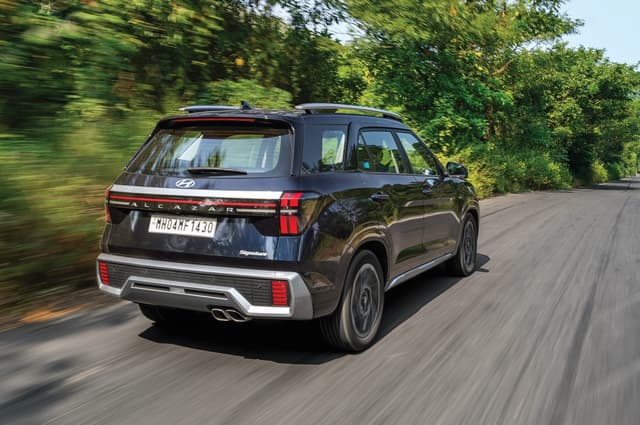
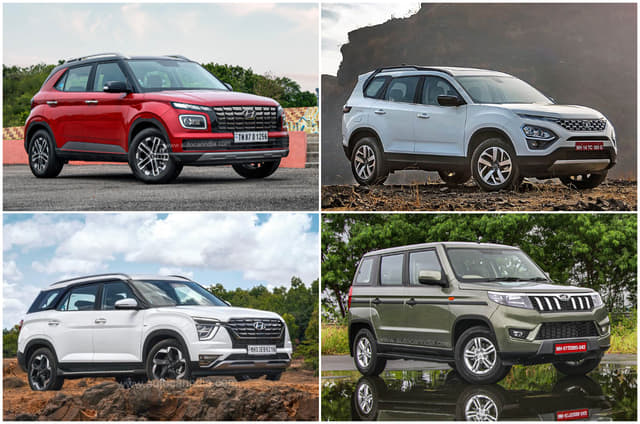
With a yearly running of just 6,000km, petrol is the sensible choice, and the Hyundai Alcazar is a good option. It is a comfortable, easy-to-drive family SUV with a hassle-free ownership experience, and the 1.5 turbo petrol engine paired with the 7-speed dual-clutch automatic is powerful enough and relatively efficient too. Plus, since you're coming from a Creta, you'll be familiar with the Hyundai network and could even ask for a loyalty discount. However, the Alcazar’s third row is not as spacious as some larger cars in the segment, so if you genuinely need a proper 7-seater, it may not be the ideal solution. What's more, if your Creta is the 2020 or newer model, you'll find the Alcazar perhaps a little too familiar on the inside.The Mahindra XUV 7XO, Tata Safari and MG Hector Plus are good options that offer more space. However, as you have noted, they're not fuel efficient at all, and moreover, in your budget, you will only get a low to mid-spec variant, whereas you will get a fully-loaded Alcazar. Another option to consider, though not an SUV, is the Kia Carens Clavis. Its MPV shape is more space-efficient, and you actually get more passenger and luggage room than the Alcazar, with the same efficient engines, for around the same price.
I want to buy a six-seater petrol automatic. Which should I choose between Alcazar and Carens Clavis? Please analyse and suggest.
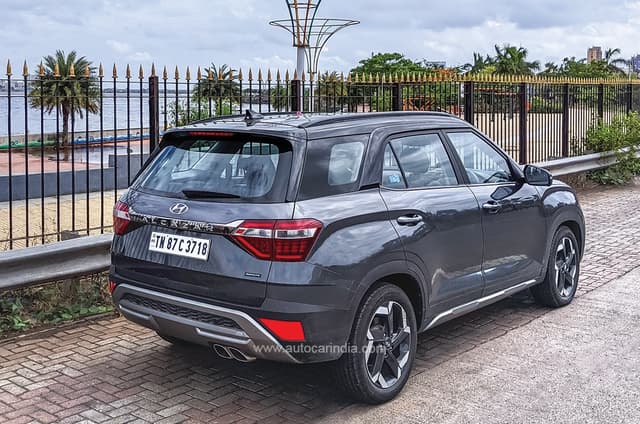
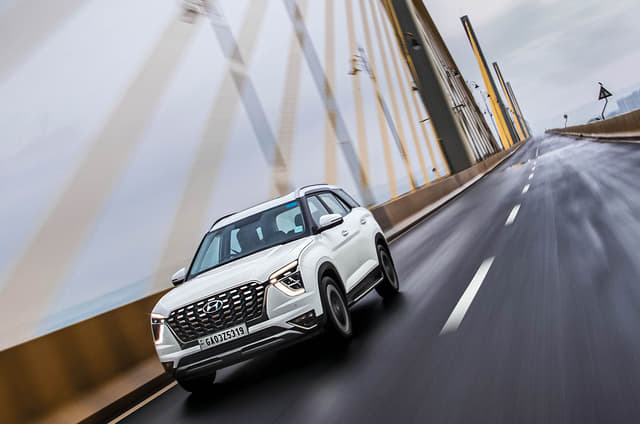
While both the Alcazar and Carens Clavis share the same 160hp 1.5-litre turbo petrol engine and 7-speed dual-clutch automatic, the Kia car is simply the better family car. Its MPV design translates into easier access to the third row, more usable space for six adults and a more comfortable third row, making it the more practical choice if you'll regularly use all six seats.The Alcazar fights back with its SUV styling, slightly more premium ambience and higher ground clearance. If those are priorities and the third row will only be used occasionally, it's a compelling option. However, if your focus is on carrying the family in comfort, the Clavis has the edge thanks to its roomier cabin and more practical layout.Both offer a similar ownership experience, safety kit and powertrain, so the decision really comes down to practicality versus image
Upcoming Cars


Hyundai Cars


Trending Cars


Latest Cars