

Last Updated on: 28 Aug 2026
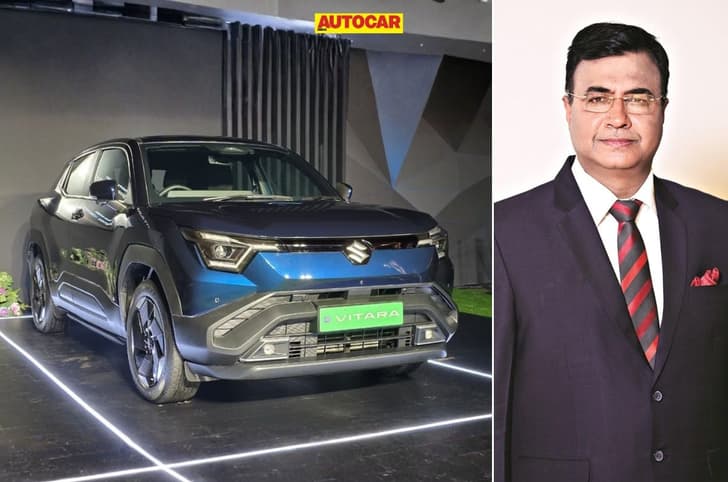
Maruti Suzuki e Vitara
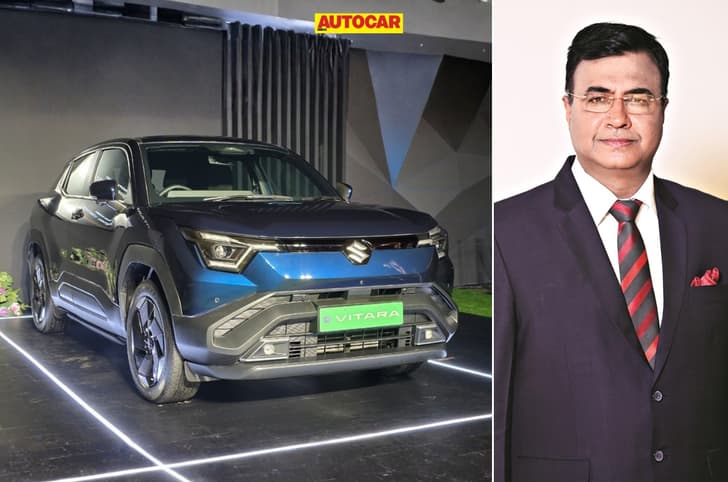
The Maruti Suzuki e Vitara is the manufacturer’s only all-electric offering in India and is priced from ₹16.19 lakh to ₹19.99 lakh. Like the mass-market MG EVs, the e Vitara is available with a battery subscription scheme. This plan essentially allows buyers to purchase the whole car except the battery pack, which is offered on a monthly subscription of ₹3.99 and ₹4.39 per km for the 49kWh and 61kWh battery pack options, respectively. This scheme lowers the Maruti e Vitara prices to ₹10.99 lakh for the base-spec Delta 49 kWh, ₹11.99 lakh for the mid-spec Zeta variant and ₹14.29 lakh for the fully loaded Alpha 61 kWh, excluding the battery subscription fee.
The Maruti e Vitara battery pack options include a 49kWh and a 61kWh choice with a claimed range of 543km and 440km, respectively. The smaller battery is mated with a 144hp electric motor, while the larger battery pack is paired with a 174hp motor. The e Vitara is offered with only a front-wheel-drive (FWD) setup, although it gets an all-wheel-drive AWD option in the overseas markets.
Maruti is offering a complimentary 7.4kW AC home charger for the e Vitara. An 8-year or 1.6 lakh km warranty on both the battery pack options (whichever is earlier), and a 3-year standard vehicle on the vehicle, which can be extended up to 8 years upon payment of an additional fee.
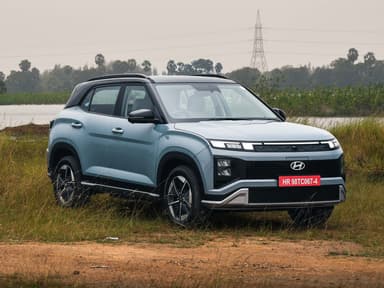
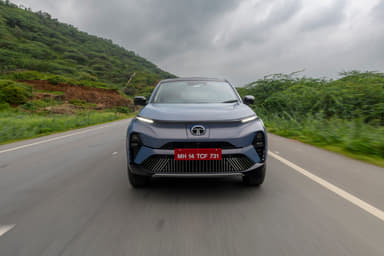
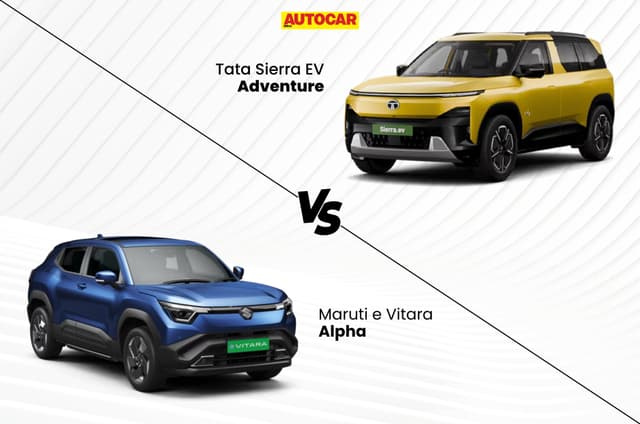
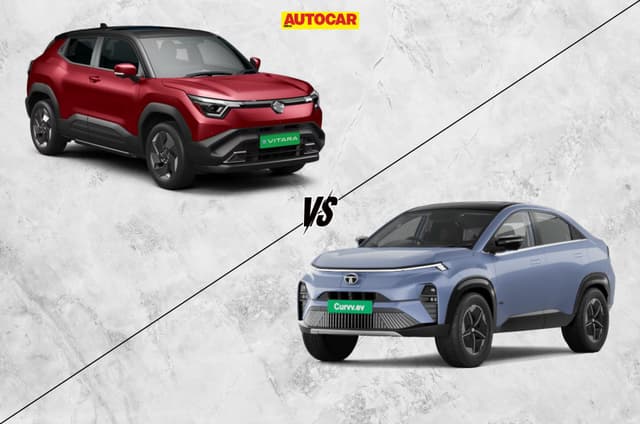
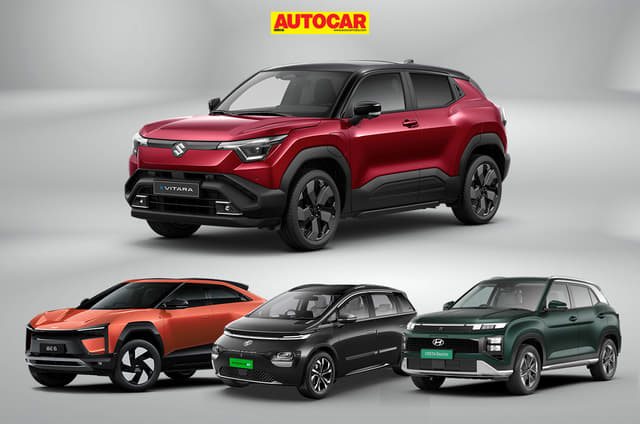
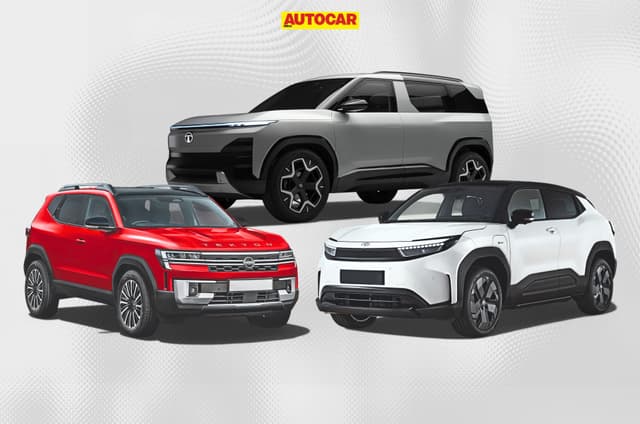
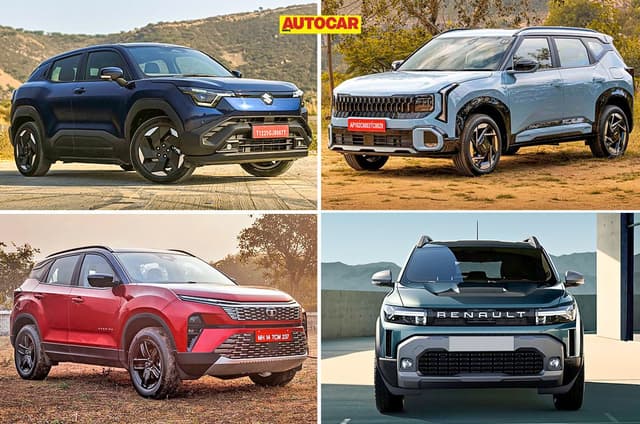
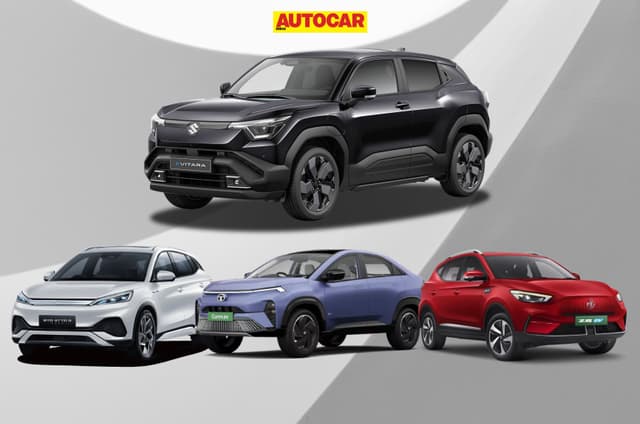
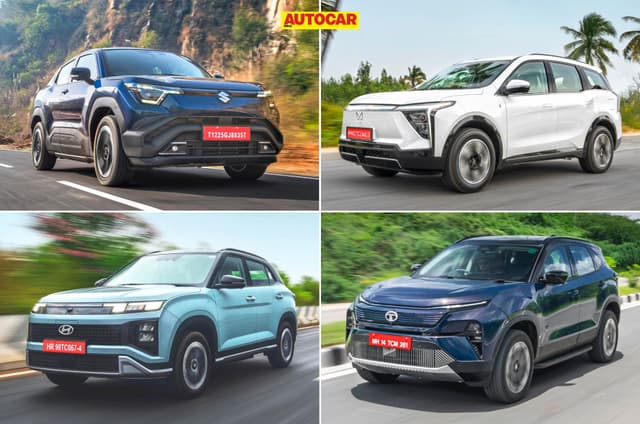
The Maruti Suzuki e Vitara rivals in India include the Hyundai Creta Electric, Toyota Ebella, Mahindra BE 6, Tata Curvv EV and also the upcoming Tata Sierra EV.
The Maruti e Vitara is also available with two buyback schemes: a 3 year/45,000 km plan with a buyback value of 60 percent, or a 4 year/60,000 km plan with a reduced buyback value of 50 percent.
Key Highlights of the Maruti Suzuki e Vitara
- e Vitara is the only Maruti Suzuki EV on sale in India.
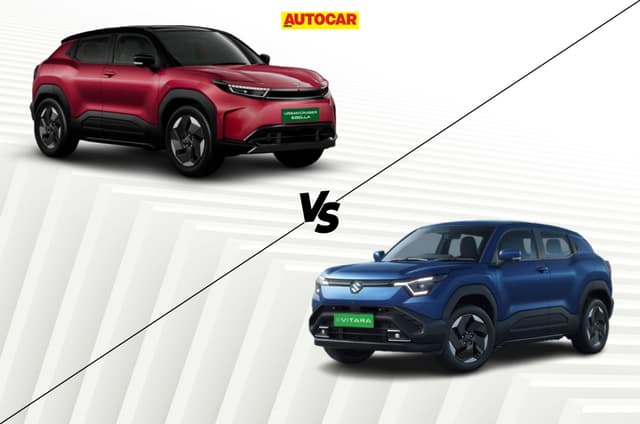
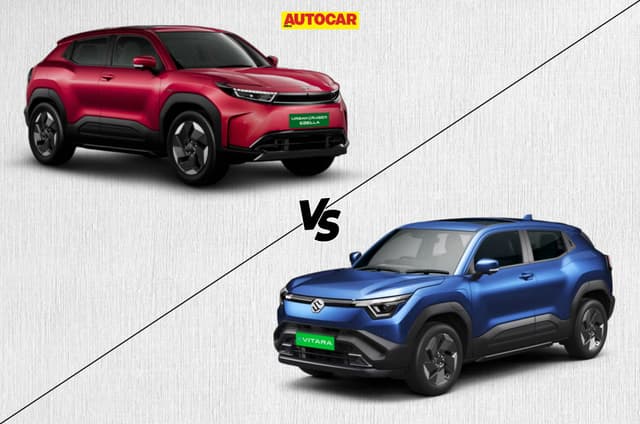
- It shares its platform, including its electric powertrain with the Toyota Urban Cruiser Ebella.
- It gets two battery pack options: 49kWh and 61kWh, with an ARAI-rated range of 440km and 543km, respectively.
- Gets either a 144hp or a 174hp electric motor, dispensing on the chosen battery pack. Torque on both versions is 193Nm.
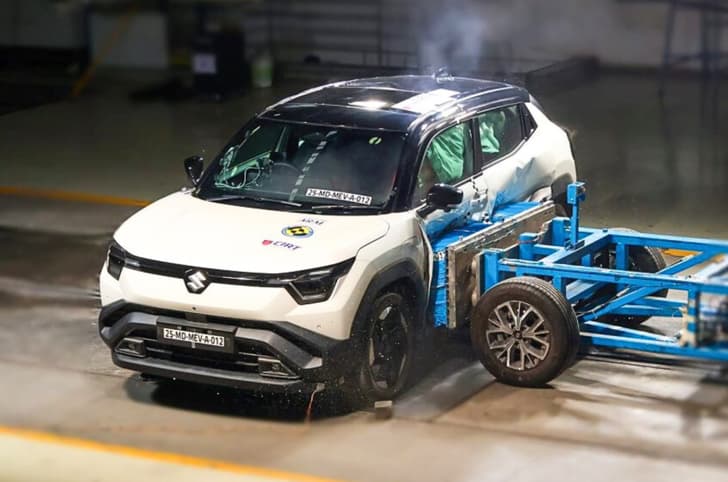
- Maruti Suzuki e Vitara crash test rating is 5 stars from Bharat NCAP and 4 stars from Euro NCAP.
- Safety features include 7 airbags, a 360-degree camera, ADAS and TPMS.
- Convenience features include a 10.25-inch driver's display, a 10.1-inch infotainment, an Infinity sound system, a wireless phone charger, a fixed glass sunroof, ventilated front seats and a powered driver seat.
Maruti Suzuki e Vitara Latest Updates
- 18 Feb 2026: Maruti reveals full prices of the e Vitara e-SUV
- 17 Feb 2026: Maruti has priced the e Vitara with battery rental scheme from ₹10.99 lakh, with a battery subscription fee of Rs 3.99 per km
Maruti Suzuki e Vitara Features and specifications
Our Rating | 6 |
Battery Range | 440 km - 543 km |
Fuel Type | Electric |
Seats | 5 |
Body Style | SUV |
Doors | 5 |
Claimed Electric Motor Range | 543 km |
| Fuel Type/ Propulsion | Electric |
| Motor Type | Permanent Magnet Synchronous Motor |
| Number of Motors | 1 |
| Gearbox Type |
| Drive Mode Types | Multiple |
| Terrain Modes | Yes |
| Battery Capacity | 61kWh |
| Charging Time | 9hrs 10%-100%(7.4kW AC), 45min 10%-80% (70kW DC) |
| Front Suspension Type | MacPherson Strut |
| Front Springs | Coil Springs |
| Rear Suspension Type | Multi Link |
| Rear Springs | Coil Springs |
| Length | 4275 mm |
| Width | 1800 mm |
| Height | 1640 mm |
| Wheelbase | 2700 mm |
| warranty Distance | 100000 |
| warranty Duration | 3 |
| 12 Volt Port | |
| 12 Volt Port Boot | |
| Accessory Power Outlet | |
| Ambient Lighting |
| Adaptive Cruise Control | |
| Airbags | 7 |
| Anti Theft Alarm | |
| Anti-Lock Brakes (ABS) |
| Antenna | Shark Fin |
| Body Coloured Bumpers | |
| Connected LED | |
| Cornering Foglamps |
| Average Fuel Consumption | |
| Average Speed | |
| Distance to Empty | |
| Gear Indicator |
| AUX Input | |
| Android Auto | Wireless |
| Apple CarPlay | Wireless |
| Audio System |
| Alexa Compatibility | |
| Anti Theft Immobilisation | |
| App Details | |
| Auto Crash Alert |
Maruti Suzuki e Vitara price & variants
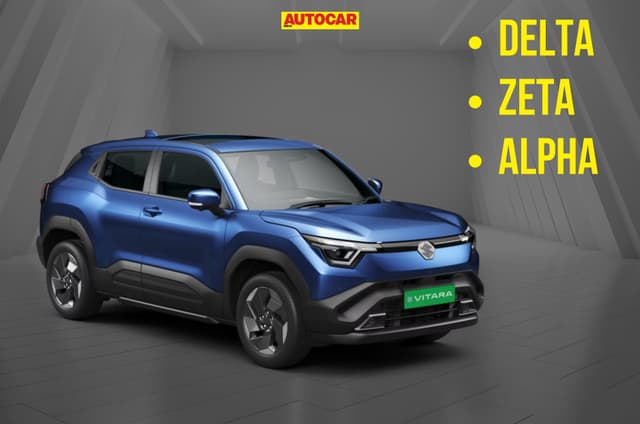
The e Vitara is offered in 3 options across three trims, namely Delta, Zeta, and Alpha. While the former comes with a 49kWh battery pack, the latter two come with a 61kWh battery pack.
Delta: Gets a 10.25-inch digital driver’s display, 10.1-inch infotainment system, wireless Apple CarPlay and Android Auto, 4 speakers, drive modes, reclining and sliding rear seats, 7 airbags, front and rear parking sensors, hill hold control and 18-inch alloy wheels. For a base trim, this variant is quite well equipped if you’re on a budget.
Zeta: Comes with a wireless phone charger, reverse parking camera and a parcel tray.
Alpha: Level 2 ADAS, 360-degree camera, ventilated front seats, 10-way powered driver seat, single-pane fixed glass roof, 8-speaker Infinity sound system with subwoofer, semi-leatherette seat upholstery. This is the variant we recommend, as it not only has all the bells and whistles, but is also better value for money than the Zeta variant.
Maruti Suzuki e Vitara expert review
We like
Easy to drive
Smooth and progressive powertrain
We don't like
Limited rear seat headroom and boot space
Busy ride
Evident road and wind noise
7.0
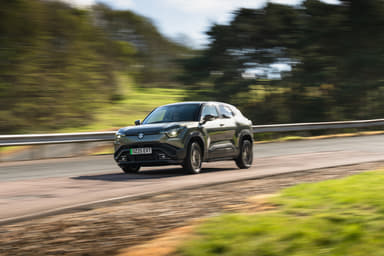
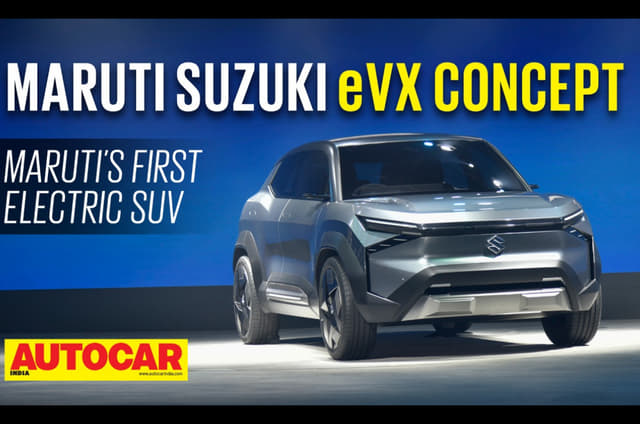
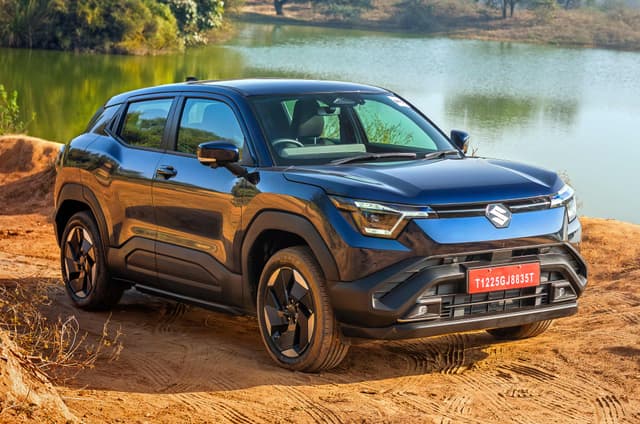
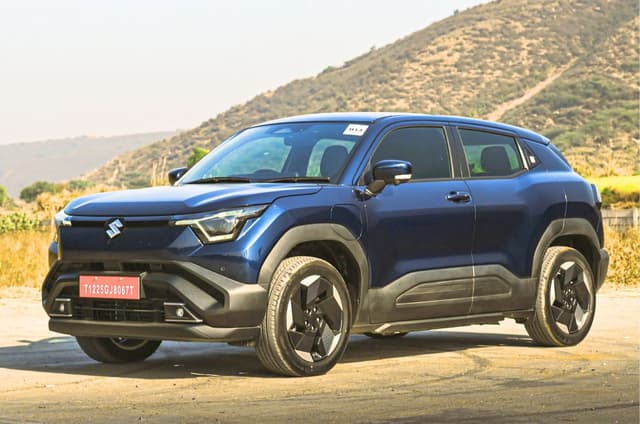
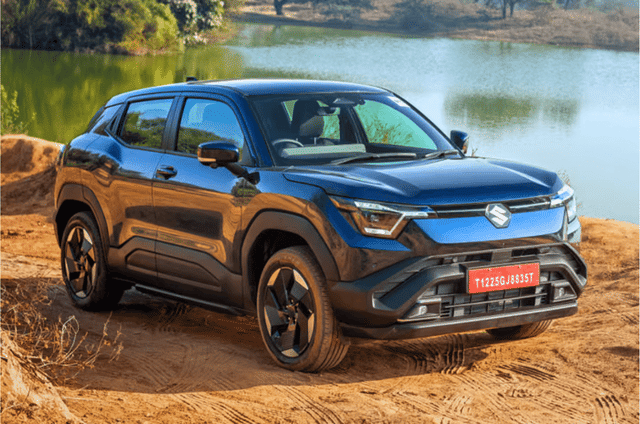
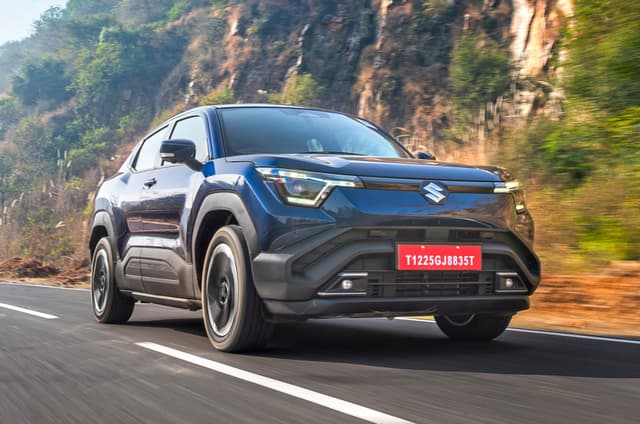
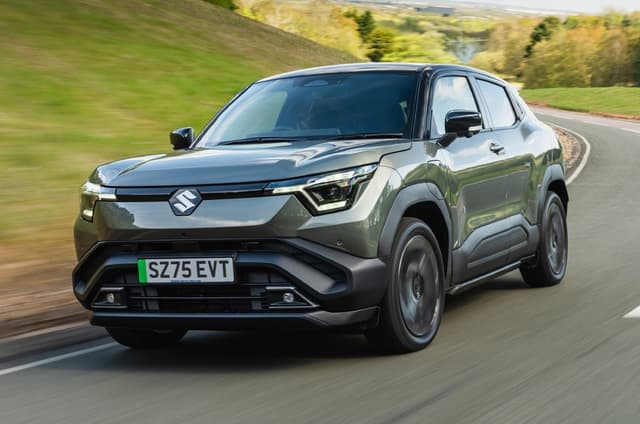
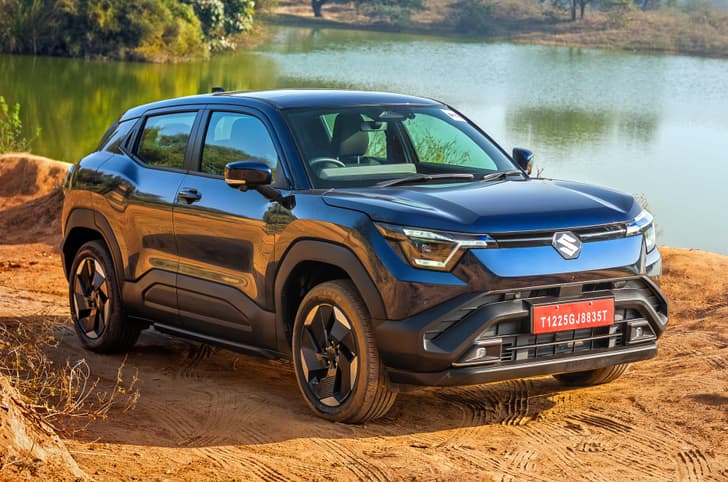
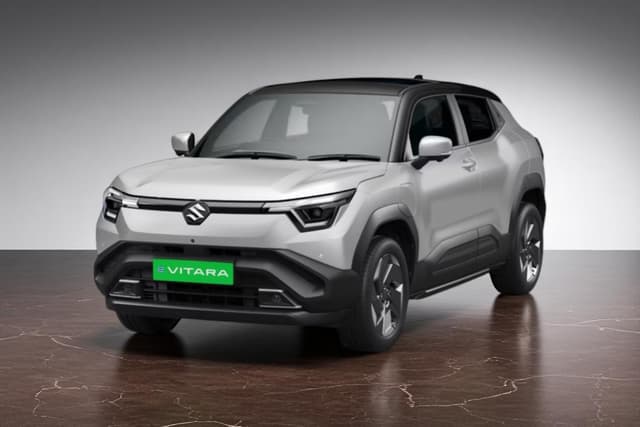
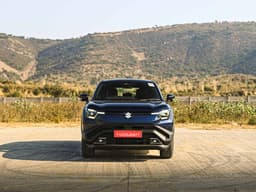
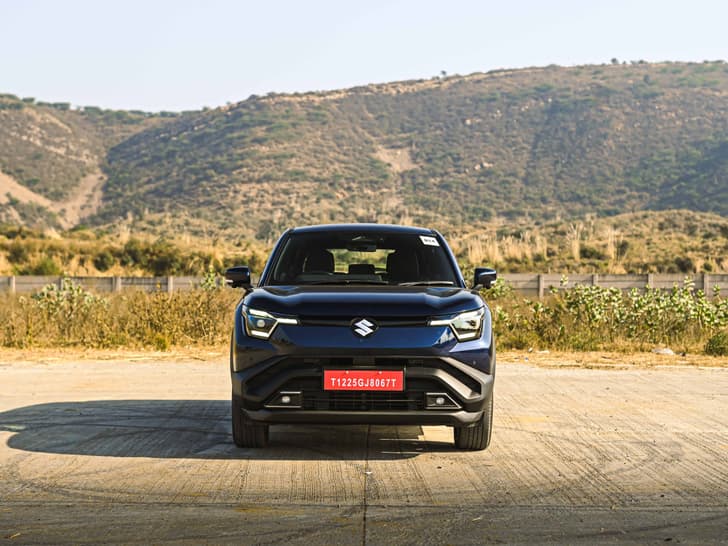
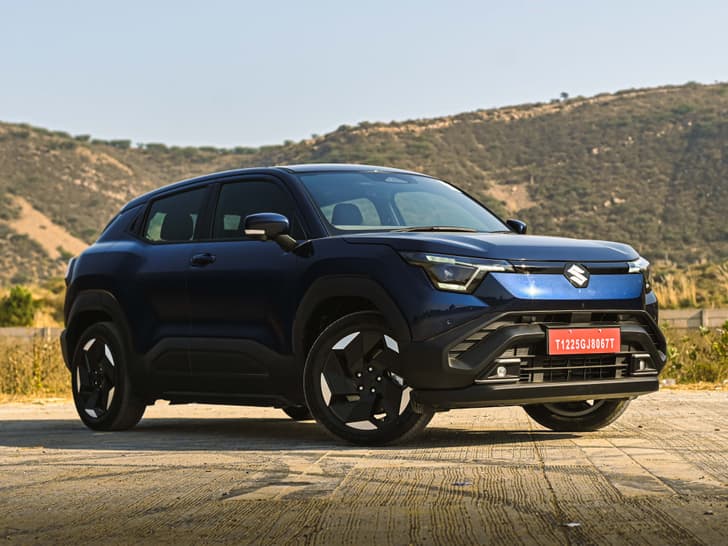
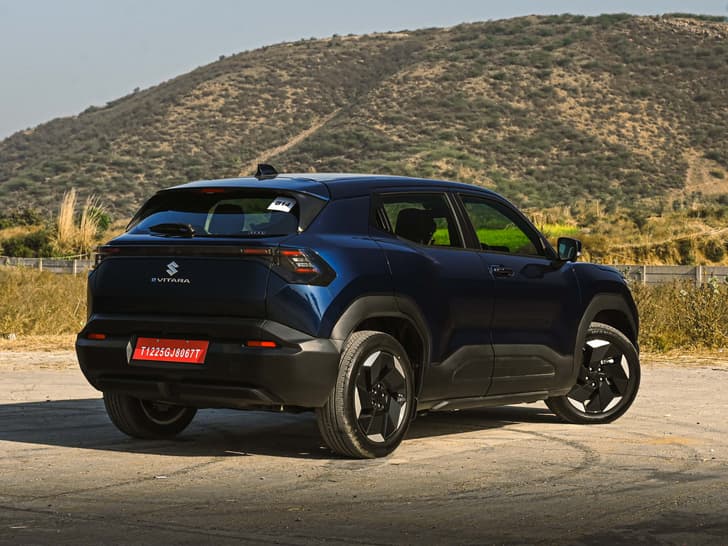
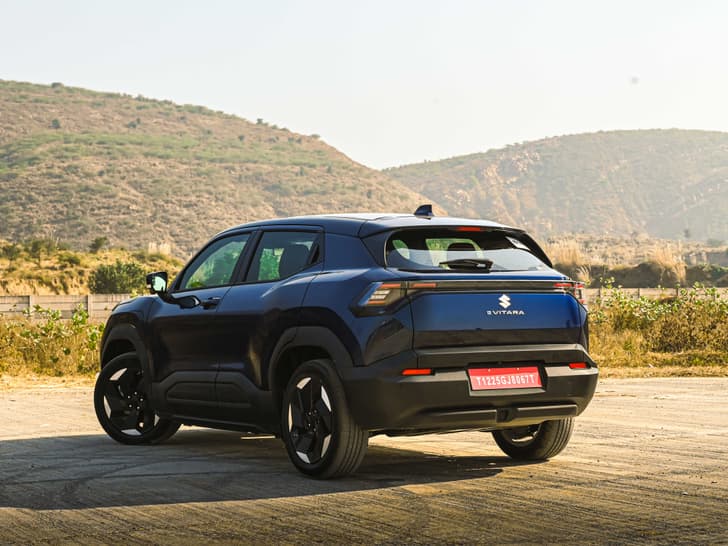
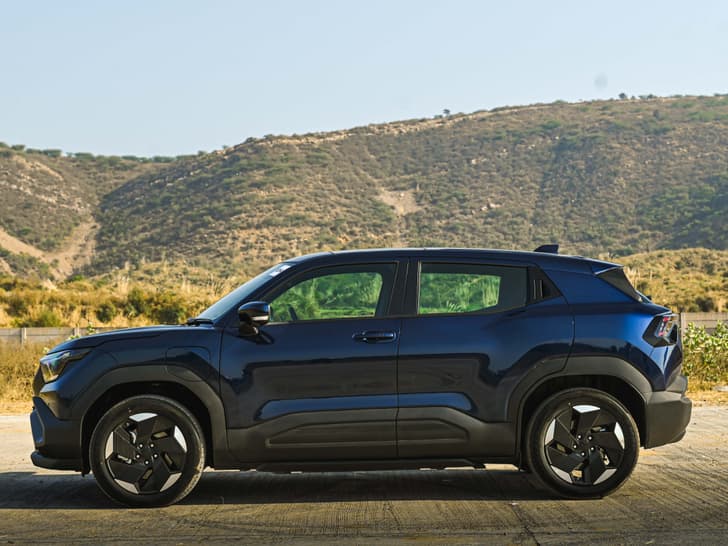
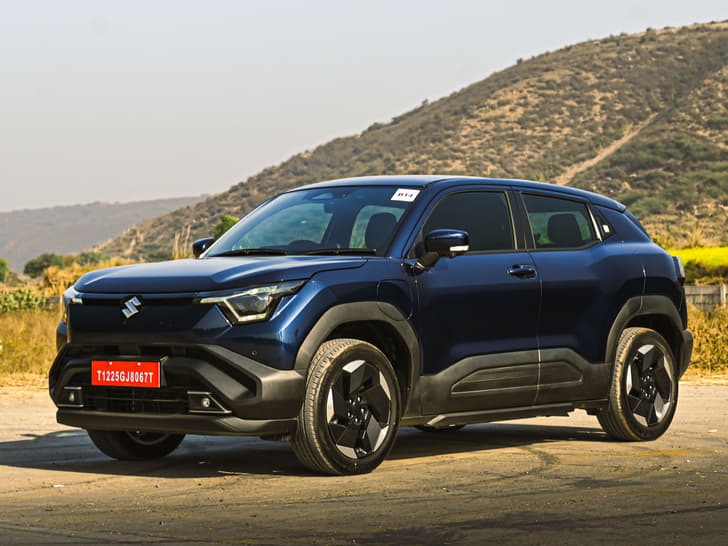
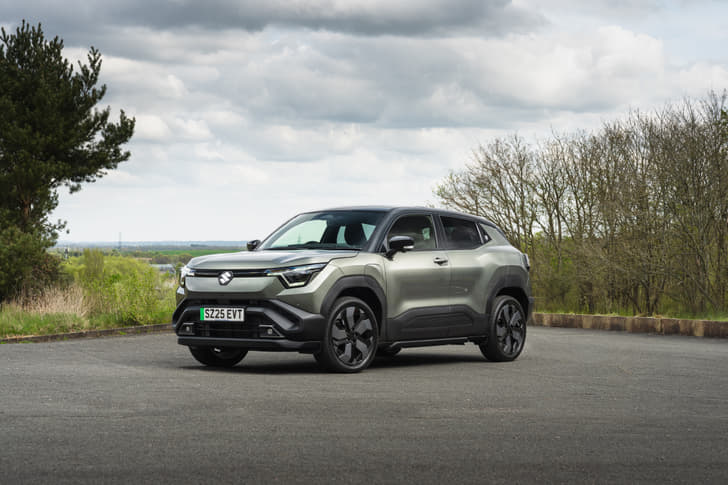
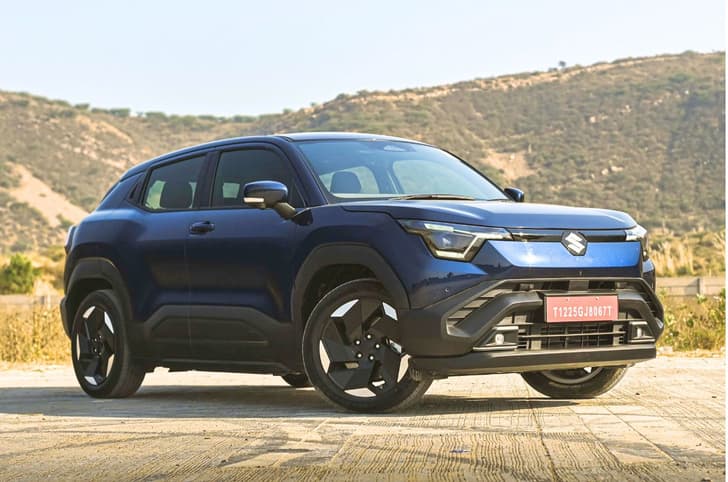
After what feels like a very long wait, India’s largest carmaker has finally entered the EV space with the e Vitara electric SUV. Unlike the familiar petrol/ICE siblings, this is a thoroughly new design that blends sharp lines, chunky cladding and a somewhat rugged stance. From the front, the grille is blanked off for aero efficiency, flanked by LED headlights with a distinctive Y-shaped DRL signature. The sides are dominated by lower-door and wheel-arch cladding and purposeful haunches. It gets 18-inch aero-efficient alloys that fill the arches well, and the roofline tapers neatly towards the rear.
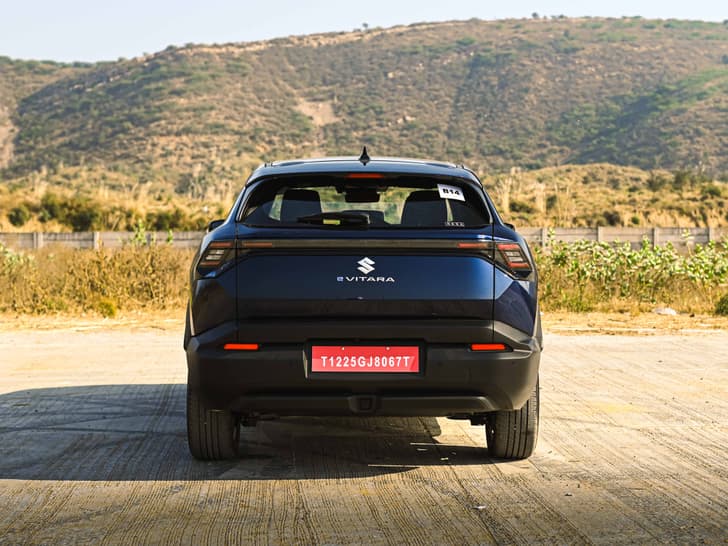
At the back, an upright tailgate with slim LED tail-lights and a faux skid plate add to the SUV’s presence, though some might find the cladding a touch too much. Under the skin, the e Vitara rides on a new Heartect-e EV platform, though packaging cues — like a front-mounted motor and the absence of a frunk — hint at it being closer to an ICE conversion than a dedicated EV. Dimensionally, it’s about 4.3m long with a 2.7m wheelbase, and a claimed ground clearance of around 185mm.
6.0
Inside, the e Vitara steps up the game for Maruti. The asymmetric dashboard uses soft-touch materials, a dual-screen layout and a squarish steering wheel that feels better than typical Suzuki fare. The higher-mounted touchscreen and digital cluster create a big bezel, but in practice the layout works. Physical AC and volume controls are nice to see in an EV that could have gone all-touchscreen.
Storage is generous with cubbies, a floating centre console and a wireless charger. Front seats are comfortable and supportive, though the driving position feels knees-up. Rear legroom benefits from the long wheelbase, but headroom is tight for taller occupants. The bench is adjustable and reclines slightly, but the backrest is upright. Boot space is limited — around 238 litres with seats back — though sliding the bench forward adds a bit of room. A full-size spare wheel lives under the boot, alongside a tray for charging cables.
7.0
Feature fitment includes a 10-inch touchscreen, full digital cluster, wireless smartphone interface, 360-degree camera, single-zone climate control, ventilated front seats, powered driver’s seat, wireless phone charger and an Infinity sound system with subwoofer — plus leatherette upholstery. A fixed, single-pane glass roof adds more light. Compared to key rivals, it misses a panoramic sunroof, dual-zone climate control and powered tailgate.
On safety, the e Vitara impresses for its class. It has six airbags, ESC, traction control and Level 2 ADAS tech. On our short drive, Maruti’s ADAS calibration seemed well-judged. The SUV has also scored a 5-star Bharat NCAP crash safety rating .
7.0
With no official specs given for India, we assumed the test car was the higher-power, larger-battery variant (174hp / 61kWh). The powertrain feels tuned more for everyday drivability than outright performance. Off the line, acceleration isn’t neck-snapping but builds in a smooth, linear fashion — where it feels best is around town or cruising, not while sporty driving.
Three drive modes (Eco, Normal, Sport) are available, but Eco feels too dull for most use, Normal is where you’ll spend most time, and Sport adds only a little more urgency. Refinement is decent, motor whine is minimal but wind and tyre noise intrude loudly, especially at higher speeds or on rough concrete surfaces. Better insulation is needed, as the absence of engine NVH makes these noises more noticeable inside the cabin.
The braking setup — discs all around — is confident, but regenerative braking levels are oddly managed. There are no paddleshifters; instead, you cycle levels through the touchscreen or a centre console button, which only toggles a preset level and must be done while stationary.
8.0
While our drive was too brief to properly test range, the e Vitara’s on-board computer showed around 4.8 km/kWh on a highway run — modest — and an impressive 7 km/kWh around town. The larger 61kWh battery is claimed to deliver up to 543 km on a single charge. Charging with an 11 kW AC unit takes roughly 5h 30m from 10-100 per cent, and a 70 kW DC fast charger can take it from 10-80 per cent in about 45 minutes.
6.0
The e Vitara’s suspension has the underlying firmness typical of European cars, so at low speeds, sharp bumps and potholes are clearly felt inside the cabin. It isn’t uncomfortable, but at highway speeds the ride feels unsettled and overly busy. There’s noticeable vertical and side-to-side movement, especially over expansion joints, which could leave passengers feeling queasy on longer drives.
In typical Maruti fashion, the handling is safe but unexciting. There’s evident body roll, and the light steering doesn’t inspire much confidence in corners, though grip levels are decent—acceptable for a midsize electric SUV.
6.0
Without a full official price or spec sheet yet at the time of our drive, final judgment is hard. What’s clear is that the e Vitara does many things well — its interior quality is a welcome leap for Maruti, it’s easy to drive, efficient and safe. But it also has clear shortcomings: limited rear headroom and boot space, a firm and busy ride, and more wind/tyre noise than rivals. Given the crowded EV landscape today, Maruti needed to address these before launch.
Still, if pricing is aggressive, there’s potential here — the fundamentals are right even if the execution feels a bit cautious compared with more mature rivals.
Maruti is yet to reveal the full price list, though it has announced that the base 49kWh Delta variant is available for an introductory price of Rs 10.99 lakh (ex-showroom), exclusive of the battery. Customers will have to pay an additional Rs 3.99 per kilometre driven, as the battery is provided on a rental basis.
Reviewed by: Soham Thakur
Maruti Suzuki e Vitara Official Brochure
Download the complete brochure with specs, features, and variants.
Maruti Suzuki e Vitara User Reviews
Tell us about your experience
Maruti Suzuki e Vitara reviews

Maruti Suzuki e Vitara comparison


Maruti Suzuki e Vitara Range
The Maruti Suzuki e Vitara is available with two battery pack options: 49kWh and 61kWh. The mileage range is 440 km - 543 km, dispensing upon the chosen battery pack.
| PowertrainThe combination of engine type, fuel, and transmission that powers your vehicle and determines how it drives and what it runs on. | ARAI RangeMileage certified by the government, tested under controlled lab conditions. Real-world mileage will vary. |
|---|---|
Electric 49kWh | 440 km |
Electric 61kWh | 543 km |
Maruti Suzuki e Vitara news
Maruti Suzuki e Vitara Images
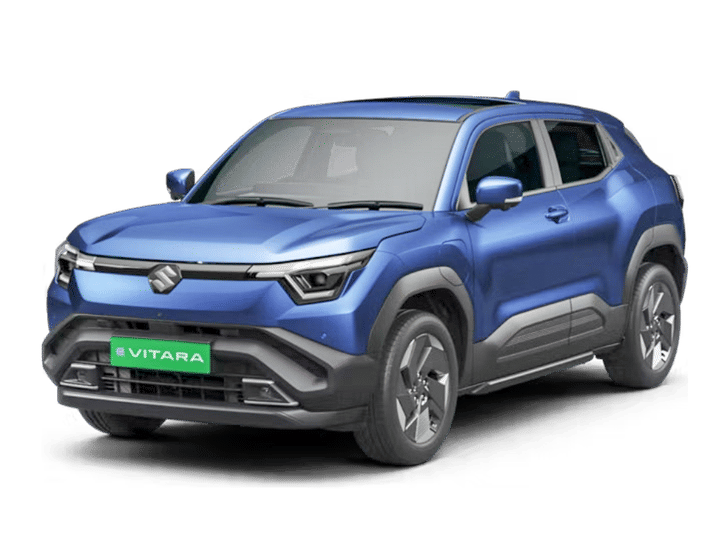
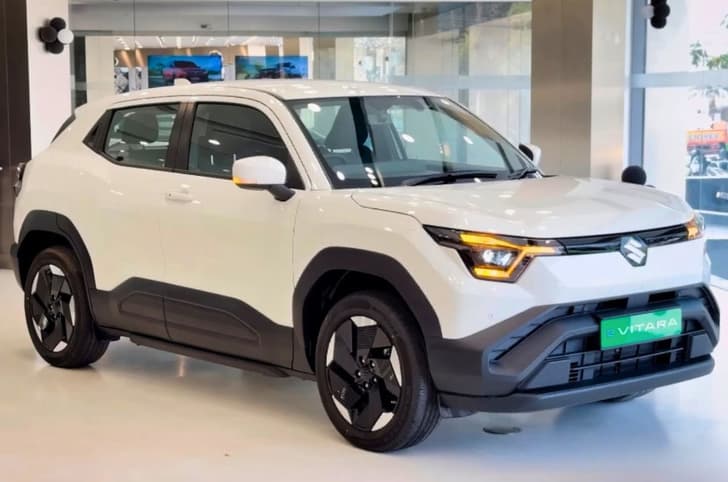
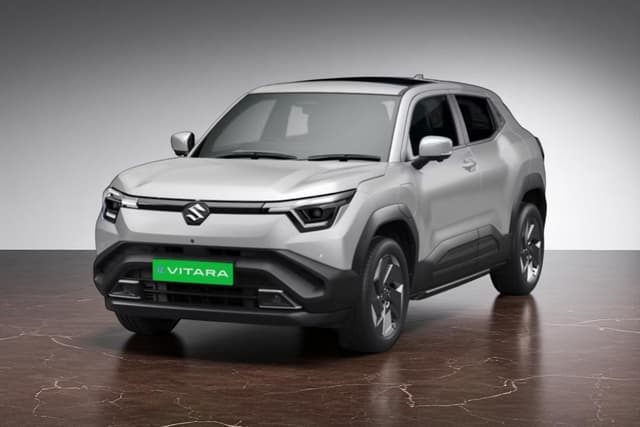
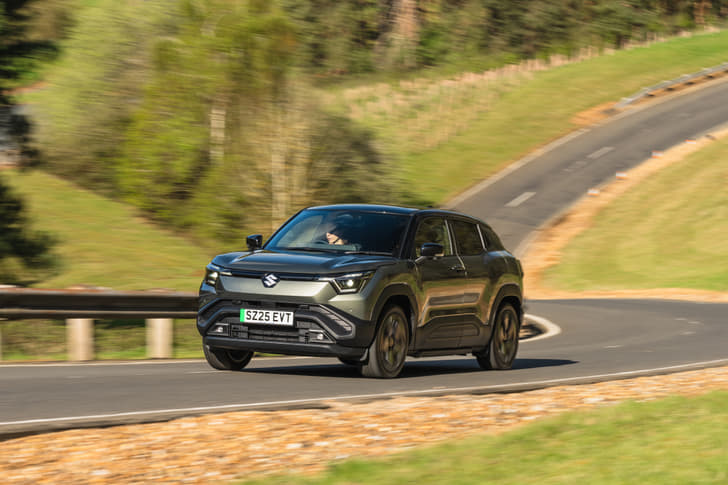
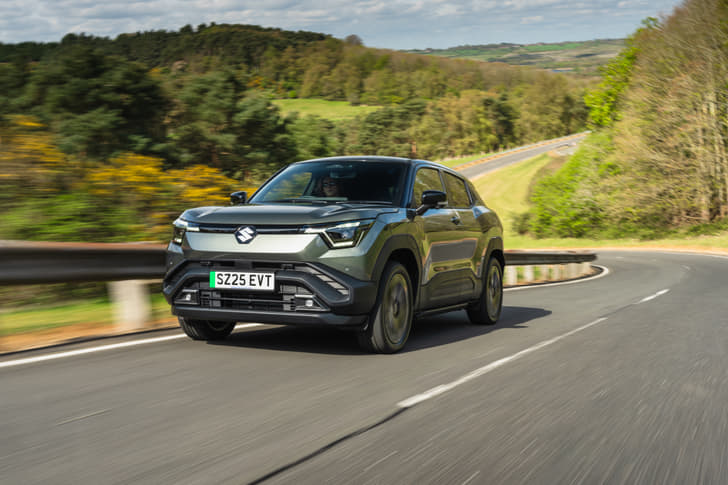
The e-Vitara images portray a sharp, futuristic SUV design language with polyhedral surfacing, a muscular stance, and Matrix connected LED headlamps and tail lamps. It also gets alloy wheels, a sculpted 3D appearance, and EV-specific design elements. Check out the images in our gallery to see its modern styling details.

Maruti Suzuki e Vitara videos
The e-Vitara videos showcase its unique styling, well-built interiors, along with its driving dynamics, features, walkarounds and review on European roads.


Maruti Suzuki e Vitara Colours
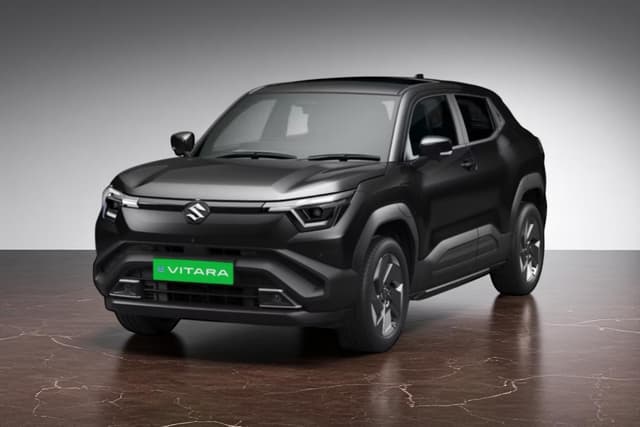
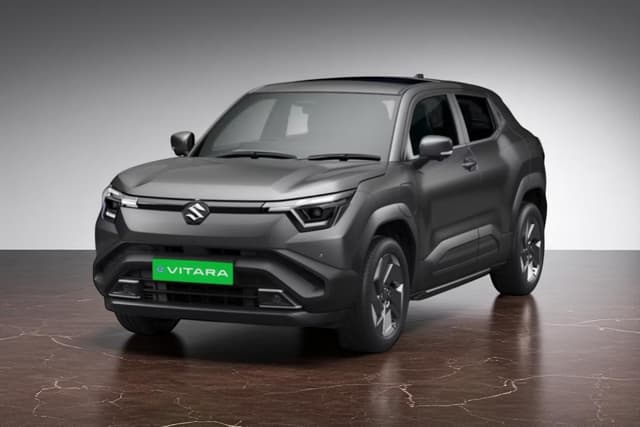
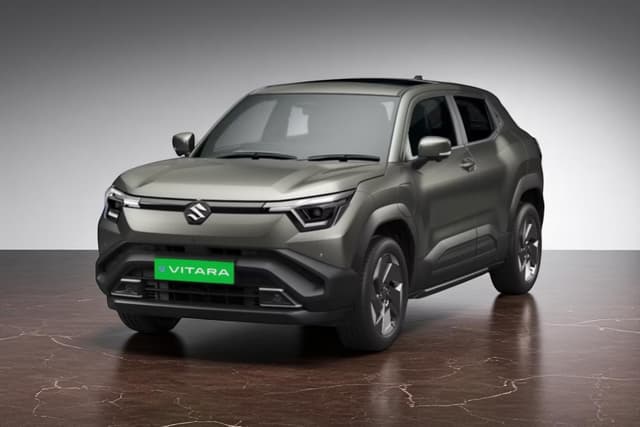
The e-Vitara colours in five monotone options, including Splendid Silver, Arctic White, Grandeur Grey, Bluish Black and Opulent Red. Dual tone colour options that come with a Bluish Black roof are available in the Opulent Red, Splendid Silver, Arctic White and Land Breeze Green colours.
Similar Cars to Explore
Maruti Suzuki e Vitara FAQs
Yes, the Maruti Suzuki e Vitara is a strong first EV for most buyers in India. It delivers power in a smooth, linear and predictable manner, making it easy to drive in city traffic without the abrupt acceleration common to many electric SUVs. Competitive pricing, along with Maruti Suzuki's Battery-as-a-Service (BaaS) option that reduces the upfront purchase cost, further enhances the e Vitara's appeal as an accessible and practical first electric SUV.
The Maruti Suzuki e Vitara's interior represents a significant step forward over previous Maruti models. It features the brand's most premium cabin yet, with a dual-screen layout, soft-touch brown leatherette trim, dark silver accents and a distinctive two-spoke steering wheel. Physical controls for the climate control system and infotainment volume also improve everyday usability, making the Maruti e Vitara's cabin feel modern and genuinely upmarket for the segment.
The Maruti Suzuki e Vitara offers decent ride quality for Indian roads, but it has some limitations. Its suspension has a slightly firm tune, so sharp potholes and broken surfaces are noticeable at low speeds. At highway speeds as well, the ride can feel a bit busy with some vertical and lateral movement over expansion joints. The Maruti e Vitara is better suited to city driving, where its suspension feels more composed and manageable.
The Maruti Suzuki e Vitara is not designed to be an enthusiast-focused EV. Its handling is safe and predictable, but not particularly engaging, with noticeable body roll and light steering that doesn’t offer strong feedback in corners. Grip levels are adequate for everyday driving, but it prioritises ease of use over excitement. For buyers seeking a more dynamic electric SUV, alternatives like the Mahindra BE 6 are likely to feel more engaging, while the Maruti e Vitara remains a comfort-oriented EV.
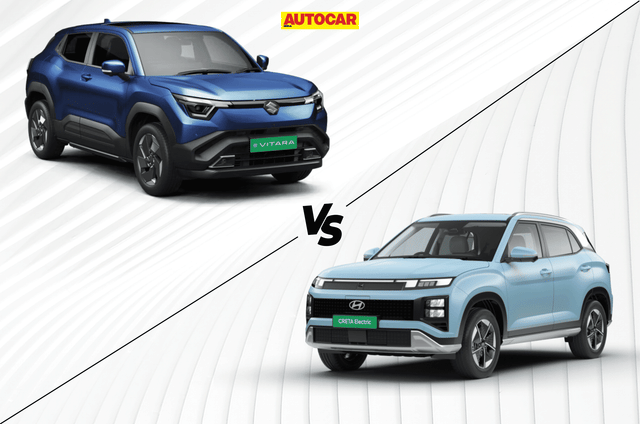
The Maruti Suzuki e Vitara offers limited boot space of around 238 litres, which makes it one of its weaker aspects as a family EV. While sliding the rear bench forward can free up a little extra room, and there is provision for a full-size spare wheel along with a storage tray for charging cables, overall practicality is restricted. Compared to rivals like the Hyundai Creta Electric, the Maruti e Vitara provides noticeably less usable luggage space for family trips and long-distance travel.
Questions you may find useful
How do the Maruti Suzuki e Vitara, Toyota Urban Cruiser Ebella, BYD Atto 3 and Hyundai Creta Electric compare in terms of performance and overall package?
The Maruti Suzuki e Vitara, Toyota Urban Cruiser Ebella, BYD Atto 3 and Hyundai Creta Electric are all fundamentally different electric cars targeting different buyers. The Maruti e Vitara and Ebella are essentially the same car underneath, with the Ebella offering a slightly more premium interior and Toyota’s stronger brand perception; however, it is also significantly more expensive than the e Vitara.The BYD Atto 3 is a larger, more premium EV with a bigger battery and a claimed range of around 521km. It offers a more spacious cabin, a more premium interior and a more mature EV ownership experience, but it is also significantly more expensive.The Hyundai Creta Electric sits somewhere in between, offering a familiar Creta package with a 51 kWh battery. It is a well-rounded EV with a strong brand and service network, but it does not offer the same level of range or premium feel as the BYD Atto 3.If you are looking for a value-focused, efficient city EV, the e Vitara or Ebella are the better choices. If you want a more premium, spacious EV with a more mature ownership experience, the BYD Atto 3 is the better option. The Creta Electric is a good middle ground, but it does not stand out like the other two.
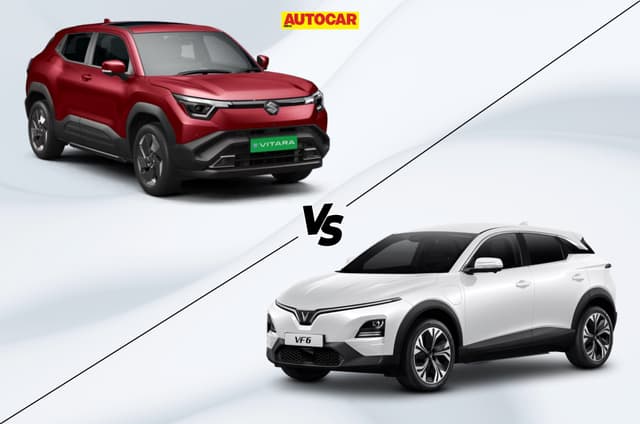
Hi Autocar Team, I currently own a 2021 Maruti Suzuki Swift ZXi (P) and have covered 100,000 km. My daily running is around 90–95 km for my office commute, and I live in Delhi-NCR while working in Greater Noida. I am a family of two, and my ownership experience so far has been completely hassle-free. The Swift is still running perfectly and delivers an average of around 22 km/l. Since I have now crossed the 100,000 km mark, should I consider upgrading? Given my daily running and the fact that I can manage home charging, I feel an EV could suit my requirements. Should I consider the Maruti Suzuki e Vitara Alpha or the VinFast VF6 Wind?
Given the usage, the Maruti Suzuki E Vitara Alpha is the better fit. A 90- 95 km daily commute, combined with the ability to charge at home, makes an EV a sensible upgrade. The E Vitara is a well-rounded package, backed by Maruti’s extensive service network and established ownership experience.The VinFast VF6 Wind is an interesting alternative, with a larger battery and a longer claimed range. However, VinFast is still a new brand in India and does not have the same service reach or long-term track record as Maruti. The e Vitara’s 50.8kWh battery and 550km ARAI-claimed range are more than adequate for the daily commute, while the service network of Maruti Suzuki cars across Delhi-NCR and Noida is a significant advantage for long-term ownership.The VF6 Wind’s 59.6kWh battery and 525km claimed range are impressive, but its limited service footprint and lack of an established ownership history make it a riskier choice at this stage. The E Vitara Alpha also gets a good set of features, including a 360-degree camera, ADAS and a 12.3-inch touchscreen, making it a well-equipped and practical upgrade from the Maruti Suzuki Swift.The VinFast car does have an advantage in terms of rear-seat and boot space, although for a family of two, the e Vitara should be more than adequate. It also feels more solid and planted at higher speeds, while offering considerably more power and a more engaging driving experience. However, these advantages are not enough to sway the overall decision. For this particular use case, the e Vitara Alpha remains the safer and more sensible choice.
Hello, I am from Goa and am in the process of buying an EV. I need expert advice to help me choose between the Creta EV-LR, the new Syros EV-ER, and the Maruti e Vitara 61kWh. I had initially shortlisted the Tata Punch EV 40kWh, but for the past 45 days, there have been no EV deliveries at Tata dealerships in Goa. Hence, out of desperation, I have been compelled to consider the above-mentioned options instead of the Punch EV. I would appreciate your response at the earliest.
The Hyundai Creta EV LR would be our recommendation. It offers the most balanced package of the three, with a strong real-world range, a well-sorted driving experience and Hyundai's proven electric car ownership ecosystem. The Maruti e Vitara 61 kWh is a good alternative with a larger battery and Maruti's service reach, but its cabin isn't as roomy and its ride quality isn't as comfy as the Creta EV. The Kia Syros EV ER is also a good option, but this Hyundai car has the edge in terms of overall size and its more conventional design. The Punch EV 40 kWh was a sensible choice, but if Tata's delivery situation in Goa is forcing you to look elsewhere, the Creta EV LR is the most dependable and well-rounded alternative.
I am using MG Hector plus Savvy pro CVT April,2023 model but its mileage is coming down to 7 to 8 on highway due to E 20 fuel, company is also saying that yr vehicle is E 20 compliant and need not worry about engine but during my highway trip to Delhi journey, my car stopped on flyover while running and did not take start, i have to call RSA and car went to service centre by towing. In service centre they told me that while cleaning engine tank white color substance found due to this fuel injection line choked and did not take start due to E 20 petrol. Now I want to switch to EV of either MG windser or TATA punch EV or Maruti E vitara. which is suitable as safety and price wise and range and charging price. My budget is 15 lac.
I am from Delhi, and my daily commute is around 80 km. I am looking for an EV with a budget of around Rs. 17 lakh. I have shortlisted the e Vitara Zeta 61 kWh and the Syros ER HTX 51 kWh. I want a niggle-free ownership experience, at least a 400 km range, a smooth and comfortable ride, and good interior space. I also plan to keep the car for at least 8-10 years. Please suggest which one is the better choice.
The Kia Syros ER HTX 51kWh is the better fit for your requirements. With an 80km daily commute, an electric car makes perfect sense, and the Syros' 51kWh battery is more than capable of comfortably covering your daily usage while delivering a smooth, refined and comfortable driving experience. It also offers a spacious cabin, premium interiors and should feel more modern and sophisticated to live with over the long term.The Maruti Suzuki e Vitara Zeta 61kWh is also a strong option. Its larger battery gives it an advantage on range and provides more flexibility for longer highway trips. Maruti's extensive service network is another plus if long term ownership is a priority. However, unless you frequently undertake long distance journeys, the additional range isn't something you'll use every day.
Upcoming Cars


Maruti Suzuki Cars


Trending Cars


Latest Cars