Last Updated on: 16 Jul 2026
Hyundai i20 key specifications
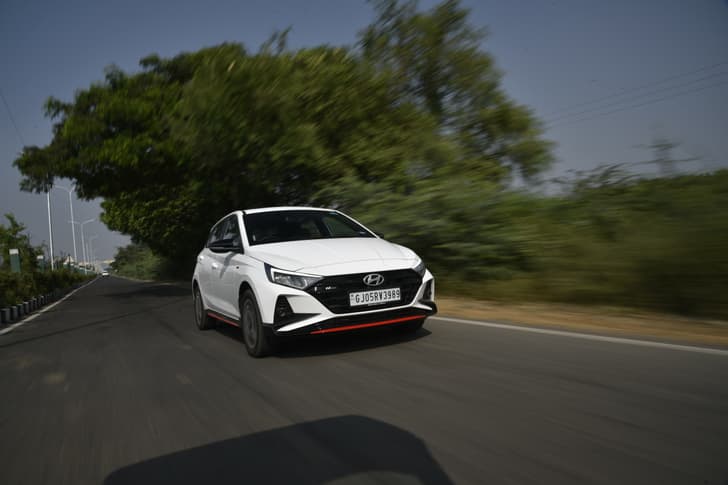
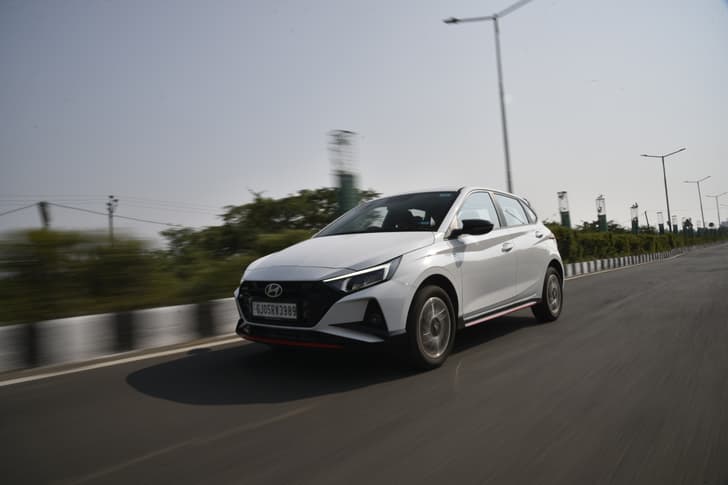
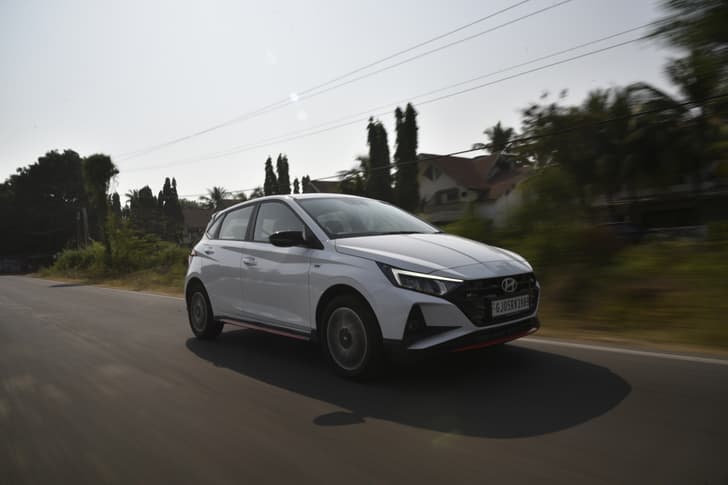
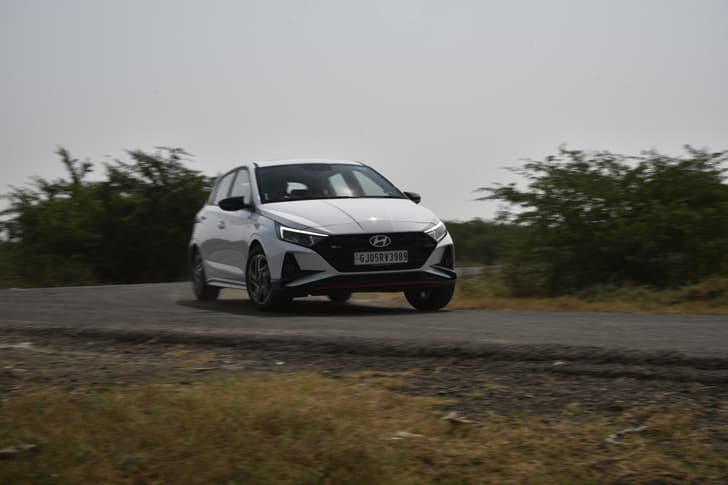
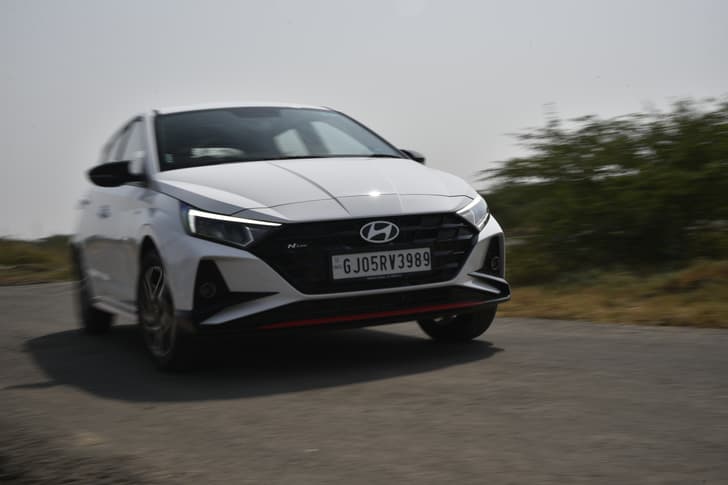
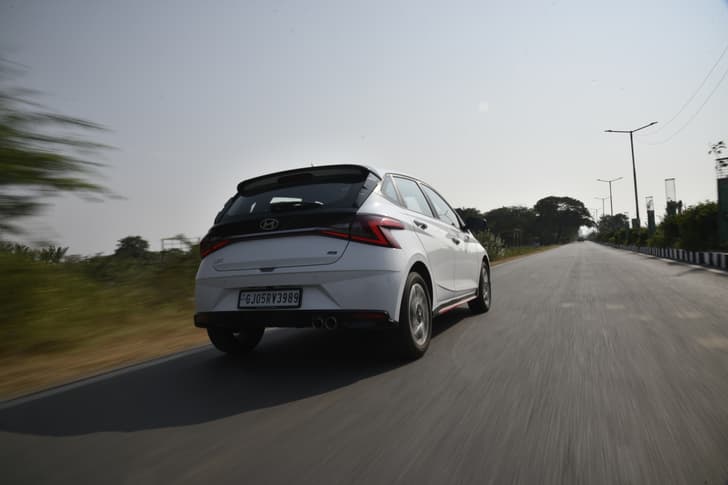
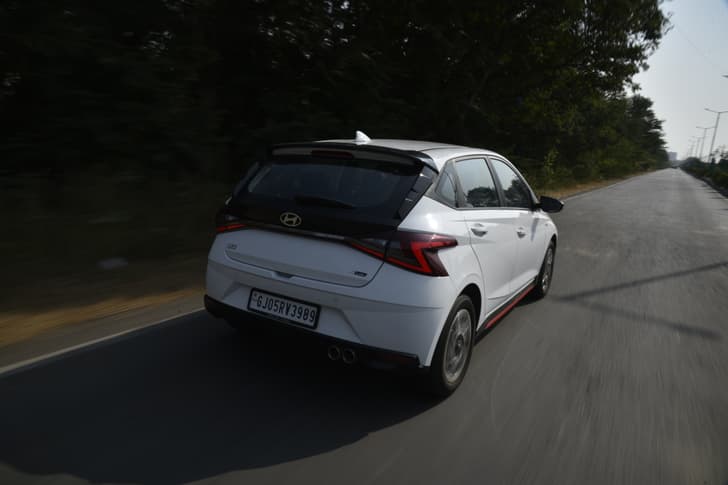
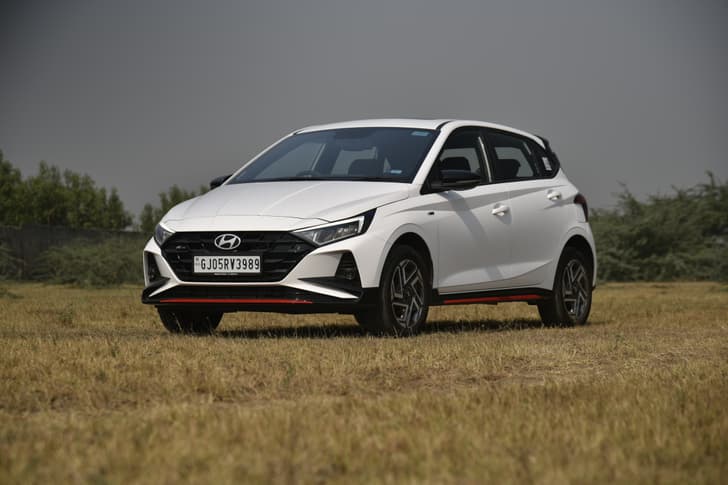
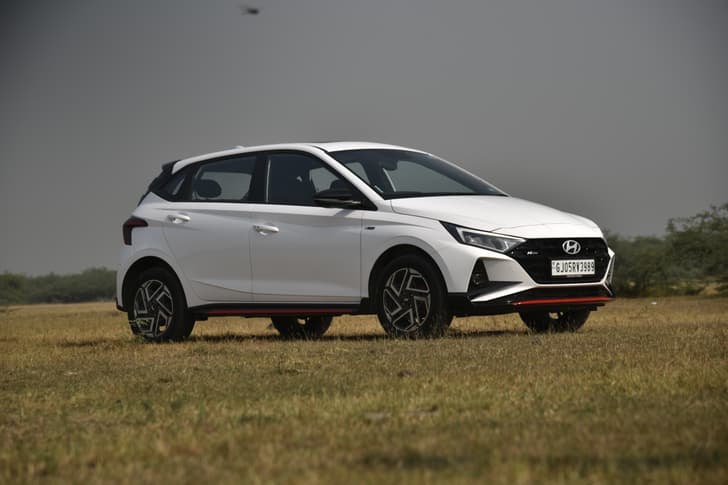
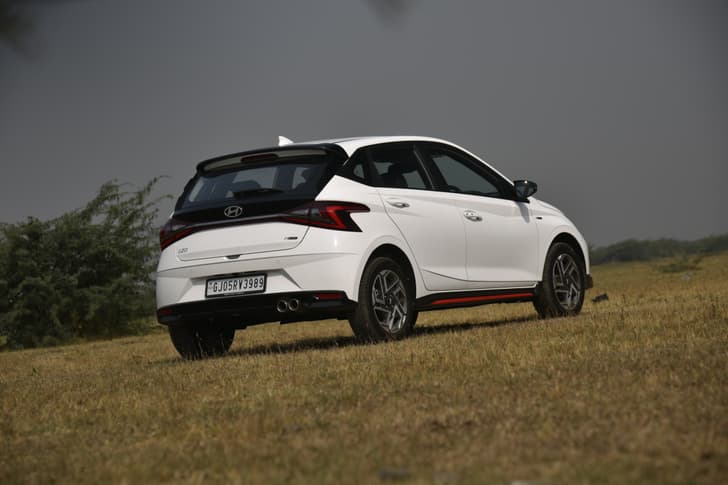
The i20 is designed as a Hatchback with a Turbocharged engine delivering 120 hp at 6000 rpm and 172 Nm at 1500 - 4000 rpm. It’s paired with DCT and delivers a mileage of around 20 kmpl. With a seating capacity of None and a Front Wheel Drive, it offers a fine balance between performance and practicality.
Mileage 16 kmpl - 20 kmpl | Engine 998 cc - 1197 cc |
Fuel Type Petrol | Transmission Manual, DCT, CVT |
Body Style Hatchback | Seats 5 |
Hyundai i20 specifications
The i20 features a 998 cc Petrol engine that produces 120 hp at 6000 rpm and offers DCT. It delivers a mileage of 20 kmpl and supports Front Wheel Drive for versatile performance. With a seating capacity of None, this Hatchback also includes Ambient interior lighting, Cruise control, Sunroof, Keyless start, Airbags.
Engine & Transmission
Fuel Type/ Propulsion | Petrol |
Number of Cylinders | 3 |
Pure Electric Driving Mode | No |
Engine Installation | Front |
Engine Displacement | 998 cc |
Engine Type | Turbocharged |
Max Engine Power | 120 hp at 6000 rpm |
Max Engine Torque | 172 Nm at 1500 - 4000 rpm |
Drive Layout | Front Wheel Drive |
Gearbox Type | DCT |
Number of Gears | 7 |
Lockable Differential/s | No |
Sport Mode for Automatic Gearbox | Yes |
Manual Shifts via Gear Lever on Automatic Gearbox | Yes |
Paddle Shifters for Automatic Gearbox | Yes |
Fuel & Performance
Fuel Tank Capacity | 37 litres |
Emission Standard | Bharat Stage VI |
Official Fuel Economy | 20 kmpl |
E20 Compatibility | Yes |
Fuel Supply System | Direct Injection |
Auto Start/Stop | No |
User Reported Mileage | 15.62 kmpl |
0-100kph | 11.31 s |
20-80kph (in third gear/ kickdown) | 6.33 s |
40-100kph (in fourth gear/ kickdown) | 8.50 s |
Suspension & Steering
Front Brakes | Discs |
Rear Brakes | Discs |
Type of Power Assist | Electric |
4 Wheel Steer | No |
Steering Adjust | Tilt and Telescopic |
Steering Adjust type | Manual |
Front Suspension Type | Independent, MacPherson Strut |
Front Springs | Coil Springs |
Rear Suspension Type | Non-independent, Torsion Beam |
Rear Springs | Coil Springs |
Damper Control | No |
Ride Height Adjust | No |
Wheels | Alloys |
Wheel Size | 16 inches |
Front Tyre Size | 195/55 R16 |
Rear Tyre Size | 195/55 R16 |
Spare Wheel | Space Saver |
Dimensions
Length | 3995 mm |
Width | 1775 mm |
Chassis Type | Monocoque |
Height | 1505 mm |
Wheelbase | 2580 mm |
Doors | 5 |
Hyundai i20 features
Comfort
| Power Windows | Front and Rear |
| Digital Instrument Cluster | Fully Digital |
| Bluetooth Connectivity | |
| Trunk Light | |
| Front Seatback Pockets | |
| Cabin Boot Access |
Safety
| Airbags | 6 |
| Traffic Sign Recognition | |
| Speed Sensing Door Lock | |
| Speed Assist System | |
| Rear Cross Traffic Alert | |
| Rear Cross Traffic Collision Avoidance |
Exterior
| Body Coloured Bumpers | |
| Outside rear view mirror (ORVM) | |
| ORVM turn indicators | |
| Follow Me Home Headlamps | |
| Puddle Lamps | |
| Projector Headlamps |
Interior
| Speedometer | Digital |
| Tachometer | Digital |
| Trip Meter | |
| Average Fuel Consumption | |
| Average Speed | |
| Distance to Empty |
Entertainment
| Audio System | |
| CD Player | |
| Front USB port | Type C |
| Second Row USB port | Type C |
| Branded Music System | Bose |
| USB Input |
Connected Car Features
| Remote Car Lock/Unlock via App | |
| Remote AC On / Off via App | |
| Driving Analytics | |
| Geo Fence | |
| Smart Drive Information | |
| Emergency Call Button |
Hyundai i20 variants comparison
Hyundai i20 Specifications - User Reviews
After driving the i20, I felt it is one of the best cars in the hatchback segment. Ride quality is top notch with premium interiors though average is a bit low in city around 11-12 km/l.
The i20 offers awesome performance and great comfort. It is a nice choice for a compact car. I would prefer the i20.
I currently own an i20 Nline N8, 1l Turbo, 7 speed DSG. Almost driven 36k and own it for 34 months. I love the stability and nimbleness for highway and city cruises, but would like to upgrade the suspension to a much comfortable feel without impacting the current stability and drive feel.
Read moreCurrently driving a Hyundai i20 Diesel 2022. My daily office travel is 200 km, and now my back is starting to give up.
i20 N line suspension feels too stiff for city roads. 1.0 TGDi MT builds power gradually and lacks the punch of 1.0 TSI. rear seat comfort isnt as good as VW or skoda. sharing this from personal experience as i chose kylaq over i20 N line after months of evaluation
Read moreTell us about your experience
Specifications of Hyundai i20 alternatives
Questions you may find useful
Sathwik
I'm a first-time car buyer planning to purchase an automatic petrol car in Q3 2026, mainly for city use and occasional long trips. I want modern features such as a 360° camera, wireless Android Auto/Apple CarPlay, etc. My budget is around Rs. 10-12 lakh, but I can extend it to Rs. 14 lakh if the car is feature-rich and offers good safety, ADAS, etc. Initially, I shortlisted the Hyundai i20 Asta variant, but I have heard that it will receive a facelift soon. I have also heard that Hyundai will be launching the Bayon soon. So, I am a little confused about whether it is a good decision to buy a car that is due for a facelift, wait for the Hyundai Bayon launch, or consider other alternatives such as the Hyundai Venue, Kia Sonet, or Mahindra XUV 3XO. I am avoiding Maruti Suzuki because I have read that the features and safety offered in this price range are not as good as those of the competition. Please advise me. Thanks.

autocar.india
The Mahindra XUV 3XO petrol automatic is a strong fit for your usage. Its smooth 6 speed automatic, light steering and compact footprint make it very easy to live with in the city, especially in traffic and tight parking conditions. Importantly, it already ticks your feature requirements, including a 360° camera, wireless Android Auto and CarPlay, and even ADAS, within your stretched budget of around Rs 14 lakh. It also feels reassuringly solid. The XUV range has built a good safety reputation, and the turbo petrol engine offers strong low end performance, making it well suited to both city driving and occasional highway runs.On the i20, while it remains a well rounded premium hatchback, the current version does miss out on features like a 360° camera and ADAS. There is talk of a facelift, but timelines are not confirmed, and it is unclear whether Hyundai will add these features, so waiting specifically for that may not guarantee what you are looking for.As for the upcoming Bayon, Hyundai is expected to bring it around September, but it will likely be a larger, around 4.3 metre crossover as a Maruti Suzuki Victoris rival and positioned below the Creta. That means it may not be as feature rich in the variants that fall within your budget. It could also end up competing more with mid size SUVs rather than sub 4 metre options.The Venue and Sonet are polished and easy to recommend, but the variants that offer both ADAS and a 360 degree camera tend to stretch well beyond Rs.14 lakh on road.
Shubham
I have a budget of ₹10-12 lakh. About 80% of my driving is in the city (Mumbai, Goregaon), with occasional long drives. My priorities are good resale value, a good music system, and quality interiors (hence I am not interested in Maruti). I am considering the i20 Sportz/Asta, Amaze, and Kylaq. Which one should I choose? Are there any other options like the Sonnet or Venue that I should consider?

autocar.india
The Hyundai i20 is the one that fits your brief best. Given your city-heavy use, we recommend an automatic, so look at an i20 with the 1.2 petrol and CVT (Hyundai calls it IVT), which feels very smooth in slow traffic. While it's tempting to go for the more powerful 1.0 turbo-petrol, its DCT gearbox is not as smooth as the CVT at low speeds, hence we don't recommend it. Also, while the i20 1.2 IVT Asta (O) could go out of your budget, we would recommend you to stretch it, as that will get you the Bose sound system, which sounds excellent. Hyundai resale is also strong in Mumbai, which meets your first priority. The Honda Amaze is easy to own and has good resale value too. It's reliable, good on maintenance, fuel efficient, fun to drive and spacious. But the interiors and music system are nothing to write home about. The Sonet, Venue and Kylaq are good options, but won't give you the kind of features and high-spec interior you are seeking in this budget. That said, when it comes to resale value, none are quite as good as Maruti cars, since that is your number one priority.
Kishore
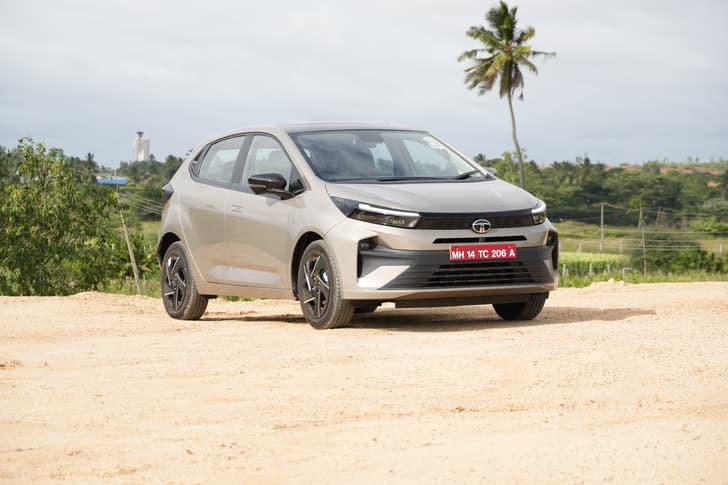
Hello team. I’m selling my old i20 and planning to buy a new car. I’ve shortlisted the Tata Altroz, Maruti Baleno, Toyota Glanza and Maruti Dzire. My priorities are an automatic transmission, good mileage, 4/5-star safety, an armrest and a rear wiper. I’m attracted to the Glanza for its styling and the UV-cut glass on the top variant. My maximum budget is ₹10.5-11 lakh on-road in Telangana. Please suggest which is best.

autocar.india
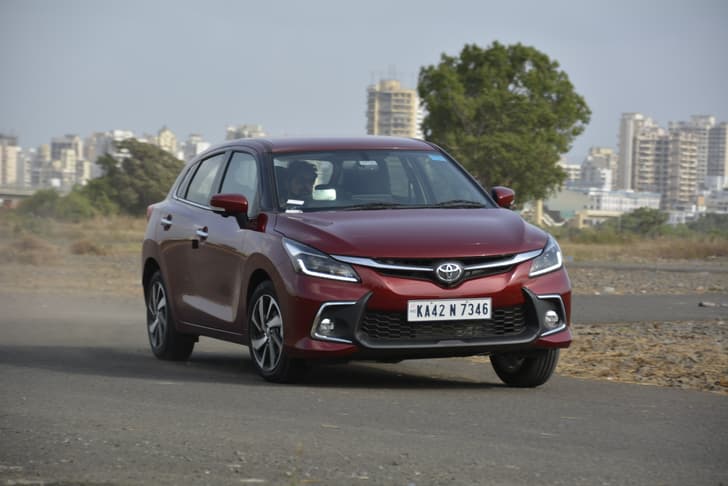
The Toyota Glanza is a rebadged Maruti Suzuki Baleno, and the only difference between the two is the badge, some interior trim colours and the warranty. The Glanza is sold with a 3-year/1,00,000km warranty, while the Baleno gets a 2-year/40,000km warranty.The Glanza is a good option if you like the way it looks, and the UV cut glass is a must-have feature for you. However, if you are looking for a car that will hold its value better, then the Maruti Suzuki Baleno is the better option, and also features UV cut class.The Tata Altroz does get you the option of a diesel engine, and a DCT automatic, which is the more sophisticated auto gearbox here. However, you could also consider the new Hyundai i20, which comes with a CVT auto or a DCT with its powerful turbo engine.
Rangaraj
Hi, I am planning to buy an automatic car under 10 Lakh rupees. I was in a dilemma between the i20 Sportz IVT and the Tata Altroz Creative AMT. Which one would suit both city and highway driving with good fuel efficiency? Please advise.

autocar.india
Pick the AMT version of the Tata Altroz only if fuel efficiency is extremely important to you. Do keep in mind, the AMT is quite jerky, and the drive won't be as seamless as the Hyundai i20 CVTs or as the Altroz DCA's, both of which are far smoother options.If you love the Altroz for what it is, consider spending a bit more and getting the dual-clutch automatic version for a much superior drive experience.
Kartik
My monthly running is 1,400 km. I need an automatic car with good mileage, pickup, looks, and interior finish. I’m confused between the Baleno, i20, and Altroz. My budget is around ₹10 lakh.

autocar.india
The Maruti Suzuki Baleno would be the best choice. It features good looks, a well-finished interior, and most importantly, strong mileage. The Hyundai i20 has slightly better interior quality, but its fuel efficiency isn’t as strong as the Maruti.
Mithun
We own a 2010 Maruti Ritz with 1.6 lakh km on the odometer and are considering an upgrade, especially after the GST 2.0 changes. We've set our sights on the Kia Sonet 1.2 MT HTK-O due to its appealing looks and features. However, we've come across YouTube reviews mentioning that the 1.2L engine is underpowered, has poor mileage, and has a stiff suspension. Additionally, there are concerns about high service costs and expensive spare parts. We're also considering the Maruti Baleno/Glanza (top model), Hyundai Venue S+ Opt, Hyundai i20 Sportz, and Honda Amaze VX as alternatives. Could you provide an expert opinion on these options?

autocar.india
We haven’t driven the 1.2-litre version of the Kia Sonet yet, but we’ve experienced the same engine in the Hyundai i20. Given that the Sonet is slightly larger and heavier, it isn’t expected to feel particularly powerful. For city commutes and bumper-to-bumper traffic, however, it should be adequate. On highways, you might notice it could use a bit more power. If you frequently drive on highways, we recommend the Sonet 1.0-litre Turbo IMT HTK variant, which is slightly pricier but noticeably stronger. The other options you mentioned also come with 1.2-litre naturally aspirated engines and won’t feel much different from the 1.2-litre Sonet.
Siddhant Lokhande
I am planning to buy an automatic car with an on-road budget of around ₹15 lakh. I currently drive a Honda Civic (manual), and my monthly usage is relatively low at under 400 km. The car will primarily be used for daily city commutes (office) and occasional highway trips—around 2–3 times a year, typically within 500 km. I am looking for a well-balanced option that offers comfort, reliability, and good fuel efficiency for both city use and occasional highway driving. I am not in a hurry and can wait until the end of the year if better options or updates are expected. Could you please suggest the best choices in this budget, keeping long-term ownership and ease of driving in mind?

autocar.india
You haven't mentioned the body style or whether you have any transmission preference (MT or AT). But since you're used to the low-slung Honda Civic manual, chances are the new crop of compact SUVs might not give you the same satisfying 'sporty' drive experience. You could consider the Hyundai i20 N Line, which is a 'fun-to-drive' hatchback. You could get either the manual or dual-clutch automatic version well within your budget. If it is a fun-to-drive sedan you're after, the entry-level 1.0 TSI manual versions of the Volkswagen Virtus and Skoda Slavia will fall within Rs 15 lakhs (on-road) too. Both these cars are likely to get an update this year, with similar changes as their mid-size SUV counterparts, Taigun and Kushaq; expect minor cosmetic updates and an upgraded air-con system with its manual version.
NEEL S
I am planning to buy my first car. My net annual income is around ₹11 lakh. Could you please suggest which brand and model I should consider? My main criteria are fuel efficiency (petrol), ride comfort, good looks, suitability for a taller driver like me, reliability and safety for the next 8-10 years, and low hassle in terms of service and maintenance.

autocar.india
Go for the Maruti Suzuki Brezza petrol. It is the most balanced and sensible first car for your income and requirements. With a net income of Rs 11 lakh, you should ideally look at cars in the Rs 10-12 lakh range, which gives you a comfortable EMI and low ownership stress. In this space, the Brezza stands out because it delivers exactly what you want. It has a reliable, naturally aspirated petrol engine, good real-world fuel efficiency and one of the lowest maintenance costs in the segment thanks to Maruti’s service network. It is also known for strong resale value, which matters over 8-10 years.For your height, the Brezza works very well. It offers a tall seating position, good headroom and easy ingress and egress, which makes daily use comfortable. Ride quality is well-tuned for Indian roads, so it remains comfortable in the city and stable on highways. Smaller options like Maruti Baleno or Hyundai i20 will give better mileage, but they will not offer the same seating comfort or ground clearance you are looking for.
Mohit
I am looking to buy a new car within a budget of ₹10 lakh. My usage will be mostly city driving, with very minimal usage on weekends (around 50 km per month). My requirements are: Petrol engine only (naturally aspirated) Automatic or manual transmission High safety and strong build quality Good mileage and low maintenance Rear camera required No sunroof needed I am also confused between choosing a 1.2L vs 1.5L engine, and 3-cylinder vs 4-cylinder engines. I want to consider options only from Maruti Suzuki, Hyundai, and Kia. Please suggest the best suitable car.

autocar.india
You should check out the Kia Sonet 1.2 HTK (O) manual, it fits your budget and needs best for safe, easy city driving. Your use is very low and only in the city, so the simple 1.2 petrol with no turbo is the right call. It is a 4-cylinder engine, so it feels smoother and quieter than most 3-cylinder engines. The HTK (O) trim includes a rear camera, though if you can increase your budget slightly, consider moving up to the Sonet HTK+, which will get you features like keyless entry and go, a wireless phone charger, a 60:40 split rear seat and alloy wheels.The 1.2 in the Sonet doesn't get an automatic option, so if you decide you must have one, you would need to look at a different model. Consider the Maruti Suzuki Fronx 1.2 Delta+ AMT, which also gets a rear-view camera and a four-cylinder engine. If you don't mind a hatchback, there's also the Hyundai i20 1.2 IVT Sportz, which gets a smoother CVT automatic gearbox.The only 1.5-litre engine in your price bracket can be found in the Maruti Suzuki Brezza. But as that very engine capacity disqualifies it from small car tax breaks, its price is higher than others, and you will only get a base model.
Shyam
Hello Autocar Team, I am planning to buy an automatic car with an on-road budget of ₹12 lakh in Coimbatore. Around 80% of my driving will be in the city, and this car will be driven by a new license holder. I would prefer to avoid AMT gearboxes and am looking for a car that offers good safety and a smooth driving experience. I am not interested in sedans. Could you please suggest the best options for my requirements?

autocar.india
For your requirements of a smooth, automatic, premium feel and ease of driving, we would first suggest considering the Hyundai i20 IVT. The CVT gearbox is very smooth, which makes it the easiest car to drive in city traffic, especially for a new driver. It also feels premium inside, well-equipped and well priced, making it a great first car. Hyundai’s after-sales service and ease of maintenance are also strong positives.That said, in terms of safety, the i20 scored a 3-star rating earlier, and the facelifted version hasn’t been tested yet, so that remains a bit of an unknown.If 5-star safety is your top priority, then you can consider the Tata Altroz DCA. It has a strong build and better safety credentials. The ride quality is also more comfortable, and the car feels more stable on the highway.However, the engine and gearbox are not as refined or as smooth as the Hyundai's, though it is still a better experience than an AMT.
Have questions about this car?
Ask owners & Autocar experts.
Hyundai i20 FAQs
The Hyundai i20 is slightly larger than the Tata Altroz in most key dimensions. It measures 3,995mm in length, making it 5mm longer than the Altroz, while its width of 1,775mm is 20mm greater. The i20 is, however, 18mm shorter in height at 1,505mm compared to the Altroz's 1,523mm. It also has a significantly longer wheelbase of 2,580mm, which is 79mm more than the Altroz's 2,501mm.
The standard Hyundai i20 is powered by a naturally aspirated 1.2-litre petrol engine that produces 83hp and 115Nm with the manual gearbox, while the CVT version develops a slightly higher 88hp with the same 115Nm torque output. The sportier i20 N Line, on the other hand, gets a 1.0-litre turbo-petrol engine that makes 120hp and 172Nm. Compared to the standard i20, the N Line offers up to 37hp more power and 57Nm more torque.
The N Line gets 30 percent stiffer damping for the suspension and a retuned steering too. The upgraded suspension enhances the N Line’s sporty character, reduces body roll in the bends and enables it to corner flatter.
Just the i20 N Line variants offer disc brakes for all wheels, while the standard hatchback sticks to a disc-and-drum setup.
While both options provide swift shifts for a sporty experience, the manual clocks a faster 0-100kph time of 10.66 seconds, whereas the DCT does the same in 11.31 seconds (note that these figures are not as per Autocar India test standards).
Hyundai i20 On Road Price in India
Upcoming Cars


Hyundai Cars


Trending Cars

Latest Cars