
Last Updated on: 25 May 2026
Volkswagen Taigun
The Volkswagen Taigun price starts from Rs 11.00 lakh and goes upto Rs 19.30 lakh (ex-showroom). The Taigun is a midsize SUV sold by Volkswagen that competes with the Hyundai Creta, Kia Seltos, Skoda Kushaq, Maruti Suzuki Grand Vitara, Honda Elevate, Toyota Urban Cruiser Hyryder, Maruti Suzuki Victoris, Duster, Tata Sierra, MG Hector and more. VW Taigun on road price starts from Rs 13.02 lakh to Rs 22.74 lakh depending on the variant and city.
The Volkswagen Taigun variants on sale include 11 options spanning petrol engine options only. Volkswagen offers the Taigun with both manual and automatic gearboxes. The Volkswagen Taigun mileage stands at a claimed 18.85 kmpl - 19.98 kmpl as per ARAI testing.
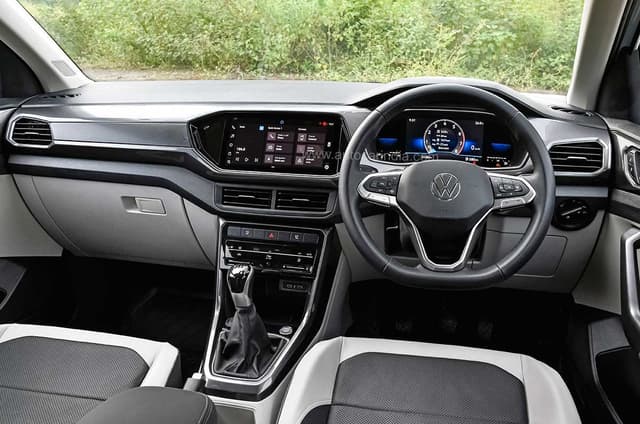
The Volkswagen Taigun interior gets a two-tone finish and a sizable number of creature comforts. Volkswagen Taigun features include 10.1-inch infotainment touchscreen, 8-inch digital instrument cluster, 6-speaker sound system, ventilated front seats, wireless Apple CarPlay and Android Auto, automatic climate control, powered front seats, sunroof, red ambient lighting, leatherette upholstery, and more.
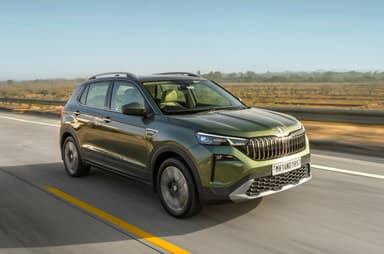
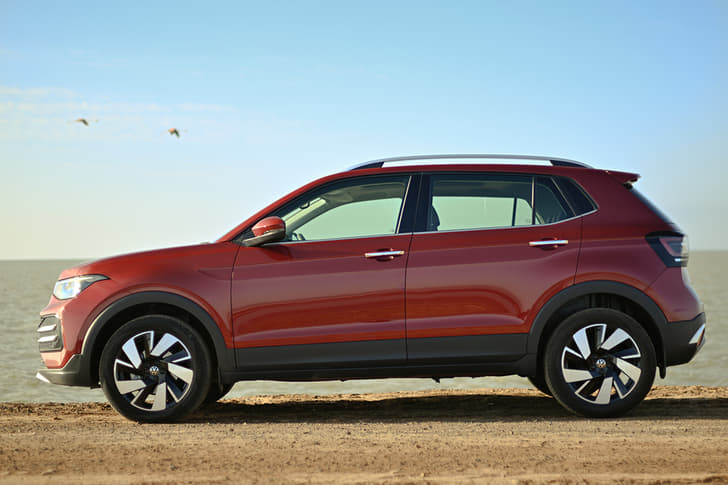
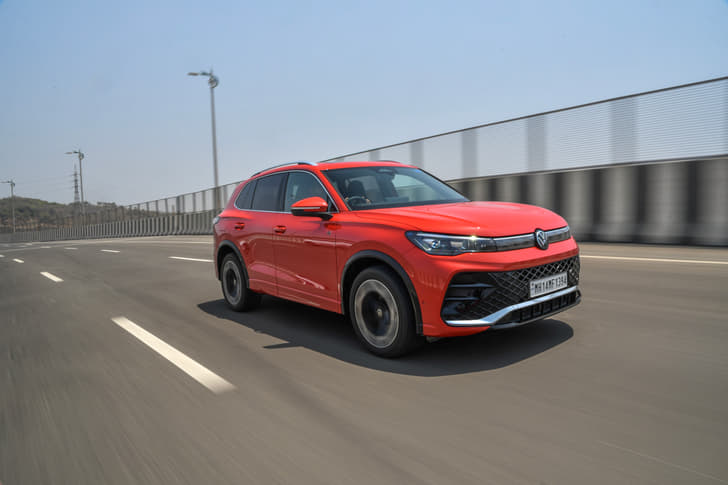
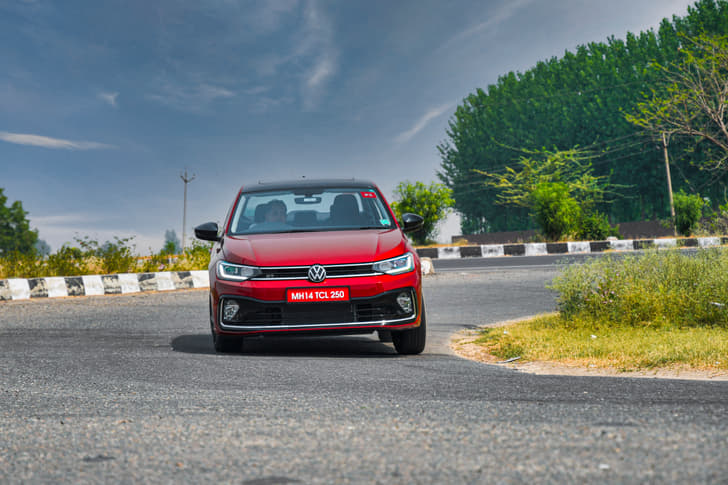
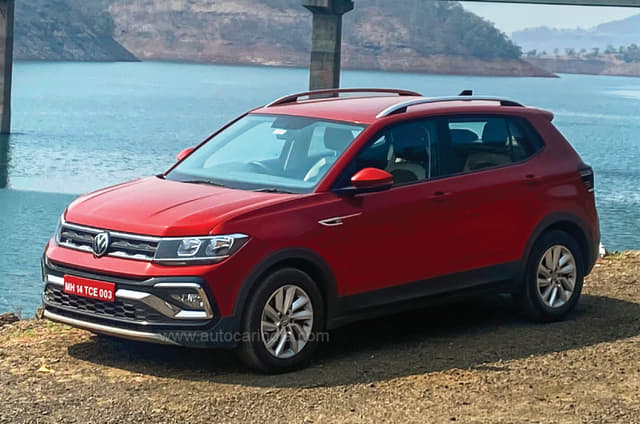
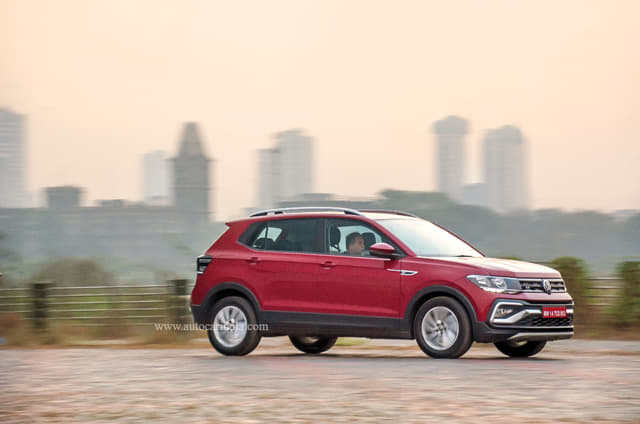
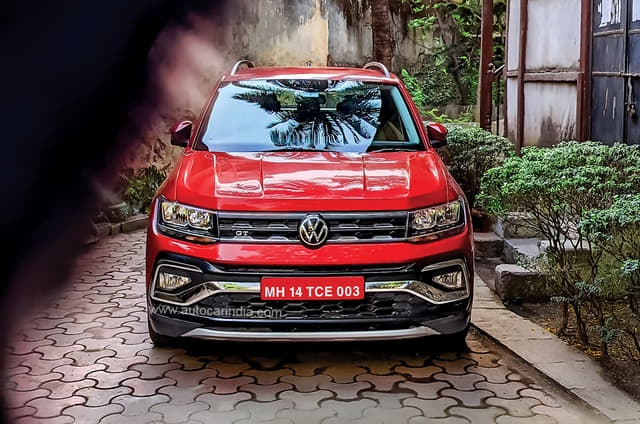
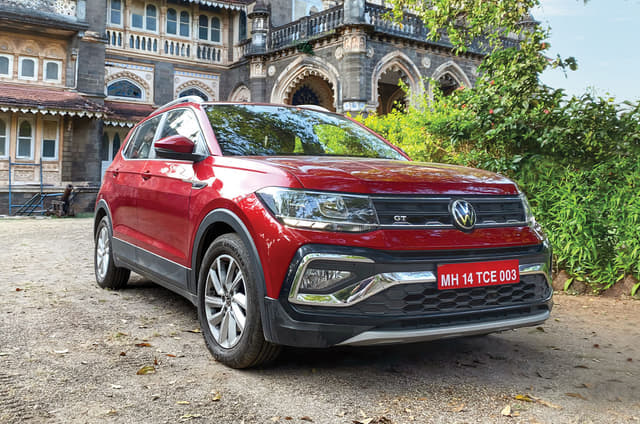
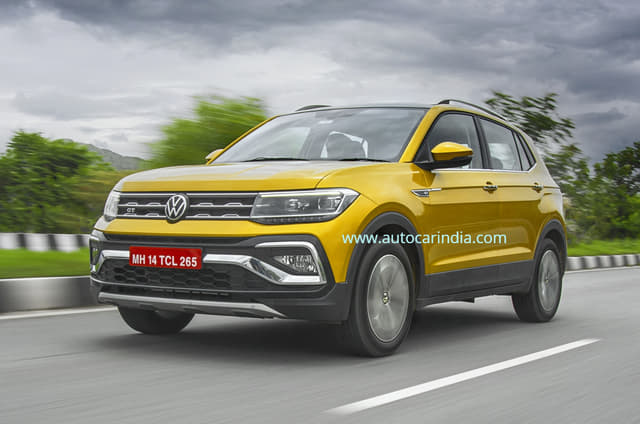
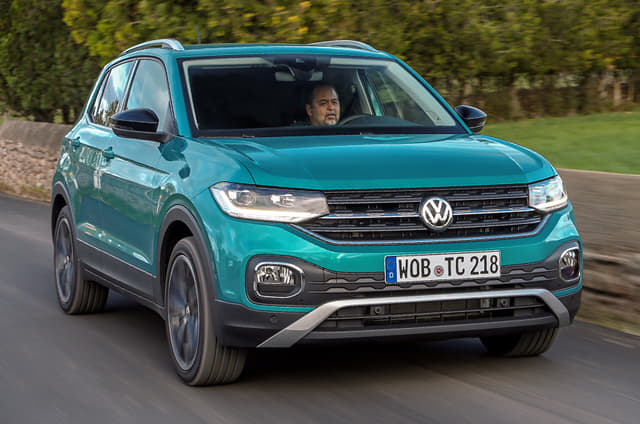
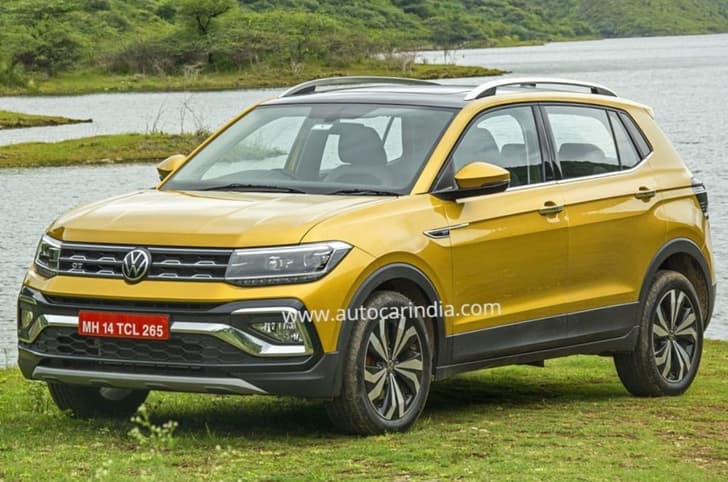
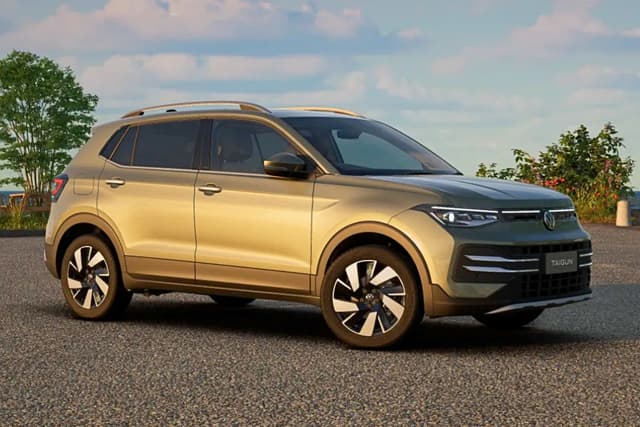
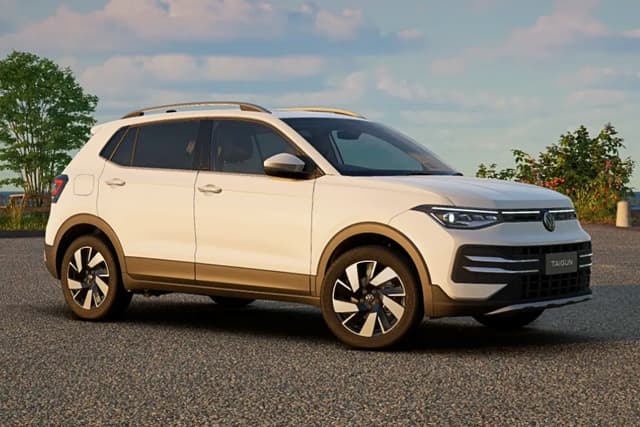
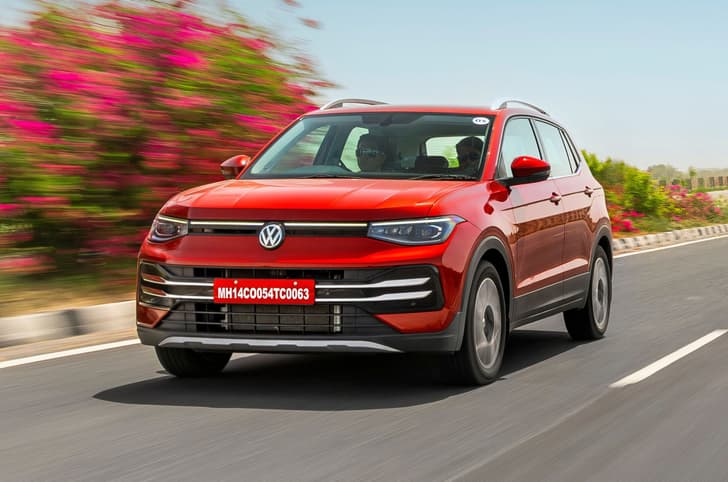
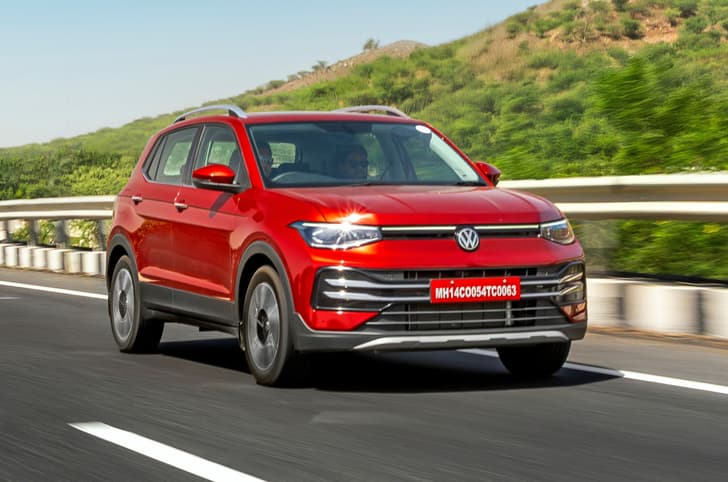
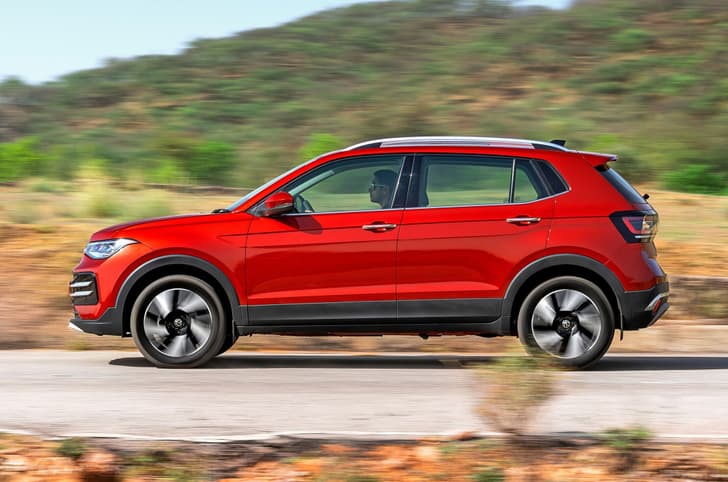
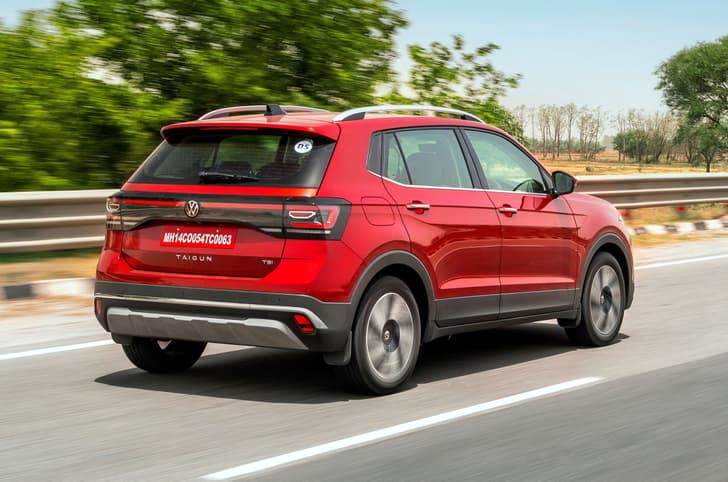
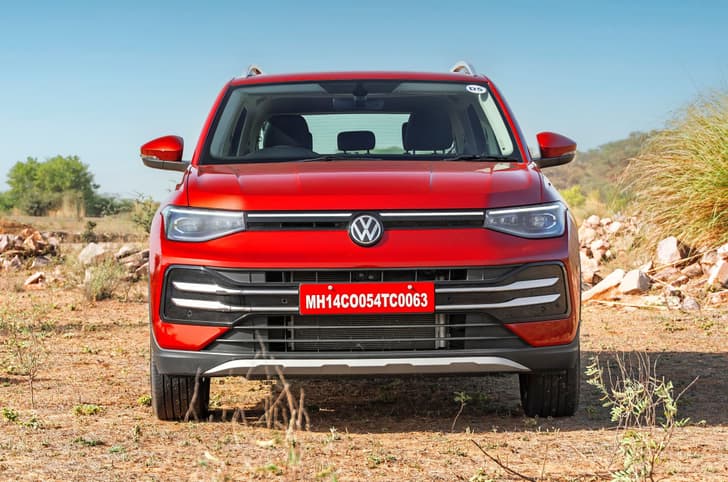
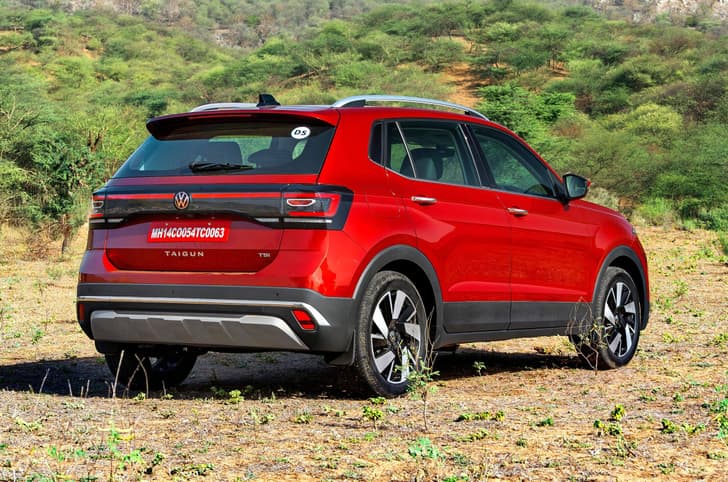
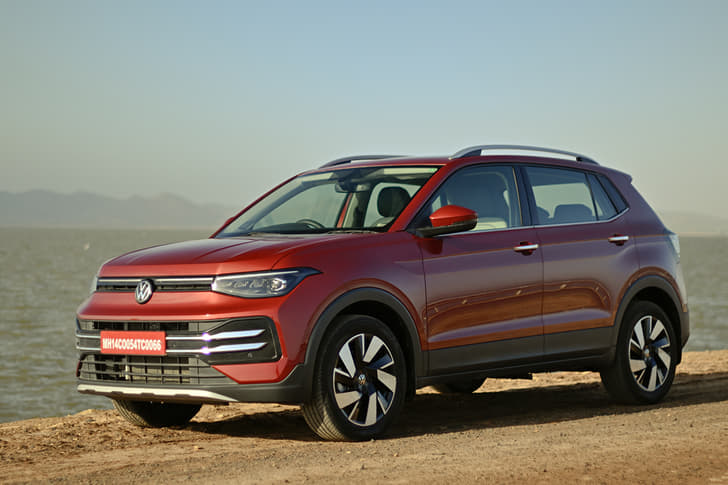
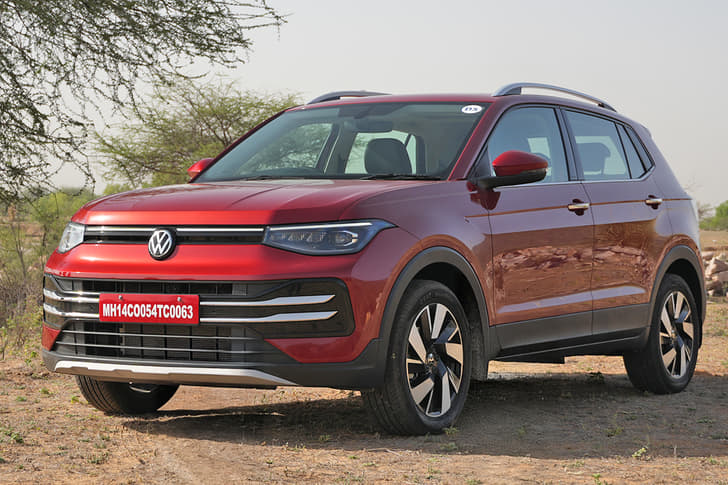
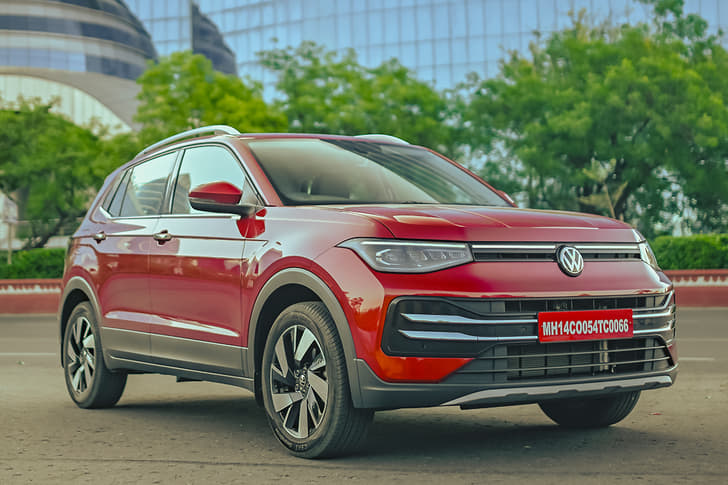
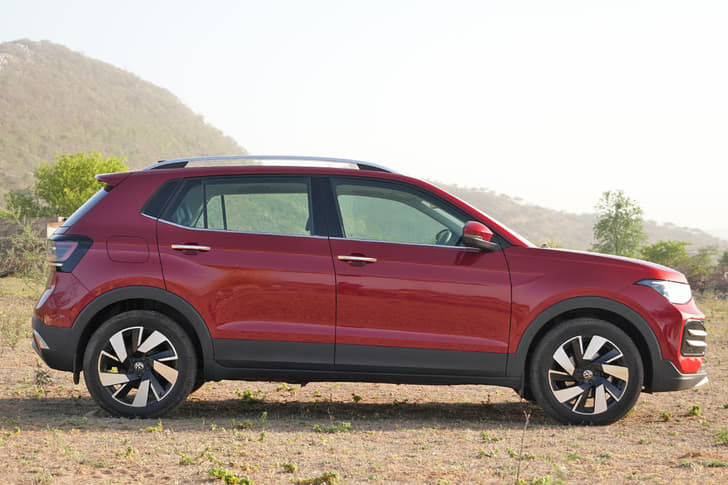
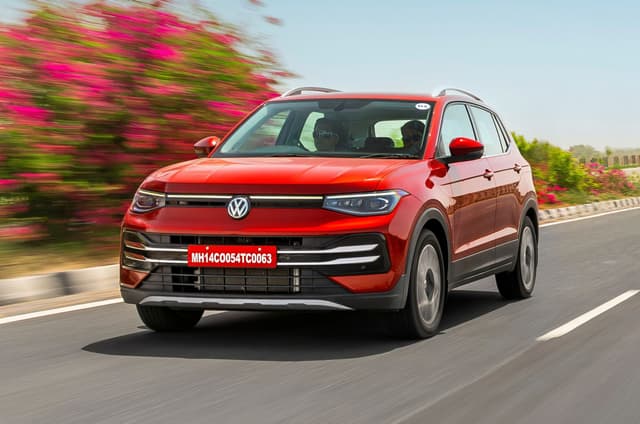
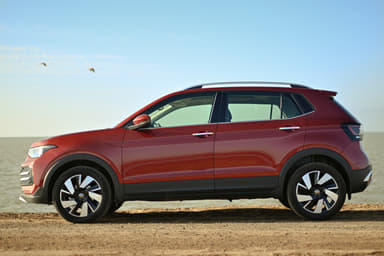
The VW Taigun looks modern and subtly aggressive thanks to design highlights like large LED headlights, muscular bumpers with lots of chrome detailing, rear LED light bar, generous body cladding, 17-inch alloy wheels, roof spoiler, etc. Volkswagen Taigun ground clearance is 188mm.
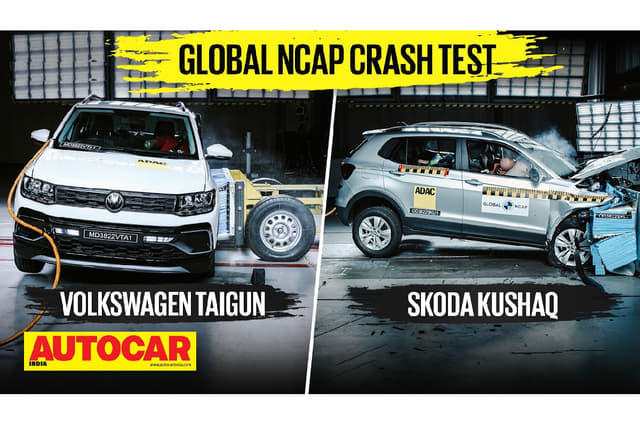
The Volkswagen Taigun safety rating is 5 stars as per Global NCAP testing. Additionally, the Taigun safety features include 6 airbags as standard, ABS with EBD, front disc brakes, traction control, ESC, ISOFIX child seat anchors, rear view camera, rear parking sensors, TPMS, hill hold control, and more.
Key Highlights of Volkswagen Taigun
- The VW Taigun price range is Rs 11.00 lakh to Rs 19.30 lakh (ex-showroom).
- Volkswagen Taigun top model price is Rs 19.30 lakh (ex-showroom).
- The Taigun is powered by 3 cylinder turbo-petrol and 4 cylinder turbo-petrol engines, both available with manual and automatic transmissions.
- The Volkswagen Taigun dimensions are 4,221mm length, 1,760mm width, 1,612mm height, and 2,651mm wheelbase.
- Volkswagen Taigun boot space is 385 litres.
- The Volkswagen Taigun mileage is 18.85 kmpl - 19.98 kmpl (claimed).
- Volkswagen Taigun interior features include a 10.1-inch infotainment touchscreen, 8-inch digital instrument cluster, 6-speaker sound system, wireless Apple CarPlay and Android Auto, automatic climate control, powered front seats, sunroof, etc.
- The Volkswagen Taigun ground clearance is 188mm.
Volkswagen Taigun Latest Updates
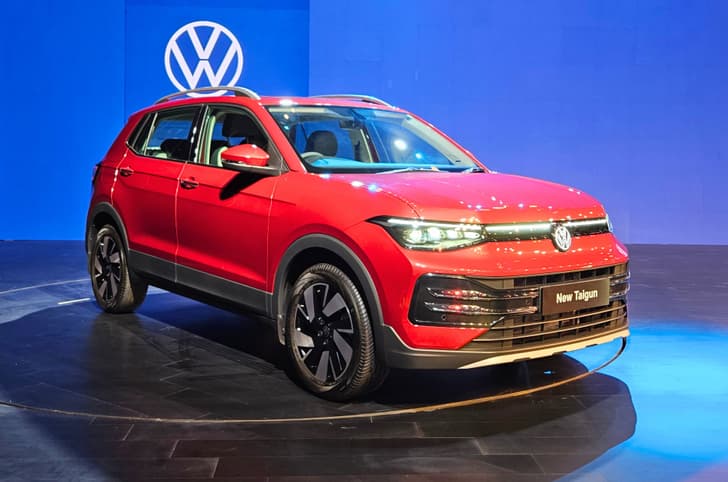
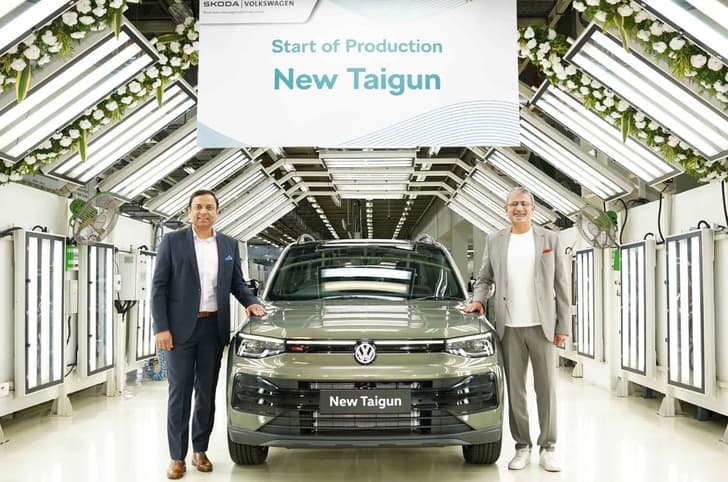
- 14 April 2026: 2026 Volkswagen Taigun facelift launched at Rs 11 lakh
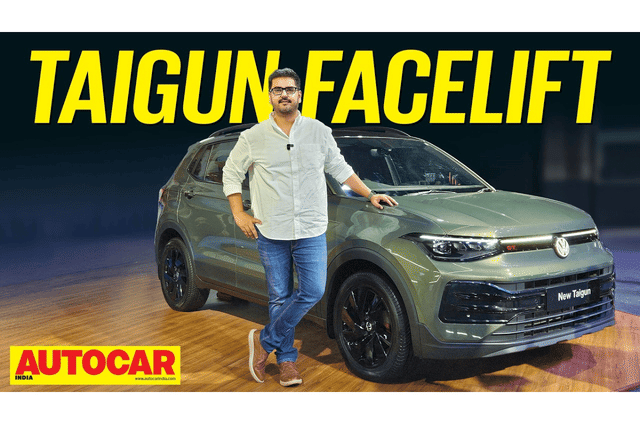
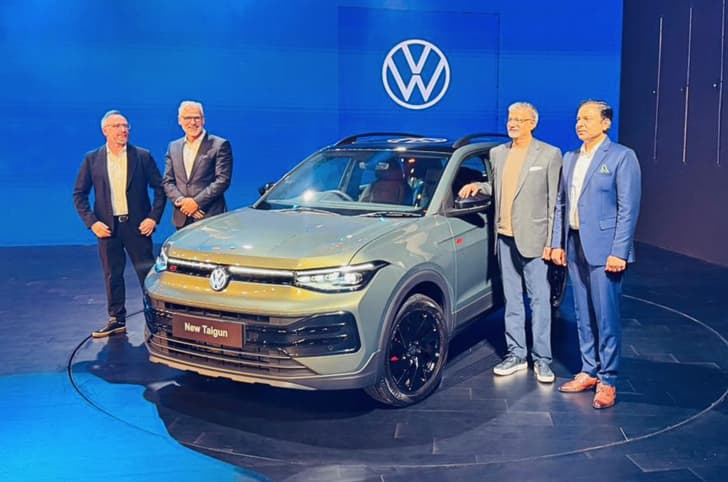
- 9 April 2026: Volkswagen pulls the covers off the Taigun facelift, gets updated styling with more features, like a panoramic sunroof and new 10.25-inch driver's display
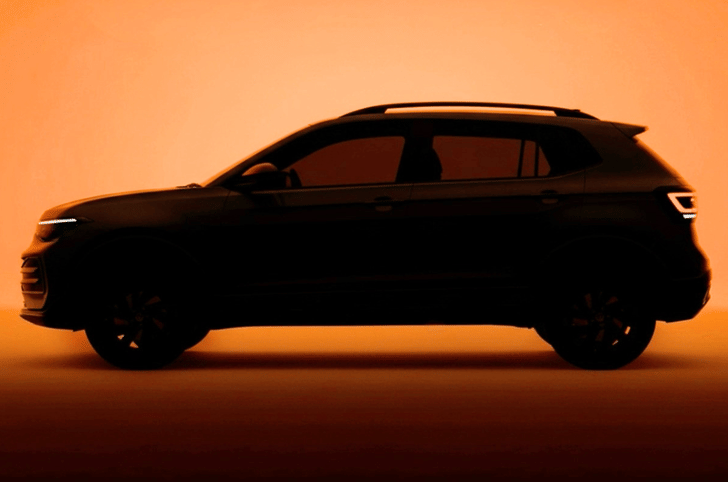
- 6 April 2026: Volkswagen teases Taigun facelift ahead of April 9 launch; first official teaser of the midsize SUV hints at redesigned lights and front bumper
- 26 March 2026: Volkswagen Taigun facelift to debut on April 9
Volkswagen Taigun Features and specifications
Our Rating | 7 |
Mileage | 18.85 kmpl - 19.98 kmpl |
Engine | 999 cc - 1498 cc |
Fuel Type | Petrol |
Transmission | Manual, Torque Converter, DCT |
Seats | 5 |
Body Style | SUV |
Doors | 5 |
Max Power | 150 hp at 5000 - 6000 rpm |
Max Torque | 250 Nm at 1600 - 3500 rpm |
| Fuel Type/ Propulsion | Petrol |
| Engine Displacement | 1498 cc |
| Engine Installation | Front |
| Max Engine Torque | 250 Nm at 1600 - 3500 rpm |
| Emission Standard | Bharat Stage VI |
| Fuel Supply System | Direct Injection |
| Official Fuel Economy | 18.85 kmpl |
| Front Brakes | Disc |
| Rear Brakes | Disc |
| Turning Radius | 5.05 |
| Type of Power Assist | Electric |
| Width | 1760 mm |
| Boot Capacity | 385 - 1405 litres |
| Chassis Type | Monocoque |
| Doors | 5 |
| warranty Duration | 4 Years |
| warranty Distance | 100000 |
| Ambient Lighting | |
| Bluetooth Connectivity | |
| Bottle Holder in Doors | |
| Vanity Mirror |
| Tyre Pressure Monitoring System | Warning Only |
| Curtain Airbag | |
| Passenger Airbag | |
| Rear Defogger |
| Roof Rails | Functional |
| Rub Strips | |
| Welcome and Goodbye Animation | |
| Scuff Plates |
| Driver's Seat Height Adjust | |
| Electric Adjust for Driver's Seat | |
| Electric Adjust for Front Passenger's Seat | |
| Ventilated Seats | Front Only |
| Voice Commands | |
| Speakers | 6 |
| Apple CarPlay | Wireless |
| Android Auto | Wireless |
| SOS Button | |
| Driving Analytics | |
| Geo Fence | |
| Vehicle Tracking Via App |
Volkswagen Taigun price & variants
The Taigun price starts from Rs 11.00 lakh to Rs 19.30 lakh (ex-showroom). Volkswagen sells the Taigun in 11 variants. The Volkswagen Taigun on road price starts at Rs 13.02 lakh to Rs 22.74 lakh.
- Volkswagen Taigun base model is powered by a 1.0-litre 3-cylinder turbo-petrol engine developing 115hp and 178Nm, mated to either a 6-speed manual or 6-speed AT.
- The Volkswagen Taigun GT price starts at Rs 17 lakh (ex-showroom). Taigun GT variants are powered by a stronger 1.5-litre 4-cylinder turbo-petrol engine producing 150hp and 250Nm, paired with either a 6-speed manual or 7-speed DCT.
Volkswagen Taigun Official Brochure
Download the complete brochure with specs, features, and variants.
Volkswagen Taigun expert review
We like
Rock-solid highway stability
Smooth-shifting 8-speed automatic
We don't like
Low speed ride feels harsh
Misses 360-deg camera, ADAS, rear sunblinds
8.0
Under the hood is the familiar 115hp/178Nm 1.0-litre, three-cylinder direct injection turbo-petrol engine, now paired with a new 8-speed torque converter automatic (AQ300), replacing the earlier 6-speed unit.
This new gearbox shifts ratios seamlessly and very smoothly. And compared to the outgoing 6-speed auto version, its creep function (initial roll-on) is much more natural, though it still feels slightly eager than some of its rivals with CVT and DCT, particularly in reverse.
Just like the mechanically identical Kushaq with the same powertrain, acceleration feels a bit quicker than the outgoing 6-speed automatic version. This new gearbox complements the 1.0-litre TSI well, and the closely stacked ratios keep the engine in its powerband. While gearshifts are seamless, you’ll notice the gearbox going up or down ratios too frequently - even light throttle inputs can trigger multiple downshifts quickly. Paddle shifters are carried over for manual control.
6.0
Volkswagen claims that the 1.0L 8AT version can deliver up to 19.54kpl. However, a real-world highway run from Jaipur to Chandigarh covering 448.8km, with two occupants, luggage, and the AC set to 22-deg C in full-auto mode, yielded a fuel efficiency of 13.94kpl. The car consumed 32.19 litres of fuel, with an average speed of 68kph.
This gearbox’s enthusiastic nature as well as its shorter gearing seems to have impacted its fuel efficiency. To put it into perspective, at 100kph in eighth gear, the engine spins at around 2,000rpm, which is higher than ideal for an eight-speeder.
8.0
The Taigun continues to be among the most engaging SUVs to drive in its segment. Its taut chassis delivers predictable handling, and high-speed stability is excellent—it feels planted and reassuring at triple-digit speeds.
That said, the suspension is on the stiffer side and can feel jarring over sharp bumps at low speeds, especially compared to rivals like the Renault Duster or the Tata Sierra. The steering is light and direct, making city driving easy, though it could do with more weight at higher speeds.
Interestingly, the 1.5-litre version now gets rear-disc brakes, while the 1.0-litre variant continues with rear drum brakes. Despite that braking performance remains strong and confidence-inspiring.
7.0
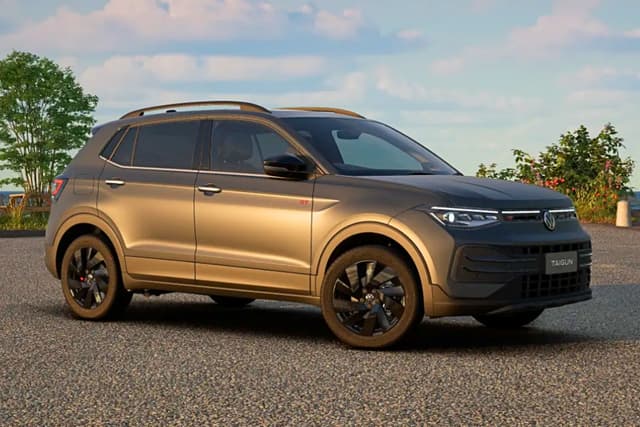
Design changes are largely focused on the front, with a slimmer grille, sleeker LED headlamps and a full-width light bar with an illuminated VW logo, similar to the Volkswagen Tayron. There’s a redesigned bumper with chrome detailing, new 17-inch alloy wheels, and minor updates at the rear including revised tail-lamp elements and sweeping indicators.
The 188mm ground clearance remains unchanged as are its other dimensions, making it one of the smallest SUVs in its class.
7.0
Inside, the dashboard gets a new silver trim, which goes well with the black and light grey interior colour scheme. On a bright and sunny day however, it reflects on the (passenger-side) window which can get a bit distracting. VW has also upgraded the air-conditioning system with a variable displacement compressor that cools the cabin more efficiently and operates at a lower fan speed than before.
Like before, the front seats are well-shaped, supportive, and their ventilation function is effective despite having just two fan speeds. Rear seat space is adequate, with decent headroom thanks to a scooped roof. The seat contouring and the cabin’s width however, makes this space best suited for two adults. The 385-litre boot, while modest on paper, is highly usable and can accommodate up to six cabin-sized suitcases, even more than some rivals with a larger boot capacity rating.
6.0
It gets a new 10.25-inch digital instrument cluster, which besides multiple views, has fonts that are crisp, clear and very easy to read. And while the touchscreen remains the same as the outgoing version, the software has been updated - the interface remains slick and the touch sensitivity is very nice. What isn’t nice however is that certain functions, for example adjusting the volume is a three-step operation, which is not very user-friendly.
Also, VW could have also taken this opportunity to upgrade its reverse camera; the resolution still remains very quite poor. And while the company has introduced front parking sensors with this version, a 360-degree camera is still missing.
A panoramic sunroof is a new addition too. Unlike its Skoda sibling, this version doesn’t get a rear seat massage function - while that isn’t something most buyers are likely to miss, kit like a 360-degree camera, rear sunblinds and ADAS are features that would bring the Taigun at par with the competition.
6.0
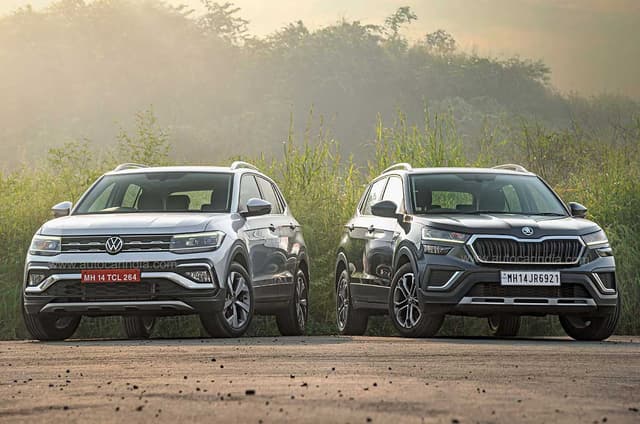
Priced at Rs 11 lakh to 19.30 lakh, the Taigun is positioned higher than the mechanically identical Skoda Kushaq (Rs 10.69 lakh to 18.99 lakh). However, not only is the Skoda more affordable, but it also gets more standard equipment such as a single-pane sunroof and alloys, making it better value for money.
To conclude then, despite the updated styling, added features and a new gearbox, the 2026 Taigun has only inched forward. Unfortunately though, this update isn’t substantial enough to keep pace with the rapidly advancing competition - rivals are far more rounded in comparison.
In summary, the Taigun is still the driver’s choice in this segment, and if driving pleasure is your top priority, then and only then, the Taigun makes a strong case.
Reviewed by: Saumil Shah
Volkswagen Taigun reviews

Volkswagen Taigun comparison


Volkswagen Taigun mileage
The Volkswagen Taigun mileage ranges between 18.85 kmpl - 19.98 kmpl (claimed). These Volkswagen Taigun mileage figures are based on ARAI testing.
| Fuel type | Displacement | Transmission | Mileage |
|---|---|---|---|
| Petrol | 999 cc | Manual | 19.98 kmpl |
| Petrol | 999 cc | Torque Converter | 19.54 kmpl |
| Petrol | 1498 cc | DCT | 18.85 kmpl |
Volkswagen Taigun news
Volkswagen Taigun Images
Check out the Volkswagen Taigun images in our gallery, which highlight the SUV’s sophisticated exterior styling, well-built interior, and sizable feature list.
Volkswagen Taigun videos
Video reviews of Volkswagen Taigun cover its ride comfort, handling, performance and fuel efficiency of the petrol powertrains, refinement and NVH levels, seating capacity, boot space, and safety features.


Volkswagen Taigun Colours
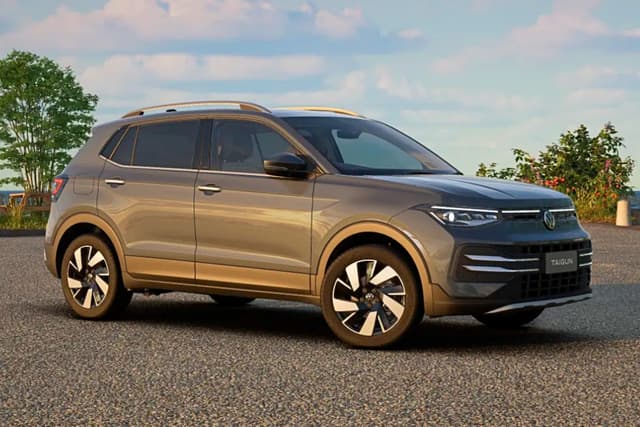
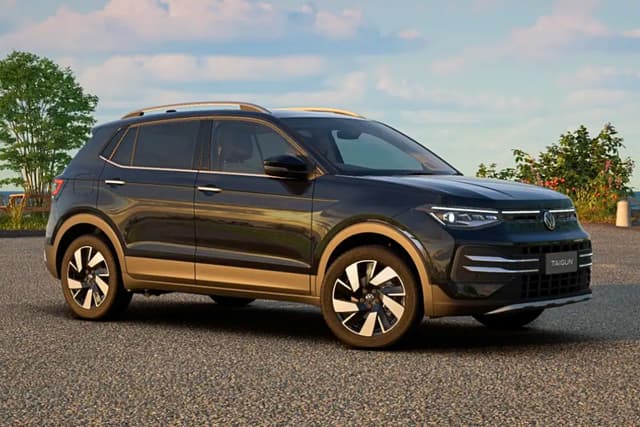
The Volkswagen Taigun colours span 9 options. Volkswagen Taigun interior is available with multiple two-tone options.
Volkswagen Taigun FAQs
The ARAI tested mileage for the Volkswagen Taigun is 19.87 km/l for the 1.0L manual, 18.15 km/l for the 1.0L automatic, 18.61 km/l for the 1.5L manual, and 19.01 km/l for the 1.5L DSG.
The Volkswagen Taigun is offered with two petrol engines, the 1.0-litre TSI and 1.5-litre TSI.
The Volkswagen Taigun has 15 variants on sale in India.
The GNCAP 5-star rated Volkswagen Taigun has 6 airbags, ABS, ESC, hill hold control, multi-collision brakes, ISOFIX child seat mounts, tyre pressure monitoring system, and many more safety features.
The Volkswagen Taigun dimensions are 4,221mm length, 1,760mm width, 1,612mm height, and 2,651mm wheelbase.
Yes, the Volkswagen Taigun is offered with a single-pane sunroof in higher variants.
The Volkswagen Taigun price starts at Rs 11.00 lakh (ex-showroom).
The Volkswagen Taigun mileage is 18.85 kmpl - 19.98 kmpl as per ARAI testing.
The Volkswagen Taigun boot space is 385 litres.
The Volkswagen Taigun ground clearance is 188mm.
Yes, the Volkswagen Taigun is available with either a 6-speed AT or 7-speed DCT.
No, the Volkswagen Taigun is sold with petrol engines only.
Questions you may find useful
Tharan
•1dI currently own a Maruti Suzuki Swift that has done around 130,000 km, and I’ve loved driving it. I’m now planning to upgrade to a petrol manual SUV with a budget of around Rs. 25 lakh. We are a family of 4, and my usage is roughly 70% city and 30% highway. I have an opportunity to buy a Volkswagen Taigun GT Plus Sport 1.5 TSI MT for around ₹28 lakh from a dealer. Automatic is a strict no because my son is learning to drive, and a manual would be good for that Should I go ahead with it? Is it a good upgrade considering my usage and preferences?

Autocar India
With 70 percent city use, some highway trips, a family of four, and a strict manual requirement, the Volkswagen Taigun GT Plus Sport 1.5 TSI manual is a good upgrade from your Maruti Suzuki Swift. However, the manual transmission on the 1.5 TSI was discontinued earlier this year and has not returned with the recent facelift. This means the car you are considering is a pre-facelift version that may have been sitting at the dealer for a while. Moreover, Rs 28 lakh also seems very steep, as the last recorded on-road price of the 1.5 GT Plus Sport MT in Chennai, as per our records, was around Rs 22-23 lakh. Haggle hard if you proceed, do a very thorough pre-delivery inspection, and push for an extended warranty.As for the vehicle itself, the 1.5 petrol with the manual is an excellent choice. It feels quick and smooth, pulls cleanly from low speeds so you do not have to shift constantly in traffic, and has strong performance for safe highway overtakes. It is not too big for city lanes, the higher seating position improves visibility, and it feels stable at speed. Cabin quality and the overall safety focus are clear steps up from your Swift.Two things to note for your usage: the clutch is heavier than your Swift’s, and fuel consumption and upkeep costs will be noticeably higher.Alternatively, you could consider the Hyundai Creta N Line manual or the Renault Duster 1.3 manual, both of which are great options for keen drivers.
Vivek
•1wI currently own a 2016 Renault Duster Diesel 110PS AMT and am now planning to upgrade to a new car. I have shortlisted the following options: Renault Duster 1.3L Iconic DCT (2026) Volkswagen Taigun 1.5L DSG GT (2026) Skoda Kushaq 1.5L DSG Monte Carlo (2026)

Autocar India
The new Renault Duster 1.3 DCT feels like the most natural upgrade. You already know and appreciate the Duster formula, but this new one moves the game on significantly. The big advantage is the wet clutch DCT, which is smoother and better suited to Indian traffic than the dry clutch DSGs in the VW and Skoda. Ride comfort is another big strength, and if you do long-distance touring, the Duster’s absorbent suspension and SUV character will feel instantly familiar, just in a far more polished package. The only real downside is that rear seat space is not class-leading.The Volkswagen Taigun GT and Skoda Kushaq Monte Carlo are both excellent cars to drive. That 1.5 TSI is a strong engine, and both feel quick, polished and in some ways more sophisticated than the Duster. Between the two, the choice largely comes down to taste because mechanically, they are nearly identical. The Taigun has a more understated personality, while the Kushaq Monte Carlo feels a touch sportier. The caveat is the dry clutch DSG, which is brilliant once on the move, but not as naturally comfortable in heavy stop-and-go traffic as the Renault’s wet clutch setup.
Shyam
•1wI’m looking to buy a compact SUV with an automatic transmission for my family, with a budget under Rs. 17 lakh. It should comfortably seat 5 people - 4 adults and 1 child - plus luggage. My usage will be mostly city driving in Pune for office commutes, with occasional highway trips to Mumbai and other outstation routes that include ghat sections. I’m considering the Skoda Kushaq, Volkswagen Taigun, Hyundai Creta N Line, Kia Sonet, Maruti Suzuki Victoris, and MG Astor. Could you please help me decide which automatic option would be most reliable for me? I’d like to compare them on safety, mileage, comfort, and service/maintenance. If there’s another car you’d recommend that fits my needs better, please suggest that too.

Autocar India
Mostly city use in Pune with room for five and a Rs 17 lakh cap - the Hyundai Creta IVT is the best fit. The N Line or other turbo-petrol trims will require you to stretch your budget beyond Rs 20 lakh. Since most of your use is in Pune city traffic, performance from the 1.5 NA is more than adequate. It is also the roomiest amongst your choices and comfortably seats five with room for their luggage. One drawback, though, is that on your occasional highway excursions, you may find overtaking needs a bit more planning with a full load and luggage.If performance feels inadequate, then the Skoda Kushaq 1.0 TSI automatic or the Volkswagen Taigun 1.0 TSI automatic are great choices too. They feel solid and safe, have top crash ratings, and stay steady in sharp bends. The automatic is smooth in traffic, the engine pulls well on climbs, and fuel use is sensible for daily runs. They are not as roomy as the Creta, but overall, the space is good for four adults and a child, and the ride handles broken roads well. The Maruti Suzuki Victoris should be very easy to own and efficient, but highway performance would trail the Kushaq/Taigun.Overall, for your mix of city and highway with ghats, the Creta IVT fits best.
Dinesh Gopalani
•2wI am confused between the Mahindra 3XO, Hyundai Venue, and Honda Elevate. I am considering petrol automatic variants (preferably non-AMT). My usage will be mostly city driving with occasional highway trips. I am looking for a car without a sunroof and with good overall performance. Could you please help me choose the right option?

Autocar India
Unfortunately, both Mahindra and Hyundai have paired their respective automatic versions with a sunroof, which should rule them out for you.The Honda Elevate V CVT doesn't get a sunroof, but it delivers strong performance, and it meets your requirements. It is a no-nonsense car with comfortable seats, excellent ride-handling balance, and a smooth CVT automatic transmission. It is also a size larger than the Mahindra XUV 3XO and Hyundai Venue, so space and boot space are better too.Another option you could consider is the 2026 Volkswagen Taigun Highline 1.0TSI with the new 8-speed automatic transmission.
Siontan Ghosh
•3wI am planning to buy an SUV that is safe, has good driving dynamics, is comfortable, and economical in terms of maintenance. My driving will be 70% city and 30% highway, with a monthly running of less than 500 km. I am confused between the Honda Elevate, Skoda Kushaq, and Volkswagen Taigun. I am very interested in German cars but would like your suggestion.

Autocar India
With a majority of city use, short monthly running, clear focus on safety, driving dynamics and comfort, we will suggest the Volkswagen Taigun 1.0 TSI automatic or equivalent Skoda Kushaq. You will like it for three reasons. First, it feels sure-footed and is a pleasure to drive. Second, the 1.0 turbo petrol is smooth and quick enough for gaps in city traffic, and the automatic here is a regular torque-converter unit, which means gears changes are very smooth. It also handles slow, stop-start roads without fuss. Third, safety is strong - the Taigun and Kushaq have a 5-star crash test rating and are well equipped with safety features. A couple of trade-offs to note. The back seat is not very wide, so three adults will be snug. And the ride at very low speeds, can feel a bit firm over sharp bumps. Service costs are a bit higher than Honda car, but VW now offers long warranty and service packs that keep bills predictable, so do ask your dealer about it.
Rengaraj K
•4wI live in Bangalore, and my usage is around 800km in a month, 70% in the city and 30% on highways. I have shortlisted Toyota Hyryder Hybrid (eCVT), Taigun 1.5 DSG, and Seltos 1.5 DCT. Help me choose one. Currently, I own a Toyota Yaris CVT.

Autocar India
The Toyota Hyryder Hybrid is the better fit for you. It suits your pattern of 70% city use in Bengaluru traffic and about 800 km a month, and will feel familiar coming from your Yaris CVT.The Toyota Urban Cruiser Hyryder does a lot of running on the battery at low speeds, so it pulls away smoothly and cleanly, and feels very quiet and refined to drive in the city. It will also use less fuel in the city than the two turbo-petrol options you've listed, and you are already familiar with Toyota's reputed after-sales service. As per Toyota, its fuel efficiency is 29.97kpl.Trade-offs to note are that it doesn't have the outright performance, such as the Taigun or Seltos, and the boot is smaller than the other two, thanks to the hybrid battery.
Rengaraj K
•4wI live in Bangalore, and my usage is around 800 km per month, with 70% in the city and 30% on highways. I have shortlisted the Toyota Hyryder Hybrid (eCVT), Volkswagen Taigun 1.5 DSG, and Kia Seltos 1.5 DCT. Please help me choose one. I currently own a Toyota Yaris CVT.

Autocar India
You are doing mostly city driving in Bangalore with some highway use, and you are already used to a smooth CVT experience. The Toyota Hyryder hybrid fits this perfectly. It is extremely smooth, quiet and effortless in traffic, often running on electric power at low speeds, which makes it far more efficient in city conditions. It also offers a relaxed driving experience on highways with consistent efficiency. This makes it the most comfortable and least stressful option for daily use.Now, comparing your other choices. The Volkswagen Taigun 1.5 DSG is easily the most fun to drive. It is quick, engaging and feels very stable at high speeds. But in city traffic, the DSG is not as smooth as a CVT, and achieving good fuel efficiency in the city will be difficult. It is better suited as an enthusiast’s car rather than a daily comfort-focused option.The Kia Seltos 1.5 turbo DCT sits somewhere in between. It is more refined than the Taigun and feels more premium inside, but the DCT still behaves like a performance-oriented gearbox. In stop-go traffic, it is not as seamless as a hybrid or CVT, and fuel efficiency will be noticeably lower than the Hyryder.
Piyush Aggarwal
•4wI am confused between a used Taigun GT Plus 1.5 (2024 model) with 20,000 km on the odometer, priced at around ₹14 lakh, and a new Duster 1.3 Techno priced at ₹18 lakh. Which car makes more sense if my priority is performance?

Autocar India
If performance is your top priority and you want something that feels genuinely quick and engaging, the 2024 Volkswagen Taigun GT Plus 1.5 at Rs 14 lakh is the stronger choice here.It's 1.5 TSI paired with the DSG (twin-clutch automatic) delivers sharp, rapid shifts and a lively, responsive character that suits an enthusiast driver. The Taigun also feels more agile and composed in corners, while still being easy to drive in the city. At roughly Rs 4 lakh less than the new Duster, you also have room to budget for an extended warranty, fresh tyres, or even preventative maintenance, which is important when buying a used, performance-oriented car.There are a couple of caveats. In heavy, crawling traffic, the DSG can feel slightly jerky, and like most dual-clutch setups, it prefers consistent movement over prolonged inching. The ride is also on the firmer side, especially over broken surfaces.On the other hand, the new Renault Duster 1.3 Techno is the better choice if you prioritise ride comfort and robustness over outright performance. Its 1.3 turbo-petrol is strong and tractable, and the car feels more planted on rough roads. The Duster’s dual-clutch transmission is a wet-clutch unit, which is inherently smoother and better suited to stop-go traffic, though it doesn’t feel as quick or as sporty as the Taigun’s DSG.Overall, if your brief is clearly performance-first, the Taigun GT Plus makes more sense.
Drnatarajan
•5wI currently own a Volkswagen Taigun 1.5 TSI GT DSG and have been facing issues with jerky low-speed performance in city driving, along with persistent rattles despite multiple service visits. I am considering upgrading to either the Kia Seltos (turbo petrol DCT) or the upcoming Renault Duster (turbo DCT). My usage is around 60% city and 40% highway. My main concern is whether these alternatives will offer a smoother and more refined driving experience in city traffic compared to my current car, or if they will exhibit similar behaviour due to the nature of dual-clutch transmissions.

Autocar India
With 60% city use and you already unhappy with the Volkswagen Taigun’s DSG jerks and cabin rattles, the Kia Seltos 1.5 petrol IVT automatic is the safer bet for you rather than the turbo DCTs. The IVT is a belt-type automatic (essentially a CVT) that has no clutch to slip, so it moves off smoothly in slow traffic and is jerk-free at parking speeds. It is also easier to live with in our stop-go traffic, and power is adequate for your weekend highway runs, but it won't have the punch and pace of the VW Taigun 1.5.If you switch to a Seltos turbo DCT, its relaiively jerky too. Dual‑clutch gearboxes like the VW DSG and Kia’s DCT can still give a small lurch when you crawl in bumper-to-bumper traffic. On rattles, Seltos cabins we’ve used have held up quite well, but no car is fully immune to rough roadsTwo trade-offs with the Seltos IVT: it won’t feel as quick as your 1.5 TSI when you floor it, and on bigger wheels, the ride can feel a bit firm on sharp bumps.About the new Duster: it has a wet-clutch DCT, which is a bit slower to shift than the VW DSG, and it's not as smooth as the Kia IVT. t.Overall, for your mix and your pain points, the Seltos 1.5 IVT lines up best. If you really want a turbo punch, the Seltos turbo DCT is fine, but expect similar low-speed manners to your Taigun.
Avi Bansal
•5wI am 22 years old, shifting to Gurgaon, and frequently travel to Chandigarh. I have shortlisted the Toyota Hyryder strong hybrid base variant. Any other options and your advice?

Autocar India
Opt for the Toyota Urban Cruiser Hyryder strong hybrid if your priority is low running cost and stress-free ownership, but there are a couple of alternatives depending on what you value more. At your age and usage, frequent Gurgaon to Chandigarh runs plus city driving, the Hyryder makes a lot of sense because it is extremely efficient and very easy to live with. The strong hybrid system can deliver excellent real-world efficiency and even run a significant portion on electric power in traffic, which keeps costs low, and it is smooth, comfortable and reliable over long distances.That said, it is not a very exciting car to drive. The focus is on comfort and efficiency rather than performance, so if you enjoy driving, it may feel a bit dull on highways.If you want something more fun and engaging, look at the Skoda Kushaq or Volkswagen Taigun. Both are great to drive on highways like Gurgaon to Chandigarh and feel more solid at high speeds, but they will be less efficient and slightly higher to maintain.If you want a more premium and feature-rich option, the Kia Seltos or Hyundai Creta are strong alternatives. They offer better interiors, more features and a more modern feel, but again, fuel efficiency will not match the hybrid.