
Hyundai cars in India (10)





FAQs
Trending Questions on Hyundai Cars - Answered by Autocar Experts
I own a 2019 Baleno RS, which I am considering upgrading because of its light build and lackluster handling despite having a nice engine. My usage is mostly in the city with occasional trips to the hills, as I use my Virtus GT for highways. I am considering the Hyundai Venue Diesel top‑variant automatic because it has the best drivetrain option of the lot, but the ₹17 lakh plus on‑road price doesn’t seem fully justified to me. Safety and comfort are my priorities, and I am nearly 6 feet tall. I need your expert advice.
You're right; the price of the Hyundai Venue diesel AT feels high for a compact SUV, but that's largely because the cost of keeping a diesel engine compatible with the latest emissions norms is high. It becomes especially apparent in the price of compact cars.
And yes, while the diesel automatic is the best overall powertrain of the Venue, and a relative novelty in the segment, you could save a bundle by choosing the turbo petrol instead.
Since you plan to use it mostly in the city, it's not worth the extra spend on the diesel engine, and the 1.0 T-GDi with the DCT is a good combo.
However, if you want a car that's fun to drive in this segment, consider the Skoda Kylaq instead. It's perhaps not as cutting-edge as the Venue when it comes to tech, but it does have a 5-star Bharat NCAP rating.
Also, a punchier engine in its 1.0 TSI and a smoother automatic in the form of its 6-speed torque converter auto.
I want to buy a better premium car with comfortable back seats. I am choosing between the Hyundai Creta and Victorius, and since I will mainly drive in the city, I prefer a CVT. Please suggest which is better.
Yes, if your driving is primarily in the city, the combination of naturally aspirated petrol and a smooth automatic is the best option for you. Advantages of the Maruti Victoris are a slightly lower price and official fuel economy rating.
However, do note that the Victoris uses a 6-speed torque converter automatic, while the Hyundai Creta uses a CVT, and in real-world use, the CVT is likely to be more efficient. The Creta outscores the Victoris in most other areas, too, including your requirement of comfortable back seats, where the Victoris is lacking in space.
You could also check out the new Kia Seltos, which offers the same 1.5 petrol CVT powertrain as the Creta, but even better rear seat space and comfort.
I have a Liva petrol manual and want to replace it with a similar-sized small car that has more safety features such as ADAS Level 2 and an automatic transmission. My choice is the new 2025 Hyundai Venue. Is this the right choice, or do I have other options?
While there aren't too many compact cars with ADAS features, the new Hyundai Venue is one of them. It's a great all-rounder with improved ride comfort and rear-seat space, a high-tech infotainment system with excellent graphics, a wide array of engines and gearboxes, and loads of safety features, including the aforementioned ADAS.
Another good option is the Kia Syros, which has all the features of the Venue, but even greater rear seat space (and ventilated rear seats). It costs a little bit more, and its look is not to all tastes, but it offers quite a bit more.
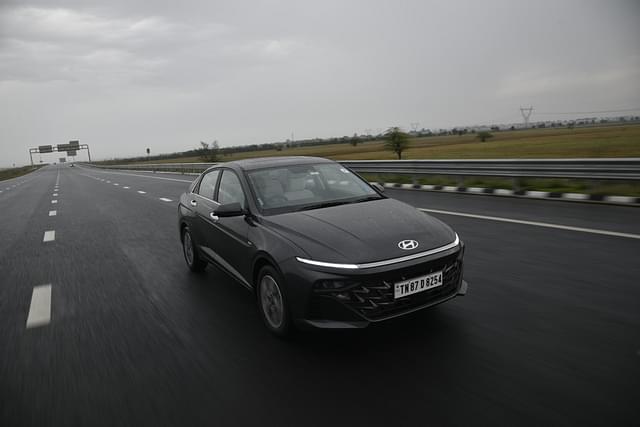
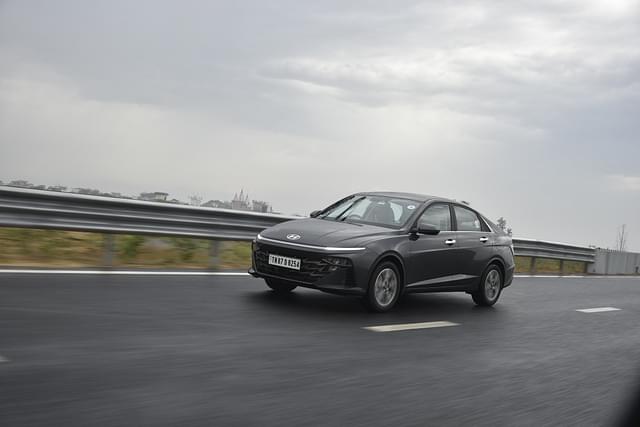
I want to buy the Hyundai Verna Turbo variant, but I am confused about whether I should buy it in March 2026 or wait for the facelift, which is expected to launch around Q2 2026.
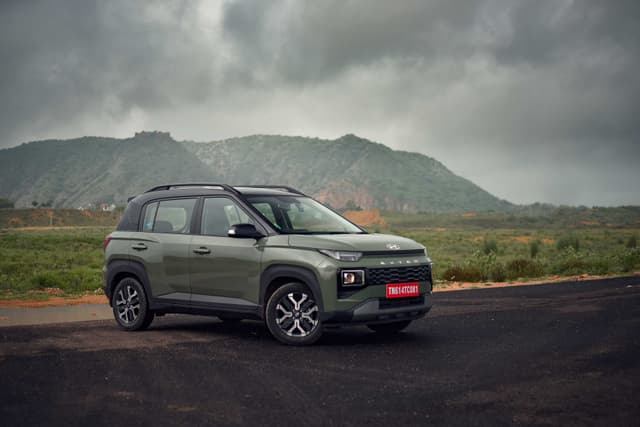
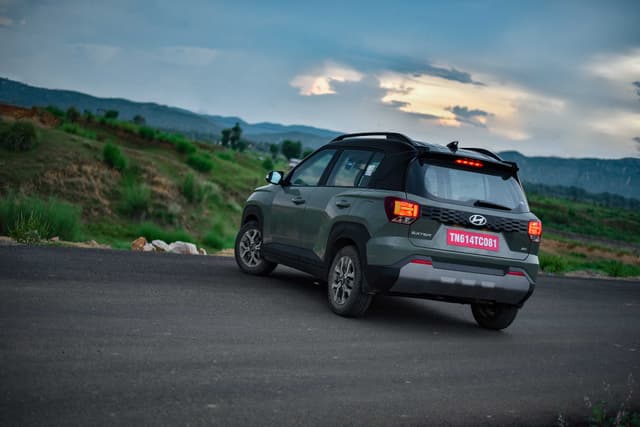
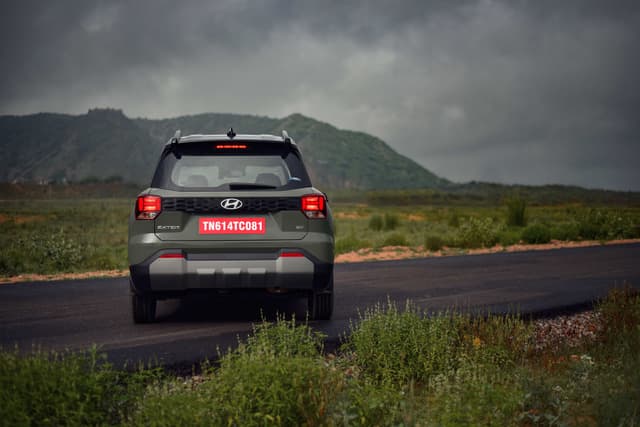
I am planning to buy my first new car and, being inexperienced, I am confused between the Hyundai Exter AMT and the Nissan Magnite AMT. Please suggest which one would be a better choice.
You can go with the Hyundai Exter AMT, it is a well-equipped car, drives well and has the smoothest AMTs in the segment. The 1.2-litre, 4-cylinder naturally aspirated petrol engine is smooth, refined and linearly delivers its power.
For a first-time car owner, Hyundai's vast network of service centres and relatively pocket-friendly after-sales service will add to your ownership experience.
I want a comfortable, fuel-efficient car under 10 lakh for my wife for normal city driving and occasional long drives.
The Maruti Suzuki Baleno or even its sister car, the Toyota Glanza, would be a good option to buy. The car is spacious with comfy seats, and it is fuel-efficient too, both the manual and the automatic version (AMT).
In our standard test cycle, we got 13.80kpl and 17.50kpl in our city and highway cycles for the manual, whereas the automated manual transmission (AMT) achieved 11.86kpl and 17.21kpl.
The Baleno sits below 4 meters in length and is compact enough for the city. However, if you would like something smaller, consider the Hyundai Exter. It won't be as efficient, in the manual we got 9kpl and 14kpl for city and highway runs, but this is still good. Also, you will also benefit from a slightly higher seating position and a lower price.
I have been using a Nexon EV for the past three years and would now like to upgrade to another EV. What would be an ideal replacement below ₹50 lakh? We are a family of three, the car will be self-driven, and I prefer something compact.
I am planning to buy my first car and have started driving classes. My budget is ₹10 lakh. I will mostly drive in the city and occasionally on the highway, and I have a family of three. Please suggest which car to buy.
The new Hyundai Venue is a good option to consider. It is an easy-to-drive SUV with good visibility, a light steering, and a buttery-smooth 5-speed manual gearbox and clutch. The 1.2-litre petrol engine is very refined and smooth, and has adequate performance for city use.
You could also consider a Maruti Baleno or Toyota Glanza. These are very user-friendly hatchback options in that price range.
I am looking to purchase a new car under 20-22 lacs within another 3 months. Actually, I'm a car enthusiast and love performance cars. I would be travelling within city everyday and out of the state once every 1-2 months. So, please suggest me accordingly.
The 1.5TSI versions of the Skoda Kushaq, Skoda Slavia, Volkswagen Taigun and Volkswagen Virtus, will certainly bring a smile to your face with their performance as well as dynamic prowess.
All these feel similar from behind the wheel, so pick the body style you prefer - sedan or SUV. Out of these, the Kushaq is likely to get updated in the coming weeks, so you may want to check that out before making your decision.
On the other hand, if you want a car that looks sporty, drives well, and has features like ADAS, you could also consider a Hyundai Creta N Line and Verna.
I own a 2022 S-Cross, though it is not listed in your dropdown. I am looking to transition to an EV with a budget of around ₹20 lakh, extendable to ₹22 lakh. I need a real-world highway range of at least 400 km and prefer a spacious car similar to the S-Cross, rather than a compact SUV-based EV like the Nexon. The BE 6 is currently my choice, but my wife is not a fan of its design.
Last Updated on: 2 Jan 2026