
Last Updated on: 27 May 2026
Tata Tigor EV
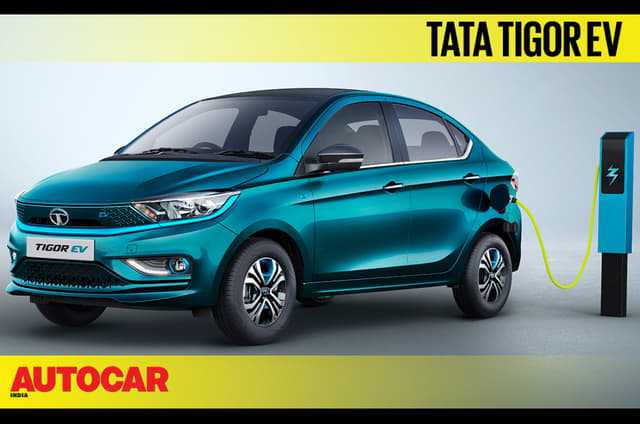
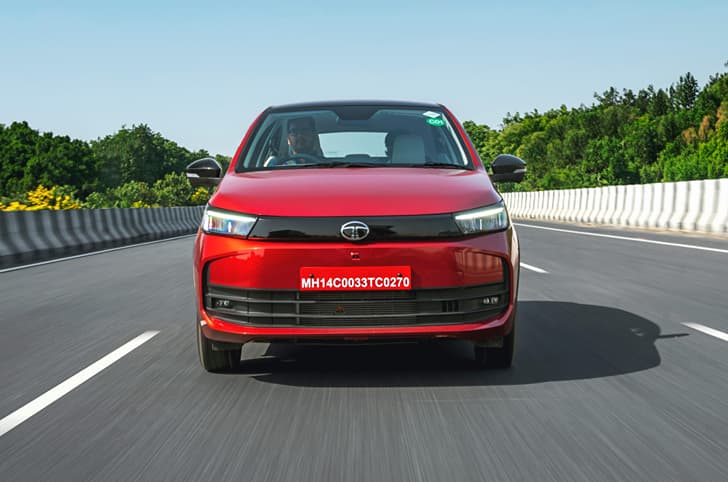
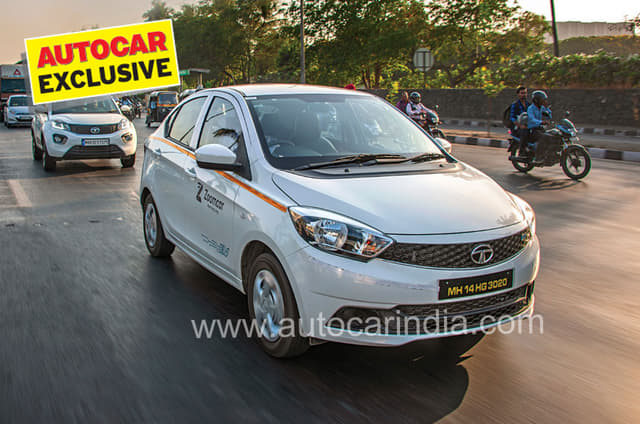
The Tata Tigor EV is the first electric vehicle from Tata Motors that was launched back in 2017, and received a facelift in 2021. This Tata electric car is priced from ₹12.49 lakh, ex-showroom, for the entry-level XE trim. The top-spec XZ+ Lux model is priced at ₹13.75 lakh, also ex-showroom.
The Tigor EV variants include 4, including XE, XT, XZ+, XZ+ Lux. The Tata Tigor EV on-road prices start from 13.27 lakh and go all the way up to 14.59 lakh in the city of Mumbai. It features a 26kWh battery pack, which is paired with a 75hp front-axle-mounted electric motor.
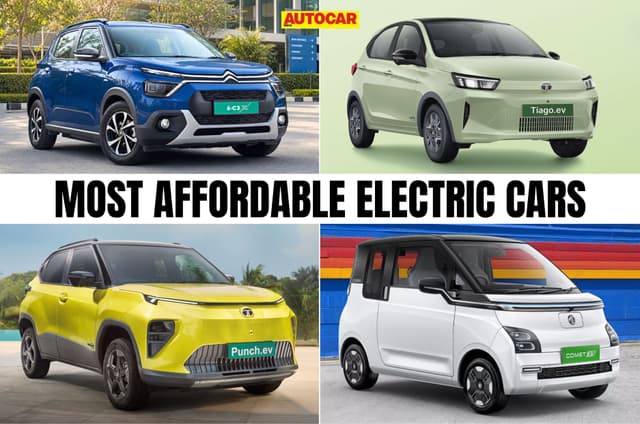
Tata Tigor EV does not have a direct rival but can be considered an option to the Tata Tiago EV, Citroen eC3, and MG Comet EV.
The Tata Tigor EV claimed range is 315km (ARAI-certified).
Key Highlights Of Tata Tigor EV
- It is the first EV launched by Tata Motors in India.
- Gets a 26kWh battery pack that powers a front-axle-mounted electric motor that produces 75hp and 170Nm.
- Has a claimed ARAI-certified range of 315km and can be charged from 0-80% in about an hour with a DC fast charger.
- It is the first EV crash tested by Global NCAP in 2021, where it scored a 4-star safety rating.
- Safety features include dual front airbags as standard, ABS with EBD, a rear parking camera, TPMS, front fog lamps and a rear defogger.
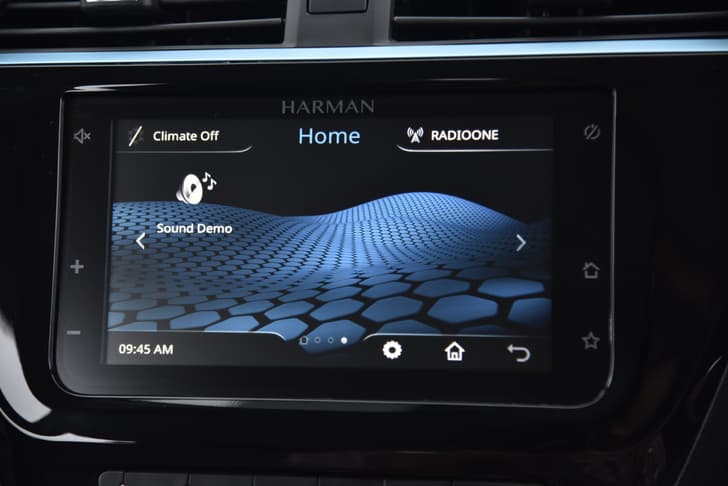
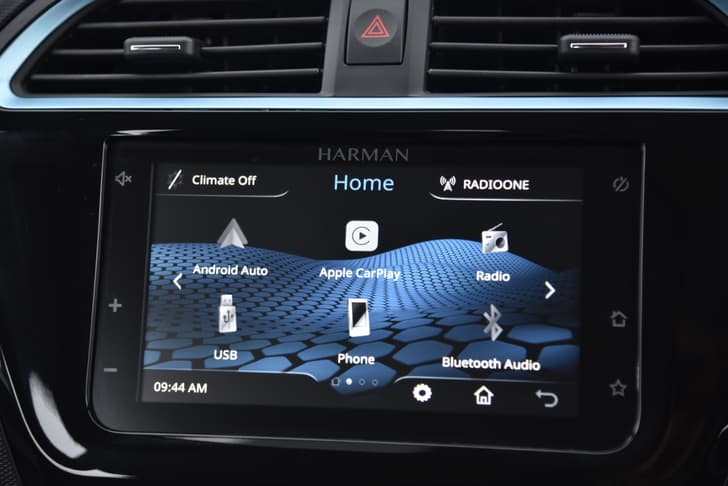
- Convenience features include a 7-inch touchscreen infotainment system, a semi-digital driver’s display, a cooled glovebox and cruise control.
- The Tata Tigor EV gets a traditional interior layout with a grey and black theme featuring blue accents that break the monotony.
- Dimensions include a 3993mm length, 1677mm width, 1532mm height, a wheelbase of 2450mm and it has a boot space of 316 litres.
Tata Tigor EV Latest Updates
- 14 December 2023: Tata Tigor EV gets up to Rs 1.1 lakh year-end discounts.
Tata Tigor EV Features and specifications
Our Rating | 7 |
Battery Range | 315 km |
Fuel Type | Electric |
Transmission | Auto |
Seats | 5 |
Body Style | Sedan |
Doors | 4 |
Claimed Electric Motor Range | 315 km |
Warranty Distance | 125000 km |
Warranty Duration | 3 Years |
| Fuel Type/ Propulsion | Electric |
| Motor Type | Permanent Magnet Synchronous Motor |
| Number of Motors | 1 |
| Pure Electric Driving Mode | Yes |
| Battery Capacity | 26 kWh |
| Claimed Range | 315 km |
| Charging Time | 9.4hrs 10%-100%(15A), 9.4hrs 10%-100%(AC Wallbox), 59min 10%-80%(DC fast charger) hrs |
| Auto Start/Stop | No |
| Front Brakes | Discs |
| Rear Brakes | Drums |
| Type of Power Assist | Electric |
| Steering Adjust | Tilt |
| Length | 3993 mm |
| Width | 1677 mm |
| Height | 1532 mm |
| Wheelbase | 2450 mm |
| Power Windows | Front and Rear |
| Voice Assisted Sunroof | |
| Power Windows with One Touch-Down | Driver Window Only |
| Powered Tailgate |
| Airbags | 2 |
| Driver Airbag | |
| High Beam Assist | |
| Emergency Brake Light Flashing |
| Body Coloured Bumpers | |
| Outside rear view mirror (ORVM) | |
| Cornering Headlights | |
| ORVM turn indicators |
| Speedometer | Digital |
| Tachometer | Digital |
| Trip Meter | |
| Average Fuel Consumption |
| Audio System | |
| Speakers | 4 |
| CD Player | |
| Branded Music System | Harman/Kardon |
| Find My Car | |
| Geo Fence | |
| Remote Sunroof Open / Close via App | |
| Low Battery Warning |
Tata Tigor EV price & variants
The Tata Tigor EV prices start from ₹12.49 lakh for the XE trim and goes up to ₹13.75 lakh for the fully-loaded XZ+ Lux variant, ex-showroom. Tigor EV on road prices in Mumbai range between ₹13.27 lakh and ₹14.59 lakh.
- All variants of the Tigor EV are offered with a 26kWh battery pack.
The Tata Tigor EV competitors include the Tata Tiago EV, MG Comet EV and Citroen eC3.
Tata Tigor EV Official Brochure
Download the complete brochure with specs, features, and variants.
Tata Tigor EV expert review
We like
Green image
No emissions
We don't like
Expensive
Underwhelming performance
7.0
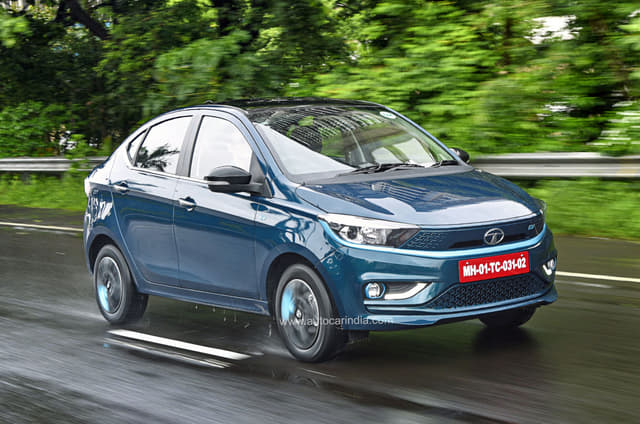
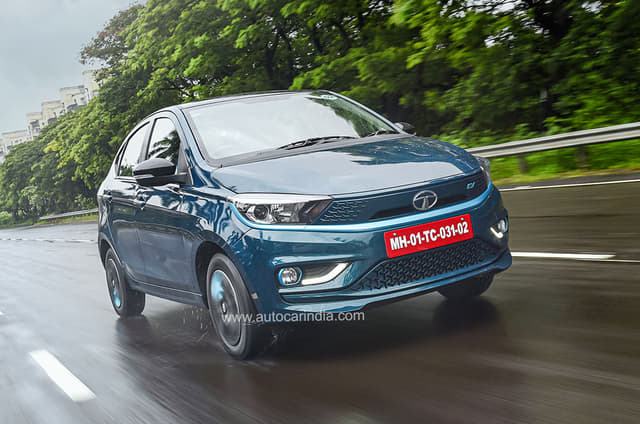
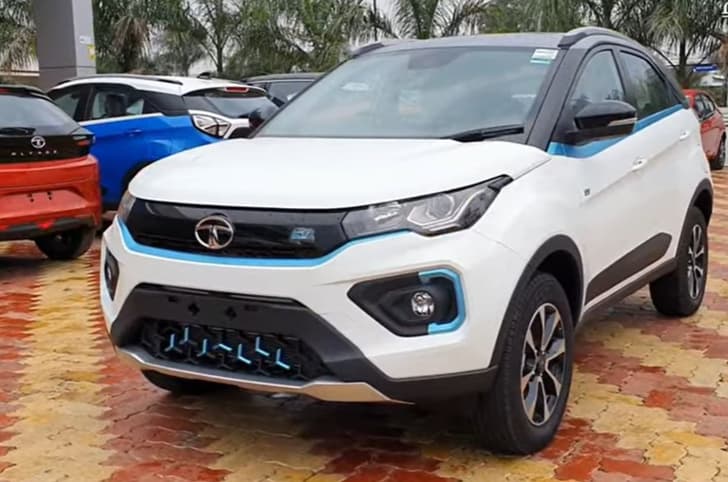
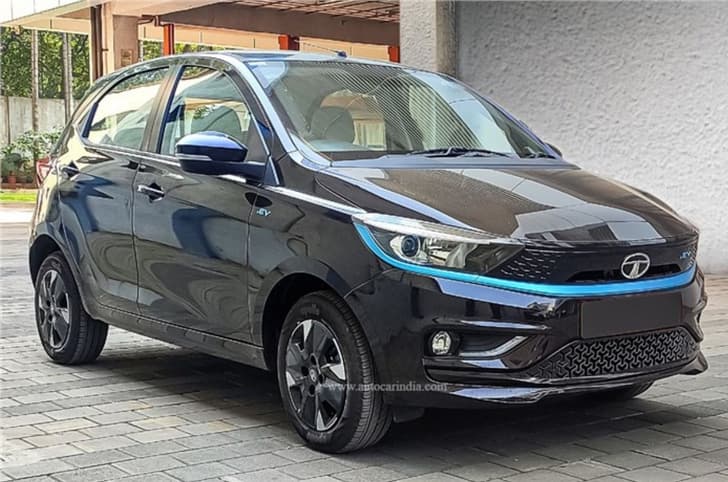
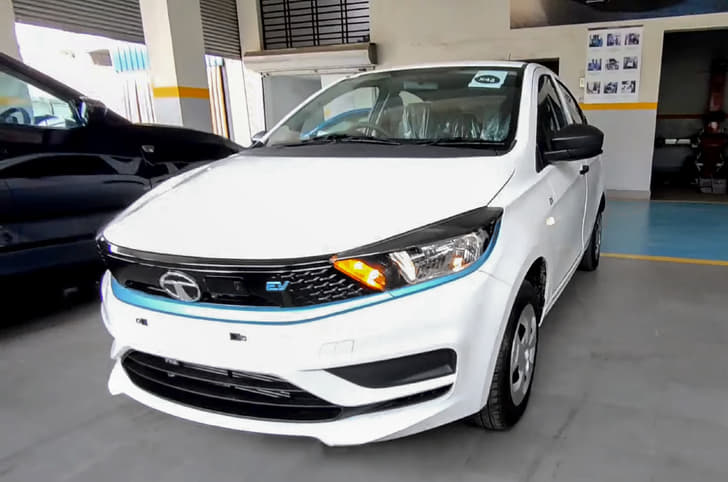
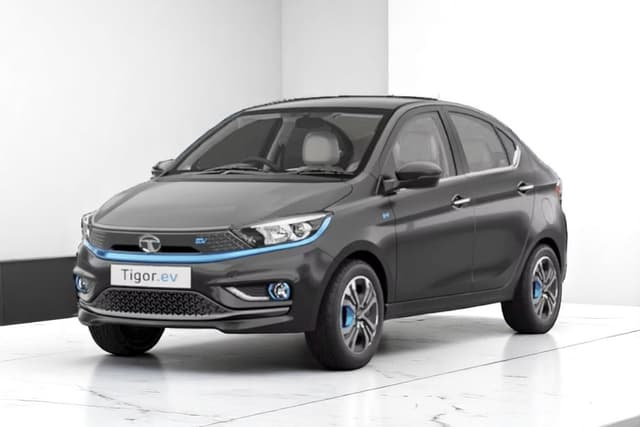
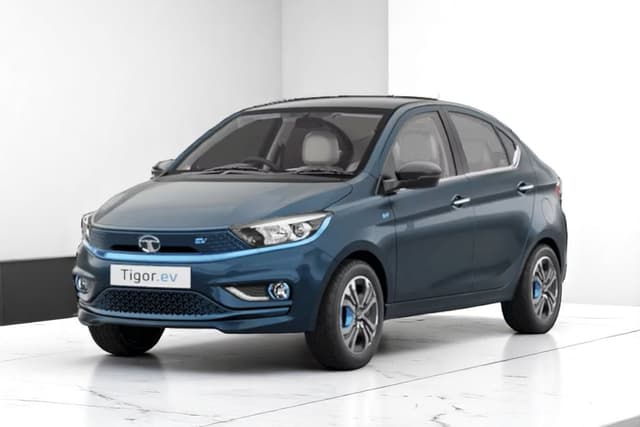
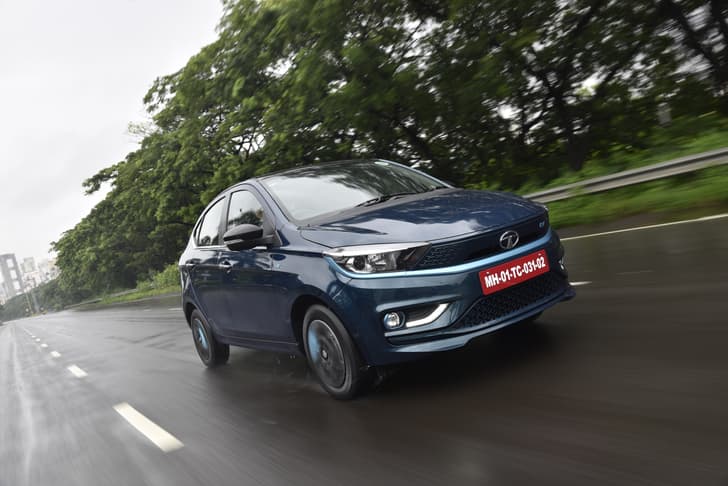
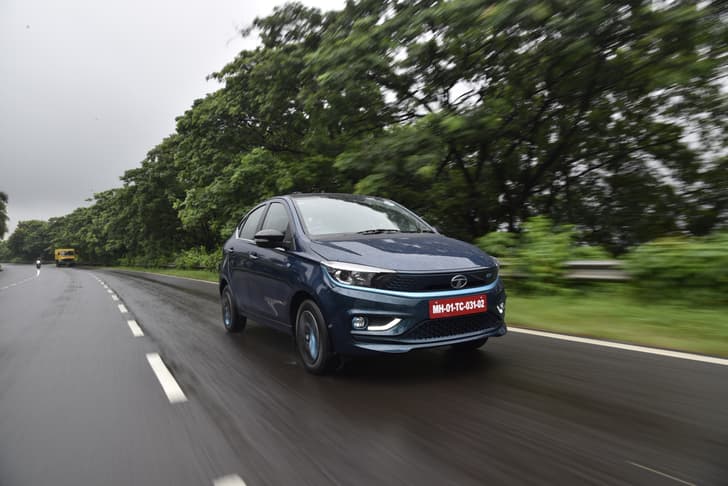
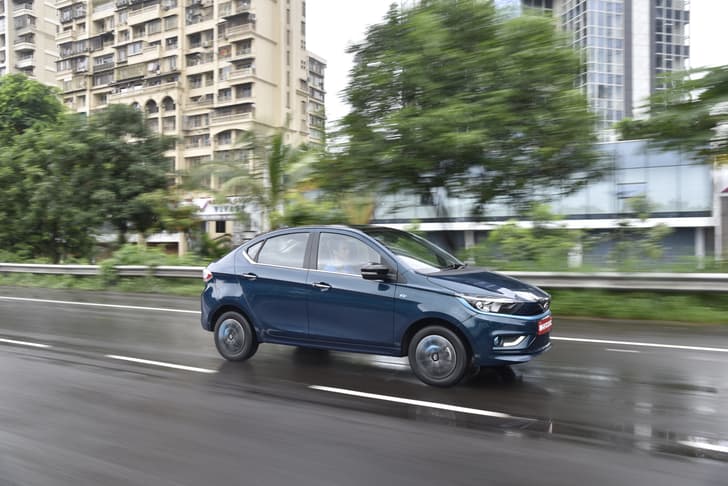
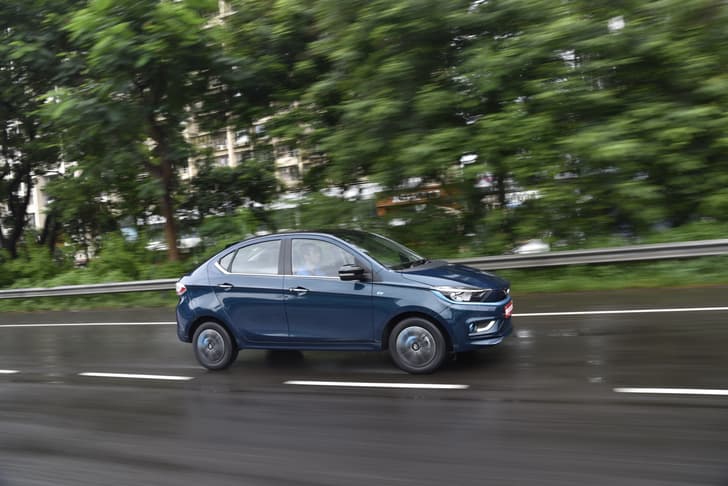
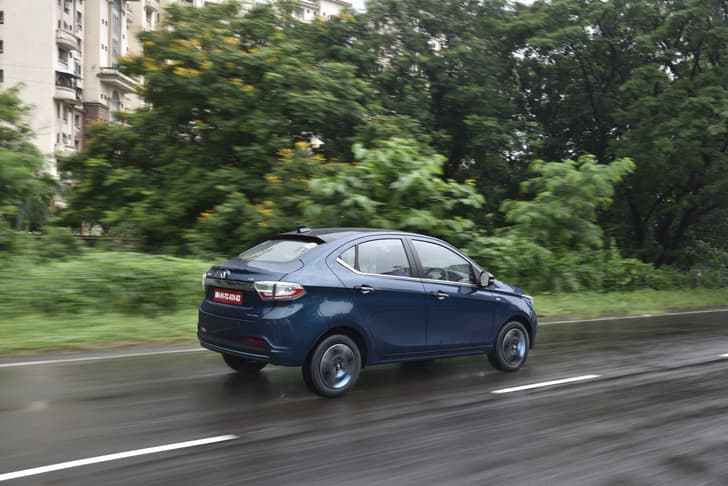
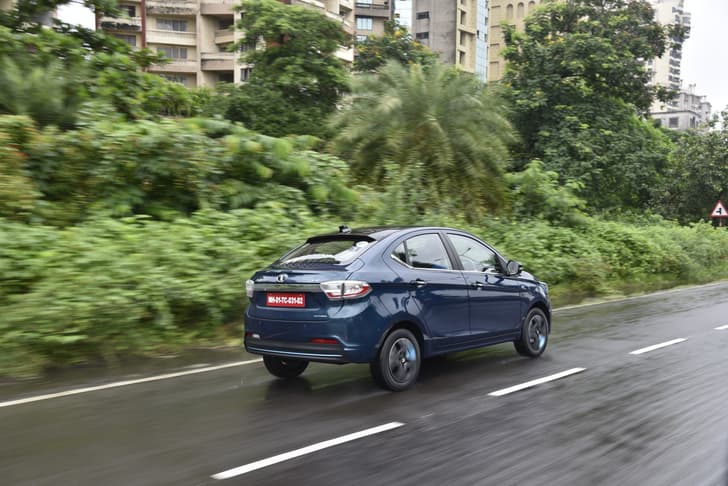
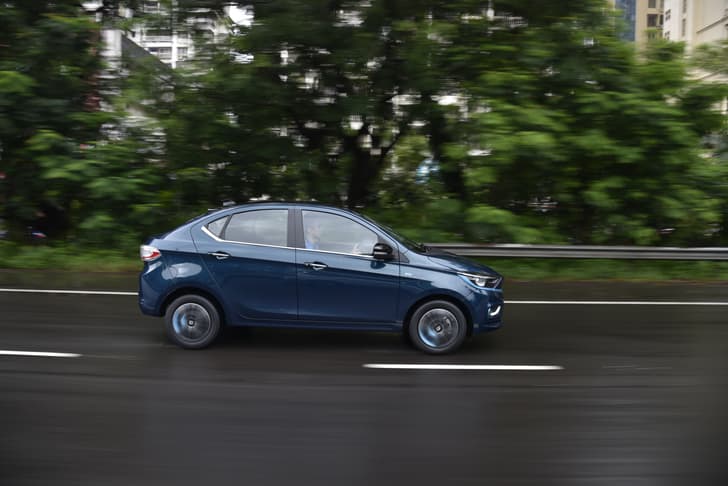
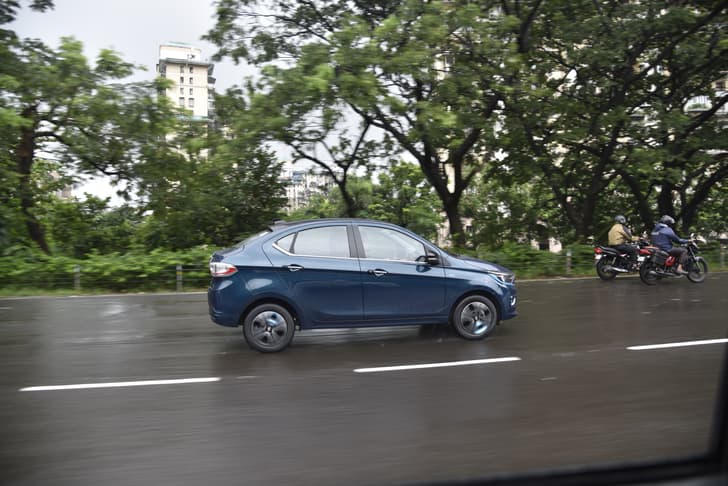
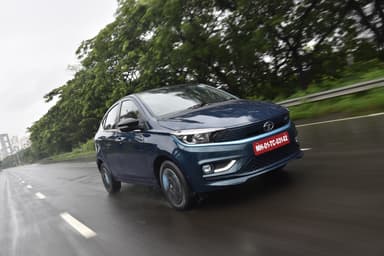
Tata Tigor EV is based on the updated Tata Tigor, it retains the compact sedan silhouette but has added EV-specific touches such as blue accents, revised grille detailing and aerodynamic alloy wheels.
It is built on Tata’s Ziptron EV architecture, the Tigor EV uses a 26kWh lithium-ion battery pack.
7.0
Inside, the Tigor EV mirrors the petrol Tigor’s cabin layout, with subtle EV-specific blue highlights helping differentiate it. The layered dashboard design looks neat, and the overall cabin feels familiar and user friendly. Front seats are comfortable enough for city commutes, and visibility is excellent thanks to the upright greenhouse. Rear-seat space remains decent for the segment, though taller passengers may find under-thigh support limited.
Boot space is slightly compromised at 316 litres due to the battery packaging but remains practical enough for daily use.
7.0
Tigor Ev is powered by a front-mounted electric motor producing 75hp and 170Nm. The Tigor EV offers two drive modes: Eco and Sport. Full power and torque are available only in Sport mode, where throttle responses become noticeably sharper. Performance is smooth and predictable rather than thrilling. The Tigor EV feels quick enough up to urban speeds, especially in Sport mode, where it can sprint to 60kph quite briskly. Beyond that, acceleration tapers off, and it struggles to match the pace of petrol rivals at highway speeds.
What stands out instead is refinement. The electric drivetrain is silent and vibration-free, making city driving feel calm and effortless. The absence of engine noise immediately gives it a more sophisticated feel than similarly priced petrol compact sedans. Regenerative braking is always active and cannot be adjusted, which takes some acclimatisation, especially on highways where lift-off deceleration can feel abrupt.
8.0
The claimed ARAI range for Tigor EV is 315km. In our real-world testing, the EV achieved around 200km in city conditions and approximately 181km on the highway. Efficiency figures stood at 7.69km/kWh in the city and 6.98km/kWh on highways.
8.0
The suspension setup has been revised to handle the extra battery weight, with stiffer springs and retuned dampers. While there is an initial firmness at low speeds, the Tigor EV settles well and absorbs bumps competently once moving. Rear passengers feel sharper road shocks more noticeably due to the firmer rear suspension setup. However, overall ride comfort remains respectable for a compact sedan.
The steering is light and effortless in city conditions, making the Tigor EV easy to manoeuvre in traffic and tight parking spaces. Handling is safe and predictable rather than sporty, with the added battery weight making its presence felt during quick direction changes.
8.0
The Tigor EV comes reasonably equipped with features such as touchscreen infotainment, connected car tech, automatic climate control and keyless entry.
Safety is a strong point. The Tigor EV benefits from Tata’s robust structure and carries a 4-star Global NCAP safety rating, making it one of the safer compact EVs available at the time.
8.0
Priced between roughly Rs 12 lakh and Rs 14 lakh (ex-showroom), the Tigor EV positioned itself as one of India’s most accessible long-range EVs. For buyers looking to make the switch to electric mobility without stretching into SUV territory, the Tigor EV delivers a practical, safe and easy-to-live-with package that fits naturally into everyday urban life.
Reviewed by: Sergius Barretto
Tata Tigor EV User Reviews
Tell us about your experience
Tata Tigor EV reviews

Tata Tigor EV comparison
Tata Tigor EV Range
The Tata Tigor EV has a claimed range of 315km (ARAI-certified).
| Fuel type | Displacement | Transmission | Range |
|---|---|---|---|
| Electric | 26 kWh | Auto | 315 km |
Tata Tigor EV news
Tata Tigor EV Images
Check out the Tata Tigor EV’s simple exterior and interior design, and its decently-loaded feature suite in 69 images.
The Tigor EV brings together a traditional exterior design, a simple cabin layout and a battery pack that is good enough for daily city drives, all of which will appeal to a first-time EV-buyer.
Tata Tigor EV videos
Videos of the Tigor EV highlight our opinions on the sedan’s exterior and interior design, its convenience and safety features’ integration and its ride and driving dynamics to make it easier for you to know whether you should buy it or choose one of its rivals.


Tata Tigor EV Colours
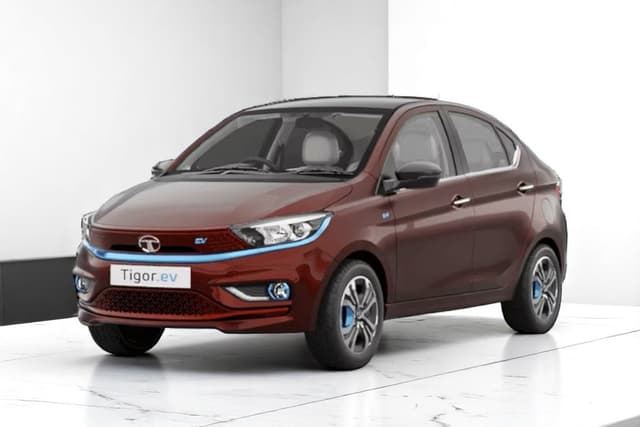
The Tata Tigor EV gets 3 exterior colour options, including . None of the options is available in a dual-tone choice.
The Tigor EV interior gets a dark grey and black shade with some blue accents for added contrast. It gets fabric seats that are finished in white.
Tata Tigor EV FAQs
Initially, the Tata Tigor EV was only available to commercial buyers. However, since October 2019, the model has been on sale to private customers as well.
The Tata Tigor EV’s lithium-ion battery pack takes 9.4 hours to charge from 10 percent to full when plugged into a regular wall socket. With 15kW DC fast charging, the battery pack replenishes from 10 to 80 percent charge in an hour.
The Tata Tigor EV has an ARAI claimed range of 315 km.
No, the Tata Tigor EV does not get a sunroof.
Tata Tigor EV has a vehicle warranty of 3 Years / 1,25,000 km and a motor, and a battery pack warranty of 8 Years / 1,60,000 km (whichever is earlier).
Tata Tigor EV has 316 litres of boot space.
Currently, there are 4 Tata Tigor EV variants on sale: XE, XT, XZ+, XZ+ Lux.
The 7-inch touchscreen infotainment system is available from the XT variant onward.
Leatherette seats and a leatherette-wrapped steering wheel are exclusive to the top-end XZ+ Lux variant.
No, the Tata Tigor EV does not get alloy wheels. In the higher-spec XZ+ and XZ+ Lux trims, it gets stylised wheel covers that give it a look akin to alloy wheels.
All variants of the Tata Tigor EV use the same 26kWh lithium-ion battery pack.
Questions you may find useful
Ram
•31wI am planning to purchase an electric vehicle (EV). I have a weekly commute of approximately 600 km and no home charging facility. Fortunately, there is a 60 kW DC fast charging station with four charging ports right next to my house. Based on this situation, I have two main concerns: 1. Will DC fast charging every two days negatively impact the long-term health of the EV battery? 2. Given my high weekly mileage and reliance on public fast charging, is it a wise and practical decision?

Autocar India
You haven’t mentioned your budget. To answer your questions, we recommend charging the battery up to 90 percent at most during DC fast charging. Most manufacturers also advise performing a full slow AC charge cycle after every 3-4 DC fast charge cycles to help balance the battery cells and maintain long-term health.Even though you’ll rely on public charging, an EV can still be economical if you don’t mind frequent visits to the charging station. You’ll likely spend ₹24-28 per unit, translating to a running cost of about ₹3-4 per km. With around 2,500 km of monthly usage, your savings will still be significant compared to a similar petrol or diesel car.