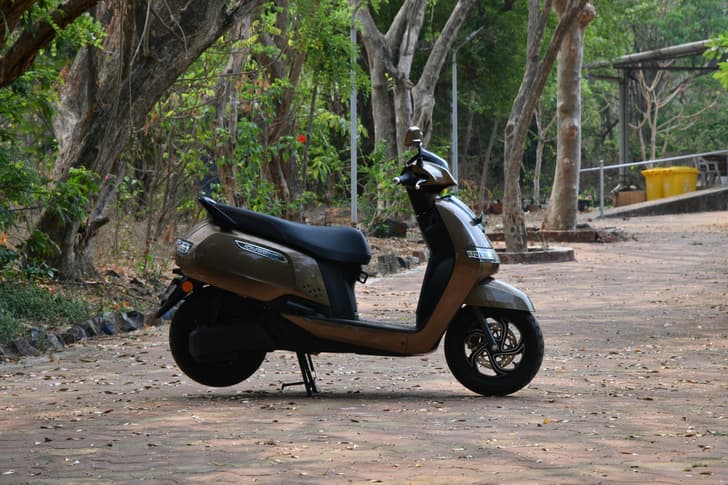
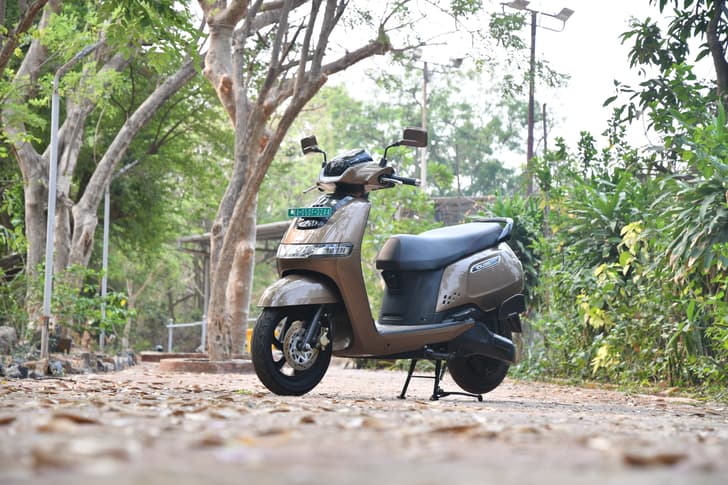
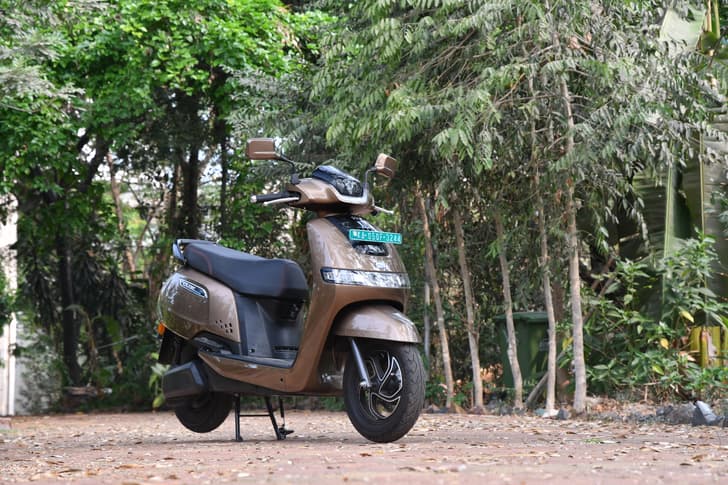
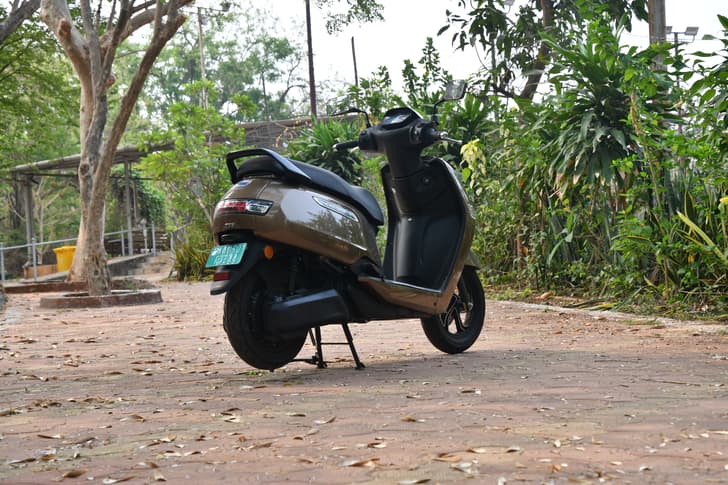
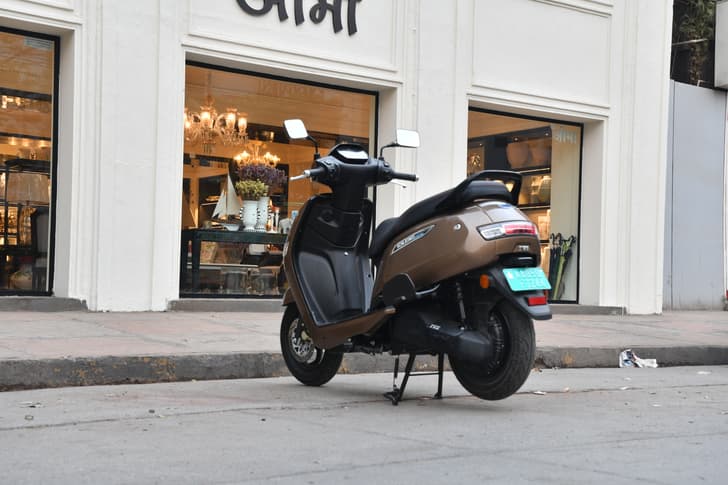
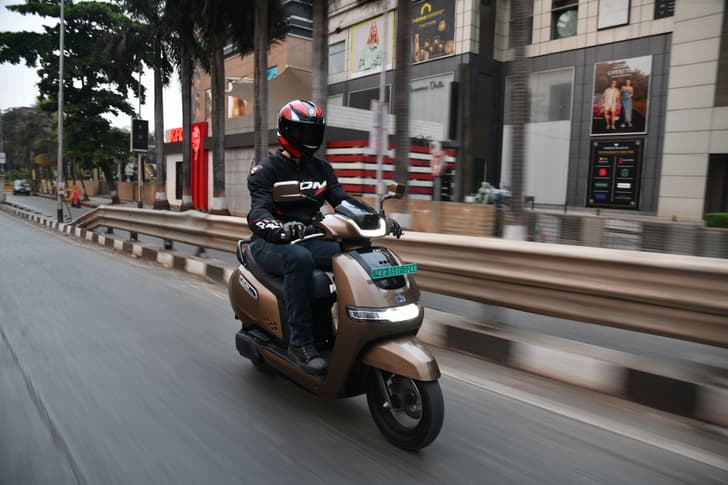
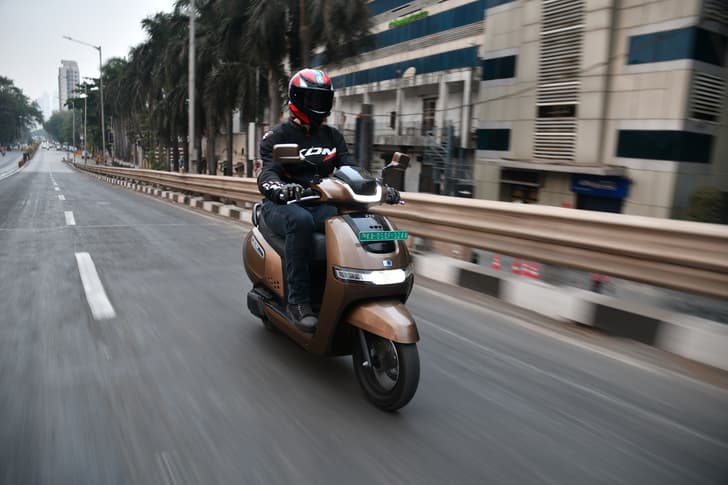
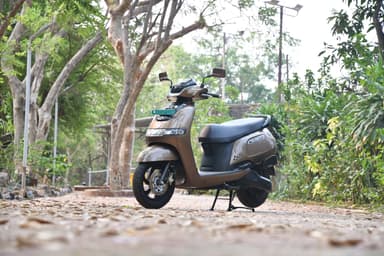
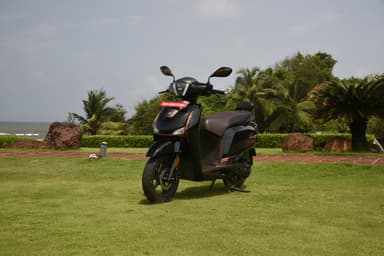
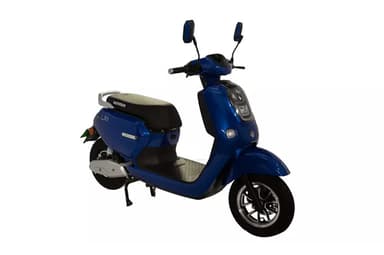
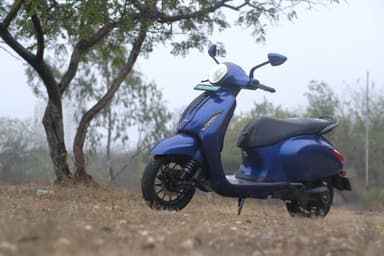
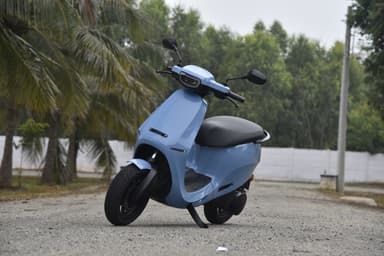
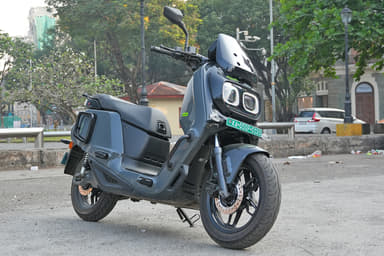
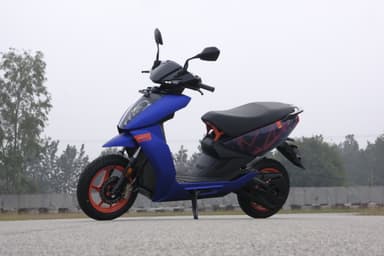
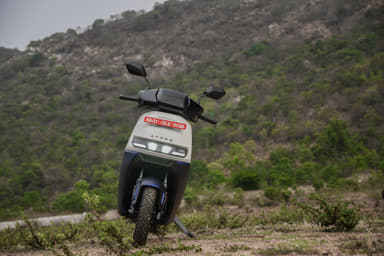
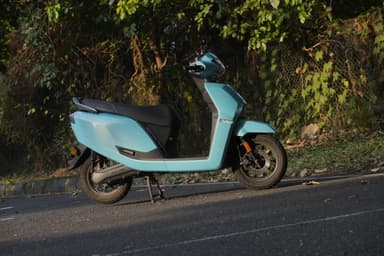
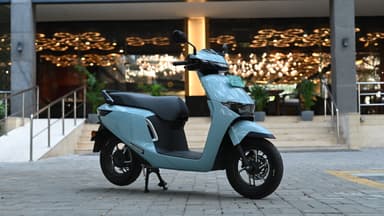
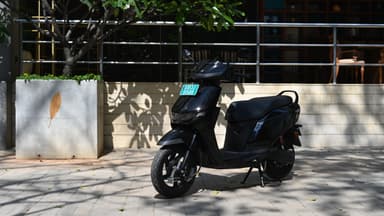
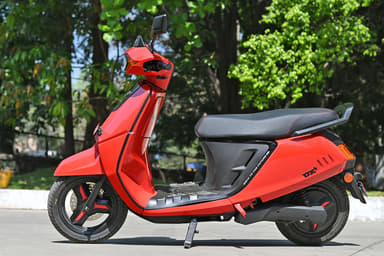
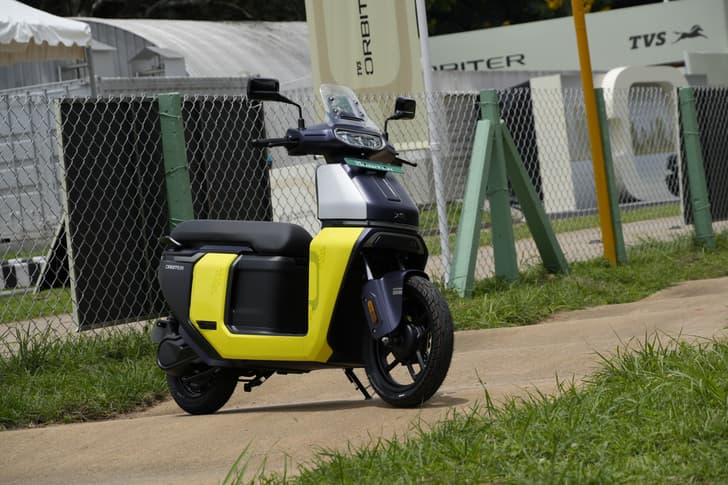
TVS iQube 3.5 kWh
TVS iQube 3.5 kWh specifications
Engine & Transmission
Lithium-ion battery | Yes |
Motor Type | BLDC Hub-Mounted Motor |
Max Motor Torque | 140 Nm |
Max Motor Power | 4.4 kW |
Fuel Type/ Propulsion | Electric |
Aspiration | Naturally Aspirated |
Reverse gear | Yes |
Transmission Type | Automatic |
Fuel & Performance
Top Speed | 78 kph |
EV Battery Capacity | 3.5 kWh |
Claimed Charging Time | 0-100% in 5 hrs and 0-80% in 4.3 hrs |
Claimed battery range | 145 km |
0-40kph | 4.2 sec |
Chassis & Suspension
Rear Brakes | Drum |
Front Brakes | Disc |
Rear Suspension Type | Hydraulic Twin Tube Shock Absorber |
Chassis name | Tubular Structure |
Chassis type | Tubular chassis |
Front Suspension Type | Telescopic Forks |
Rear Brake Size | 130 mm |
Rear Brake Type | Drum |
Front Brake Size | 220 mm |
Front Wheel Size | 12 inch |
Rear Tyre Size | 90/90 - 12 |
Rear Wheel Size | 12 inch |
Front Brake Type | Disc |
Tyre type | Tubeless |
Wheel Construction | Alloy |
Wheel Type | Alloy |
Calliper Type | Front - 1 Piston, Rear - Piston |
Front Tyre Size | 90/90 - 12 |
Dimensions
Width | 645 mm |
Wheelbase | 1301 mm |
Seat height | 770 mm |
Length | 1805 mm |
Kerb Weight | 118.6 kg |
Height | 1140 mm |
Ground Clearance | 157 mm |
TVS iQube 3.5 kWh features
Safety
| Hazard lights | |
| Combined Braking System |
Features
| No. of Tripmeters | 2 |
| USB Charging Port | |
| Underseat storage light | |
| Turn Signal | |
| Tripmeters Type | Digital |
| Tripmeter |
Instrumentation
| TFT colour Instrument cluster | |
| Touchscreen | |
| Trip Meter | |
| Instrument console | Digital |
| Average Speed |
TVS iQube variants
TVS iQube comparison


Trending Questions on TVS iQube - Answered by Autocar Experts
Hi, my daily round-trip commute to the office is around 60 km, and I’m looking for a moped/scooter. Should I opt for a petrol vehicle or an electric vehicle? I’m interested in the TVS Ntorq 150 and the Yamaha Aerox for petrol — it seems Ntorq gives around 25–30 kmpl and Aerox around 30–35 kmpl, but I’m concerned about fuel expenses and need a better suggestion. For electric, the new Simple Ultra (with ~400 km range, still under R&D) and the Ather 450X (well-established) look nice, but I’m worried about battery and motor durability, since petrol vehicles can last 15+ years — I’ve used a Bajaj Pulsar 220F for over 125,000 km in more than 15 years. Please suggest whether I should choose petrol or electric based on my requirements.
Since you have a long daily run, getting an electric scooter would be advisable, as in the long-term, you'll save a good chunk of money in running expenses. In the EV space, you should look at models with a 3.5kWh battery or higher, considering your daily 60km run. Options we'd recommend taking a look at are the Ather Rizta, Bajaj Chetak and TVS iQube as they come from reputed makes with a good reputation for reliability.
While the Ather 450X is a fun scooter to ride, it's quite cramped and has stiff suspension, which won't be ideal for your long daily commute. Simple Energy has a very small dealer network across India, and the Ultra e-scooter is yet to prove itself in the market. So we'd advise sticking to more mainstream brands.
Hi, I am 46 years old and own a Royal Enfield Electra 5S (2006 model). I am planning to buy a new scooter as my primary vehicle and keep my Enfield as a secondary one. My daily commute is about 40 km. Should I choose an IC (internal combustion) scooter or an electric one? I want a scooter with good suspension, because I’ve been riding an Enfield for almost 20 years and bumps and potholes have never been an issue thanks to its big tyres. I also want decent mileage and good performance. Awaiting your advice. Thank you.
In the ICE scooter space, among the practical, family-centric offerings, consider the TVS Jupiter 110/125 and the Suzuki Access. Both have some of the best ride qualities on an Indian scooter and are quite fuel-efficient, spacious, and practical. If you want something quicker, then the TVS Ntorq 125 / 150 models are worth taking a look at because they blend peppy performance and everyday usability quite well.
Since you have a pretty long commute, in the EV space, you should look at options like the Ather Rizta 3.7, Bajaj Chetak 35 models and TVS iQube 3.5 variants so you have enough range to tackle other things outside of your daily run. These EVs will be quite a bit more expensive to buy than the petrol-powered scooters listed above, but you will recoup the additional money with the low running costs.
We'd recommend a test ride of these machines over all sorts of roads so you can decide for yourself which is the best option for you.
Dear Sir, good morning. I am a senior citizen currently using a Honda City and a Suzuki Access. I have been suffering from back and neck pain for many years, and now want to switch to an electric scooter only for local commuting. The Suzuki e-Access is too expensive. Please suggest a good EV scooter between Rs 1 lakh and Rs 1.25 lakh, with a 3 to 3.5kWh battery and a comfortable, ergonomic design. Thank you. Regards.
I am looking to buy an electric scooter. My average daily commute is around 10km. Which EV scooter would be the most suitable for my usage?
I drive about 350 km monthly (around 12-15 km daily). I am looking for a new EV scooter with decent storage. How is the TVS iQube 2.2 or Ather Rizta for my usage for a family of three?
In the electric scooter market, we would recommend you take a look at the Ather Rizta 2.9 variants, Bajaj Chetak 3001 and the TVS iQube 2.2 / 3.1 for your usage. All three have large storage spaces under the seat, with at least 30 litres of space available, if not more.
The Ather is the only one that will give you a touchscreen colour TFT display on the higher Z variants if that is of interest to you. If not, the S variants have the same underpinnings with a few features less while also costing much less.
The iQube and Chetak are proven products and have a straightforward scooter riding experience. They are appreciated by lakhs of people and are sure to resonate with you as well.
A test ride and visit to your nearest dealer to enquire about service costs is for all three in order to make a more informed decision.
I currently own a 10-year-old TVS Wego and am interested in buying an electric scooter. My average monthly running is about 350 km. I am looking for a good family-friendly EV scooter with ample storage space. Please suggest the best options.
Since your daily running isn't much more than 10kms - based on the monthly usage you have specified - you can go for an electric scooter with a smaller battery pack. We would recommend you take a look at the Bajaj Chetak 3001 / 3503, TVS iQube 2.2 / 3.1 and Ather Rizta S / Z 2.9.
All of these have at least 75km of real-world range - if not more - and will be more than sufficient for your limited daily usage. These EVs also have spacious floorboards and 30 litres of underseat storage - if not more. They should be more than up to the task of hauling around daily needs like groceries, household supplies, etc.
Take a test ride of these options so you can decide which one fits you best.
I am 36 years old, and my daily commute is about 90 km (to and from) six days a week. I currently own a 2016 Hero Glamour PGM-FI. I now want to buy an EV bike or scooter for daily commuting. My 90 km run includes about 40 km in heavy traffic and 50 km on the highway. You may also suggest suitable 125/150 cc bikes. Please advise.
Since you have a long daily commute, you will need a scooter with a battery capacity of 3.5kWh or more, so you have a healthy buffer in case of emergencies or to account for spontaneity. Among our top picks in the EV space today are the Bajaj Chetak, TVS iQube and Ather Rizta.
Among the 125cc commuters, you can consider the TVS Raider, Hero Xtreme 125R, Honda Shine / SP125, Honda CB125 Hornet, Hero Super Splendor and Hero Glamour X. In the 150/160cc space, we would recommend the Honda Unicorn / SP160, TVS Apache RTR 160 4V and Bajaj Pulsar N160.
We would recommend you take a test ride of everything you shortlist before you make up your mind.