Last Updated on: 06 Oct 2026
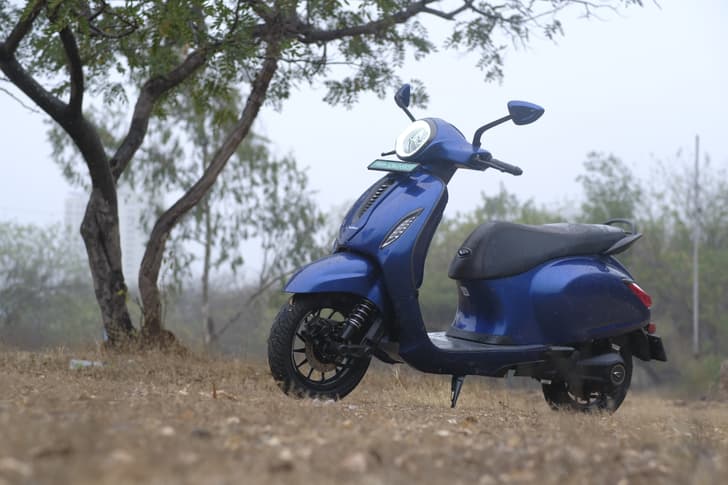
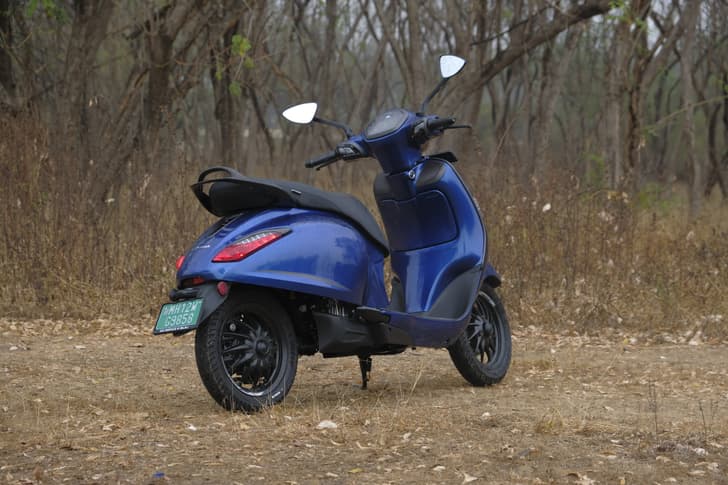
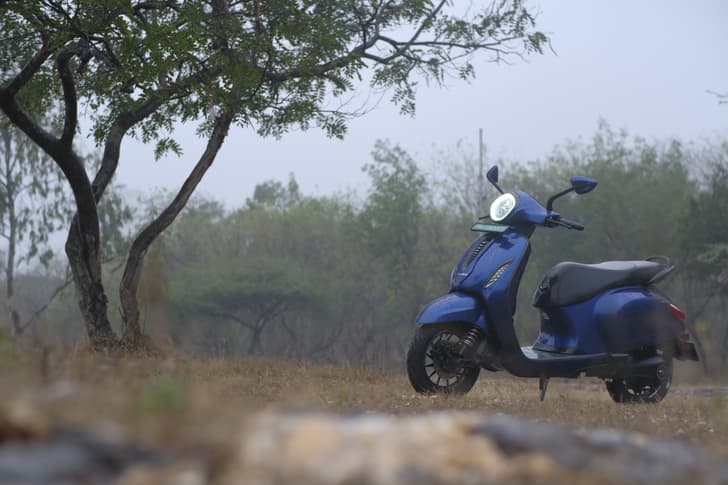
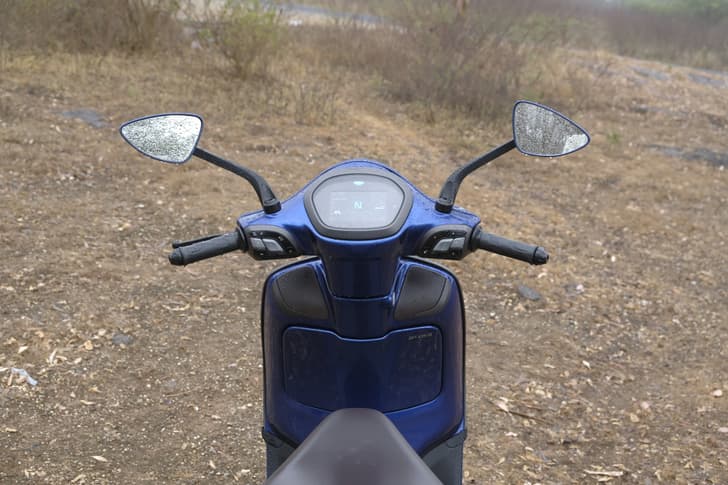
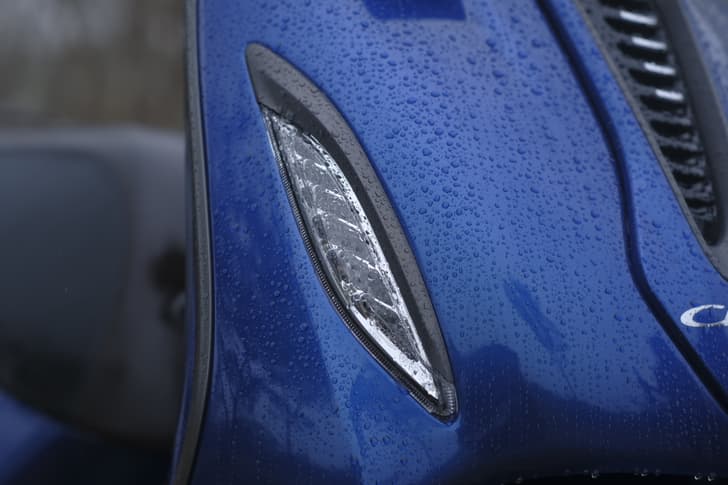
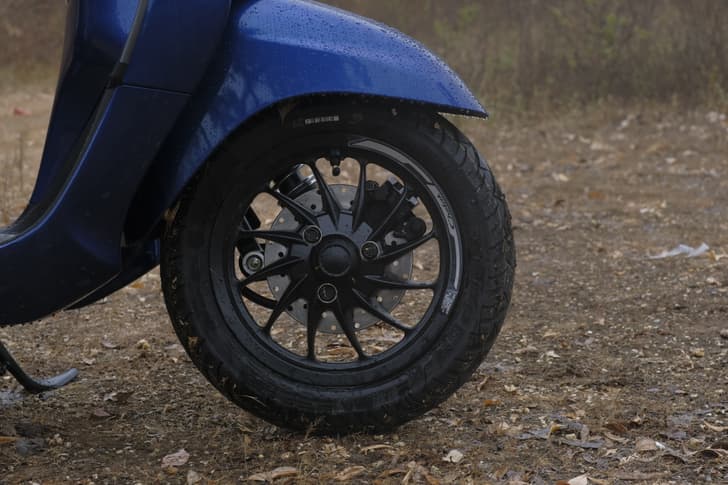
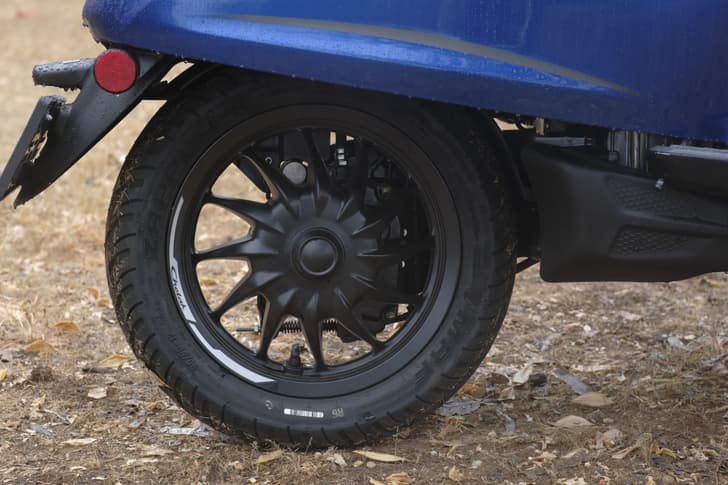
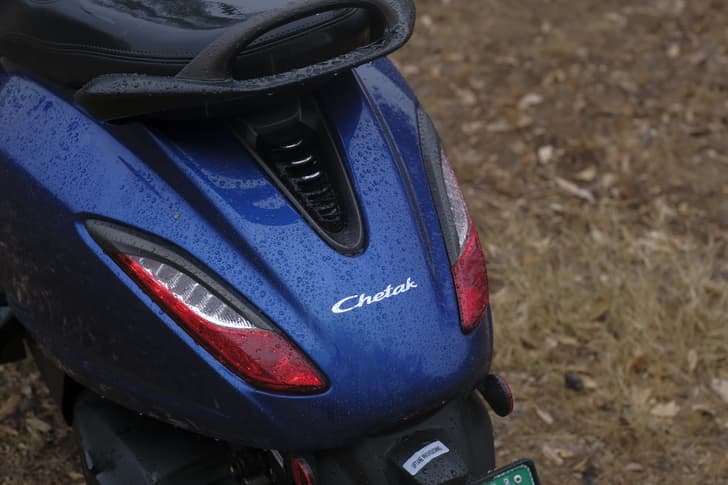
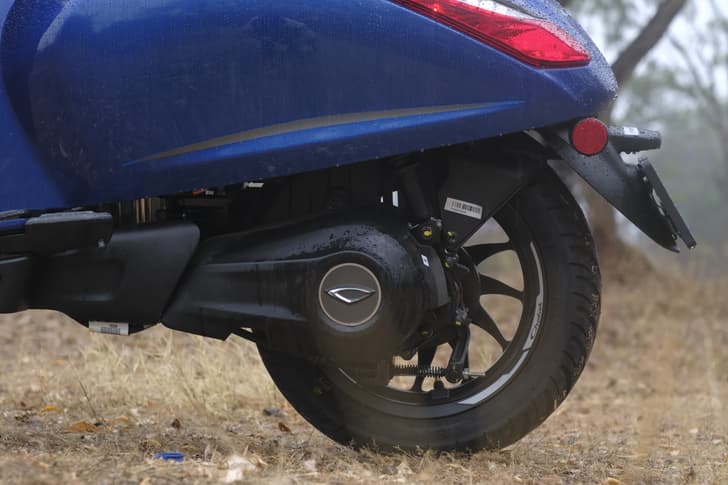
Bajaj Chetak 3001
Bajaj Chetak 3001 specifications
Engine & Transmission
Fuel Type/ Propulsion | Electric |
Motor Type | BLDC Motor |
Lithium-ion battery | Yes |
Max Motor Power | 3.1 kW |
Reverse gear | Yes |
Transmission Type | Automatic |
Fuel & Performance
User Reported Mileage | 100 km |
EV Battery Capacity | 3 kWh |
Claimed battery range | 127 km |
Claimed Charging Time | 0-80% in 3.5 hrs |
Top Speed | 62 kph |
Chassis & Suspension
Chassis name | Underbone |
Chassis type | Underbone |
Front Suspension Type | Single Sided Leading Link |
Rear Suspension Type | Monoshock |
Rear Suspension Adjustability | Yes |
Front Brakes | Disc |
Rear Brakes | Drum |
Wheel Type | Alloy |
Wheel Construction | Alloy |
Tyre type | Tubeless |
Front Tyre Size | 90/90 - 12 |
Rear Tyre Size | 90/90 - 12 |
Calliper Type | Front - 1 Piston, Rear - Piston |
Front Wheel Size | 12 inch |
Rear Wheel Size | 12 inch |
Front Brake Type | Disc |
Rear Brake Type | Drum |
Dimensions
Length | 1914 mm |
Width | 725 mm |
Height | 1142 mm |
Wheelbase | 1355 mm |
Ground Clearance | 168 mm |
Bajaj Chetak 3001 features
Safety
| Hazard lights | |
| Combined Braking System |
Features
| No. of Tripmeters | |
| Underseat storage light | |
| Turn Signal | |
| Tripmeters Type | Digital |
| Tripmeter | |
| Start Type | Electric Start |
Instrumentation
| Touchscreen | |
| Trip Meter | |
| Instrument console | Digital |
| Average Speed |
Bajaj Chetak variants
Questions you may find useful
Hi there. I am planning to buy an electric scooter for my daily commute of around 30 km. I have test-ridden the TVS iQube, Bajaj Chetak 3502 and Ather Rizta. I found the Chetak to be quieter and smoother, while the Rizta makes a sound similar to an e-rickshaw. I also wasn't impressed with the braking performance of the TVS iQube, so I've ruled it out. Which scooter would be the better choice in terms of after-sales service, reliability and cost per kilometre?

I want to buy an electric scooter for nearly 30 km of daily travel. My budget is around Rs. 1.45 lakh. I am confused between Vida VX2 Plus and Chetak 3503. I also looked for Ather Rizta S Base which has low range but it is out of my budget. For TVS IQube, I looked for 3.5kwh base model that was around Rs. 1.49 lakh but I have heard of some issues with it during rainy days and it does not support fast charging. Vida VX2 Plus is the cheapest of all but I have heard about its AUX issues, build quality of switches, app glitches. For Chetak, I have heard of its battery issues and that, it does not support fast charging for 3503. Please suggest which EV would be suitable for daily city use in this budget. My priorities are good reliability, low maintenance and good range.
Hi Autocar Team, I am planning to buy an electric scooter that will be used by all members of my family. I am currently considering the Ather Rizta (2.9 kWh), Bajaj Chetak 3501, and TVS iQube S. Could you please suggest which of these options would be the best overall choice in terms of comfort, practicality, performance, and reliability?
Hi Autocar Team, I am planning to replace my 2012 Hero Honda CD Deluxe. My usage is strictly within the city, specifically a 28 km daily round trip for office and market chores. Interestingly, we already have two Hero Vida V1s at home (one Pro and one Plus). Since the V1 is quite feature-heavy, I don’t want to spend extra on premium features or performance for this new purchase. That’s why I have ruled out the Ather Rizta and TVS iQube. I am looking for a reliable, no-nonsense entry-level electric scooter. My current shortlists are: Hero Vida VX2 Go (3.4 kWh) TVS Orbiter Bajaj Chetak 2501 Since all of these offer the basic, essential features I need, which one would be the most practical choice for a daily city workhorse? Does sticking with the Vida ecosystem (VX2 Go) offer any real advantage, or should I consider the Orbiter or the all-metal Chetak 2501 instead?
After five years of remote work, I now commute 40 km daily. I previously owned a Yamaha FZ-S (2012), which I’ve given to my uncle, and I currently use a Honda Dio (2012) for short trips, but the Dio gives me back pain on longer rides. My priorities are reliability, comfort, lightness, and efficiency. I’m interested in electric scooters like the TVS iQube and Bajaj Chetak, but I’m worried about back pain. Please suggest electric motorcycles (if any) or ICE bikes within a ₹2 lakh budget, with a little flexibility.
Bajaj Chetak price in India
Upcoming Bikes

Bajaj Bikes
Trending Bikes
Latest Bikes