Last Updated on: 29 Jul 2026
TVS iQube
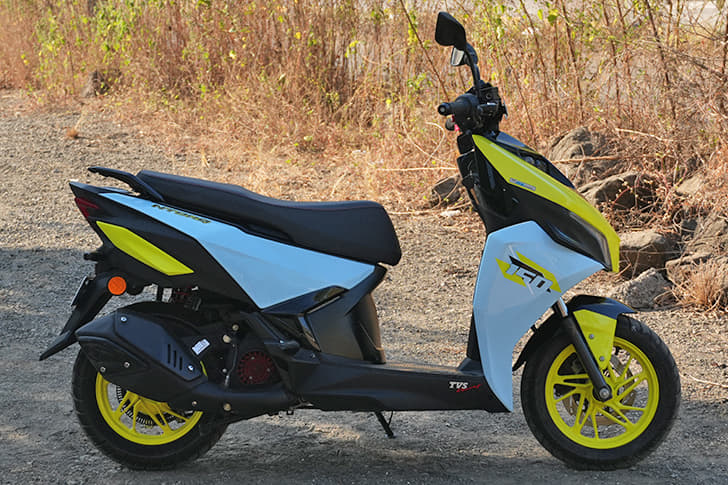
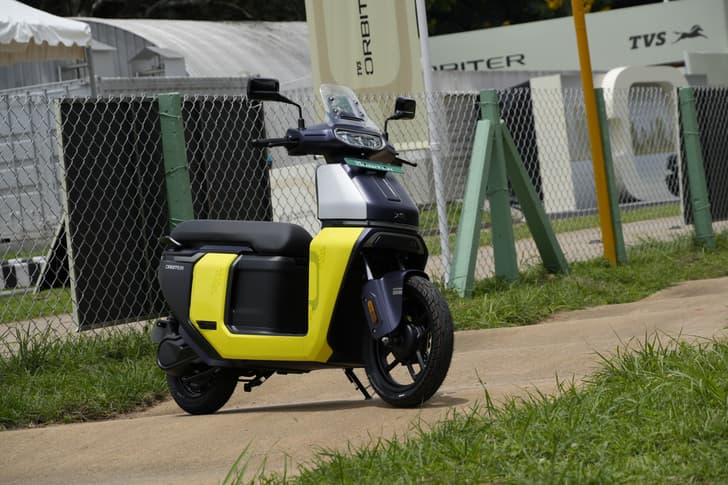
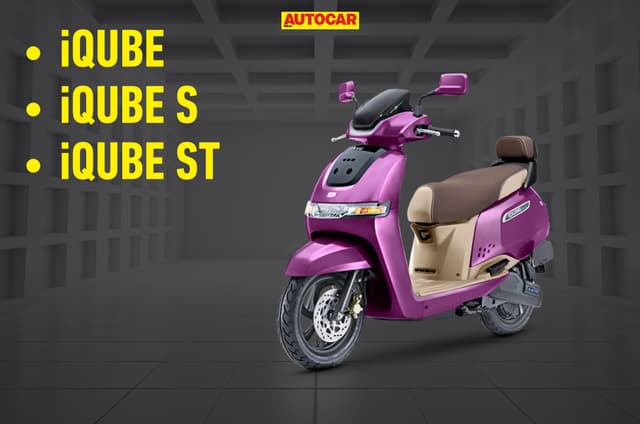
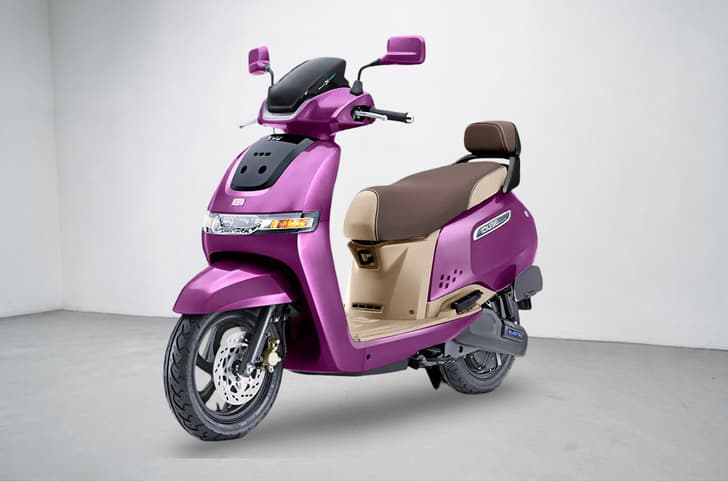
The TVS iQube is a family-oriented electric scooter that has maintained its position as one of the top-selling electric vehicles since its introduction in 2020. It was first launched through selected dealerships in Bengaluru before expanding to various Indian cities. Over time, the TVS iQube electric scooter has grown with the addition of new variants and features.
In 2022, it received a major update with the introduction of the Base, S, and ST variants. These new iQube variants brought larger battery packs, higher claimed range, and added connectivity features compared to the earlier single-variant model. The brand also continues to roll out OTA updates for the BMS, telematics, and instrument cluster to keep the iQube scooter updated.
The TVS iQube 2026 model is available in 5 variants: iQube 2.2 kWh, iQube 3.1 kWh, iQube 3.5 kWh, iQube S 3.5 kWh, and iQube ST 5.3 kWh. Based on the variant selected, the price varies. The TVS iQube price starts at ₹1.11 lakh and goes up to ₹1.62 lakh (ex-showroom). On the other hand, the TVS iQube on road price generally falls between ₹1.24 lakh and ₹1.78 lakh.
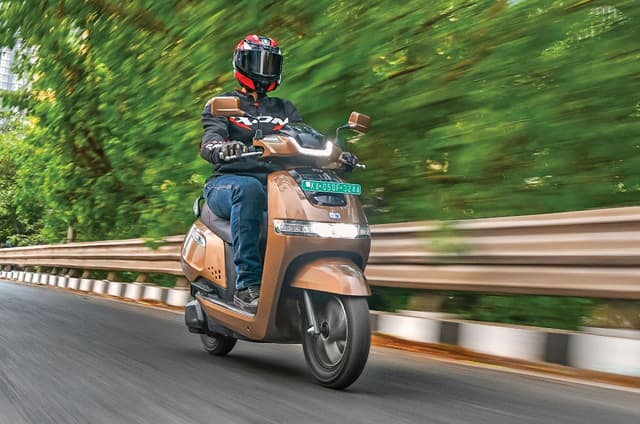
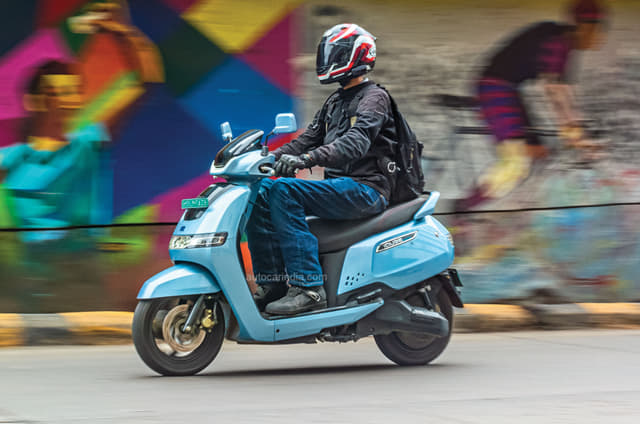
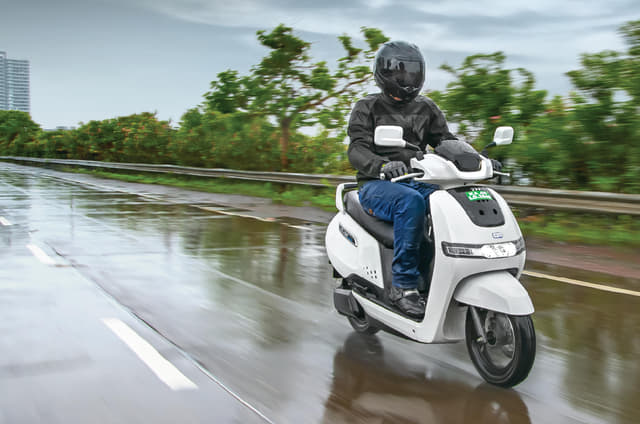
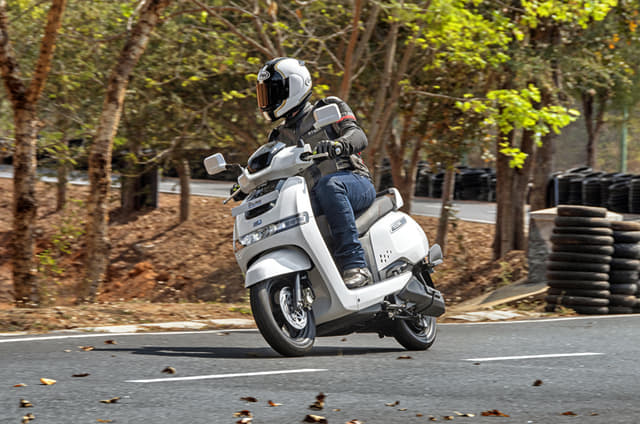
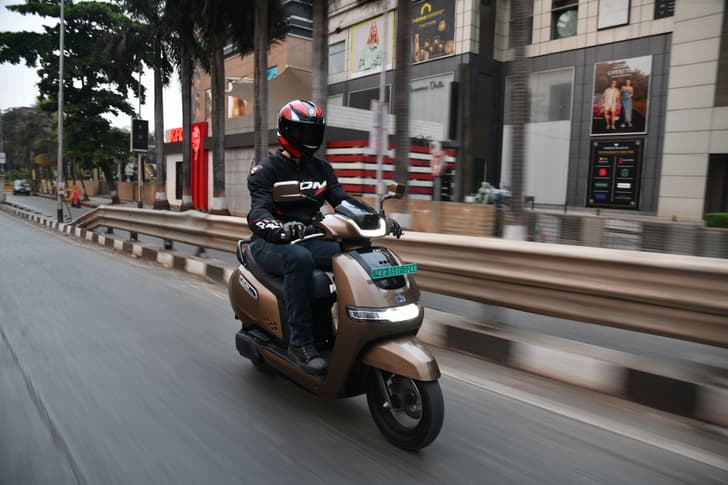
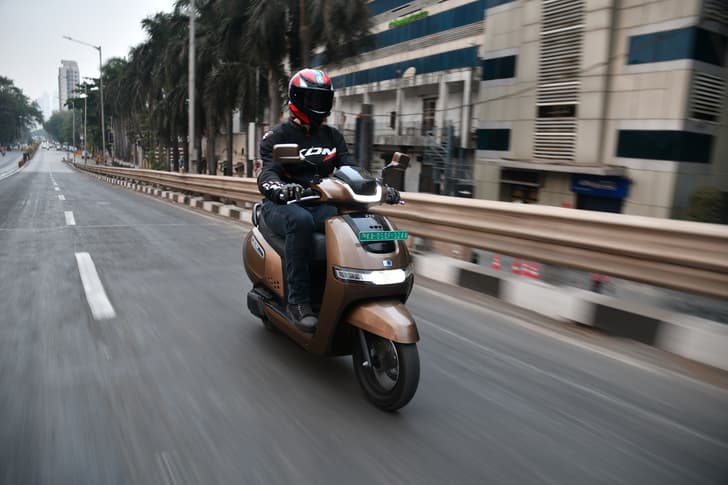
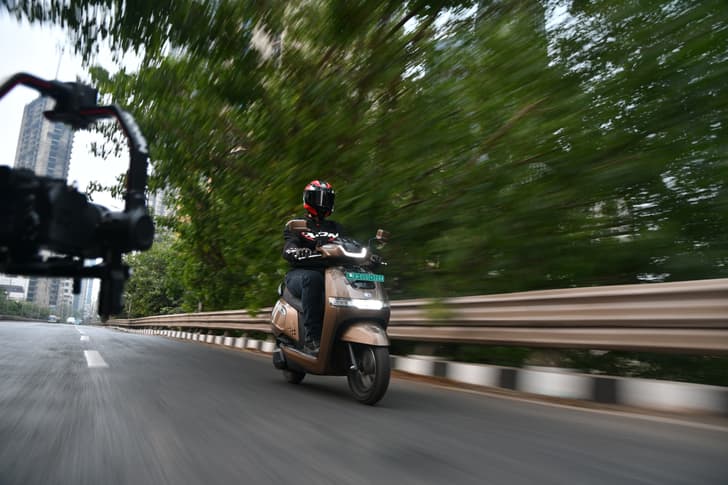
The TVS iQube works well as a practical family scooter. The seat is wide and supportive, and the suspension setup handles daily road conditions without much fuss. Ride quality is very similar to a petrol scooter, and the range readout is accurate, which helps in planning rides without second-guessing the battery level.
The TVS iQube range depends on the battery pack. On a single charge, the base variant offers a claimed range of 94km, while higher variants deliver between 121km and 212km. In terms of performance, the TVS iQube top speed ranges between 75kph and 82kph, depending on the variant.
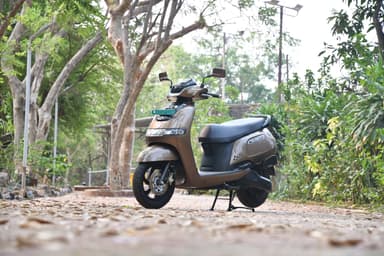
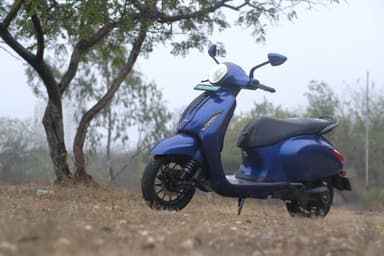
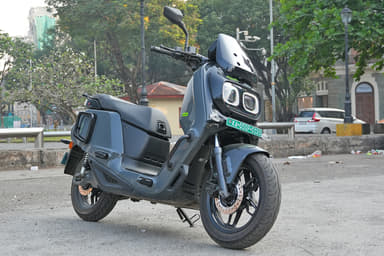
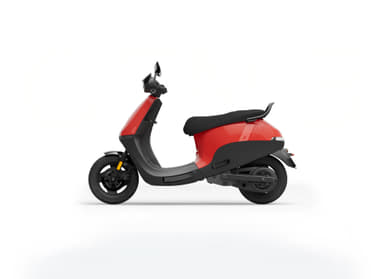
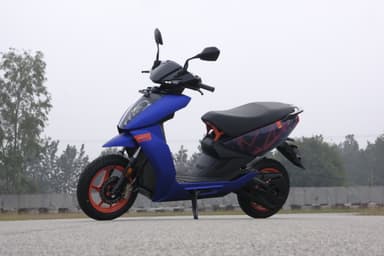
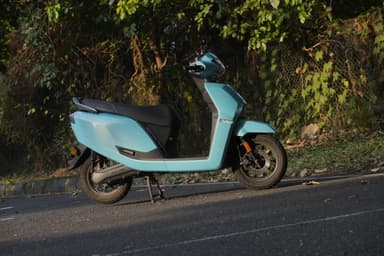
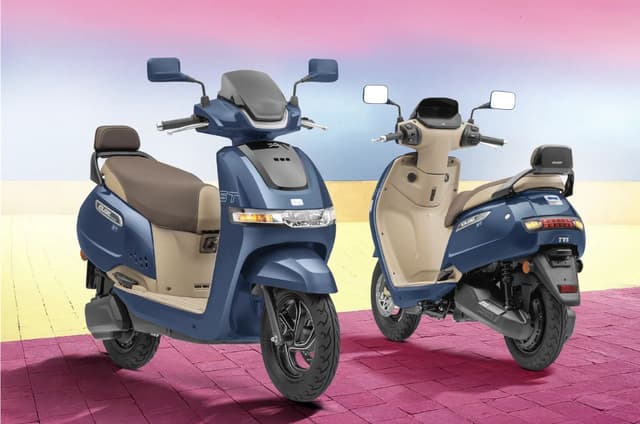
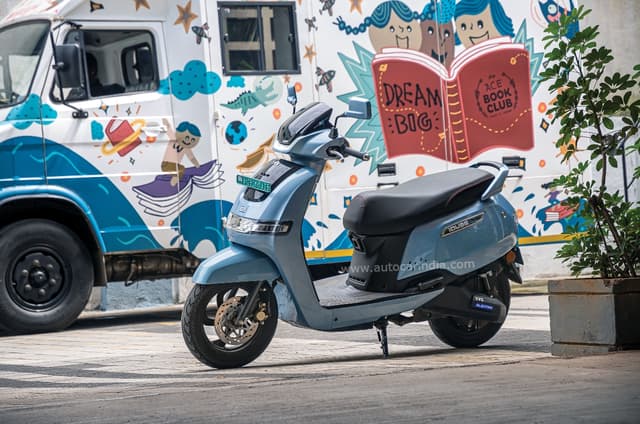
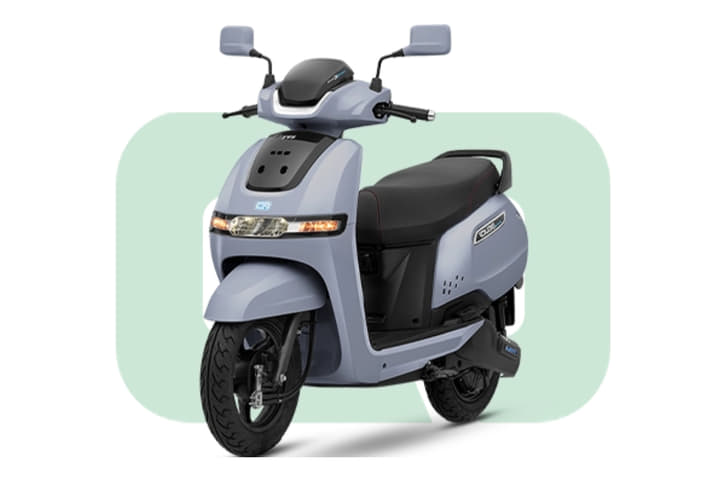
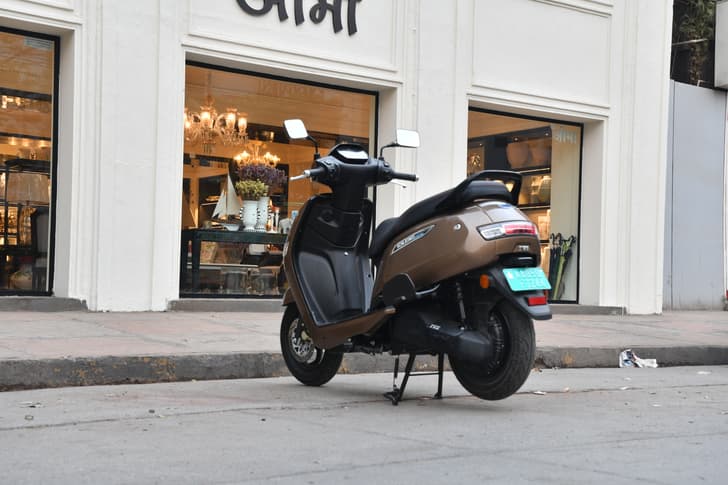
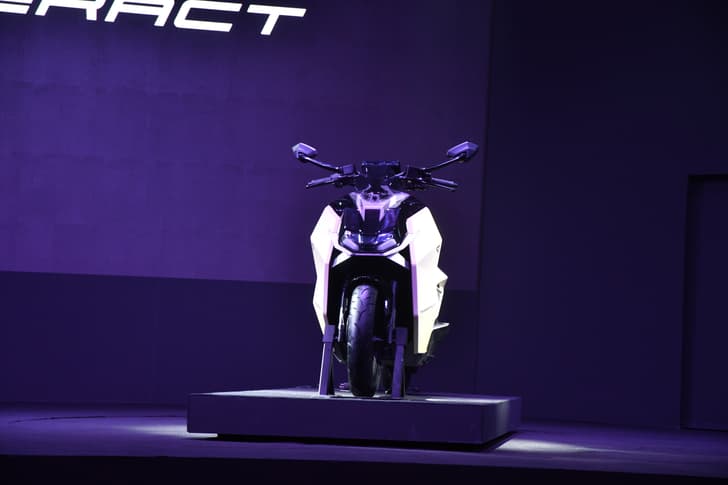
In terms of design, the TVS iQube electric scooter stays close to what most scooter buyers are used to. It gets a roomy seat that can accommodate two adults, a wide footboard, and 32-litre under-seat storage. LED lighting and connected features such as a TFT touchscreen display and turn-by-turn navigation are also part of the package, depending on the variant selected.
Since the TVS iQube is offered in 5 variants with different battery sizes and features, here’s a closer look at the key specifications of each version:
Benchmark | iQube 2.2 kWh | iQube 3.1 kWh | iQube 3.5 kWh | iQube S 3.5 kWh | iQube ST 5.3 kWh |
Top Speed | 75kph | 82kph | 78kph | 78kph | 82kph |
Range | 94km | 123km | 145km | 145km | 212km |
Charging Time (0-80%) | 2hour and 45minutes | 4hour and 03minutes | 4hour and 30minutes | 3hour | 4hour and 18minutes |
Display Type | TFT | TFT | TFT | TFT | TFT Touch |
Display Size | 12.7cm | 12.7cm | 12.7cm | 17.78cm | 17.78cm |
TVS iQube Features and specifications
Our Rating | Yet to be Reviewed |
Body Type | Scooter |
Battery Range | 94 km - 212 km |
Fuel Type | Electric |
Transmission | Automatic |
Claimed Electric Motor Range | 212 km |
| Fuel Type/ Propulsion | Electric |
| Motor Type | BLDC Hub-Mounted Motor |
| Lithium-ion battery | Yes |
| Max Motor Power | 4.4 kW |
| EV Battery Capacity | 5.3 kWh |
| Claimed battery range | 212 km |
| Claimed Charging Time | 0-100% in 5 hrs and 0-80% in 4.18 hrs |
| Top Speed | 82 kph |
| Chassis name | Tubular Structure |
| Chassis type | Tubular chassis |
| Front Suspension Type | Telescopic Forks |
| Rear Suspension Type | Hydraulic Twin Tube Shock Absorber |
| Length | 1805 mm |
| Width | 645 mm |
| Height | 1140 mm |
| Wheelbase | 1301 mm |
| Combined Braking System | |
| Hazard lights |
| Bluetooth Connectivity | |
| Brake/Tail Light | LED |
| Clock | |
| Cruise Control |
| Average Speed | |
| Instrument console | Digital |
| TFT colour Instrument cluster | |
| Touchscreen |
TVS iQube price & variants
The TVS iQube 2026 model is available in 5 variants and depending on the variant selected, the price varies. View the latest ex-showroom TVS iQube electric scooter price below:
- iQube 2.2 kWh: ₹1.11 lakh
- iQube 3.1 kWh: ₹1,21,615 lakh
- iQube 3.5 kWh: ₹1,32,043 lakh
- iQube S 3.5 kWh: ₹1,39,642 lakh
- iQube ST 5.3 kWh: ₹1.62 lakh
The TVS iQube ST price is higher due to its larger battery pack, extended range, and advanced touchscreen display. On the other hand, the TVS iQube on road price generally ranges between ₹1.24 lakh and ₹1.78 lakh, depending on the variant chosen.
TVS iQube reviews

TVS iQube comparison


TVS iQube Range
Depending on the variant, the TVS iQube range is as follows:
- 2.2 kWh: 94km
- 3.1 kWh: 123km
- 3.5 kWh: 145km
- 3.5 kWh (S): 145km
- 5.3 kWh (ST): 212km
In real-world conditions, the TVS iQube range may vary depending on riding habits, load, terrain, and temperature.
| PowertrainThe combination of engine type, fuel, and transmission that powers your vehicle and determines how it drives and what it runs on. | ARAI RangeMileage certified by the government, tested under controlled lab conditions. Real-world mileage will vary. |
|---|---|
Electric-Automatic (Automatic) 2.2 kWh | 94 km |
Electric-Automatic (Automatic) 3.1 kWh | 123 km |
Electric-Automatic (Automatic) 3.5 kWh | 145 km |
Electric-Automatic (Automatic) 5.3 kWh | 212 km |
TVS iQube news
TVS iQube Images
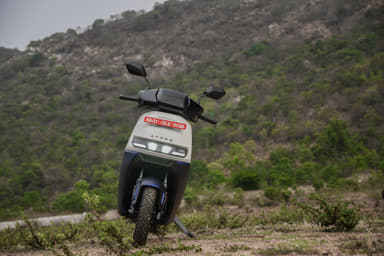
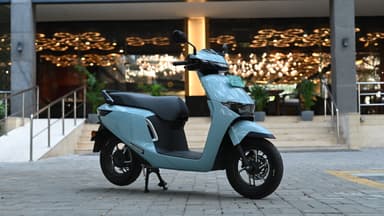
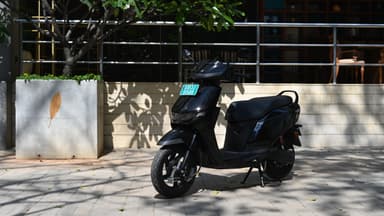
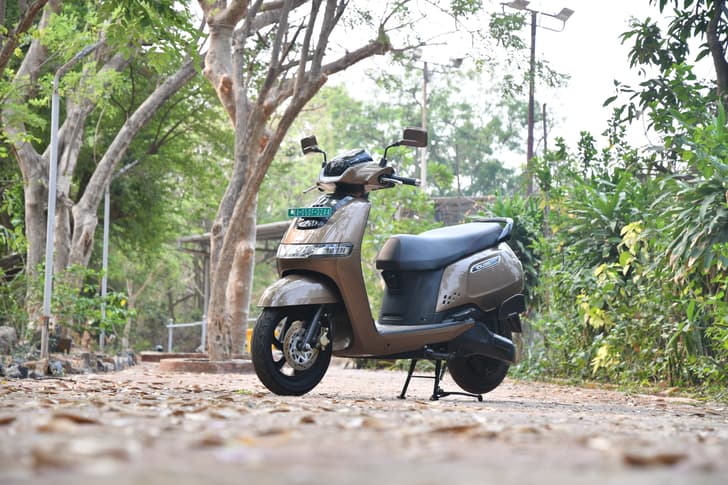
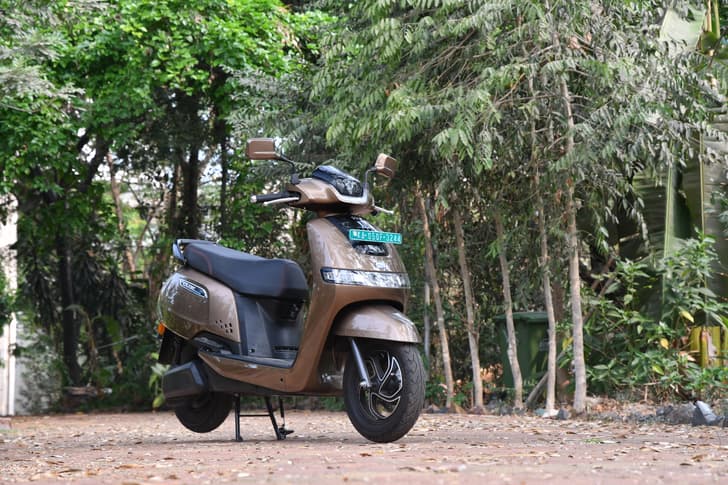
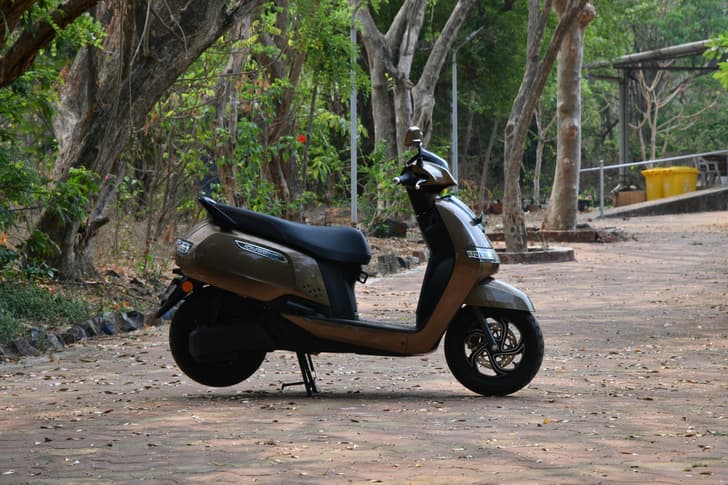
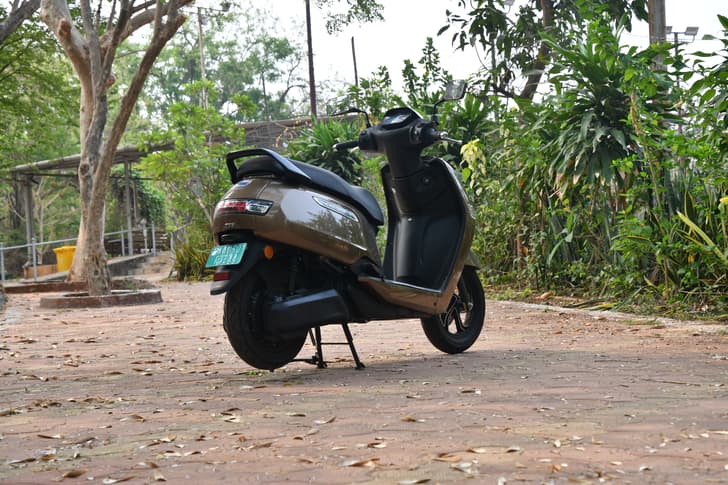
The TVS iQube images highlight its clean and practical design. The scooter features:
- Smart LED headlight with DRL
- Large under-seat storage
- TFT / touchscreen display
- Comfortable seat with pillion backrest
- Minimalistic and family-friendly styling, etc.
Browse through 41 TVS iQube electric scooter images to explore the scooter from multiple angles.
TVS iQube videos
The TVS iQube videos showcase all 5 variants, giving riders a close look at their design and performance. A total of 1 videos are available, allowing you to explore real-world riding characteristics of this EV bike and understand what each variant offers.

TVS iQube Colours
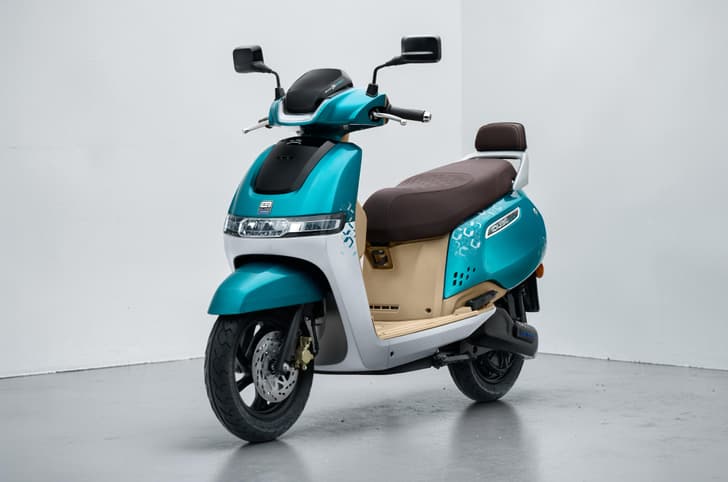
The TVS iQube colours vary depending on the variant. The iQube Base variant is available in Pearl White, Walnut Brown, and Titanium Grey, whereas the iQube S variant comes in Mercury Grey, Starlight Blue Beige, and Copper Brown Beige shades. Meanwhile, The TVS iQube ST, the top variant, is available in Titanium Grey Matte, Starlight Blue Beige, and Copper Brown Beige.
In total, TVS iQube colours lineup includes 7 shades:
- Copper Brown Beige
- Mercury Grey
- Pearl White
- Starlight Blue Beige
- Titanium Grey
- Titanium Grey Matte
- Walnut Brown
TVS iQube FAQs
The TVS iQube price starts at ₹1.11 lakh and goes up to ₹1.62 lakh (ex-showroom).
The TVS iQube on road price generally falls between ₹1.24 lakh and ₹1.78 lakh, depending on the variant.
The TVS iQube range varies between 94km and 212km, depending on the battery variant.
The TVS iQube top speed ranges between 75kph and 82kph.
The TVS iQube battery capacity ranges from 2.2 kWh to 5.3 kWh.
The TVS iQube battery price varies depending on the variant and battery capacity. The 2.2 kWh variant, the battery cost generally ranges from ₹45,000 to ₹60,000. The 3.1 kWh and 3.5 kWh variants typically cost between ₹65,000 and ₹80,000, while the larger 5.3 kWh battery can cost around ₹1.15 lakh to ₹1.20 lakh. Overall, the TVS iQube battery price ranges from approximately ₹45,000 to over ₹1.2 lakh.
The TVS iQube charging time (0-80%) ranges between approximately 2 hours 45 minutes and 4 hours 30 minutes.
Yes. The top variant, TVS iQube ST, comes with a touchscreen TFT display.
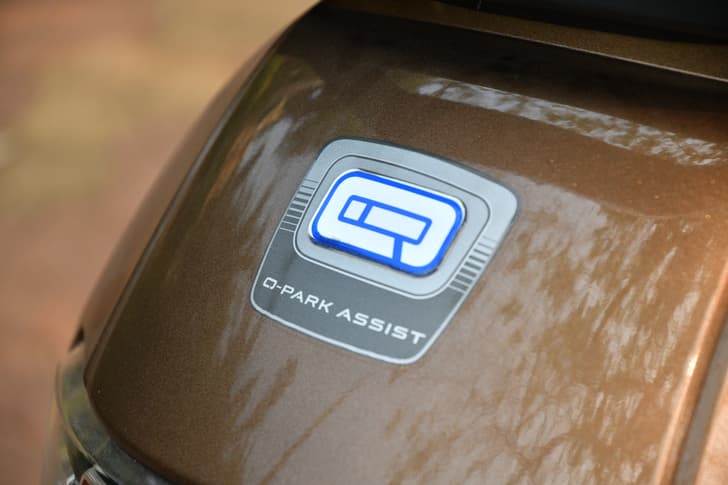
The TVS iQube features include Bluetooth connectivity, TFT display, reverse assist, USB charging, and 32-litre storage space.
The scooter is available in three main variants: standard iQube, TVS iQube S, and TVS iQube ST.
The TVS iQube ST price is ₹1.62 lakh, (ex-showroom) for the 5.3 kWh variant.
Questions you may find useful
I have a 2009 Hero Honda Xtreme that has seen very little use. I am now planning to scrap it and buy something new. I am considering an EV, specifically either the Ather Rizta or the TVS iQube. Which one would you suggest? My daily travel would be around 20-25km. Even if I buy the 2.2kWh version, the range will reduce after a few years due to battery ageing. My main concern is battery longevity and warranty.
Both the Ather Rizta and TVS iQube are great options, and no matter which one you choose, you realistically cannot go wrong with them. The Rizta has much more tech, and even its small battery gives you 105km of real-world range on a single charge. Its boot is also better shaped than the iQube's, which means a good-quality imported full-face helmet will fit inside alongside the charger, provided you thoughtfully arrange everything inside.On the other hand, the TVS iQube is as simple as an electric scooter gets and is a no-nonsense machine which just keeps running without fault day in and day out. TVS's service reach across the country is better than Ather's, so the iQube makes for the logical purchase, but it's not like the Rizta is an outlier. Picking between the two will be made easier once you get a test ride of both and see which one you're leaning toward more.No matter which option you choose, your commute is short enough that a normal amount of range drop after a few years will not majorly affect you.
I am planning to buy either the TVS iQube ST 5.3kWh or the Ather Rizta. I want a scooter that is reliable and durable in the long term, without battery-related issues. I have already owned a Honda Activa for many years, so I am expecting a similar level of reliability from an EV scooter as well. My daily commute is around 30km on the highway.
Since you travel around 30km on the highway every day, the TVS iQube ST 5.3kWh makes more sense because its larger battery pack gives you a substantial range buffer, meaning you won't need to charge it very often.At higher highway speeds, EVs tend to consume more energy than they do in city conditions, where speeds are generally lower. In that regard, a larger battery pack is a significant advantage.On top of that, the iQube is as straightforward and easy-going as an electric scooter can be. It feels very much like a conventional scooter to ride and live with, apart from the EV-specific traits of silent operation and instant torque. It has also built a strong reputation in the market, with very few issues reported so far, and it benefits from the backing of an established manufacturer like TVS.
I want to buy an electric scooter for nearly 30 km of daily travel. My budget is around Rs. 1.45 lakh. I am confused between Vida VX2 Plus and Chetak 3503. I also looked for Ather Rizta S Base which has low range but it is out of my budget. For TVS IQube, I looked for 3.5kwh base model that was around Rs. 1.49 lakh but I have heard of some issues with it during rainy days and it does not support fast charging. Vida VX2 Plus is the cheapest of all but I have heard about its AUX issues, build quality of switches, app glitches. For Chetak, I have heard of its battery issues and that, it does not support fast charging for 3503. Please suggest which EV would be suitable for daily city use in this budget. My priorities are good reliability, low maintenance and good range.
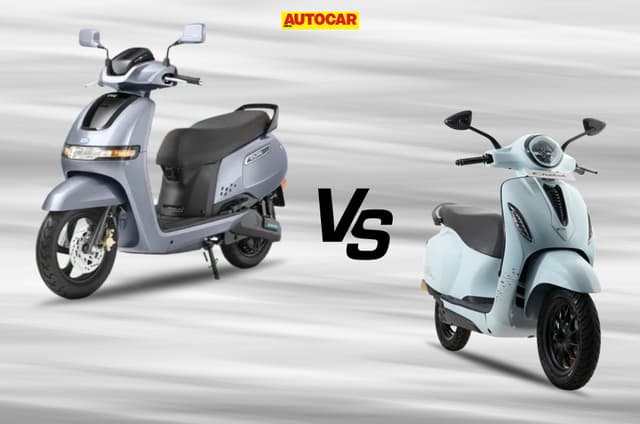
In the electric scooter segment, the TVS iQube and Bajaj Chetak models are hard to go wrong with, and no matter which one you choose, you're likely to end up with a safe purchase which will safely last you many years. Coming to issues with using the iQube during the monsoon, you're unlikely to have any - this is a scooter that has proven its mettle over the past 6 years that it has been on sale. The base 3.5 variant of the iQube in your shortlist, has a 650W charger as standard and it should be sufficiently quick for most daily needs. Its a similar story with the Bajaj Chetak. Any unfortunate battery issues you face will be covered under warranty and even so, these instances are few and far between, not widespread occurrences. The Chetak 3503 also has pretty quick charging times, with the Bajaj website stating a 3hr25min duration for a 0-80 percent top-up, which should be more than enough for your daily needs. Hero's Vida VX2 has come onto the scene relatively later but judging by the fact that these have started to become a fairly commonplace sighting on our roads, the market seems to have given it a good response. We'd recommend a visit to each scooter's authorized dealership and take thorough test rides to ensure you cover every aspect before you make your decision.
I need guidance between Ather Rizta and TVS iQube. Daily commute around 45 km. Which is better, and what is the real-world range?
Both the TVS iQube and Ather Rizta are accomplished electric scooters with very few factors to pick between them in terms of the product proposition they present. The iQube is as straightforward and fuss-free as an electric scooter can get in comparison to a petrol option, and if this is your first EV, it would make for a smooth transition. There are five variants available within the iQube lineup, and we'd recommend choosing between the 3.1 / 3.5 models for your daily 45km commute.Where the iQube is the straightforward choice in the EV arena, the Rizta doesn't lag too far behind. Ather's first family e-scooter is comfortable, practical and has more tech than machines three times the price (if you're into that sort of thing). The small 2.9 battery variants can return close to or just above 100km real-world range, which should be more than enough for your use case. Do bear in mind that the S 2.9 variant has a simpler LCD display and doesn't have Ather's Magic Twist regenerative braking system and traction control. This model also comes with a very slow charger, meaning you'll need to plug it in overnight for a full charge.A test ride of both will help you decide which is the better option for you. Whichever option you decide to go for, make sure you have a service centre nearby, that's a key factor in EV ownership because a roadside mechanic can't really fix much when it breaks down, as most functions are electronically controlled.
Hi Autocar Team, I am planning to buy an electric scooter that will be used by all members of my family. I am currently considering the Ather Rizta (2.9 kWh), Bajaj Chetak 3501, and TVS iQube S. Could you please suggest which of these options would be the best overall choice in terms of comfort, practicality, performance, and reliability?
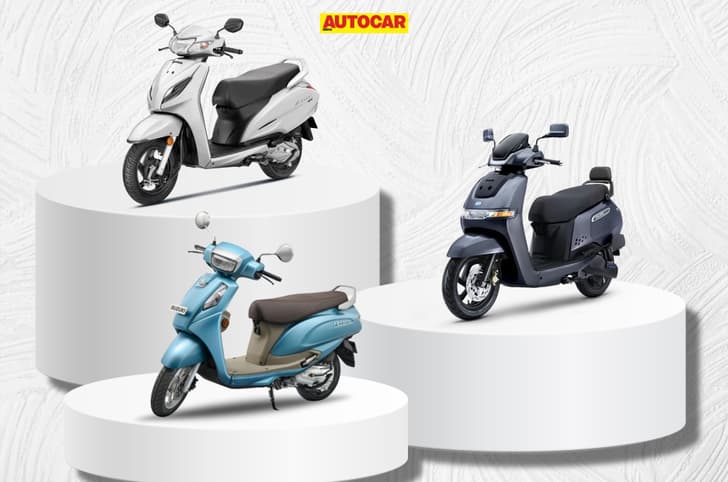
All three options you have shortlisted are actually very well-rounded EVs and are frontrunners in the electric scooter market in terms of sales, long-term reliability and brand recall. Therefore, picking between them will boil down to personal preferences toward design, comfort, real-world range and features. The TVS iQube S and Bajaj Chetak 3501 are undoubtedly more VFM here because they come with larger battery packs, thus, longer distances before you need to charge them. You can easily expect a real-world range of over 100km, even when ridden quite aggressively, which the Ather Rizta 2.9 will not be able to match because it has a smaller battery pack. When it comes to boot space, it might seem like all three are evenly matched, but the real-world picture is slightly nuanced. To recap, the iQube S has 32 litres of underseat storage, whereas the Ather Rizta has 34 and the Bajaj Chetak has 35. Now, on paper, it's a negligible difference, but the TVS' boot is much shallower than the Bajaj and Ather scooters. It means you'll have to be smart with how you pack your belongings in it. Plus, an imported ECE-certified helmet will not fit inside the TVS, in case that is a consideration for you. When it comes to after-sales experience, all three are largely good to live with, although it will vary depending on where you're located.Take an exhaustive test ride of all three before you make a decision. All three are straightforward, practical, reliable EVs, so no matter which one you choose, it's likely you'll be happy with it.
Upcoming Bikes


TVS Bikes


Trending Bikes
Latest Bikes