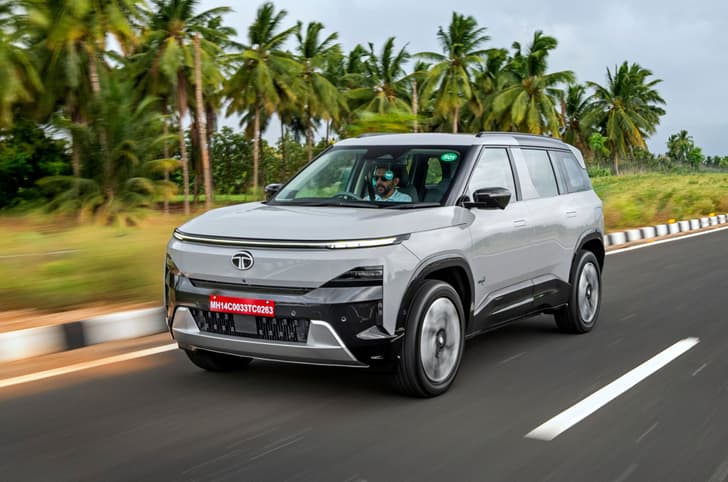
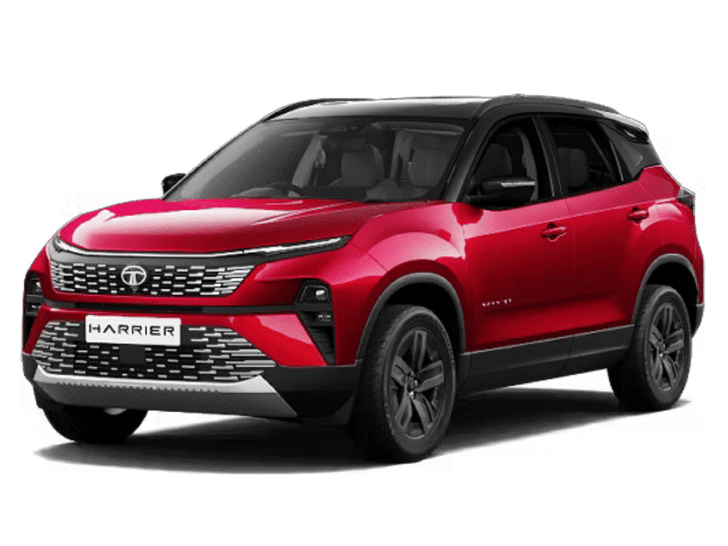
Tata Harrier: Mileage Review


Last Updated on: 11 Oct 2026
Engine Type | Turbocharged |
Engine Displacement | 1498 cc |
Number of Cylinders | 4 |
Engine Installation | Front |
Fuel Type/ Propulsion | Petrol |
Pure Electric Driving Mode | No |
Gearbox Type | Torque Converter |
Number of Gears | 6 |
Manual Shifts via Gear Lever on Automatic Gearbox | No |
Paddle Shifters for Automatic Gearbox | Yes |
Sport Mode for Automatic Gearbox | No |
Drive Layout | Front Wheel Drive |
Lockable Differential/s | No |
Max Engine Power | 170 hp at 5000 rpm |
Max Engine Torque | 280 Nm at 1750 - 3500 rpm |
User Reported Mileage | 16 kmpl |
Fuel Supply System | Direct Injection |
E20 Compatibility | Yes |
Emission Standard | Bharat Stage VI |
Terrain Modes | Yes |
Auto Start/Stop | No |
Front Suspension Type | Independent, MacPherson Strut |
Front Springs | Coil Springs |
Rear Suspension Type | Non-independent, Torsion Beam |
Rear Springs | Coil Springs |
Ride Height Adjust | No |
Steering Adjust type | Manual |
Steering Adjust | Tilt and Telescopic |
Front Brakes | Disc |
Rear Brakes | Disc |
Wheel Size | 18 inches |
Front Tyre Size | 235/60 R18 |
Rear Tyre Size | 235/60 R18 |
Wheels | Alloys |
Spare Wheel | Space Saver |
Length | 4605 mm |
Width | 1922 mm |
Height | 1718 mm |
Wheelbase | 2741 mm |
Ground Clearance | 205 mm |
Boot Capacity | 445-815 litres |
Doors | 5 |
| Driver rear view monitor (DRVM) | |
| Rear Windscreen Sun Shade | |
| Electric Tailgate Release | |
| Bottle Holder in Doors | |
| Roof Grab Handles | |
| Trunk Light |
| Video Recording | |
| Traffic Sign Recognition | |
| Adaptive Cruise Control | |
| Rear Washer/Wiper | |
| Tyre Pressure Monitoring System | With Display |
| Traction Control |
| Headlight Height Adjuster | |
| Headlight Type | LED |
| Integrated Washer Jets with Wiper | |
| Illuminated Logo | |
| Roof Rails | |
| Sequential Turn Indicators |
| Tachometer | Digital |
| Average Speed | |
| Average Fuel Consumption | |
| Trip Meter | |
| Low Fuel Level Warning | |
| Distance to Empty |
| MirrorLink | |
| Rear Entertainment Screens | |
| Voice Commands | |
| CD Player | |
| Satellite Navigation | Phone-based |
| Branded Music System | Harman/Kardon |
| Geo Fence | |
| Remote Car Lock/Unlock via App | |
| Live Location Sharing | |
| Driving Analytics | |
| Smart Drive Information | |
| Remote Sunroof Open / Close via App |
 Electronic Stability ControlFully Digital Digital Instrument ClusterNo SpeakersAnti Theft ImmobilisationFabric Seat Material360 degree Parking CameraPanoramic SunroofHarman/Kardon Branded Music SystemOver the air (OTA) updatesDriver's Seat Height Adjust360 degree Parking CameraPanoramic SunroofHarman/Kardon Branded Music SystemOver the air (OTA) updatesDriver's Seat Height AdjustWith Display Tyre Pressure Monitoring SystemDriving ModesElectric Adjust for Driver's SeatBody Coloured Door Handle FinishPanoramic SunroofWith Display Tyre Pressure Monitoring SystemDriving ModesElectric Adjust for Driver's SeatBody Coloured Door Handle FinishPanoramic SunroofAdaptive Cruise ControlPanoramic SunroofBlind Spot MonitorHarman/Kardon Branded Music SystemOver the air (OTA) updatesAdaptive Cruise ControlPanoramic SunroofBlind Spot MonitorHarman/Kardon Branded Music SystemOver the air (OTA) updatesAutomatic Day Night Interior Mirror2-zone Climate ControlJBL Branded Music SystemFront Only Ventilated SeatsConnected LEDPowered Tailgate with Gesture ControlAdaptive Cruise ControlPanoramic SunroofJBL Branded Music SystemFront Only Ventilated SeatsLane Departure AvoidanceHands-free Boot OpeningHarman/Kardon Branded Music SystemAlexa CompatibilityElectric Adjust for Front Passenger's Seat

Join the Discussions
Hi everyone ...i am Abhinav Gupta from Jaipur... For myself, I am a very huge & giant fan of cars... A true car-lover & car enthusiast... I'm maintaining a 2022 Tata Harrier diesel Manual Transmission...about it's mileage, it gives 11-12 km/l in city & 15-16 on highways ... I have done many road trips on this car & believe me ...its got great power & driving feel... About my long term experience, I am totally satisfied & would surely recommend anyone who is planning to buy this car
Hi, I am about to book Tata Harrier petrol automatic as my running is less but I am confused between Adventure X and Adventure X+ and there is only 35 to 45,000 rupees difference between these two variants in the showroom from where I am about to book the car.

 Tata Harrier
I purchased a Kia Sonet 1.0 iMT in 2024 after owning Maruti Suzuki Dzire for around 11 years. I was so bored of driving it for more than a decade that I rushed to change. I wanted a compact SUV as an upgrade but settled for a sub-compact SUV due to budget constrain or may be due to lack guidance and understanding. Soon after buying it, I realized that this is not the car that I want to drive. I want a vehicle that looks and feels rugged but at the same time, is usable for daily commute with 80 - 90% city drive. I want to feel the same way I feel when I drive my Royal Enfield (strong and rugged). In less than 3 years, I am looking for a change again but this is time I don't want to make the same mistake. I have a few cars in mind but I am not sure which one should I go for. I have shortlisted Renault Duster Hybrid (upcoming), Tata Harrier AT (diesel), Thar Roxx AT (diesel), Toyota Hyryder Hybrid and Hyundai Creta AT (Diesel or Petrol). I drive around 1000 to 1200 km per month, mostly in the city but when I plan for long drives to mountains in Himachal, Uttarakhand or even Leh, I shouldn't have to worry about it. My budget is between 17 to 19 lakh (ex-Showroom). Please advise.
Renault DusterToyota Urban Cruiser HyryderTata HarrierMahindra Thar RoxxMahindra Thar OGHyundai CretaI am currently driving Maruti Suzuki Swift Dzire VDi (2013) diesel manual. I want to decide between Tata Harrier Adventure X Plus DK and Tata Sierra accomplished (both diesel). On Harrier, I am getting discount of approximately 1.6 lakh and on Sierra, I am getting approximately 70,000 discount. Which one should I prefer? My daily driving is approximately 70km with 80% driving on state highway and 20% in city. There is no budget constraint.
Tata HarrierTata Sierra