
Last Updated on: 27 Jun 2026
Skoda Kylaq price in Yavatmal
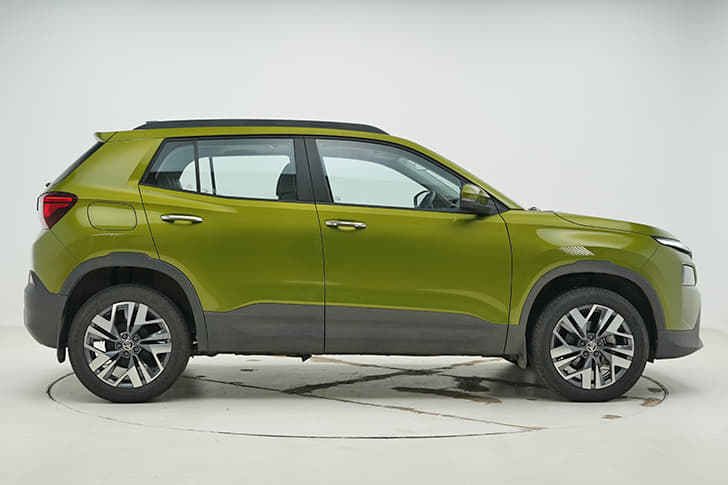
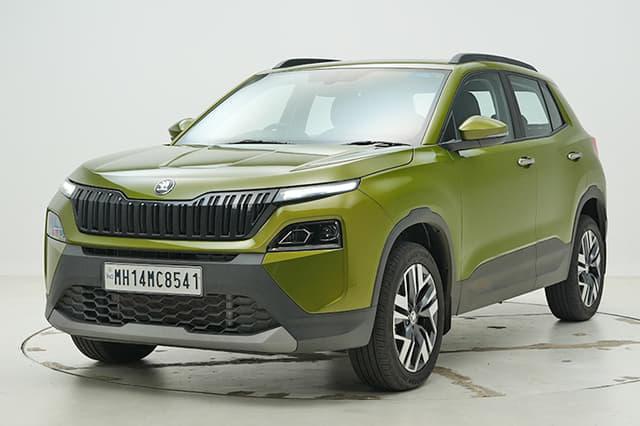
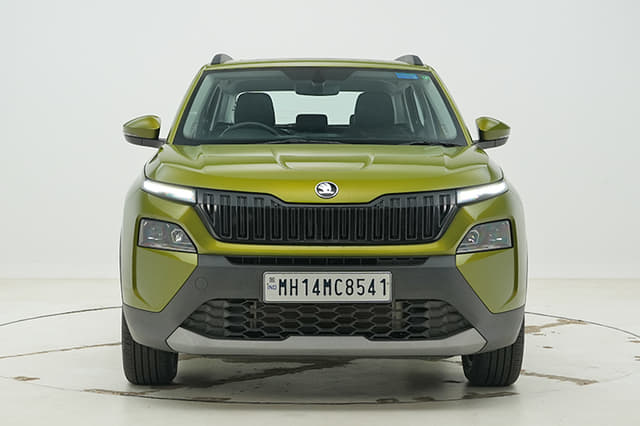
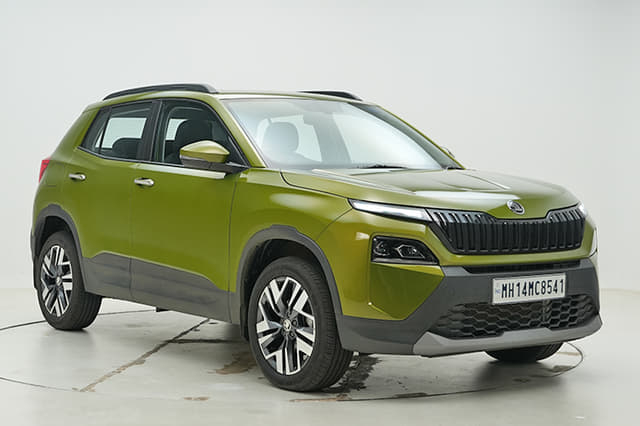
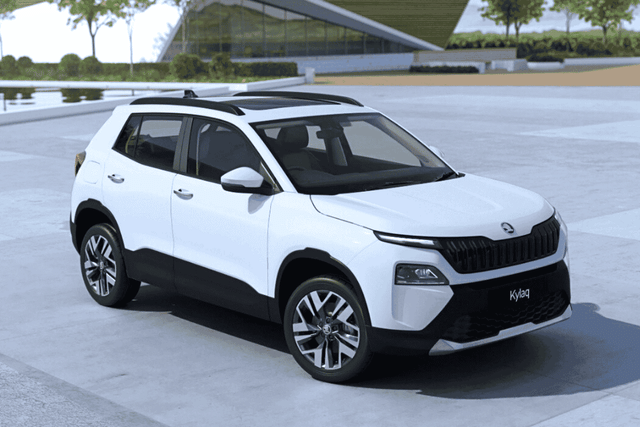
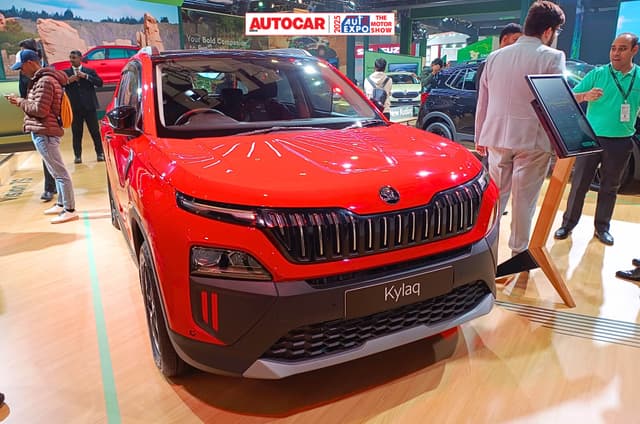
The Skoda Kylaq price in Yavatmal starts at Rs 7.59 lakh for the Classic MT and goes upto Rs 12.99 lakh for the Prestige+ AT. In comparison, the Kylaq on road price in Yavatmal starts from Rs 8.77 lakh to Rs 15.33 lakh (including all taxes, RTO fees, and insurance).
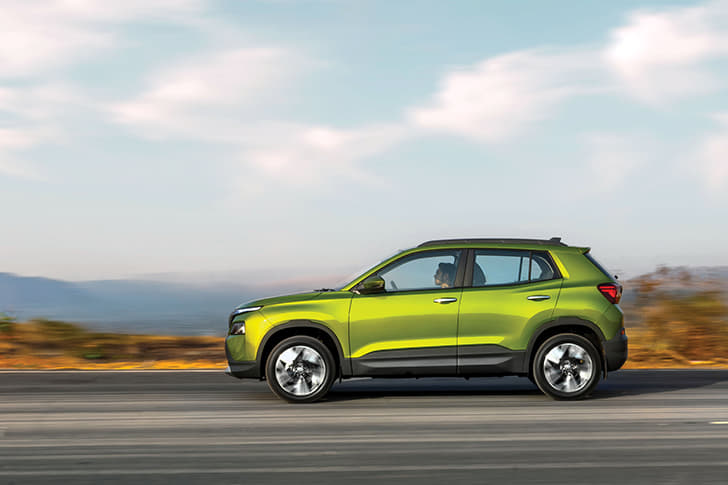
Skoda Kylaq price in Yavatmal
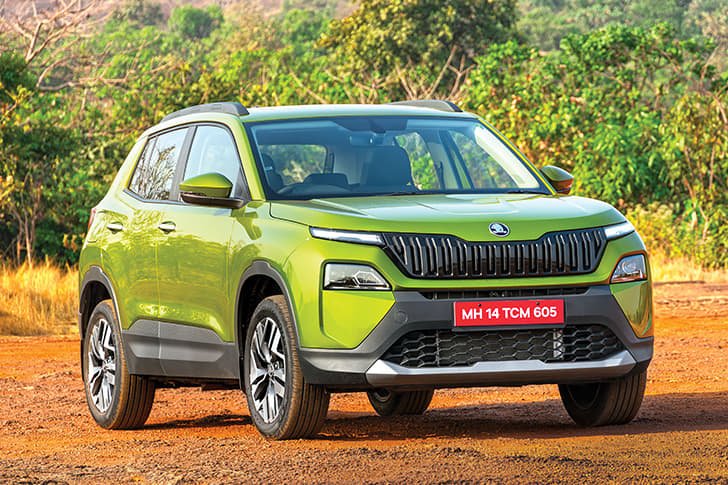
The Skoda Kylaq price in Yavatmal starts at Rs 7.59 lakh for the Classic MT and goes upto Rs 12.99 lakh for the Prestige+ AT. In comparison, the Kylaq on road price in Yavatmal starts from Rs 8.77 lakh to Rs 15.33 lakh (including all taxes, RTO fees, and insurance).
Skoda Kylaq Pricing by Variants
* Estimated on-road price. Final amount may vary.
Skoda Kylaq Booking & Test Drive - User Reviews
The Kylaq feels like a smaller vehicle, especially in the rear seat. The 6-speed transmission is responsive but sometimes feels jerky. It feels small compared to the Kushaq.
Tell us about your experience
Skoda Kylaq Official Brochure
Download the complete brochure with specs, features, and variants.

Calculate your fuel cost for Skoda Kylaq
On Road Price of Skoda Kylaq Alternatives in Yavatmal
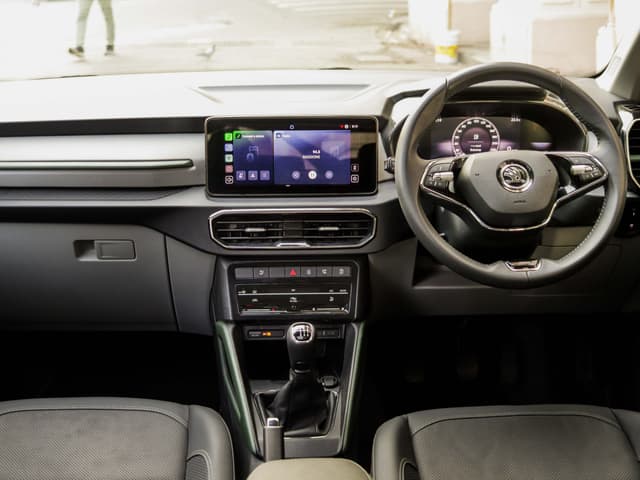
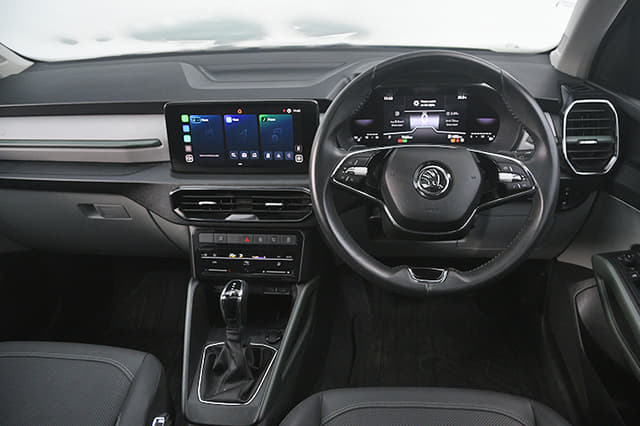
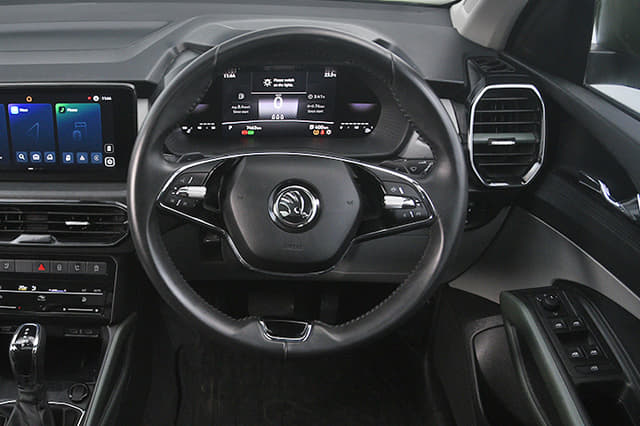
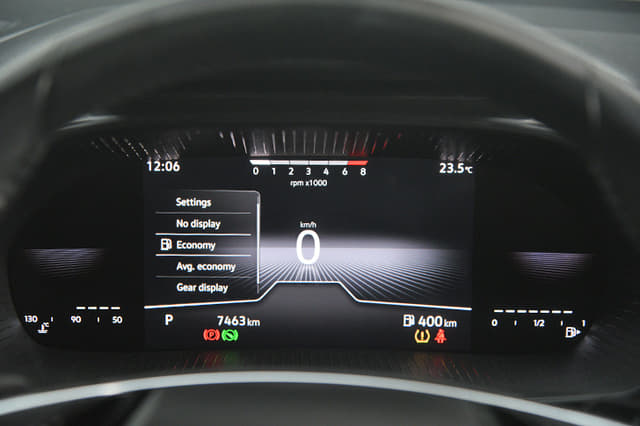
Skoda Kylaq Images
Skoda Kylaq Colours
Skoda Kylaq news
Skoda Kylaq videos


.jpg?w=640&q=75)
Skoda Kylaq FAQs
How do the Skoda Kylaq prices compare to those of the other compact SUV rivals?
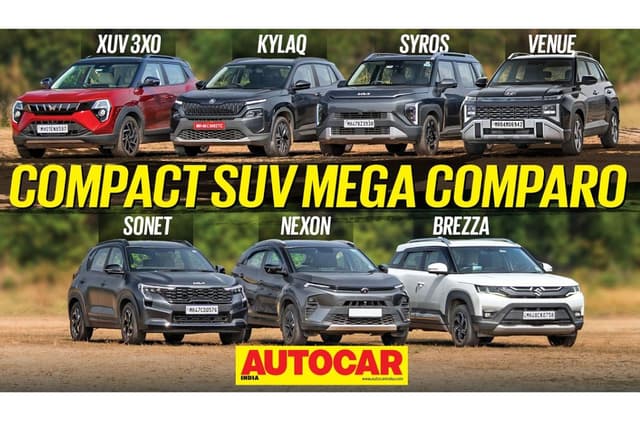
The Kylaq’s starting price is similar to the Tata Nexon and Mahindra XUV 3XO, which are also offered with a similarly powered turbo-petrol engine. Turbo-petrol engines offered with other rivals like Venue, Sonet, Magnite and Fronx have a higher starting price. The Kylaq also has one of the most affordable top-spec trims with a turbo-petrol engine in the segment at ₹12.99 lakh.
Is the Skoda Kylaq a value-for-money car?
In terms of real-world performance, as well as the overall drive experience, the Kylaq is one of the best compact SUVs currently. However, it falls short in terms of equipment like a 360-degree camera and ADAS, which rivals offer. It is value-for-money if for you the driving experience precedes the requirement of premium features.
Questions you may find useful
msivapra
I am planning to buy a TC or CVT automatic car around 15 lakhs. City driving of about 30 kms daily, and on weekends about 100 kms. Highway trips once every 6 months (mainly to a hill station). My priorities are safety, features, comfort, low running costs, and a sunroof. Please suggest the best options.

autocar.india
There are two good options at your budget and with your requirements, and those are the Skoda Kylaq and Maruti Suzuki Brezza. Both have sunroofs, and both use smooth 6-speed torque-converter automatic gearboxes. The Kylaq has the stronger 1.0 turbo engine, tougher feel, 5-star NCAP rating and more premium feeling interiors. However, the Brezza has lower running costs, including mileage, and is a bit more spacious overall. On balance, we think the Brezza suits your needs better as it is the better all-rounder and isn't all that lacking in performance either. However, if you can wait for a bit, a facelift for the Brezza is due very soon, and it would make sense to wait and see what updates that brings.
ranakarmadeepsinh16
Should I buy petrol or diesel car? My budget is Rs. 10 lakh through the CSD route for long-term ownership. I currently own a 2022 Hyundai Creta Diesel, but my monthly running is relatively low. I am also concerned about future fuel regulations. If I buy an E20-compatible petrol car today, will it be able to handle higher ethanol blends that may be introduced in the coming years?

autocar.india
Given your low monthly running, we would recommend a petrol car over a diesel. The fuel-efficiency advantage of a diesel only starts to make strong financial sense when you're covering substantially higher distances. Since you're already driving a 2022 Creta Diesel, moving to a petrol for your next car would also help you avoid concerns around DPFs and future diesel regulations.We also wouldn't let ethanol-blending concerns drive your purchase decision. While India could move towards E27 or even E30 fuel in the future, there is currently no official roadmap confirming this. Most modern E20-compliant petrol cars have been engineered with a margin of tolerance and should be able to handle somewhat higher ethanol blends without any immediate issues. At worst, some rubber components may wear slightly faster over many years, but these are typically inexpensive parts to replace. The bigger impact is likely to be a small reduction in fuel efficiency rather than any major reliability concern.For a Rs.10 lakh CSD budget, we would suggest looking at the Hyundai Venue 1.0 Turbo Petrol or the Skoda Kylaq. The Venue's turbo-petrol engine feels punchy and refined, offers a premium cabin and is very well suited to everyday use. The Kylaq, meanwhile, feels more substantial, offers excellent safety credentials and has one of the most enjoyable turbo-petrol engine and automatic gearbox combinations in the segment.
shivakumar.1
I have a budget of Rs. 12 lakh and am currently driving a Tata Tiago, which I have owned for the past 10 years. I am now looking to upgrade and would appreciate suggestions in both the sedan and SUV segments. My biggest dilemma is deciding whether I should choose a sedan or an SUV. In the sedan category, I am considering the Volkswagen Virtus and Skoda Slavia. In the SUV segment, I am looking at the Tata Nexon. Please suggest if there are any better options than these as well. My driving is evenly split between city and highway usage, and I am a light user with an average monthly running of around 1,000 km. Considering my requirements, which type of vehicle would be the better choice, and which models should I shortlist?

autocar.india
The first thing to note is that with a Rs. 12 lakh budget, the Volkswagen Virtus and Skoda Slavia may be difficult to fit in unless you're looking at entry-level variants or stretching your budget. The Tata Nexon, on the other hand, sits much more comfortably within your range.Between a sedan and an SUV, we'd lean towards a sedan for your usage pattern. With your driving split evenly between city and highway and a relatively modest monthly running of around 1,000km, a sedan generally offers better ride comfort, superior highway stability and a more engaging driving experience. Coming from a Tata Tiago, a Virtus or Slavia will feel like a substantial upgrade in terms of refinement, space and overall quality.If your budget is firm at Rs 12. lakh, we'd suggest looking at the Skoda Kylaq Automatic or Honda Amaze CVT as well. The Kylaq offers SUV practicality, strong safety credentials and a fun turbo-petrol engine, while the Amaze provides the smoothest automatic experience and excellent long-term ownership appeal.The Tata Nexon remains a good all-rounder with strong safety credentials and a practical cabin, but if your heart is set on a Virtus or Slavia and you can stretch the budget, they are the more rewarding cars to own and drive.
prakharsuhane
Hi Autocar team, I need your help in choosing an automatic family car that is reliable, safe and builds confidence in a new driver. I am planning to replace my 2017 Maruti Baleno Alpha petrol as it feels flimsy and dents very easily. Further, it no longer inspire confidence on highways and its braking confidence is also not great. I would appreciate your recommendations for another car. I am currently based in Pune and have planned for BH registration because there is a reasonable possibility of moving to another state in the future (most likely among Madhya Pradesh, Bangalore or Delhi). I will be primarily using it for city driving (90%) with occasional highway trips that may be very long (up to 1,000 km) sometimes. I usually travel with 2 adults and 1 child. I am looking for a car that can comfortably accommodate 4 adults and 1 child whenever required. My annual running is currently under 8,000 km, but it could increase significantly because there will be two drivers and an automatic car is likely to be used more. There will be one experienced driver who is comfortable with car of any size. Second driver is relatively new and gets intimidated by judging front-left corner and vehicle dimensions. I am looking for features such as rear camera that can help in significantly building confidence. I want to first look for a car in Rs. 10 lakh on-road mark but am comfortable with spending around Rs. 14 to 16 lakh if the car offers more safety, confidence and better ownership experience. I am looking for the best overall fit rather than trying to maximize budget. My priorities are reliability and hassle-free ownership, safety, easy maneuverability and confidence in city traffic. I value predictable ownership, service quality and peace of mind more than outright performance. I am comfortable with either petrol, hybrid or EV car with automatic transmission. EV seems interesting because I have a dedicated parking and home charging is possible. My area has mostly good roads with occasional monsoon-related road damage. We have taken test-drives of a few hatchbacks and compact SUVs with automatic transmissions. One thing that has became clear to me is that commanding seating position and a clearer view of road ahead significantly increase confidence, especially for the newer driver. However, we are still unsure whether this benefit alone justifies moving up from a hatchback to an SUV. Initially I thought a small hatchback would be ideal because I could pass it on to my parents after 3-5 years. However, if a slightly larger vehicle offers better safety, comfort and confidence, I would rather keep it for 5-10 years and later buy my parents a separate car. Based on the above requirements, what would be your top 5 recommendations and in what order? More importantly, which body style would you choose among premium hatchback, compact SUV, midsize SUV, hybrid SUV or EV? Which popular models you will not choose despite their popularity, and why? How much importance should I give to reliability versus crash safety while choosing a family car that will mostly be driven in the city but I make take it occasionally for long highway trips? Also, will I regret staying with a hatchback, or moving a segment up, the more sensible long-term decision for my use case?

autocar.india
You could consider the Hyundai Venue Turbo-petrol DCT and the Skoda Kylaq Turbo-AT. Both these are sub-4-meter SUVs with high seating positions and light controls, making them compact and easy-to-judge for new drivers. Both of these options will feel like a proper upgrade over your outgoing car in terms of build, safety, fit-finish, as well as features. Also, while performance isn't something you're concerned much about, you'll be happy to know that their turbo-petrol engines pack in good punch, which will make them perform effortlessly during your highway drives with the family.Even though with a Rs. 16 lakh budget, you could get midsize SUV or sedan options, we'd suggest you stick to these compact SUV, that will make manoeuvring and parking easy.Between the options suggested, the Hyundai car has a slight edge, particularly due to Hyundai's widespread service network.If you're open to EVs, the Nexon EV with the 45kWh battery is worth considering. It is compact, smoother than any similarly priced ICE car, and with the large battery real-world range will be good too. You can easily get a variant well within your budget.
erprakhars
I want a new car for my use, considering 40 kms/day in the city. Should I go for Kylaq or Tata Curvv EV, considering new tech and the future of green energy

autocar.india
If you consider new tech and green energy, pick the Tata Curvv EV. With 40 km a day in the city, an EV makes the most sense - you can charge at home once or twice a week, spend far less per km, and enjoy a quiet, smooth drive in traffic. The big question is, do you have a dedicated parking spot with a plug at home or office? If yes, you’re set. You will barely visit public chargers for city use, and the range will easily cover a week of commuting.The Skoda Kylaq is still a sensible pick only if you cannot install home charging or you often do long highway runs. Petrol refuelling is instant, and planning is zero, so it is easier outside the city.One catch with the Curvv EV is its higher upfront price, patchy or busy public chargers on some routes, and a likely poor resale value. However, for your daily city use, though, Curvv EV wins.
user_123i41a1
I need an SUV model for my family. We are 4 members, we need comfort and safety, also good build quality and low maintenance. Twice a year, we go on a long trip. Now we are using the Alto 2011 model. Budget 10 to 15 lakh.

autocar.india
The Skoda Kylaq Automatic would be the recommendation here. Coming from a 2011 Alto, the Kylaq will feel like a significant upgrade in terms of comfort, safety, performance and overall refinement. It offers strong build quality, a spacious cabin for a family of four, excellent safety credentials and a smooth automatic gearbox that makes city driving effortless. It is also comfortable enough for the two long trips you undertake every year.If low maintenance and hassle-free ownership are your top priorities, the Maruti Suzuki Brezza Automatic is another excellent option. It may not feel quite as solid or enjoyable to drive as the Skoda, but it offers proven reliability, good fuel efficiency and one of the widest service networks in the country.
prempanigrahi
My daily running is around 50 km, and I take one long trip every month. I currently drive a Honda Amaze Diesel, but I am now planning to replace it. I am confused about whether I should choose an EV, a petrol car, or a diesel car under Rs. 15 lakh. My key requirements are a smooth transmission, excellent fuel efficiency, and strong safety. Considering my usage pattern and priorities, which type of car would be the best choice for me?

autocar.india
The Honda Amaze Diesel has served you well, but given your current usage pattern, a diesel would not be our first choice today.With a daily running of around 50km and just one long trip a month, both petrol and EV options make more sense. If you have access to home charging, an EV can significantly reduce your running costs. In that case, the Tata Punch EV Long Range would be a strong contender. It offers good safety credentials, smooth performance and more than enough range for your daily commute and occasional longer journeys.If you'd rather stick with an ICE vehicle, the Skoda Kylaq Automatic would be our recommendation. Its torque-converter automatic gearbox is smooth and reliable, the turbo-petrol engine offers strong performance and it has solid safety credentials. However, it won't match an EV for running costs.
sebastian_daniel
I have been driving a Datsun GO A for almost 7 years now, and I feel it is time for an upgrade. My budget is up to Rs. 12 lakh, although I can stretch it by around Rs. 1 lakh if needed. I drive approximately 400 km per month and take occasional outstation trips, usually once or twice a year. I am open to recommendations across all vehicle segments, but I am not particularly fond of large vehicles because of traffic and parking challenges in Bengaluru. One thing I really enjoy about the Datsun GO is its peppy engine, and I would love a car that offers a similarly engaging driving experience. I can also postpone my purchase by about a year if there is an upcoming model that would be worth waiting for, such as the Hyundai Bayon. Considering my requirements, which cars would you recommend?

autocar.india
Coming from a Datsun Go, you'll probably appreciate a car that feels light, easy to manoeuvre and has a responsive engine rather than a large SUV. Given your relatively low monthly running of around 400km and the fact that most of your driving will be in Bengaluru, a petrol automatic makes the most sense.Our pick would be the Skoda Kylaq Signature AT. It is compact enough for city traffic, the 1.0-litre turbo-petrol engine feels genuinely peppy and the torque-converter automatic is smooth and easy to live with. It also offers a substantial upgrade over the Datsun in terms of safety, refinement and overall quality.If you prefer a hatchback, the Hyundai i20 IVT is worth considering. It is easy to drive in traffic, has a smooth and refined powertrain and offers a premium cabin. While it isn't as punchy as the Kylaq, it remains one of the best all-round city cars in this price range.As for the Hyundai Bayon, we wouldn't recommend delaying your purchase for it. Even if Hyundai decides to bring it to India, it is likely to be positioned above your budget and could end up closer to the Creta in terms of pricing.
shubhamjain
Hello! I have a manual Ertiga and am planning to buy a secondary automatic car in the Rs 10-12 lakh range for long-term ownership. I intend to opt for the maximum extended warranty and service packages. Usage will be mostly city driving in Delhi NCR, with a few short vacation trips, and a monthly running of around 600-700km. I want a delightful ownership experience with good build quality, fit and finish. I am not willing to go with an AMT transmission. Please suggest the best option. Also, please suggest more options if I increase my budget by Rs 1-2 lakh.

autocar.india
The Honda Amaze CVT would be the recommendation here. Since this will be a secondary car primarily for city use in Delhi NCR, with monthly running of just 600-700km and a focus on long-term ownership, the Amaze makes a lot of sense. The CVT automatic is among the smoothest gearboxes in this price range, the petrol engine is refined and proven, and Honda's reputation for reliability and hassle-free ownership is hard to ignore. If you're planning to take the maximum warranty and service packages, it should be an extremely easy car to live with for many years.The Hyundai i20 IVT would be the second choice. It feels more premium inside than the Amaze, offers excellent fit and finish, and its IVT automatic is just as smooth in city traffic. It is also compact and easy to drive, making it a great urban runabout.If you're willing to stretch your budget slightly, the Skoda Kylaq Classic+ AT is worth considering. It brings the benefits of an SUV body style, a solid feel and a smooth torque-converter automatic. However, for your specific use case, the Honda and Hyundai edge it out thanks to their smoother powertrains and stronger reputation for long-term ownership peace of mind.
karthik21k
Hi. I have been driving an i20 diesel for the last 8 years, and it has covered 1.15 lakh km. The car has been maintained well. I recently moved to Bengaluru, and the urge to upgrade has come up. I looked at the Skoda Kylaq and even booked the Signature Plus Automatic, with my i20 valued at Rs. 4.6 lakh in exchange. However, after a test drive, my family now wants me to buy the Slavia 1.0 Automatic instead. I am also concerned about the ethanol-blending issue. Should I go ahead with the purchase or continue using the i20 for a few more years? I am getting the Slavia Prestige at Rs. 18 lakh on-road.

autocar.india
Go ahead with the Skoda Slavia 1.0 automatic. For Bengaluru traffic and family use, it will be nicer daily, and the current car is E20-compliant too.The Slavia’s 6‑speed automatic is smooth in stop‑go, the cabin and boot are a clear step up from your i20, and its high ground clearance for a sedan handles bad roads and speed humps without drama. Skoda’s 1.0 TSI is built to run on E20, so you won’t harm the engine or void the warranty. You may see a small dip in mileage with higher ethanol and, versus your diesel, expect higher fuel bills.Since you’d booked the Kylaq, know this: it drives almost similarly to the Slavia with the 1.0 automatic. Pick it only if you really want the higher seating and compact dimensions. If your running is mostly in the city and if your family prefers a sedan, the Slavia makes sense.Rs. 18 lakh on road for Prestige is fair in Bengaluru, and Rs. 4.6 lakh for your i20 diesel at 1.15 lakh km is about par. Unless you’re happy to keep the i20 another year just to save cash, there’s no strong reason to wait.