
Last Updated on: 06 Jun 2026
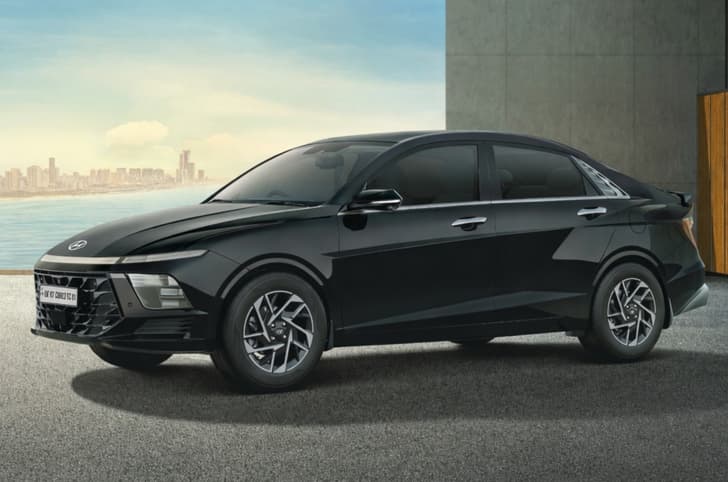
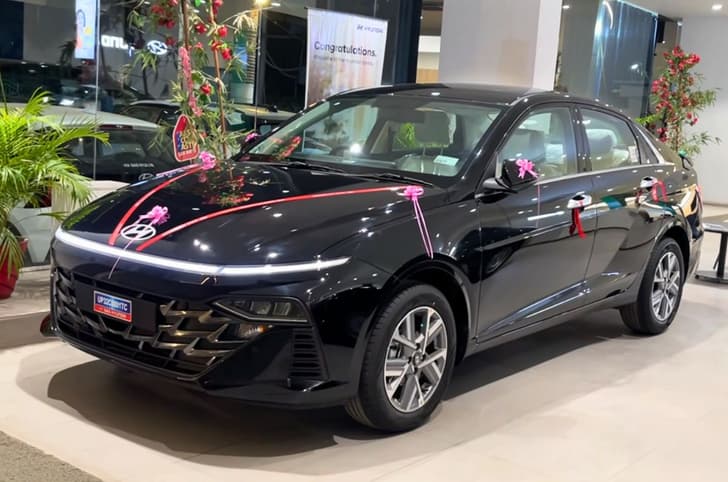
Hyundai Verna price in Kamle
The Hyundai Verna on road price in Kamle ranges from ₹12.08 lakh for the base model to ₹20.15 lakh for the top variant (including all taxes, RTO fees, and insurance). In comparison, the Verna price range in Kamle is between ₹10.99 lakh and ₹18.26 lakh.
Check out the Hyundai Verna on road price for all variants in Kamle below.
Hyundai Verna price & variants
Hyundai Verna Official Brochure
Download the complete brochure with specs, features, and variants.
On Road Price of Hyundai Verna Alternatives in Kamle
Hyundai Verna news
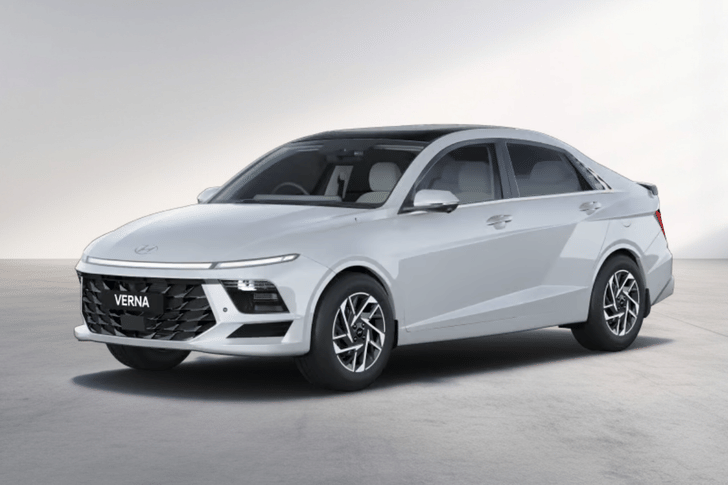
Hyundai Verna Images
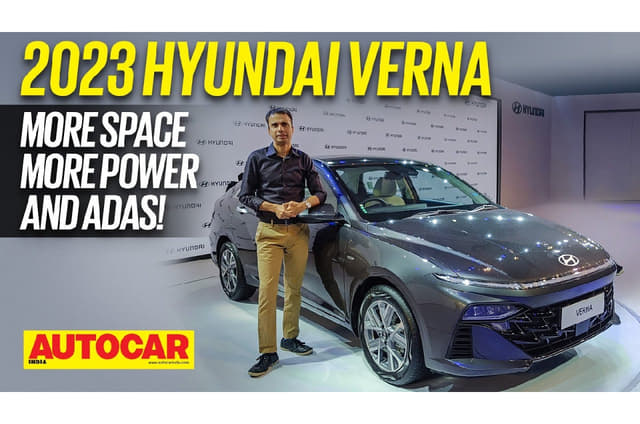
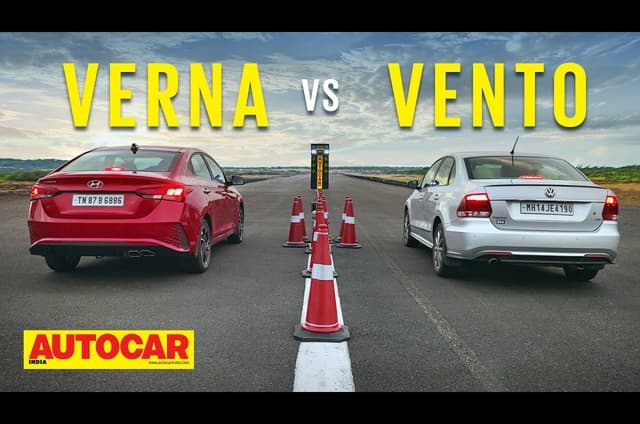
Hyundai Verna videos
.jpg?w=640&q=75)


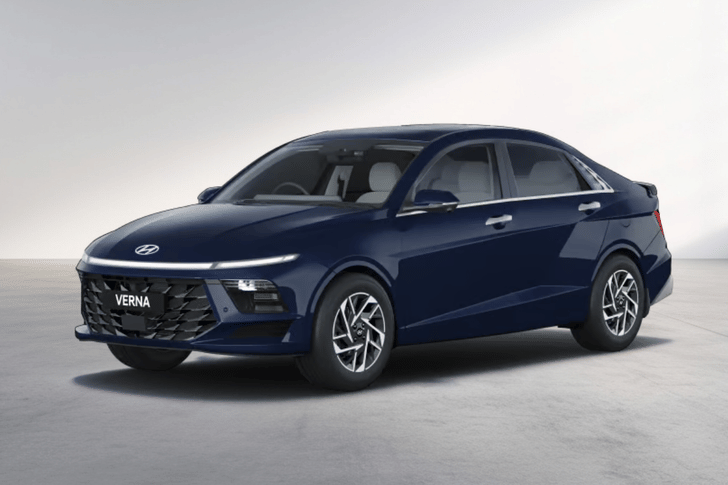
Hyundai Verna Colours
Hyundai Verna FAQs
The Verna base model price (HX2 Petrol MT) in Kamle is ₹10.99 lakh, ex-showroom.
The Hyundai Verna base model on road price in Kamle is ₹12.08 lakh.
The Verna top model price (HX10 Turbo Petrol DCT) in Kamle is ₹18.26 lakh, ex-showroom.
The top-spec (HX10 Turbo Petrol DCT) Hyundai Verna on road price in Kamle is ₹20.15 lakh.
The Verna price in Kamle starts from Rs 10.99 lakh to Rs 18.26 lakh ex-showroom price.
In Kamle, The Verna on road price starts from Rs 12.08 lakh to Rs 20.15 lakh.
The Verna automatic price in Kamle starts from Rs 14.40 lakh for (Hyundai Verna HX6 Petrol CVT) variant to Rs 18.26 lakh for (Hyundai Verna HX10 Turbo Petrol DCT) variant (ex-showroom price).
Questions you may find useful
KD
•1dI currently own a Honda Jazz and am looking for an upgrade. My confusion is between the Hyundai Verna 1.5 NA MT HX6 Plus and the Kia Seltos HTK, the latter being my wife's choice. My running will be around 5,000-6,000 km per year. I did a test drive of both cars. I was sceptical about the Verna's ground clearance, but I drove it over bad patches and large speed breakers, and it did not scrape at all. The overall ride also felt smoother in the Verna than in the Seltos. My only concern is whether ground clearance will become an issue when travelling with luggage on longer trips. While the Seltos interior looks more modern, the Verna variant lacks some features found in the Seltos HTK Plus.

Autocar India
Pick the Verna 1.5 manual. You already prefer its smoother ride, and with just 5-6k km a year, the extra height of the Seltos will not make much difference.Your ground-clearance worry is fair, but it should not be a deal-breaker. The Hyundai Verna clears most big speed breakers if you go slow, and its boot is larger than the Seltos, so you can take more luggage. Even when loaded, it will be fine on regular highways and town roads. It only becomes tricky with five adults, a fully stuffed boot, and broken village tracks. Slow down and take tall breakers a bit diagonally, and it won’t scrape.The Verna HX6 Plus also gives you more of the useful kit you noticed missing on the Seltos HTK, and the sedan will feel more engaging to drive. It will also be more fuel-efficient.Do note that if you or your parents value easy step-in height and an elevated driving position, the Kia Seltos suits that better. But for comfort, features and your actual use, the Verna is the smarter upgrade from a Jazz.
Jay Desai
•3dAre sedans still a good option to buy in 2026? If yes, how suitable is the Hyundai Verna HX10 DCT for my requirements? My usage consists of approximately 80% highway driving, and my main priorities are fuel efficiency and performance.

Autocar India
Yes, sedans still make a lot of sense in 2026, and for your 80% highway use, the Hyundai Verna 1.5 turbo with the automatic is a great option. Its low, slippery shape helps you get better fuel economy at a steady cruise than most SUVs, and the turbo engine has enough punch for quick overtakes without needing a downshift. At highway speeds, it sits stable and quiet, and the boot is big enough for long trips.Driven calmly on open roads, you can see mileage in the mid to high teens, but if you drive with a heavy foot, it will drop. In slow, stop-go traffic the automatic can feel a bit hesitant, though your usage is mostly highway so that’s a small worry. If mileage edges out performance for you, the non-turbo Verna with the manual does better on fuel but is nowhere near as quick. For your brief though, the Verna turbo DCT hits the sweet spot.
Anand AH
•5dCurrently, I own a Honda Jazz Diesel MT and have driven around 1 lakh km in 8 years. I am now planning to upgrade to a sedan. My daily usage is around 100 km, including 40 km on highways, 45 km on winding state highways and panchayat roads, and 15 km in city/town traffic. I also do 2-3 long trips every year, each covering around 1,200 km round trip.

Autocar India
Pick the Honda City hybrid for your needs. It will cut your daily fuel spend by a lot, and it is nice and seamless to drive in traffic and on highways. The hybrid system runs in EV mode for most of the time, which means you get a quiet, refined drive and excellent fuel efficiency. And unlike an EV, you don't have to charge the battery, as that's done by the engine. Coming from your Jazz diesel, you'll also appreciate the familiarity with this Honda, and you'll also be backed up by the stress-free ownership generally associated with the brand. Do note though, the hybrid does have a smaller boot than the standard petrol City, and the ground clearance could be an issue on broken village roads or when fully loaded.Alternatively, if the City hybrid is too expensive for you and you want just a simple petrol sedan, consider the Hyundai Verna 1.5 IVT. It offers a smooth and refined drive, a feature-rich and spacious cabin and is backed by Hyundai's widespread service network.
Sufiyan
•6dHyundai Verna 2026 top model vs Honda City 2026 top model - which is the more practical and value-for-money car? Also, what would be Autocar India’s recommendation between the two?

Autocar India
Considering the naturally aspirated engines in both, the Honda City is the better pick. It rides and handles better, has a nicer back seat, and performance is livelier. Add Honda’s typically higher resale value and lower running costs, and it becomes the better long-term proposition.Where the Hyundai Verna fights back is with more features and the option of a turbo-petrol engine. If you want the faster, flashier sedan at this price, then the Verna turbo-petrol is the one to have.For a practical, value-for-money buy over the years of ownership, the City is the smarter pick. Choose the Verna only if performance and extra features matter more than everyday ease of use and efficiency.
Max D
•1wI am planning to buy a sedan, despite most people today preferring SUVs. I am considering the Hyundai Verna HX10 IVT and the Volkswagen Virtus 1.5 DSG. Since I would be spending around Rs 20 lakh on either of these cars, I wanted to know whether sedans still make sense given Indian road conditions. Are roads improving enough to justify buying a sedan again, or should one still stick to SUVs? I also noticed that a similarly equipped SUV as the Creta costs around Rs 3-4 lakh more. Is this premium justified, or is it better to save the money and buy a sedan instead?

Autocar India
Sedans absolutely make sense. Road quality in most cities has improved enough that a modern sedan’s clearance handles regular bumps and broken patches fine. You'd buy an SUV mainly for the road presence and higher seating position, and these days, very few offer AWD or specialised off-road hardware. If your daily commute has absolutely broken roads, steep speed breakers or is prone to flooding, that extra 10-20mm of ground clearance will help. Or if you have elderly passengers for whom getting into and out of a sedan is difficult. If not, you are paying Rs 3-4 lakh more for the feel-good factor rather than any tangible benefit.Pick the Hyundai Verna IVT. For your mostly urban Indian driving and on a Rs 20 lakh budget, it is smoother to drive, easier to live with, and cheaper to run. The automatic is smooth in traffic, the ride is comfortable, and there is no long-term worry around heat-and-traffic wear that the Volkswagen Virtus 1.5 with its quick but complex gearbox can throw up. The Virtus is the driver’s car here - stronger on highways and more fun in corners - but it can stretch past your budget on-road, and repairs aren’t cheap if things go wrong.
Alok Agarwal
•1wWhich sedan currently offers the best overall value for money within a budget of around ₹18 lakh, including hybrid options as well?

Autocar India
At the moment, the Honda City is the only mid-size sedan in the market with a hybrid powertrain, however it should cost you close to Rs 25 lakh on-road.Since you're looking for a value-for-money offering within Rs 18 lakh, the Hyundai Verna HX6+ 1.5 Petrol CVT is the one to go for. The car is feature-rich, comfortable, and very smooth to drive.
Hemal
•4wHi, my running is quite low, but I want a good car with a comfortable suspension setup and a premium-feeling interior. I am currently confused between the new 2026 Hyundai Venue, Maruti Brezza, and Mahindra XUV 3XO. Could you please guide me on which would be the better choice for my needs?

Autocar India
The Mahindra XUV 3XO offers the best overall balance here with a genuinely premium cabin, comfortable suspension and a more spacious interior, which makes it feel like the most complete package. It also handles rough roads better than the Venue, which will matter if road conditions are not always ideal.The Hyundai Venue is not far behind and also offers a premium cabin with very good fit and finish, but its suspension is firmer, and it does not absorb rough roads as comfortably as the Mahindra. The Maruti Suzuki Brezza, meanwhile, handles bad roads with ease and remains the easiest long-term ownership proposition, but its cabin feels more utilitarian and basic compared to the other two.So, if you want the best mix of comfort, interior feel and everyday usability, the XUV 3XO is the one we would recommend.
Santhosh
•4wI am looking to buy a sedan, my driving is like 70 city and 30 highway which one will be good for me

Autocar India
Given your requirements, you should consider the Hyundai Verna IVT. It is powered by a refined 115hp, 1.5-litre petrol engine paired with a smooth CVT automatic gearbox, which will make your city drives stress-free. The sedan comes with a large boot, a spacious and premium cabin, and a comfortable ride quality, all of which you will appreciate on long highways.Being a Hyundai, the Verna is also reliable, and its widespread service network means your ownership experience should be smooth. Alternatively, you can consider the Honda City CVT, which offers a better rear seat than the Verna, but it is not as refined or feature-rich as the Hyundai.
Akshay Nayak
•4wI am planning to buy a new car and have narrowed my choice down to the Skoda Slavia/VW Virtus with the 1.5 DSG. I really love how both cars drive, and the DSG feels like magic. However, 90% of my driving is in the city, and I live in one of the most traffic-congested areas of Mumbai (Malad). Would it be a wise decision to go for the DSG gearbox? Which other cars would you recommend in this segment (no SUVs)?

Autocar India
Go for the Volkswagen Virtus 1.0 TSI automatic rather than the 1.5 DSG, given your 90 percent city use in Malad’s heavy stop start traffic. You get the same cabin, driving position and overall feel you liked, but the 1.0’s torque converter automatic is far better suited to daily Mumbai conditions as it is smoother at low speeds, easier to modulate in bumper to bumper traffic and less stressful to live with over time. The 1.5 DSG, while genuinely quick and engaging with its fast shifts, can feel jerky at crawling speeds, tends to heat up in prolonged traffic and can be expensive to repair once out of warranty, which makes it less ideal for your usage. The 1.0 still feels adequately quick in the city with light controls and easy drivability, so you are not really giving up much unless you drive hard on open roads. If you are considering alternatives, the Honda City CVT and Hyundai Verna IVT are even smoother in traffic and very easy to live with, while the City e:HEV is the best for city efficiency if you are willing to stretch. The only drawback with the 1.0 is that it lacks the punch and sharp shift feel of the 1.5 DSG on highways, but overall it is the far more practical and stress free choice for your driving conditions.
Peasant Sampan
•5wHello Autocar, I am planning to buy a sedan, with almost 90% city usage. Please suggest a suitable option. Also, is it true that for my usage, naturally aspirated (NA) engines are better suited than turbo-petrol engines?

Autocar India
For your usage, a naturally aspirated petrol with a CVT or IVT is the best fit. These setups are smoother, easier to drive in traffic and more predictable, which matters far more in city conditions than outright performance. So yes, in your case, NA engines are better suited than turbo petrol.The Hyundai Verna IVT stands out as the most well-rounded option for city driving. The engine is smooth, the IVT gearbox is very intuitive in stop-and-go traffic, and the overall driving experience is effortless. It feels refined and easy to live with daily.The Honda City Hybrid is worth considering if your running is high. It offers excellent fuel efficiency, strong performance and is very easy to drive in the city thanks to its hybrid system. However, it comes with a higher upfront cost, and the battery placement results in a higher boot floor, which slightly affects practicality.Compared to the Verna, the standard Honda City CVT is also an option, but the engine feels a bit noisier, and the gearbox is not as intuitive as the Verna’s IVT in everyday use.