Last Updated on: 12 Aug 2026
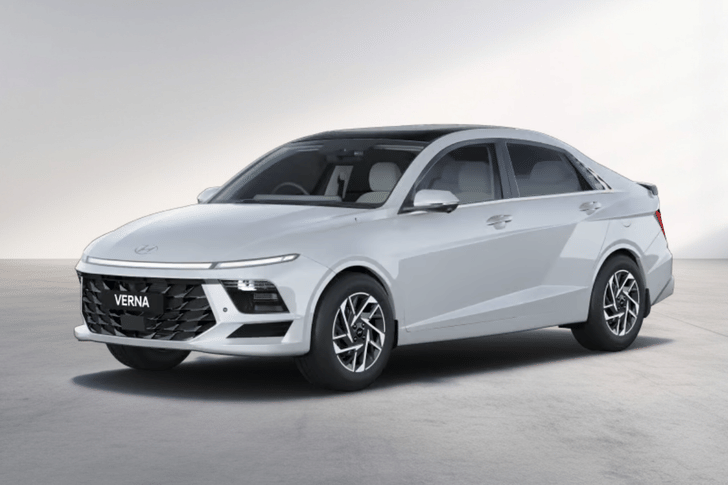
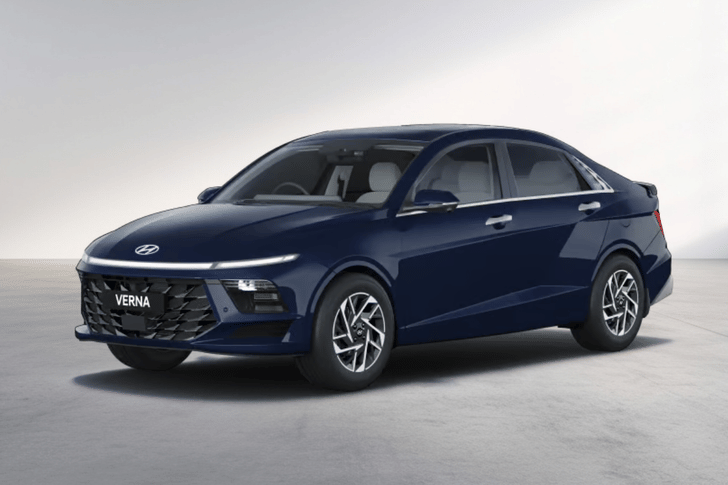
Hyundai Verna specifications
The Hyundai Verna carries the highest power and pulling power figures in its class, and that is the headline specification. The 1.5-litre turbo-petrol makes 160hp and 253Nm. The 1.5-litre naturally aspirated petrol makes 115hp and is the version most buyers choose.
Key facts for the Verna:
Gearboxes are a 6-speed manual on both engines, a CVT on the naturally aspirated version and a 7-speed dual-clutch on the turbo.
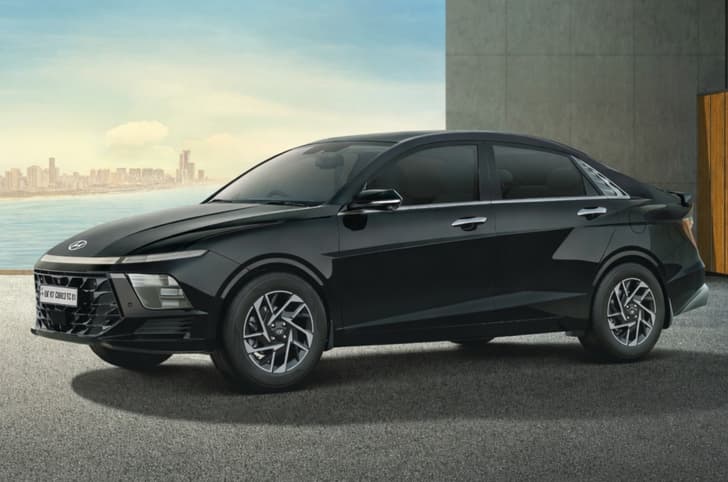
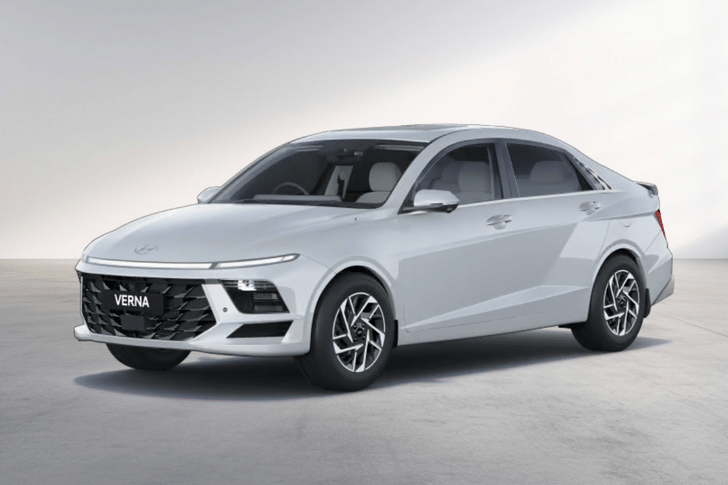
The car measures 4,565mm long, 1,765mm wide and 1,475mm tall on a 2,670mm wheelbase.
Boot space is 528 litres, which our review rates as class-leading.
The crash rating is 5 stars from Global NCAP, with six airbags rising to seven on the top variant.
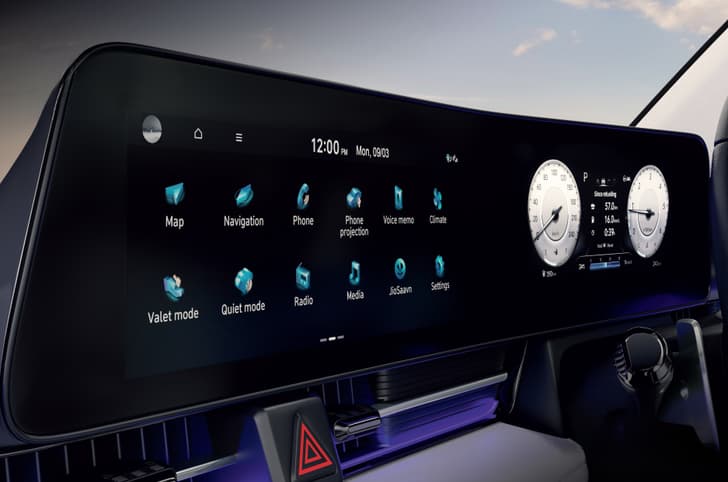
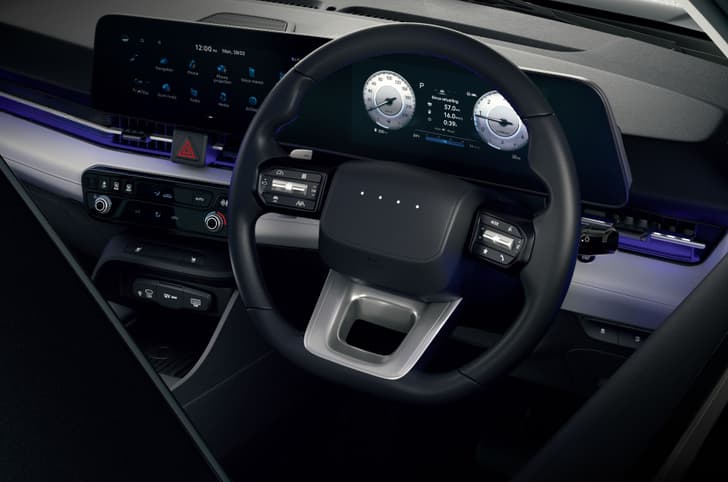
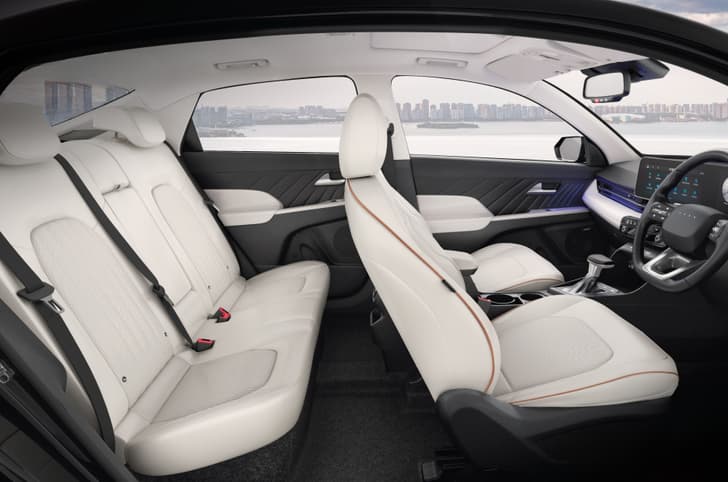
Two 10.25-inch screens are fitted, one touchscreen and one behind the steering wheel.
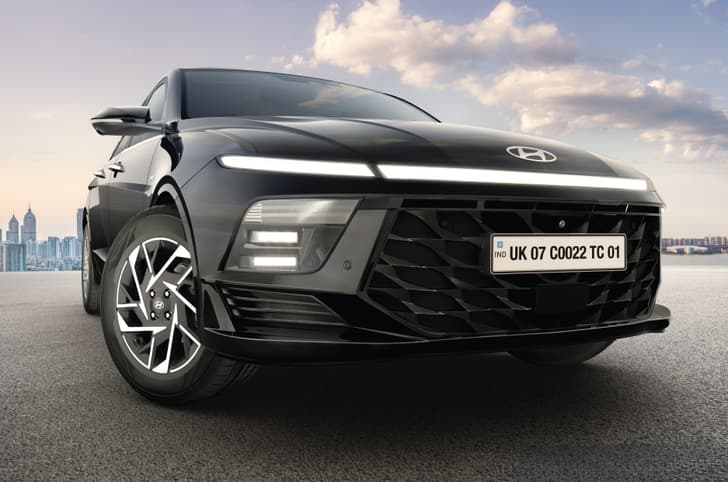
Heated and ventilated front seats are offered, along with LED projector headlights and a 360-degree camera.
Our review found the ride errs towards comfort, absorbing low-speed bumps well and staying composed at expressway speeds.
Hyundai Verna highlights
Cars with above 20 kmpl mileage are typically small-capacity diesels, hybrids, or efficient petrol hatchbacks. In India, cars with above 20 kmpl mileage are favoured by buyers who prioritise running costs and frequent highway driving. They offer strong fuel economy without compromising everyday usability.
Hyundai Verna key specifications
Cars with up to 10 kmpl mileage are usually high-performance models, luxury SUVs, or sports cars that prioritise power over efficiency. In India, buyers choosing cars with up to 10 kmpl mileage often value refinement, speed, and premium features more than fuel economy.
Engine 1482 cc - 1497 cc | Fuel Type Petrol |
Transmission CVT, DCT, Manual | Body Style Sedan |
Seats 5 |
Hyundai Verna specifications
The Hyundai Verna offers 115hp, 144Nm 1.5-litre naturally aspirated petrol and 160hp, 253Nm 1.5-litre turbo-petrol engine options. A 6-speed manual transmission is standard with both engines. The NA motor can also be optioned with a CVT unit, while the more powerful turbocharged engine offers the choice of a 7-speed dual-clutch automatic gearbox.
Engine & Transmission
Engine Type | Turbocharged |
Engine Displacement | 1482 cc |
Number of Cylinders | 4 |
Engine Installation | Front |
Fuel Type/ Propulsion | Petrol |
Gearbox Type | DCT |
Number of Gears | 7 |
Manual Shifts via Gear Lever on Automatic Gearbox | Yes |
Paddle Shifters for Automatic Gearbox | Yes |
Sport Mode for Automatic Gearbox | Yes |
Drive Layout | Front Wheel Drive |
Lockable Differential/s | No |
Max Engine Power | 160 hp at 5500 rpm |
Max Engine Torque | 253 Nm at 1500 - 3500 rpm |
Fuel & Performance
Fuel Supply System | Direct Injection |
E20 Compatibility | Yes |
Emission Standard | Bharat Stage VI |
Terrain Modes | No |
Auto Start/Stop | Yes |
Official Fuel Economy | None kmpl |
Autocar Tested City Mileage | 10.7 kmpl |
Autocar Tested Highway Mileage | 16.0 kmpl |
Fuel Tank Capacity | 45 litres |
Autocar Tested Mileage | 13.35 kmpl |
Suspension & Steering
Front Suspension Type | McPherson strut |
Front Springs | Coil Springs |
Rear Suspension Type | Coupled torsion beam axle |
Rear Springs | Coil Springs |
Damper Control | No |
Ride Height Adjust | No |
Type of Power Assist | Electric |
Steering Adjust type | Manual |
Steering Adjust | Tilt and Telescopic |
4 Wheel Steer | No |
Front Brakes | Disc |
Rear Brakes | Disc |
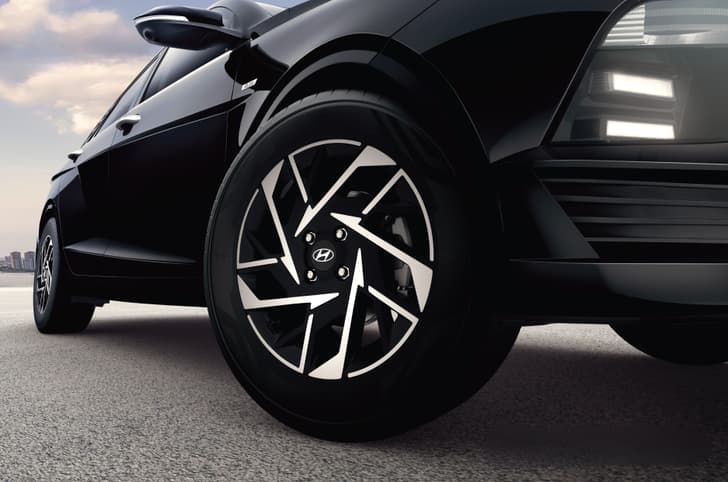
Wheel Size | 16 inches |
Front Tyre Size | 205/55 R16 |
Rear Tyre Size | 205/55 R16 |
Wheels | Machine finished alloys |
Spare Wheel | Space Saver |
Dimensions
Length | 4565 mm |
Width | 1765 mm |
Height | 1475 mm |
Wheelbase | 2670 mm |
Chassis Type | Monocoque |
Boot Capacity | None litres |
Doors | 5 |
Hyundai Verna features
Comfort
| Electric Tailgate Release | |
| Bottle Holder in Doors | |
| Power Windows | Front and Rear |
| Foldable Seatback Table | |
| Flat Bottom Steering Wheel | |
| Cabin Boot Access |
Safety
| Central Locking | |
| Seat Belt Warning | |
| Child Safety Lock | |
| Curtain Airbag | |
| Road Departure Mitigation System | |
| Dashcam |
Exterior
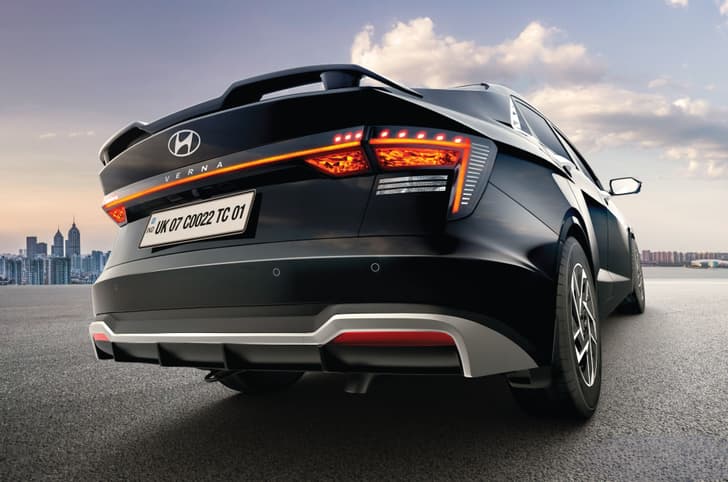
| LED taillights | |
| LED headlamps | |
| LED fog lamps | |
| Headlight Type | LED |
| Headlight Height Adjuster | |
| LED DRLs |
Interior
| Shift Indicator | |
| Average Speed | |
| Average Fuel Consumption | |
| Tachometer | Digital |
| Speedometer | Digital |
| Instantaneous Consumption |
Entertainment
| Satellite Navigation | On-board |
| Voice Commands | |
| Web Browser | |
| Rear Entertainment Screens | |
| Rear Seat Infotainment Controls | |
| Wireless Phone Charging |
Connected Car Features
| Google/Alexa connectivity | |
| Home to Car Connectivity | |
| In Car Payment | |
| Driving Analytics | |
| Remote Engine Start/Stop | |
| Live Location Sharing |
Hyundai Verna variants comparison
Hyundai Verna Specifications - User Reviews
Tell us about your experience
Specifications of Hyundai Verna alternatives

Questions you may find useful
I am planning to buy a car with a budget of around ₹15 lakh. I am a 30-year-old buyer and am confused between the Hyundai Verna SX+ (which is my favourite) and the new Kia Seltos HTE(O) automatic. I am concerned about the mileage of the Verna, while the Seltos offers fewer features like no sunroof or alloy wheels, and I am also unsure about its service experience. My usage will be mostly city driving in the Delhi NCR region, primarily on weekends.
The Hyundai Verna and Kia Seltos share a smooth, refined 1.5-litre petrol engine and an IVT (automatic). So in terms of performance, smoothness and maintenance, they're likely to be very similar. For its sheer driving pleasure, pick the Verna (sedan) if you're usually self-driven. Being lower and having a lower centre of gravity, this one will feel better to drive than an SUV. Its boot is much larger, too, which you will appreciate during your weekend trips or airport runs. The Hyundai Verna price starts at Rs 10.99 lakh (ex-showroom). The Hyundai Verna Mileage is up to 13.5kpl in real-world driving.However, if you are going to be driving with five adults regularly, only then pick the Seltos, which has a more spacious cabin, especially at the rear.
Hi, I own a Kia Sonet, which I am extremely disappointed with. About 99% of my driving is in the city, and my budget for a new car is around Rs 15-16 lakh. My priorities are a sedan with a smooth and comfortable ride, particularly over city speed breakers and potholes, along with good mileage, relatively low and hassle-free maintenance, reasonable running costs, and good after-sales service. Unfortunately, I have found the Kia Sonet disappointing in all these areas. I am therefore looking for a decent sedan that better suits my requirements. I also believe sedans generally offer a smoother and more comfortable ride than many of the newer compact SUVs. Please correct me if I am wrong and suggest some suitable options within my budget.
Given your priorities, the Honda City is the clear recommendation. It is a proven sedan with a comfortable ride, excellent reliability and low maintenance costs. The suspension is well-tuned for city use, and it handles speed breakers and potholes with a level of composure that many compact SUVs struggle to match. Honda's service network is strong, and ownership experience is generally hassle-free. The petrol engine is smooth and efficient, making it a great fit for predominantly city driving.Your observation about sedans is largely correct. A well-engineered sedan like the City often delivers a smoother and more settled ride than many compact SUVs, especially over broken city roads.If you want a more premium feel and a slightly softer ride, the Hyundai Verna is also worth considering. It is a comfortable and refined sedan with good service support, but the Honda City remains the more proven long-term ownership proposition.The key is to avoid turbo petrol engines with DCT gearboxes, as they can be less suited to stop-start city traffic. The naturally aspirated petrol engines in the City and Verna are smooth, reliable and well suited to your usage.Overall, the Honda City is the most sensible and satisfying choice for your requirements.
Hi, I am planning to buy my first car. Previously, I used my family car, a Maruti Ciaz, for 10 years. I am looking for an automatic, fuel-efficient car with low maintenance. My driving is 70% in the city and 30% on the highway. My budget is around ₹15 lakh. For family comfort, could you please help me with this?
Since you have been using a Maruti Suzuki Ciaz for the past 10 years, it is important to note that at a Rs 15 lakh budget, nothing will really feel like an upgrade in terms of space, especially for the rear seat.Ideally, we would have recommended the Hyundai Verna, the HX6 IVT automatic variant, which has just been updated. It is a comfortable and spacious sedan and even the mid-spec variant comes with good features. The 1.5-litre naturally aspirated petrol engine is refined, and the IVT transmission is silky smooth, making it ideal for your city commutes. However, it is about Rs 1.5 lakh above your stated budget, so you would need to stretch slightly.If you want to stay strictly within your Rs 15 lakh budget, the Maruti Suzuki Brezza 1.5 naturally aspirated petrol automatic is a good option. The engine and transmission combination work well for city driving, and the car is spacious enough for four adults, making it comfortable for family use.
I am planning to buy a new 7-seater and am confused between the Kia Carens Clavis and Maruti Ertiga, both with naturally aspirated petrol engines. I do not like the new air-conditioning setup in the Ertiga. Could you advise on the Carens Clavis in terms of mileage, reliability, and long-term service costs?
The Kia Carens Clavis is a great 7-seater. It is very spacious, and even tall adults can sit in the last row without any issue. The cabin feels very premium, with high-quality materials used, and even the lower variants offer impressive standard equipment, which makes the entry-level 1.5-litre petrol versions excellent value for money.The 1.5L petrol engine is smooth and refined, and in our tests, it accelerated quickly than the Maruti Suzuki Ertiga, indicating better drivability too. This engine is shared with the Carens, Hyundai Creta, Kia Seltos, and Hyundai Verna, and it has been quite reliable so far. Service and maintenance costs are also on par with, or even lower than, its rivals.
I have always loved the driving dynamics and comfort of sedans and want to buy a new one with a budget of around ₹20 lakh. In India, there are very few sedan options that offer both ADAS and a 360-degree camera. Should I consider an SUV instead? If yes, which one?
If you are looking for a sedan, the Hyundai Verna is a good option. It is spacious, comfortable, and has a good ride quality. The 160hp, 1.5-litre turbo-petrol engine is punchy, and it comes with Level 2 ADAS features. However, it does not have a 360-degree parking camera.If you are open to an SUV, the Hyundai Creta Turbo-DCT would be a good option. It has the same powertrain as the Verna but comes with the added practicality of an SUV, and it also gets a 360-degree camera and ADAS features.
Hyundai Verna On Road Price in India
Upcoming Cars


Hyundai Cars


Trending Cars


Latest Cars