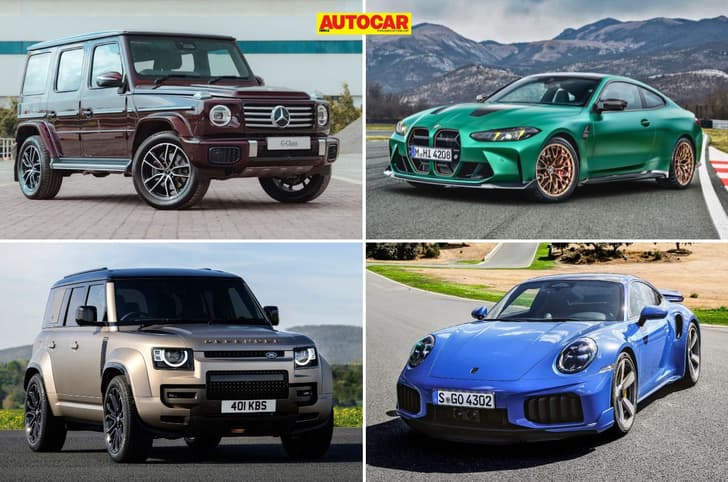
India’s recently concluded negotiations for a Free Trade Agreement (FTA) with the European Union are set to fundamentally alter the country’s premium car import landscape. For the first time, import duties on fully built European cars will be reduced in a phased manner, potentially narrowing the price gap between India and global markets. However, the impact will be quota-controlled and restricted exclusively to EU-sourced completely built units (CBUs).
Structure of the import duty reduction framework
New import duty will be applicable in a phased manner and limited to quotas
Currently, India imposes two customs duty slabs on fully imported cars based on their CIF value (factory price, insurance and freight). Cars valued up to USD 40,000 attract a 70 percent duty, while those above this threshold face a 110 percent duty.
As per Reuters, the import duty will start at 30-35 percent and gradually drop to 10 percent over 5-10 years. However, the reductions will be limited to an annual quota of 2.5 lakh units. Imports beyond this cap will continue to face high duties.
Locally assembled (completely knocked down) cars will remain unaffected by the duty cuts. Additionally, duty reductions for electric models will begin around the fifth year of the agreement.
Cars expected to be affected by the India-EU FTA
Mercedes-Benz
Mercedes-Benz cars such as the C-Class, E-Class, GLA and even the GLS are locally assembled and hence won’t be affected by the FTA. Its EVs will also not be able to reap the benefits, at least for the initial years. However, the performance-focused AMG and the luxury Maybach models will benefit from the new trade agreement.
BMW
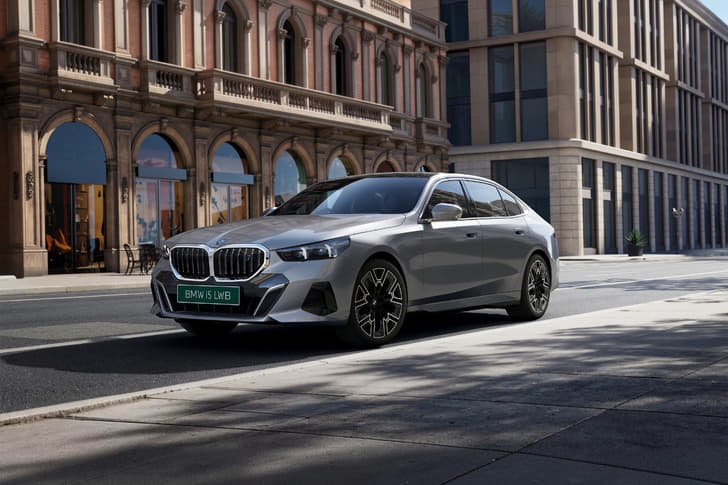
Except for the M2 and XM, which are manufactured in Mexico and the USA, respectively, all the other sporty BMW M models will benefit from the India-EU FTA. The other locally assembled offerings, such as the X1, X5, M340i and 5 Series, as well as the entire EV line-up, will not see much change.
Audi
Audi’s sporty RS Q8 and S5 Sportback, along with the regular Q8, will benefit from the FTA, while locally assembled models, such as the A4, A6 and Q3, will continue to attract taxes similar to the current regime.
JLR
Except for the Defender and Discovery, which are manufactured in the brand’s Slovakia plant, all the other JLR models are locally assembled in India. So only the Defender and Discovery will benefit from the trade pact with the EU.
Porsche
The entire ICE-powered Porsche range, including the popular 911 Carrera, Panamera and Cayenne models, will benefit from the India-EU FTA. Porsche’s all-electric offerings are also CBU models, but as the FTA mentions that EVs won’t be included in the ratified import duty scheme, these will not be affected initially.
Lamborghini
Like Porsche, all the Lamborghini cars also come to India via the CBU route and hence will benefit from the India-EU FTA.
Ferrari
The entire Indian line-up of Lamborghini’s prime competitor, Ferrari, is manufactured in Italy. So the trade deal with the EU will benefit all Ferrari models. Notably, the upcoming 849 Testarossa and Amalfi models will also benefit, while the upcoming Elletrica, being an all-electric offering, will be unaffected by the FTA initially.
Maserati
Maserati cars are manufactured in Italy as well, and are shipped to India via the CBU route, making them eligible for the India-EU FTA advantage. However, the Folgore versions of the Grecale, GranTurismo and GranCabrio, being all-electric models, will not reap any benefits from the India-EU FTA.
Note: Most of the CBU cars mentioned above are likely to benefit from the India-EU FTA. However, it is up to the manufacturers to decide whether these benefits will be passed on to customers. Any reduction in import duties or prices is expected to start only from 2027 or 2028. Moreover, the FTA advantage will also be dependent on other factors, including input costs and exchange rates, which can vary over time.

 Uday Singh
 Glenn Noronha