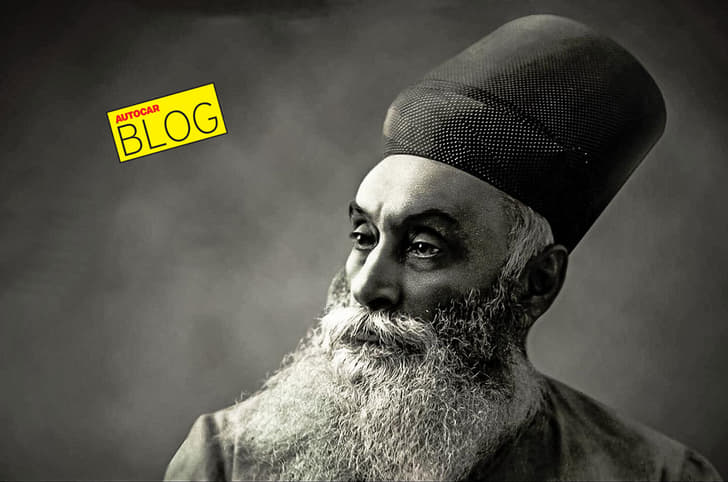
On June 23, Edelgive Foundation and Hurun Research released the list of the top 10 philanthropists of the last 100 years, which was led by Jamsetji (Jamshedji) Tata at an astronomical $102.4 billion – the only Indian in the top 10. The company’s philanthropic work continues, as does its many businesses, but I thought to myself – what would he have done with Tata Motors were he alive today?
I think he would have built an entire ecosystem around the trucks, in the form of highway stops that would incorporate boarding and lodging, primary health care, road discipline training and retail of items of both personal care as well as vehicle maintenance. He would have never sold off Ceat to the RPG Group and made it into a powerhouse for radial tyres for all multi-terrain commercial vehicle applications.
He would have set up the Indian Institute of Automotive Research & Development to make the country a global R&D pioneer for multi-energy propulsion systems, lean engineering, and public transport solutions. Jamshedji would launch the first small Indian car which would cater to the aspiration of millions. Democratisation of mobility would be led by Tata, from public to private transport. He would focus on the sub-4m category in passenger vehicles, challenging Maruti Suzuki for market leadership.
Along with Jamshedpur (which would continue to be called Sakchi) and Pune, Uttarpara would be a key manufacturing base, having acquired the erstwhile Hind Motors business from the Birlas. His intense nationalism would have manifested in globalisation, with the Tata brand a global name, democratising mobility across Africa, South America and South-East Asia through sub-1-tonne micro CVs and sub-4m passenger vehicles.
Jamshedji would run public transport operations in the top 10 cities through bus fleets, car shared fleets, micro public carrier fleets and river boat fleets. For this, he would have launched the Tata Mobility Card, linking all modes of public transport, and also with Air India (which he would have wrested back from the government) and Tata Rail. And, of course, Tata Motors would have been renamed ‘Tata Mobility’.
He would have adopted key road stretches across the country to make them benchmarks in traffic and safety management. He would consciously stay away from entering the two-wheeler segment, respecting the pioneering work of Bajaj and Munjal.
He would have spearheaded a multi-energy green movement for India, offering mobility solutions using bio-diesel, electric, methanol and even solar. He would have ensured that Tata Administrative Services churns out world-class talent capable of running Tata Mobility. And taken pride in the fact that many Tata Mobility alumni were heading global automakers.
He would lead SIAM in setting up the Indian Automotive History Museum in Chennai. And Jamshedji would drive his electric Nano to and from Bombay House everyday without fail!
Image credit: Tata
 Rishaad Mody
 Sergius Barretto