Slavia vs Virtus Sedan Choice


Last Updated on: 13 Oct 2026
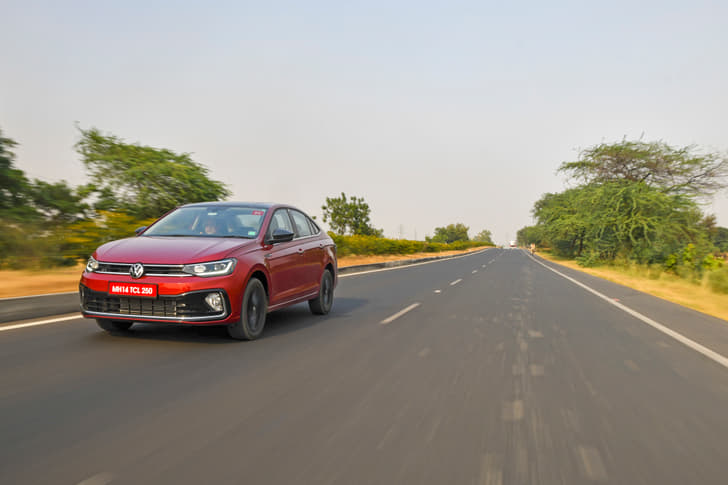
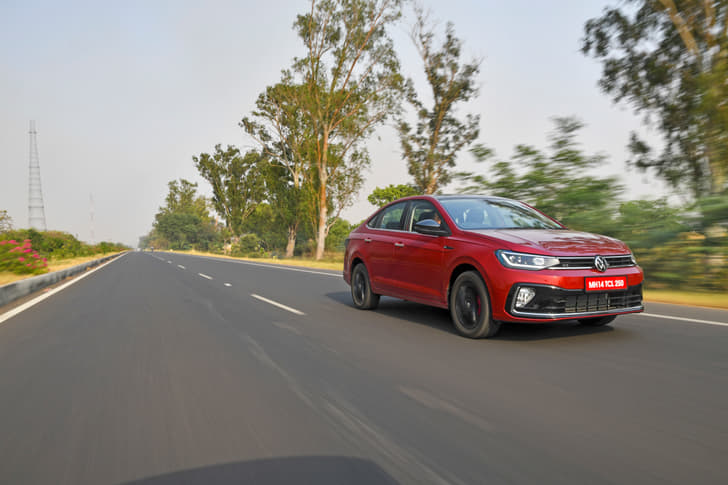
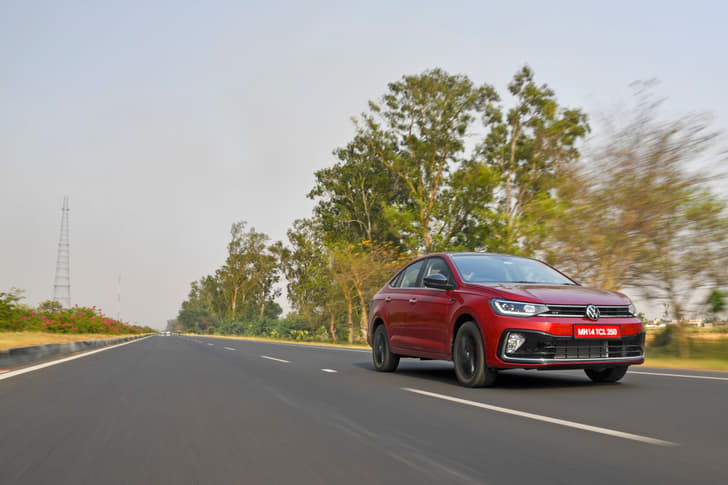
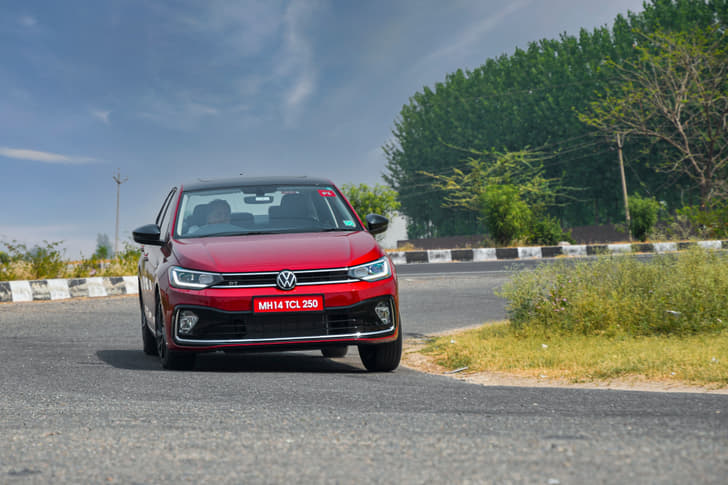
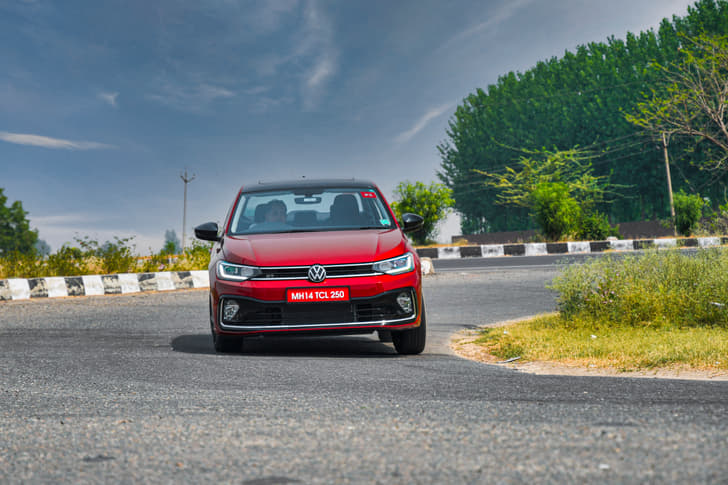
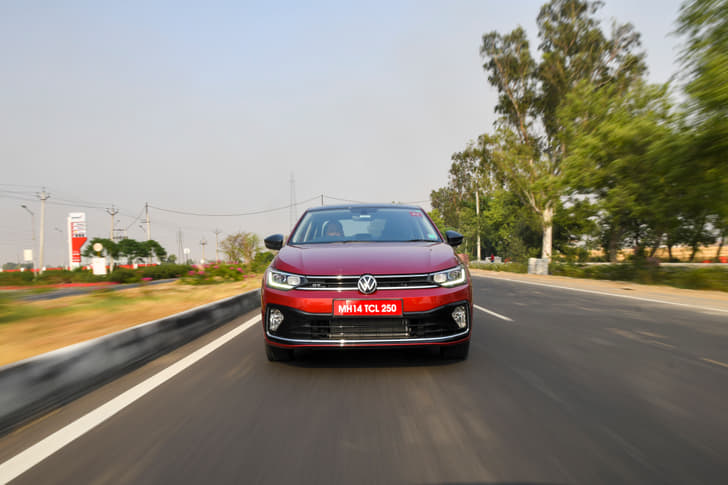
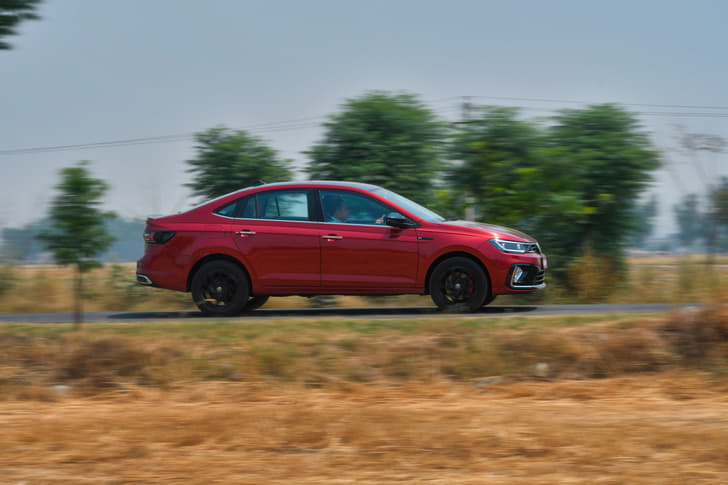
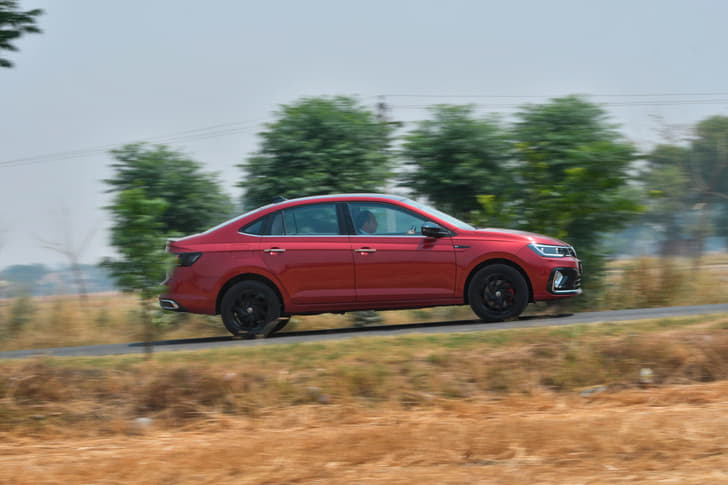
Mileage 18.7 kmpl - 20.19 kmpl | Engine 999 cc - 1498 cc |
Fuel Type Petrol | Transmission Manual, Torque Converter, DCT |
Body Style Sedan | Seats 5 |
Engine Type | Turbocharged |
Engine Displacement | 1498 cc |
Number of Cylinders | 4 |
Engine Installation | Front |
Fuel Type/ Propulsion | Petrol |
Pure Electric Driving Mode | No |
Gearbox Type | DCT |
Number of Gears | 7 |
Manual Shifts via Gear Lever on Automatic Gearbox | Yes |
Paddle Shifters for Automatic Gearbox | Yes |
Sport Mode for Automatic Gearbox | No |
Drive Layout | Front Wheel Drive |
Lockable Differential/s | Yes |
Max Engine Power | 150hp at 5000-6000 rpm |
Max Engine Torque | 250Nm at 1600-3500 rpm |
Fuel Supply System | Direct Injection |
E20 Compatibility | Yes |
Emission Standard | Bharat Stage VI |
Auto Start/Stop | Yes |
Official Fuel Economy | 19.62 kmpl |
City Fuel Economy as Tested | 9.3 kmpl |
Highway Fuel Economy as Tested | 15.6 kmpl |
Fuel Tank Capacity | 45 litres |
User Reported Mileage | 17.63 kmpl |
0-100kph | 9.68 s |
20-80kph (in third gear/ kickdown) | 5.95 s |
40-100kph (in fourth gear/ kickdown) | 6.3 s |
Front Suspension Type | Independent, MacPherson Strut |
Front Springs | Coil Springs |
Rear Suspension Type | Non-independent, Torsion Beam |
Rear Springs | Coil Springs |
Damper Control | No |
Ride Height Adjust | No |
Type of Power Assist | Electric |
Steering Adjust type | Manual |
Steering Adjust | Tilt and Telescopic |
4 Wheel Steer | No |
Turning Radius | 5.05 m |
Front Brakes | Discs |
Rear Brakes | Drums |
Wheel Size | 16 inches |
Front Tyre Size | 205/55 R16 |
Rear Tyre Size | 205/55 R16 |
Wheels | Alloys |
Spare Wheel | Full Size |
Length | 4561 mm |
Width | 1752 mm |
Height | 1507 mm |
Wheelbase | 2651 mm |
Ground Clearance | 179 mm |
Kerb Weight | 1260 kg |
Chassis Type | Monocoque |
Boot Capacity | 521-1050 litres |
Doors | 4 |
| Power Windows | Front and Rear |
| 12 Volt Port | |
| Cabin Boot Access | |
| Door Pockets | |
| Digital Instrument Cluster | Fully Digital |
| Bottle Holder in Doors |
| Crash Test Rating | 5 |
| Driver Airbag | |
| Door Ajar Warning | |
| Lane Departure Avoidance | |
| Day Night Interior Mirror | Automatic |
| Dashcam |
| Body Coloured Bumpers | |
| Cornering Headlights | |
| Follow Me Home Headlamps | |
| ORVM turn indicators | |
| Scuff Plates | |
| Antenna | Shark Fin |
| Speedometer | Digital |
| Tachometer | Digital |
| Trip Meter | |
| Average Fuel Consumption | |
| Average Speed | |
| Distance to Empty |
| Audio System | |
| CD Player | |
| Speakers | 8 |
| Branded Music System | |
| USB Input | |
| AUX Input |
| Alexa Compatibility | |
| Over the air (OTA) updates | |
| Find My Car | |
| Emergency Call Button | |
| Remote Sunroof Open / Close via App | |
| Remote AC On / Off via App |
Tell us about your experience
Hi, I have a VW Virtus bought in early 2023, and now I am looking for a replacement. My preference is for an SUV. I'll primarily use it for city driving, and my monthly usage would be around 200 km. The car must have a good safety rating, comfort and mileage.

 Skoda KushaqKia SeltosVolkswagen TaigunVolkswagen Virtus
Hello team, I read your blogs regularly and value your reviews. Please guide me on which car I should buy from my shortlisted options. This will be my first car, and I enjoy driving. My requirements are a minimalist design (not too many gadgets), a manual transmission, good comfort and space, and a roomy boot. I’ve shortlisted the Volkswagen Virtus, Honda Amaze, and Hyundai Basalt. My budget is ₹12–14 lakh. Please advise.
Citroen BasaltHonda AmazeVolkswagen VirtusVirtus 1.0 AT (Top-End) vs Elevate ZX CVT — Which One to Pick? 🚗💭 After months of research, I’m torn between the Volkswagen Virtus 1.0L AT (top trim) and the Honda Elevate ZX CVT. I live in Bangalore, mostly drive on weekends, and do 3–4 highway trips a year to Kerala. I love driving, and I’m upgrading from a Grand i10 petrol. Family of three (two adults + one kid). Looking for advice on: Which feels better to drive on city roads and highways Ride comfort, refinement, and family practicali
Volkswagen VirtusHonda Elevate (2023-2026)I want to buy a sedan. My usage will be approximately 25% city driving and 75% highway driving. My priorities are a fun-to-drive experience, good handling, strong highway stability, rear-seat comfort, and solid build quality. My budget is around ₹18-20 lakh.
Volkswagen VirtusSkoda Slavia (2022-2026)I am planning to buy an automatic car with an on-road budget of around ₹15 lakh. I currently drive a Honda Civic (manual), and my monthly usage is relatively low at under 400 km. The car will primarily be used for daily city commutes (office) and occasional highway trips—around 2–3 times a year, typically within 500 km. I am looking for a well-balanced option that offers comfort, reliability, and good fuel efficiency for both city use and occasional highway driving. I am not in a hurry and can wait until the end of the year if better options or updates are expected. Could you please suggest the best choices in this budget, keeping long-term ownership and ease of driving in mind?
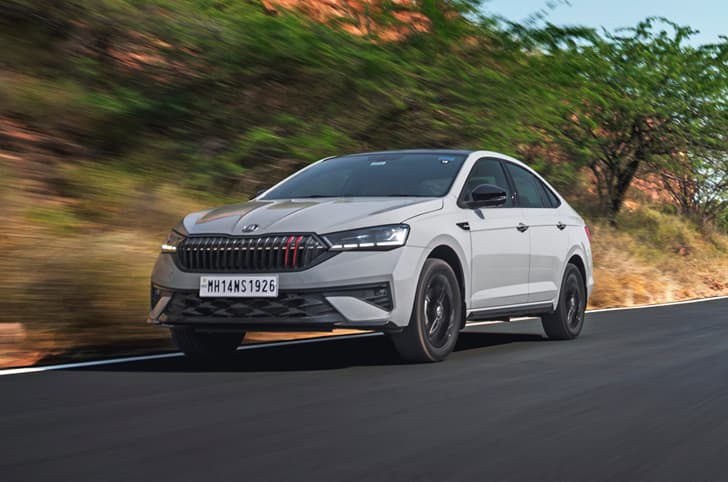
Hyundai i20Volkswagen VirtusSkoda Slavia (2022-2026)The Virtus is offered only with 115hp 1.0-litre 3-cylinder turbo-petrol and 150hp 1.5-litre 4-cylinder turbo-petrol engines. These are quite competitive by segment standards.
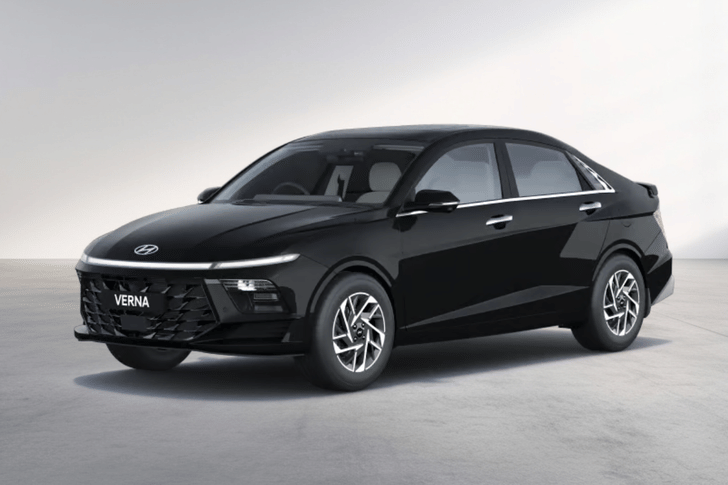
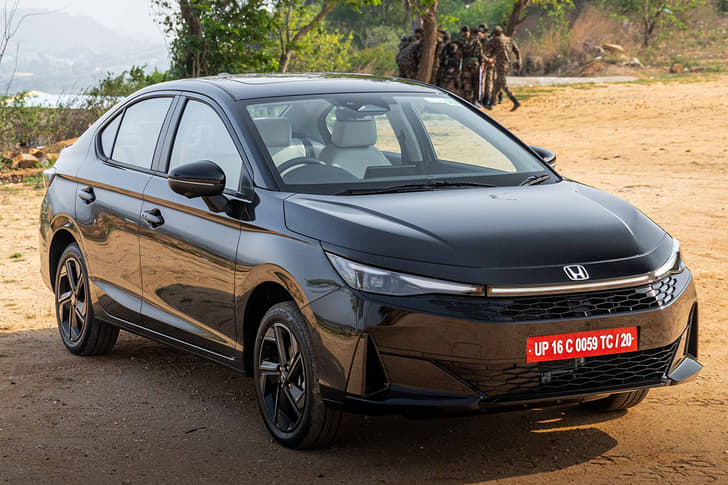
In terms of overall dimensions, the Virtus slots between its rivals. It's longer overall than the Slavia, but shorter than the City and Verna. However, the Virtus is the tallest midsize sedan, and has the highest ground clearance too.