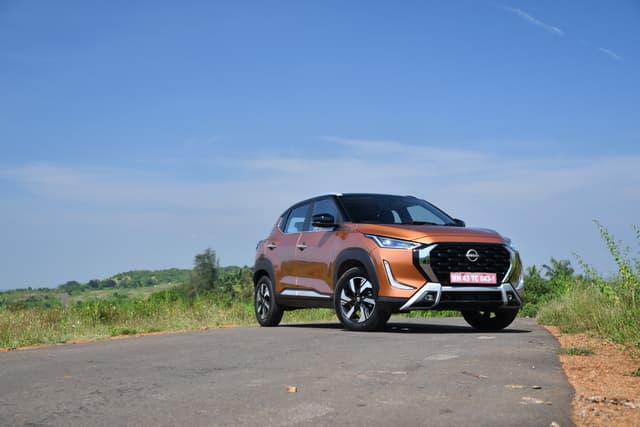
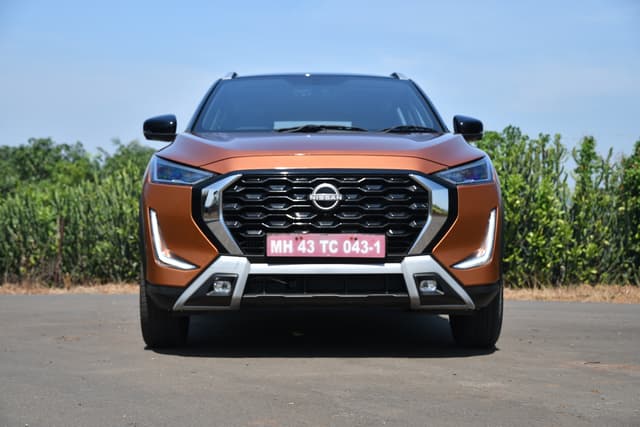
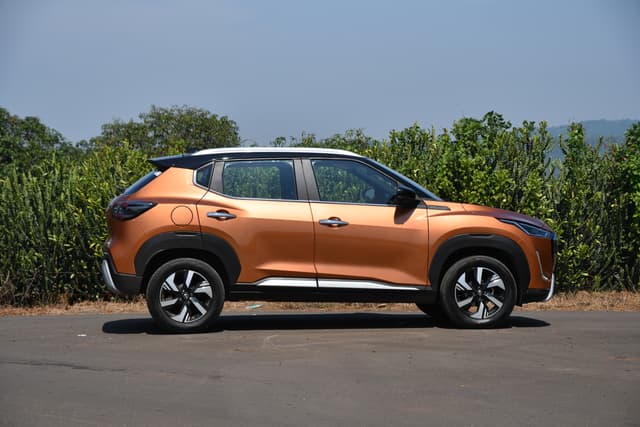
Suv Cvt Cars in India (9)
Discover the best Suv Cvt Cars. Our comprehensive guide covers detailed specifications, expert reviews, pricing information, and buying advice for Suv Cvt Cars. Find the perfect cars that matches your requirements and budget.


Find cars by fuel type
Trending Questions on Cars - Answered by Autocar Experts
Hi, my car-buying parameters are these: a 4.3-metre SUV, 5-star safety, an affordable turbo-petrol engine with good highway performance, an automatic transmission for convenience, great ground clearance for Bangalore's bad roads, a large boot for travel, a decent cabin that feels acceptable and at least a little modern, and good stability, ride quality and comfort. I have narrowed it down to two cars: the Kia Seltos HTK/HTK(O) CVT and the Renault Duster Evolution DCT. But now I'm stuck in a vicious circle of confusion because I feel the Duster Evolution's interior, at around Rs 18.8 lakh on-road, is too basic compared to similarly priced Seltos variants like the HTK or HTK(O). I know Renault is offering a terrific engine, a great ride and a stable car, but I can't convince myself that manual AC knobs, no start-stop system and no auto-dimming IRVM are acceptable in 2026. I genuinely love the Duster, and it feels perfect for my family and me. It will mostly be my wife and me, and occasionally my parents and brother, travelling on long weekend journeys. Should I sacrifice the engine and performance and go for the nicer interiors of the Kia, or should I choose the more utilitarian Duster and accept that the cabin is relatively bare? I can't stretch my budget to the Seltos HTK(O) DCT or the Duster Techno DCT. Please help, I'm heavily confused.
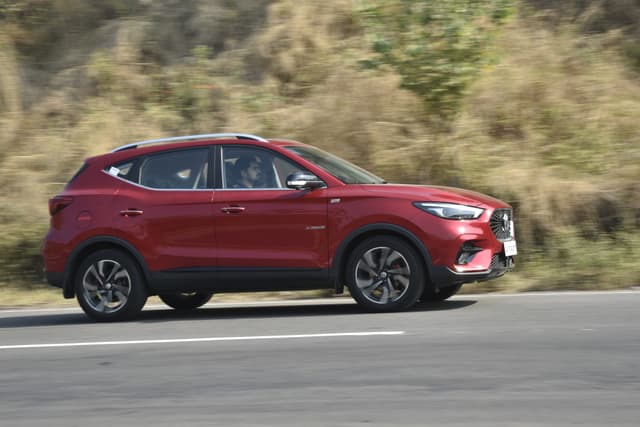
Pick the Renault Duster Evolution DCT. Your use is long highway runs with family and Bangalore’s rough roads, and here the Duster’s 1.3 turbo and suspension make life easier and calmer. It overtakes cleanly even with four adults and luggage, rides over broken patches without slowing to a crawl, and feels very stable at speed. The Kia Seltos HTK/HTK(O) CVT is nicer inside, yes, but that 1.5 petrol with the automatic will feel flat when the car is loaded, and you hit inclines or need quick passes.Your worry about the Duster’s basic feature set with the Evolution trim is fair, but that’s the compromise that buys you the better drive for your highway trips. If most of your driving were city commutes, the Kia’s cabin and convenience would win. For your weekend highway touring, the Duster’s strengths will matter every single time.
I am planning to buy an automatic SUV for my daily commute. However, I am confused about which variant would be the better choice, especially in terms of long-term service and maintenance costs. I have test-driven the Hyundai Venue DCT and the Nissan Magnite CVT. Could you please guide me on which would be the better option for my usage and whether a CVT or a DCT would be more suitable in the long run? Thank you.
Pick the Magnite CVT if your life is mostly in city traffic and you want the easier, cheaper long-term option. A CVT suits stop-go better than a DCT, so you get smoother crawling, fewer jerks, and no clutch heat or wear to worry about. Over years, that usually means fewer big bills. Nissan’s 1.0 turbo with the CVT is calm in traffic and, driven gently, can sip less fuel than a DCT in the city. Routine service costs on the Magnite are also quite reasonable, and parts aren’t pricey.The Venue DCT is the quicker, nicer-feeling one when you push it, and Hyundai’s network is wider, but a DCT in heavy traffic can feel a bit snatchy, can run hot, and is simply more complex. Out-of-warranty clutch or mechatronics work will hurt your wallet more than anything you’re likely to face on the CVT.One honest catch with the Magnite CVT: when you floor it, the engine drones and it isn’t as quick for sudden highway overtakes as the Venue DCT. Also check how close your nearest Nissan workshop is. If your use is 90 percent city and you’re watching long-term costs, the Magnite CVT is the safer bet.
Looking for a comfortable SUV mainly for city driving in Chennai. I drive around 35 km per day and do not face too much bumper-to-bumper traffic. I am looking for a spacious 5-seater car with an automatic transmission and preferably a petrol engine, within a budget of ₹20 lakh. I currently own a 2013 Chevrolet Beat petrol manual. I do very minimal highway driving, with yearly highway usage of around 1,000-2,000 km.
Get the Kia Seltos 1.5 NA IVT - it is a comfortable and easy SUV to live with for your daily Chennai runs. The smooth automatic suits light traffic, the ride takes bad patches and speed breakers well, and the AC is strong, which matters in our weather. It is also properly spacious for five, with a relaxed back seat and easy ingress, so the upgrade from your beat will feel big without feeling bulky to drive.City mileage will sit around 11kpl, and the light steering makes parking and tight streets simple. Mid trims with the automatic should land around your Rs. 20 lakh mark in Chennai, and Hyundai’s wide service network helps for hassle-free ownership.One honest trade-off: the 1.5 NA is not exciting to drive on the highway, and the petrol auto is tuned more for smoothness than speed. If you want a bit more performance from a NA engine, look at the Honda Elevate CVT.
Hello team, I am planning to buy a compact SUV. Shortlisted vehicles are 3XO, Venue Automatic, Sonet, the new Punch, and Nexon. Please suggest. I am in the process of shortlisting the Venue Automatic.
The new Hyundai Venue is a genuinely well-rounded package. It is more spacious than before, the rear seat is now comfortable enough for two adults, the turbo petrol engine feels punchy, and overall, it is easy to live with. The only caveat is the DCT gearbox. It is smooth enough in normal use, but it is not as seamless in traffic as the 3XO’s torque converter automatic, which is where the Mahindra clearly has the advantage.The Mahindra XUV 3XO also has a wider and more spacious rear seat, making it a better five-seater if family use matters. The downside is boot space, which is among the smallest in the segment, so if luggage carrying matters, that is worth keeping in mind.The new Tata Punch is a solid improvement over the older car, but compared to the others here, it does not feel as premium, as powerful or as sophisticated, which is reflected in its lower price positioning. The Nexon is still a competent option, but against the fresher 3XO and Venue, it now feels a little dated.
Hello All. I am planning to purchase a sub-4 m SUV. Currently downselected Kiger turbo CVT petrol and 3XO turbo petrol AX5. Mostly driven in the city, with once or twice a month long drives. Both do not exceeding 1000KM a month. While this is not an apple-to-apple comparison, I have pinned down these two basis my 13-14L budget PS. I have rejected the Kylaq for rear seat discomfort.
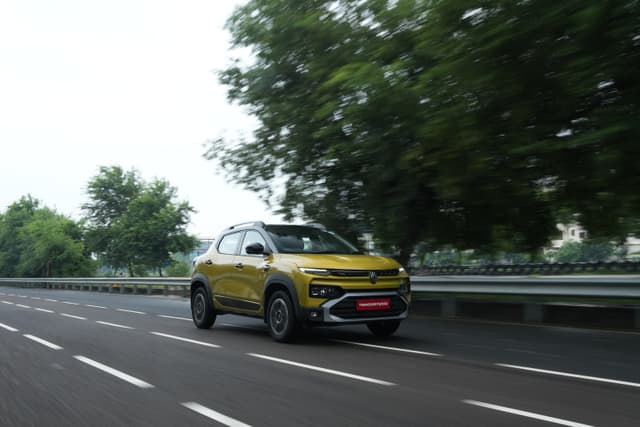
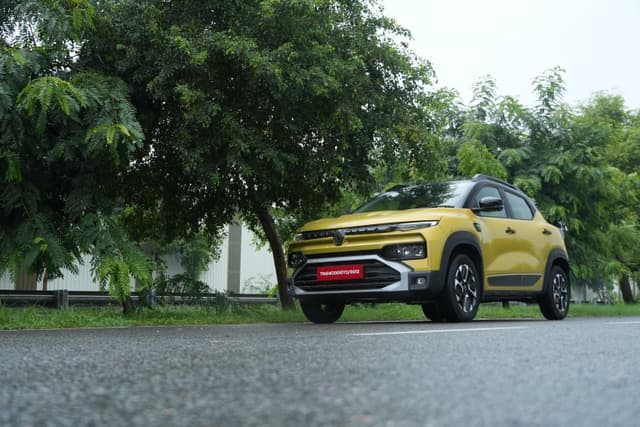
Your mostly city use with a Rs. 13-14 lakh cap points you to the Renault Kiger Turbo CVT RXZ. The CVT automatic is smooth enough for city traffic, and the car is small and easy to park. It will also handle your once-or-twice-a-month highway runs without stress, cruising steadily and feeling easy to place on the road. The Kiger will also likely land a little cheaper too, leaving room for insurance and add-ons inside your budget.Two things to note on the Kiger: the back seat is fine for two but feels tight for three adults, and the cabin feels basic in places. If your family often uses the rear seat, this matters.If you care more about punch on the highway and a roomier back seat, the Mahindra XUV 3XO Turbo AX5 makes sense. It feels stronger when you want quick overtakes and rides well over broken roads. Just check if the AX5 with an automatic transmission fits your budget in your city; if not, the manual will be heavier to live with in traffic.For your mostly city use, the Kiger Turbo CVT RXZ fits best.
I recently upgraded from a Skoda Rapid Diesel DSG to a Honda Elevate ZX CVT. I drive around 62 km daily in Mumbai (Navi Mumbai to Andheri) in bumper-to-bumper traffic. I like everything about the Elevate except its 40-litre fuel tank, due to which I need to refuel every 4-5 days, which is becoming frustrating. I am even considering changing my car by the end of the year to the Renault Duster (which is expected to have a larger 50-litre tank). I also need sufficient boot space. I understand the Duster may not offer a spare wheel (stepney), though space might be available to carry one. While the Duster Hybrid is tempting, the lack of boot space and a proper spare tyre could be deal-breakers, especially since I take occasional long drives to the South where a spare tyre feels essential. Given this situation, should I continue with the Elevate or consider switching? What would you suggest?
If you're looking to replace the Honda Elevate CVT with a Renault Duster, make sure you opt for the hybrid version. The Duster's 1.3-litre turbo-petrol-DCT combination isn't likely to deliver respectable fuel efficiency, especially in bumper-to-bumper traffic; hence, your fuel stops are likely to be as frequent, if not more so. A hybrid, on the other hand, will remain in EV mode while idling or at low speeds, which will significantly reduce fuel consumption. While Renault provides a puncture repair kit, a spare tyre will certainly come in hand in the event of a sidewall cut, which is a possibility on long drives and unfamiliar roads. Hence, you could purchase an extra tyre and place it in the boot, however that is likely to compromise luggage space.Alternatively, you could consider retaining your Honda Elevate. It is a very sensible, no-nonsense car. Also, keep in mind that because it isn't a popular model, resale value is likely to be on the lower side, hence you will have to add a fair bit from your pocket, to make the new purchase.
I have a daily work commute of around 50 km, of which nearly 40 km is on the highway. I am currently driving a Maruti Baleno and am planning to upgrade to an SUV. I have shortlisted three petrol automatic options: the Tata Harrier Adventure X Plus Dark 1.5L Petrol, Kia Seltos GTX(A) 1.5L CVT, and Toyota Urban Cruiser Hyryder V AWD 1.5L Automatic. I personally prefer the larger and more substantial Harrier, while my wife is inclined towards the Hyryder. I have also used my Baleno for nearly 10 years, so long-term reliability and longevity are very important factors for me in this purchase.
With 40 km of highway in your 50 km daily run and a 10-year plan, the Urban Cruiser Hyryder 1.5 petrol automatic fits your brief best from your list. It is a calm, easy choice for daily use, and it should be the cheapest and simplest car to live with over the long term. If you aren’t planning any off-roading, skip the AWD and stick to the 2WD to save around Rs 2 lakh.Why it suits you: that 1.5 petrol with the 6-speed torque-converter automatic is smooth and relaxed at steady highway speeds, so your daily run will feel easy rather than tiring. Toyota-Maruti parts and service are widely available and usually straightforward, which helps when you plan to keep the car for a decade. Also, coming from a Maruti Suzuki Baleno, the Hyryder will feel familiar to drive in the city but steadier on the highway, which should please both you and your wife.Two trade-offs to be aware of: quick overtakes at 90-110 kph need a firm press on the accelerator, and with five people and luggage, it can feel a bit slow. Also, the cabin is not as wide as the Kia's, so three adults in the back can feel tight on longer trips.If you want a bit more punch in everyday driving and a richer cabin, the Kia Seltos 1.5 petrol IVT is the other strong pick. On the Harrier, petrol is a good choice, but for long-term ownership and ease of use, the Hyryder will likely be the simpler car to live with. For your commute and 10-year plan, the Hyryder automatic lines up best.
Hi, I am planning to buy a new, feature-rich car with ventilated seats, a 360° camera, and ADAS. However, I am facing a dilemma—most variants above the base now come with a panoramic sunroof. I am not a fan of sunroofs, especially considering NCR’s hot weather and the potential additional maintenance costs. I am unsure whether this should be a deal-breaker or if I should still go ahead with an otherwise well-equipped car. We are a family of three and only occasionally require seating for five. My budget is ₹16–18 lakh, and I am currently considering the Kia Seltos IVT, as about 85% of my driving is in the city, with a monthly usage of 1,000–1,200 km. Could you please advise whether I should compromise on the sunroof, and if there are better alternatives I should consider? Also, should I wait for a new Hyundai Creta or a potential Seltos hybrid?
Mostly city use, family of three, Rs. 16-18 lakh in your place, I would pick the Kia Seltos petrol IVT in the HTX+ (or the closest trim that bundles ADAS and the 360 camera). It fits your routine better than most because the IVT, which is an automatic that varies ratios smoothly, feels calm and easy in slow NCR traffic, and the Seltos gives you the features you want without feeling bulky to park.On the sunroof worry, I wouldn’t make it a deal-breaker. In this price band, the trims that add ventilated seats, a 360-degree camera, and ADAS almost always include a panoramic sunroof. With the sunshade kept shut, heat gain is small in real use, and you can simply never open it. Upkeep is basic - ask the service to clear the drain channels once a year, and you’re done. A bigger trade-off to note is a little less headroom if you are very tall.
I am planning to buy an automatic car and would appreciate your expert recommendation. My budget is around Rs. 12 lakh on-road, and I prefer either a CVT or torque converter, as I am not interested in an AMT. I am based in Bangalore, and my usage will be around 70% city driving and 30% highway driving. My annual running will be approximately 6,000-9,000 km, including 2-3 long trips every year. I prefer SUV styling, although I can consider a hatchback if it is significantly better overall. My previous car was a Tata Tiago AMT, which I have now given to my father. My main priorities are safety, reliability, a smooth driving experience, and low-hassle ownership. I plan to keep the car for around 5 years.
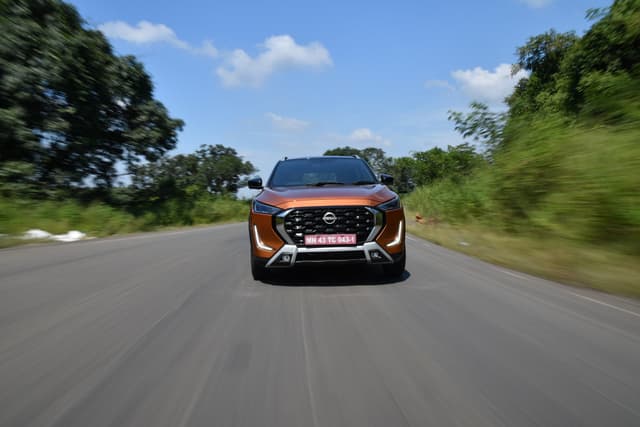
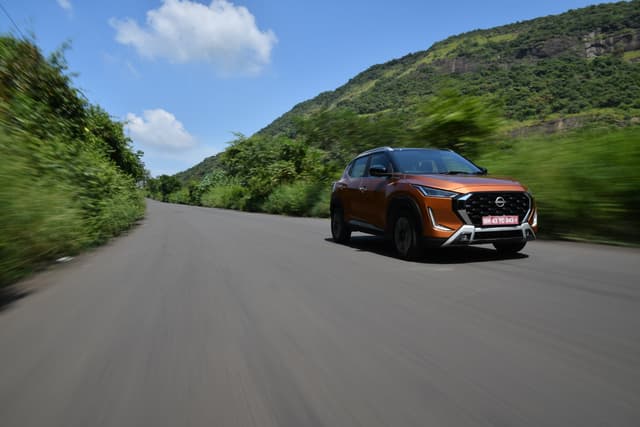
The Nissan Magnite Turbo CVT is the one that fits your brief best - the Kuro variant fits in your budget but try and stretch to the Tekna or Tekna+ if you can. It keeps the SUV look you prefer, and the CVT makes daily drives far smoother than your old Tiago AMT. The size is friendly for tight lanes and parking, yet the turbo engine has enough pull for your 2-3 highway trips a year, so it will not feel strained when you cruise with family and bags. For a 5-year keep and 6,000-9,000 km a year, running costs and upkeep should be manageable, and Nissan’s network in Bangalore is decent.A couple of trade-offs to note. The cabin feels simple next to pricier rivals, and it can get a bit noisy at higher speeds. Also, while it has a 5-star Global NCAP rating, some rivals do feel more solid - but those with torque converter or CVT autos sit well above your budget.If you want the same package with a different style or dealer, look at the Renault Kiger Turbo CVT in a mid trim - it is the sister car to the Magnite, so pick the one you like sitting in more. If you are open to a hatchback, the Hyundai i20 1.2 IVT is the smoothest and most polished to drive, with a very easy ownership experience.
Last Updated on: 19 Jul 2026